Gryllodes Sigillatus Tropical House Cricket Large - 250pcs
£38.99

A 500-pack of small live tropical house crickets (Gryllodes sigillatus) for suitable reptiles, amphibians and invertebrates. Match prey size to the animal and follow species-specific feeding guidance.
Gryllodes sigillatus
A 500-pack of small live tropical house crickets (Gryllodes sigillatus) for suitable reptiles, amphibians and invertebrates. Match prey size to the animal and follow species-specific feeding guidance.
Tropical House Cricket Small, 500 Pack (Gryllodes sigillatus) contains one pack sold as 500 small live crickets for use as feeder insects. This is the small grade, intended for keepers who have already checked that a smaller moving prey item is suitable for the species, age and size of the animal being fed.
Gryllodes sigillatus is commonly called the tropical house cricket and is also known as the Indian house cricket. In the live-food trade it is often described as a banded cricket. The pack can suit suitable reptiles, amphibians and invertebrates, but it should not be treated as a universal daily food. The right prey, quantity, feeding frequency and supplement plan depend on the target animal and its complete diet.
The listing below explains exactly what the pack represents, how to plan for 500 live insects, how to hold and feed crickets before use, and where the advice is species-specific. It also separates verified care guidance from changing delivery or stock details, which should always be checked on the website at the time of ordering.
| Detail | What this listing provides |
|---|---|
| Scientific name | Gryllodes sigillatus |
| Common names | Tropical house cricket; Indian house cricket; often sold as banded cricket |
| Pack | One pack sold as 500 live crickets |
| Grade | Small; no millimetre measurement is claimed by the supplier listing |
| Use | Live prey for suitable insect-eating animals |
| Before feeding | Check prey size, feed and hydrate the crickets, then follow the target animal's feeding and supplement plan |
| Holding | Use a secure, well-ventilated keeper with climbing surface, suitable food, safe hydration and regular cleaning |
Important: "Small" is a supplier size grade, not a precise measurement on this listing. Do not assume that the word small makes every cricket suitable for every hatchling or miniature species. Inspect the insects you receive and compare them with the feeding guidance for the animal in your care.
The accepted name is Gryllodes sigillatus, a true cricket in the family Gryllidae. The Orthoptera Species File lists Tropical House Cricket and Indian House Cricket among its English common names. The University of Florida IFAS species profile also uses the name tropical house cricket and provides identification and biological background.
The different common names do not mean that this pack contains a mixture of species. "Tropical house cricket", "Indian house cricket" and the feeder-trade term "banded cricket" can all refer to Gryllodes sigillatus. Keeping the scientific name with the product helps distinguish it from Acheta domesticus, Gryllus assimilis and Gryllus bimaculatus, which are separate cricket species also sold as live food.
This distinction matters when comparing products. Two tubs may both be described simply as crickets while differing in species, size grade and pack quantity. Choose on the basis of the animal's needs and your ability to manage the pack, rather than assuming that one cricket species is automatically better for every keeper.
The first decision is whether the individual crickets are an appropriate prey size. The second is whether 500 is a sensible quantity for your feeding rate. A large pack cannot compensate for a poor size match.
Use current, species-specific guidance from a reputable care source or an experienced exotic-animal veterinarian. Consider the animal's species, age, mouth size, hunting ability, body condition and health. A prey item that is manageable for one juvenile lizard may be unsuitable for a smaller gecko, frog, mantis or spider, even when both are described as young.
For one clearly defined example, the RSPCA's bearded dragon guidance recommends varied live invertebrates and says prey should be no bigger than the size of the dragon's mouth. That is guidance for bearded dragons, not a universal measuring rule for every reptile, amphibian or invertebrate. Apply the care standard written for the animal you actually keep.
| Question | Why it matters |
|---|---|
| Is this prey size recommended for the target species and life stage? | Terms such as hatchling, juvenile and small cover very different animals. |
| Can the animal catch and swallow the cricket safely? | Hunting ability and mouth size matter as well as appetite. |
| Does the feeding plan require variety? | Many insectivores benefit from a rotation rather than one feeder used in isolation. |
| Can you house the remaining insects properly? | A 500 pack needs more holding capacity and management than a small trial quantity. |
| Are supplements needed? | The answer varies by species, age, diet and husbandry, so follow qualified guidance. |
Small crickets are commonly considered for insect-eating reptiles, amphibians and predatory invertebrates. Examples may include some juvenile lizards, geckos, frogs, newts, mantids and spiders. This list describes possible uses, not guaranteed compatibility. Some individuals may need a smaller grade, another feeder type or no crickets at all.
Be especially cautious with very small animals, animals that are unwell, newly acquired pets, species with specialised diets, and invertebrates during vulnerable moulting periods. A keeper should never rely on the product title alone to decide whether a live insect is safe. If the care source for your animal gives a size limit, feeding schedule or warning, that guidance takes priority.
The current pack may be useful when several suitable animals eat the same grade, or when one growing insectivore has a feeding plan that uses the quantity within a manageable period. It may be excessive for a single small animal that eats only a few insects. Buying fewer insects and maintaining them well can be more responsible than buying a large count that cannot be housed or used.
Have the holding container ready before the order arrives. A secure, well-ventilated cricket keeper gives the insects more usable space and makes feeding, cleaning and portioning easier. The lid and ventilation openings should contain the small grade without blocking airflow. Position the keeper where it cannot be knocked over, reached by other pets or exposed to unsuitable household conditions.
Add clean cardboard or egg-crate-style material to increase climbing and resting surface. Arrange it so that you can lift sections gently when collecting insects and so that waste does not remain hidden indefinitely. Avoid overcrowding the usable surface. If the container becomes dirty, wet or poorly ventilated, the quality of the holding environment can deteriorate quickly.
The needs of live insects cannot be reduced to one universal room temperature. Conditions in the room, the design of the tub and the length of the holding period all affect the result. This listing therefore does not promise a fixed lifespan or prescribe an unsupported temperature range. Use a reputable live-food husbandry method, avoid temperature extremes, and monitor the insects rather than assuming that a number on a generic guide guarantees success.
Feeder insects are living animals and should receive appropriate food and hydration while in your care. Use a suitable cricket or gut-loading diet and a hydration method designed for small live food. Follow the product instructions for any prepared feed or hydration material. Do not allow fresh food to remain until it spoils or turns the container damp.
Check the keeper every day. Remove spoiled food, shed material, excessive waste and dead insects. Replace dirty climbing material when needed, while preventing escapes. Good ventilation and routine cleaning are more useful than repeatedly adding food to an already soiled container.
Plan food and hydration together. Dry feed without an appropriate moisture source is not a complete holding routine, while wet pieces added without monitoring may spoil. Offer manageable amounts, observe how quickly they are used and replace them before they deteriorate. If you are unfamiliar with keeping live crickets, begin with a simple container that is easy to inspect rather than a complicated setup with inaccessible corners.
Gut-loading means feeding the live insects a nutritious diet before they are offered as prey. It does not turn one feeder into a complete diet for every animal, but it can form part of a better-managed feeding plan. The RSPCA advises a formulated gut-loading diet 24 to 48 hours before feeding crickets to bearded dragons. The MSD Veterinary Manual also describes feeding and gut-loading insects and stresses that supplement needs vary among reptiles.
Use those times and methods only where they fit the care plan for the target animal and the instructions on the gut-load product. A published review indexed by PubMed discusses gut-loading and dusting as nutritional strategies, while also showing why results depend on the feeder insect, nutrient, method and target species. That is a reason for precise guidance, not for a blanket claim that every cricket becomes nutritionally complete after the same treatment.
Dusting coats feeder insects with a supplement shortly before feeding. The correct product, amount and frequency depend on the animal's species, life stage, diet, health and, for reptiles, wider husbandry such as UVB provision. Follow the supplement label and the guidance of a qualified exotic-animal veterinarian. More powder is not automatically better, and this listing does not prescribe a universal calcium or vitamin schedule.
Decide the number to offer from the target animal's care plan, not from the number remaining in the tub. Supervise feeding so you can see whether the animal is hunting effectively and whether the cricket size remains appropriate. Remove uneaten insects rather than leaving an uncontrolled number in the enclosure. The RSPCA specifically warns that uneaten live food can bite bearded dragons; other animals and enclosure types have their own risks.
A varied feeder rotation may be appropriate for many insectivores. Variety can change movement, shape and nutrient profile, but it still needs to be planned around the species. Do not label a food a staple or a treat solely because it appears in a comparison table. For example, waxworms are commonly used differently from crickets, and their role should be determined from the target animal's dietary guidance.
Watch the animal as well as the feeder. Appetite, droppings, body condition, growth and behaviour can all help a knowledgeable keeper notice that a plan needs review, but they do not replace veterinary assessment. Seek an exotic-animal veterinarian when an animal stops eating unexpectedly, loses condition, has difficulty swallowing, or shows another health concern.
A 500-pack can make sense for a suitable high-use household, but the printed count should not be treated as an invitation to overfeed. Estimate how many insects your animals normally use, how much space your keeper provides and how confidently you can maintain the remaining stock.
Consider the full period between delivery and use. Live-food demand may change when an animal grows, reduces its appetite, enters a seasonal slowdown, becomes unwell or moves to another prey grade. Keep a margin for responsible care rather than assuming that every insect will be used on a fixed timetable.
| A 500 pack may be practical when... | A smaller order may be wiser when... |
|---|---|
| Several suitable animals use the same small grade | You are testing whether one animal accepts this feeder |
| You already have a secure, ventilated holding setup | You do not yet have suitable holding space |
| Your established feeding plan uses the quantity responsibly | The animal eats only a few live insects or needs frequent variety |
| You can feed, hydrate and clean the colony consistently | You will be unable to check the insects daily |
This is quantity planning, not a claim that a larger pack is always cheaper, fresher or more convenient. Real value comes from buying the right grade and an amount you can use without compromising the welfare of either the feeder insects or the animal being fed.
If the animal is ready for a larger prey grade, compare the large Gryllodes sigillatus 250-pack. It is the same named cricket species in a different grade and pack quantity. Do not move up on age alone; check the actual prey and the target animal before feeding.
Keepers comparing cricket species can also view the large Acheta domesticus 250-pack. The useful comparison is species, grade, pack size and suitability for the target animal. This listing does not claim that Gryllodes sigillatus is universally softer, hardier or nutritionally superior.
For a different feeder type, see live waxworms (Galleria mellonella). They should not be treated as a like-for-like cricket replacement without checking the target animal's dietary guidance. The goal of internal links is to make a considered comparison easier, not to encourage an unnecessary mixed order.
Use dedicated containers and tools for live food. Wash your hands after handling the cricket keeper, its contents and the target animal's enclosure. Keep live-food equipment away from human food-preparation areas, clean spills promptly and prevent children or other pets from opening the container.
Work over a clear, contained area when transferring insects. Open only the section of the keeper you need, collect the required number and close it securely before moving to the animal enclosure. If a cricket escapes, retrieve it rather than using household pesticide around animal housing or feeder stock.
Do not mix newly arrived insects automatically with an established holding group. First inspect the new pack, its condition and its size. Separate containers make it easier to observe issues, manage different grades and avoid losing track of which insects have received a gut-loading diet.
Live-food dispatch options, order cut-offs, weather controls and guarantee terms can change. Check the current Delivery and Live Arrival Guarantee page before ordering and follow any instructions shown for your basket. The product description does not promise free delivery or a fixed delivery speed because the checkout and current policy are the correct sources for those details.
On arrival, inspect the pack before opening it fully. Confirm that it is the ordered product and small grade, then prepare the holding container so the transfer can be controlled. If there is a delivery concern, preserve the packaging and follow the evidence and contact steps in the current delivery policy rather than discarding the container first.
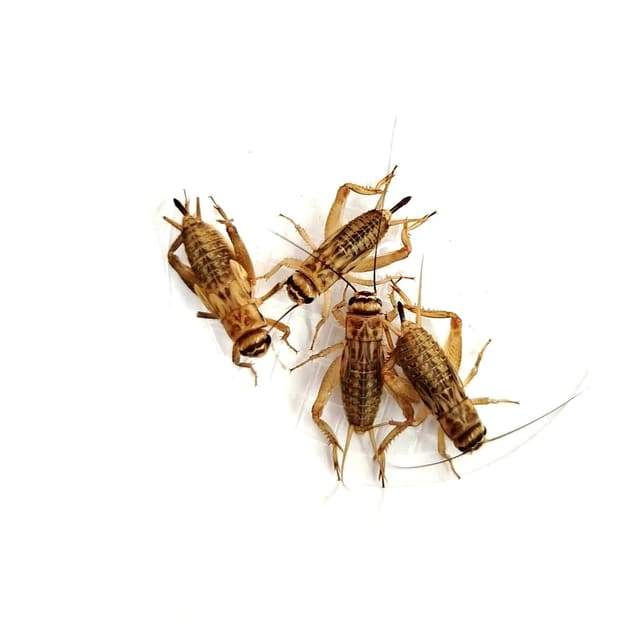
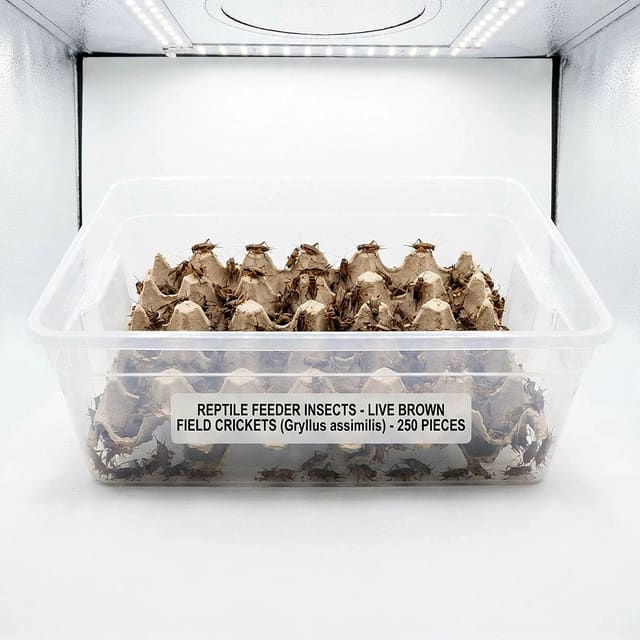
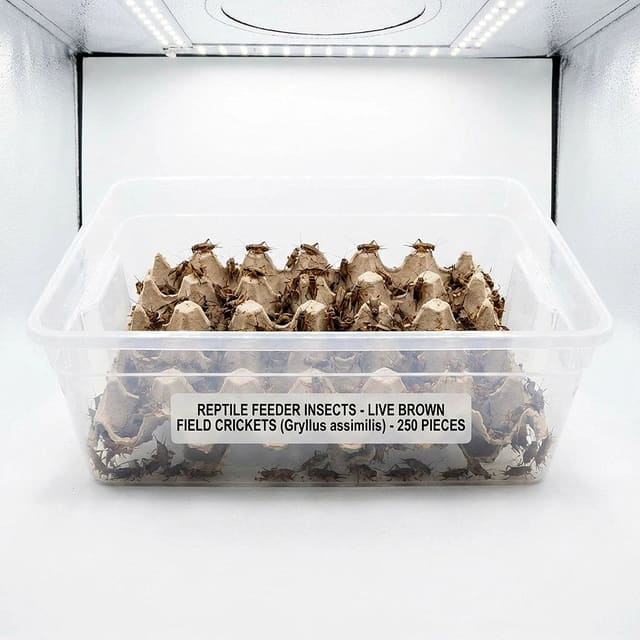
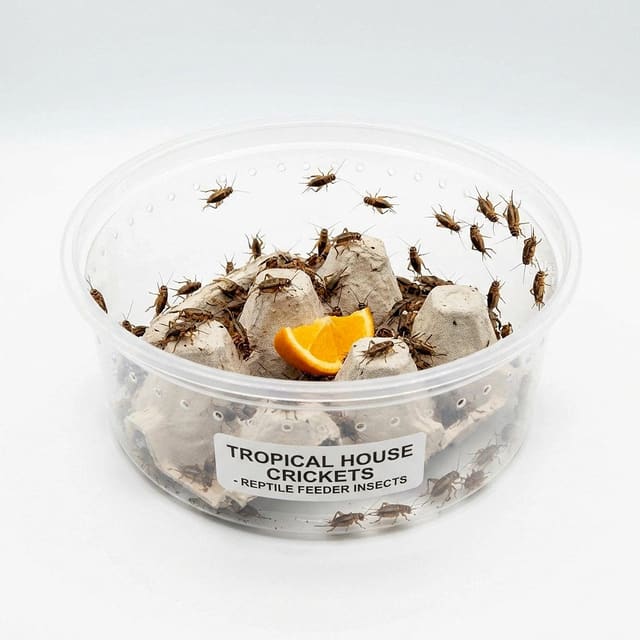
The gallery image is a real, representative supplier-style photograph. It shows small brown crickets in a ventilated clear live-food tub with cardboard, an orange wedge and a printed tropical-house-cricket label. It is not a habitat scene. The photograph helps identify the product type, but it is not a visual count of 500 individual insects and does not promise that every delivery container or packing arrangement will look identical.
This process is intentionally more careful than calling any cricket a universal staple. Small tropical house crickets can be a practical live-food option when their size, quantity and preparation match the animal in front of you. The product supplies the feeder insects; responsible selection, holding and feeding complete the job.
No reviews for this item yet. Bought one? Honest reviews only, good or bad.
What customers say about ordering from us
I have a small group of long finned mountain minnows. So was delighted to be able to order ten of this variety to increase the genetics in my tank . The ones I recieved are healthy but it’s to early to give a verdict on wether they are of a long finned type since they are small currently.
Gordon Walker · 23 Sept 2026
100% success travel and "installation". Pleased with quality of purchase. The Siamese fighter a bit "shy" so have not yet seen him at his best yet but looking good. Happy customer. GG
George E Garratt · 21 Sept 2026
Reviews of our shop, collected by Judge.me, an independent third-party review collector. Newest first.