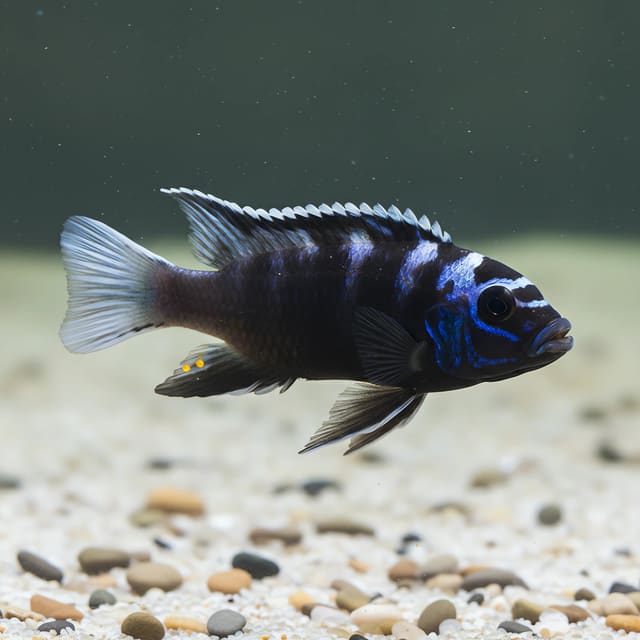
Moderate
Acei Cichlid (Pseudotropheus sp. “acei”)
24–26°C · pH 7.5–8.5 · 300L
£7.99

Azureus Cichlid (Copadichromis azureus) is an open-water Lake Malawi hap needing at least a 150 × 45 cm aquarium base and about 304 litres. One purchase supplies one animal in the selected dispatch size; plan routine water at 26–27°C, pH 8.0–8.5 and 12–18 dGH. Avoid mbuna, other Copadichromis and similarly coloured or rowdy fish.
Adult size is the maximum length this species reaches at full maturity (scientific sources). The livestock you receive will be younger and smaller — pick a size above for the actual shipping size. Product-photo provenance and any image-specific limitations are stated on the listing.
Copadichromis azureus
Save when buying multiple fish. Each quantity is one fish; sex and pair formation are not guaranteed unless the selected variant explicitly states them.
Azureus Cichlid (Copadichromis azureus) is an open-water Lake Malawi hap needing at least a 150 × 45 cm aquarium base and about 304 litres. One purchase supplies one animal in the selected dispatch size; plan routine water at 26–27°C, pH 8.0–8.5 and 12–18 dGH. Avoid mbuna, other Copadichromis and similarly coloured or rowdy fish.
Adult size is the maximum length this species reaches at full maturity (scientific sources). The livestock you receive will be younger and smaller — pick a size above for the actual shipping size. Product-photo provenance and any image-specific limitations are stated on the listing.
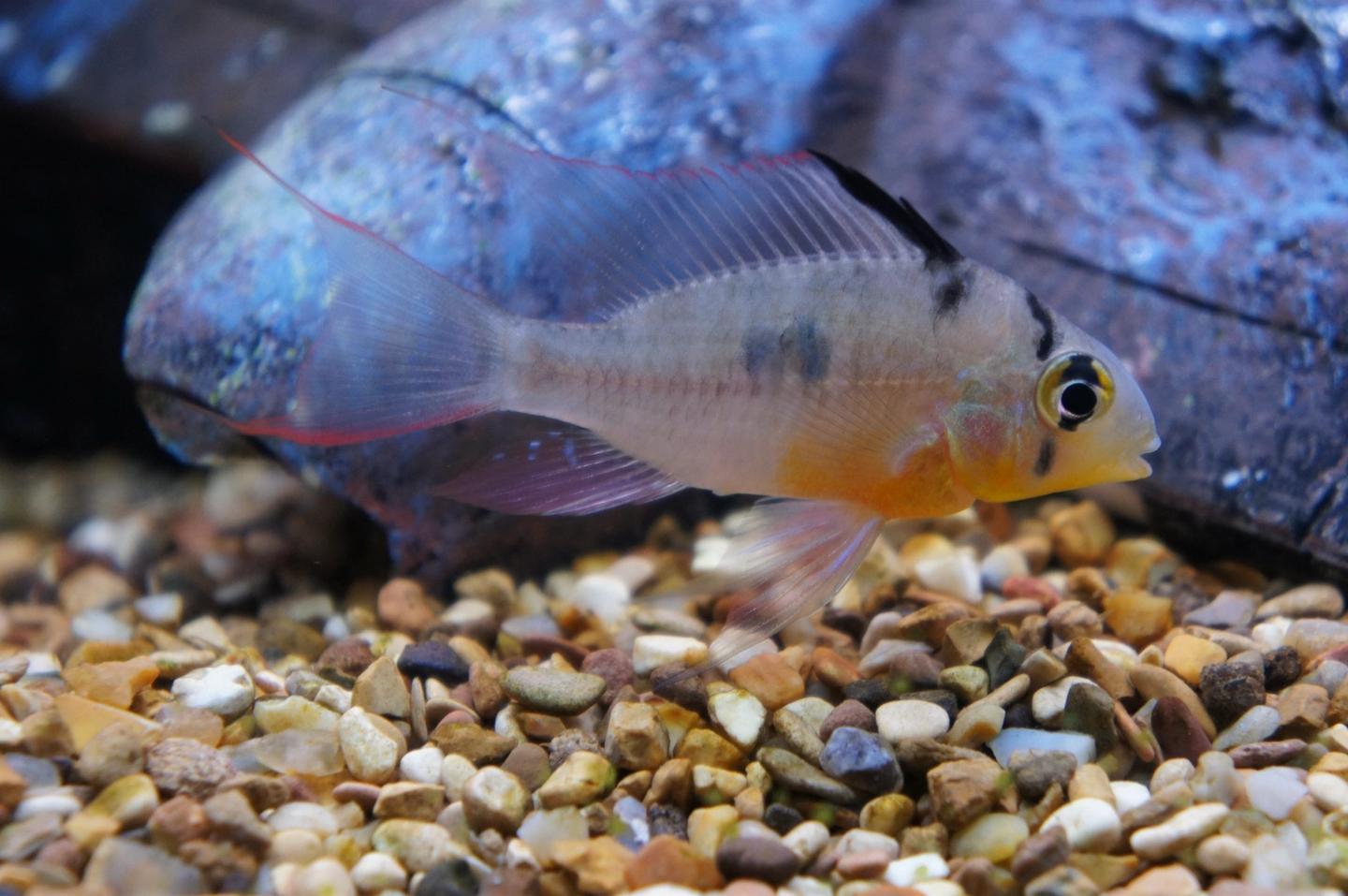
Cichlids are a family of roughly 1,800 accepted species, not one care type. Before buying, identify the exact species and source, then compare adult measurement, usable tank dimensions, social system, territory, tested water, diet and an exit plan. No family-wide minimum tank, water range or tank-mate list is safe.
Maintain these water conditions for optimal health and vibrant colors
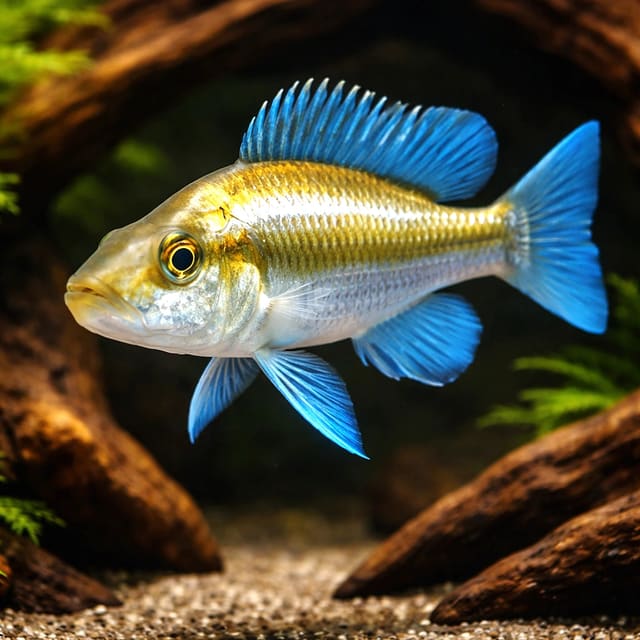
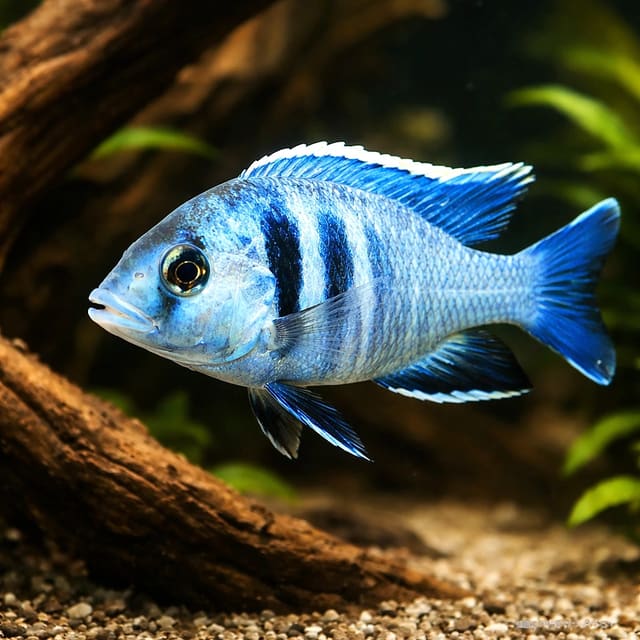
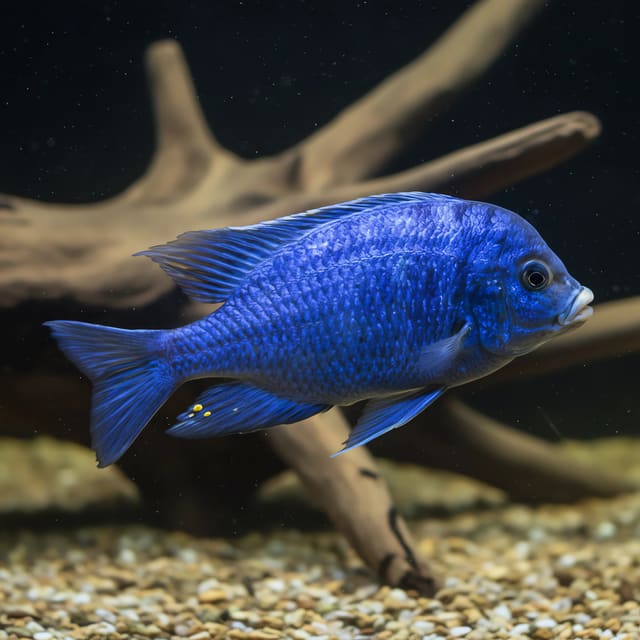
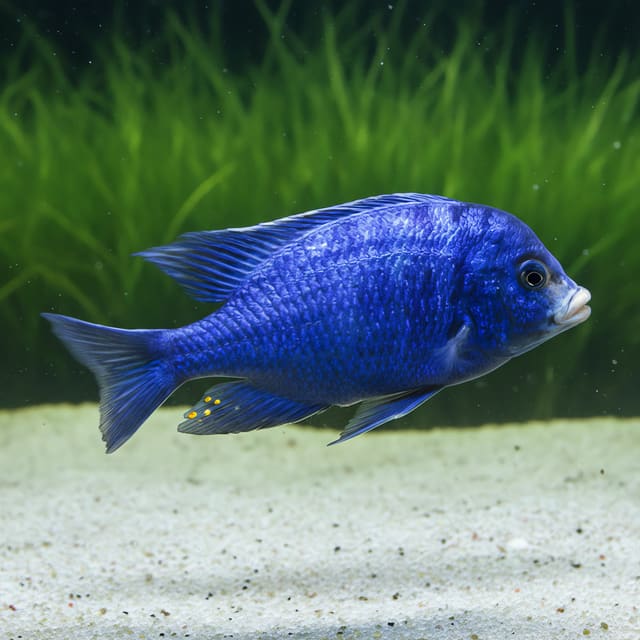
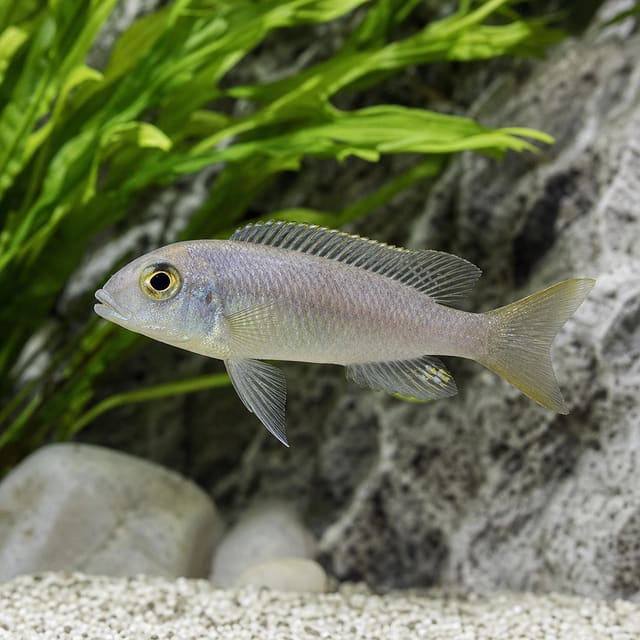
The Azureus Cichlid, Copadichromis azureus, is a freshwater cichlid and Lake Malawi haplochromine. It belongs to the open-water utaka group rather than the rock-dwelling mbuna group, and it is not an Aulonocara peacock. That distinction shapes the aquarium: prioritise a long swimming area, sand and carefully positioned rockwork instead of filling the whole tank with dense rock piles.
FishBase records the species as endemic to Lake Malawi and gives a maximum length of 14.6 cm total length for male or unsexed fish. In nature it inhabits the interface between sand and rock. Females may gather in small groups or remain solitary while feeding on plankton and benthic invertebrates near the bottom. Territorial males defend bowers beside spawning caves, which explains why open sand, retreat space and room between rival males matter in an aquarium.
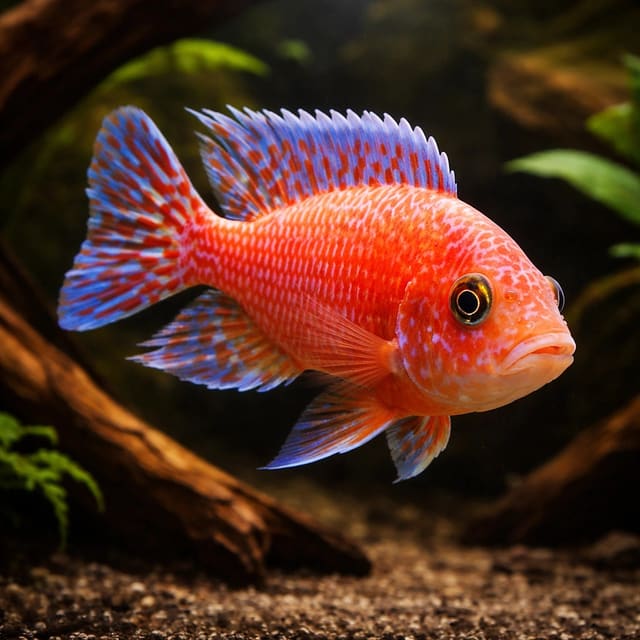
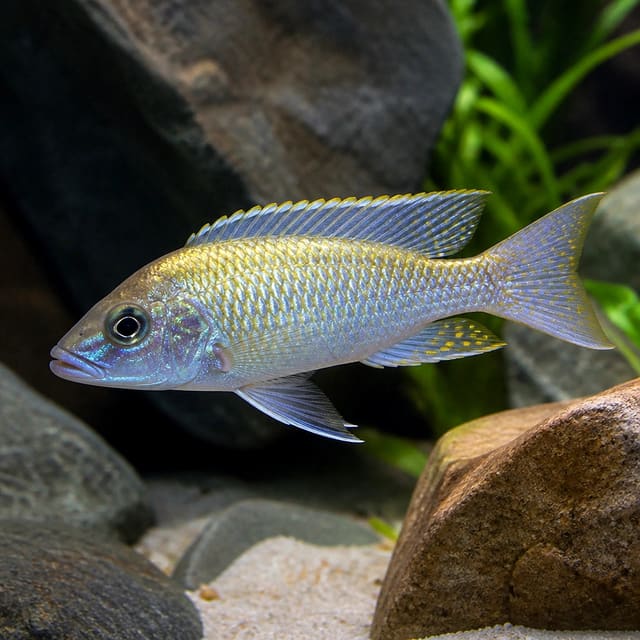
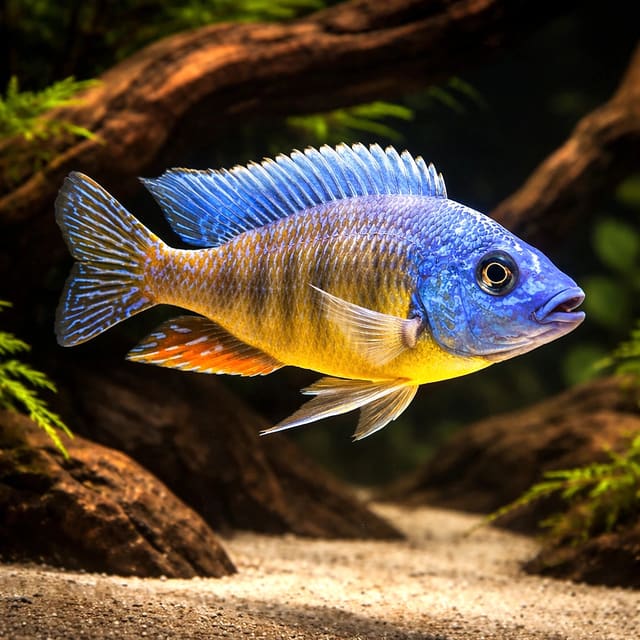
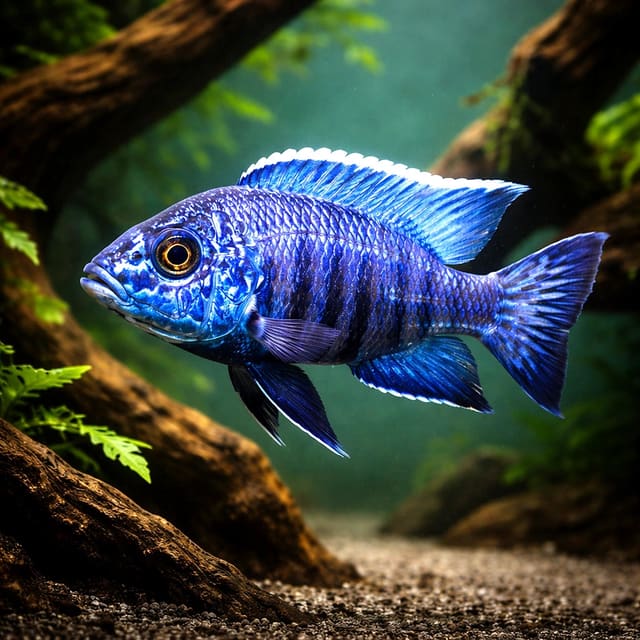
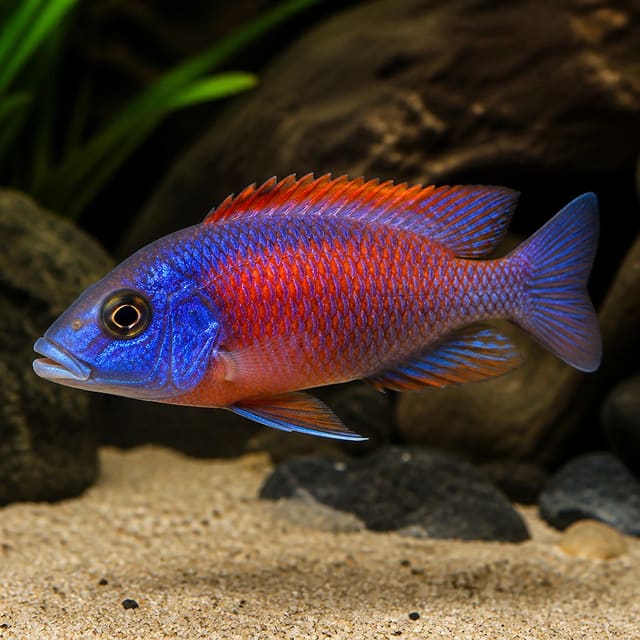
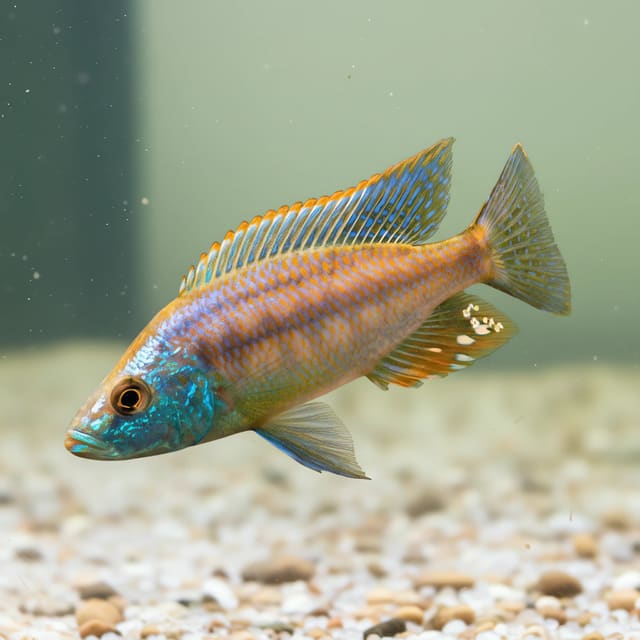
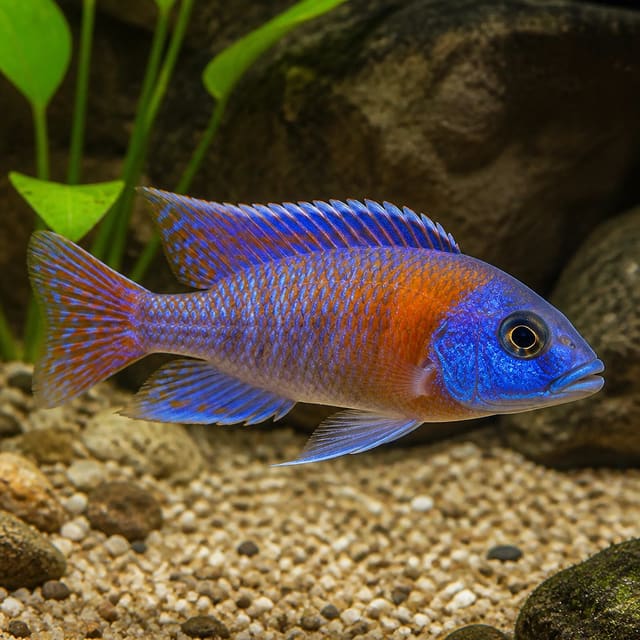
Some gallery images have been digitally enhanced to improve image quality. They show the listed type of animal rather than guaranteeing the exact markings of the individual supplied, so natural colour and pattern can vary.
One purchase supplies one animal of the selected option. Use the live size selector to choose between the labels 2 - 3 cm, 4 - 5 cm, 6 - 7 cm, XL and 7-9 cm. The size you select is the size supplied, not the adult size. Treat each centimetre label as a dispatch measurement and plan the permanent aquarium around the adult fish before choosing a smaller grade.
A smaller fish does not turn a compact aquarium into a suitable long-term home. The filtration, footprint, sand area and compatibility plan must already account for an active adult. When adding a smaller individual to an established Malawi aquarium, compare its dispatch size with the size, speed and temperament of every resident. A large difference can leave the newcomer unable to compete or retreat safely even when the species names appear compatible.
Sex is guaranteed only when the selected option explicitly states male or female. This Azureus Cichlid listing has no sex-guaranteed option.
Seriously Fish advises a base of at least 150 × 45 cm and an aquarium of about 304 litres for this active species. Its 160 mm standard-length planning reference uses a different measurement from FishBase’s 14.6 cm total-length record, so do not treat the two figures as interchangeable promises. The practical decision is the same: provide the full adult footprint from the start.
For aquarium water, Seriously Fish gives 26–28°C, pH 7.5–8.5 and 10–25 dGH. OATA’s broad Malawi-cichlid guidance gives 23–27°C, pH 8.0–8.6 and 12–18 dGH. Use the overlap as a conservative routine target: 26–27°C, pH 8.0–8.5 and 12–18 dGH.
| Decision | Plan |
|---|---|
| Aquarium footprint | At least 150 × 45 cm |
| Planning volume | About 304 litres |
| Routine temperature | 26–27°C |
| Routine pH | 8.0–8.5 |
| Routine hardness | 12–18 dGH |
| Layout | Open swimming space, sand and marginal rocks |
This fish suits a keeper prepared to measure water, maintain strong biological filtration and make compatibility decisions before purchase. It is a poor choice for a general mixed community assembled around colour alone.
| Suits | Not suited to |
|---|---|
| Stable aquarium water maintained at 26–27°C and pH 8.0–8.5 | Water outside 26–27°C and pH 8.0–8.5 |
| Most Aulonocara species after individual temperament, size and water screening | Mbuna |
Start with the footprint rather than the decorative theme. A tank at least 150 cm long and 45 cm front to back gives this active hap room to cruise and allows territorial areas to be separated. Keep the central route open from end to end. Tall rock walls across the middle may look dramatic, but they divide the swimming lane and force fish through narrow conflict points.
| Zone | Purpose |
|---|---|
| Open centre | Provides the long swimming route required by an open-water species. |
| Sandy floor | Allows natural digging and male nest construction. |
| Rock margins | Create retreats, visual barriers and variation without crowding the centre. |
Build rock piles securely so digging cannot undermine them. Place them towards the ends or rear margins, leaving several routes around rather than one narrow entrance. Visual breaks help a pursued fish leave the aggressor’s line of sight. They are particularly useful when peaceful rock-associated Malawi fish are part of a carefully screened community.
Sand is essential for the species’ nest-building behaviour. Keep enough exposed sand for a male to select an area without occupying the only path between two rock piles. FishBase describes wild bowers with a bowl around 19–33 cm in diameter, so a token patch of sand surrounded by ornaments does not reproduce the spatial choice behind that behaviour.
Plants are optional rather than the foundation of the layout. The species is not expected to harm them, and Seriously Fish names hard-water-tolerant Vallisneria, Anubias and Sagittaria as possible choices. Use plants in small groups around the margins so they do not replace swimming room. OATA notes that Malawi cichlids will often dig and rearrange the substrate, which will uproot any plants present, so attach robust plants securely or accept that rooted specimens will be rearranged.
Before adding livestock, view the tank from both ends. If rocks, equipment or plants block most of the length, simplify the layout. The finished aquarium should let a fish swim freely while still reaching cover within a short movement.
Set the aquarium to 26–27°C, pH 8.0–8.5 and 12–18 dGH, then judge suitability from repeated measurements rather than one reading. These values combine the species aquarium range with the narrower overlap in OATA’s Malawi guidance. Stability inside the range matters more than chasing a particular decimal with abrupt adjustments.
Use a dependable thermometer and appropriate tests for pH, general hardness, ammonia, nitrite and nitrate. Our water chemistry guide explains what the measurements mean, while the water matcher helps compare your measured aquarium values with the target range.
| Reading | Action |
|---|---|
| Temperature below 26°C | Check heater operation and room conditions before adding the fish. |
| Temperature above 27°C | Identify the heat source and restore the routine range gradually. |
| pH below 8.0 | Review source water, substrate and carbonate stability before stocking. |
| pH above 8.5 | Do not add the fish until the cause has been identified and the value is stable. |
| Ammonia or nitrite detected | Pause additions, test again and correct the biological-filtration problem. |
| Hardness outside 12–18 dGH | Compare tap and aquarium readings before making any measured adjustment. |
OATA’s targets for ammonia and nitrite are zero mg per litre. It advises keeping nitrate no more than 20 mg per litre above the normal tap-water level. Test the tap supply as well as the aquarium so the nitrate result has a useful baseline.
Do not use visible clarity as a substitute for testing. Clear water may still contain ammonia or nitrite, and sudden pH movement may occur without cloudiness. Record results at the same point in the weekly maintenance cycle so changes are easier to recognise. If a value moves unexpectedly, check the test procedure, repeat the measurement and find the cause before making several changes at once.
A mature biological filter is essential before the fish enters the aquarium. The RSPCA explains that fish release toxic ammonia, which filter bacteria convert first to toxic nitrite and then to the safer nitrate. A filter must therefore be established, maintained and matched to the waste produced by the whole community.
For an aquarium of roughly 304 litres, Seriously Fish uses a turnover target of four to five times the volume per hour and gives an example of two filters rated at 610–760 litres per hour each. This provides a planning reference of about 1,220–1,520 litres per hour across both filters before accounting for the reduction caused by media, pipework and normal use.
OATA recommends an oversized filter and strong aeration for Malawi communities because their stocking and activity create substantial oxygen and waste-management demands. Position outlets to move surface water and distribute oxygen without removing the calmer areas beside cover. Check intakes and outlets for blockage as part of weekly maintenance.
If filter media needs cleaning, rinse it lightly in aquarium water removed during a water change. Do not run it under the tap because chlorine or chloramine may damage the bacteria responsible for processing waste. Preserve established media and avoid replacing all of it at once.
A useful first-month checkpoint is consistency: the filter should keep ammonia and nitrite at zero as feeding and activity settle. Any detectable reading means the system needs attention before another fish is added. Reduce the cause of waste rather than relying on clearer-looking water as reassurance.
Copadichromis are specialised zooplankton feeders. Seriously Fish recommends a mixture of small live, frozen and dried foods, with Artemia nauplii highlighted as particularly suitable. Include vegetable matter through blanched spinach or a good-quality Spirulina flake. This varied menu reflects a fish adapted to taking small drifting prey rather than tearing large meals from the bottom.
| Food role | Supported choices |
|---|---|
| Small animal food | Small live or frozen foods, including Artemia |
| Dried staple | A good-quality small dried food |
| Vegetable component | Spirulina flake or blanched spinach |
| Extra variety | Freeze-dried Artemia or an algae-based food |
Feed twice daily, offering only what the fish can finish within a few minutes. Begin with a small portion distributed across the open swimming area. Watch whether each fish reaches food, then stop when active feeding falls away. Remove avoidable leftovers because uneaten food breaks down and adds waste to the biological filter.
Match particle size to the fish selected from the size selector. A smaller dispatch grade needs pieces it can take cleanly, while larger pieces may be ignored or monopolised by bigger residents. The goal is not to increase the total ration automatically for a larger aquarium; it is to give each fish access to suitable food without leaving excess behind.
Observe the group during every meal. A fish that repeatedly hangs back may be facing competition, unsuitable particle size or a compatibility problem. Spread food across more than one point so a dominant resident cannot control the entire feeding area. Do not respond by pouring in a large surplus, because that treats unequal access by increasing pollution.
If appetite drops, test water and compare breathing, swimming, colour and social behaviour with the fish’s normal pattern. Resume routine feeding only when the cause has been addressed. Consistent small meals and clean water are more useful than occasional heavy feeds.
Change 25% of the aquarium water at least once every week. Treat replacement tap water with conditioner to remove chlorine or chloramine before it enters the aquarium, and keep the new water compatible with the established temperature and chemistry. Use a siphon to remove settled solid waste while leaving enough undisturbed sand for normal digging behaviour.
Consistent timing makes the results easier to interpret. A nitrate reading taken immediately after a water change cannot be compared fairly with one taken just before the next change. Choose a testing point in the cycle and keep it the same. If nitrate rises faster from one week to the next, review feeding, waste removal, filter flow and the total stocking load.
Watch for hanging at the surface, sitting on the bottom, erratic swimming, unusual hiding, changed aggression, faster or slower gill movement, fading or darkening colour, damaged fins, lost scales, white spots, fluffy growths, body-condition changes or reduced feeding. These are signals to test the water and inspect the aquarium rather than reasons to add a treatment without identifying the cause.
If you notice a health change, test temperature, ammonia, nitrite, nitrate and pH immediately, separate observation from guesswork and contact us for guidance. Keep notes on when the change started, which fish are affected and what maintenance or stocking change preceded it.
Monthly, inspect pipes, impellers, seals and hidden areas behind rocks for reduced flow or trapped debris. Preserve the biological media while restoring the intended circulation. Stable maintenance prevents the gradual loss of filter performance that can otherwise appear as a sudden water-quality problem.
Prepare the aquarium before the delivery window. Confirm temperature at 26–27°C, ammonia and nitrite at zero mg per litre, and stable pH and hardness within the planned range. Someone must be present to receive live fish, so use the date shown through checkout and tracking to organise the first day.
Follow our delivery and Live Arrival Guarantee policy when the parcel arrives. Start filming before the sealed parcel is opened, then open it in one continuous take and show the fish inside the sealed bag before anything is disturbed. Float the bag for 20–30 minutes before releasing the fish, and never pour the bag water into the aquarium. Keep the process calm and avoid adding several unrelated changes to the tank at the same time.
During the first week, observe the new fish at the same times each day. Note whether it uses open water, reaches cover, competes at meals and maintains normal breathing. A smaller dispatch grade may need food spread over several points so larger residents cannot monopolise it. Do not increase the overall portion beyond what the community finishes within a few minutes.
Additions to a Malawi aquarium should be gradual because every new fish increases waste and feeding. Test ammonia and nitrite after the addition rather than assuming a previously mature filter will absorb any increase immediately. Both must remain at zero mg per litre. If either appears, pause further additions and correct the filtration or waste problem.
At the end of the first month, review four outcomes: stable water readings, reliable feeding access, no persistent targeting by a resident, and continued use of both swimming and retreat areas. If one fish controls the whole length, rearranging décor may disrupt established territories. Make one purposeful change, then observe its effect rather than repeatedly moving every feature.
Compatibility depends on behaviour, colour, adult size, water requirements and the room left for territories. Seriously Fish describes this as a generally peaceful Copadichromis, but says it does poorly with rowdy or belligerent companions. Avoid mbuna, similarly coloured fish and other Copadichromis. Similar colour may trigger aggression, while mixing members of the same genus carries a hybridisation risk.
| Question | Decision |
|---|---|
| Is it a mbuna? | Avoid the combination. |
| Is it another Copadichromis? | Avoid because the fish may hybridise. |
| Is it similarly blue? | Avoid because colour may provoke aggression. |
| Is it rowdy or belligerent? | Reject it for this comparatively peaceful hap. |
| Does it need different water? | Do not combine the fish. |
| Will it overwhelm the selected dispatch size? | Delay or revise the introduction plan. |
Most Aulonocara species and peaceful haps such as Cyrtocara moorii are identified as better prospects, but they still require individual screening. A species name is not a universal guarantee: consider the particular aquarium dimensions, existing hierarchy, adult sizes, colours and the behaviour of the actual residents.
OATA limits Malawi communities to other Malawi cichlids or some Lake Malawi Synodontis, recommends adding more peaceful species before aggressive ones and advises introducing Malawi cichlids in groups where the stocking plan permits. That broad rule does not override the species-specific exclusions above.
Use the African cichlid collection to compare identities, then screen each candidate rather than choosing by appearance. Contact us with aquarium dimensions, water readings, resident species, their approximate sizes and the intended Azureus dispatch grade for a stocking assessment.
This is a naturally shoaling species, but rival males need enough space to establish separate territories. Seriously Fish recommends one male with a group of three or more females in most aquariums. Several males are reserved for larger tanks and need a correspondingly larger female group as well as enough floor area for separate territories.
Use that ratio only when the sexes have been established independently and reliably. When working with unsexed fish, do not label individuals from dispatch size, temporary colour or a gallery illustration. Plan enough space and observation capacity to respond as social behaviour develops.
| What you see | What to do |
|---|---|
| Brief display followed by separation | Continue observing access to food, cover and open water. |
| One fish controls the whole tank | Reassess space, visual barriers and the stocking plan. |
| Repeated pursuit of one individual | Act before the targeted fish loses feeding access or condition. |
| Rivals hold separate areas | Confirm each still has a clear route to food and retreat space. |
| A newcomer remains hidden | Check aggression, breathing and water rather than assuming shyness. |
Décor can help manage territory but cannot compensate for an undersized base. If aggression follows an addition, rearranging rock margins may break existing territorial boundaries. Preserve the central swimming route and ensure each new retreat has more than one approach so it cannot become a trap.
Avoid using OATA’s general recommendation for groups of at least 15 Malawi cichlids as an automatic target for this species. The number suitable for one aquarium depends on its 150 × 45 cm minimum base, total volume, filtration and the sexes and species involved. The more specific Azureus plan is one male with at least three females, with additional males considered only in larger aquariums.
Review the community again as fish grow. A combination that appears calm at a small dispatch size may change as territories, colour and adult body size develop. The permanent plan must work for mature fish, not only for the first weeks after introduction.
It is an open-water Lake Malawi haplochromine cichlid that uses sand-and-rock margins and feeds naturally on plankton and bottom-dwelling invertebrates.
One purchase supplies one animal of the selected option. Use the live selector to choose the dispatch size.
The selector uses 2 - 3 cm, 4 - 5 cm, 6 - 7 cm, XL and 7-9 cm labels; these are dispatch sizes rather than adult sizes.
Plan at least a 150 × 45 cm base and about 304 litres, with open swimming space, sand and stable rock piles around the margins.
For reliably sexed fish, plan one male with three or more females; several males require a larger aquarium, more females and separate territorial space.
Use a stable routine range of 26–27°C, pH 8.0–8.5 and 12–18 dGH, with ammonia and nitrite at zero mg per litre.
Offer small live, frozen and dried foods, including Artemia, plus Spirulina flake or blanched spinach, twice daily in portions finished within a few minutes.
Start filming before opening the sealed parcel, continue in one take until the fish is shown inside the sealed bag, then float the bag for 20–30 minutes before releasing the fish.
Screen peaceful Malawi candidates individually; avoid mbuna, other Copadichromis, similarly coloured fish and rowdy or belligerent tank mates.
No reviews for this item yet. Bought one? Honest reviews only, good or bad.
What customers say about ordering from us
I have a small group of long finned mountain minnows. So was delighted to be able to order ten of this variety to increase the genetics in my tank . The ones I recieved are healthy but it’s to early to give a verdict on wether they are of a long finned type since they are small currently.
Gordon Walker · 23 Sept 2026
100% success travel and "installation". Pleased with quality of purchase. The Siamese fighter a bit "shy" so have not yet seen him at his best yet but looking good. Happy customer. GG
George E Garratt · 21 Sept 2026
Reviews of our shop, collected by Judge.me, an independent third-party review collector. Newest first.