Moderate
Pseudotropheus Greberi (Pseudotropheus hajomaylandi)
24–26°C · pH 7.5–8.5 · 200L
£13.99
A striking Lake Malawi mbuna cichlid with bold color, lively behavior, and classic rock-dwelling personality. Moderate care, aggressive. 23-27C, pH 7.5-8.5.
Adult size is the maximum length this species reaches at full maturity (scientific sources). The livestock you receive will be younger and smaller. Product-photo provenance and any image-specific limitations are stated on the listing.
Pseudotropheus barlowi
Shoaling fish: kept in a group they feel safer, stay calmer and show their best colour.
Confirm your email, then we’ll send an availability message for this exact item if it returns within 180 days.
This request is only for this product—no newsletter or other promotions. A mail-provider retry may very rarely duplicate the same availability message. Unconfirmed addresses are removed after 48 hours. See our privacy policy.
A striking Lake Malawi mbuna cichlid with bold color, lively behavior, and classic rock-dwelling personality. Moderate care, aggressive. 23-27C, pH 7.5-8.5.
Adult size is the maximum length this species reaches at full maturity (scientific sources). The livestock you receive will be younger and smaller. Product-photo provenance and any image-specific limitations are stated on the listing.
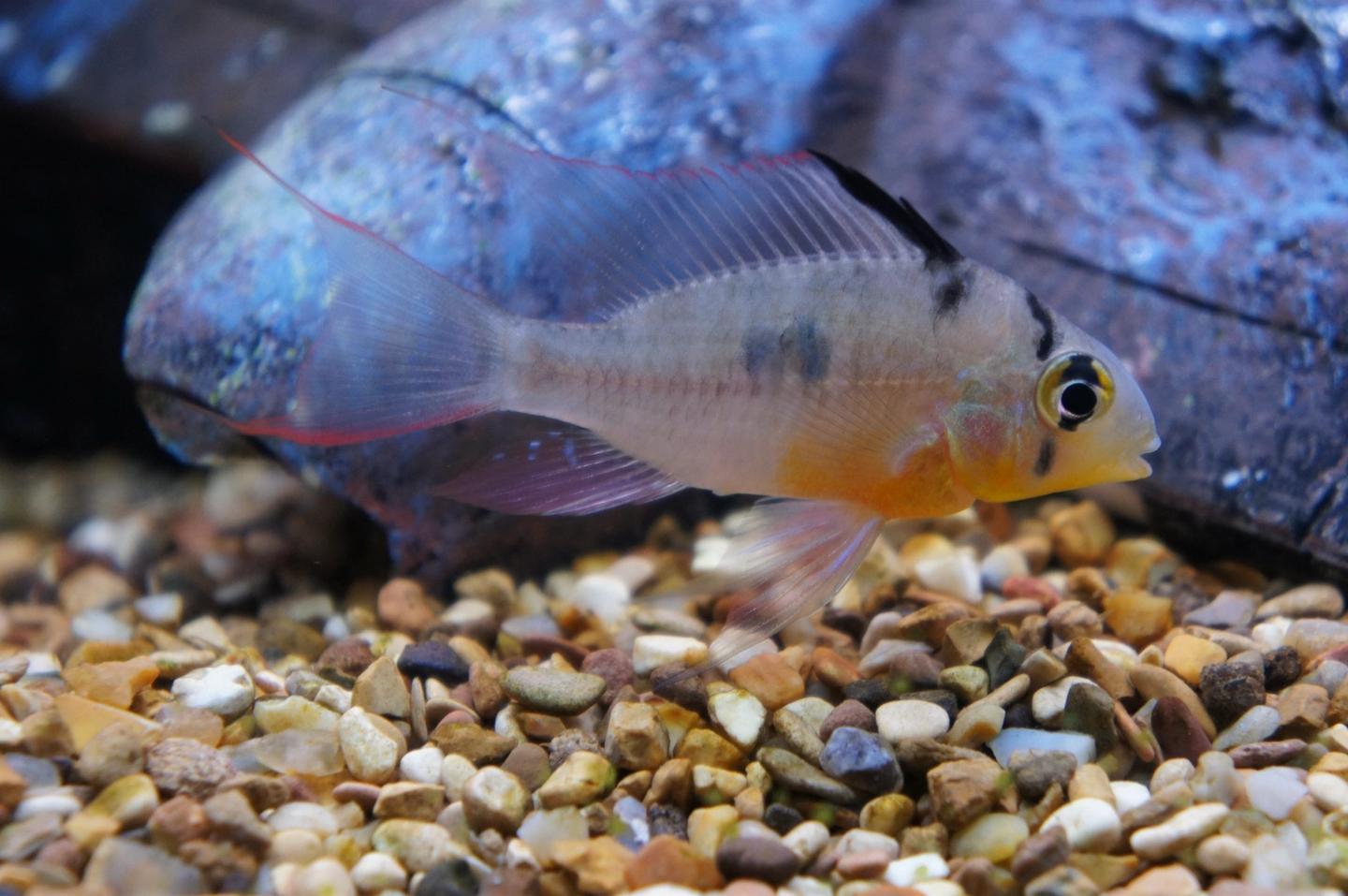
Cichlids are a family of roughly 1,800 accepted species, not one care type. Before buying, identify the exact species and source, then compare adult measurement, usable tank dimensions, social system, territory, tested water, diet and an exit plan. No family-wide minimum tank, water range or tank-mate list is safe.
Maintain these water conditions for optimal health and vibrant colors
This offer retains its Pseudotropheus barlowi trade name. FishBase lists Maylandia barlowi to 8.1 cm standard length, excluding the tail fin. Plan adult territories and the intended group; a small current grade is not an adult maximum.
This offer retains its Pseudotropheus barlowi trade name. FishBase lists Maylandia barlowi to 8.1 cm standard length, excluding the tail fin. Plan adult territories and the intended group; a small current grade is not an adult maximum.
Pseudotropheus barlowi, commonly known as Barlow's mbuna, represents one of Lake Malawi's most striking rock-dwelling cichlids, offering aquarists bold color, lively personality, and classic African cichlid character. This robust mbuna exemplifies the remarkable diversity found in East Africa's Great Lakes, where intense evolutionary pressures have produced hundreds of colorful, specialized cichlid species. Now available to buy tropical fish online UK with expert guidance, this aggressive Lake Malawi cichlid brings vibrant energy and dynamic interaction to properly stocked and structured aquariums. Whether establishing a dedicated Malawi mbuna community or expanding your African cichlid collection, P. barlowi delivers the intense color and active behavior that makes African cichlids so captivating. This species represents authentic African cichlid keeping at its most engaging, though demands proper planning for successful long-term maintenance.
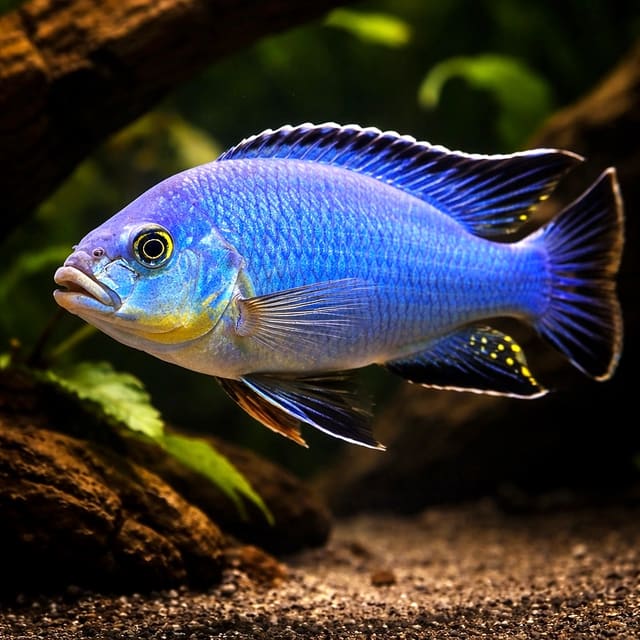
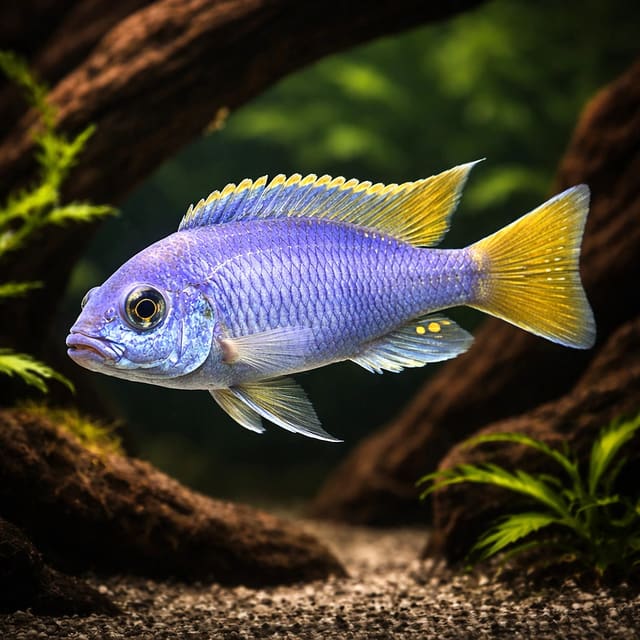
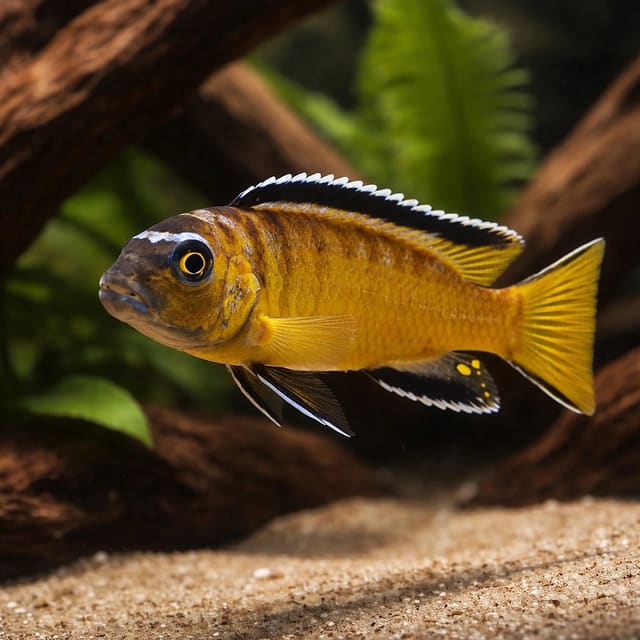
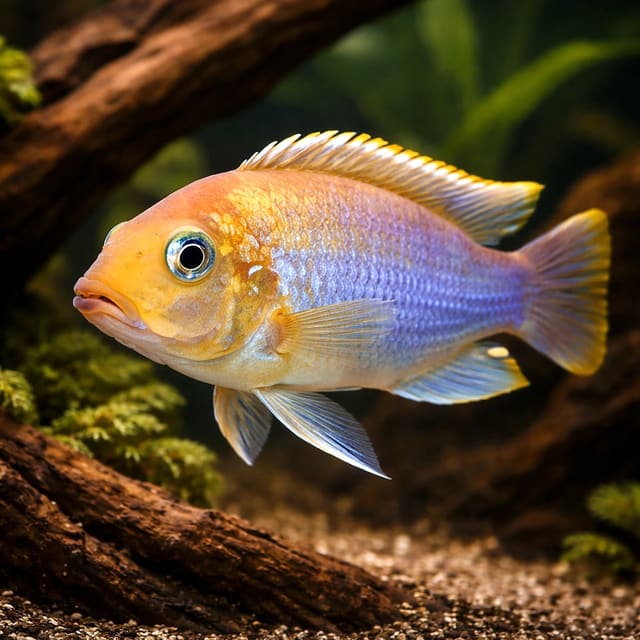
Pseudotropheus barlowi displays the characteristically deep-bodied, robust build typical of Lake Malawi mbuna. Coloration varies with sex, mood, and breeding condition but typically features vibrant blues, yellows, or mixed patterns depending on locality and individual genetics. Males develop more intense coloration than females with breeding dress bringing out maximum color intensity. The species length record is 8.1 cm standard length, excluding the tail fin. Choose housing for mature territorial fish and the complete group rather than a small supplied grade. The species exhibits clear sexual dimorphism with males displaying brighter colors and slightly larger size. Body shape remains laterally compressed with a blunt head profile and strong jaws adapted for grazing algae from rocky surfaces. Finnage is well-developed with males showing extended fins and egg-spots on the anal fin used during breeding. The eyes are positioned high on the head providing excellent vision for monitoring territorial boundaries. Healthy specimens display vibrant coloration, extended fins, and alert, active behavior throughout daylight hours.
Endemic to Lake Malawi in East Africa, Pseudotropheus barlowi inhabits rocky littoral zones where complex rock formations create countless crevices, caves, and territorial boundaries. The natural environment features clear, highly oxygenated water with hard, alkaline chemistry and remarkable stability. Rocky substrates extend from shoreline to depths of 10-20 meters, creating vertical habitat with multiple ecological zones. Wild populations form dense aggregations with males defending small territories centered on preferred feeding rocks and spawning caves. The lake's exceptional clarity allows deep light penetration supporting abundant algae growth on rock surfaces—the primary food source for aufwuchs-grazing mbuna. Water conditions remain stable year-round with minimal temperature fluctuation. This specialized rocky habitat—combining hard alkaline water, structural complexity, and intense intraspecific competition—shapes the aggressive territorial behavior and specialized feeding biology that characterize mbuna. Accurate habitat replication proves essential for successful long-term aquarium maintenance.
A minimum of 250 litres is required despite the relatively small adult size, primarily due to aggressive territorial behavior and the need to disperse aggression through proper stocking. The aquarium must be structured as a Malawi rocky biotope with extensive rockwork creating multiple caves, territories, and visual barriers. Arrange rocks from substrate to near water surface, creating complex three-dimensional structure with numerous hiding places and separate territorial zones. Use coral sand, crushed coral, or Malawi-specific substrates to naturally buffer pH into the alkaline range. Lighting should be moderate to bright as mbuna naturally inhabit well-lit shallow zones. Filtration must be powerful with high oxygenation—aim for 8-10 times tank volume turnover hourly to handle the heavy biological load of crowded mbuna communities. Perform consistent weekly water changes to maintain quality and dilute accumulated hormones and metabolic waste. Avoid soft-water decorations like driftwood that lower pH. The classic mbuna setup employs "overstocking" strategies where high fish numbers distribute aggression, though this demands exceptional filtration and maintenance discipline.
Pseudotropheus barlowi is primarily an aufwuchs grazer in nature, feeding on algae and associated microorganisms scraped from rock surfaces. In aquarium settings, provide a diet based primarily on vegetable matter and spirulina-enriched foods. High-quality cichlid pellets or flakes formulated for herbivorous/omnivorous African cichlids should form the dietary foundation. Supplement with algae wafers, spirulina flakes, and blanched vegetables such as spinach, courgette, or seaweed sheets. Limited animal protein can be included—small amounts of brine shrimp, mysis, or quality omnivore foods—but avoid protein-heavy diets that can cause digestive issues and poor water quality when portions are excessive. Feed 2-3 times daily in small portions that are consumed quickly, preventing waste accumulation. Encourage natural grazing behavior by allowing algae growth on some rock surfaces. The species' strong jaws and specialized teeth are adapted for scraping firm surfaces, and this natural feeding behavior should be accommodated. Avoid fatty foods, mammalian proteins, and excessive feeding which contribute to health problems common in improperly maintained mbuna.
Pseudotropheus barlowi exhibits aggressive temperament typical of Lake Malawi mbuna, with pronounced territorial behavior particularly intense in males. These fish establish and vigorously defend territories centered on preferred caves and feeding rocks, with boundaries extending several body lengths in all directions. Aggression manifests through displays, chase sequences, mouth-wrestling, and physical confrontation at territory boundaries. In properly structured aquariums with adequate space and rockwork, this aggression becomes ritualized and rarely causes serious injury. However, in undersized tanks or poorly planned communities, aggression can escalate to dangerous levels with constant harassment and physical damage. Activity levels remain high throughout daylight hours with constant patrol, feeding, and territorial enforcement. Males display intense breeding coloration when courting females, with courtship involving elaborate displays and pursuit. The species shows moderate intelligence with territory recognition, social hierarchy awareness, and learned feeding responses. Dominance hierarchies form quickly with alpha males controlling prime territories while subordinates occupy peripheral areas.
Suitable companions are limited to other robust Lake Malawi mbuna of similar size and aggression levels. Consider species like other Pseudotropheus, Melanochromis, or Labidochromis that can defend themselves and tolerate crowded conditions. Larger, faster Malawi species from haplochromis groups can work in very large aquariums if they occupy different zones. Synodontis catfish from African lakes make appropriate bottom-dwellers if sized appropriately. Avoid all small peaceful fish which will face relentless harassment or predation. Slow-moving or long-finned species suffer from constant aggression and fin damage. Shrimp and small invertebrates will be consumed immediately. Soft-water community species cannot tolerate the required alkaline, hard water chemistry. Very aggressive species like certain Melanochromis can create instability even in robust mbuna communities. The key to successful mbuna communities lies in deliberate overstocking with similarly sized, similarly aggressive species, extensive rockwork creating numerous territories, and exceptional filtration supporting the high bioload. Many aquarists focus on single-species harems or carefully selected robust mbuna combinations rather than diverse communities.
Pseudotropheus barlowi is a maternal mouthbrooder with breeding behavior typical of Lake Malawi mbuna. Males establish territories and display intense breeding coloration to attract females. Courtship involves vigorous displays with the male leading the female to the spawning site, typically a flat rock or cave floor. The female deposits eggs and immediately collects them into her mouth, then follows the male to pick up sperm by attempting to "collect" the egg-spots on his anal fin, facilitating fertilization. Clutch size typically ranges from 15-40 eggs depending on female size and condition. The female incubates eggs for approximately 3 weeks without feeding, during which she should not be harassed by aggressive tank mates. Fry emerge as well-developed juveniles capable of accepting finely crushed flake food and newly hatched brine shrimp. In crowded mbuna communities, fry survival is low unless removed to dedicated grow-out tanks. Provide multiple territories and adequate females per male to prevent constant harassment of non-receptive females. Breeding can occur every 4-6 weeks under optimal conditions, though excessive breeding stresses females if not managed.
Lake Malawi mbuna like Pseudotropheus barlowi prove generally hardy when maintained in appropriate conditions but face several specific health risks. Bloat syndrome represents the most serious threat—a condition involving fluid accumulation and intestinal inflammation, often fatal if not caught early. Prevention through proper vegetable-based diet and excellent water quality far exceeds treatment effectiveness. If illness occurs, identify the cause and seek qualified fish-health advice before choosing treatment. Aggressive behavior can cause physical injury including torn fins, damaged scales, and stress-related immune suppression in harassed individuals. Crowded conditions necessary for aggression management create ideal disease transmission conditions, making quarantine of new fish critical. Stable hard, alkaline water chemistry is essential—soft acidic conditions cause severe stress. High metabolic rates and active behavior mean these fish produce substantial waste, demanding powerful filtration and consistent maintenance. Despite aggressive nature, these fish can suffer chronic stress from inappropriate tank mates or inadequate territory availability. Regular observation identifies problems early—changes in feeding behavior, coloration fading, or labored breathing indicate issues requiring immediate attention. With proper setup and maintenance, these hardy fish provide years of enjoyment.
Tropical Fish Co specializes in African cichlids with comprehensive expertise in Lake Malawi mbuna communities. Our Pseudotropheus barlowi specimens are sourced from quality suppliers who maintain proper water conditions and understand mbuna requirements. Each fish undergoes health screening and quarantine before being offered for sale, ensuring robust individuals arrive ready to thrive. We provide expert guidance on mbuna community planning, including stocking levels, species selection, tank mate compatibility, and the critical "overstocking" strategy that manages mbuna aggression effectively. Our detailed setup advice covers rockwork arrangement, water chemistry management, and filtration requirements specific to demanding mbuna communities. As specialist aquarium retailers serving serious hobbyists, we understand the complexities of Lake Malawi cichlids and offer ongoing support as you develop your collection. Our packaging employs proven techniques for safe transport of aggressive cichlids, with appropriate container sizes and stress-reduction methods ensuring excellent arrival condition. When you buy tropical fish online UK from Tropical Fish Co, you receive not merely fish but access to decades of combined expertise in African cichlid keeping. Our commitment to customer success and focus on quality over volume makes us the natural choice for aquarists building authentic Lake Malawi mbuna communities throughout the UK.
No reviews for this item yet. Bought one? Honest reviews only, good or bad.
What customers say about ordering from us
Easy website plenty of info on fish your buying great to pick a time slot
TRACEY DURRANT · 7 Oct 2026
Got some lovely fish thank you
Kevin Mackie · 7 Oct 2026
Reviews of our shop, collected by Judge.me, an independent third-party review collector. Newest first.