−13%
Moderate
Crowntail Male Betta (Betta splendens)
26–28°C · pH 6–8 · 20L
£12.17£13.99
The Samurai Double Tail Plakat Male Betta (Betta splendens) is an Osphronemidae labyrinth fish whose wild species occurs in central Thailand and the lower Mekong and reaches 7 cm. It suits a careful beginner ready for intermediate care: keep one male alone at Tropical Fish Co’s 26–28°C target; FishBase, Seriously Fish and OATA overlap at pH 6.0–8.0 and 5–12 dGH. Sold individually as one male.
Adult size is the maximum length this species reaches at full maturity (scientific sources). The livestock you receive will be younger and smaller. Product-photo provenance and any image-specific limitations are stated on the listing.
Betta splendens
The Samurai Double Tail Plakat Male Betta (Betta splendens) is an Osphronemidae labyrinth fish whose wild species occurs in central Thailand and the lower Mekong and reaches 7 cm. It suits a careful beginner ready for intermediate care: keep one male alone at Tropical Fish Co’s 26–28°C target; FishBase, Seriously Fish and OATA overlap at pH 6.0–8.0 and 5–12 dGH. Sold individually as one male.
Adult size is the maximum length this species reaches at full maturity (scientific sources). The livestock you receive will be younger and smaller. Product-photo provenance and any image-specific limitations are stated on the listing.
For one typical domestic Betta splendens, start with at least 20 litres, a mature filter, thermostatic heater, separate thermometer, gentle flow, a secure lid with surface access, and plants or refuges. Keep one male per aquarium.
Maintain these water conditions for optimal health and vibrant colors
The Samurai Double Tail Plakat Male Betta (Betta splendens) is a freshwater labyrinth fish in the Osphronemidae family. The wild species occurs in central Thailand and the lower Mekong, while ornamental aquarium forms have a complex breeding history. FishBase records a maximum length of 6.5 cm. It suits a careful beginner who can prepare a heated, filtered and covered aquarium and follow an intermediate care routine.
This is a territorial male to plan around as the only Betta in its aquarium. Its labyrinth organ lets it breathe atmospheric air, but it still needs clean water, mature biological filtration and unobstructed access to the surface. NCBI recognises the scientific name Betta splendens.
Start with at least 20 litres for one male, although the 45 × 30 cm base and approximately 41-litre volume in the species profile provide a stronger space target. Our complete Betta care guide uses a stable 26–28°C as the practical temperature target. For chemistry, FishBase, Seriously Fish and OATA overlap at pH 6.0–8.0 and 5–12 dGH. OATA’s Betta sheet is broad group guidance rather than a species-specific optimum.
| Suits | Not suited to |
|---|---|
| A careful beginner with a cycled aquarium | An unfiltered bowl or tiny jar |
| A heated, covered and furnished setup | A strong-current aquarium |
| A plan centred on one male Betta | A plan to house two males together |
| A keeper prepared to test and maintain water | A community where separation is impossible |
Choose this fish when the aquarium can be organised around gentle flow, surface access, shelter and solitary Betta housing. Do not rely on its ability to breathe air as a substitute for filtration, heating or weekly maintenance.
One purchase supplies one live fish. Treat any length at dispatch as the fish’s present size rather than its adult potential, and plan the aquarium around the recorded 6.5 cm adult length from the outset.
Sex is guaranteed only when the exact product or selected option explicitly states male or female. This Samurai Double Tail Plakat Male Betta listing is sold as male.
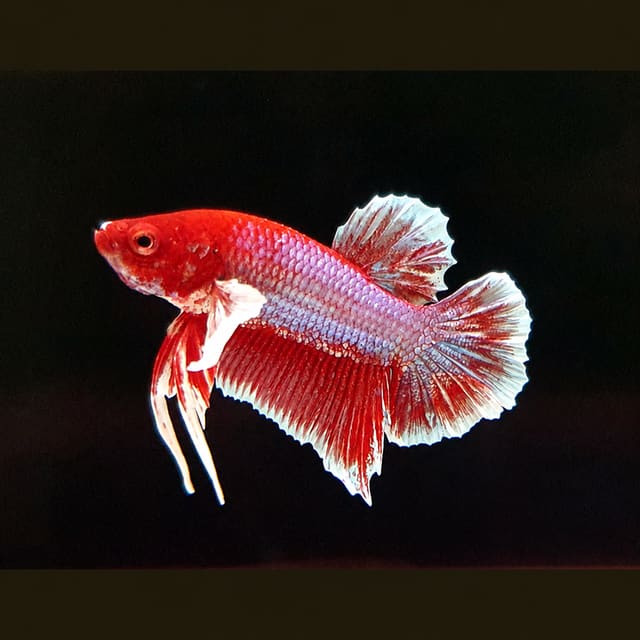
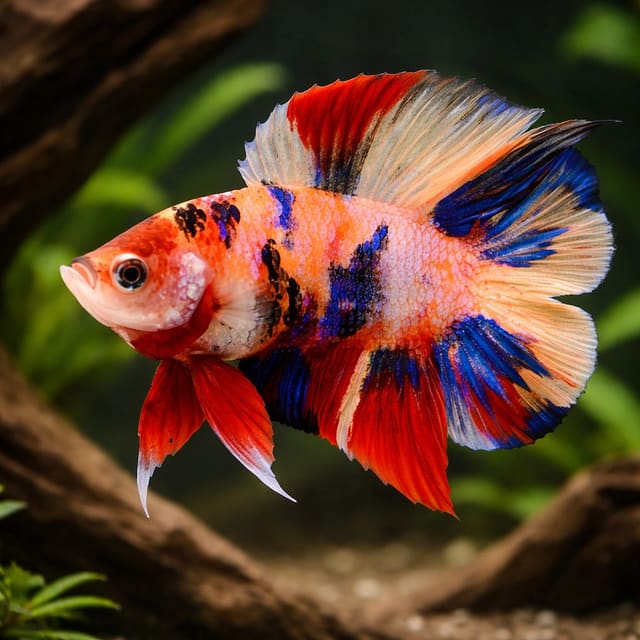
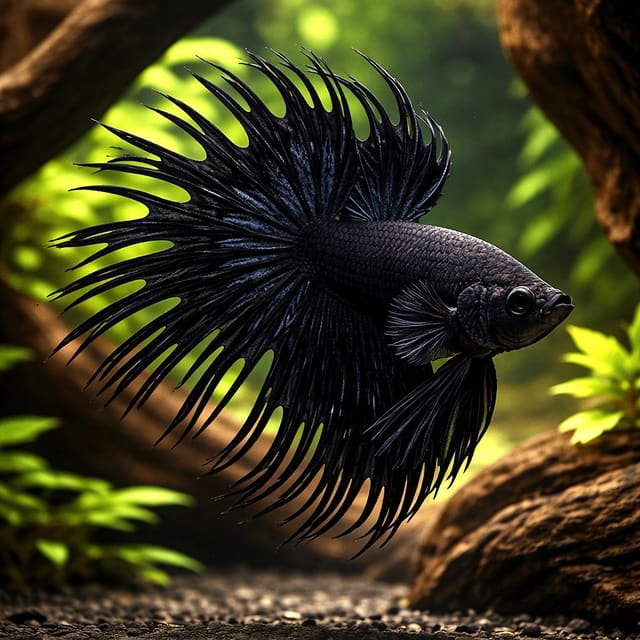
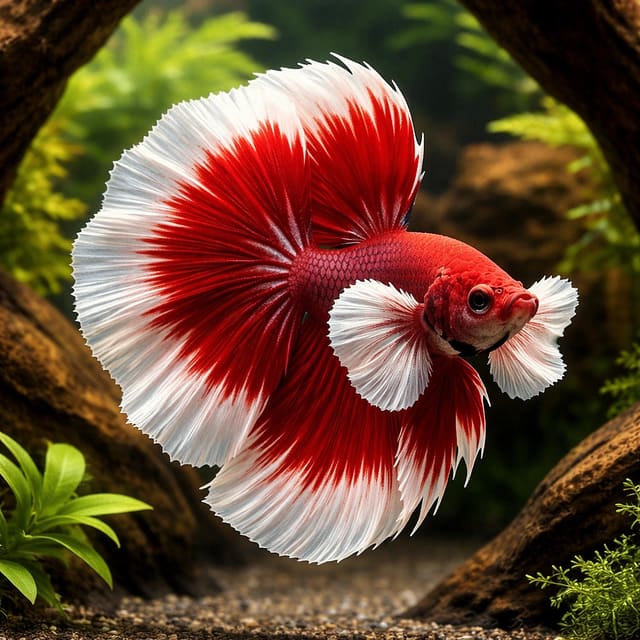
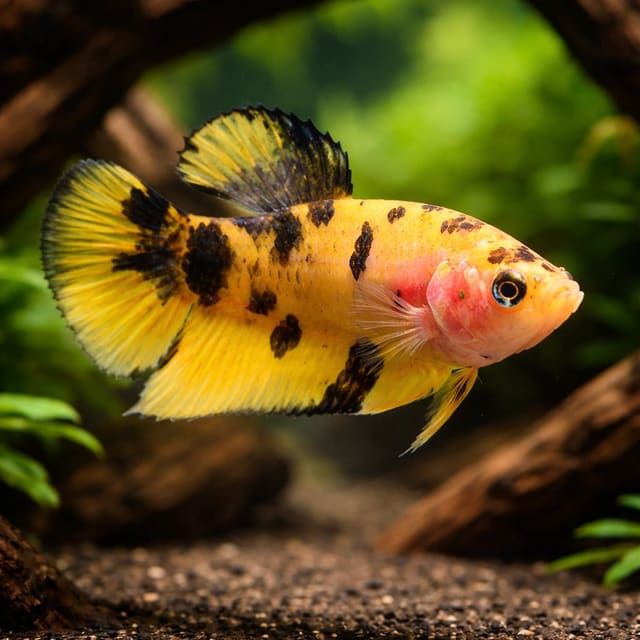
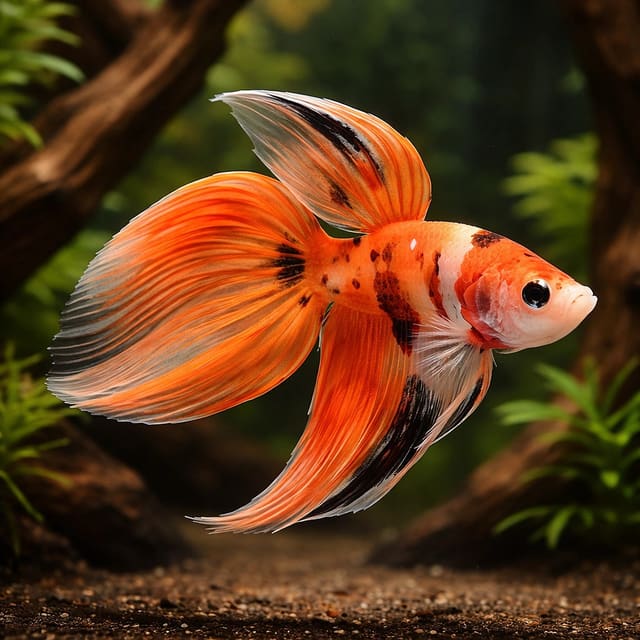
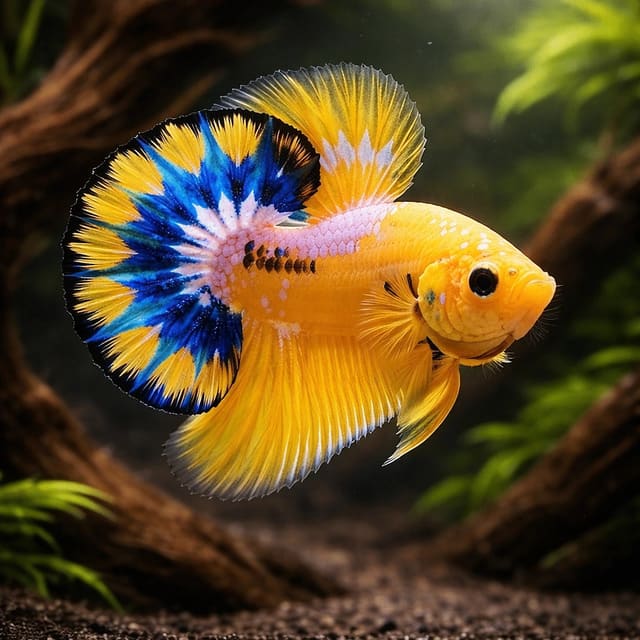
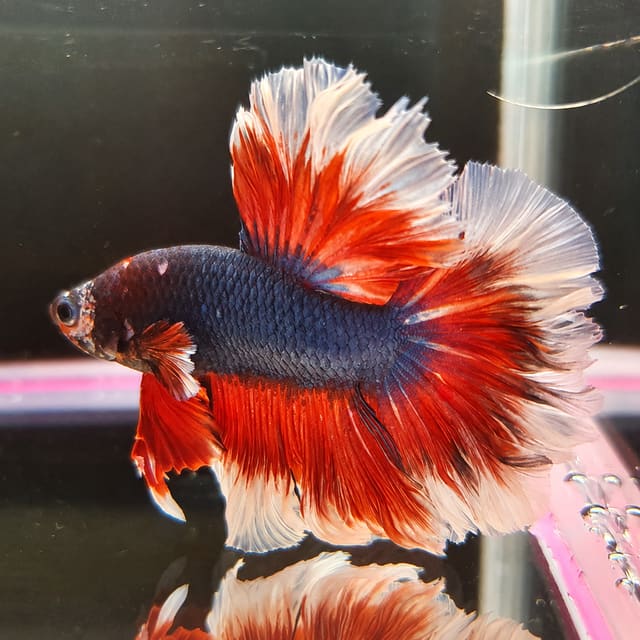
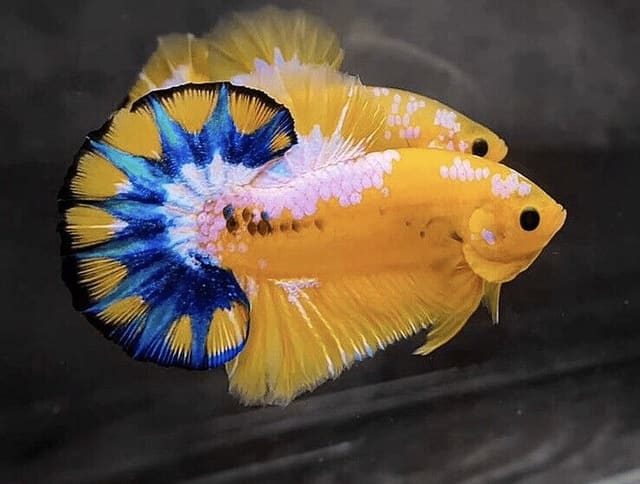
The double-tail, plakat and samurai words identify the ornamental presentation named in this offer. Plakat refers to the compact, short-finned form shown in the gallery, while the visible samurai-style fish have dark bodies with metallic white or blue scale patches. These appearance labels do not determine temperament, age, pedigree, fertility, health or geographic origin.
Research into domestic Betta diversity documents complex variation in colour, fins, body traits and behaviour. Use the named form to understand the intended appearance, then judge the live fish by its own swimming, breathing, feeding and condition after arrival.
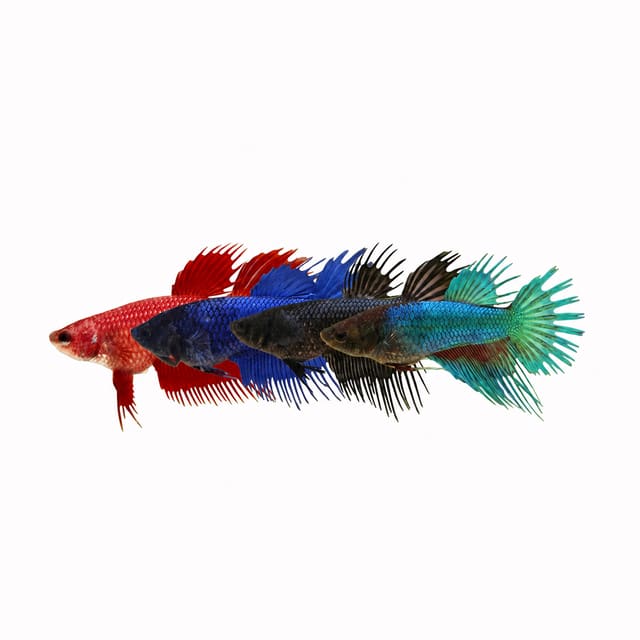
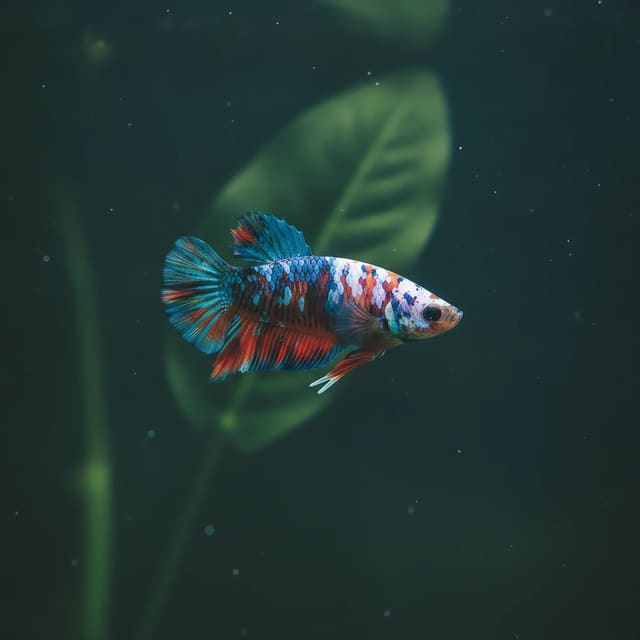
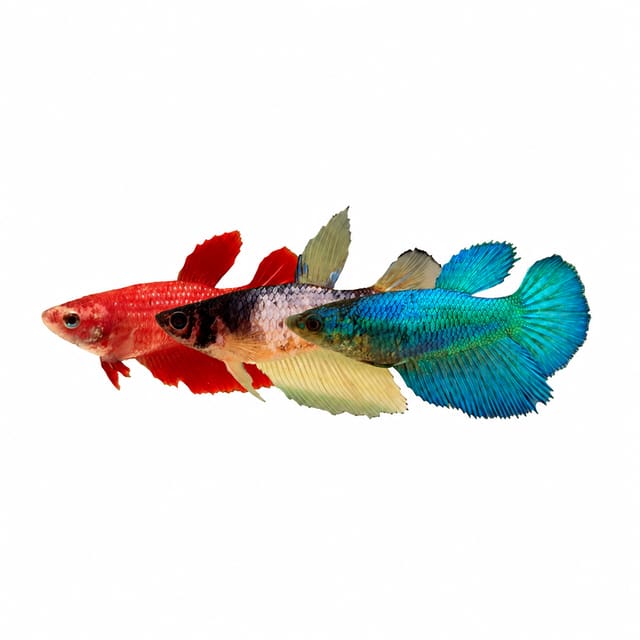
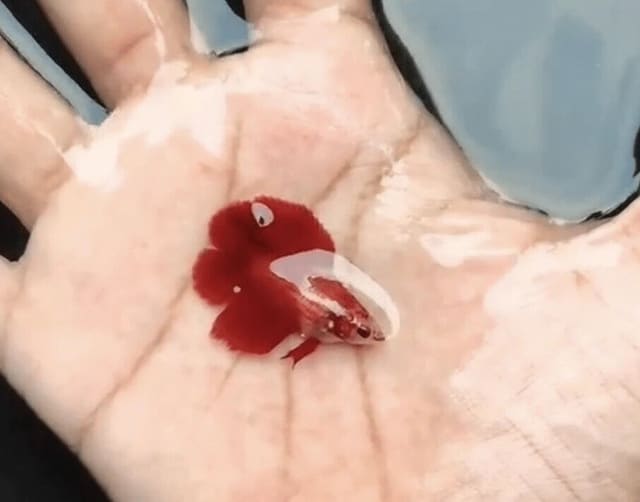
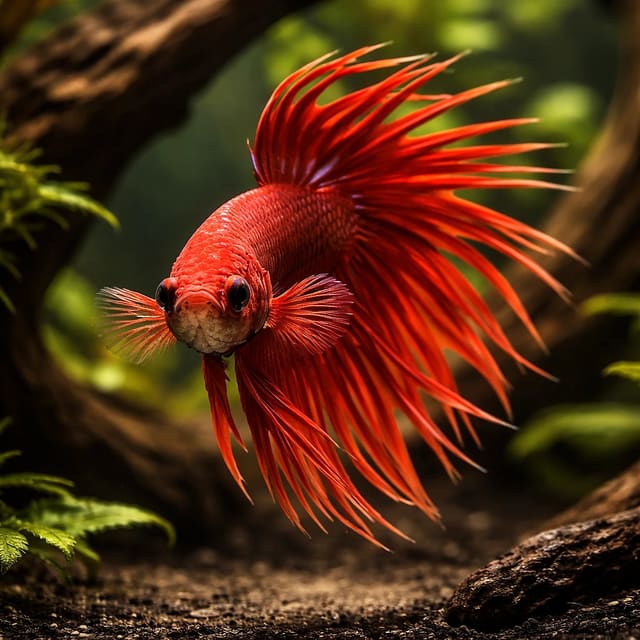
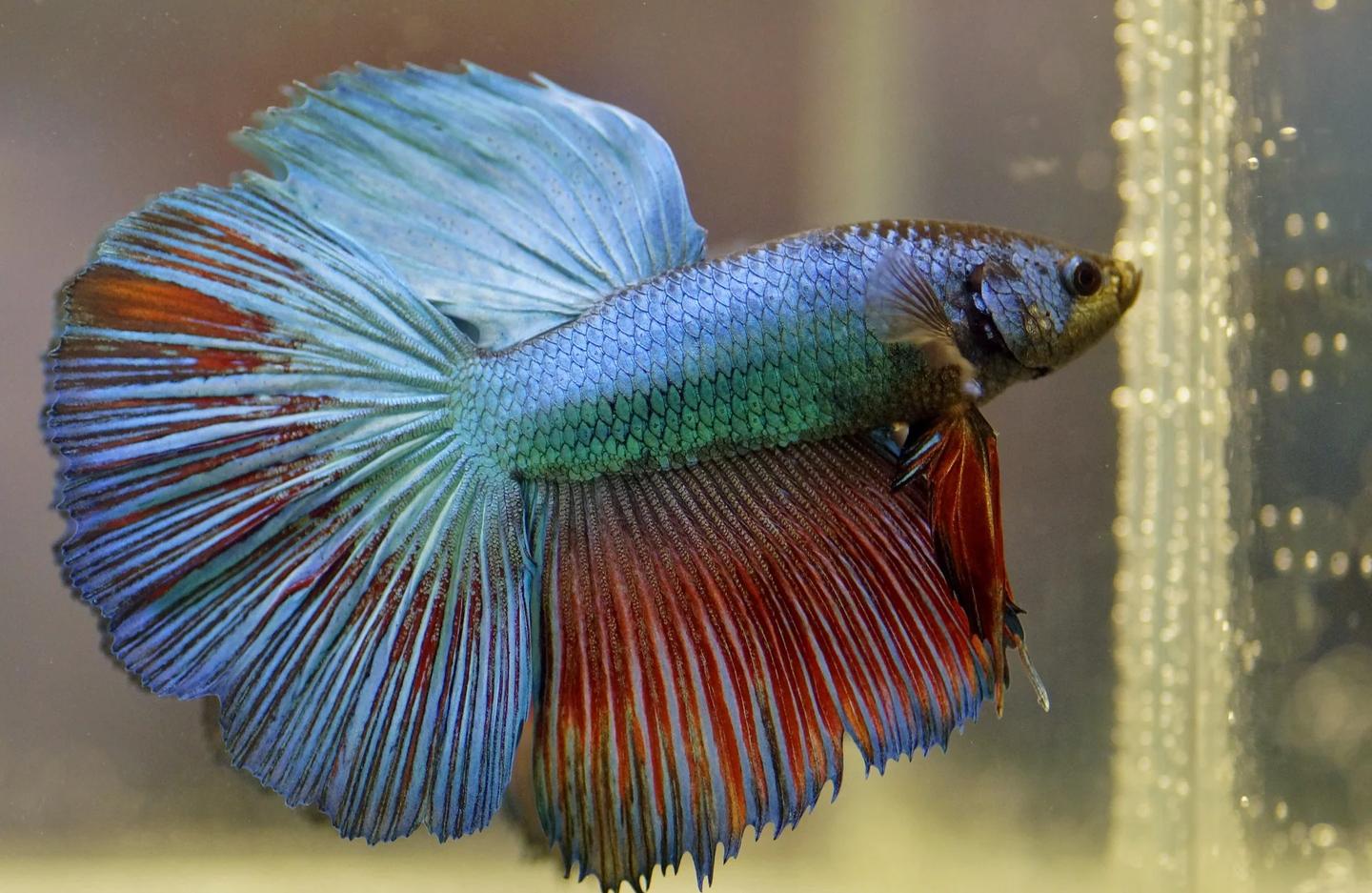
The gallery images are representative of this type of animal rather than photographs of the exact animal supplied, so colours can look slightly different from the live animal.
Lighting, background, stress, settling time and individual domestic variation can all affect how colour appears. Select furnishings and tank mates for the animal’s welfare requirements rather than trying to reproduce the gallery background.
Plan for a 6.5 cm adult from the beginning. FishBase records that maximum for male or unsexed Betta splendens. Seriously Fish records 7 cm standard length, while OATA describes Bettas as growing to about 7 cm; these figures represent a real difference between records and do not change the 6.5 cm figure used throughout this offer.
Use at least 20 litres for one male as the UK starting minimum. Seriously Fish describes an aquarium with a 45 × 30 cm base, or an equivalent shape of approximately 41 litres, as large enough for a single male or pair. For this male, the larger footprint and volume give more room for plants, shelter, equipment and gentle circulation while retaining open access to the surface.
Do not begin with a tiny container on the assumption that the fish can move later. A smaller volume is harder to keep stable, decor reduces the water actually present, and the fish needs its complete setup from arrival. A nominal 20-litre aquarium is only a starting screen: it still needs a mature filter, thermostatic heater, separate thermometer, safe furnishings and enough clear water volume to function properly.
If choosing between two suitable aquariums, favour the one with more usable capacity and a practical footprint. Extra room is useful only when it remains heated, covered, filtered, furnished and maintained; volume does not make two male Bettas safe together.
Prepare a biologically mature aquarium before adding the fish. A clear-looking new tank is not automatically ready: the filter needs an established population of beneficial bacteria to process ammonia into nitrite and then nitrate. Both ammonia and nitrite are toxic, so each must test at zero before the planned arrival.
The RSPCA explains why working biological filtration is vital. Keep the filter running continuously and provide enough water movement to carry waste to it without creating a current that pushes the Betta around.
A labyrinth organ is an additional breathing adaptation, not an alternative waste-processing system. The fish still releases ammonia and still depends on stable, oxygenated water passing through biological filter media.
Match the filter to the aquarium while keeping the return gentle. If the fish is repeatedly carried across the tank, struggles to hold position or cannot rest in its chosen area, diffuse or reduce the flow without switching off essential filtration. A sponge filter set gently is one supported approach for the sluggish-water conditions this species favours.
Keep a separation container for emergencies, but do not use an unheated or unfiltered temporary bowl as routine accommodation. Any backup arrangement must protect temperature, water quality and surface access while the main aquarium issue is corrected.
Keep the aquarium at 26–28°C, pH 6.0–8.0 and 5–12 dGH. The temperature is Tropical Fish Co’s practical target for a typical domestic Betta splendens; the pH and hardness figures are the overlap of FishBase, Seriously Fish and OATA. Stability matters more than repeatedly adjusting the water towards the middle of each range.
Use a thermostatic heater throughout the year and confirm its result with a separate thermometer. Follow the heater maker’s aquarium-volume, minimum-depth, installation and room-temperature instructions rather than relying on a universal watts-per-litre formula.
| Check | Action |
|---|---|
| Temperature | Hold 26–28°C and investigate unexpected movement. |
| pH | Keep within 6.0–8.0 without rapid correction. |
| General hardness | Keep within 5–12 dGH and monitor the aquarium itself. |
| Ammonia | Maintain zero mg/L. |
| Nitrite | Maintain zero mg/L. |
| Nitrate | Do not let it exceed 20 mg/L above the normal tap-water level. |
Treat replacement tap water with an appropriate conditioner before it enters the aquarium because chlorine or chloramine can harm fish and filter bacteria. UK tap-water chemistry varies, so test rather than assuming one local or national value. Our water chemistry guide explains what each measurement means, and the water matching tool helps compare measured aquarium values with this plan.
If a result moves unexpectedly, confirm it with a fresh test, check the thermometer and equipment, and review recent water changes or additions. Correct the cause gradually where the fish is not in immediate danger. Rapid pH or hardness manipulation can replace one stability problem with another.
Furnish the aquarium with plants, shade and smooth refuges while preserving open routes to the surface. Seriously Fish recommends a well-planted, shady setup with surface cover and additional shelter. Tall stems, floating plants, driftwood and attached plants are supported choices when they suit the aquarium’s lighting and maintenance routine.
Keep the current gentle because the species naturally occupies sluggish water. Flow should circulate water through the filter without sweeping the fish away from resting places. Observe how this individual swims: repeated displacement, difficulty holding position or constant avoidance of the filter return calls for a gentler or better-diffused outlet.
Dried leaf litter can add cover, release tannins and support microbe colonies as it decomposes. Use it only as part of a maintained aquarium, not as a replacement for food, filtration or water changes.
Check the layout from the fish’s perspective after planting. A refuge is useful only if the fish can enter, turn and leave safely, while floating cover must not seal the entire surface. Make adjustments when stems overgrow the access route or a movable ornament shifts.
A tight-fitting lid reduces escape risk, but do not close off access to warm, humid air above the water. The correct balance is a covered aquarium with clear surface access and an air gap, not an uncovered tank or a completely blocked surface.
Use a suitably sized complete Betta pellet or quality aquarium flake as the measured nutritional base, then provide small live or frozen invertebrate foods for variety. FishBase records wild Betta splendens feeding on zooplankton, mosquito larvae and other insect larvae, while Seriously Fish describes predation on aquatic and terrestrial invertebrates.
Suitable live or frozen additions include daphnia, Artemia and small bloodworm. Seriously Fish also lists suitably prepared small insects such as fruit flies or pinhead crickets. Match every item to the fish’s mouth and remove anything that remains uneaten.
Do not use the size of the fish’s eye as a universal portion formula. Pellet dimensions and energy density vary, and appetite changes with individual condition and water temperature. Follow the food maker’s directions, then adjust by observing prompt consumption and body condition.
Overfeeding affects both nutrition and water quality. Bettas are described as particularly prone to obesity, while decomposing leftovers release waste that places additional demand on the biological filter. If several people feed the aquarium, prepare labelled portions so a second meal is not added by mistake.
A reduced appetite is a useful change to notice, but it is not a diagnosis by itself. Check temperature, ammonia, nitrite and recent changes before assuming the fish simply dislikes a food. Persistent refusal alongside altered breathing, posture or swimming needs a broader health assessment.
At least once every week, carry out a 25% partial water change.
Test ammonia and nitrite at least once a week and keep both at zero. Record nitrate, pH, hardness and temperature so gradual movement becomes visible before it turns into a sudden problem. Test more promptly after an equipment failure, unexpected behaviour, overfeeding or any other change that could affect the system.
Cleaning every surface and replacing all filter media together can remove too much useful bacterial activity. Preserve mature media unless a manufacturer’s safety instruction requires replacement, and stagger disruptive tasks where practical.
Use the fish’s normal pattern as another maintenance indicator. Note its usual feeding response, resting places, breathing and swimming. A change after maintenance can point to temperature mismatch, altered flow, an equipment problem or a chemistry shift, so test before adding products.
Keep the lid, heater cable, thermometer, filter return and surface route in the weekly inspection. Plants can grow across the breathing route, debris can restrict flow, and a shifted refuge can create a trap. Correcting these small issues during routine maintenance is easier than responding after the fish is distressed.
Have the heated, filtered aquarium ready before the parcel reaches you. Ammonia and nitrite must already be zero, the temperature should be stable at 26–28°C, and the secure lid, gentle flow and surface route should be in place.
Keep the video and order number if a Live Arrival Guarantee claim is needed, and report an arrival problem the same day. The complete conditions remain on the delivery and Live Arrival Guarantee policy.
Observe breathing, posture and the ability to hold position in the gentle current. The fish may choose cover while settling, so judge changes alongside water tests and its condition rather than demanding immediate display behaviour.
For the first week, keep feeding measured and confirm that food is recognised and eaten promptly. Test ammonia and nitrite if appetite, breathing or swimming changes, and inspect the heater and filter rather than changing several things at once. Keep this male separate from every other Betta during settling and thereafter.
Do not add new animals simply because the first day appears calm. The biological filter must adjust to the added waste, and compatibility cannot be decided from a brief period when a newly introduced fish is still settling. Preserve the solitary plan unless the full compatibility screen has been completed and a separate aquarium is ready.
Test the aquarium first when feeding, breathing, posture, swimming, colour or fins change. OATA identifies surface hanging, bottom sitting, erratic swimming, altered aggression or hiding, faster or slower gill movement, white spots, fluffy growths, damaged fins, changing body condition and reduced food intake as signs that need attention.
Use the MSD Veterinary Manual approach to aquarium-fish investigation: combine water analysis with the aquarium history and the animal’s signs rather than choosing a medicine from one symptom.
A torn fin, pale patch, swollen abdomen or unusual swimming pattern can have several causes. Correcting dangerous water conditions may be urgent, but a water result does not identify every infection or injury. Preserve a clear timeline and avoid exposing the fish to several treatments without a diagnosis.
Seek experienced help when signs are severe, persistent or unexplained. OATA maintains a fish-vet directory for finding specialist veterinary help. Share the test results, temperature, aquarium size, recent changes and feeding history so the whole system can be assessed.
Continue essential heating and filtration unless a qualified treatment plan directs otherwise. Isolation can be useful only when the backup aquarium also maintains suitable temperature, water quality, cover and surface access.
Keep this male as the only Betta in its aquarium. FishBase states that males fight each other, while OATA warns that two males may fight until one is severely injured or killed. More volume, planting or decor does not turn direct male cohabitation into a safe plan.
Routine housing with a female Betta should also be avoided. FishBase and Seriously Fish describe keeping the sexes separately except for controlled mating, and breeding is not an ordinary compatibility arrangement. Do not add a female as companionship or to change the male’s behaviour.
RSPCA compatibility guidance also recognises that male Bettas may fight their own kind and that the needs of every species must be checked before fish are mixed.
Visual barriers between neighbouring aquariums are useful where repeated displays occur, but they do not permit shared water space. Watch for persistent flaring, charging or fixation through the glass and rearrange the external view if necessary.
Do not use the gallery’s two visible fish as a husbandry example. It represents appearance, whereas the offer and care plan concern one male housed without another Betta.
A solitary aquarium is not an empty aquarium. Plants, smooth refuges, shade and varied resting positions provide structure without introducing another territorial fish. This arrangement lets the setup be tuned for gentle flow, measured feeding and unhurried surface access.
Plan for this male to live alone. Seriously Fish does not recommend Betta splendens for the standard community aquarium and says solitary housing is best; individual tolerance of another species is the exception rather than the expected result.
Some small cyprinids and loaches from similar environments may be possible after careful research. OATA describes very placid tank mates as the only community direction for males. Neither statement creates a universally safe companion, and the aquarium must meet the adult needs of every animal rather than only the Betta’s minimum setup.
| Check | Decision |
|---|---|
| Adult space | Allow for every animal at full size and the zones each uses. |
| Water | Require compatible temperature, pH and hardness. |
| Temperament | Reject boisterous or aggressive companions. |
| Fins and shape | Avoid trailing fins and Betta-like body forms. |
| Feeding | Prevent competition that leaves either animal underfed. |
| Separation | Have a complete second setup ready before mixing. |
Do not assume shrimp, snails or other small invertebrates are safe. A Betta may investigate or hunt smaller animals, while larger or defensive invertebrates can introduce an injury risk. Treat any proposed combination as uncertain rather than as a cleaning arrangement or feeding strategy.
After introduction, watch for chasing, repeated flaring, hiding, damaged fins, missed food or one animal being excluded from part of the aquarium. Separate promptly when these signs appear; do not wait for injury to prove that the combination has failed.
The safest answer remains a furnished aquarium for one male. If another species is considered, assess the named species, the actual aquarium and this individual fish together rather than relying on a general community label.
Plan for an adult length of 6.5 cm. FishBase records 6.5 cm as the maximum length for male or unsexed fish, so use that figure for the aquarium, furnishings and long-term care rather than treating the fish’s arrival size as its adult size.
Use at least 20 litres for this fish, with a mature filter, heater, lid and safe furnishings. Seriously Fish describes a 45 × 30 cm base with approximately 41 litres as large enough, making that the stronger space target where practical.
Keep one male per aquarium. FishBase states that males fight, and OATA warns that two males may fight until one is severely injured or killed; extra space and planting do not make direct male cohabitation safe.
It can suit a careful beginner who is ready for intermediate care. The aquarium must be cycled before arrival and needs at least 20 litres, stable heat, a mature filter, a separate thermometer, gentle flow, a secure lid, cover and regular water testing.
Feed a measured, suitably sized complete Betta pellet or quality aquarium flake once daily, offering only what it eats within a few minutes. Add small live or frozen invertebrate foods such as daphnia, Artemia or bloodworm for variety, and remove leftovers.
Keep it at Tropical Fish Co’s practical target of 26–28°C. FishBase, Seriously Fish and OATA overlap at pH 6.0–8.0 and 5–12 dGH; OATA’s figures are broad Betta guidance, and ammonia and nitrite must remain at zero mg/L.
This male is territorial and must not share an aquarium with another male Betta. Avoid fish with Betta-like body shapes or trailing fins because the male may view them as rivals; other fish may also nip a male Betta’s fins, so solitary housing is safest.
Keeping it alone is the safest plan. Seriously Fish identifies some small cyprinids and loaches as possible only after careful research, while OATA limits consideration to very placid tank mates. Do not assume shrimp or snails are safe, and keep a complete separation setup ready.
Start filming the sealed parcel before opening it, then show the fish inside the sealed bag in one continuous take. Be present to receive it, open it the same day, float the bag for 20–30 minutes before release, and retain the video and order number for any Live Arrival Guarantee claim.
No reviews for this item yet. Bought one? Honest reviews only, good or bad.
What customers say about ordering from us
Easy website plenty of info on fish your buying great to pick a time slot
TRACEY DURRANT · 7 Oct 2026
Got some lovely fish thank you
Kevin Mackie · 7 Oct 2026
Reviews of our shop, collected by Judge.me, an independent third-party review collector. Newest first.