
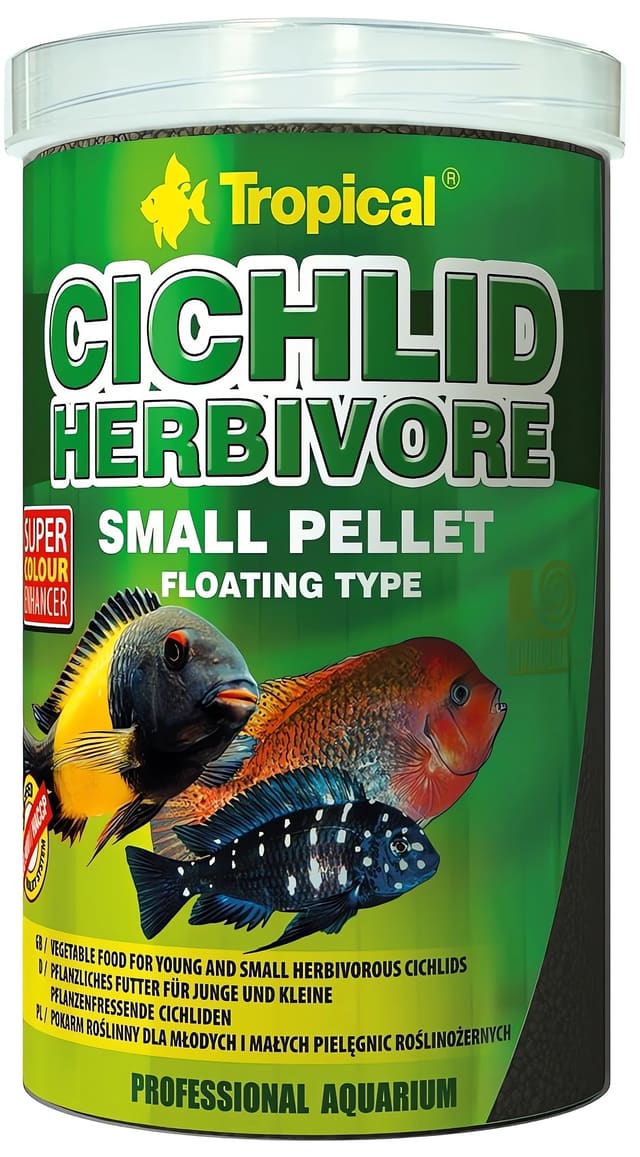
Tropical Cichlid Herbivore Small Pellet 1000 ml / 360 g
£38.99

Plant-rich Tropical Malawi Mbuna Flakes for Malawi mbuna and suitable herbivorous or omnivorous cichlids. Available in 1000ml, 5L, 11L and 21L sizes.
Plant-rich Tropical Malawi Mbuna Flakes for Malawi mbuna and suitable herbivorous or omnivorous cichlids. Available in 1000ml, 5L, 11L and 21L sizes.
Tropical Malawi Mbuna Flakes are multi-ingredient, plant-rich flakes made for daily feeding of Lake Malawi mbuna. The current Tropical manufacturer description highlights spinach, nettle, spirulina, wheat germ and other plant ingredients, with fibre designed to suit the long digestive tract of mbuna.
This listing offers four pack sizes from 200g to 4kg, making the same food available for a home aquarium, larger collection or high-throughput fish room.
| Pack | 1000ml / 200g |
|---|---|
| Pack | 5L / 1kg |
| Pack | 11L / 2kg |
| Pack | 21L / 4kg |
Tropical describes Malawi as a multi-ingredient flake food with a high proportion of plant components. The current manufacturer information specifically mentions spinach, nettle, spirulina, wheat germ and green pea among the nutritional themes of the formula.
The plant-led profile makes it a logical prepared food for mbuna that spend much of their natural feeding time grazing and processing plant-rich material. It should still be matched to the exact species; not every Lake Malawi cichlid has the same feeding ecology.
Offer several small portions rather than one heavy feed, and only add more after the previous amount has been eaten. Crush flakes where necessary for small juveniles and distribute food across more than one area if a dominant fish controls the first feeding point.
Rock-heavy mbuna aquariums can hide uneaten food. If flakes are settling between rocks, reduce the portion and improve how the food is distributed instead of adding more.
The product is intended for Malawi mbuna and other suitable herbivorous or plant-leaning omnivorous cichlids. It should not automatically be used as the sole food for peacocks, predatory haps or unrelated fish whose diet is more animal-based.
Keep the pack tightly closed, dry and away from heat, sunlight and aquarium humidity. Choose a pack size you can use while the food remains fresh. Large bulk packs only provide value when they are stored properly and used at a realistic rate.
Yes. Tropical specifically markets Malawi Flakes for daily feeding of Lake Malawi mbuna.
Yes. Tropical’s current manufacturer description lists spirulina among the plant ingredients, together with spinach, nettle and wheat germ.
The current Shopify variants are 200g, 1kg, 2kg and 4kg.
Tropical positions it as a daily mbuna food. Use small portions and adjust the amount to the number, size and condition of the fish.
A peacock may eat flakes, but that does not make this plant-rich mbuna formula the best staple for every Aulonocara. Match the main diet to the species’ feeding ecology.
It should not be assumed to be the main staple for animal-oriented predators simply because they also come from Lake Malawi.
They suit larger stocks and fish rooms that can use the food at a high enough rate to keep it fresh after opening.
Keep the pack sealed and dry, away from direct heat and humidity, and follow the best-before details on the delivered container.
No reviews for this item yet. Bought one? Honest reviews only, good or bad.
What customers say about ordering from us
I have a small group of long finned mountain minnows. So was delighted to be able to order ten of this variety to increase the genetics in my tank . The ones I recieved are healthy but it’s to early to give a verdict on wether they are of a long finned type since they are small currently.
Gordon Walker · 23 Sept 2026
100% success travel and "installation". Pleased with quality of purchase. The Siamese fighter a bit "shy" so have not yet seen him at his best yet but looking good. Happy customer. GG
George E Garratt · 21 Sept 2026
Reviews of our shop, collected by Judge.me, an independent third-party review collector. Newest first.



22–28°C · pH 7–8 · 41L

21–25°C · pH 5–7
24–29°C

24–27°C · pH 6.5–6.5

22–27°C · pH 6–8 · 72L

23–27°C · pH 5.5–7 · 60L

22–27°C · pH 6–8

22–26°C · pH 6–7.8 · 75L