Easy
Nemo Plakat Betta, Male (Betta splendens)
24–30°C · pH 6–7.5 · 20L
£30.99
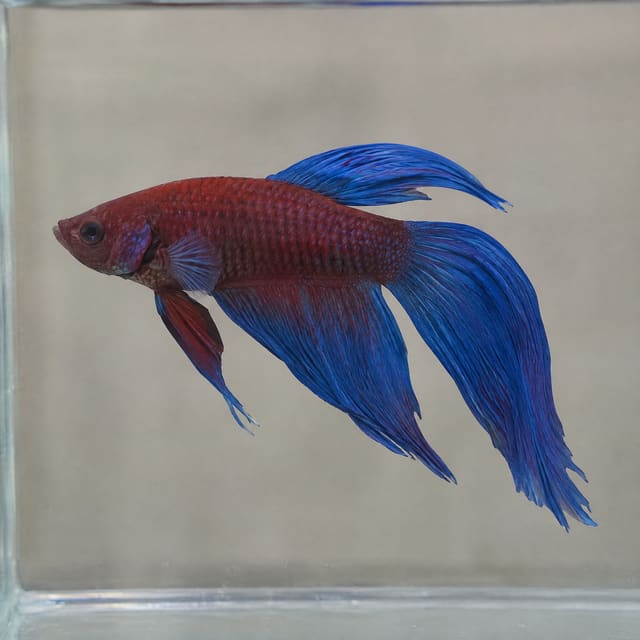
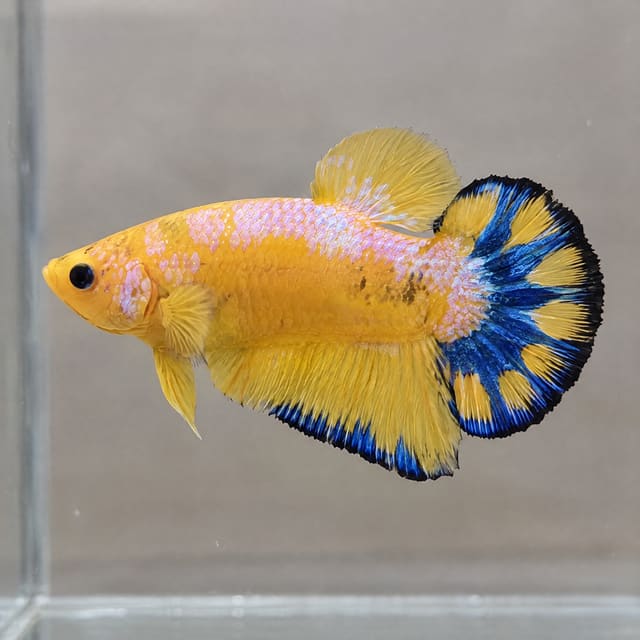
The Snow White Gold Fin Dragon is a male Siamese fighting fish (Betta splendens) bred for a heavy coat of white dragon scaling and fins that fade to gold. Keep one male on his own in a heated, filtered aquarium of at least 20 litres (40 litres or more is better) at a steady 26–28°C, with gentle flow, plants and a lid. Sold individually as one live male.
Adult size is the maximum length this species reaches at full maturity (scientific sources). The livestock you receive will be younger and smaller. Product-photo provenance and any image-specific limitations are stated on the listing.
Betta splendens
Confirm your email, then we’ll send an availability message for this exact item if it returns within 180 days.
This request is only for this product—no newsletter or other promotions. A mail-provider retry may very rarely duplicate the same availability message. Unconfirmed addresses are removed after 48 hours. See our privacy policy.
The Snow White Gold Fin Dragon is a male Siamese fighting fish (Betta splendens) bred for a heavy coat of white dragon scaling and fins that fade to gold. Keep one male on his own in a heated, filtered aquarium of at least 20 litres (40 litres or more is better) at a steady 26–28°C, with gentle flow, plants and a lid. Sold individually as one live male.
Adult size is the maximum length this species reaches at full maturity (scientific sources). The livestock you receive will be younger and smaller. Product-photo provenance and any image-specific limitations are stated on the listing.
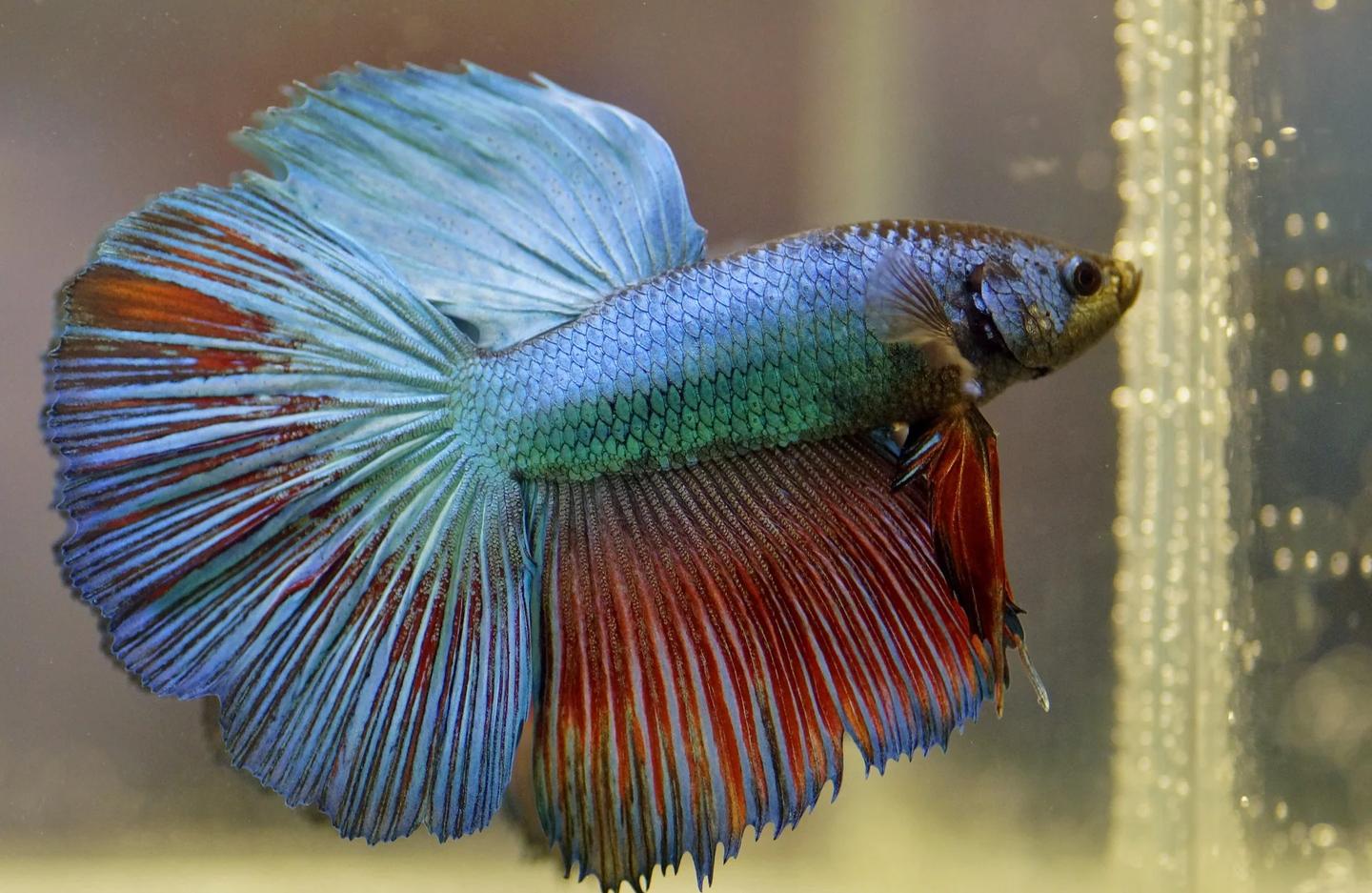
For one typical domestic Betta splendens, start with at least 20 litres, a mature filter, thermostatic heater, separate thermometer, gentle flow, a secure lid with surface access, and plants or refuges. Keep one male per aquarium.
Read the full care guidance when planning conditions for your aquarium.
The Snow White Gold Fin Dragon is a white dragon betta: a male Siamese fighting fish, Betta splendens, from an ornamental line bred for colour. In the trade, “dragon” describes bettas with a heavy, opaque, metallic-looking layer over the scales that gives the body a solid, armoured look. In this form that layer is snowy white, and the fins fade from white towards gold at their edges. Like all ornamental bettas he is a captive-bred, domesticated fish.
Seriously Fish gives the wild species a native range in central Thailand, from Chiang Rai province in the north to Surat Thani and Phang Nga in the south, and says records from the Mekong basin, Laos, Vietnam and Cambodia refer to other species or introduced fish; FishBase still describes the range as the Mekong basin. Wild fish live in still or sluggish water such as rice paddies, swamps, ditches and ponds, often shaded and sometimes low in oxygen. FishBase lists the wild species as Vulnerable on the IUCN Red List (assessed 2011).
| Suits | Not suited to |
|---|---|
| One male living as the only betta in the aquarium | Sharing with another male betta |
| A heated, filtered aquarium of at least 20 litres, ideally larger | A bowl, vase or unheated jar |
| A steady 26–28°C | A room-temperature tank that swings with the weather |
| Gentle flow, plants and a covered surface with an air gap | Strong currents, bare tanks or a tank filled to the lid |
| Calm, short-finned companions, or none at all | Fin-nippers and fish with long, showy fins |
Compare him with other males in our betta fish collection or the male Betta splendens category. Our guide to betta colours and tail types explains the names used in the hobby.
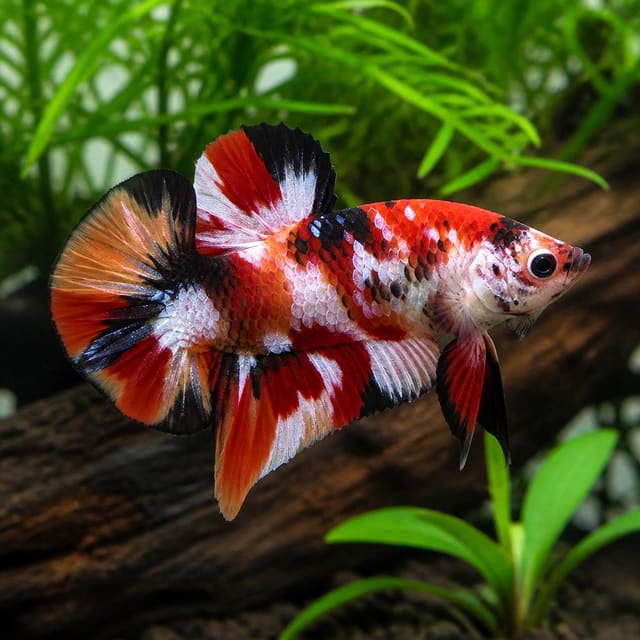
One purchase quantity supplies one live male betta in our single standard size. Ornamental bettas vary from fish to fish: fin shape, fin length and the amount of gold differ, so the photographs show the colour form, not the individual you will receive and not a confirmed tail type. Some gallery images are representative and none shows the exact fish supplied.
Have the aquarium running, heated and mature before you order, and check our delivery and Live Arrival Guarantee information for dispatch days. Setting up first means he goes straight into stable, warm water instead of waiting in a bag or a cold tank.
The sources differ on minimum size. OATA’s UK care sheet gives at least 20 litres for a single male and advises buying as large as possible; Seriously Fish recommends a base of at least 45 × 30 cm, about 41 litres, for a single male or a pair, and opposes keeping bettas in tiny aquariums or jars. FishBase also advises against very small containers. We treat 20 litres as the absolute minimum and recommend 40 litres or more where you have room, because a larger volume holds temperature and water quality more steadily.
Our tank volume calculator turns your tank’s dimensions into litres, so you can size the heater and filter correctly. Seriously Fish suggests a filter rated at about 80–125 litres per hour and a heater of roughly 50–100 W for its recommended tank.
Bettas breathe air. Like other anabantoids they have a labyrinth organ, an expansion of the upper part of the first gill arch lined with folded, blood-rich flaps, which lets them take oxygen from air gulped at the surface. Seriously Fish advises keeping the tank well covered but not filled to the top, so the fish can reach the warm, humid air above the water, and warns that bettas are excellent jumpers.
| Area | Purpose |
|---|---|
| Calm surface with an air gap under the lid | Air breathing, resting and bubble nests |
| Floating plants over part of the surface | Shade and cover, as in a shaded paddy |
| Tall plants and leaves near the surface | Resting places close to the air |
| Wood, caves or plant thickets | Sight-breaks and places to retreat |
| Open water in front | Room to display his fins without catching them |
Seriously Fish recommends a well-planted, shaded aquarium with plenty of surface cover: tall stem plants, floating plants such as Salvinia or Riccia, and Cryptocoryne, with driftwood carrying Java fern or Java moss. Choose smooth décor: long fins tear on sharp edges and rough plastic plants. A healthy male may build a bubble nest at the surface; Seriously Fish describes this as the male’s part in breeding, and it is no cause for concern.
Bettas are tropical fish and need a heater in a UK home. OATA gives a range of 20–28°C, Seriously Fish 22–30°C and FishBase 24–30°C. We recommend a steady 26–28°C, which sits inside the 24–28°C band that all three sources accept. Our betta temperature guide explains how to set and check the heater through the seasons.
| Reading | Target | Source |
|---|---|---|
| Temperature | A steady 26–28°C | Our target; OATA 20–28°C, Seriously Fish 22–30°C, FishBase 24–30°C |
| pH | 6.0–8.0 | OATA; Seriously Fish (ornamental strains); FishBase |
| General hardness | 4–12°dH | OATA; Seriously Fish 1–15 dGH; FishBase 5–19 dH |
| Carbonate hardness | 3–10°dKH | OATA |
| Ammonia | 0 mg/l | OATA |
| Nitrite | 0 mg/l | OATA |
| Nitrate | No more than 20 mg/l above your tap water | OATA |
Seriously Fish notes that wild-collected bettas probably prefer softer, more acidic water of pH 5.0–7.0, but ornamental strains such as this one do well across pH 6.0–8.0, which covers most UK tap water. Check your supply with our water matcher and keep conditions stable rather than chasing an exact number.
A betta tank needs biological filtration like any other, but long fins and a slow swimmer mean the flow must stay gentle. Seriously Fish advises avoiding strong currents. If he is pushed around by the outflow or rests in corners to escape it, baffle the outlet or turn the flow down.
Small tanks change quickly: a few uneaten pellets in 20 litres raise ammonia faster than in a large aquarium, and a heater fault cools a small tank faster. This is the main practical reason we recommend a larger aquarium where possible.
Wild bettas eat small invertebrates: Seriously Fish mentions aquatic and terrestrial invertebrates, and FishBase lists zooplankton and mosquito and other insect larvae. In the aquarium, OATA recommends a good-quality flake or pellet, ideally a specialised betta pellet, with occasional small live or frozen foods.
Seriously Fish warns that bettas are prone to obesity. A betta will usually keep eating if you keep feeding, so judge by his body, not his appetite: the belly should be gently rounded after feeding, never bloated.
Acclimatise him with the floating-bag method OATA recommends, with the tank lights off, and do not leave him in the transport bag longer than necessary. Release him into a mature, heated aquarium with ammonia and nitrite at zero. Expect him to explore and possibly hide for a day before he starts to display.
| Checkpoint | What to do |
|---|---|
| Before arrival | Heater running at 26–28°C for at least a day; ammonia and nitrite at 0 mg/l |
| On arrival | Float the bag, then release him with the lights off |
| Next day | Offer a small meal and check that he eats |
| Every day | Check fins are spread, colour is bright and he visits the surface normally |
| End of week one | Full water test and a 25% water change |
OATA lists the signs of a healthy betta: clear, bright eyes, undamaged fins, intact scales, no ulcers or bumps, normal swimming and steady breathing.
Long fins are the first place problems show. Torn edges usually mean sharp décor or a nipping tank mate; ragged, receding or discoloured edges point to poor water and possible fin rot, which our guide to fin rot treatment explains.
| If you see | Do this |
|---|---|
| Clamped fins, flicking against décor or shimmying | Test the water; OATA lists these as signs of disease |
| Fins with ragged or receding edges | Test the water, change 25% and check for sharp décor or nipping tank mates |
| White spots or fluffy growths | Test the water and seek fish-health advice before treating |
| Lying on the bottom, gasping at the surface or erratic swimming | Check temperature first, then ammonia and nitrite |
| Bloated belly or reluctance to swim | Reduce feeding and check water quality |
| Constant flaring at the glass | Check for reflections or a rival he can see, and add cover |
Seriously Fish describes opercular flaring, spreading the gill covers, as a betta’s typical aggressive display. Brief flaring is normal; constant flaring is stressful and usually has a visible cause.
Two male bettas must never share an aquarium. OATA warns that they will fight until one is severely injured or killed. Seriously Fish adds that ornamental strains are more aggressive than other Betta species and that usually only one individual can be kept per tank, with males and females kept apart except for breeding. OATA notes that a male kept with at least five females needs a densely planted tank and is not recommended for inexperienced keepers.
Breeding is a separate project. Seriously Fish describes how the male builds a bubble nest, collects the eggs after spawning and guards them; the eggs hatch in 24–48 hours and the fry stay in the nest for three to four days. Only attempt it with a planned set-up for the female’s safety and for rearing the young.
OATA says males should be kept alone or with very placid tank mates, because they are often subject to fin nipping. Seriously Fish goes further: it does not recommend B. splendens for the standard community aquarium, suggests that some small cyprinids and loaches from similar habitats may be suitable after research, and says fish with trailing or showy fins should be avoided because a male may treat them as rivals.
| May suit, with care | Avoid |
|---|---|
| No tank mates at all, the simplest and safest choice | Another male betta, or female bettas outside a breeding plan |
| A few very calm, small, short-finned fish in a larger planted tank | Known fin-nippers such as tiger barbs |
| Small cyprinids or loaches from similar still, soft-water habitats, after research | Long-finned or showy fish such as guppies and longfin danios, and fast, greedy feeders |
No tank mate is guaranteed safe, because every male has his own temperament; watch any new companion closely for the first few days and have a plan to separate them. Our betta tank mates guide discusses safer choices, and the tank mates tool checks a mix against water needs.
Bettas have been kept and bred for centuries. A genomic study by Kwon and colleagues (2022) notes reports of fighting-fish breeding in Thailand as early as the 14th century and ornamental breeding from the early 20th century. The same study found that 76% of the ornamental bettas sampled (28 of 37) carry ancestry from other Betta species, mostly B. mahachaiensis and B. imbellis, and that genes flow in the other direction too, which is one reason Seriously Fish warns that ornamental releases threaten the genetic integrity of wild populations.
Metallic and iridescent colouring has a genetic basis that researchers are only now mapping: Kwon and colleagues found that a gene called alkal2l likely corresponds to what breeders call the “spread iridocyte” gene. “Snow White Gold Fin Dragon” itself is a trade name for a colour form rather than a fixed show standard, so expect variation between fish.
If you like the white dragon betta look, compare him with the Snow Dragon Plakat Male Betta, a short-finned plakat form, the Dragon Scale Halfmoon Male Betta Mix and the metallic Halfmoon Platinum Male Betta. For a full introduction to keeping any betta, read our betta care guide.
No. OATA warns that two males will fight until one is severely injured or killed, so keep one male per aquarium.
We recommend a steady 26–28°C, held by a thermostatic heater and checked with a separate thermometer. OATA gives 20–28°C, Seriously Fish 22–30°C and FishBase 24–30°C.
At least 20 litres, according to OATA. Seriously Fish recommends a 45 × 30 cm base, about 41 litres, and we recommend 40 litres or more where possible.
Yes. OATA says a filter is always essential. Keep the flow gentle, for example with an air-powered sponge filter, because long fins make strong currents hard work.
A trade name for ornamental Betta splendens with a heavy, opaque, metallic-looking layer over the scales. This Snow White Gold Fin Dragon has white scaling and fins that fade to gold at the edges.
Betta pellets or a good flake once a day, with daphnia, brine shrimp or small bloodworm a few times a week. Give only what he eats within a few minutes, as bettas overeat easily.
Sometimes, but living alone is the safest choice. OATA advises only very placid tank mates; avoid fin-nippers, other bettas and any fish with long or showy fins.
About 7 cm, according to OATA. Seriously Fish gives 70 mm standard length and FishBase 6.5 cm total length.
No reviews for this item yet. Bought one? Honest reviews only, good or bad.
What customers say about ordering from us
Easy website plenty of info on fish your buying great to pick a time slot
TRACEY DURRANT · 7 Oct 2026
Got some lovely fish thank you
Kevin Mackie · 7 Oct 2026
Reviews of our shop, collected by Judge.me, an independent third-party review collector. Newest first.
Moved by UK carriers licensed to handle live animals
Hand-packed with oxygen bags, poly box, heat pack
Email photos the same day; an optional unboxing video helps us review problems faster — claim terms apply
Klarna & PayPal Pay in 3 at checkout