Redbreast Tilapia (Coptodon rendalli)
24–28°C
£7.99

Starry Night Cichlid (Paratilapia polleni) is a large territorial cichlid from Madagascar. One live fish in the 4–5 cm grade, for a spacious aquarium with shelter and careful social planning.
Paratilapia polleni
Save when buying multiple fish. Each quantity is one fish; sex and pair formation are not guaranteed unless the selected variant explicitly states them.
Starry Night Cichlid (Paratilapia polleni) is a large territorial cichlid from Madagascar. One live fish in the 4–5 cm grade, for a spacious aquarium with shelter and careful social planning.
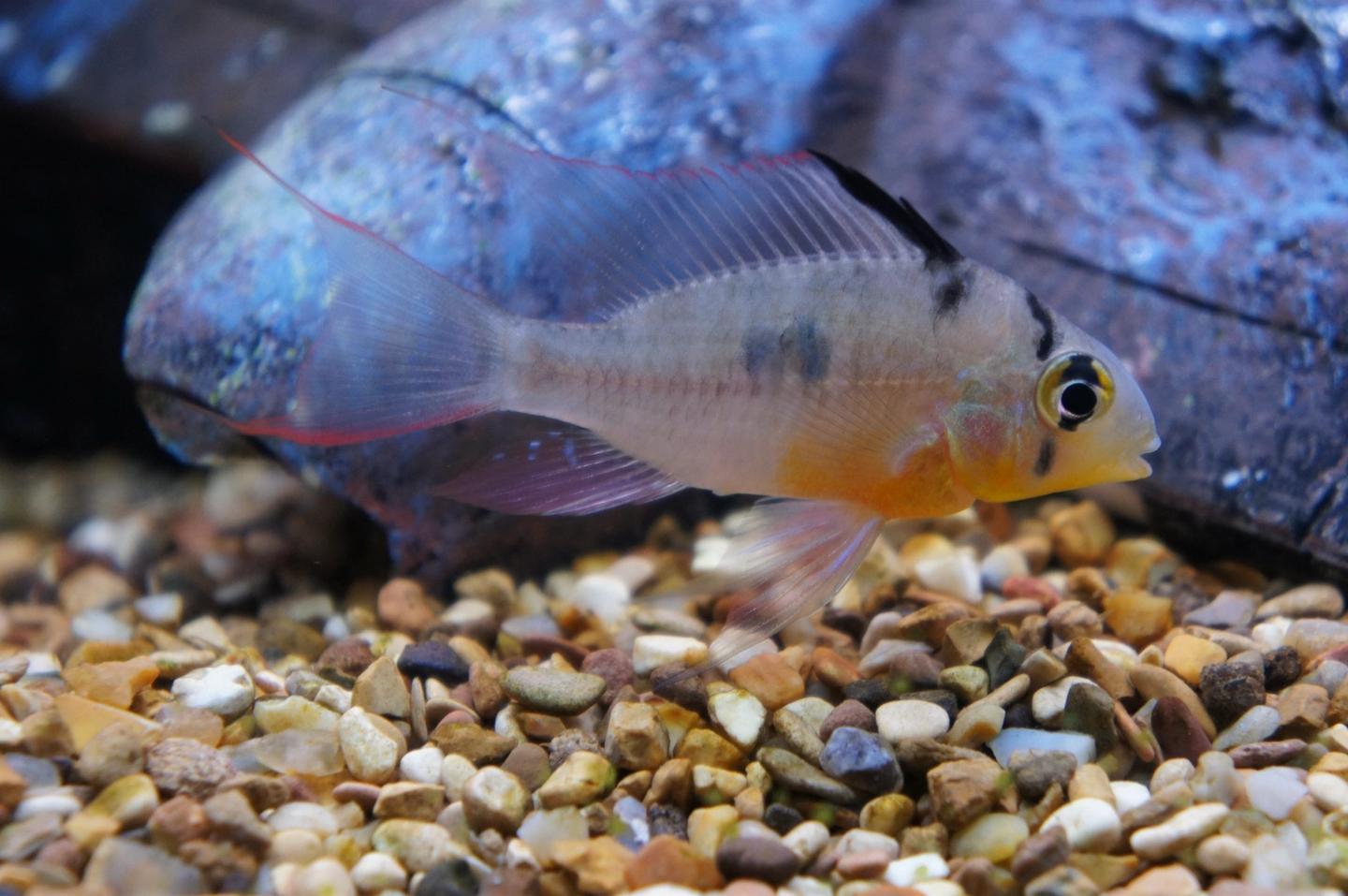
Cichlids are a family of roughly 1,800 accepted species, not one care type. Before buying, identify the exact species and source, then compare adult measurement, usable tank dimensions, social system, territory, tested water, diet and an exit plan. No family-wide minimum tank, water range or tank-mate list is safe.
Maintain these water conditions for optimal health and vibrant colors
The Starry Night Cichlid (Paratilapia polleni) brings a dark, spotted presence to an aquarium designed around a large territorial fish. Its appeal is easy to see, but the most useful question before buying is where it will live as an adult. This is a freshwater cichlid from Madagascar, with the strength and feeding habits to make small community fish unsuitable companions. A dedicated aquarium gives you much more control over its space, feeding and relationships.
One purchase supplies one live fish in the 4–5 cm dispatch grade. This is a young fish size, not an adult size or a promise that it will remain suitable for a small tank. There is one offered size rather than a choice of sizes on this listing. Plan its permanent home before it arrives, including enough clear floor space for turning and enough cover to retreat without becoming trapped behind decoration.
Sex is guaranteed only when the selected option explicitly states male or female. This Starry Night Cichlid listing has no sex-guaranteed option.
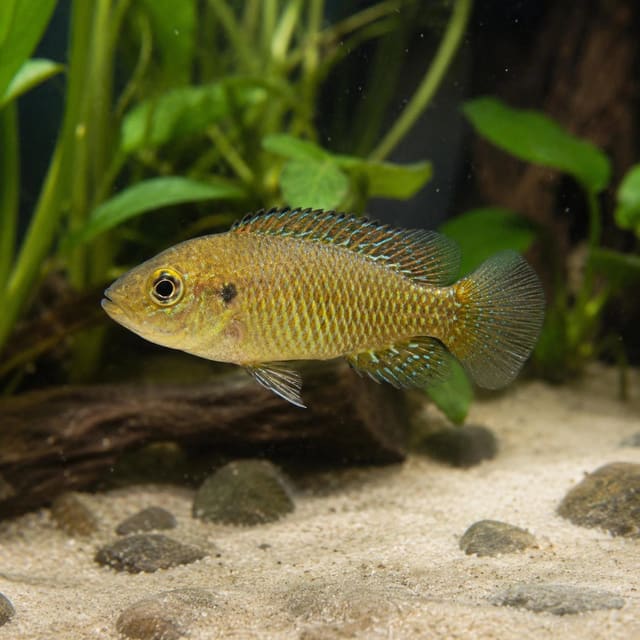
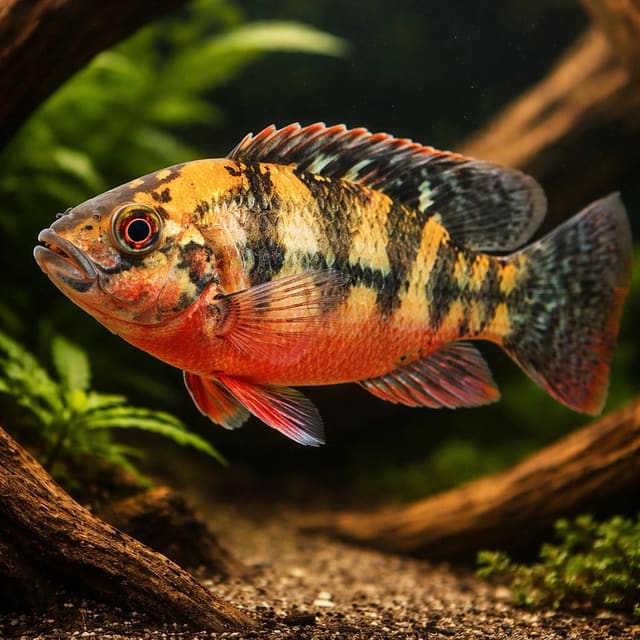
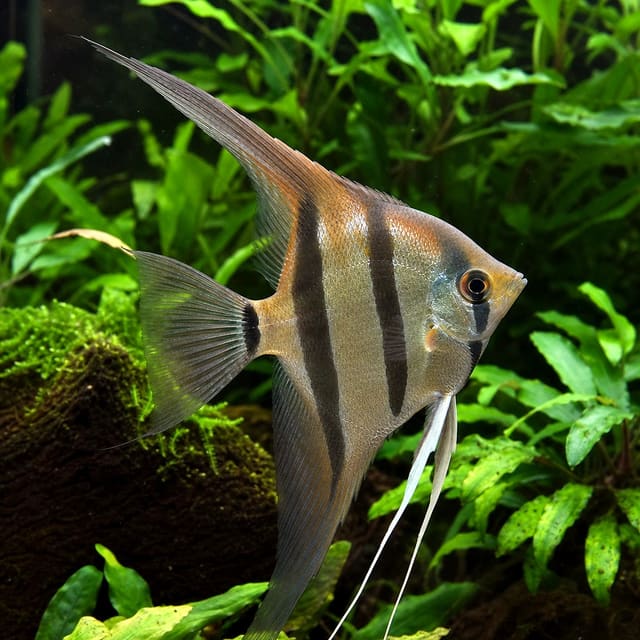
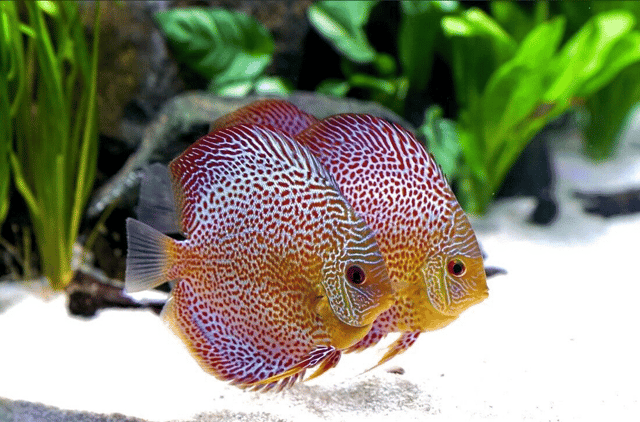
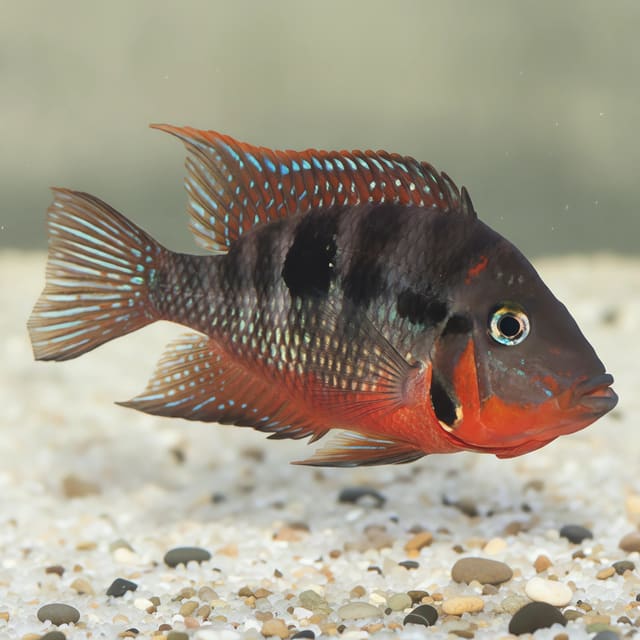
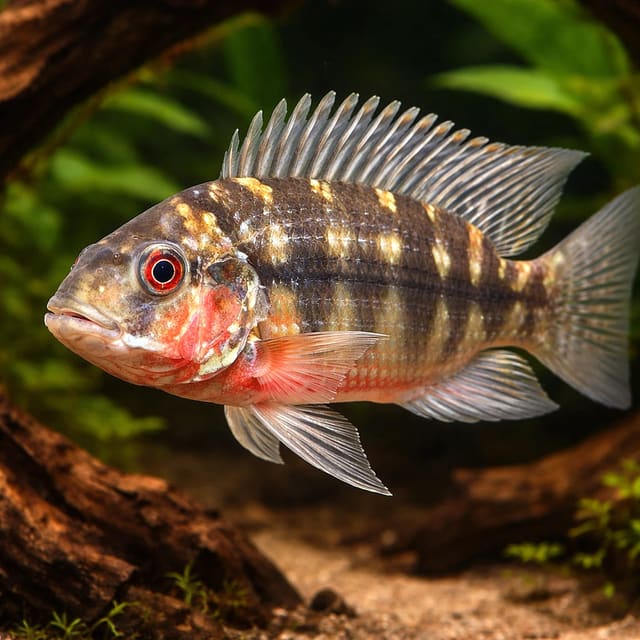
The gallery images are representative of this type of animal rather than photographs of the exact animal supplied, so colours can look slightly different from the live animal. The photograph showing two fish does not change the one-fish sold unit or establish that two fish bought together will form a compatible pair.
The dark body and contrasting pale spots give this cichlid its common name. The gallery shows the deep body, substantial head and long dorsal fin clearly. Enjoy those features as part of the animal's overall appearance, while allowing for changes in presentation as a young fish settles and grows. Lighting, background and viewing angle can make the same fish look quite different; a photograph is a poor basis for judging its eventual size or deciding which sex to buy.
Madagascar is the species' native home. That geographical identity is useful when choosing reading and planning the aquarium: this is not a South American species simply because it may be displayed alongside familiar aquarium cichlids. Its broad natural adaptability also does not remove the need for stable, clean water in captivity. A fish must still be able to rest, feed and move normally in the actual aquarium you provide.
This fish suits someone who enjoys managing a large fish's environment and is comfortable responding to territorial behaviour. That means recognising when an apparently peaceful arrangement has changed, being able to separate fish promptly, and maintaining filtration that can process the food and waste entering the aquarium. Space for an emergency separation is particularly important if your eventual plan involves a pair or other cichlids.
A single fish can be an entirely worthwhile display. You do not need to add another cichlid to make the aquarium interesting, and buying two individuals is not a shortcut to a settled pair. Equally, a mixed display needs more planning than matching the word “cichlid” on two labels. Adult size, usable territories, feeding opportunities and water requirements must all work together.
If you enjoy watching one substantial fish use a well-designed environment, this is an appealing project. If your priority is a busy community of small schooling species, choose animals suited to that arrangement. The care and compatibility sections below explain the decisions that matter most, from interpreting adult measurements to arranging a territory and feeding without unnecessary live prey.
| Your plan | What this fish needs |
|---|---|
| A dedicated display | Room for an adult, useful shelter and a reliable feeding and cleaning routine. |
| A pair or mixed cichlid aquarium | Compatible individuals, separate territories and mature accommodation available for separation. |
| A small-fish community | Choose a different centrepiece because small fish are prey. |
Adult measurements need their labels. FishBase records 28 cm total length for male/unsexed fish; total length includes the tail. The species care profile gives 28 cm standard length, which excludes the tail. These are different measurements and should not be treated as two identical whole-fish maximums. For aquarium planning, allow for a substantial fish whose body alone may reach the larger standard-length figure, with the tail additional.
This distinction matters more than choosing a neat number for a care card. The fish needs to turn comfortably between the front glass and the decoration, pass shelters without scraping, and move around another individual if housed socially. A deep or tall aquarium can hold a lot of water while still offering a poor floor plan. Look at the usable length and width after wood, pots and equipment are in place.
The species profile describes a 120 × 45 × 38 cm aquarium, approximately 205 litres, as suitable for a single compatible pair. That is guidance for a compatible pair, not a general capacity for several adult cichlids. Larger quarters provide more flexibility, particularly where other fish are involved. Compatibility remains a separate requirement even when the tank exceeds those dimensions.
Before choosing a tank, sketch where the fish will rest, where it will feed and where another animal could move without crossing that area. A shelter that occupies almost the entire width may look impressive yet leave little usable room around it. Similarly, a long bare tank can provide distance but still leave every fish visible to every other fish. Both room and the arrangement of that room matter.
A temporary juvenile aquarium should be part of a definite plan, with the larger home ready in time. Moving a fish because it is already cramped makes feeding, transport and social decisions harder. A planned move allows you to mature the new filter, organise safe shelter and compare water conditions before the fish needs the space urgently.
Provide several substantial hiding places using aquarium-safe roots, driftwood or clay pots. The aim is a layout where the fish can withdraw from view and still leave the shelter easily. Avoid narrow dead ends that an adult cannot turn in, especially in social housing. More than one retreat is useful because a fish may claim a particular resting place or block another animal's access to it.
Sand is the preferred substrate in the species care profile, with fine gravel also acceptable. Choose a layout you can keep clean around the shelter entrances and beneath the feeding area. Deep piles of decoration are less useful if they create inaccessible pockets of uneaten food. Keep heavy items stable and check that they cannot shift if the substrate around them is disturbed.
Plants are optional, but additional cover can be useful. Position planting so it helps break up lines of sight while leaving room for the fish and your maintenance tools. A planted corner and open central route may be easier to manage than filling the entire floor with vegetation. You should be able to inspect the fish without having to strip its shelter away on every visit.
Think through the aquarium from the fish's level. A piece of wood that looks attractive from above may provide little concealment along the front glass. A pot facing directly towards another occupied pot may encourage repeated confrontation. Changing the angle of a shelter or placing a visual barrier between areas can make the same equipment more useful.
Position the tank on a suitable level stand, away from direct sunlight, draughts and frequent vibration. These are general aquarium principles, but they have a practical payoff here: a calm location makes observation easier and reduces the need to disturb a large fish's surroundings. Leave enough room around the aquarium to service hoses and filters without lifting large amounts of decoration.
A useful layout will still work when the animal is much larger than it is on arrival. Small ornamental caves may be suitable temporary cover, but adult retreats need to be part of the design from the start. The most attractive arrangement is one you can maintain while the fish continues to use it comfortably.
For routine aquarium keeping, the species profile recommends aiming for 72–80°F, approximately 22.2–26.7°C. Its broader stated temperature range is 17–28°C. Use the routine aquarium aim when planning normal care, rather than treating the ends of a broad range as temperatures to alternate between. Check an actual thermometer reading; a heater setting alone does not tell you the temperature throughout the aquarium.
The same aquarium profile gives pH 6.5–8.0 and hardness 8–25 dGH. These figures describe its species husbandry guidance. They are not an instruction to adjust water repeatedly towards whichever end of a range seems most convenient. Establish what your source water and aquarium water actually measure, then maintain suitable conditions consistently.
| Check | Practical purpose |
|---|---|
| Temperature | Confirms the fish's actual environment and helps identify changes after maintenance or warm weather. |
| pH and general hardness | Describe different aspects of the water; one reading does not substitute for the other. |
| Ammonia and nitrite | Both should be zero; a detectable result requires attention to the aquarium's waste processing. |
| Nitrate | Helps you follow waste accumulation and judge the effectiveness of the maintenance routine. |
The water chemistry guide explains the relationship between these measurements. Record results with the date, feeding changes and maintenance performed. A trend is often more informative than a single isolated number, particularly after moving a fish or changing the filter load.
Use the water matcher as a comparison aid once you have real measurements. Water overlap is one part of suitability; it cannot decide whether two territorial fish will share the available space. Keep those decisions separate when planning any mixed aquarium.
This species' care notes favour small, frequent water changes because abrupt changes in water conditions can be troublesome. Prepare replacement water so it is safe for aquarium use and suitably matched to the tank. Base the amount and frequency on testing, feeding and the aquarium's condition, rather than assuming one fixed large weekly change suits every setup.
Clean accessible waste regularly and review how quickly it returns. If leftover food collects behind a particular pot, move the feeding position or improve cleaning access. Do not leave a poor layout unchanged and compensate by continually adding more equipment. The aim is a stable routine that removes waste without repeatedly dismantling the fish's territory.
A mature biological filter is essential before this fish arrives. Aquarium filters provide a place for bacteria that process toxic ammonia and nitrite; clear-looking water alone does not prove that this process is established. The first aquarium setup guide is useful for the preparation sequence, including checking the system before livestock is added.
Choose filtration for the actual aquarium and expected feeding load, then maintain it so water continues to pass through the filter properly. Check intakes, hoses and accumulated debris. An impressive flow rating is of little value if the intake is obstructed or food is repeatedly left to decompose in sheltered corners. Keep normal filter maintenance practical enough to carry out consistently.
Paratilapia polleni is a piscivore in nature. In aquaria it commonly accepts suitable dead foods, including frozen foods, and many individuals also take dried fish foods. Offer variety across appropriate foods the fish actually eats. A dried food suitable for predatory cichlids can be useful when accepted, but observe the fish rather than assuming that anything offered has been swallowed.
Choose portions that can be handled comfortably at the fish's current size. A large chunk is not necessarily a better meal for a small juvenile, and food that is mouthed repeatedly or abandoned can quickly become waste. Watch the feeding response and remove uneaten material rather than continuing to add more. Feeding gives you a convenient opportunity to check condition without chasing the fish from its shelter.
There is no need to use live fish as food. Build the routine around appropriate aquarium foods and avoid terrestrial meat such as beef or chicken. If changing the diet, keep a note of what is accepted and how much remains. Variety is useful only when the fish eats the foods offered and the aquarium can cope with the resulting waste.
Spend a little time observing before feeding as well as during it. Check swimming, breathing, body condition, fins and willingness to emerge. A fish that stays hidden may simply be resting, but a persistent change from its normal behaviour deserves attention. If it is also losing access to food or being chased whenever it moves, investigate the social arrangement as well as the water.
Colour alone is not a diagnosis. Avoid choosing a treatment from a photograph or adding products simply because the animal looks different under new lighting. Water results, recent changes and a clear description of the symptoms make any further advice more useful.
A single specimen or an established compatible pair is the clearest starting point for social planning. The species is generally aggressive towards its own kind, and a group of young fish may become a very different arrangement as territories develop. Do not assume that growing up together guarantees continued tolerance. The way the animals use the space now is more important than how calm they were when first introduced.
A pair is a behavioural relationship, not simply two fish occupying the same aquarium. Even an apparently established pair needs observation and somewhere to retreat. If one fish controls all useful shelter or prevents the other from feeding, the arrangement needs intervention. A second cave is not sufficient if the dominant fish can guard both entrances from the same position.
The species profile describes relative tolerance towards other species outside its territory, while also stressing that a large aquarium is needed for mixed cichlid housing. It mentions some Rift Lake cichlids and milder Central American cichlids as possible combinations. Those are broad examples requiring careful individual assessment, not a list of automatically safe companions.
Work through the full requirements of each proposed fish. Check adult size, water conditions, territory, feeding method and how it will behave if displaced. A fish may be too large to swallow yet still suffer persistent intimidation. Another may tolerate the water perfectly while repeatedly entering the cichlid's chosen area. The aquarium must support normal behaviour for every occupant, including the quieter one.
Small fish will be eaten, so a busy community of small schooling fish is unsuitable. Do not use swimming speed or a period without incidents as evidence of safety. Predation risk changes as the cichlid grows, and a fish that seemed too large to take when the predator was young may not remain so.
Social trouble is easier to address before fins are torn. Look for a fish that waits behind equipment, abandons food when the cichlid approaches or stays in one small corner. Check behaviour at different times, because an aquarium that looks quiet at the front glass may contain persistent exclusion around a shelter. Normal access to food and resting places is part of compatibility.
A larger aquarium increases your options but does not guarantee that an incompatible combination will work. If your enjoyment depends on keeping a particular small species, design around that species instead. Choosing the right inhabitants at the start is far easier than managing an avoidable conflict once everyone is established.
Breeding behaviour can greatly increase the area a pair defends. A territory that previously seemed generous may become inadequate once the fish begin guarding a spawning site. Consider this possibility before adding tankmates, rather than relying on a peaceful period as proof that the arrangement will remain stable. The most useful preparation is room and a workable separation plan.
This is a substrate-spawning cichlid with parental care. The fish may excavate a depression and use the substrate, wood or exposed roots around the spawning area. Both parents can become involved in defending the brood, but that does not mean they tolerate each other at every stage. The female may exclude the male while tending eggs, and aggression within a young pair can also require separation.
Leave the fish a choice of shelter and watch how they use it. Do not repeatedly rearrange the territory to provoke courtship or move a reluctant individual back beside an aggressive partner. A breeding ambition should never take priority over an animal's ability to rest and feed safely. If a pair is incompatible, more feeding or warmer water is not a substitute for resolving that conflict.
Growing juveniles also need a plan. Fish that coexist when small may later claim separate territories; that change can happen unevenly within a group. Watch for the first signs that one individual is controlling the others and be ready to divide or move them. A spare aquarium needs a functioning filter and suitable cover, not merely an empty glass box found after trouble starts.
Known locality or spotted forms should be kept distinct where their identity is documented. Do not choose prospective breeding partners solely because two photographed fish look similar. Maintaining clear records of the animals you acquire is more useful than assigning a form name from spot size alone. This listing identifies the species without promising a particular locality or a breeding line.
For everyday keeping, success is simpler: the fish has enough space, uses its surroundings normally, eats an appropriate varied diet and remains in stable water. Courtship and young fish can be interesting developments, but they add responsibilities for housing, feeding and separation. Plan those responsibilities before encouraging the aquarium to become a breeding project.
Have the aquarium functioning and tested before arranging delivery. Check its cover, temperature, shelter and filtration, and make sure any resident fish are suitable. Keep the route from the delivery door to the aquarium clear so you can inspect the parcel and settle the fish without searching for equipment. A quiet, prepared space makes the arrival much easier to manage.
Tropical Fish Co uses a licensed live-animal courier and confirms the Thursday or Friday delivery date with tracking by email. Fish are hand-bagged with oxygen and packed in an insulated box, with a heat pack when conditions call for one. Be present to receive the parcel, as live fish cannot be left unattended. Read the current delivery and Live Arrival Guarantee policy before your delivery day.
Open and inspect the parcel on the day it arrives. For a Live Arrival Guarantee claim, the policy requires a continuous unboxing video beginning with the sealed parcel and showing the fish still inside the sealed bag. Have the camera ready before opening so that evidence is available if there is a problem. Contact the team the same day with the order number and video if a claim is needed.
Switch off aquarium lights and handle the bag carefully. The store's arrival guidance is to float the bag for 20–30 minutes before release, acclimatising slowly. Keep bag water out of the aquarium. Avoid exposing the fish to bright light or unnecessary handling while moving it into the prepared environment.
Once released, give the animal time to find shelter. Watch quietly from outside the aquarium rather than moving decoration to make it visible. Check that it can move freely, and continue to observe breathing and behaviour alongside water results. If an established resident immediately excludes it from the usable space, address the social problem promptly instead of assuming it will disappear after settling.
Keep the first observations simple: where the fish rests, how it moves and whether it accepts suitable food. These notes give you a useful reference for later changes. Avoid adding more animals while you are still learning the new fish's behaviour and the effect of its feeding on the aquarium.
FishBase records 28 cm total length for male/unsexed fish, including the tail. The species care profile gives 28 cm standard length, excluding the tail. Plan around a substantial adult with room beyond that body-length figure, rather than treating either measurement as the size supplied.
The species profile describes a 120 × 45 × 38 cm aquarium, approximately 205 litres, for a single compatible pair. Larger accommodation is needed when planning a mixed cichlid display. Usable floor space, shelter and compatibility all matter; the volume alone does not establish a safe stocking level.
A single fish or an established compatible pair is the usual approach. This species can be aggressive towards its own kind, and a juvenile group may need separating as territories develop. Have suitable separation space ready before attempting social housing.
Its adult size, predation and territorial behaviour make it a demanding first aquarium project. It suits a keeper who can maintain stable water, recognise social problems and separate fish promptly. Preparing the permanent aquarium before purchase is particularly important.
Offer a varied selection of suitable frozen or other appropriate aquarium foods. Many individuals also accept dried fish foods. This is a piscivore, but live feeder fish are unnecessary. Match portions to the animal's size, observe actual intake and remove leftovers.
The species profile's routine aquarium aim is 72–80°F, approximately 22.2–26.7°C, with pH 6.5–8.0 and hardness 8–25 dGH. Maintain suitable conditions consistently and use smaller regular water changes, with replacement water prepared appropriately.
They can defend substantial territories and become more aggressive when breeding. Small fish are prey, and their own species may be challenged. Watch access to food and shelter as well as visible fighting, and intervene if one fish cannot avoid persistent pressure.
The species profile mentions some Rift Lake cichlids and milder Central American cichlids in a large, carefully planned aquarium. These are conditional possibilities, not universal companions. Check each animal's adult needs and provide separate territories; a dedicated setup is easier to manage.
Tropical Fish Co uses oxygen-filled bags, insulated packaging and a licensed live-animal courier, with a confirmed Thursday or Friday date and tracking by email. Be present and inspect the parcel that day. A Live Arrival Guarantee claim needs a continuous video from the sealed parcel to the fish still in its sealed bag, with same-day contact.
No reviews for this item yet. Bought one? Honest reviews only, good or bad.
What customers say about ordering from us
I have a small group of long finned mountain minnows. So was delighted to be able to order ten of this variety to increase the genetics in my tank . The ones I recieved are healthy but it’s to early to give a verdict on wether they are of a long finned type since they are small currently.
Gordon Walker · 23 Sept 2026
100% success travel and "installation". Pleased with quality of purchase. The Siamese fighter a bit "shy" so have not yet seen him at his best yet but looking good. Happy customer. GG
George E Garratt · 21 Sept 2026
Reviews of our shop, collected by Judge.me, an independent third-party review collector. Newest first.