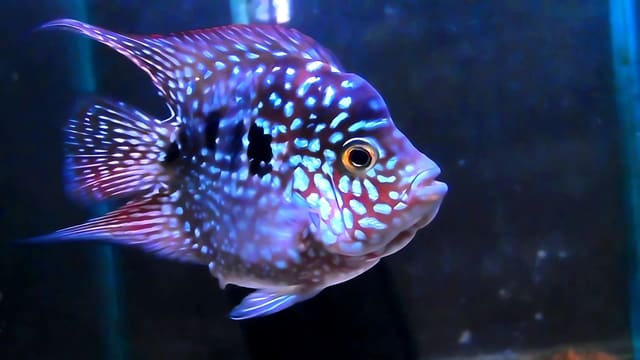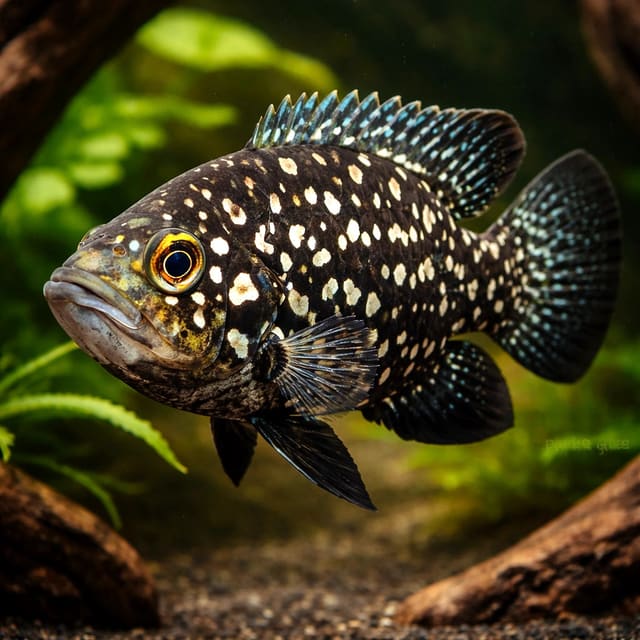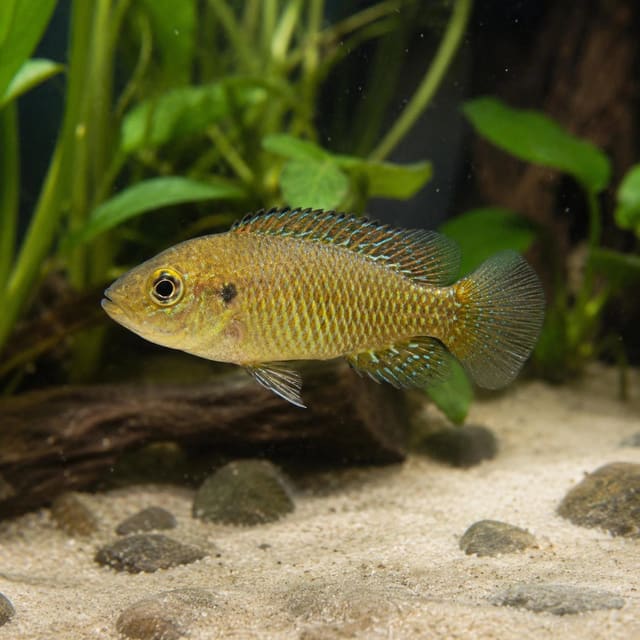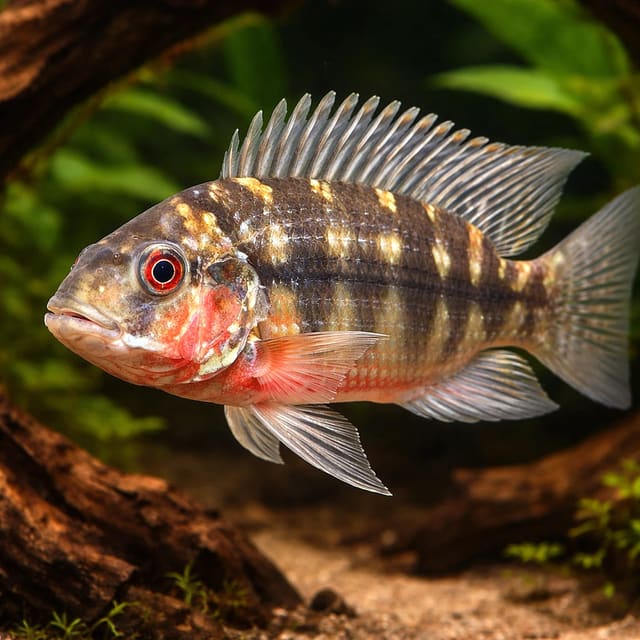
Redbreast Tilapia (Coptodon rendalli)
24–28°C
£7.99

A bold West African cichlid for large, mature aquariums, with strong filtration, robust tankmates and careful adult-size planning.
Adult size is the maximum length this species reaches at full maturity (scientific sources). The livestock you receive will be younger and smaller — pick a size above for the actual shipping size. Product-photo provenance and any image-specific limitations are stated on the listing.
Heterotilapia buettikoferi
Save when buying multiple fish. Each quantity is one fish; sex and pair formation are not guaranteed unless the selected variant explicitly states them.
Confirm your email, then we’ll send an availability message for this exact item if it returns within 180 days.
This request is only for this product—no newsletter or other promotions. A mail-provider retry may very rarely duplicate the same availability message. Unconfirmed addresses are removed after 48 hours. See our privacy policy.
A bold West African cichlid for large, mature aquariums, with strong filtration, robust tankmates and careful adult-size planning.
Adult size is the maximum length this species reaches at full maturity (scientific sources). The livestock you receive will be younger and smaller — pick a size above for the actual shipping size. Product-photo provenance and any image-specific limitations are stated on the listing.
Cichlids are a family of roughly 1,800 accepted species, not one care type. Before buying, identify the exact species and source, then compare adult measurement, usable tank dimensions, social system, territory, tested water, diet and an exit plan. No family-wide minimum tank, water range or tank-mate list is safe.
Maintain these water conditions for optimal health and vibrant colors
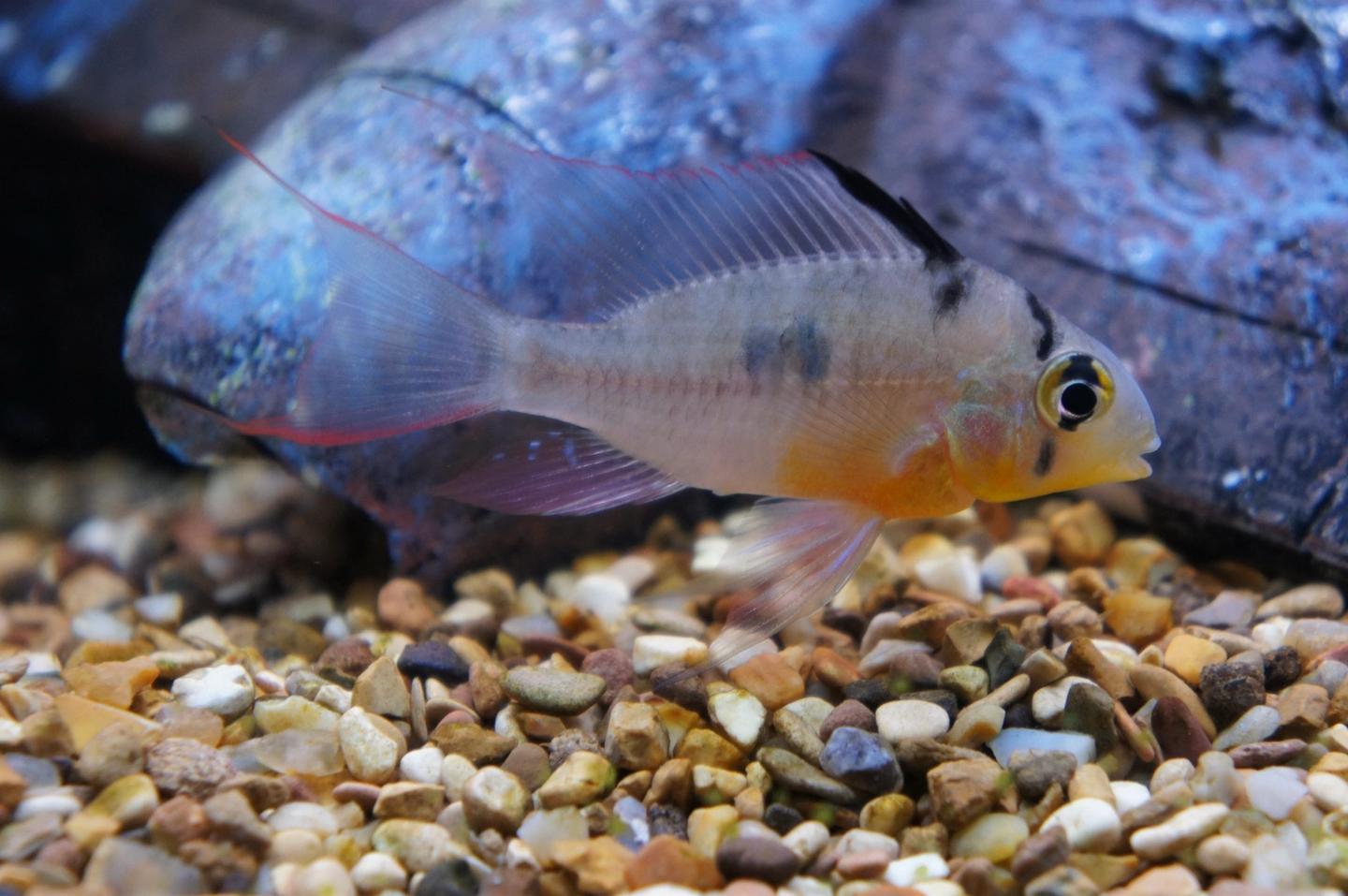
Zebra Tilapia / Buttikoferi Cichlid is a large West African cichlid with bold juvenile barring, strong presence and a temperament that needs honest planning. our stock records still use Tilapia buttikoferi, and many aquarium searches use Heterotilapia buttikoferi. FishBase currently lists the corrected spelling as Heterotilapia buettikoferi, so this page keeps the trade names visible while using the source-backed name in the care notes.
This Shopify product covers five size options when available: 3-4.5 cm, 4.5-5.5 cm, 6-7 cm, 8-10 cm and 25-30 cm. Those are purchase sizes, not a promise that the fish stays small. FishBase gives a maximum of about 30.8 cm standard length, and aquarium keepers should plan for a fish that can approach the low-to-mid 30 cm range in total length. A young zebra tilapia can look manageable, but adult housing is the real decision.
The naming history is important because it is one reason older listings become messy. The aquarium trade often writes the fish as Heterotilapia buttikoferi or Tilapia buttikoferi. FishBase explains that the corrected spelling is Heterotilapia buettikoferi, named for Johann Buettikofer. Rather than repeating every version through the page, this listing uses Zebra Tilapia and Buttikoferi Cichlid naturally, then explains the taxonomy once.
The common name is also slightly confusing. This is not a small tilapia for a mixed community aquarium. It is a substantial cichlid with the strength, appetite and territorial behaviour that come with that body plan. The bold striped juvenile look is what makes the fish attractive, but the adult temperament is what determines whether it is a good match for your aquarium.
Young Zebra Tilapia are striking fish. They normally show a pale yellow, cream or white body with strong dark vertical bars, giving the classic zebra or hornet look. The contrast can vary with mood, hierarchy, lighting, stress and age. Newly arrived fish may look flatter at first, then sharpen up as they settle, feed and claim a secure area.
As the fish grows, the body becomes deeper and more powerful. The stripes may become broader or less crisp with maturity, and large adults can look much heavier through the head and shoulder than the small fish in the bag. Colour should be judged after the fish has had time to acclimate, not in the first minutes after arrival.
Heterotilapia buettikoferi is native to tropical West Africa. FishBase places it in the lower reaches of coastal rivers from Guinea-Bissau to western Liberia, while other species summaries describe large rivers, marginal vegetation and rocky or structured areas. These are not fragile nano-fish habitats; they are warm, productive waters where a large cichlid can graze, patrol and defend space.
That natural background explains the aquarium approach. Use a mature, stable system with strong filtration, open swimming room and robust structure. Sand or fine gravel works well, but heavy stones and wood should be set securely before the fish has the strength to dig beneath them. Expect rearranging, testing and occasional plant damage. Robust plants can be tried, but the layout should still work if plants are moved or eaten.
For adult care, plan around a 600 litre or larger aquarium with a long footprint. A smaller grow-out tank can work only as a short-term stage when the fish is young and the adult tank is already realistic. This is the kind of species where buying first and planning later usually causes stress for both fish and keeper.
Build the aquarium around sight breaks. Use wood, rockwork and caves to break up open lines of view, while leaving enough clear space for the fish to turn and cruise. Use strong lids, protected heaters and a filter system sized for adult waste, not juvenile size. Large cichlids produce a meaningful bioload, so weekly maintenance and stable oxygenation matter.
If you are attempting a pair or mixed robust-cichlid setup, keep a divider or spare tank plan ready. Compatibility can change as the fish matures, and a peaceful juvenile group does not guarantee peaceful adults. A single specimen in a large display is often the safer and more predictable route.
| Temperature | 23-28C practical aquarium range; avoid sudden swings |
|---|---|
| pH | 6.5-7.8 as a stable planning range |
| Hardness | Moderate hardness is suitable; stability matters more than chasing extremes |
| Minimum aquarium | 600 litres or larger for adult care |
| Adult size planning | 30 cm+ potential; FishBase lists 30.8 cm standard length |
| Temperament | Territorial, assertive and often aggressive when mature |
Do not make large chemical changes just to hit a narrow number. A stable, clean aquarium is more useful than a tank constantly adjusted up and down. Keep ammonia and nitrite at zero, nitrate controlled by water changes, and temperature steady. Because this fish is strong and active, good oxygenation is part of the setup, not an optional extra.
Zebra Tilapia are omnivores, but they should not be fed like pure predators. In the aquarium, use quality cichlid pellets, spirulina foods, algae wafers and vegetable matter as the base. Blanched courgette, spinach, shelled peas and other suitable greens can help keep the diet balanced. Add measured protein foods such as shrimp, krill, bloodworm, insect larvae or chopped earthworm for variety.
Feed with restraint. A large cichlid that eats eagerly can quickly be overfed, and the extra waste will show in water quality. Young fish can take smaller meals more often; adults usually do well with controlled daily feeding and occasional vegetable grazing. Watch body shape and behaviour rather than relying only on appetite.
This is the section to take seriously. Zebra Tilapia are territorial cichlids, and many keepers find them highly aggressive as adults. They may defend a chosen area, chase rivals, harass weaker fish and become more forceful during breeding condition. A bold personality is part of the appeal, but it means the fish is not suitable for peaceful community aquariums.
Suitable tankmates are limited to robust fish in genuinely spacious systems. Large armoured catfish, strong Synodontis-type catfish or similarly confident large cichlids may work where the aquarium has enough volume and sight breaks. Avoid small tetras, guppies, dwarf cichlids, shrimp, snails, long-finned fish, delicate peaceful species and any tankmate that cannot handle assertive cichlid behaviour.
If you already keep peaceful fish, this is usually a separate-project species rather than an add-on. Think in terms of a specialist large-cichlid aquarium, not a community centrepiece for a small tank.
Zebra Tilapia are substrate-spawning cichlids with strong parental behaviour. A pair may clean and defend a flat site, then guard eggs and fry aggressively. That behaviour can be fascinating in the right aquarium, but it can also make tankmates unsafe. Even experienced keepers should expect breeding condition to increase territorial pressure.
If breeding is not the goal, keep the layout calm and avoid overcrowding. If breeding is the goal, use a dedicated aquarium, large territory, excellent filtration and a plan for the young. Never release unwanted fish into local waterways; this species has become established outside its native range in some regions after aquarium releases.
Use a quick reality check before choosing this fish. The aquarium should be mature, covered, strongly filtered and large enough for the adult. Tankmates should already be chosen around a territorial cichlid. Decor should be heavy enough to stay safe if the fish digs. The keeper should be comfortable moving fish, using dividers and adjusting stocking if behaviour changes.
If those pieces are in place, Zebra Tilapia can be a rewarding feature fish. It has presence, intelligence, feeding response and a dramatic pattern when young. It suits aquarists who enjoy large cichlids and want a fish with real character. It does not suit nano tanks, planted community aquariums, shrimp tanks or casual mixed setups.
For comparison, Redbreast Tilapia and Mozambique Tilapia are useful tilapia-type references, while Spotted Tilapia / Tiger Cichlid is another large West African cichlid where adult space matters. Temporalis Cichlid is a very different Lake Tanganyika species, but it is a good reminder that structure and territory shape cichlid success.
When your fish arrives, dim the aquarium lights and let the sealed bag equalise temperature before mixing small amounts of aquarium water gradually. Release the fish gently, avoid adding transport water to the aquarium where possible, and keep the first feed light. Give the fish a quiet settling period before judging colour, confidence or long-term behaviour.
Eligible livestock orders are covered by the Tropical Fish Co Live Arrival Guarantee when the arrival and acclimation terms are followed. The guarantee is included here because it matters, but the main job of this page is still to help you decide whether this large cichlid is the right fish for your aquarium.
No reviews for this item yet. Bought one? Honest reviews only, good or bad.
What customers say about ordering from us
I have a small group of long finned mountain minnows. So was delighted to be able to order ten of this variety to increase the genetics in my tank . The ones I recieved are healthy but it’s to early to give a verdict on wether they are of a long finned type since they are small currently.
Gordon Walker · 23 Sept 2026
100% success travel and "installation". Pleased with quality of purchase. The Siamese fighter a bit "shy" so have not yet seen him at his best yet but looking good. Happy customer. GG
George E Garratt · 21 Sept 2026
Reviews of our shop, collected by Judge.me, an independent third-party review collector. Newest first.