−14%
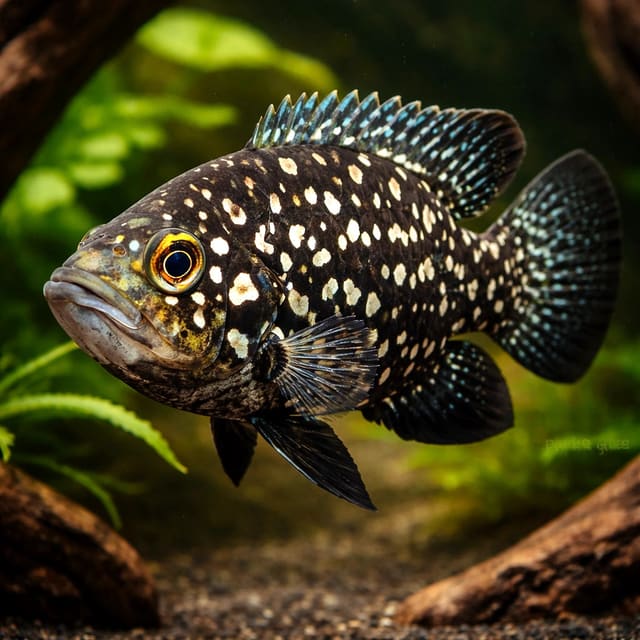
Starry Night Cichlid (Paratilapia polleni)
22.2–26.7°C · pH 6.5–8
£16.33£18.99

Rare Thoracochromis brauschi, a Fwa River Congo Basin cichlid for mature African river aquariums. Semi-aggressive, best for experienced keepers.
Adult size is the maximum length this species reaches at full maturity (scientific sources). The livestock you receive will be younger and smaller — pick a size above for the actual shipping size. Product-photo provenance and any image-specific limitations are stated on the listing.
Thoracochromis brauschi
Save when buying multiple fish. Each quantity is one fish; sex and pair formation are not guaranteed unless the selected variant explicitly states them.
Confirm your email, then we’ll send an availability message for this exact item if it returns within 180 days.
This request is only for this product—no newsletter or other promotions. A mail-provider retry may very rarely duplicate the same availability message. Unconfirmed addresses are removed after 48 hours. See our privacy policy.
Rare Thoracochromis brauschi, a Fwa River Congo Basin cichlid for mature African river aquariums. Semi-aggressive, best for experienced keepers.
Adult size is the maximum length this species reaches at full maturity (scientific sources). The livestock you receive will be younger and smaller — pick a size above for the actual shipping size. Product-photo provenance and any image-specific limitations are stated on the listing.

Cichlids are a family of roughly 1,800 accepted species, not one care type. Before buying, identify the exact species and source, then compare adult measurement, usable tank dimensions, social system, territory, tested water, diet and an exit plan. No family-wide minimum tank, water range or tank-mate list is safe.
Maintain these water conditions for optimal health and vibrant colors
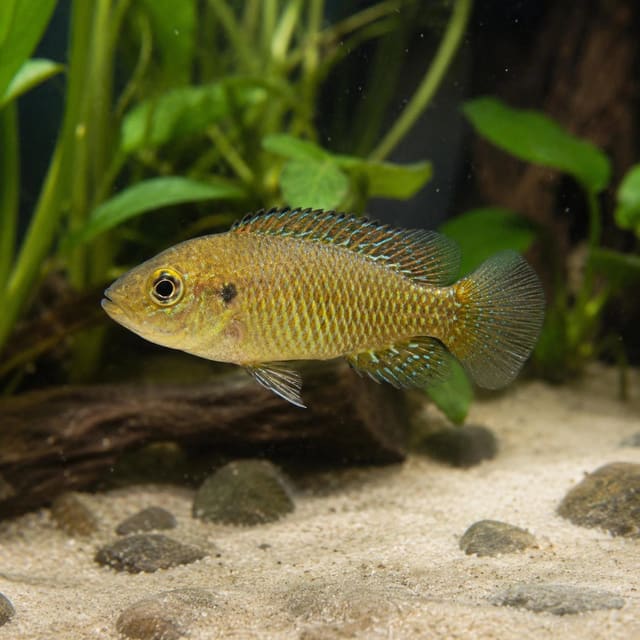
Thoracochromis brauschi is a rare Congo Basin haplochromine cichlid from the Fwa River system in the Democratic Republic of the Congo. It is a specialist fish for keepers who enjoy subtle colour, territorial behaviour and biotope-style aquariums rather than a loud show cichlid. The current variants are supplied around 4-5 cm and 5-6 cm, with adult planning around 10 cm.
This is a genuine African river cichlid, not a Malawi or South American species. It suits aquarists who can provide stable warm water, visual barriers, good filtration and carefully chosen tank mates. Kept well, it offers interesting social behaviour, male colour development and the kind of rare-species appeal that rewards close observation.
| Scientific name | Thoracochromis brauschi |
|---|---|
| Origin | Fwa River, Sankuru/Kasai drainage, middle Congo River basin, DRC |
| Supplied sizes | 4-5 cm and 5-6 cm variants |
| Adult size | Plan for about 10 cm total length |
| Temperament | Semi-aggressive, especially males and breeding fish |
| Best for | Experienced keepers, rare African cichlid setups and Congo-style aquariums |
FishBase records Thoracochromis brauschi as endemic to the Fwa River, part of the Sankuru River and Kasai drainage within the middle Congo River basin. This narrow locality matters: the fish is not a generic African cichlid that should be dropped into any hardwater rock tank. It is a riverine, freshwater, demersal species associated with tropical water around 25-27°C.
In aquarium terms, aim for a warm Congo river feel: sand or fine gravel, smooth stones, wood, leaf-litter influence if appropriate, open swimming lanes and broken sight lines. The setup should give males territories without forcing every fish into constant face-to-face contact.
The beauty of Thoracochromis brauschi is understated until mature males begin to colour. Expect a compact, laterally compressed cichlid shape with bronze, grey, olive and darker patterning that can shift with mood, hierarchy and breeding condition. Males are usually more colourful than females, with stronger throat and facial tones when dominant.
Because this species is rare in the trade, exact colour intensity can vary by sex, age, stress level and line. Do not judge young or newly arrived fish only by first-day colour. Stable water, good diet and a settled hierarchy bring out the best display.
Use a mature aquarium with enough floor and midwater space for territorial movement. A 100 litre aquarium is the minimum starting point for a pair or very small group, but 120 litres or more gives better margin for visual barriers and tank mates. Build the layout with smooth rock piles, driftwood, hardy plants such as Anubias or Java fern, and open areas where fish can feed without being trapped.
Keep lighting moderate and avoid a bare, exposed tank. The species can be nervous when first introduced, and confident behaviour usually improves when the fish can retreat behind wood, plants or rockwork. Filtration should be steady and oxygen-rich without blasting the fish around the aquarium.
| Temperature | 25-27°C preferred; 24-28°C practical holding range |
|---|---|
| pH | 6.0-7.2 from supplier/Fwa River care context; keep stable |
| Hardness | Soft to moderately hard, roughly 0-20 dGH tolerance |
| Minimum tank | 100 litres minimum; larger is better for groups or tank mates |
| Water quality | Zero ammonia/nitrite, low nitrate, regular partial water changes |
Thoracochromis brauschi is an omnivorous cichlid that should receive a varied diet. Use quality small cichlid pellets or granules as the staple, then rotate frozen foods such as bloodworm, daphnia, brine shrimp, cyclops and mosquito larvae. Add some spirulina or vegetable-rich prepared food so the diet is not entirely meaty.
Feed modest portions once or twice daily. These are active cichlids, but overfeeding quickly damages water quality and increases aggression around feeding spots. A varied diet supports colour, condition and breeding readiness far better than one rich food fed repeatedly.
This is a semi-aggressive species, best understood as territorial rather than simply nasty. Males may claim areas, display to rivals and push other fish away from a preferred site. With space and visual barriers, that behaviour becomes interesting rather than destructive. In cramped or bare tanks it can turn into stress.
Keepers report that Thoracochromis brauschi can be shy or skittish at first. Give new fish time, cover and a predictable feeding routine. Avoid constant rescapes or chasing. A settled pair or group is far more likely to show natural movement and colour.
| Good options | Robust similar-sized African river cichlids, larger peaceful tetras/barbs, suitable Synodontis and active dither fish |
|---|---|
| Use caution with | Other territorial cichlids, especially if the tank is under 120 litres |
| Avoid | Tiny fish, shrimp, delicate long-finned species, very aggressive Malawi-style communities |
| Group planning | Use extra space and visual barriers if keeping more than a pair |
Earlier generic copy treated this fish as a likely substrate spawner, but Fishipedia identifies Thoracochromis brauschi as an oviparous mouthbrooder, with dominant males capable of breeding with multiple females. That changes the aquarium advice: provide territory, stable water, good conditioning food and cover for females, rather than assuming eggs will be guarded on a flat rock.
During breeding, expect increased male display and territorial pressure. If keeping a group, watch female condition closely and be ready to move bullied fish. Fry care should be planned before breeding attempts, because rare cichlid fry need clean water and appropriately sized first foods.
Dim the lights on arrival and acclimate slowly. Match temperature, then gradually introduce aquarium water over 30-45 minutes before release. For the first week, prioritise low stress over heavy feeding: small meals, stable temperature, no ammonia or nitrite, and no aggressive tank mates testing the new fish immediately.
Watch for clamped fins, heavy breathing, hiding that never improves, or one fish being pinned in a corner. Those are signs the layout or social mix needs adjustment. Adding an extra visual barrier can sometimes solve more than changing the water chemistry.
The most important design choice is not a decoration style but line-of-sight control. Use wood, rock piles, plant clumps and open lanes so a dominant fish can hold a small area without seeing every other fish every second. This reduces chasing and lets subordinate fish feed, rest and regain colour. If the tank is too open, even a moderate male can make the whole aquarium feel tense.
For a pair, provide at least two clear shelter zones so the female has a retreat. For a group, use a longer tank footprint and several broken territories. Add dither fish only if they are large and quick enough not to be bullied. Avoid mixing this species casually with hardwater mbuna or very aggressive rift-lake cichlids just because it is African; the water style and behaviour are different.
A healthy Thoracochromis brauschi should hold its fins cleanly, breathe steadily, respond to food and show curiosity about its territory. Newly imported or newly moved fish may hide at first, but they should gradually become more confident. Watch the belly line, fin edges and breathing rate during the first two weeks.
Because this is a rarer cichlid, prevention matters more than rescue. Quarantine new tank mates where possible, avoid sudden parameter swings, and keep nitrate under control. If aggression increases after a rescape or water change, give the fish time to re-establish territories before assuming the social mix has failed.
Choose Thoracochromis brauschi if you want a rare Congo Basin cichlid with genuine behaviour and you are comfortable managing semi-aggressive fish. It is a strong option for experienced freshwater keepers building a riverine African display, but it is not ideal for tiny community tanks, delicate nano fish, shrimp tanks or beginners who want a simple peaceful centrepiece.
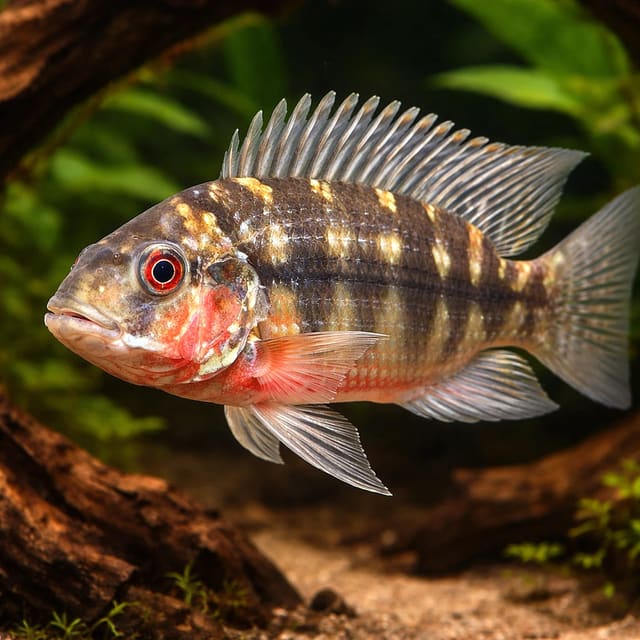
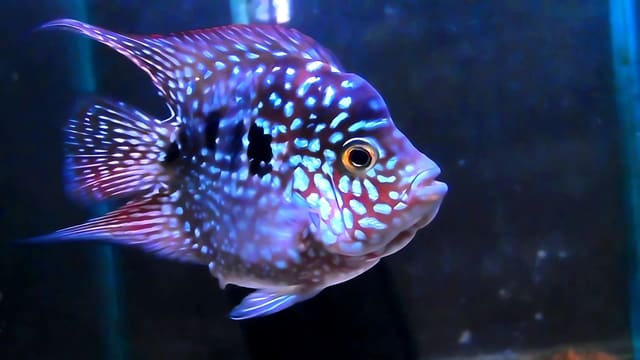
Our listing keeps the practical details visible: supplied size, adult planning size, Congo Basin origin, water range, temperament and compatibility. The exact supplier source image is kept with the product alongside the aquarium reference images, so the page remains visual without losing the real fish record. We pack live fish carefully for UK livestock transport and keep the care advice focused on welfare rather than keyword repetition.
No reviews for this item yet. Bought one? Honest reviews only, good or bad.
What customers say about ordering from us
I have a small group of long finned mountain minnows. So was delighted to be able to order ten of this variety to increase the genetics in my tank . The ones I recieved are healthy but it’s to early to give a verdict on wether they are of a long finned type since they are small currently.
Gordon Walker · 23 Sept 2026
100% success travel and "installation". Pleased with quality of purchase. The Siamese fighter a bit "shy" so have not yet seen him at his best yet but looking good. Happy customer. GG
George E Garratt · 21 Sept 2026
Reviews of our shop, collected by Judge.me, an independent third-party review collector. Newest first.