Redbreast Tilapia (Coptodon rendalli)
24–28°C
£7.99

A hardy Mozambique Tilapia for very large adult aquariums: robust, brackish-tolerant and full of cichlid character, but territorial and best planned around a 760L+ adult setup.
Adult size is the maximum length this species reaches at full maturity (scientific sources). The livestock you receive will be younger and smaller — pick a size variant above for the actual shipping size. Product-photo provenance and any image-specific limitations are stated on the listing.
Oreochromis mossambicus
Save when buying multiple fish. Each quantity is one fish; sex and pair formation are not guaranteed unless the selected variant explicitly states them.
Confirm your email, then we’ll send an availability message for this exact item if it returns within 180 days.
This request is only for this product—no newsletter or other promotions. A mail-provider retry may very rarely duplicate the same availability message. Unconfirmed addresses are removed after 48 hours. See our privacy policy.
A hardy Mozambique Tilapia for very large adult aquariums: robust, brackish-tolerant and full of cichlid character, but territorial and best planned around a 760L+ adult setup.
Adult size is the maximum length this species reaches at full maturity (scientific sources). The livestock you receive will be younger and smaller — pick a size variant above for the actual shipping size. Product-photo provenance and any image-specific limitations are stated on the listing.
Cichlids are a family of roughly 1,800 accepted species, not one care type. Before buying, identify the exact species and source, then compare adult measurement, usable tank dimensions, social system, territory, tested water, diet and an exit plan. No family-wide minimum tank, water range or tank-mate list is safe.
Maintain these water conditions for optimal health and vibrant colors
The Mozambique Tilapia (Oreochromis mossambicus) is a powerful, adaptable African cichlid with far more presence than its young sale size suggests. the trade label also uses Mozambi and the older name Sarotherodon mossambica, but the accepted name used for care and search is Oreochromis mossambicus. It is famous for hardiness, fast growth, brackish-water tolerance and confident cichlid behaviour.
This listing has been written for serious fishkeepers rather than small-community impulse buys. Juveniles can be grown on in smaller aquariums, but the adult fish is a large, muscular tilapia that should be planned around a very large, heavily filtered system. If you want a robust African cichlid with intelligence, appetite and real tank presence, it can be fascinating. If you want a peaceful planted community fish, choose something else.
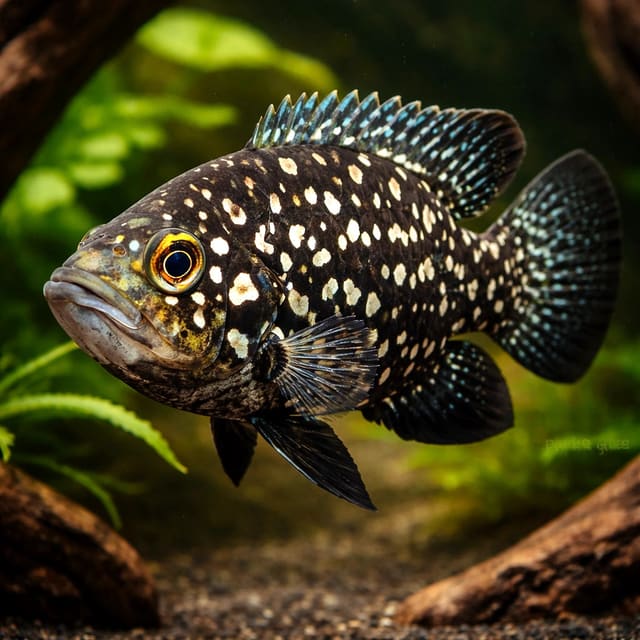
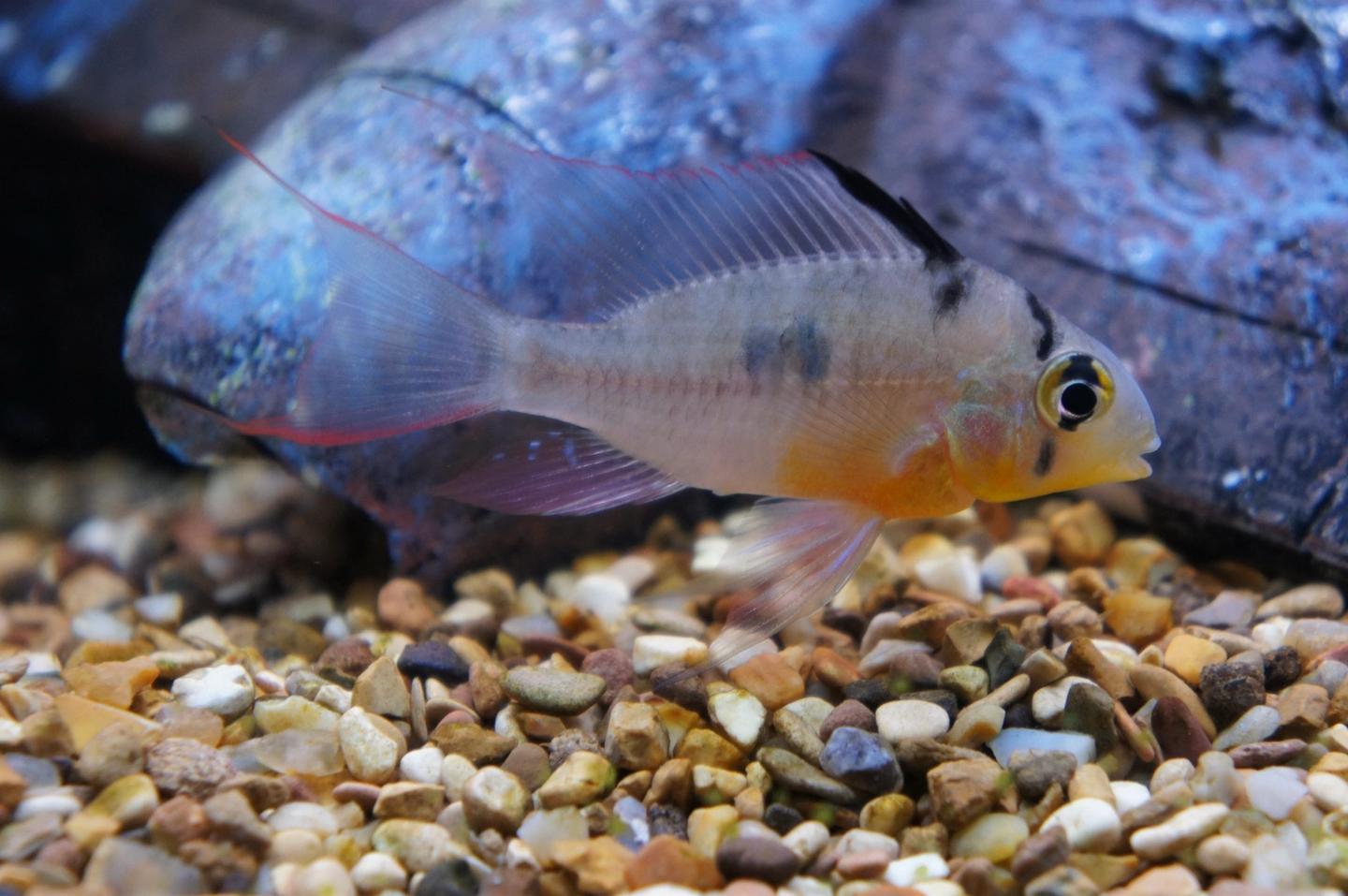
Mozambique Tilapia are not neon show fish. Their appeal is strength, scale and behaviour. The body is deep, compressed and solid, usually silver-grey, olive or bronze with darker markings. Breeding males can become much darker, with a yellow-gold throat and cheek area and reddish margins on the dorsal and tail fins. In a big aquarium the fish looks purposeful: it cruises, grazes, digs and inspects its surroundings like a confident cichlid rather than a background shoaler.
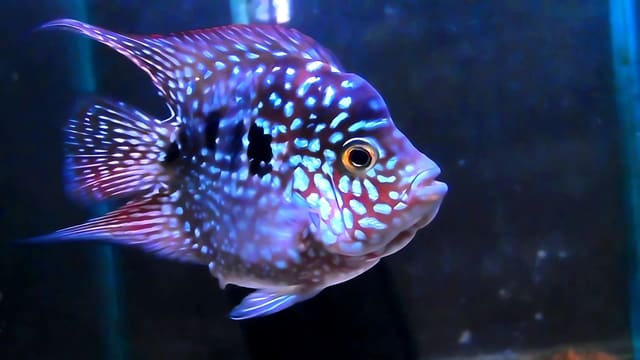
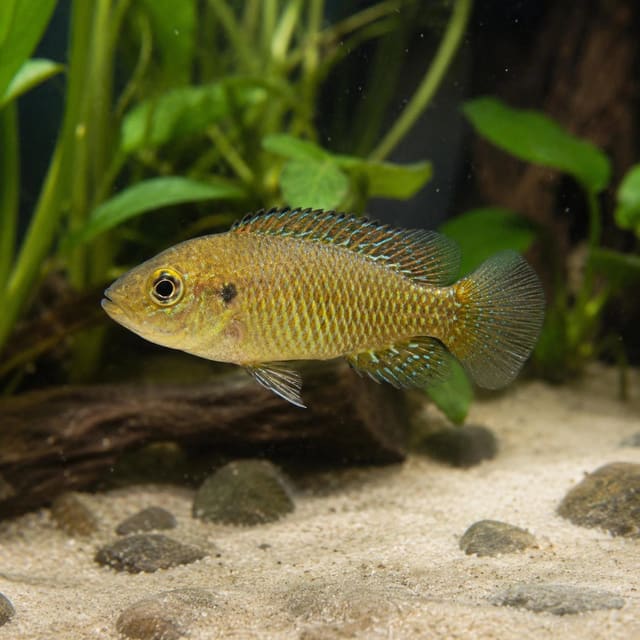
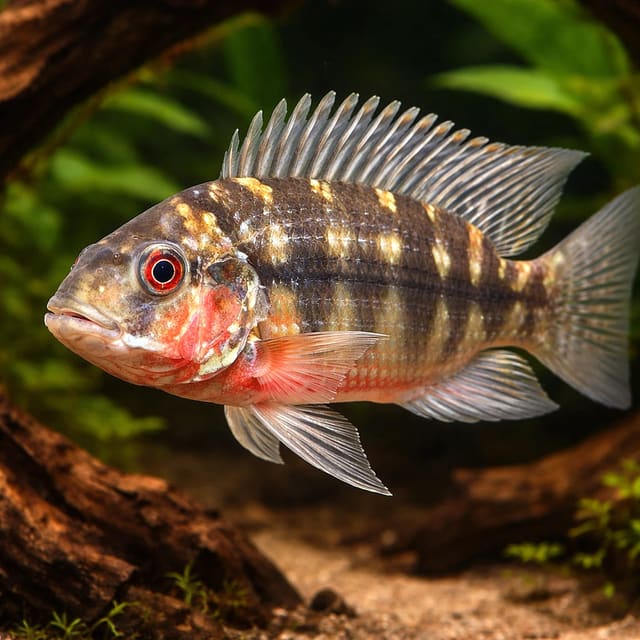
Use those images as a visual guide, but also plan for adult size. A small juvenile tilapia can quickly become the dominant fish in the aquarium.
FishBase places Oreochromis mossambicus in freshwater and brackish habitats of southeastern Africa, especially the lower Zambezi, lower Shire and coastal plains towards South Africa. It occurs in rivers, reservoirs, creeks, swamps, drains, warm pools, canals, ponds and tidal creeks. These are often warm, vegetated, muddy or sandy environments where food can include algae, phytoplankton, detritus, small invertebrates and plant material.
That background explains the fish in the aquarium. It is tolerant, adaptable and euryhaline, but it is also active, messy and strong. USGS notes high salinity tolerance and cold intolerance; for the home aquarium, this means warm, stable water and strong filtration matter more than trying to push the fish to the edge of what it can survive.
Plan the adult aquarium first. Seriously Fish recommends an adult footprint around 210 x 60 x 60 cm, roughly 760 litres. That is a much better adult target than the older 300 litre wording because the fish can reach about 39-40 cm and becomes territorial. Juveniles may be grown on smaller, but the permanent setup should already be part of the plan before purchase.
Use a sandy substrate and leave open swimming room. Decor should be heavy, stable and difficult to undermine, because this fish digs and rearranges. Delicate planting is usually a poor match: plants may be eaten, uprooted or simply moved around. If you want greenery, use very robust planting in protected areas and accept that the fish may remodel the layout.
Filtration should be oversized. Mozambique Tilapia eat heavily, grow quickly and produce significant waste. A large external filter, extra biological capacity, strong oxygenation and regular mechanical cleaning are sensible. Build the aquarium around water quality and swimming space, not delicate aquascape detail.
The available variants are young fish, but the care plan must not be written as if the sale size is the final size. A 5-6 cm or 6.5-8 cm juvenile is manageable at first, yet this species grows quickly when fed well. Treat the purchase as the start of a large-cichlid project: the adult aquarium, filtration, tankmate plan and long-term maintenance routine should be ready before the fish outgrows a temporary setup.
Growth also changes behaviour. Juveniles can seem relatively tolerant while they settle, then become more territorial as they gain size and sexual maturity. Watch for chasing, cornering, fin damage, guarding of a cave/open area and tankmates hiding at feeding time. Those signs mean the layout or stocking plan needs changing before stress becomes injury.
A sensible layout uses heavy rock, wood or inert decor placed securely on the base before the substrate is added, so digging cannot topple it. Leave open front and midwater swimming space, then create a few visual barriers at the sides and rear. In a very large aquarium, broken sight lines help weaker fish move away from a dominant individual without being trapped in one corner.
Use equipment covers or robust placement for heaters, intakes and airline fittings. Large cichlids can knock loose equipment or move substrate around filter intakes. A pre-filter sponge, regular mechanical cleaning and strong surface movement help keep the aquarium stable for a fish with this appetite.
For long-term aquarium care, aim for 21-27C, pH 6.2-8.5 and 10-30 dGH. Our stock records are slightly warmer at 24-28C, while FishBase shows the species can tolerate broader tropical conditions. The practical target is simple: keep it warm, clean, oxygenated and stable.
Weekly water changes of 20-30% are a sensible starting point, with more needed if the fish is fed heavily or kept with other large cichlids. Test nitrate and adjust the maintenance schedule to the actual bioload. Do not rely on the species being hardy as a reason to let water quality drift.
This is an omnivore with a strong algae, detritus and plant-matter component in nature. In the aquarium, use quality cichlid pellets or sinking omnivore pellets as the base, then add spirulina, algae wafers and blanched vegetables such as courgette or spinach. Occasional protein foods such as shrimp, worms or insect larvae can be used, but they should not become the whole diet.
Because the fish has a strong appetite, portion control matters. Feed moderate amounts once or twice daily and remove excess food. A large tilapia that is overfed can make water quality decline quickly, so diet and filtration should be planned together.
Mozambique Tilapia are intelligent, active and territorial. They explore, graze, dig and test the layout. Males become especially assertive when holding territory or courting females. This is why the fish is best treated as a specialist large-cichlid choice, not a general community fish.
Possible tankmates are limited to robust, similarly sized fish in genuinely spacious aquariums. Large African or Central American cichlids, large Synodontis or Loricariid catfish may work in the right system, but every combination needs monitoring. Avoid small fish, shrimp, delicate long-finned fish, peaceful soft-water species and anything that cannot handle a confident cichlid. If in doubt, a species-only or very carefully planned cichlid setup is safer.
Oreochromis mossambicus is a maternal mouthbrooder. Males establish territories and court females; females carry eggs and young in the mouth. Breeding can make territorial behaviour much stronger, so give fish room and escape routes and avoid overcrowding. This species can be prolific, so do not trigger breeding unless you have a plan for the young.
Choose this fish if you want a hardy, large African cichlid for a serious aquarium, aquaponics-style project or species-focused display, and you are comfortable managing space, filtration and aggression. Skip it if your tank is small, peaceful, soft-water, heavily planted or built around tiny fish. The fish itself is forgiving; the setup requirement is the demanding part.
On arrival, keep lights low and give the fish time to settle before feeding heavily. Float the sealed bag to equalise temperature, then gradually mix small amounts of aquarium water over 30-45 minutes before release. Because this is a hardy species, the common mistake is not delicate acclimation but overconfidence afterwards: sudden stocking changes, poor oxygenation or heavy feeding in an immature aquarium can still cause problems.
Good condition signs include steady breathing, confident swimming, alert response to food and a full but not swollen body. Watch for clamped fins, persistent hiding, flashing, cloudy eyes, frayed fins or one fish preventing others from feeding. Most problems in this species trace back to water quality, overcrowding or territorial pressure, so the first checks should be ammonia, nitrite, nitrate, oxygenation and aggression.
Compared with smaller West African dwarf cichlids or peaceful community cichlids, Mozambique Tilapia are much more robust and demanding for space. Compared with many ornamental Malawi mbuna, they are less about colour pattern and more about size, appetite and adaptability. The closest shopping comparison is another large, hardy cichlid where behaviour and adult footprint matter more than the juvenile price or size label.
If you like interactive fish and can provide the room, that boldness is the appeal. If your aquarium is under roughly six feet, heavily planted, or already stocked with peaceful fish, a smaller cichlid or tilapia alternative will usually be a better match.
At Tropical Fish Co, livestock is packed for UK live-animal courier delivery with a Live Arrival Guarantee. The product variants show the current sale sizes, while this care guide is written around the adult fish so you can plan responsibly before checkout.
Max adult size is the length this species reaches at full maturity (from scientific sources). The livestock you receive will be younger and smaller — pick a size variant on the buy box for the actual shipping size. Product-photo provenance and any image-specific limitations are stated on the listing.
A hardy fish does not mean an easy community fish. Plan around adult size, waste output, digging and breeding territory.
Always research specific species before adding them to your tank. Consider:
No reviews for this item yet. Bought one? Honest reviews only, good or bad.
What customers say about ordering from us
I have a small group of long finned mountain minnows. So was delighted to be able to order ten of this variety to increase the genetics in my tank . The ones I recieved are healthy but it’s to early to give a verdict on wether they are of a long finned type since they are small currently.
Gordon Walker · 23 Sept 2026
100% success travel and "installation". Pleased with quality of purchase. The Siamese fighter a bit "shy" so have not yet seen him at his best yet but looking good. Happy customer. GG
George E Garratt · 21 Sept 2026
Reviews of our shop, collected by Judge.me, an independent third-party review collector. Newest first.