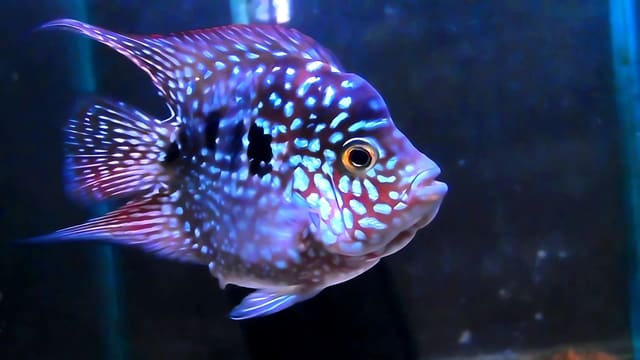
Redbreast Tilapia (Coptodon rendalli)
24–28°C
£7.99

A large, territorial West and Central African cichlid sold at 4-5 cm, best for 400L+ aquariums with robust tankmates and a plant-rich diet.
Adult size is the maximum length this species reaches at full maturity (scientific sources). The livestock you receive will be younger and smaller — pick a size variant above for the actual shipping size. Product-photo provenance and any image-specific limitations are stated on the listing.
Pelmatolapia mariae
Save when buying multiple fish. Each quantity is one fish; sex and pair formation are not guaranteed unless the selected variant explicitly states them.
Confirm your email, then we’ll send an availability message for this exact item if it returns within 180 days.
This request is only for this product—no newsletter or other promotions. A mail-provider retry may very rarely duplicate the same availability message. Unconfirmed addresses are removed after 48 hours. See our privacy policy.
A large, territorial West and Central African cichlid sold at 4-5 cm, best for 400L+ aquariums with robust tankmates and a plant-rich diet.
Adult size is the maximum length this species reaches at full maturity (scientific sources). The livestock you receive will be younger and smaller — pick a size variant above for the actual shipping size. Product-photo provenance and any image-specific limitations are stated on the listing.
Cichlids are a family of roughly 1,800 accepted species, not one care type. Before buying, identify the exact species and source, then compare adult measurement, usable tank dimensions, social system, territory, tested water, diet and an exit plan. No family-wide minimum tank, water range or tank-mate list is safe.
Maintain these water conditions for optimal health and vibrant colors
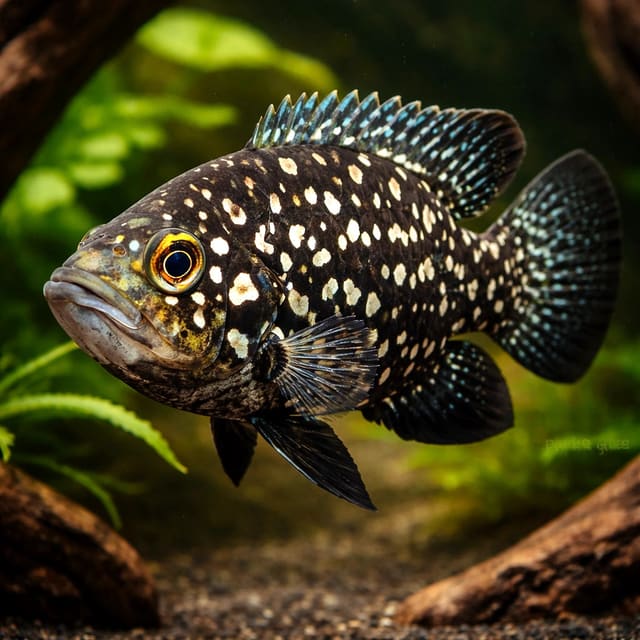
Spotted Tilapia / Tiger Cichlid (Pelmatolapia mariae) is a substantial West and Central African cichlid for keepers who want a bold, intelligent fish and have the space to house it properly. the trade listing uses the older name Tilapia mariae and the trade wording Zebra Cichlid or Tiger Cichlid, so this page keeps those names visible without forcing them into the title over and over.
This Shopify product covers three size options: 4-5 cm, 5-7 cm and >8 cm. Those are sale sizes, not adult sizes. FishBase records Pelmatolapia mariae at 32.3 cm standard length, and UK aquarium profiles commonly advise planning for a fish that can approach 36 cm total length. Treat it as a large-cichlid project from day one, even when the fish you receive is still young.
The name history matters because this fish is still sold under several labels. FishBase and modern taxonomy use Pelmatolapia mariae; older aquarium catalogues and our stock records still use Tilapia mariae. The common name Spotted Tilapia is the clearest species-level name, while Tiger Cichlid and Zebra Cichlid describe the barred and spotted juvenile pattern that attracts many keepers.
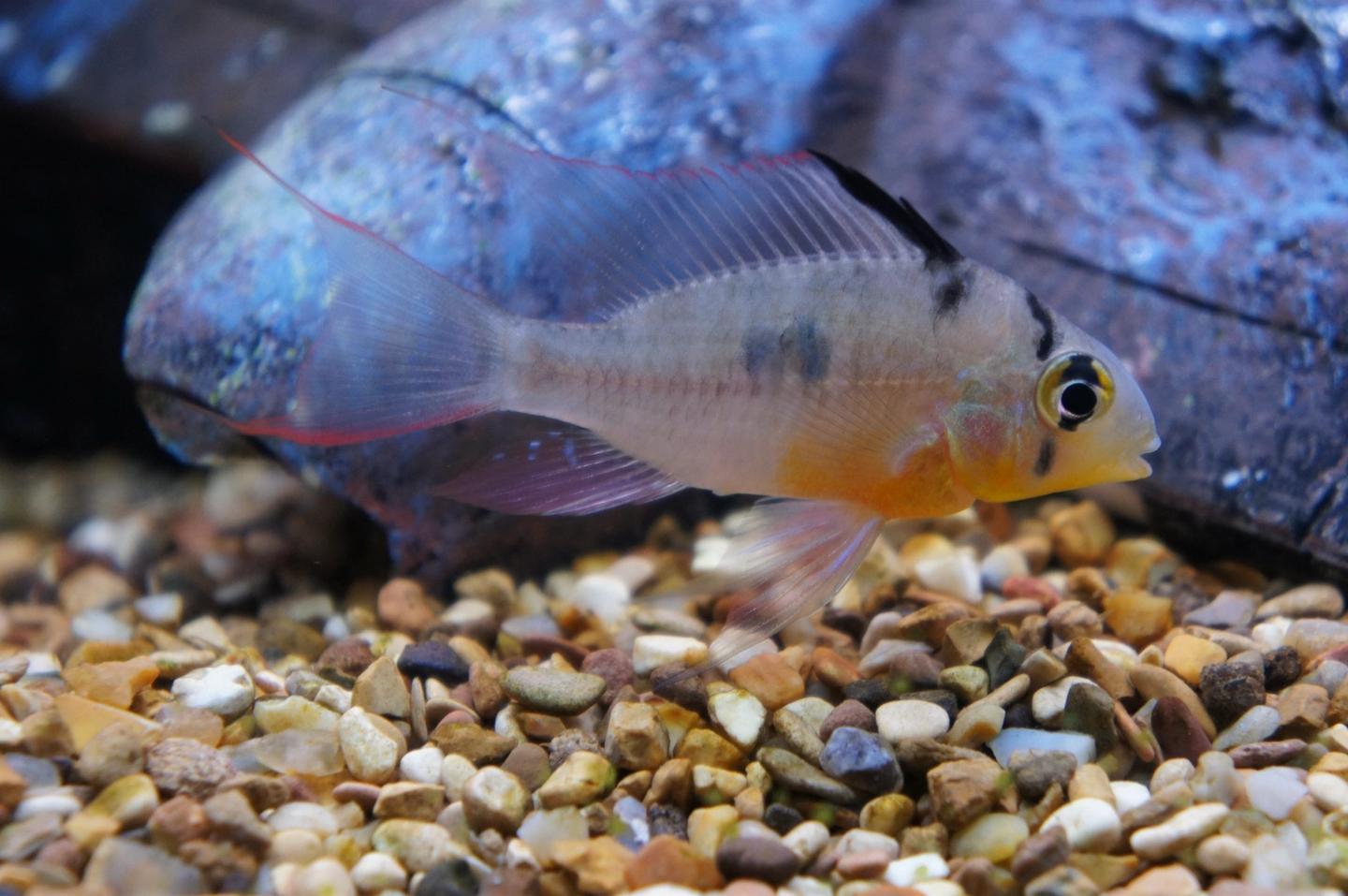
That pattern can change as the fish grows. Juveniles often show strong vertical bars over a green-gold base, while adults tend to develop larger dark flank spots and a heavier, more powerful body. The original reference image is added as supporting media only, so the page keeps its current visual depth and gains supplier traceability.
Young fish are the most decorative stage for many aquarists. Expect a bright gold to olive body, strong dark bars or blotches along the flank, dark spotting through the dorsal and caudal fins, and a compact but powerful cichlid shape. The pattern is why trade catalogues often use Zebra or Tiger wording, although Spotted Tilapia is the more stable common name for the species.
As the fish matures, the body deepens and the juvenile bars often soften into larger flank spots. Large males can become notably heavier through the head and shoulder area. Colour also depends on mood, hierarchy, lighting, diet and stress level, so a newly arrived fish may look flatter than a settled specimen. Give it cover, stable water and a quiet first week before judging final colour.
The sale size is useful for acclimation because younger fish normally travel and adapt more easily than large adults. The trade-off is that you must plan ahead. A 4-5 cm fish can outgrow a small aquarium surprisingly quickly when well fed, so the adult tank should be available before the fish is purchased, not treated as a future maybe.
Pelmatolapia mariae is native to coastal lagoons and lower river courses from the Tabou River area of Cote d'Ivoire east toward Cameroon. FishBase lists it as a freshwater and brackish demersal species, while hobby and museum profiles describe canals, lagoons, lower river sections, warm springs and marginal vegetation. In other words, this is an adaptable cichlid, but not a tiny community fish.
Its natural habitat explains the aquarium approach. Give it room, strong filtration, stable water, and a layout with sand, rounded stone, wood and open swimming lanes. It may dig and rearrange decor, so heavy rocks should sit directly on the tank base or secure supports before substrate is added. Plants can be used, but choose robust species and expect some disturbance.
For adult planning, use a 400 litre or larger aquarium with a long footprint. A young 4-5 cm fish may look easy to place, but it will not stay that size.
Create broken sight lines with wood, stone and large caves, but leave enough open space for turning and cruising. The layout should let the fish claim an area without seeing every tankmate all the time. Use a heater guard, robust filtration, and secure lids. If you are trying a pair, keep a divider or spare tank plan ready, because pair compatibility is not guaranteed just because two fish are male and female.
| Temperature | 22-28C practical aquarium range; avoid sudden swings |
|---|---|
| pH | 6.0-8.0 |
| Hardness | 5-20 dGH is a sensible planning range |
| Minimum aquarium | 400 litres or larger for adult care |
| Adult size planning | 30 cm+ potential; FishBase lists 32.3 cm standard length |
Do not chase a perfect number if your tap water is already stable and suitable. This species is naturally tolerant, but tolerance is not an excuse for dirty water. Keep ammonia and nitrite at zero, nitrate controlled by regular water changes, and oxygenation strong. A large cichlid produces meaningful waste, so the filter and maintenance routine should match the adult fish, not the juvenile sale size.
Although it accepts a wide menu, Pelmatolapia mariae should not be fed as a pure predator. FishBase describes a clear preference for plant material including algae and higher plants, with insects and shrimp also taken. In the aquarium, use spirulina flakes, algae wafers, quality cichlid pellets and blanched greens as the base, then add measured frozen or dried protein foods for variety.
Feed modest portions and watch body shape. Heavy protein every day can cause problems in plant-leaning cichlids, while constant overfeeding will quickly damage water quality in a large fish tank. Young fish can be fed smaller meals more often; adults usually do well on one or two controlled feeds per day with occasional vegetable grazing foods.
This is the section to read twice before ordering. Spotted Tilapia are territorial cichlids. Maidenhead Aquatics describes them as non-community fish, and that is the safest way to think about them. Juveniles may tolerate each other for a time, but adults can become belligerent, especially once a territory or pair bond forms.
Suitable companions are limited to large, robust fish in very spacious aquariums. Large Synodontis or pleco-type catfish may work if the layout provides refuge and the fish are not bullied. Other large cichlids are possible only when the tank is genuinely big enough and the aquarist is ready to intervene. Avoid small fish, shrimp, slow long-finned species, peaceful community fish and any tankmate that cannot cope with assertive cichlid behaviour.
Pelmatolapia mariae is a substrate-brooding cichlid with strong parental care. FishBase notes that parents prepare a nest site on logs, leaves or other debris, and that both parents guard eggs and young. That behaviour is fascinating, but it also explains why breeding-condition fish can become difficult in mixed aquariums.
If you want to keep a pair, allow them to form naturally from a group only if you have the space and a plan for the extra fish. Aquarium Glaser notes that pairs are the peaceful unit, not random adult combinations. For most home keepers, a single specimen in a large, well-structured aquarium is the easier and safer route.
Use this quick check before adding it to your basket: the aquarium should be mature, fully cycled, covered, strongly filtered and large enough for the adult fish. Tankmates should already be chosen around a territorial cichlid, not around a peaceful community. If the tank contains small tetras, guppies, dwarf shrimp or delicate long-finned fish, this is not the right match.
If you are building a specialist display, think of this fish as a centrepiece rather than a background species. It rewards space with confident behaviour, purposeful movement and strong feeding response. It punishes shortcuts with chasing, stress and rearranged decor. That honest warning is part of the value of this page: the right customer gets a better fish, and the wrong setup avoids a problem.
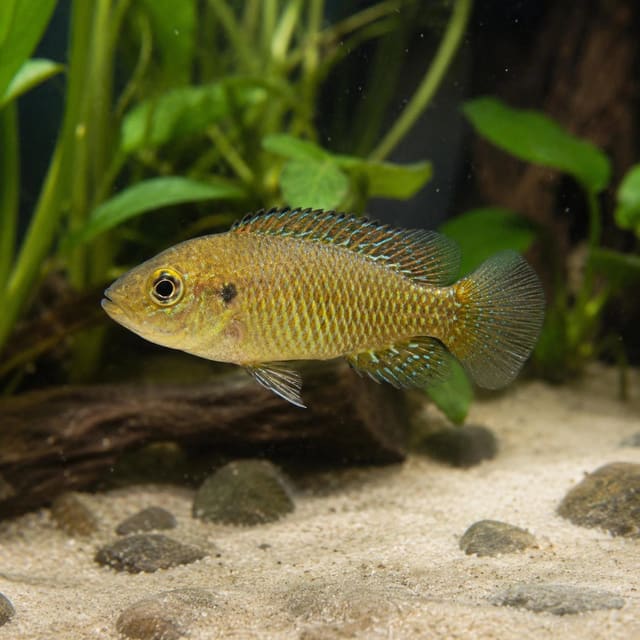
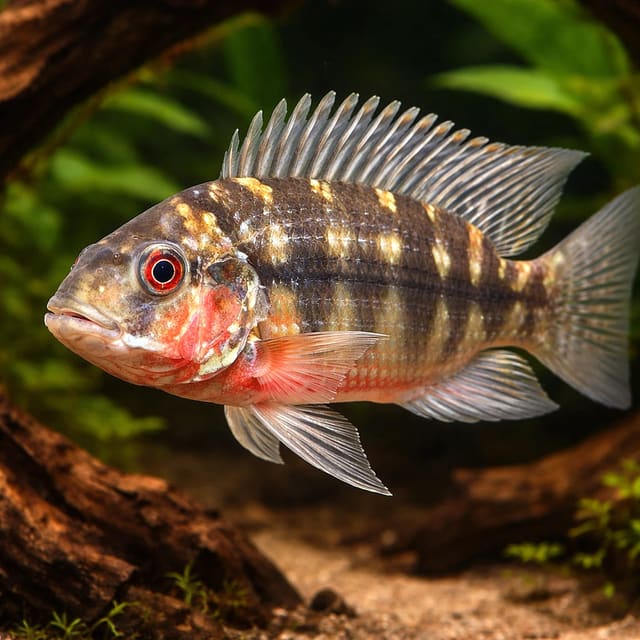
For keepers comparing similar options, the cleanest route is to compare adult size, diet and temperament rather than only colour. Mozambique Tilapia and Redbreast Tilapia are also larger tilapia-type cichlids, while Arnold's / Five Spot Cichlid is a smaller West African option. Temporalis Cichlid is a very different Lake Tanganyika fish, but it gives a useful comparison for structured cichlid aquariums where territory matters.
This listing is best for experienced keepers, or confident intermediate keepers moving into large cichlids. It suits aquarists who enjoy behaviour, territory, feeding response and a fish with real presence. It does not suit small community aquariums, peaceful planted nano tanks, shrimp tanks or casual mixed setups.
If you have the right aquarium, this is a rewarding species: hardy, alert, strongly patterned when young, and full of character as it grows. The key is honest planning. Buy the 4-5 cm fish only if the adult 400 litre setup is already realistic.
Your fish should be acclimated slowly after arrival. Dim the aquarium lights, float the sealed bag to equalise temperature, then gradually mix small amounts of aquarium water into the transport water before release. Do not add shop water to the aquarium if you can avoid it. Keep the first feed light and let the fish settle before judging colour or confidence.
Eligible livestock orders are covered by the Tropical Fish Co Live Arrival Guarantee when the delivery and acclimation terms are followed. This guarantee is included here because it matters to customers buying live fish online.
Max adult size is the length this species reaches at full maturity (from scientific sources). The livestock you receive will be younger and smaller — pick a size variant on the buy box for the actual shipping size. Product-photo provenance and any image-specific limitations are stated on the listing.
Adult fish are territorial and pair compatibility is not guaranteed. Use a large aquarium, visual barriers and a spare divider or backup tank for pair management.
Always research specific species before adding them to your tank. Consider:
No reviews for this item yet. Bought one? Honest reviews only, good or bad.
What customers say about ordering from us
I have a small group of long finned mountain minnows. So was delighted to be able to order ten of this variety to increase the genetics in my tank . The ones I recieved are healthy but it’s to early to give a verdict on wether they are of a long finned type since they are small currently.
Gordon Walker · 23 Sept 2026
100% success travel and "installation". Pleased with quality of purchase. The Siamese fighter a bit "shy" so have not yet seen him at his best yet but looking good. Happy customer. GG
George E Garratt · 21 Sept 2026
Reviews of our shop, collected by Judge.me, an independent third-party review collector. Newest first.