Advanced
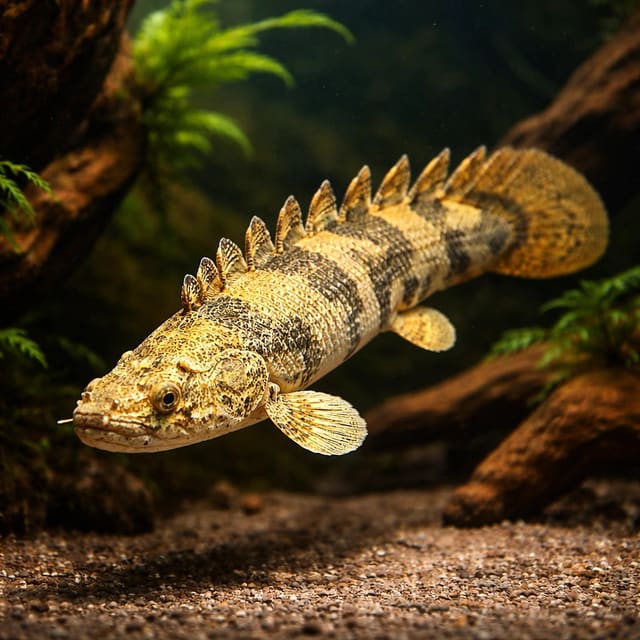
Saddled Bichir (Polypterus endlicherii) – 5–25cm Size Grades
From £17.99Some sizes on sale

A specialist estuary/coastal toadfish for brackish to marine setups, not a standard freshwater community fish.
Adult size is the maximum length this species reaches at full maturity (scientific sources). The livestock you receive will be younger and smaller — pick a size above for the actual shipping size. Product-photo provenance and any image-specific limitations are stated on the listing.
Batrachomoeus trispinosus
Confirm your email, then we’ll send an availability message for this exact item if it returns within 180 days.
This request is only for this product—no newsletter or other promotions. A mail-provider retry may very rarely duplicate the same availability message. Unconfirmed addresses are removed after 48 hours. See our privacy policy.
A specialist estuary/coastal toadfish for brackish to marine setups, not a standard freshwater community fish.
Adult size is the maximum length this species reaches at full maturity (scientific sources). The livestock you receive will be younger and smaller — pick a size above for the actual shipping size. Product-photo provenance and any image-specific limitations are stated on the listing.
Maintain these water conditions for optimal health and vibrant colors
Three-spined Frogfish (Batrachomoeus trispinosus) is an unusual toadfish from estuary, mangrove and coastal habitats. Despite the common name, this is not a planted-community freshwater fish. It is a specialist ambush predator for brackish to marine-style aquariums.
| Sale size | 5-6 cm on this variant; larger size variants may appear on the parent listing |
|---|---|
| Adult size | Can exceed 20 cm, so plan a spacious adult aquarium |
| Water | Hard, alkaline brackish to marine conditions; stable salinity is essential |
| Temperament | Predatory, sedentary and best kept with robust, carefully chosen tank mates |
| Diet | Meaty foods such as shrimp, mussel, squid, krill and fish flesh |
This fish spends much of its time camouflaged on the bottom, waiting for food to pass. Use a mature aquarium with sand, caves, rockwork and open feeding areas. Avoid small fish or ornamental invertebrates, which may be eaten.
Because this species comes from estuary and coastal habitats, long-term success depends on stable mineral-rich water and a keeper who is comfortable managing salinity, water quality and target feeding.
Check the live stock selector before ordering because this specialist species is not always available. Livestock is packed for UK delivery by a licensed live-animal courier and covered by our Live Arrival Guarantee when the policy conditions are followed.
No reviews for this item yet. Bought one? Honest reviews only, good or bad.
What customers say about ordering from us
I have a small group of long finned mountain minnows. So was delighted to be able to order ten of this variety to increase the genetics in my tank . The ones I recieved are healthy but it’s to early to give a verdict on wether they are of a long finned type since they are small currently.
Gordon Walker · 23 Sept 2026
100% success travel and "installation". Pleased with quality of purchase. The Siamese fighter a bit "shy" so have not yet seen him at his best yet but looking good. Happy customer. GG
George E Garratt · 21 Sept 2026
Reviews of our shop, collected by Judge.me, an independent third-party review collector. Newest first.