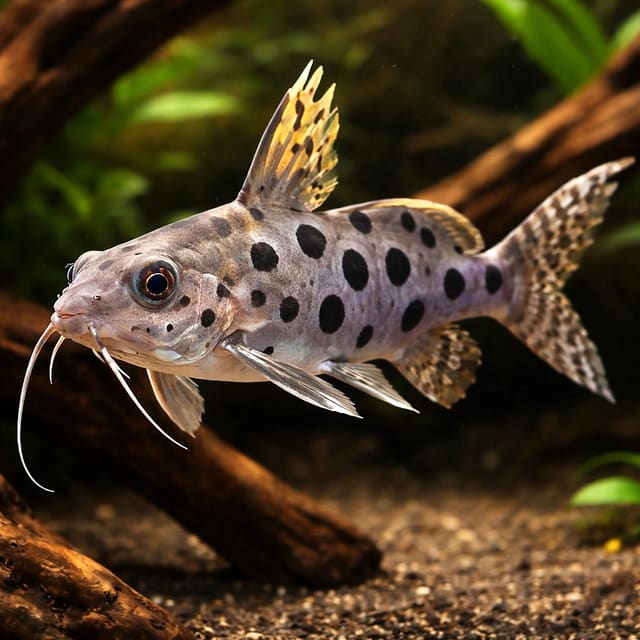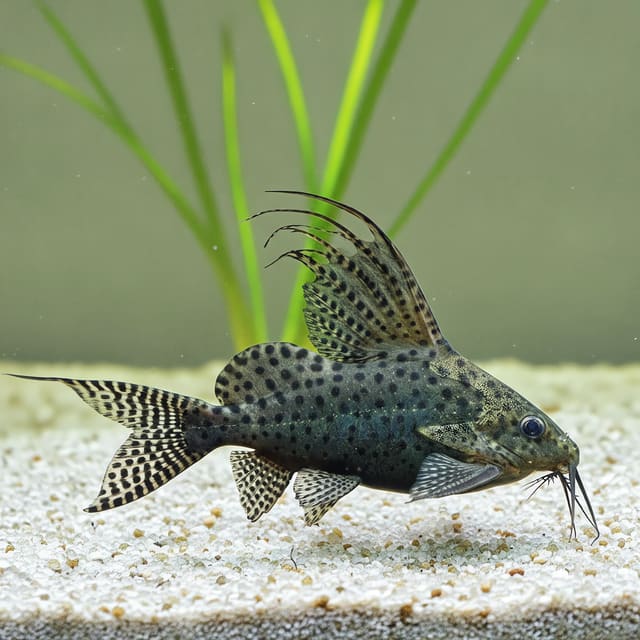
Featherfin Synodontis (Synodontis eupterus)
22–26°C · pH 6.2–7.5
£6.99

Buy Synodontis Petricola, a striking African catfish for planted and rocky aquariums. Moderate care, peaceful nature, and UK delivery available.
Adult size is the maximum length this species reaches at full maturity (scientific sources). The livestock you receive will be younger and smaller. Product-photo provenance and any image-specific limitations are stated on the listing.
Synodontis petricola
Shoaling fish: kept in a group they feel safer, stay calmer and show their best colour.
Confirm your email, then we’ll send an availability message for this exact item if it returns within 180 days.
This request is only for this product—no newsletter or other promotions. A mail-provider retry may very rarely duplicate the same availability message. Unconfirmed addresses are removed after 48 hours. See our privacy policy.
Buy Synodontis Petricola, a striking African catfish for planted and rocky aquariums. Moderate care, peaceful nature, and UK delivery available.
Adult size is the maximum length this species reaches at full maturity (scientific sources). The livestock you receive will be younger and smaller. Product-photo provenance and any image-specific limitations are stated on the listing.
Maintain these water conditions for optimal health and vibrant colors
The Dwarf Lake Synodontis, Synodontis petricola, is one of the most rewarding oddball catfish for a modern tropical fish UK aquarium. Native to the rocky shorelines of Lake Tanganyika, this small African catfish combines striking white polka dots, active nocturnal behaviour, and a surprisingly social nature. For fishkeepers searching for aquarium fish UK, aquarium catfish UK, or a standout species for a Rift Lake setup, this fish offers a rare mix of personality and practicality. Adult fish usually reach around 10 cm, live for up to 15 years, and adapt well to hard, alkaline water when the synodontis petricola tank requirements are met. That makes them especially appealing to keepers building a Tanganyikan or mixed African setup in the UK.
One reason this species remains so popular is flexibility. It works in a species group, can suit a carefully planned cichlid aquarium, and often becomes a favourite in tanks where hobbyists want movement on the bottom without the bulk of larger catfish. If you have been researching synodontis petricola tank size, synodontis petricola temperature, dwarf lake synodontis tank setup, or even comparing community tropical fish UK options, this guide covers the real details that matter. See our detailed photos showing the spotted body pattern, strong barbels, and compact build that make this one of the most attractive colourful tropical fish UK catfish choices for a hardwater aquarium. For fishkeepers browsing aquarium fish online UK, tropical fish uk for sale, or catfish for sale UK, this species brings long-term value, fascinating behaviour, and true character.
Synodontis petricola was described in 1959 and is one of the best-known smaller African squeaker catfish in the aquarium hobby. It belongs to a family famous for strong pectoral spines, sensitive barbels, and unusual upside-down or cave-oriented behaviour. Among aquarists, it is especially valued as a compact Tanganyika species and is often compared with Featherfin Synodontis and Clown Synodontis when choosing an African catfish for a display tank.
Dwarf Lake Synodontis comes from Lake Tanganyika in East Africa, one of the oldest and deepest freshwater lakes in the world. In the wild, Synodontis petricola is associated with rocky shore zones where cracks, caves, and boulder fields provide shelter from predators and strong daylight. This origin explains much of the fish’s behaviour in captivity: it prefers cover, explores crevices, and becomes most active in dim conditions or after lights-out.
For anyone reading a dwarf lake synodontis care guide or asking how to care for dwarf lake synodontis, the first key point is that this is not a soft-water Amazon species. Its natural habitat is mineral-rich, alkaline, and well oxygenated. The ideal dwarf lake synodontis ph level sits in the upper range for freshwater fish, and stable hardness matters just as much as pH. This is why many fishkeepers in the UK find them easier to keep than some soft-water catfish, especially in areas with naturally hard tap water.
In the lake, these catfish feed opportunistically on insect larvae, small crustaceans, organic debris, and edible biofilm. That natural feeding style is why they do so well on a mixed captive menu rather than one single food. They are often described as suitable dwarf lake synodontis with other fish in Rift Lake communities because they occupy the bottom and lower rockwork while many cichlids use midwater or territories around caves.
It is also worth clearing up a common search confusion. This is not a pond species. Searches such as pond catfish for sale uk, small pond catfish for sale uk, tropical fish outdoor pond uk, tropical fish pond uk, or where to buy catfish for pond near me do not apply here. Synodontis petricola is a true tropical aquarium fish, not a coldwater pond catfish. If you want wild tropical fish UK style authenticity in an indoor Rift Lake setup, however, this species is an excellent match.
Mimicking the natural rocky habitat improves confidence, feeding response, and daytime visibility. In tanks with layered stone caves and shaded retreats, petricola often spend less time hiding and show far more natural group behaviour.
Getting the setup right is the difference between a shy, rarely seen fish and a bold, active group that patrols the tank every evening. If you have searched synodontis petricola catfish tank size, dwarf lake synodontis tank size, or dwarf lake synodontis minimum tank size, the practical answer is this: 100 litres is the minimum for a small group, but 150-180 litres is a far better long-term home if you want stable water quality and more natural social behaviour.
The recommended synodontis petricola minimum tank size is 100 litres, especially for juvenile fish, but adults are more active than many buyers expect. Because this species should be kept in a group of at least 3, and ideally 4-6, the real synodontis petricola tank size should account for group dynamics, hiding spots, and bioload. A wider footprint matters more than extra height. If you are asking how many dwarf lake synodontis in a tank, a 100-litre aquarium suits 3 small specimens, while 150 litres or more is better for 5-6 alongside suitable cichlids or other robust companions.
The ideal dwarf lake synodontis water temperature is 24-27°C, which also fits the usual tropical fish tank temperature UK range for African setups. If you prefer exact figures, the best tropical fish tank temperature UK celsius target is 25-26°C for mixed Tanganyika communities. The preferred tropical fish water temperature UK for this species should stay stable rather than swing between day and night. The correct dwarf lake synodontis temperature and synodontis petricola tank temperature range supports digestion, immunity, and activity. Keep pH between 7.5 and 9.0, and hardness around 10-25 dGH. The ideal synodontis petricola ph is roughly 8.0-8.6 in most home aquariums.
Anyone asking can tropical fish live without a filter or how long can tropical fish live without a filter should know that this species depends on good oxygen levels and clean water. A mature external canister or strong internal filter is ideal, with enough turnover to move waste without blasting the fish out of their caves. Because they are bottom dwellers, uneaten food and detritus collect where they live. Good filtration is not optional in a petricola aquarium.
A sand or smooth fine gravel substrate is best. Sharp gravel can damage barbels over time. Build rock piles securely on the tank base, not on loose substrate, and create several caves so lower-ranking fish can avoid dominant individuals. This is central to a good dwarf lake synodontis aquarium setup. Darker substrate often helps the spotted pattern stand out better in display tanks.
Many keepers ask about dwarf lake synodontis in planted tank setups. Yes, they can work in a planted aquarium if you choose hardy species attached to rock or wood rather than delicate stem plants. Anubias, Java fern, and Vallisneria are practical options around rockwork. Lighting should be moderate, not harsh, with shaded areas under caves. If you are also considering other algae and detritus grazers, species like the Super Red Bristlenose Pleco Ancistrus Spes, Golden Bristlenose Pleco Ancistrus Spec South, Common Bristlenose Pleco Ancistrus Spec South, or Whiptail Catfish Pleco Tropical Fish Tank are often researched alongside petricola, though stocking should always be planned carefully.
Always cycle the tank for 4-6 weeks before adding fish. If you use an aquarium fish calculator uk tool to plan stocking, remember that bottom-dwelling catfish still add meaningful waste even if they do not occupy midwater space.
The synodontis petricola catfish diet is best described as omnivorous with a strong preference for meaty sinking foods. In the wild they pick at insect larvae, crustaceans, and organic matter around rocks. In the aquarium, the ideal synodontis petricola diet includes a quality sinking pellet as the staple, supported by frozen or live foods several times a week. If you are asking what do synodontis petricola eat or what does synodontis petricola eat, think varied, protein-rich, and offered after lights dim.
The best daily base for a dwarf lake synodontis diet is a high-quality sinking catfish pellet or omnivore wafer. This gives balanced protein, vitamins, and minerals without relying on leftovers from cichlids. Hobbyists often search for the best tropical fish food UK for bottom feeders; in practice, choose a sinking food with fish meal, krill, insect protein, or shrimp meal high on the ingredient list.
As part of a proper dwarf lake synodontis feeding guide, add frozen bloodworm, brine shrimp, mysis, daphnia, and chopped krill in rotation. Some keepers also compare the synodontis lucipinnis diet because both species have similar needs. Variety improves colour, body condition, and breeding readiness.
If you are wondering what to feed synodontis petricola for conditioning, frozen black mosquito larvae, enriched brine shrimp, and high-protein gel foods work well. They are not true algae grazers, so searches for algae eating tropical fish UK should not lead you to expect pleco-like cleaning behaviour. They may pick at biofilm, but they need deliberate feeding. On plant safety, do synodontis petricola eat plants? Usually no, not in the way herbivorous fish do. They may disturb soft plants while foraging, but healthy robust plants are generally safe. As for invertebrates, do synodontis petricola eat shrimp? Small shrimp can be eaten, especially at night. Do synodontis petricola eat snails? Tiny snails may be consumed, but they are not a reliable snail-control species.
A common question is how many times a week do you feed tropical fish. For petricola, feed small portions once daily, with the main meal in the evening. Juveniles can be fed lightly twice a day. Another frequent worry is how long can small tropical fish go without food. Healthy adult petricola can usually manage a few days, but regular fasting should not replace proper care. If you travel often, an automatic tropical fish feeder UK model can dispense pellets, though frozen foods still give better variety.
| Time | Food | Amount |
|---|---|---|
| Morning | Optional small sinking pellet for juveniles | Only what is eaten in 1-2 minutes |
| Evening | Sinking catfish pellets or frozen food | Main meal, eaten within 2-3 minutes |
Overfeeding causes ammonia spikes, cloudy water, and hidden waste in caves and rock gaps. Because petricola feed at the bottom, excess food often goes unnoticed until water quality drops.
Synodontis petricola is a compact, muscular catfish with a pale grey to brown base colour covered in bright white spots. Adults usually reach a synodontis petricola size of about 10 cm, though especially well-grown specimens can appear more substantial because of their deep body and broad head. The contrast between the dark body and crisp spotting is one reason it stands out among colourful tropical fish UK catfish, even without bright red or blue tones.
The species has three pairs of barbels used for locating food, a strong dorsal spine, and firm pectoral spines. The fins often carry spotting or pale edging, and healthy specimens show a clean, satin sheen rather than a dull, dusty look. Our photos show the attractive patterning and compact proportions that make this species so different from larger, more cumbersome catfish often seen in searches such as blue catfish for sale uk, asian redtail catfish for sale uk, freshwater red tail catfish for sale uk, or albino red tail catfish for sale uk. Those are completely different fish in size, care, and suitability.
Sexing is subtle. In discussions of dwarf lake synodontis male vs female, mature females are usually rounder and fuller-bodied, especially when carrying eggs, while males may appear slimmer. There are no dramatic colour morphs commonly traded, which is part of the appeal: what you see is the natural Lake Tanganyika pattern. If you are browsing catfish for sale uk delivered or live tropical fish delivered uk, look for clear eyes, intact barbels, and full finnage rather than exaggerated claims about rare morphs. Searches such as chameleon whiptail catfish for sale uk, catfish for sale uk us shoe size, or legal catfish size are unrelated to this species and can confuse buyers comparing catfish online.
One of the biggest reasons this fish is recommended as the best catfish for community tank setups in hard alkaline water is temperament. So, are synodontis petricola aggressive? Usually no. They are assertive around food and can squabble within the group, but true synodontis petricola aggressive behaviour is uncommon when they are housed properly in groups with enough caves. This makes them excellent synodontis petricola tank mates for robust African fish.
The best dwarf lake synodontis compatible fish are Tanganyika cichlids, some Malawi cichlids of suitable temperament, and other medium, non-delicate species that enjoy similar water chemistry. If you are asking can synodontis petricola live with cichlids, the answer is yes, and that is where they shine. They also work with other Synodontis in larger aquariums. Related species often considered include Featherfin Synodontis for larger displays and Clown Synodontis for keepers who enjoy patterned African catfish.
For broader bottom-dweller comparisons, some hobbyists also look at Whiptail Catfish Pleco Tropical Fish Tank, Golden Bristlenose Pleco Ancistrus Spec South, or Red Black Longfin Bristlenose Pleco Ancistrus. These are not direct Lake Tanganyika matches, but they are often researched by buyers building a mixed display and deciding which bottom fish best fits their water, decor, and feeding routine.
Very small fish should be avoided. In a true synodontis petricola in community tank setting, anything tiny enough to fit in the mouth may be taken at night. This is why many keepers avoid nano tetras, tiny rasboras, and small shrimp. If you are asking can synodontis petricola live with betta fish, it is not recommended. Bettas prefer softer, calmer water and can be stressed by the alkaline, rock-heavy environment petricola need. Fishkeepers searching what tropical fish are aggressive should also avoid pairing petricola with highly violent, hyper-territorial cichlids in cramped tanks.
A key part of synodontis petricola catfish care is social structure. This species does best in groups, and synodontis petricola schooling is not true schooling in the tetra sense, but they do show loose shoaling and social resting behaviour. Good dwarf lake synodontis tank mates planning includes at least 3 petricola together so one fish is not constantly singled out. This is central to keeping dwarf lake synodontis with other fish successfully.
In a 150-litre setup, a practical community tropical fish UK hardwater example is 4 petricola with a small group of shell dwellers or rock-dwelling Tanganyika cichlids. In a 240-litre tank, 5-6 petricola can share space with medium Malawi species if territories and hiding spots are well structured. That kind of planning matters more than simply searching tropical fish uk guide lists or asking what day tropical fish uk open before buying. Stocking success depends on layout, filtration, and matching water chemistry.
| Species | Compatible? | Notes |
|---|---|---|
| Clown Synodontis | ✅ Yes | Works in larger African setups with plenty of caves and strong filtration. |
| Featherfin Synodontis | ⚠️ Caution | Possible in larger tanks, but featherfins grow bigger and can dominate feeding. |
| Small shrimp | ❌ Avoid | May be hunted at night. |
Always quarantine new arrivals for 2-4 weeks before adding them to an established African setup. This protects both your petricola group and any cichlids from parasites and bacterial issues introduced by new stock.
Synodontis petricola breeding is one of the most fascinating topics in the hobby because of the species’ association with brood parasitism in mouthbrooding cichlids. In nature, they are famous cuckoo catfish, slipping eggs among cichlid spawn so the cichlid parent incubates the catfish eggs. In captivity, however, how to breed synodontis petricola consistently is still considered difficult for most home aquarists.
A dedicated synodontis petricola breeding setup should include mature, well-conditioned adults, excellent water quality, and either a carefully chosen mouthbrooding cichlid host or an artificial approach used by advanced breeders. For hobbyists exploring dwarf lake synodontis breeding, a larger breeding tank with caves, stable alkaline water, and protein-rich conditioning foods is essential. Reports on synodontis petricola breeding age vary, but fish usually need to be mature and well grown before attempts are worthwhile.
If you are asking how do synodontis petricola breed, the classic behaviour involves timing their spawning around that of mouthbrooding cichlids. During active synodontis petricola breeding behavior, males pursue females, and the fish become more energetic around caves and open spawning zones. Some breeders compare this with synodontis lucipinnis breeding, but petricola remain the species most strongly linked with the cuckoo strategy.
Where successful, synodontis petricola fry need tiny, frequent feeds such as newly hatched brine shrimp and powdered fry foods. Survival improves with spotless water and gentle filtration. Because this is not a beginner breeding project, most keepers buy established juveniles rather than trying to raise fry from scratch. Searches like baby catfish for sale uk, baby red tail catfish for sale uk, baby wels catfish for sale uk, and live baby wels catfish for sale uk refer to very different fish and should not be confused with petricola fry.
For those interested in specialist breeding, it helps to follow dedicated tropical fish breeders uk discussions and compare different tropical fish breeds uk approaches. Sexing adults through dwarf lake synodontis male vs female body shape is useful, but not always enough on its own.
Condition a group with varied frozen foods for several weeks, then perform slightly cooler, mineral-rich water changes to mimic fresh influx. Breeders attempting the cuckoo method often get better results when host cichlids are already proven spawners and the catfish group is kept in peak condition.
Comparing species matters because many catfish look similar in online listings but behave very differently in the aquarium. The most common comparison is dwarf lake synodontis vs pictus catfish. Both are active spotted catfish, but they suit very different water chemistry and community plans.
| Feature | Synodontis petricola | Pictus Catfish |
|---|---|---|
| Max Size | About 10 cm | About 12-13 cm |
| Care Level | Easy to moderate | Moderate |
| Temperature | 24-27°C | 23-27°C |
| Water Type | Hard, alkaline | Neutral to slightly soft |
| Best For | African Rift Lake tanks | Fast-moving South American communities |
| Feature | Synodontis petricola | Featherfin Synodontis |
|---|---|---|
| Adult Size | About 10 cm | Much larger |
| Group Suitability | Excellent in small groups | Needs more space as it matures |
| Tank Size | 100 L minimum | Substantially larger tank needed |
| Temperament | Peaceful | Bolder, more dominant |
| Best For | Compact African displays | Large feature aquariums |
Choose petricola if you want a smaller, social African catfish with genuine Rift Lake compatibility and a manageable dwarf lake synodontis for beginners profile. Choose a larger species like Featherfin Synodontis only if you have the tank space and want a more imposing centrepiece bottom dweller. If your main goal is algae control rather than catfish behaviour, a bristlenose such as the Golden Bristlenose Pleco Ancistrus Spec South may be more suitable, but it is not a direct substitute for petricola in a Tanganyika-themed aquarium.
Strong, active feeding behaviour, intact barbels, clear eyes, and a full body shape are the main signs of good dwarf lake synodontis health. Healthy fish spend the day sheltering or resting under cover, then become noticeably more active in the evening. A fish that isolates constantly, breathes heavily, or stops feeding needs attention quickly.
The main risks are stress from poor water quality, barbel erosion from rough substrate, bacterial infections after injury, and parasite outbreaks introduced by new fish. Because they come from alkaline, oxygen-rich conditions, petricola often suffer when kept in under-filtered community tanks. This is why searches like which catfish for sale uk 2024, which catfish for sale uk online, and which catfish for sale uk price should never be the only buying criteria. Husbandry matters more than bargain pricing.
Prevention starts with clean water, strong filtration, and a soft substrate. Quarantine all newcomers. If disease appears, identify the issue before medicating. Some broad medications can affect catfish sensitivity, so dose carefully and ensure plenty of oxygenation. Odd search phrases such as which catfish for sale uk to usa, which catfish for sale ukraine, which tropical fish ukes, which tropical fish ukraine, which tropical fish ukulele, and which tropical fish uky are not useful health indicators; focus instead on source quality, quarantine, and water chemistry stability.
Never assume a bottom-dwelling catfish is fine just because it is hiding. Petricola are naturally secretive by day, so the best health checks happen at feeding time: watch appetite, swimming balance, and barbel condition closely.
This species is peaceful, curious, and most active from late afternoon onward. During the day, petricola often wedge themselves under rock ledges or inside caves with only their barbels visible. Once lights dim, they patrol the bottom, inspect every crevice, and interact with one another in loose groups. That is why a proper dwarf lake synodontis tank setup includes multiple shelters rather than one central cave.
Although not a true schooling fish, they are social enough that solitary specimens often stay hidden more. In groups, you see more natural confidence and better feeding behaviour. This is one reason they are often recommended in a solid tropical fish care in UK plan for hardwater aquariums. Their behaviour also makes them more interesting than many static bottom fish: they are alert, responsive, and often learn feeding times quickly.
Customer feedback on this species is usually consistent: once settled, they become one of the most entertaining fish in the tank. Keepers who expected a shy catfish are often surprised by how often they appear in the open after dusk, especially when housed in a group with secure rock cover.
When people search best place to buy tropical fish online uk, buy live fish online uk, buy aquarium fish online uk, or live fish for sale uk, what they really need is not just a listing but confidence in how the fish were handled before dispatch. For Synodontis petricola, that matters because imported or newly moved catfish can hide stress well. We focus on properly settled stock that are feeding on prepared foods and showing stable behaviour before sale.
Each fish is checked for body fullness, barbel condition, and normal feeding response. Because this species is often chosen for specialist African tanks, we also pay attention to how well it is acclimated to typical UK aquarium conditions, especially hard, alkaline water systems. Buyers researching tropical fish importers uk, aquarium fish wholesale uk, or aquarium fish shop uk often want to know whether fish are simply moved through quickly or genuinely prepared for home aquariums. Proper settling time makes a visible difference with petricola.
For customers comparing tropical fish uk for sale, buy catfish UK, catfish for sale UK, buy tropical fish online uk free delivery, and aquarium fish delivery uk, packaging matters too. Fish are sent in insulated boxes, with heat packs in cold weather, secure bagging, and oxygen-rich packing methods designed for live tropical fish transit. This is especially important for bottom-dwelling catfish, which should arrive calm, upright, and ready to settle after acclimation. Buyers also ask whether are catfish for sale uk legal or are catfish for sale uk illegal; Synodontis petricola is a normal legal tropical aquarium species in the UK trade.
If you have been comparing searches like albino catfish for sale uk, albino channel catfish for sale uk, or albino wels catfish for sale uk, remember that petricola is a far more practical aquarium choice for most homes. Order your Dwarf Lake Synodontis today with confidence if you want a long-lived, social African catfish that truly earns its place in a display tank.
If you are building a full African or bottom-dweller setup, consider a few carefully matched additions. Clown Synodontis is a great option for keepers who enjoy patterned African catfish. Featherfin Synodontis suits larger aquariums where a bigger Synodontis is appropriate. For a different style of bottom grazer, Super Red Bristlenose Pleco Ancistrus Spes and Red Black Longfin Bristlenose Pleco Ancistrus are popular pleco alternatives. If you prefer a slender, unusual silhouette, the Whiptail Catfish Pleco Tropical Fish Tank is worth a look. You can also browse our wider tropical fish UK collection to compare African catfish, plecos, and other specialist aquarium fish in UK stock.
No reviews for this item yet. Bought one? Honest reviews only, good or bad.
What customers say about ordering from us
I have a small group of long finned mountain minnows. So was delighted to be able to order ten of this variety to increase the genetics in my tank . The ones I recieved are healthy but it’s to early to give a verdict on wether they are of a long finned type since they are small currently.
Gordon Walker · 23 Sept 2026
100% success travel and "installation". Pleased with quality of purchase. The Siamese fighter a bit "shy" so have not yet seen him at his best yet but looking good. Happy customer. GG
George E Garratt · 21 Sept 2026
Reviews of our shop, collected by Judge.me, an independent third-party review collector. Newest first.