Advanced
Heteractis malu yellow - Marine Aquarium Livestock UK
24–26°C · pH 8.1–8.3
£47.99
One live expert-only Magnificent Sea Anemone (Radianthus magnifica) per selected quantity in the medium grade; no exact diameter is supplied.
Radianthus magnifica
One live expert-only Magnificent Sea Anemone (Radianthus magnifica) per selected quantity in the medium grade; no exact diameter is supplied.
Maintain these water conditions for optimal health and vibrant colors
Each selected quantity supplies one live Magnificent Sea Anemone in the medium grade. The supplier has not published an exact diameter for this grade, so it should not be read as a guaranteed centimetre size. No clownfish, rock, coral, pair or display decoration is included.
The current scientific name is Radianthus magnifica. Aquarists and older references often use Heteractis magnifica, while Ritteri Anemone is another established trade name. All three names refer to the same very large, photosymbiotic, clownfish-hosting sea anemone.
This is an expert-only marine invertebrate, not a beginner anemone. It needs a mature, exceptionally stable reef system, high-intensity light, energetic but non-damaging flow, a secure rock attachment site, guarded pumps and enough clear space for an animal that can eventually spread close to one metre. It can move and sting corals or other sessile animals in its path.
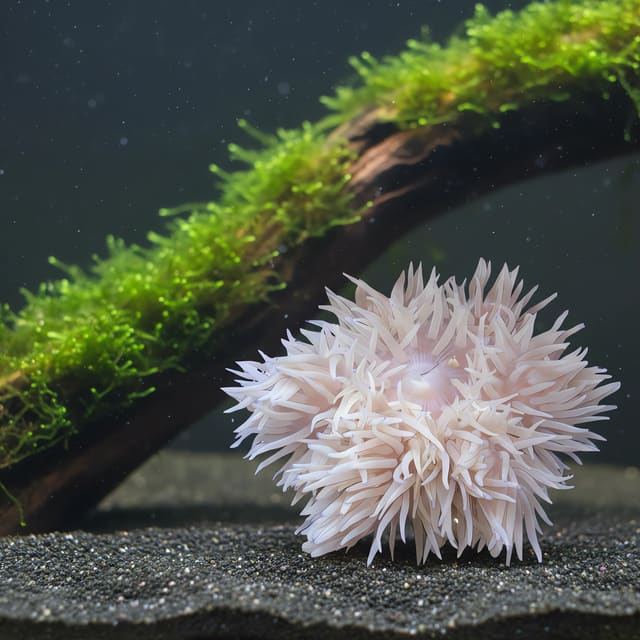
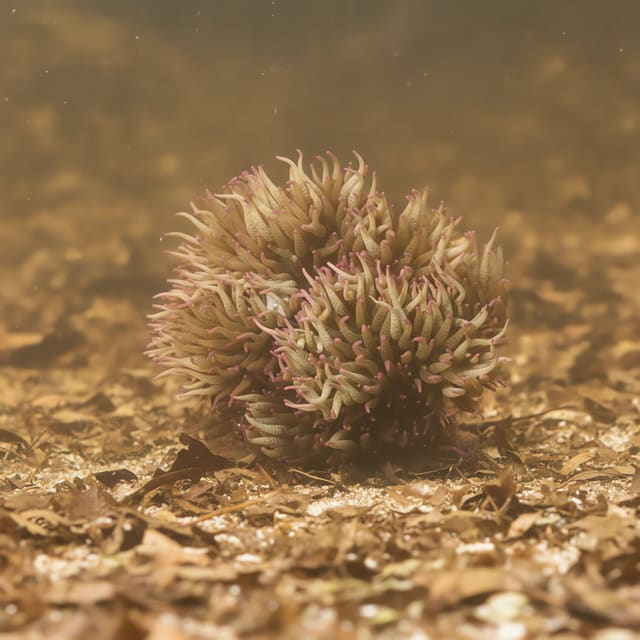
Important gallery note: image 5 is the supplier identity reference. Images 1-4 are protected legacy illustrations that do not show this species or its marine habitat accurately. They remain in the gallery under the current no-removal instruction, but they must not be used to identify the animal or predict what will arrive.
| At a glance | Evidence-led guidance |
|---|---|
| Current scientific name | Radianthus magnifica |
| Familiar scientific synonym | Heteractis magnifica |
| Common trade names | Magnificent Sea Anemone; Ritteri Anemone |
| Sale unit | One live anemone per selected quantity |
| Dispatch grade | Supplier medium grade; no exact diameter supplied |
| Care level | Expert Only |
| Adult spread | Potential oral-disc diameter close to 1 m |
| Practical system baseline | Around 500 litres and 150 cm long for a small or medium specimen, with a larger-space plan |
| Temperature | 24-27 C, stable |
| pH | 8.1-8.4, stable |
| Specific gravity | 1.024-1.026 at aquarium temperature |
| Light | High-intensity reef lighting, introduced gradually |
| Flow | Strong, broad and turbulent; never a narrow jet at the animal |
| Feeding | Photosymbiotic with measured marine animal-food supplements |
Quantity one means one living anemone. The order does not include a clownfish, host pair, rock or coral. If more than one quantity can be selected, each unit is a separate animal and each needs its own space and compatibility assessment.
The stock label is a practical supplier category rather than a biological measurement. No exact open diameter, contracted diameter, age or final colour has been provided for the animal that will be selected for dispatch. Plan for the species' adult potential rather than the temporary dispatch grade.
This is not a individually photographed what-you-see-is-what-you-get sale. Colour, column tone, tentacle shade, expansion and posture vary between live animals and with lighting, flow, feeding, transport and settling. The supplier has not certified a locality, sex, collection method or captive-propagated origin.
| The listing confirms | The listing does not promise |
|---|---|
| One live Magnificent Sea Anemone per quantity | A clownfish, pair, rock or coral |
| Medium grade | An exact centimetre diameter or age |
| Species identity | One fixed colour, column tone or tentacle pattern |
| Eligible UK livestock delivery support | Immediate attachment, hosting or zero movement |
| Representative reference photo in image 5 | The anatomy or freshwater scenes shown in images 1-4 |
A 2024 peer-reviewed revision returned this species to the genus Radianthus. That makes Radianthus magnifica the current name used here. The older combination Heteractis magnifica remains widespread in aquarium books, supplier systems and search results, so it is retained as a synonym rather than treated as a different animal.
Ritteri Anemone is an older aquarium trade name. A listing or care article using Ritteri, Magnificent Sea Anemone or Heteractis magnifica may therefore discuss this species, but care quality still needs to be judged on its evidence and not on the name alone.
A healthy expanded specimen has a broad oral disc with dense, finger-like tentacles. Tentacles can appear tan, brown, green or purple, while the column can be conspicuously red, orange or purple. Colour alone is not a safe identification method because lighting, bleaching, contraction and natural variation can change the impression.
The fifth gallery item is the reference photo. It shows the expected anemone form with greenish tentacles and a coloured column. The source file is small and visibly watermarked; the watermark has been retained rather than being destructively painted over.
The first four images are legacy artwork. Two show fish-anemone hybrids in freshwater planting, one shows a clownfish without the anemone, and one shows a fantasy anemone-like form in freshwater plants. They are biologically inaccurate and must not be used as identification, habitat or quantity references.
The current catalogue instruction protects every existing image from deletion or reordering and does not permit new image generation in this phase. Accurate captions and this disclosure are therefore the permitted repair. The underlying media-quality limitation remains documented for a later owner-approved gallery replacement project.
Published field guidance records an oral disc that can approach 1 m across. Many animals are smaller, especially at dispatch, but the adult potential changes the entire purchase decision. The animal needs space to expand, room to move without entering equipment and a wide buffer from corals.
For a small or medium specimen, plan around a mature reef system of roughly 500 litres with at least 150 cm of useful length. This is a conservative starting point, not a guarantee of lifelong capacity. A specimen approaching the published maximum can need a substantially larger or purpose-built system.
A tall narrow aquarium can hold many litres but still provide little horizontal clearance. Compare the rock platform, open radius, pump positions, overflow, neighbouring corals and future adult spread. A stable wide system with sensible equipment placement is more useful than volume alone.
| Space question | Responsible answer |
|---|---|
| Is a nano reef suitable? | No; adult size, movement, light, flow and system stability make it unsuitable |
| Is 500 litres a lifelong guarantee? | No; it is a conservative starting baseline for a smaller specimen |
| Can surrounding coral space be counted? | Only if it can remain clear when the anemone expands or moves |
| Can the animal stay where first placed? | It may move when attachment, light, flow or water conditions do not suit it |
| Should adult size be planned before purchase? | Yes; do not wait for the animal to outgrow its clearance zone |
A completed nitrogen cycle is only the beginning. This species should enter a system with proven salinity, temperature, alkalinity, nutrient and equipment stability across time. A recently assembled aquarium can pass one water test while still lacking the operational consistency this animal needs.
Do not chase one test result with abrupt buffers, large salinity corrections or sudden lighting changes. Confirm the reading, identify the cause and make controlled corrections. The goal is a stable operating range, not a sequence of perfect numbers followed by sharp swings.
Reliable heating, temperature monitoring, top-off control, circulation and a plan for power or pump failure are part of the habitat. A large photosymbiotic invertebrate is a poor animal with which to discover that a heater sticks, a return pump stops or evaporation changes salinity quickly.
Maintain 24-27 C, pH 8.1-8.4 and specific gravity 1.024-1.026 at aquarium temperature. Choose a point within each range that the system can hold consistently. Match replacement water carefully and verify the refractometer with a suitable calibration standard.
Ammonia and nitrite should remain at 0 mg/l. Any detectable amount needs immediate investigation because the anemone cannot leave polluted water. Check biological filtration, hidden decay, feeding, circulation and recent equipment interruptions.
Keep nitrate and phosphate low, measurable and stable for the wider reef system. Sudden aggressive nutrient removal can destabilise photosymbiotic animals. Use trends, animal response and the needs of all inhabitants rather than treating one isolated reading as the whole diagnosis.
| Parameter | Practical target | Decision rule |
|---|---|---|
| Temperature | 24-27 C | Stable, with reliable monitoring and no daily extremes |
| pH | 8.1-8.4 | Watch the daily trend; avoid abrupt correction |
| Specific gravity | 1.024-1.026 | Measure at aquarium temperature with calibrated equipment |
| Ammonia | 0 mg/l | Any detection requires investigation and action |
| Nitrite | 0 mg/l | Any detection is unsafe |
| Nitrate and phosphate | Low, measurable and stable | Avoid sudden nutrient stripping or uncontrolled accumulation |
Use the water matcher to organise measured parameters before ordering. It supports the comparison; it does not certify that a young or unstable reef is ready.
This anemone contains photosynthetic symbionts and naturally occupies bright reef positions. It needs high-intensity reef lighting with an appropriate spectrum and photoperiod. Room light, a basic fish-only fixture or a shaded rock overhang is not enough.
Exposure depends on fixture spectrum, water depth, surface movement, optical clarity, mounting height, photoperiod and the animal's previous conditions. A PAR meter is useful, but one number cannot replace observation or light-history information.
Begin from a controlled lower exposure after transport and increase according to the system's established acclimation plan. Abruptly switching to maximum output can compound shipping stress. If the animal persistently climbs, contracts, bleaches or moves, assess light together with flow, water and attachment rather than changing several variables blindly.
Provide energetic, broad, turbulent or alternating water movement. The tentacles should move and exchange water without the oral disc being folded continuously or the column being blasted. A narrow powerhead stream aimed directly at the animal can damage tissue.
Distributed circulation reduces dead zones and gives the anemone a more natural changing flow. Arrange pumps so the animal does not need to detach simply to escape one fixed stream. Reassess flow as it expands because a position that was clear while contracted can become exposed later.
Fit effective guards to powerheads and overflows before introduction, not after the animal begins moving. A mobile anemone pulled into an intake can suffer severe injury and release damaged tissue into the whole aquarium. Guarding equipment is a non-negotiable suitability check.
| Equipment area | Before the anemone arrives |
|---|---|
| Powerheads | Fit secure guards that prevent tentacle and pedal-disc access |
| Overflow and weir | Block unsafe gaps without compromising system flow |
| Heaters | Place in a protected sump or guarded position where possible |
| Rockwork | Make it stable before the foot attaches; never balance loose rocks |
| Automatic top-off | Test operation and salinity stability before livestock delivery |
| Backup plan | Prepare for circulation, heat and oxygenation failure |
In nature this species often occupies prominent hard reef substrate. Build a stable rock position with high light, useful flow and a deep crevice where the pedal disc can attach securely. The structure must remain safe if the animal pulls strongly against it.
Place the animal gently at the prepared site and allow it to choose. Do not wedge, glue, pin or repeatedly move the column. Never pull an attached pedal disc from rock; damage to the foot can be serious even when the oral disc initially looks normal.
A moving anemone may be seeking a better combination of light, flow, chemistry or attachment. Protect equipment and clear a route before it happens. Repeated movement is a reason to diagnose the system, not to keep placing the animal back by hand.
The animal is a reef species, but that does not make it harmless to a mixed coral display. Its nematocysts can sting corals and other sessile invertebrates it touches. A mobile specimen can cross boundaries that looked adequate on the day it was placed.
Plan from the expanded adult radius and probable movement routes. Do not pack valuable corals around the initial attachment point. A dedicated rock island or anemone-focused layout is usually easier to manage than a crowded mixed reef.
Some butterflyfish and large angelfish may pick at anemones. Small non-host fish can be stung or captured, while crabs and other invertebrates may disturb tissue or compete for food. Compatibility depends on individual behaviour, scale, feeding and space; there is no universal safe community list.
| Compatibility group | Guidance |
|---|---|
| Compatible clownfish species | Possible naturalistic association, but not required and never guaranteed |
| Corals and sessile invertebrates | High sting risk on contact; leave a large clear zone |
| Other anemones | Use specialist planning, substantial separation and close observation |
| Butterflyfish and large angelfish | Potential nipping risk; assess species and individual behaviour |
| Small non-host fish | Potential sting or capture risk |
| Unprotected equipment | Incompatible; guard before introduction |
Browse the broader marine anemone collection and the current Heteractis-labelled collection for comparison. A Rock Flower Anemone or Red Giant Carpet Anemone is a different species with its own care and risk profile; the links are comparisons, not interchangeable care advice.
Modern research confirms that this is one of the specialised host sea anemones used by several clownfish species in nature. The relationship is ecologically important, but an aquarium purchase should still begin with the anemone's environmental requirements.
The anemone does not need a newly purchased clownfish in order to attach or feed. Never push, net or confine a clownfish into the tentacles. Not every aquarium fish recognises a host immediately, and forced contact can injure or stress both animals.
Compatibility depends on clownfish species, individual behaviour, previous experience, animal size and timing. A fish may ignore the anemone, adopt another object or interact too vigorously with a small newly imported animal. Give the anemone time to attach and stabilise before adding extra pressure.
Use the marine clownfish collection only after checking species-specific host compatibility, adult size, social structure and the aquarium's existing stock.
Appropriate light supports the anemone's symbiotic algae, while captured or offered animal food contributes nutrition. Treat light and feeding as complementary. Heavy food cannot compensate for poor lighting, and strong light cannot correct unstable water or damaged tissue.
Once attached and settled, offer a small piece of suitable marine food such as finely portioned mysis or chopped marine flesh. One or two measured feeds weekly is a conservative home routine. The portion should be much smaller than the oral disc and easy to enclose.
Do not keep placing food on a contracted or unresponsive animal. Remove food that is released so it cannot decay under rockwork. Large daily feeds increase waste and may cause regurgitation without fixing the underlying reason for poor expansion.
A feeding response includes tentacle contact, movement toward the mouth and retention. Record appetite alongside attachment, mouth position, inflation, colour and water readings. One accepted meal is not proof that every husbandry condition is correct.
| Feeding point | Practical approach |
|---|---|
| When to begin | After the animal is attached and transport stress is settling |
| Food type | Appropriate small marine animal foods such as portioned mysis or chopped marine flesh |
| Frequency | Typically one or two measured feeds weekly in a stable home system |
| Portion | Small enough to enclose easily; never a large chunk for rapid growth |
| If rejected | Remove it, check conditions and avoid repeated handling |
Every circulation intake and overflow must be guarded. Rockwork must be stable. Lighting must be reef capable and controllable. Salinity and temperature monitoring must be reliable. If any of these are still planned rather than operating, the aquarium is not ready.
Mark the possible expanded radius around the intended rock and trace a movement route toward pumps, overflows and corals. Plan for future growth beyond the supplier medium grade. Confirm that a larger home or relocation option exists if needed.
Review several weeks of measurements and maintenance, not one reading. The system should be mature, with 0 mg/l ammonia and nitrite and predictable salinity, temperature, pH and nutrient trends.
You need enough marine experience to distinguish ordinary contraction from progressive decline, respond to movement without damaging the foot, manage strong light and flow, and isolate medication away from invertebrates. This is why the care level is Expert Only.
Check the aquarium, dim the lights, clear the attachment area and confirm every guard. Have the current order instructions, a clean container and the acclimation timer ready. Avoid changing aquascape, salinity or equipment after the bag is opened.
Use the current acclimation instructions supplied with the order because bag time, temperature and shipping conditions matter. Do not pour transport water into the display. Minimise air exposure and never lift the animal by the tentacles.
Set the pedal disc against the prepared crevice without squeezing or forcing it. Use subdued initial lighting and safe broad flow. The anemone may contract, inflate unevenly or reposition while it settles; repeated handling usually adds stress.
Photograph the unopened bag and animal clearly if there is a delivery concern, then follow the current reporting window in the livestock delivery and Live Arrival Guarantee information. Do not discard packaging until the support process is complete.
Look for a secure intact foot, responsive tentacles, a mouth that is generally closed, normal inflation cycles and an ability to retain small food after settling. Compare trends across days rather than judging only the most expanded photograph.
This species can contract strongly and even form a ball-like shape. Short contraction during settling, waste release or a daily cycle can occur. The context matters: an animal that re-expands and remains attached is different from one that repeatedly deflates, gapes and loses adhesion.
Repeated gaping, continuing loss of attachment, severe bleaching, a torn pedal disc, tissue breakdown, persistent inability to inflate or foul smell needs urgent specialist assessment. Check temperature, salinity, ammonia, flow, recent changes and physical damage immediately.
A very pale or white anemone may have lost photosynthetic symbionts through bleaching. Do not assume whiteness is a premium morph. Investigate light history, temperature, transport and overall condition with an experienced marine professional.
Copper and many fish treatments are unsafe for marine invertebrates. Do not medicate the display or share contaminated equipment without confirming invertebrate safety. Use a separate fish-treatment system and dedicated tools where required.
Sea anemones possess stinging cells. Use sensible aquarium gloves, cover cuts and avoid touching the face or eyes while working. Wash hands and equipment after contact. People with a history of strong reactions should avoid direct handling.
Asexual reproduction can occur naturally, but that does not make home cutting a routine care step. Tissue injury can cause infection, decline and whole-system contamination. Any propagation attempt belongs in an experienced, dedicated procedure outside ordinary settling care.
The current name, adult scale, hard-substrate attachment, reef position, range and appearance are based on the 2024 peer-reviewed updated field guide to clownfish-hosting sea anemones. Modern phylogenetic work also recognises Radianthus magnifica among the distinct host-anemone lineages.
Captive research using stable marine water, bright reef lighting, pulsed flow and measured mysis feeding supports the expert-only husbandry emphasis. Natural-history context from the University of Michigan Animal Diversity Web supports the Indo-Pacific reef habitat, strong water movement, hard-surface attachment, movement and large adult size. Aquarium targets on this page are conservative husbandry interpretations, not claims that one number guarantees success.
One live Magnificent Sea Anemone is supplied per selected quantity in the medium grade.
The supplier has not provided an exact diameter. Treat medium as a stock grade and plan for the species' adult spread.
Yes. A 2024 peer-reviewed revision uses Radianthus magnifica. The older name Heteractis magnifica remains a widely used synonym.
No. Ritteri Anemone is another common aquarium name for the Magnificent Sea Anemone.
Published field guidance records an oral disc capable of approaching 1 m across. Many specimens are smaller, but the maximum must shape space planning.
No. This is an expert-only species requiring a mature, stable specialist reef, high light, strong safe flow and guarded equipment.
Around 500 litres and at least 150 cm of length is a conservative starting point for a small or medium specimen, with a plan for substantially more adult space.
Maintain 24-27 C and specific gravity 1.024-1.026 at aquarium temperature, with pH 8.1-8.4 and no detectable ammonia or nitrite.
Yes. It is photosymbiotic and needs high-intensity reef lighting, introduced gradually according to its prior exposure and the system's measured conditions.
It needs strong broad turbulent or alternating flow, not a narrow jet aimed directly at the oral disc or column.
The anemone can move. Contact with an unprotected intake can severely injure it and endanger the whole aquarium.
Not necessarily. It may move in response to attachment, light, flow or water conditions. Never pull an attached foot.
It belongs on reefs but can sting corals and other sessile invertebrates. Leave a large clear zone and plan movement routes.
No. A clownfish is optional. Never force a fish into the tentacles, and do not expect hosting to be immediate or guaranteed.
After it has attached and settled, offer small measured portions of suitable marine animal food once or twice weekly and remove anything rejected.
No. Image 5 is the supplier identity reference. Images 1-4 are inaccurate legacy artwork and are not identification or habitat references.
The supplier has not provided a captive-propagation certificate or collection locality, so this listing makes neither claim.
Eligible UK livestock orders are covered when the current delivery, receipt and reporting terms are followed.
Eligible first-time customers can enter WELCOME5 for 5% off, subject to the live promotion and checkout terms.
Choose this species only when the aquarium already provides mature marine stability, guarded circulation, high reef lighting, strong safe flow, a secure rock crevice and a large clear expansion zone. Confirm the system with measured evidence and prepare for the animal's adult scale before selecting a delivery date.
Eligible UK livestock orders include our Live Arrival Guarantee when the current terms are followed. Eligible first-time customers can also use WELCOME5 for 5% off under the active promotion and checkout terms.
No reviews for this item yet. Bought one? Honest reviews only, good or bad.
What customers say about ordering from us
Easy website plenty of info on fish your buying great to pick a time slot
TRACEY DURRANT · 7 Oct 2026
Got some lovely fish thank you
Kevin Mackie · 7 Oct 2026
Reviews of our shop, collected by Judge.me, an independent third-party review collector. Newest first.