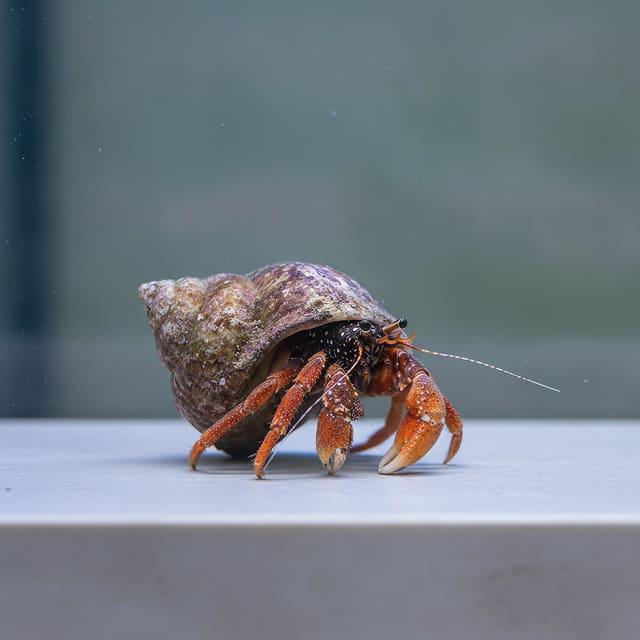
Orangeclaw Hermit Crab (Calcinus tibicen)
24–26°C · pH 7.9–8.3
£8.99
Sally Lightfoot Crab (Percnon gibbesi) is a marine crab sold as one live animal per purchase. It needs an established saltwater aquarium with plenty of rock, and OATA's broad guidance for marine crustaceans is 24–26°C, pH 7.9–8.3 and salinity 1.023–1.026.
Percnon gibbesi
Save when buying more. Each quantity is one shrimp; sex is not guaranteed unless the listing explicitly states it.
Sally Lightfoot Crab (Percnon gibbesi) is a marine crab sold as one live animal per purchase. It needs an established saltwater aquarium with plenty of rock, and OATA's broad guidance for marine crustaceans is 24–26°C, pH 7.9–8.3 and salinity 1.023–1.026.
Maintain these water conditions for optimal health and vibrant colors
The Sally Lightfoot crab, Percnon gibbesi, is a marine crab for keepers who already run a settled saltwater aquarium. Each purchase is one live crab. The question that matters most before you order is whether your tank is ready for it: fully marine water that has been stable for some time, ammonia and nitrite at zero, and plenty of live or artificial rock for grazing and hiding. If that describes your aquarium, this guide takes you through water, feeding, moulting, health and tank mates. If the tank is freshwater, or a marine set-up that is still maturing, plan the crab for later.
Wikipedia's entry for this crab explains that Percnon gibbesi is one of at least two crab species commonly called Sally Lightfoot, and that it is also known as the nimble spray crab or the urchin crab. That shared name matters whenever you read about care or compare crabs: advice written for the other Sally Lightfoot does not automatically apply to this one, so check the scientific name before you rely on what you read.
The World Register of Marine Species lists Percnon gibbesi (H. Milne Edwards, 1853) as an accepted species in the family Percnidae, within the order Decapoda, which also contains shrimps and lobsters. You will also see it offered simply as the spray crab.
Sex is guaranteed only when the selected option explicitly states male or female. This Sally lightfoot or spray crab listing has no sex-guaranteed option.
| Suits | Not yet, if |
|---|---|
| An established marine aquarium with stable salinity and zero ammonia and nitrite | The marine tank is newly set up or still cycling |
| A layout with plenty of live or artificial rock for grazing and shelter | The aquarium is bare or only lightly furnished |
| Reef-safe fish and carefully chosen invertebrates | You keep fish that are not reef-safe, which are likely to prey on crustaceans |
| A keeper who tests the water and changes 25% of it every week | Testing and water changes tend to be occasional |
Wikipedia also notes that Percnon gibbesi has been described as the most invasive decapod species to enter the Mediterranean. Treat every crab you buy as a permanent aquarium resident. Never release one into the sea, a pond or any other open water; if you ever need to rehome it, pass it on to another marine keeper.
Rock gives the crab its grazing surfaces and its hiding places, so the rockwork is where to look for it. Like every crustacean it grows by shedding its exoskeleton, so from time to time you may find an empty shell in the tank while the crab itself stays out of sight for a couple of days as its new shell hardens. That is normal, and the moulting section explains how to tell a cast shell from a crab in trouble. Between moults, a healthy crab moves with co-ordination, keeps all its legs and shows an interest in food.
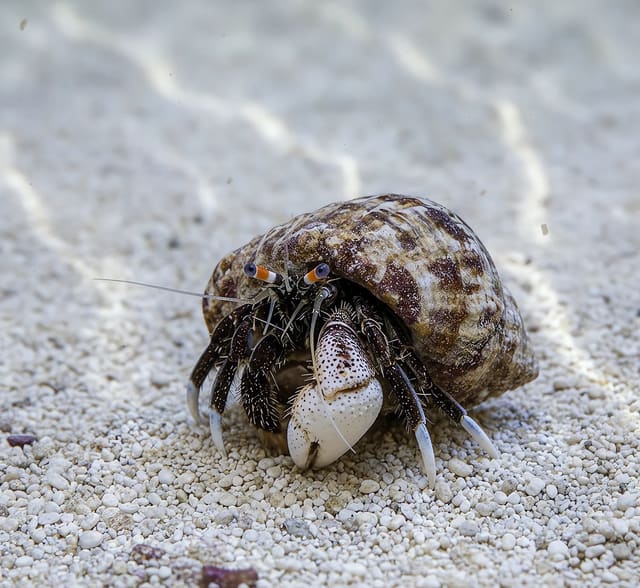
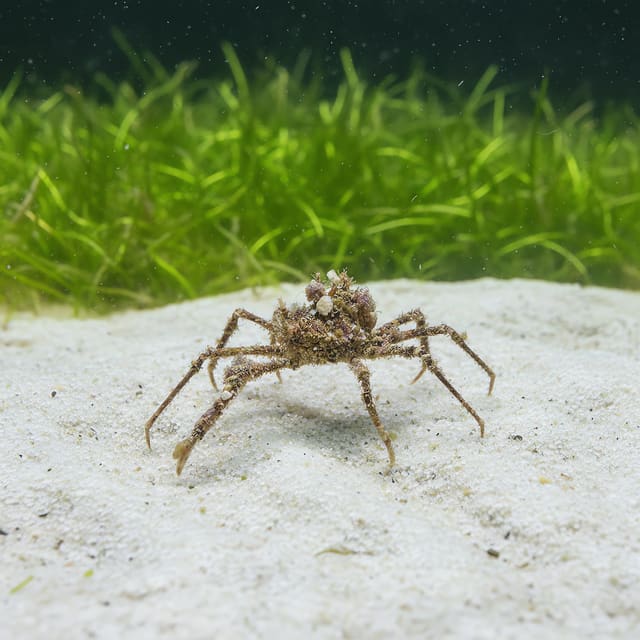
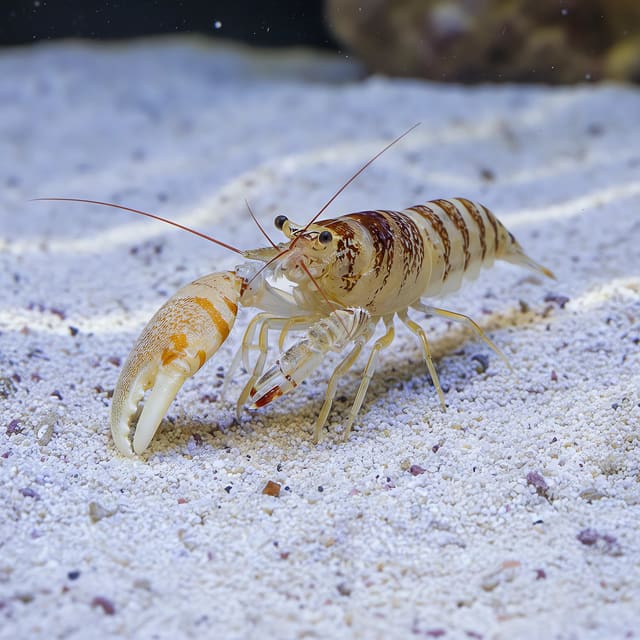
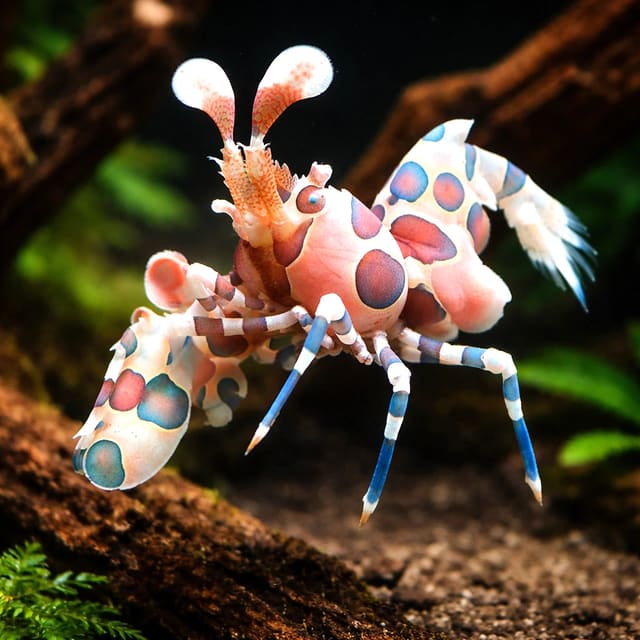
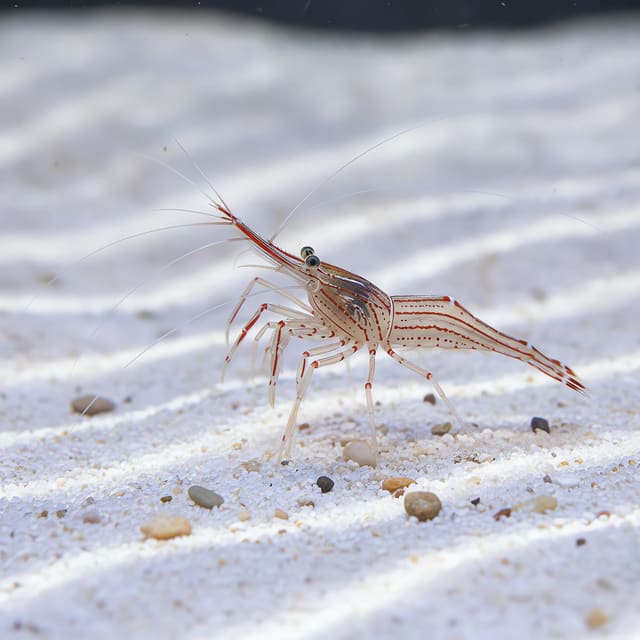
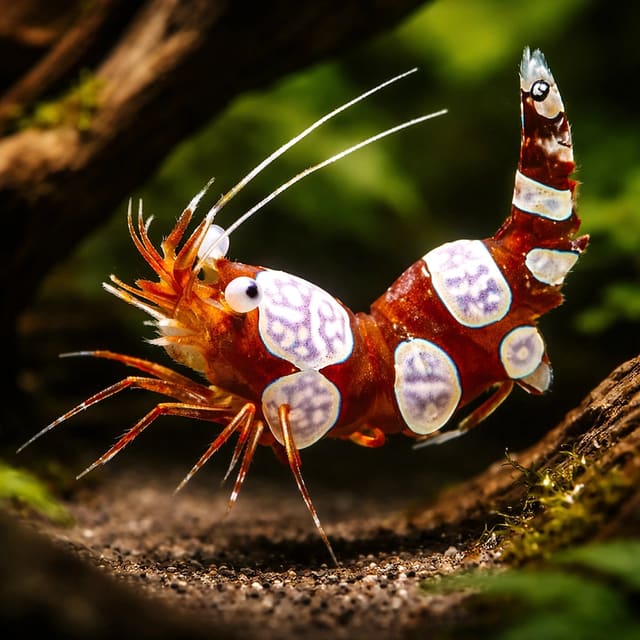
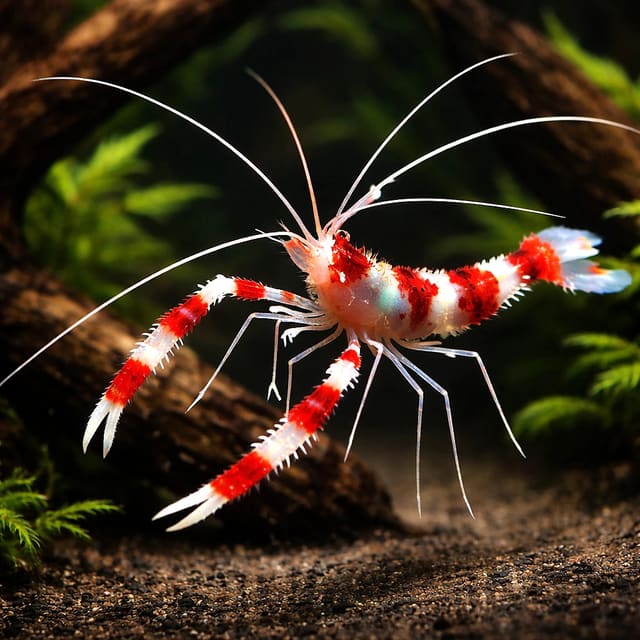
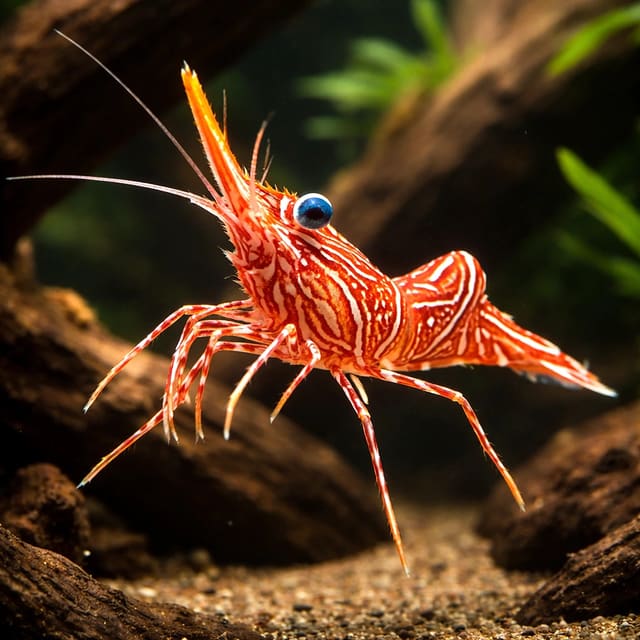
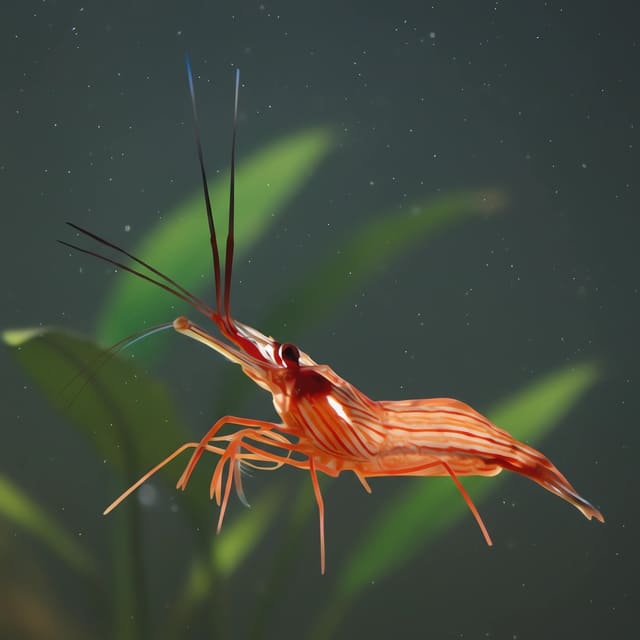
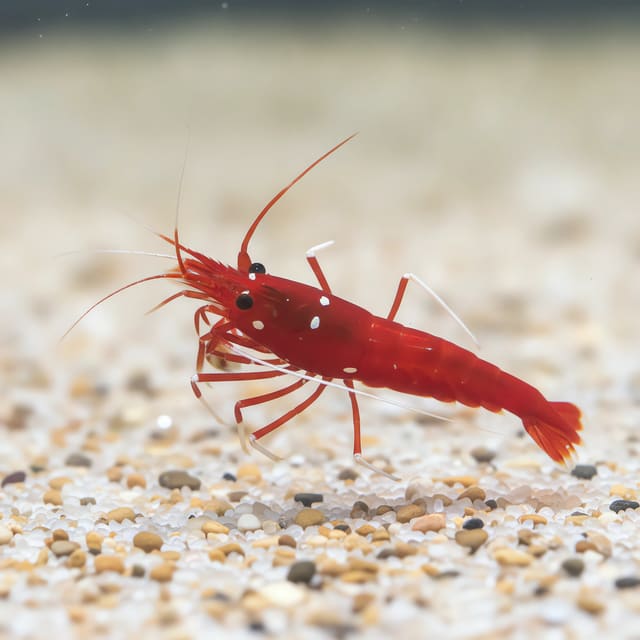
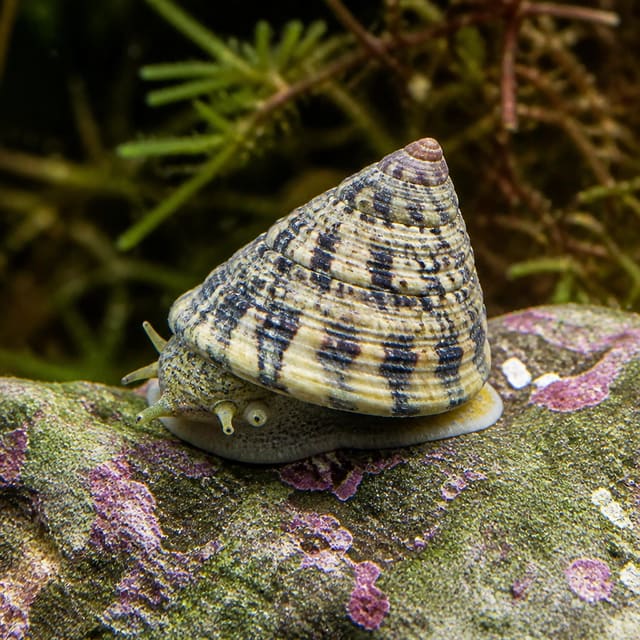
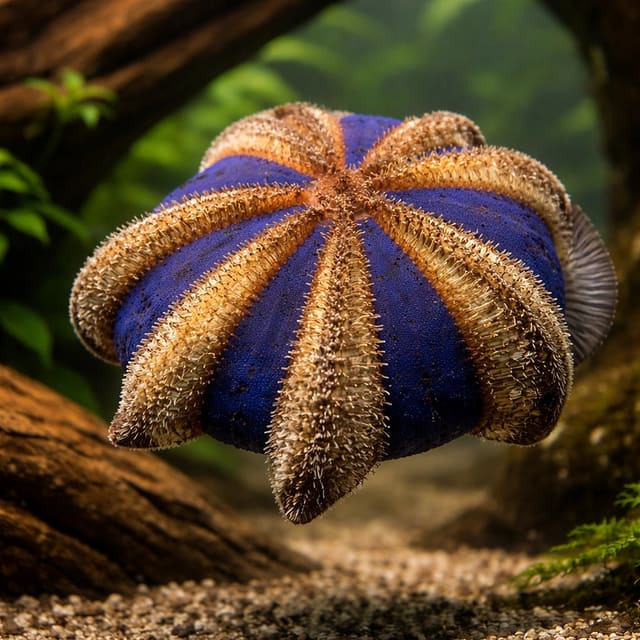
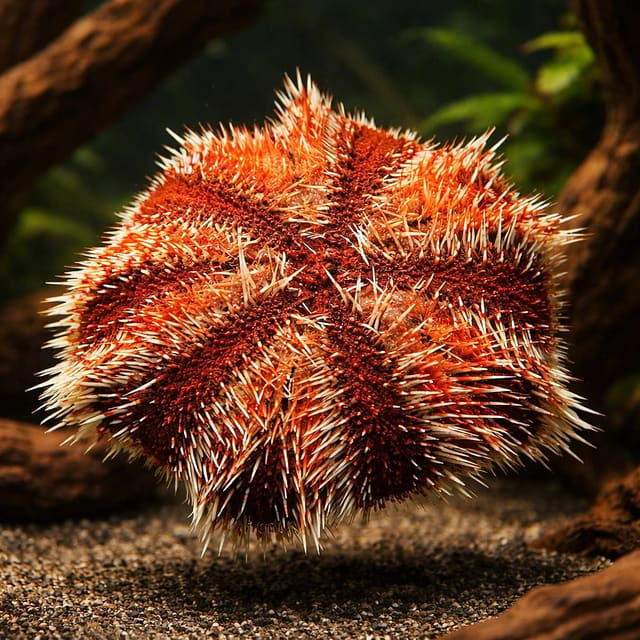
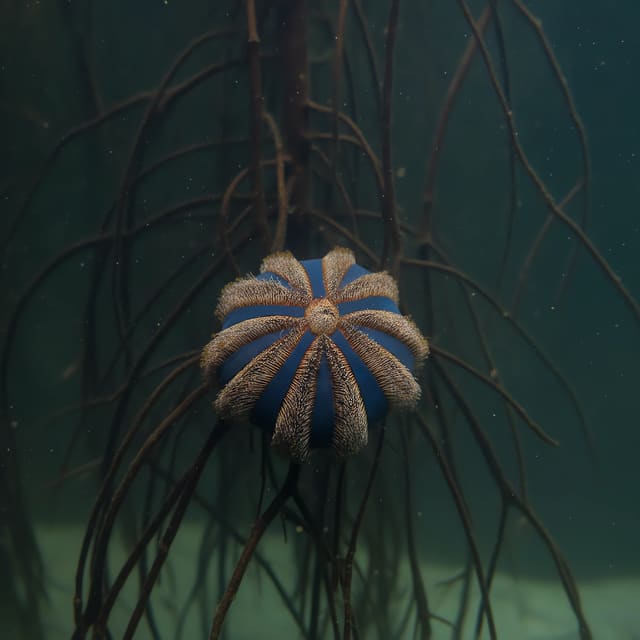
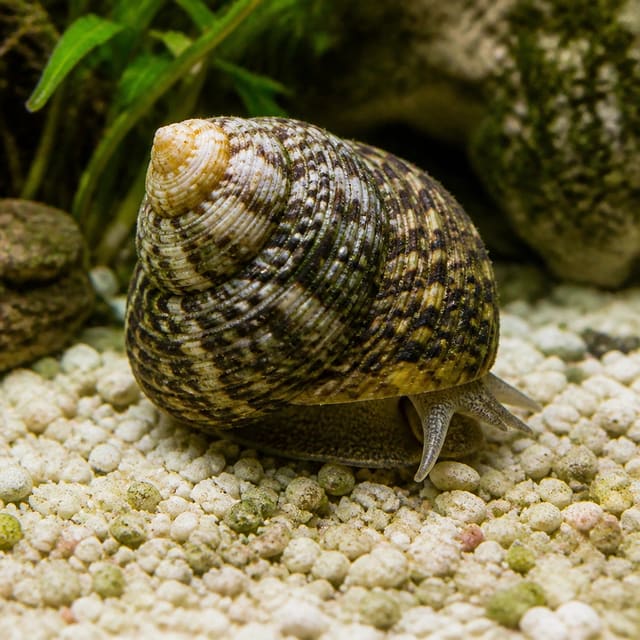
Gallery images have been digitally enhanced to improve image quality. Natural colour, pattern, size and maturity can vary between live animals.
Several gallery scenes show the crab beside green plants or driftwood. Whatever the setting in a picture, this is a marine crab that needs full-strength salt water and plenty of rock, as the care sections below explain.
Every marine crab depends on a biological filter that is already working when it arrives. Animals release ammonia, which is toxic. In a working filter, beneficial bacteria break it down to nitrite, which is also toxic, and then to nitrate, which is safer. The RSPCA's guidance on aquarium filtration explains that cycle and why no aquarium should run without a well set-up, well-maintained filter.
OATA's advice before adding any crustacean is to check that ammonia and nitrite are both at zero, and then to build up the livestock slowly. The bacterial population has to grow each time animals are added and feeding increases. Stock too quickly and the result is new tank syndrome: too few nitrifying bacteria for the extra waste, unhealthy ammonia and nitrite levels, and invertebrates that may become ill or die. A Sally Lightfoot crab belongs among the later additions to a settled tank, not the first.
OATA's general rule for marine crustaceans is to buy, within reason, an aquarium as large as possible. It recommends at least 40 litres for the smaller species of crabs and shrimp and says larger crustaceans need a larger aquarium, with the size varying by species. The group covers an enormous range, from sexy shrimp that grow only to 2 cm to blue spiny lobsters of over 30 cm, so read the 40-litre figure as the floor for the smallest animals rather than a target for this crab.
In practice, size the tank for everything you plan to keep, give the crab room to move over the rockwork without crowding other invertebrates, and choose the larger aquarium whenever you are torn between two.
Whatever its size, the aquarium needs a filter. For marine set-ups OATA describes three routes:
A protein skimmer can also help, because it removes dissolved organic waste before that waste breaks down into more harmful substances. If you run one, it needs regular cleaning to keep working properly.
Marine crustaceans need very little décor, but OATA calls live or artificial rock essential. Rock gives a crab surfaces to graze and, just as importantly, places for a freshly moulted animal to hide while its new exoskeleton hardens. Build caves, overhangs and gaps at the base of the rockwork, and check that every piece sits firmly so that a climbing crab cannot shift it.
Among the warning signs OATA lists for marine crustaceans is repeated attempts to leave the water. A well-fitting cover means that a crab trying to climb out stays safely inside the aquarium while you work out why, and it keeps the crab away from pipework and equipment above the waterline.
Most keepers thinking about this crab have one of a few kinds of marine aquarium in mind. The same OATA principles decide each case: reef-safe fish only, water set for the most sensitive animal in the tank, and careful thought about slow-moving invertebrates.
A reef can suit the crab, with two provisions. OATA notes that some of its suggested water values need altering in a reef aquarium to suit more sensitive species, so the reef's own residents set the targets. A reef also tends to hold slow-moving invertebrates, the animals OATA singles out as being at risk from opportunistic crabs, so think about each of them before you decide.
A marine tank of reef-safe fish and plenty of live rock gives the crab what OATA considers essential: rock to graze and hide in, and filtration that can include the live rock itself when the water flow through it is sufficient. If the tank holds few other invertebrates, there is also less to weigh up on compatibility.
If your fish are not reef-safe, this crab is the wrong choice. OATA's guidance is that such fish are likely to prey on marine crustaceans and should not be kept with them.
OATA's figure of at least 40 litres is written for the smaller crabs and shrimp, alongside its advice to buy as large an aquarium as you reasonably can. Plan for a larger system rather than the minimum, especially when the crab will share the tank with fish and other invertebrates.
| Aquarium | Suitable for this crab? |
|---|---|
| Established reef with stable water | Yes, with water set for the most sensitive residents and care over slow-moving invertebrates |
| Fish-only with live rock and reef-safe fish | Yes, with plenty of rock for grazing and shelter |
| Any tank with fish that are not reef-safe | No |
| Newly set-up or still-cycling marine tank | Not yet |
| Freshwater aquarium | No; this is a marine crab |
The OATA care sheet for marine crustaceans describes the group as usually undemanding of water chemistry and gives the suggested parameters below. They are broad guidance for marine crustaceans as a whole rather than a species-specific optimum for Percnon gibbesi, so the aim is to hold your water steadily within them.
| Measurement | OATA guide for marine crustaceans |
|---|---|
| Salinity (specific gravity) | 1.023–1.026 |
| Temperature | 24–26°C |
| pH | 7.9–8.3 |
| Carbonate hardness (KH) | Hard, 8–12°dKH |
| Calcium | 380–450 ppm |
| Magnesium | 1250–1350 ppm |
| Ammonia | Zero |
| Nitrite | Zero |
| Nitrate | Not above 50 mg per litre |
OATA points out that some of these values will need adjusting in a reef aquarium to suit its more sensitive species. If this crab is joining a reef, set the water for the most demanding animals in the tank, keep it steady, and make sure ammonia and nitrite stay at zero.
Water evaporates from a marine aquarium but the salt stays behind, so salinity creeps upwards between water changes. Replace evaporated water with fresh water rather than more salt water, and mix every batch of replacement salt water to the same salinity and temperature as the tank before it goes in. Keeping the reading inside 1.023–1.026 without sudden swings is the goal.
| Reading | First steps |
|---|---|
| Ammonia or nitrite above zero | Feed less, carry out a partial water change, check the filter and skimmer, and test again the next day. Add no new livestock until both read zero. |
| Nitrate over 50 mg per litre | Look at how much food goes in, keep to the weekly 25% change, and increase water changes if the level keeps rising. |
| Salinity outside 1.023–1.026 | Bring it back gradually through top-ups and water changes rather than in one large step. |
| Temperature outside 24–26°C | Check the heater and thermometer, and look for extra heat from lights, pumps or the room. |
For marine crustaceans, OATA strongly recommends a partial water change of 25% at least once every week. Good husbandry is essential, because crustaceans can be stressed by even the smallest amounts of ammonia and nitrite, and that stress may lead them to develop various diseases.
Check and clean filters regularly so they do not block. When media needs cleaning, do not run it under the tap: any chlorine or chloramine present may kill the beneficial bacteria that have built up in it. Rinse it lightly in the tank water you removed during the water change instead, which loses far fewer bacteria. The protein skimmer needs regular cleaning too, or it quickly stops pulling its weight.
If you need to move rock during maintenance, look before you lift. A crab that has just moulted may be sheltering underneath, soft and vulnerable, and its cast shell may be lying close by.
OATA's feeding advice for marine crustaceans is that their needs vary, but most species are omnivorous and will take algae, detritus and small meaty items. A varied menu covers those needs:
OATA reserves larger meaty foods, such as pieces of lancefish, cockles or mussels, for bigger crustaceans like lobsters; they are not the everyday diet for a crab of this kind.
Many crustaceans graze throughout the day, and OATA explains that for this reason it is not possible to say how many times they should be fed. Much depends on how much natural food your aquarium already produces: a tank with established rock and some algae growth offers far more between meals than one that has just been scrubbed clean. When you do give extra food, offer small portions and take care not to overfeed, because uneaten food breaks down and releases toxic waste into the water.
Some crustaceans are bought to graze unwanted algae. OATA's advice for herbivorous species is to supply extra algae as nori sheets once they have eaten the natural supply, so a grazer is never left short when the rock is clean. Whatever your crab chooses to pick at, plan to feed it rather than expecting it to live on the rockwork alone.
In a busy tank the fish often reach food first. If the crab seems to miss out, place a small portion close to the rockwork where it forages once the fish have been fed. A piece of nori clipped or wedged against the rock stays put long enough for a crab to find it.
Keep an eye on where the food goes. A crab that picks over the rock, comes out when food lands and leaves nothing behind to rot is feeding well. Reduced intake or a lack of interest in food is on OATA's list of warning signs, so if the crab stops eating outside a moult, test the water first.
Crustaceans have a hard exterior, the exoskeleton, and a body divided into segments. To grow, a crab sheds its exoskeleton, and OATA notes that it is common to find empty shells in the aquarium as a result. After shedding, the new exoskeleton takes a couple of days to harden, and the animal will often hide during this time.
Very often, no. An empty cast shell lying in the open, with the living crab out of sight in the rockwork, is the normal result of a moult. Look closely before you remove anything: a cast shell is light and hollow and usually looks complete, legs and all. Leave the crab in peace until it comes back out on its own.
OATA lists difficulty in moulting, incomplete shedding of the exoskeleton, a soft-shell condition that goes on for too long, and changes in the usual moulting frequency among the warning signs in marine crustaceans. If you notice any of them, test the water and send us the readings.
Every order is hand-packed by our team. The crab is hand-bagged in pure oxygen and packed in an insulated poly box, with a heat pack when the weather calls for it, and a licensed live-animal courier carries the parcel on a tracked service. We email you the tracking number and your confirmed delivery date. Someone must be at the address to receive the parcel, because live animals cannot be left unattended. The full terms are on our delivery and Live Arrival Guarantee page.
The parcel needs to be opened and inspected on the day it arrives. If anything has gone wrong, contact us that same day, WhatsApp being the fastest route, with your order number and the unboxing video, and we will arrange a replacement or refund.
Before the delivery day, confirm that ammonia and nitrite read zero and that salinity and temperature are inside the ranges above. After release, let the crab find its own way into the rockwork. Because the filter has to adjust to every new animal, test more often than usual for the first couple of weeks and keep extra feeding light while it catches up.
A settled Sally Lightfoot crab walks and climbs with co-ordination, keeps all its legs and claws, shows an intact exoskeleton and takes an interest in food. Learn how your own crab normally behaves, because a change from that everyday pattern is what tells you something is wrong.
OATA lists these changes as early signs of trouble in marine crustaceans:
A few lines in a notebook make changes far easier to spot: the date of each moult, how the crab is eating, and your water readings. OATA counts a change in the usual moulting frequency among its warning signs, and you can only notice that once you know what is usual for your own crab.
Test the water before anything else. Crustaceans are so sensitive to ammonia and nitrite that the readings are usually the quickest clue. Share the results with us along with a description of what you have seen, and hold off adding any treatment to the aquarium until you know what you are dealing with.
OATA's guidance is that marine crustaceans will generally mix with fish considered reef-safe, while fish that are not reef-safe are likely to prey on them and should not be kept with them. Check every fish on your list against that line before adding a Sally Lightfoot crab, including any fish you plan to buy later.
Invertebrate companions need more thought. OATA notes that some scavenger species, crabs and lobsters among them, are opportunistic and may prey on slow-moving aquarium inhabitants, so they should be mixed carefully. Think about every slow-moving animal already in the tank before the crab goes in, and watch closely during its first weeks.
If the aquarium also holds hermit crabs, OATA's advice is to give them ample food and plenty of spare shells, so they are not tempted to attack snails for their shells.
OATA's care sheet is a good reminder of how varied marine crustaceans are. Mithrax crabs and hermit crabs graze algae, peppermint shrimp eat unwanted Aiptasia anemones, and cleaner shrimp may pick parasites from larger fish. Because size, habits and diet differ so much across the group, no single rule covers every combination, and each pairing deserves its own check.
Reef-safe is a description that belongs to individual fish species, so check it for every species on your list rather than assuming it for a whole family. When you are unsure about a fish, settle the question before buying either animal.
Marine crustaceans differ widely in size, habits and compatibility, and OATA advises checking compatibility before any crustacean goes into an aquarium. Our marine invertebrate range covers animals with very different needs, so ask us about a specific combination before you buy rather than assuming two invertebrates will share a tank happily.
Add the crab to a settled aquarium rather than alongside a batch of other new arrivals, see how it uses the rockwork and behaves around your other animals, and add further livestock only once the filter has caught up and there is room. That slow approach follows OATA's general rule on stocking and gives you time to spot trouble early.
| Question | Why it matters |
|---|---|
| Are all the fish reef-safe? | Fish that are not reef-safe are likely to prey on crustaceans. |
| Are there slow-moving animals in the tank? | Opportunistic crabs may prey on them. |
| Is there enough rock for every animal? | Rock provides grazing and shelter while a moulted shell hardens. |
| Does the water suit the most sensitive animal? | Reef tanks may need values adjusted for their more sensitive species. |
Stable, fully marine water. OATA's broad guidance for marine crustaceans is salinity 1.023–1.026, 24–26°C, pH 7.9–8.3, carbonate hardness 8–12°dKH, calcium 380–450 ppm and magnesium 1250–1350 ppm, with ammonia and nitrite at zero and nitrate no higher than 50 mg per litre.
Buy as large an aquarium as you reasonably can. OATA's minimum of 40 litres applies to the smaller crabs and shrimp and larger crustaceans need more room, so treat 40 litres as a floor rather than a target, and furnish the tank with plenty of live or artificial rock.
Only once your marine aquarium is established and stable. Crustaceans can be stressed by even the smallest amounts of ammonia and nitrite, so a new or still-cycling tank is the wrong place to start, while a keeper who tests the water and changes 25% of it every week is well placed.
Offer a varied diet. OATA's advice for marine crustaceans, most of which are omnivores, is nori algae sheets, small frozen foods such as brine shrimp, and pellets. Many graze through the day, so give small extra portions and take care not to overfeed.
Treat it as an opportunist rather than a harmless ornament. OATA notes that scavengers such as crabs may prey on slow-moving tank mates, so introduce it carefully and watch closely during the first weeks.
Reef-safe fish are the usual companions, since marine crustaceans generally mix with them. Fish that are not reef-safe are likely to prey on crustaceans and should not share the tank, and slow-moving invertebrates need careful thought.
Our team hand-bags it in pure oxygen and packs it in an insulated poly box, with a heat pack when the weather calls for it, and a licensed live-animal courier carries the tracked parcel. Film one continuous unboxing video from the sealed parcel to the crab in its bag, then float the bag for 20–30 minutes before releasing it.
These public sources support the identity and care information on this page.
Packing, courier and Live Arrival Guarantee terms are set out on the Tropical Fish Co delivery page, linked in the arrival section.
No reviews for this item yet. Bought one? Honest reviews only, good or bad.
What customers say about ordering from us
Easy website plenty of info on fish your buying great to pick a time slot
TRACEY DURRANT · 7 Oct 2026
Got some lovely fish thank you
Kevin Mackie · 7 Oct 2026
Reviews of our shop, collected by Judge.me, an independent third-party review collector. Newest first.