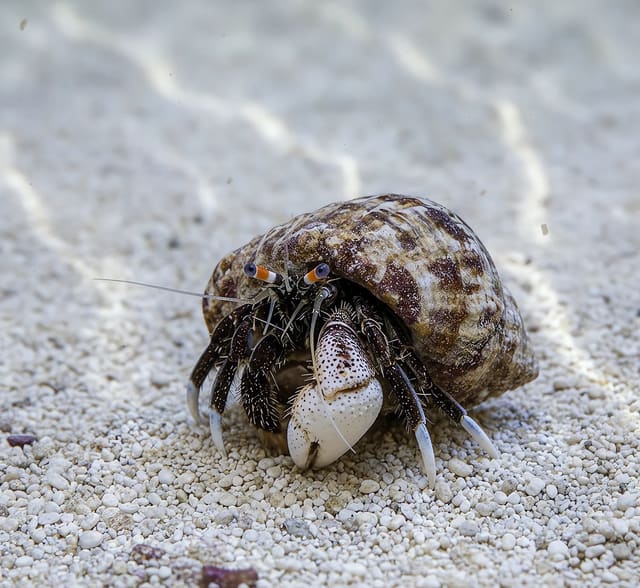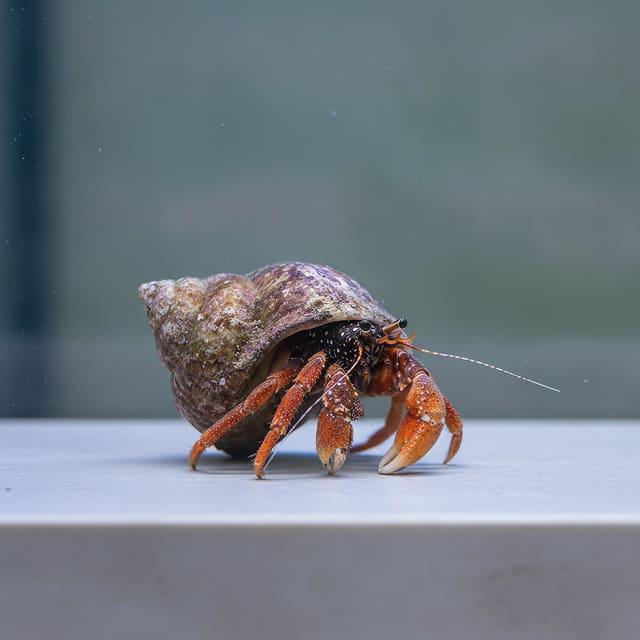
Orangeclaw Hermit Crab (Calcinus tibicen)
24–26°C · pH 7.9–8.3
£8.99
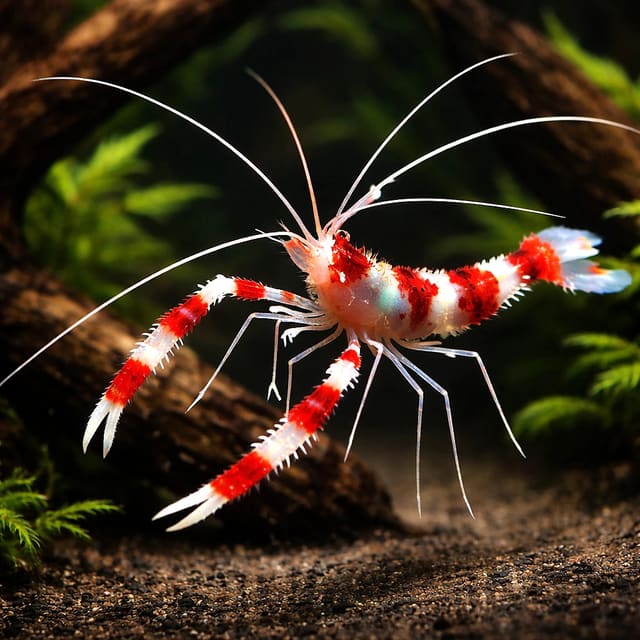
Lysmata kuekenthali is a marine caridean shrimp in the family Lysmatidae. It suits keepers with a stable, filtered marine aquarium; OATA’s marine-crustacean guidance gives 24–26°C and pH 7.9–8.3. Sold individually as one live shrimp per purchase.
Lysmata kuekenthali
Save when buying more. Each quantity is one shrimp; sex is not guaranteed unless the listing explicitly states it.
Lysmata kuekenthali is a marine caridean shrimp in the family Lysmatidae. It suits keepers with a stable, filtered marine aquarium; OATA’s marine-crustacean guidance gives 24–26°C and pH 7.9–8.3. Sold individually as one live shrimp per purchase.
Maintain these water conditions for optimal health and vibrant colors
Lysmata kuekenthali is a marine caridean shrimp in the family Lysmatidae. WoRMS accepts Lysmata kuekenthali as a distinct species. It suits a keeper who can maintain a stable, filtered saltwater aquarium, measure salinity and water chemistry, protect a freshly moulted shrimp and screen every tank mate for predation risk.
Keep the aquarium at 24–26°C, pH 7.9–8.3 and salinity 1.023–1.026. OATA’s marine-crustacean sheet gives these figures as group guidance; use them as the routine baseline while also meeting the needs of any more sensitive reef inhabitants. It also gives carbonate hardness of 8–12°dKH, calcium of 380–450 ppm and magnesium of 1250–1350 ppm.
Ammonia and nitrite must remain at zero mg/l, while nitrate must not exceed 50 mg/l. These limits make biological filtration, patient stocking and regular testing central to the decision. A marine aquarium with any measurable ammonia or nitrite is not ready for another crustacean.
OATA recommends an aquarium of at least 40 litres for smaller crabs and shrimp. Treat 40 litres as a starting point for planning a smaller-shrimp system, then increase the volume to suit the complete livestock plan, rock structure, filtration and the needs of other animals. Leave usable open water around the rock rather than filling every part of the aquarium with décor.
The Lysmata genus belongs to the caridean shrimps and the family Lysmatidae. A Wikipedia overview of the genus describes these shrimps as ornamental marine animals known for bright colour patterns and interesting behaviour. Those genus-wide characteristics explain their aquarium appeal, but Lysmata species differ in the roles they perform in an aquarium.
Some members of the genus are associated with controlling aquarium pests such as Aiptasia anemones. Do not choose Lysmata kuekenthali solely as a guaranteed pest-control solution. Plan its care as that of a marine crustacean first: provide clean saltwater, stable chemistry, suitable food, biological filtration and secure refuges. Any useful grazing or picking behaviour should be treated as additional behaviour rather than a replacement for feeding or aquarium maintenance.
Crustaceans have a segmented body covered by a hard exoskeleton. Growth involves shedding that outer covering, and an intact empty shell in the aquarium can therefore be a normal moult rather than a dead shrimp. The replacement exoskeleton takes a couple of days to harden, during which the animal often hides. Rockwork with accessible crevices is essential because it lets the shrimp withdraw while vulnerable without being forced into open areas.
Use appearance and activity as observation tools, not as guarantees about sex, maturity or behaviour. Normal behaviour can vary between individual crustaceans, and a change becomes meaningful when it is compared with that individual’s usual movement, feeding, colour and hiding pattern.
This animal is sold individually, so one purchase supplies one live shrimp. Sex is guaranteed only when the selected option explicitly states male or female. This Lysmata kuekenthali listing has no sex-guaranteed option.
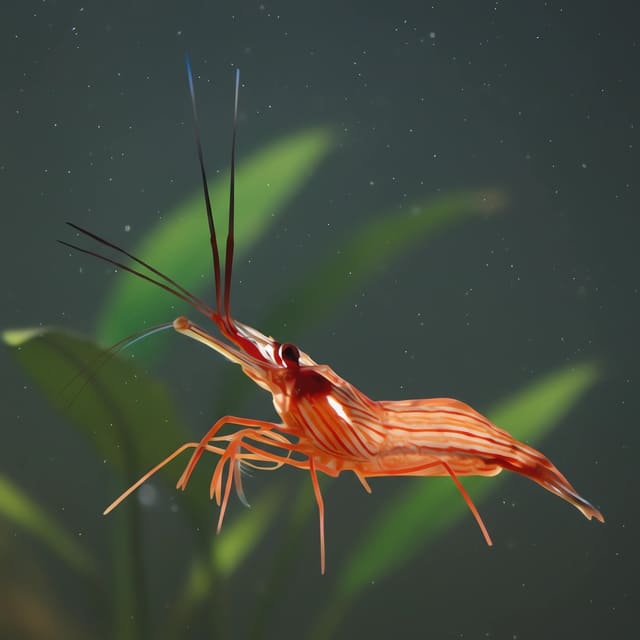
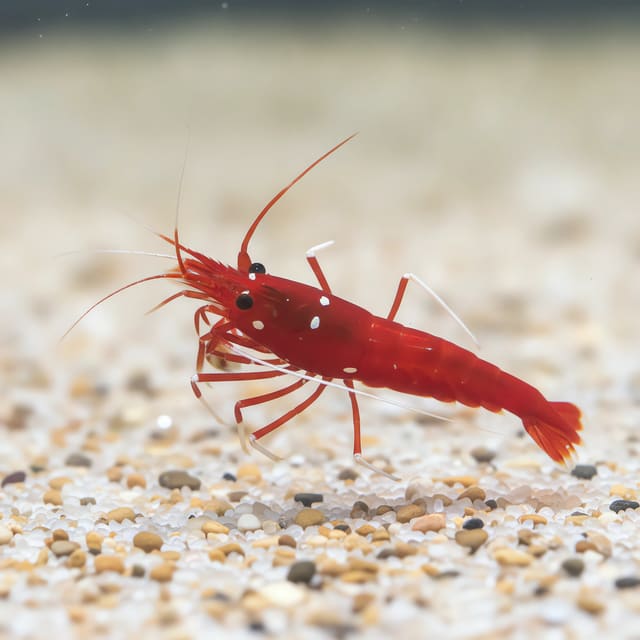
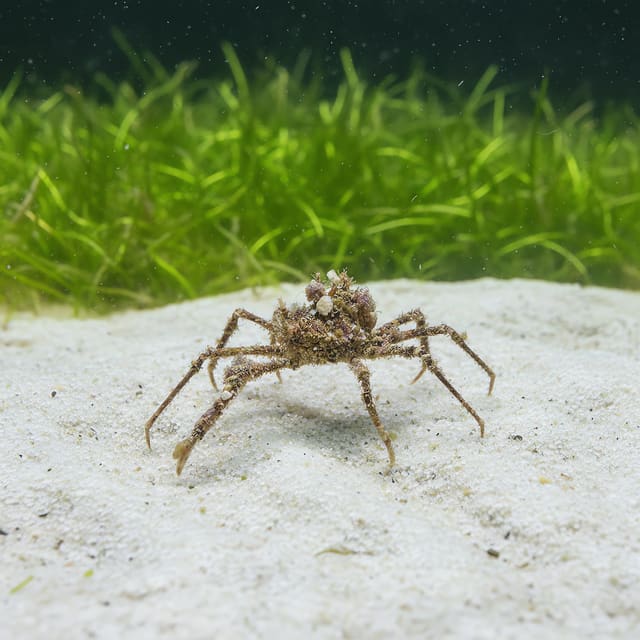
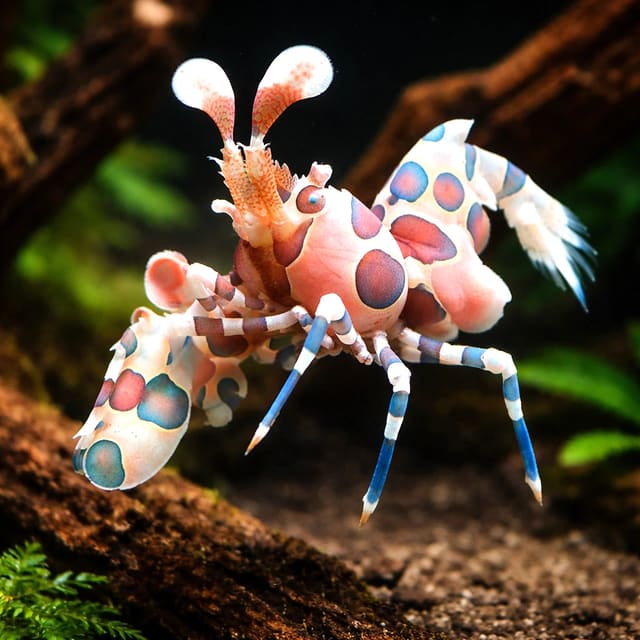
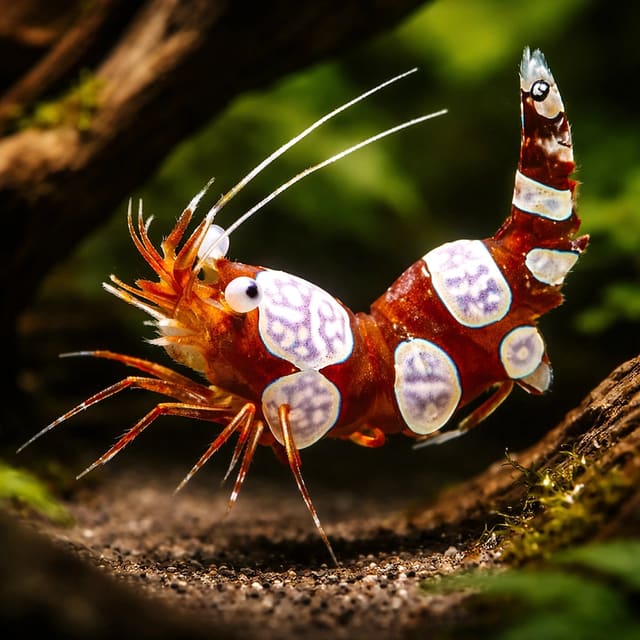
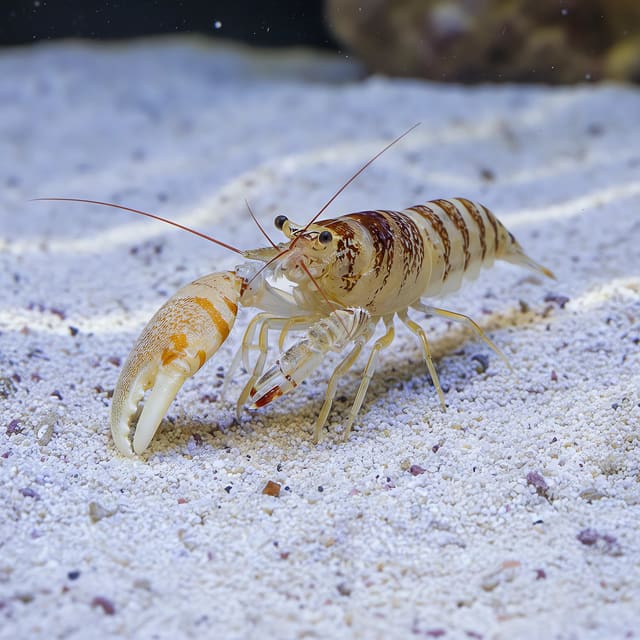
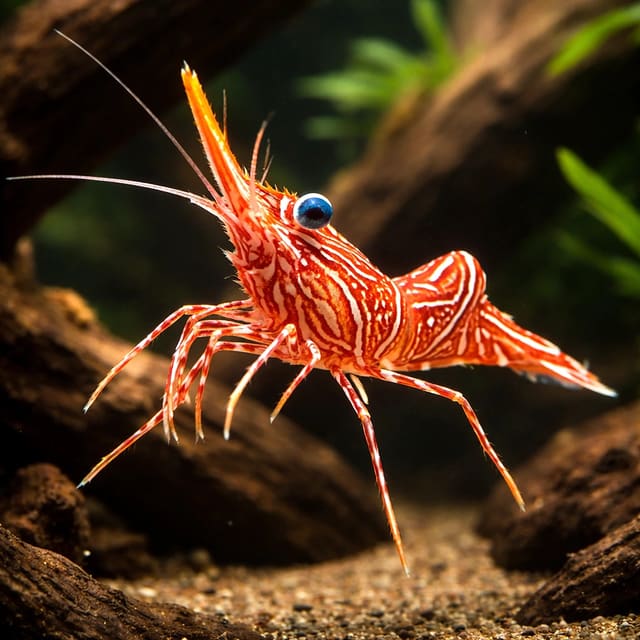
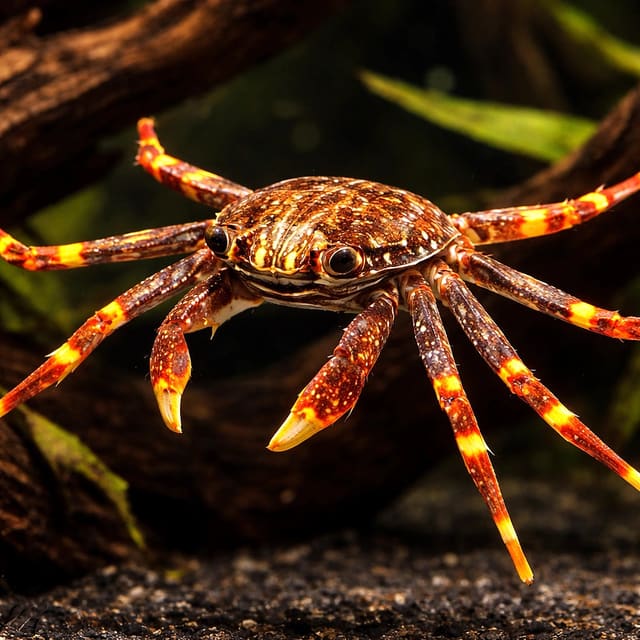
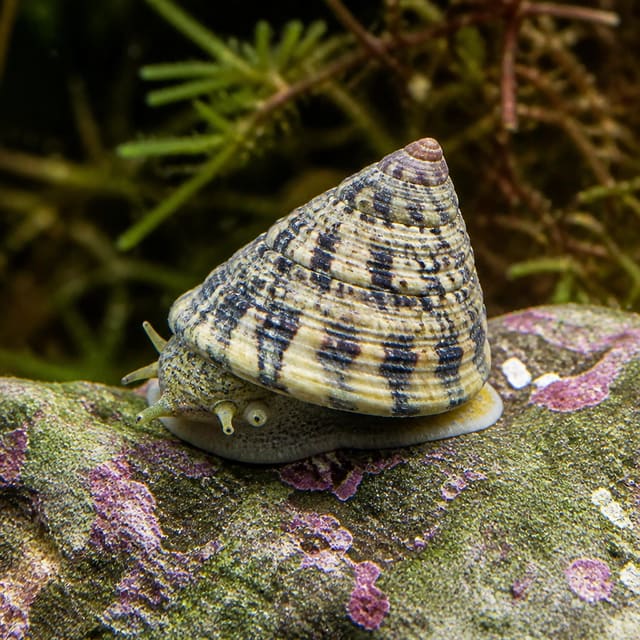
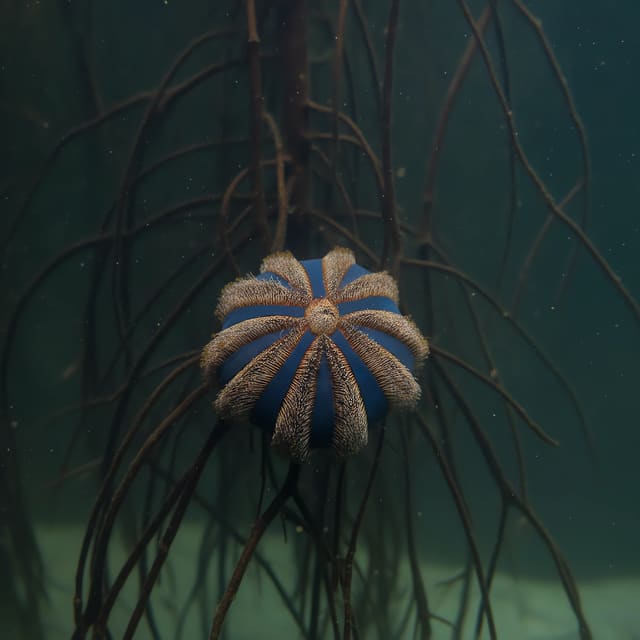
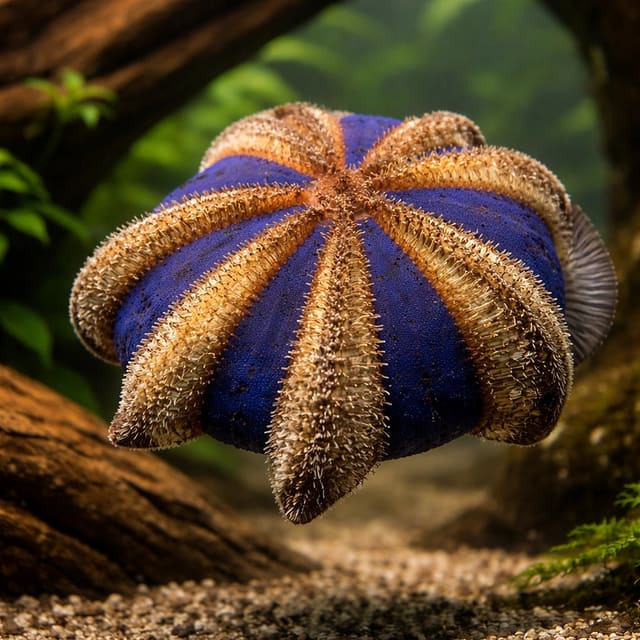
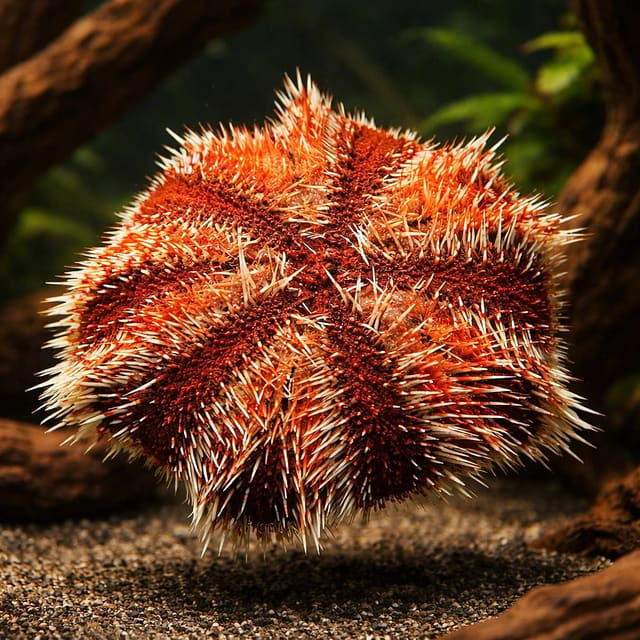
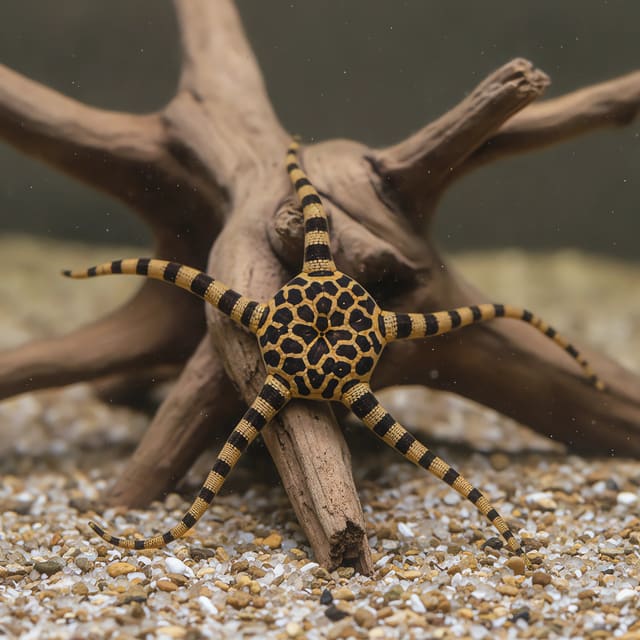
The gallery images are representative of this type of animal rather than photographs of the exact animal supplied, so colours can look slightly different from the live animal. Use the photograph to understand the general form and markings, while judging the live shrimp by its own condition and behaviour after it has settled.
Plan the aquarium around stable marine conditions rather than the shrimp’s appearance at dispatch. Space must account for the complete stocking plan, accessible rock refuges, water movement, filtration and room for maintenance.
| Suits | Not suited to |
|---|---|
| A stable, filtered marine aquarium | An unfiltered or rapidly stocked aquarium |
| Water maintained at 24–26°C and pH 7.9–8.3 | Water with detectable ammonia or nitrite |
| Rockwork with accessible moulting refuges | A layout with nowhere to hide after moulting |
| Fish assessed as reef-safe | Non-reef-safe fish likely to prey on shrimp |
| A keeper who tests salinity and water chemistry | A system managed without routine testing |
Browse the marine inverts collection when planning the wider aquarium, but assess every proposed animal separately. Sharing a marine category does not make two animals compatible.
Maintain 24–26°C, pH 7.9–8.3 and salinity 1.023–1.026. Keep carbonate hardness at 8–12°dKH, calcium at 380–450 ppm and magnesium at 1250–1350 ppm. These OATA figures form one working set of marine-crustacean parameters, so check them together rather than concentrating on temperature alone.
Ammonia and nitrite must both read zero mg/l. Nitrate must not exceed 50 mg/l. Test these values before introducing the shrimp and as part of continuing aquarium maintenance. If ammonia or nitrite is detectable, pause further livestock additions and restore biological filtration and water quality before proceeding.
A nitrate result below the maximum is only one part of the decision. Temperature, salinity, pH, carbonate hardness, calcium and magnesium still need to remain within their working ranges. A tank can have acceptable nitrate while another value has moved far enough to make an introduction unwise.
Record readings in consistent units. Salinity written as specific gravity should stay between 1.023 and 1.026; carbonate hardness should be recorded as °dKH rather than confused with general hardness. Keeping a simple sequence of results makes a gradual shift easier to see than relying on memory.
Compare each result with the preceding readings as well as the permitted range. For example, nitrate that rises across several consecutive tests while still below 50 mg/l calls for a review of feeding, waste removal and filter maintenance before the maximum is reached. The same principle applies when pH or salinity moves towards an edge of its range over several checks.
A single unexpected reading should be checked again before a large adjustment is made. Confirm the units, repeat the test carefully and compare it with the aquarium’s recent pattern. This prevents a testing or reading error from prompting several unnecessary changes at once.
Avoid correcting several values blindly at once. Identify which reading is outside the working range, check that the test and units have been read correctly, and address the cause while continuing to protect the shrimp from ammonia and nitrite.
Use a mature, functioning filter and increase livestock slowly. OATA warns that stocking too quickly can leave too few nitrifying bacteria to process the increased waste, producing unhealthy ammonia and nitrite. The filter must be ready for the extra biological load before the shrimp enters the aquarium.
The RSPCA’s aquarium filtration guidance explains the underlying cycle: beneficial bacteria in biological media convert toxic ammonia to nitrite, which is also toxic, and then to nitrate, which is safer. The goal is not simply moving water; it is preserving the bacterial population that performs this conversion.
OATA recognises several suitable forms of marine filtration: live rock with sufficient water flow, an internal or external filter, or a sump-based filter. Select a system that can be inspected and maintained without dismantling the shrimp’s main refuge. Whatever form it takes, filtration is essential.
A protein skimmer can help by removing dissolved organic waste before it breaks down into more harmful substances. It supports water-quality management but does not replace the biological filter, testing or water changes. Clean it regularly so accumulated waste does not reduce its performance.
Use ammonia and nitrite results to judge whether the filter is coping after an animal is introduced or feeding increases. Both values must remain at zero mg/l. A clear aquarium is not enough: dissolved waste can rise without making the water look dirty, so the test result is the practical check on biological performance.
Separate routine cleaning from a complete overhaul. Lightly cleaning blocked media while retaining the established bacterial population supports filtration; replacing or washing everything at once can remove the organisms that process waste. Coordinate filter work with the partial water change so removed aquarium water is ready for rinsing media.
If a test shows ammonia or nitrite, treat the reading as a system warning. Check filter operation and recent stocking, reduce the pressure created by further additions and restore safe water before expanding the livestock plan. Clean water must come from a functioning process rather than from the aquarium merely looking clear.
Provide live or artificial rock with accessible hiding places. OATA regards rock as essential for marine crustaceans because it creates grazing surfaces and places where freshly moulted animals can withdraw. Arrange it so the shrimp can enter a refuge without becoming trapped behind unstable pieces.
Leave several routes through the structure instead of one enclosed cavity. A refuge remains useful only when the animal can reach it and the keeper can still inspect the surrounding area. Keep enough open space for water flow and routine cleaning around the base of the rock.
A crustacean grows by shedding its hard exoskeleton. The discarded covering can look like a complete shrimp because it retains the body shape and appendage outlines. Look for the live animal in its refuge before removing an apparently empty shell or concluding that the shrimp has died.
The new exoskeleton takes a couple of days to harden. Crustaceans will often hide while the new exoskeleton hardens, so do not dismantle the aquarium simply because the shrimp becomes less visible after a moult. Continue observing water quality and allow the refuge to serve its purpose.
| Observation | Action |
|---|---|
| Empty shrimp-shaped shell | Look for the live shrimp in its refuge and check the shell is hollow. |
| Shrimp hiding after shedding | Leave the refuge undisturbed while the new exoskeleton hardens. |
| Rock blocks routine cleaning | Plan future access without disturbing the occupied refuge. |
| Waste collects in a dead area | Review flow and access while preserving secure hiding places. |
Trace a clear route from the feeding area to more than one sheltered space. If every route ends in an exposed opening, revise the structure before the shrimp is introduced. If solid waste repeatedly gathers beneath the same overhang, improve maintenance access while retaining nearby cover.
Inspect stability during routine work rather than waiting for a rock to shift. A useful refuge should remain secure when water is siphoned nearby and should not depend on loose pieces resting against one another. Preserve the occupied hiding area during the soft-shell period and schedule any necessary rearrangement for a safer time.
Décor should solve two needs at once: protection during moulting and practical aquarium maintenance. A complex pile that cannot be cleaned or inspected is less useful than a stable, accessible structure with genuine retreat spaces.
Begin with a varied marine-crustacean menu and adjust it to the shrimp’s observed response. OATA notes that most marine crustaceans are omnivorous and will consume algae, detritus and small meaty items. OATA says a varied diet such as nori algae sheets, small frozen foods such as brine shrimp, or pellets should be provided.
Natural grazing in the aquarium can contribute food, but it should not be assumed to meet every need. Check whether the shrimp approaches food, handles it and feeds, then inspect the aquarium for residue. The useful portion is the amount that supports feeding without leaving material to decay.
Do not impose a fixed feeding frequency without observing the system. OATA explains that many crustaceans graze throughout the day and that supplementary feeding depends on the natural food already present. A lightly stocked aquarium rich in grazing opportunities presents a different feeding decision from a system in which little natural food is accessible.
Overfeeding leaves uneaten food that breaks down and releases toxic waste. If food remains after the shrimp has stopped feeding, reduce the next supplementary portion and remove accessible leftovers during maintenance. Continue checking ammonia, nitrite and nitrate because a repeated excess is a water-quality problem as well as a feeding problem.
Judge natural food by observed grazing rather than by the age or appearance of the aquarium. A mature-looking rock structure does not show how much accessible food remains. Supplementary feeding should therefore respond to what the shrimp eats and what is left behind.
During a period of hiding, distinguish between normal post-moult withdrawal and a broader loss of appetite. Compare feeding with movement, colour, moulting condition and water readings rather than drawing a conclusion from one missed feed.
Arrange for someone to receive the parcel because live animals must not be left unattended. Tropical Fish Co hand-packs live animals in a bag with pure oxygen, inside an insulated box, with a heat pack when weather conditions call for it. A licensed live-animal courier carries the parcel, and tracking details are sent by email.
These are the arrival and acclimatisation steps in our delivery and Live Arrival Guarantee policy.
OATA advises adding livestock slowly because beneficial bacteria need to increase as waste and feeding rise. Confirm that ammonia and nitrite are zero before introducing an invertebrate, and check the aquarium’s working temperature, pH and salinity before the parcel arrives. A planned arrival should therefore follow completion of the aquarium checks, not trigger the first test of the system.
After release, note whether the shrimp can walk normally, use the rock refuges and respond to its surroundings. Compare later observations with this baseline instead of expecting constant visibility. Check the aquarium values again if activity, coordination, colour or feeding changes unexpectedly.
Keep the introduction separate from other livestock additions. Adding several animals together makes it harder to judge whether the filter has adjusted to the extra waste and whether a particular interaction is disturbing the shrimp. Slow stocking also leaves a clearer sequence of water results to compare.
After release, let the established rock refuges do their job. Observe movement, walking, feeding interest and the use of hiding places without changing several parts of the aquarium at once. A freshly moulted shrimp will often hide while its new exoskeleton hardens.
If a Live Arrival Guarantee claim is needed, open and inspect the parcel the same day it arrives and submit the short continuous unboxing video with your order number that same day.
Change 25% of the aquarium water at least once every week. OATA strongly recommends this schedule for marine crustaceans and suggests using a siphon to remove solid waste from the substrate. Prepare the replacement saltwater to suit the aquarium’s working temperature, pH and salinity so maintenance supports stability.
Check and clean the filter often enough to prevent blockages. Rinse biological media lightly in removed aquarium water rather than beneath the tap, preserving as much beneficial bacteria as possible. Clean the protein skimmer regularly when one is used.
Use the full set to decide whether the aquarium remains suitable. An acceptable temperature does not cancel detectable ammonia, and clear-looking water does not demonstrate that filtration is functioning.
Check for reduced activity, prolonged inactivity, difficulty walking or swimming, poor coordination, repeated attempts to leave the water or an unusual movement pattern. Also look for an unexpected darker or paler colour, increased hiding, altered aggression, lesions, discolouration, white or fluffy growths, or damage to the exoskeleton, limbs, claws, antennae or eyes.
Moulting signs include difficulty shedding, an incomplete moult, a prolonged soft-shell condition or a change in the animal’s usual moulting pattern. Feeding warnings include reduced intake or a lack of interest in food. When a change appears, check water readings, filter operation, recent stocking, feeding and compatibility together. This links the visible sign to practical aquarium conditions without guessing at a treatment.
| Checkpoint | Decision |
|---|---|
| Before the water change | Record water readings and note visible waste or blocked flow. |
| During the water change | Siphon solid waste and retain removed water if filter media needs rinsing. |
| After maintenance | Confirm equipment is operating and the rock refuges remain accessible. |
| Before adding livestock | Require zero ammonia and nitrite and review the recent pattern of results. |
If behaviour changes while the readings remain within range, still review feeding, moulting and interactions. If a reading has moved, deal with that system condition before drawing conclusions from appearance alone. The combination of a written result and a behavioural note gives a stronger basis for action than either observation in isolation.
Keep observations consistent. A brief note of the shrimp’s normal feeding response, preferred refuge and movement pattern provides a useful comparison when behaviour changes later.
Keep this shrimp only with animals that pass a case-by-case compatibility assessment. OATA says marine crustaceans generally mix with fish considered reef-safe, while fish that are not reef-safe are likely to prey on them and should be avoided. Use that distinction as the first screening rule rather than relying on a broad community-fish label.
Crabs and lobsters need particular caution. OATA notes that some scavenger species are opportunistic and may prey on slow-moving aquarium inhabitants. Do not assume that another marine invertebrate is compatible merely because it occupies the same retail category or lives in similar water.
In a reef aquarium, some of these crustacean water values will need to be altered to accommodate more sensitive species. Set the aquarium around the most demanding compatible resident rather than moving values between competing targets.
| Candidate | Decision |
|---|---|
| Fish assessed as reef-safe | Consider after checking the complete stocking plan. |
| Non-reef-safe fish likely to eat shrimp | Avoid. |
| Opportunistic crab or lobster | Use caution and assess predation risk individually. |
| Animal with unclear feeding behaviour | Resolve the risk before introduction. |
Assess the combination at feeding time and during moulting, not only while every animal is resting. A tank mate may ignore the shrimp under ordinary conditions yet compete for food, block a refuge or investigate it when the exoskeleton is soft. The compatibility decision must account for those predictable periods of vulnerability.
Check whether each animal can use the aquarium without forcing the shrimp into permanent concealment. Frequent hiding immediately after a moult can be normal, but repeated retreat linked to another animal’s approach calls for closer observation. Do not wait for damaged antennae, limbs or exoskeleton before reviewing the combination.
Before buying, list the scientific name of every proposed tank mate and confirm that each fish is reef-safe and that no animal is known to prey on shrimp. Judge each animal by its exact identity rather than by general labels such as peaceful or community-safe.
Increase the livestock population slowly. Each new animal and each increase in feeding asks the biological filter to process more waste, so compatibility includes the aquarium’s capacity as well as direct behaviour between animals.
Observe access to food, refuges and open routes through the rock. A compatible animal should not prevent the shrimp from reaching cover or repeatedly interrupt feeding. Pay particular attention after a moult, when the new exoskeleton takes a couple of days to harden and the shrimp will often hide.
Plan the number of shrimp and other crustaceans around usable space, food access, filtration and the behaviour of the individuals involved. Marine crustaceans vary widely, so a fixed group rule should not replace observation and a species-by-species assessment.
| What you observe | What to review |
|---|---|
| Chasing or predation attempts | The animal combination and immediate safety of the shrimp. |
| Blocked refuge or feeding access | Rock layout, food placement and competition. |
| Ammonia or nitrite after adding livestock | Biological filtration and the pace of stocking. |
| Food accumulating after introductions | Portion size, access to food and maintenance. |
Change one part of the stocking plan at a time where practical. A single addition creates a clearer observation period: water readings can be compared with the previous baseline, and any new interference around food or refuges is easier to identify.
If chasing, predation attempts, blocked refuge access or a sustained feeding problem develops, treat the combination as unsuitable. Review the stocking arrangement rather than waiting for visible injury. A tank mate that ignores the shrimp in open water may still present a risk when the shrimp is soft after moulting.
Continue testing water during any increase in livestock. Compatibility has failed at a system level if the added biological load produces ammonia, nitrite or deteriorating maintenance conditions, even when no direct aggression is visible.
Plan the aquarium for a shrimp that moults as it grows, with accessible rock refuges and open maintenance routes within the complete marine stocking plan.
For a smaller-shrimp setup, OATA recommends at least 40 litres; increase the volume to suit the full livestock plan, filtration, rock structure and other inhabitants.
Plan the number case by case around usable refuge space, food access, filtration and individual behaviour; marine crustaceans vary too widely for one group rule.
It suits a keeper who can maintain stable marine chemistry, zero ammonia and nitrite, weekly 25% water changes and carefully screened tank mates.
OATA’s group guidance recommends a varied diet for most marine crustaceans, such as nori algae sheets, small frozen items such as brine shrimp, or pellets, with portions limited to avoid waste.
OATA’s marine-crustacean guidance gives 24–26°C, pH 7.9–8.3, salinity 1.023–1.026 and carbonate hardness 8–12°dKH.
Watch feeding, refuge access and interactions after introduction; OATA says marine crustaceans vary in their compatibility, so judge each combination by how the animals behave together.
OATA says marine crustaceans generally mix with fish assessed as reef-safe; avoid non-reef-safe fish likely to prey on shrimp and use caution with opportunistic crabs or lobsters.
When you receive the parcel in person, start filming while it is still sealed with the outer box visible, keep one continuous take as you open it on the day it arrives until the shrimp is seen still inside its bag, then float the bag for 20–30 minutes before release.
No reviews for this item yet. Bought one? Honest reviews only, good or bad.
What customers say about ordering from us
Easy website plenty of info on fish your buying great to pick a time slot
TRACEY DURRANT · 7 Oct 2026
Got some lovely fish thank you
Kevin Mackie · 7 Oct 2026
Reviews of our shop, collected by Judge.me, an independent third-party review collector. Newest first.