Lysmata kuekenthali - Marine Aquarium Livestock UK
24–26°C · pH 7.9–8.3
£38.99
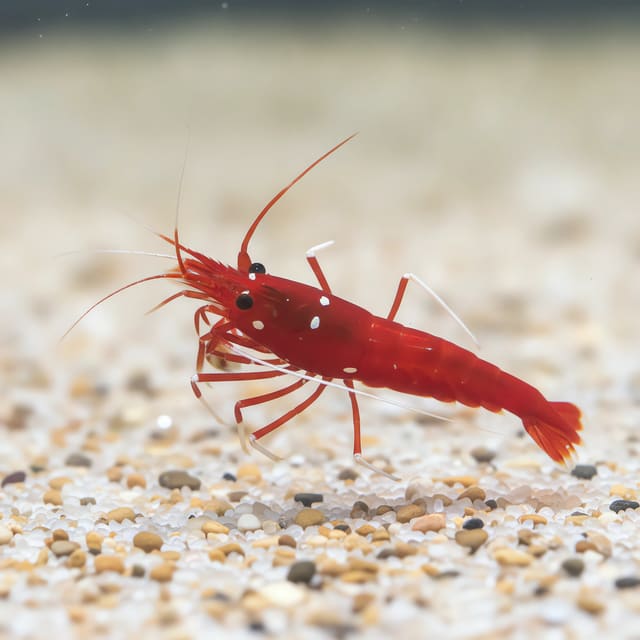
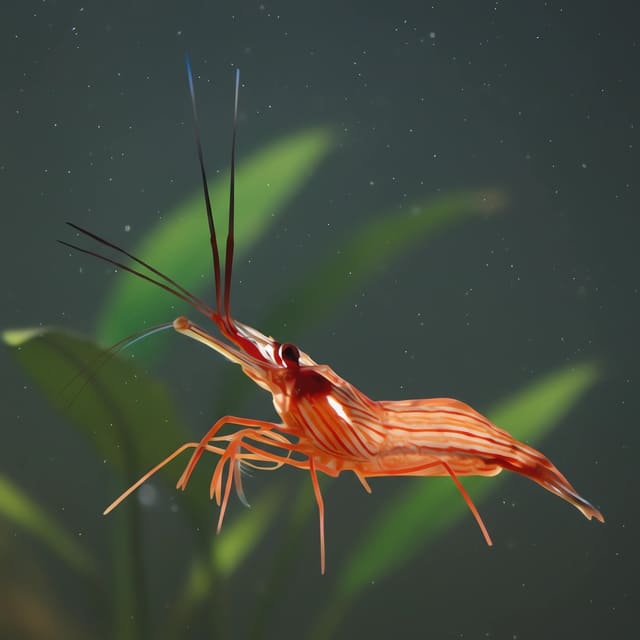
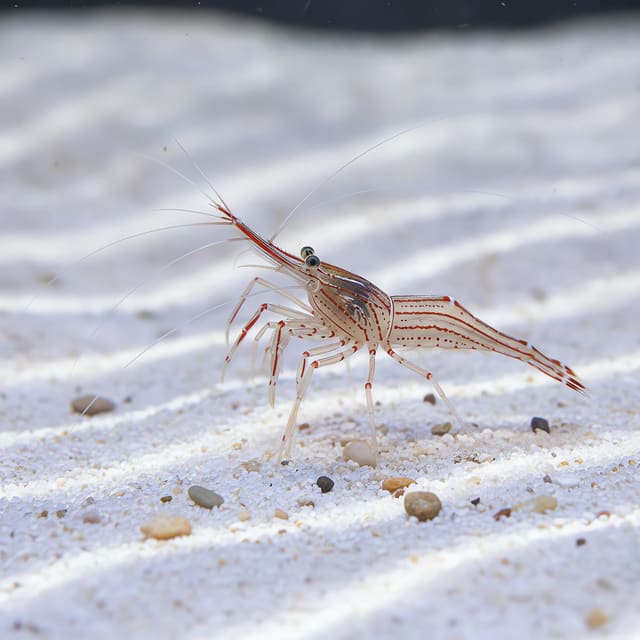
The Pacific cleaner shrimp (Lysmata amboinensis) is an omnivorous marine shrimp in Lysmatidae, widespread across tropical coral reefs. It suits a stable marine aquarium kept at OATA’s group-guidance values of 24–26°C, pH 7.9–8.3 and specific gravity 1.023–1.026, with only reef-safe fish. Sold individually in 3-5 cm and 5-7 cm dispatch sizes.
Lysmata amboinensis
Save when buying more. Each quantity is one shrimp; sex is not guaranteed unless the listing explicitly states it.
The Pacific cleaner shrimp (Lysmata amboinensis) is an omnivorous marine shrimp in Lysmatidae, widespread across tropical coral reefs. It suits a stable marine aquarium kept at OATA’s group-guidance values of 24–26°C, pH 7.9–8.3 and specific gravity 1.023–1.026, with only reef-safe fish. Sold individually in 3-5 cm and 5-7 cm dispatch sizes.
Maintain these water conditions for optimal health and vibrant colors
The Pacific cleaner shrimp (Lysmata amboinensis) is an omnivorous marine shrimp in the family Lysmatidae. WoRMS accepts this scientific identity, while Wikipedia describes the species as widespread across tropical coral reefs, typically at wild depths of 5–40 metres. It suits a keeper prepared to maintain a filtered marine aquarium, measure water chemistry and screen every fish for predation risk.
Its best-known natural behaviour is cleaning larger fish. Parasites and dead tissue from fish form a large part of its wild diet, although the species is omnivorous. In an aquarium, regard any cleaning interaction as natural feeding behaviour rather than an assurance that every fish will be cleaned.
This is a crustacean with a segmented body and a hard external skeleton. Growth involves shedding that exoskeleton, followed by a soft period while the replacement hardens. Rock shelter, clean water and careful observation therefore matter throughout its care, not only when the shrimp first enters the aquarium.
One purchase supplies one shrimp in the selected size. Use the live size selector to choose either 3-5 cm or 5-7 cm. These labels describe the animal’s dispatch length and let you choose the size sent with the order.
The size you select is the size supplied, not the adult size. Do not use either dispatch label to set the permanent aquarium volume or to infer age, sex or life stage. Plan the aquarium around mature needs, filtration capacity, water stability and the behaviour of every proposed tank mate.
Sex is guaranteed only when the selected option explicitly states male or female. This Lysmata amboinensis listing has no sex-guaranteed option.
Some gallery images have been digitally enhanced to improve image quality. They show the listed type of animal rather than guaranteeing the exact markings of the individual supplied, so natural colour and pattern can vary.
Use the following comparison before choosing this shrimp. The decisive questions are whether the marine system is biologically filtered, whether its chemistry can remain within the recommended range and whether every fish has been assessed as reef-safe. A bright display or ample décor cannot compensate for measurable ammonia, nitrite or an unsuitable predator.
| Suits | Not suited to |
|---|---|
| Filtered marine aquariums with established biological filtration | Unfiltered systems or filters unable to process added waste |
| Temperature of 24–26°C and pH of 7.9–8.3 | Systems outside the planned marine-crustacean range |
| Fish assessed as reef-safe | Fish assessed as not reef-safe |
| Rockwork with grazing surfaces and hiding places | Bare arrangements without secure post-moult shelter |
| Routine testing and weekly partial water changes | Care based only on appearance without water tests |
The species’ natural cleaning diet does not remove the need to feed it or maintain the aquarium. It still adds waste to the biological system, and extra food can decay if too much is offered. Introduce livestock gradually so the filter’s beneficial bacterial population can respond to each increase in animals and feeding.
Water values for more sensitive reef inhabitants may require a whole-system plan beyond the broad crustacean range. Decide those values before introduction and make sure the shrimp, fish and other inhabitants are all being managed under one coherent marine routine.
Keep the aquarium at 24–26°C, pH 7.9–8.3 and specific gravity 1.023–1.026. OATA’s marine-crustacean sheet gives these as broad group guidance, not a species-specific optimum. It also gives carbonate hardness of 8–12°dKH, calcium of 380–450 ppm and magnesium of 1250–1350 ppm.
| Measurement | Routine target |
|---|---|
| Temperature | 24–26°C |
| pH | 7.9–8.3 |
| Specific gravity | 1.023–1.026 |
| Carbonate hardness | 8–12°dKH |
| Calcium | 380–450 ppm |
| Magnesium | 1250–1350 ppm |
| Ammonia | 0 mg/l |
| Nitrite | 0 mg/l |
| Nitrate | Up to 50 mg/l |
Test ammonia and nitrite before introduction and keep both at zero. Nitrate should not exceed 50 mg/l. Continue testing after livestock or feeding increases because the filter’s bacterial population must process the extra waste.
Record results so a change in behaviour can be compared with the aquarium’s chemistry. A normal-looking shrimp does not replace testing, particularly because crustaceans can be stressed by even small amounts of ammonia or nitrite.
Use an aquarium as large as practicable and plan this shrimp under OATA’s larger-crustacean route, where aquarium volume varies by species. Do not treat a dispatch label as the basis for a permanent minimum. The 3-5 cm and 5-7 cm choices describe the shrimp sent, while the long-term decision must account for mature needs, filtration capacity and the complete livestock plan.
A larger water volume can only help when it is paired with suitable filtration and maintenance. It is not a substitute for zero ammonia, zero nitrite, controlled nitrate or compatible tank mates. Conversely, a filter cannot make an unsuitable predator safe for a shrimp.
Make the stocking assessment with the intended adult community in mind. A plan that only works while an animal is at dispatch size is not a permanent plan. Include future feeding, shelter use and filtration demand when deciding whether the aquarium has enough capacity.
When comparing aquariums, favour the system that gives more scope for rock shelter, effective filtration and gradual stocking. The correct decision is the one that maintains the required chemistry after feeding and livestock are added, rather than the one that merely has space for the shrimp on arrival.
A filter is essential. Marine filtration can use live rock with sufficient water flow, an internal or external filter, or a sump-based filter. A protein skimmer can also help water quality by removing dissolved organic waste before it breaks down into more harmful substances.
The RSPCA explains biological filtration as the action of beneficial bacteria that convert toxic ammonia to nitrite and then to the safer nitrate. The aquarium filter must be well set up and maintained so this process continues as animals and feeding add waste.
Increase livestock slowly. Each new animal and every increase in feeding asks the bacterial population to process more waste. Adding animals faster than that population can grow can lead to new tank syndrome, with ammonia and nitrite rising to levels that can make invertebrates ill or kill them.
Check filters regularly for blockages and clean them without destroying the bacterial population. If filter media needs attention, rinse it lightly in aquarium water removed during a partial water change. Do not run it under the tap because chlorine or chloramine may kill the established beneficial bacteria.
Provide live or artificial rock because it supplies grazing surfaces and hiding places for a freshly moulted shrimp. Arrange the structure so the shrimp can withdraw from open areas while its replacement exoskeleton hardens.
Crustaceans grow by shedding their hard external skeleton. An empty shell in the aquarium can therefore be a normal moult rather than the body of the shrimp. After shedding, the new exoskeleton takes a couple of days to harden, and hiding during this period is common.
Rockwork earns its place here for two separate reasons. It creates areas where the shrimp can graze during ordinary activity, and it provides cover during the vulnerable hardening period. A decorative arrangement without usable retreats does not meet both needs.
Observe from outside the aquarium rather than repeatedly disturbing a hidden shrimp. Continue the normal testing and maintenance routine while checking whether movement and feeding return as the new exoskeleton hardens.
Feed this omnivorous shrimp a varied marine diet. Its natural diet includes parasites and dead tissue taken from fish, while OATA’s aquarium guidance for marine crustaceans includes small frozen foods such as brine shrimp, pellets and nori algae sheets.
Build extra feeding around suitably small meaty items while retaining variety through pellets and nori. Cleaning interactions with fish are part of the species’ biology, but they do not replace a managed feeding plan. Natural grazing and food already present in the aquarium will affect how much extra food is needed.
Many crustaceans graze through the day, so set feeding frequency according to natural food in the aquarium and the animal’s response. Avoid a rigid schedule that ignores uneaten food. Excess breaks down and releases toxic waste, increasing the demand on filtration and maintenance.
Use the water tests as feedback on feeding. Ammonia and nitrite must remain at 0 mg/l, while nitrate must not exceed 50 mg/l. A feeding routine that repeatedly leaves waste or pushes those readings in the wrong direction needs smaller portions and closer control.
At least once every week, change 25% of the aquarium water. A siphon can remove solid waste from the substrate during the change. Match routine maintenance with testing so visible cleanliness and measured water quality are considered together.
Keep ammonia and nitrite at 0 mg/l and nitrate at no more than 50 mg/l. If either toxic nitrogen compound appears, make no further livestock additions while safe water conditions are restored.
Never run filter media under the tap. Chlorine or chloramine may kill the beneficial bacteria established in the media. Light rinsing in water removed during the change reduces bacterial loss while allowing debris to be cleared.
Review maintenance after every increase in livestock or feeding. Beneficial bacteria need time to increase as waste production rises. The weekly water change remains a routine requirement, while additional corrective work should be driven by test results and the animal’s condition.
Receive the parcel in person and begin with the sealed parcel. Follow the Tropical Fish Co delivery and Live Arrival Guarantee policy in this order:
Keep the continuous video with the order number. For a Live Arrival Guarantee claim, contact us on the day the shrimp arrives and include the video showing the sealed parcel, the continuous opening and the animal still in its sealed bag.
The animal is hand-bagged in pure oxygen and placed in an insulated box, with a heat pack when the weather calls for it. Someone must be at the delivery address to receive the live animal, and the parcel must be opened and inspected that day.
Separately from the parcel procedure, confirm that ammonia and nitrite are 0 mg/l and that the planned marine values are in range before release. Add livestock slowly so the established beneficial bacteria can respond to the increased waste and feeding.
After release, observe movement, coordination and use of shelter. Rock retreats are particularly important if the animal moults around the introduction period, because a newly shed exoskeleton takes a couple of days to harden.
Watch for changes in movement, colour, temperament, body condition, moulting and feeding. A single observation should lead to closer inspection and water testing, while several changes together require prompt attention to the aquarium conditions.
| What you see | What to do |
|---|---|
| Reduced activity or prolonged inactivity | Check ammonia, nitrite, nitrate, temperature, pH and specific gravity. |
| Difficulty walking or swimming | Inspect coordination, limbs and the exoskeleton, then test the water. |
| Repeated attempts to leave the water | Check the full water plan immediately. |
| Darker or paler colour | Compare with normal appearance and review recent test results. |
| More hiding or changed aggression | Check for a recent moult and review tank-mate behaviour. |
| Damaged limbs, antennae, eyes or exoskeleton | Inspect the aquarium and observe all interactions. |
| Lesions, discolouration, or white or fluffy growths | Isolate the observation from normal moulting and investigate promptly. |
| Incomplete shedding or prolonged soft shell | Review carbonate hardness, calcium, magnesium and nitrogen waste readings. |
| Reduced feeding interest | Check water quality and whether excess food is accumulating. |
Keep shelter accessible while you observe. Normal post-moult hiding can last while the new shell hardens, but difficulty shedding, prolonged softness or loss of coordination belongs in the warning list.
Use measurements to guide the next action. Ammonia and nitrite must be zero, nitrate must remain at no more than 50 mg/l, and the marine values should remain within the planned range.
Keep this shrimp only with fish assessed as reef-safe. OATA’s marine-crustacean guidance says reef-safe fish will generally mix with these invertebrates, while fish that are not reef-safe are likely to predate on them and should not be kept together.
This is an unconditional exclusion. Rockwork may give a freshly moulted shrimp somewhere to hide, but it does not turn a predatory fish into a compatible tank mate. The shrimp’s cleaning behaviour also does not remove predation risk.
Do not convert an uncertain fish into a cautious recommendation. Uncertainty means the combination still needs screening. Equally, a reef-safe classification is a first compatibility gate rather than a promise about every individual interaction. Continue observing movement, hiding, damaged appendages and changes in aggression after introduction.
No universal list of compatible corals, snails, crabs or other shrimp follows from the fish rule. Assess another invertebrate on its own biology and care needs before adding it to the same aquarium.
Apply the same sequence whenever the community changes. First screen for predation, then compare water needs, shelter and filtration demand. Passing one step does not cancel a failure at another.
| Situation | Decision |
|---|---|
| Every fish is assessed as reef-safe | Continue to water, shelter and filtration checks. |
| One fish is assessed as not reef-safe | Do not keep that fish with the shrimp. |
| A fish has not been assessed | Delay the combination until its status is clear. |
| A more sensitive reef inhabitant needs altered chemistry | Set one coherent whole-system water plan first. |
| Ammonia or nitrite is measurable | Postpone any addition until both return to zero. |
| Rock shelter is missing | Add suitable live or artificial rock before introduction. |
For example, a fish being calm at the time of inspection does not replace the reef-safe screen. Conversely, a system containing only reef-safe fish still needs suitable chemistry and biological capacity. Compatibility is the result of all these checks together.
When considering another crustacean, do not assume that a shared marine label makes the pair suitable. Marine crustaceans differ widely in behaviour and dietary needs, and some scavenger species such as lobsters and crabs may prey on slow-moving aquarium inhabitants. Review each candidate independently.
You can browse the marine invertebrate collection for other animals to assess, but treat each page as a separate care and compatibility decision rather than a recommendation to combine them.
The 3-5 cm and 5-7 cm figures are dispatch lengths. Treat neither label as a mature-size figure; plan permanent aquarium space conservatively around the shrimp’s mature needs, filtration demand and complete livestock community.
Use an aquarium as large as practicable and plan Lysmata amboinensis under OATA’s larger-crustacean route, where volume varies by species. Base the decision on mature needs, filtration, rock shelter, water stability and the complete stocking plan rather than dispatch length.
Each purchase supplies one Lysmata amboinensis. Treat every additional shrimp as a separate stocking decision and assess aquarium space, filtration demand, shelter, feeding and all existing inhabitants before adding another.
A beginner should choose Lysmata amboinensis only after establishing a filtered marine aquarium and learning to test salinity, temperature, pH, ammonia, nitrite and nitrate. Readiness depends on completing those tasks consistently rather than relying on a simple care label.
Lysmata amboinensis is omnivorous, and its wild diet includes parasites and dead tissue from fish. Offer suitably small meaty foods such as frozen brine shrimp, with pellets and nori for variety, adjusting extra food to natural grazing and removing excess.
OATA’s marine-crustacean group guidance is 24–26°C, pH 7.9–8.3, specific gravity 1.023–1.026 and carbonate hardness 8–12°dKH; keep ammonia and nitrite at 0 mg/l and nitrate at no more than 50 mg/l.
Its feeding biology includes cleaning parasites and dead tissue from fish. Observe every interaction rather than assuming identical behaviour from every animal, and investigate changed aggression, damaged appendages, unusual hiding or reduced activity.
Keep it only with fish assessed as reef-safe. OATA says fish that are not reef-safe are likely to predate on marine crustaceans and should not be kept with them; assess other invertebrates separately rather than treating them as universal companions.
Start filming while the parcel is sealed, before floating the bag. It is hand-bagged in pure oxygen and placed in an insulated box, with a heat pack when needed; open in one continuous take, show the shrimp in its sealed bag, then float the bag for 20–30 minutes before release.
No reviews for this item yet. Bought one? Honest reviews only, good or bad.
What customers say about ordering from us
Easy website plenty of info on fish your buying great to pick a time slot
TRACEY DURRANT · 7 Oct 2026
Got some lovely fish thank you
Kevin Mackie · 7 Oct 2026
Reviews of our shop, collected by Judge.me, an independent third-party review collector. Newest first.