Lysmata kuekenthali - Marine Aquarium Livestock UK
24–26°C · pH 7.9–8.3
£38.99
Spider crab (Camposcia retusa) is a marine decorator crab that attaches living sponges and corals to its body as camouflage. One purchase supplies one animal; for aquarium planning, OATA's marine-crustacean guidance uses 24–26°C, with filtration, rock and carefully screened tank mates.
Camposcia retusa
Save when buying more. Each quantity is one shrimp; sex is not guaranteed unless the listing explicitly states it.
Spider crab (Camposcia retusa) is a marine decorator crab that attaches living sponges and corals to its body as camouflage. One purchase supplies one animal; for aquarium planning, OATA's marine-crustacean guidance uses 24–26°C, with filtration, rock and carefully screened tank mates.
Maintain these water conditions for optimal health and vibrant colors
The Spider crab, Camposcia retusa, is a marine crustacean in the family Inachidae. The World Register of Marine Species accepts this scientific identity, while its long-legged form and decorating behaviour account for the familiar spider-crab and decorator-crab names.
A natural-history summary of the genus Camposcia describes this animal as the velcro crab, spider decorator crab and harlequin crab. It is the only species placed in the genus Camposcia. Its defining behaviour is attaching living sponges and corals to its body, where they act as camouflage. That makes the animal interesting to watch, but it also creates a practical reason to assess a coral display carefully before introducing it.
Choose it for a filtered marine aquarium in which water chemistry can be measured and kept steady. Rock must provide surfaces and sheltered areas, while every fish, coral and mobile invertebrate should pass a deliberate compatibility screen. The animal is better suited to a keeper prepared to monitor feeding, waste, moulting and interactions than to someone seeking a universal clean-up animal.
| Suits | Not suited to |
|---|---|
| A filtered marine aquarium with rock and sheltered areas | An aquarium without essential filtration or suitable rock cover |
| A keeper prepared to test water and screen every pairing | A setup containing fish not considered reef-safe |
| A display where decorating behaviour has been assessed | A coral or sponge display where that behaviour would create a conflict |
Its camouflage is functional behaviour rather than a fixed decorative pattern. Attached growth can alter the outline seen in the aquarium, and the crab may look different as its covering changes. Judge condition through movement, feeding response, limb condition and moulting as well as outward colour.
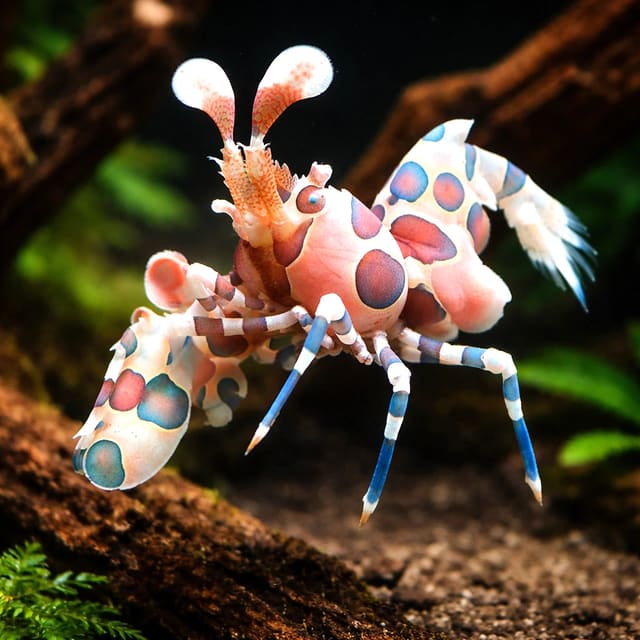
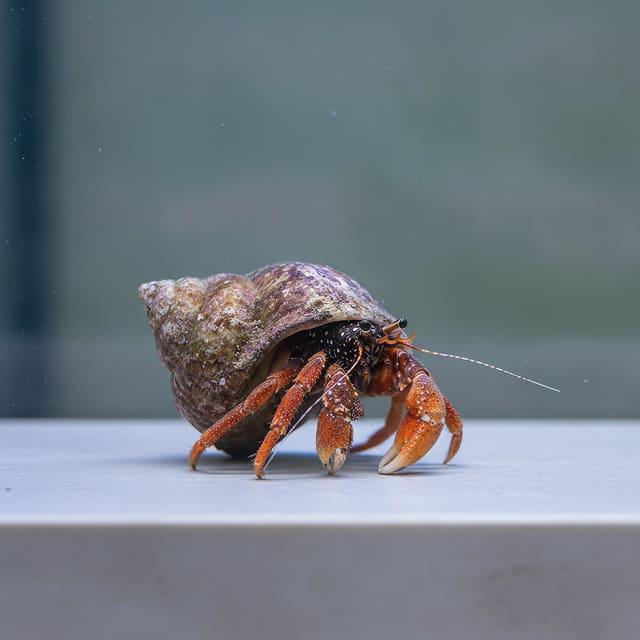
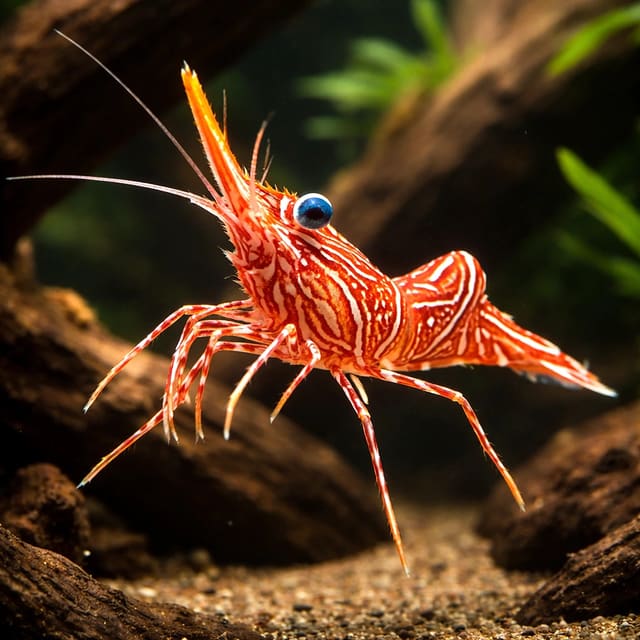
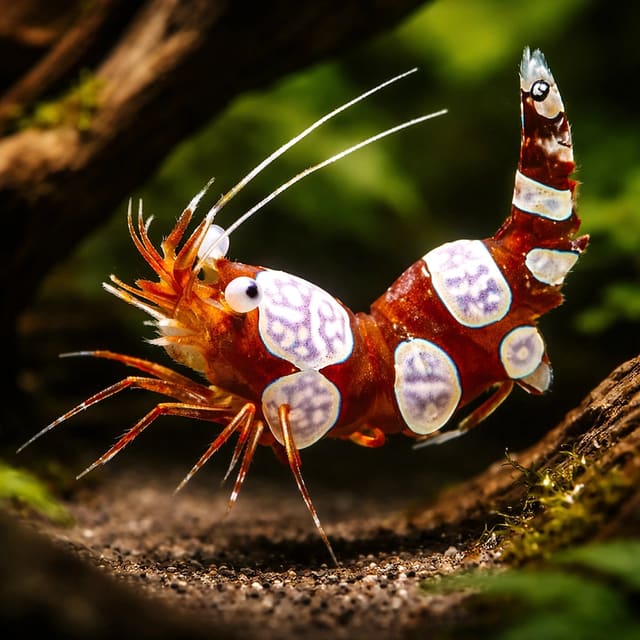
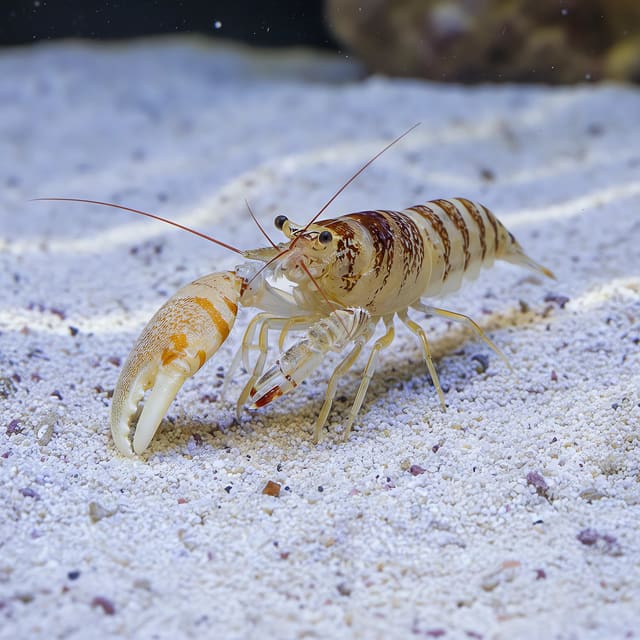
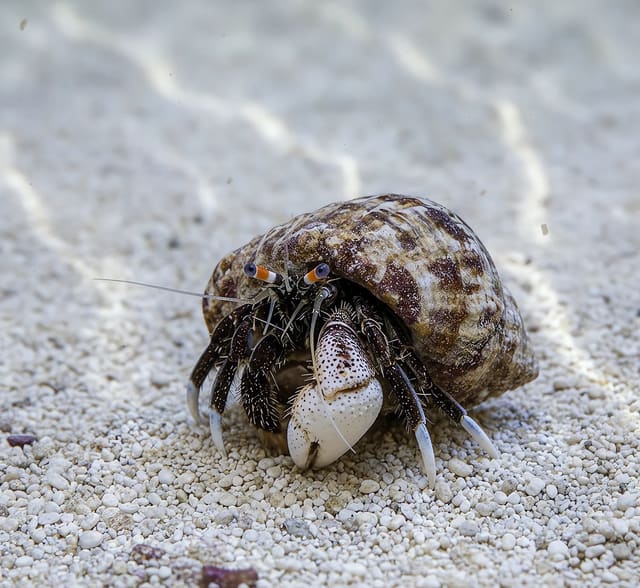
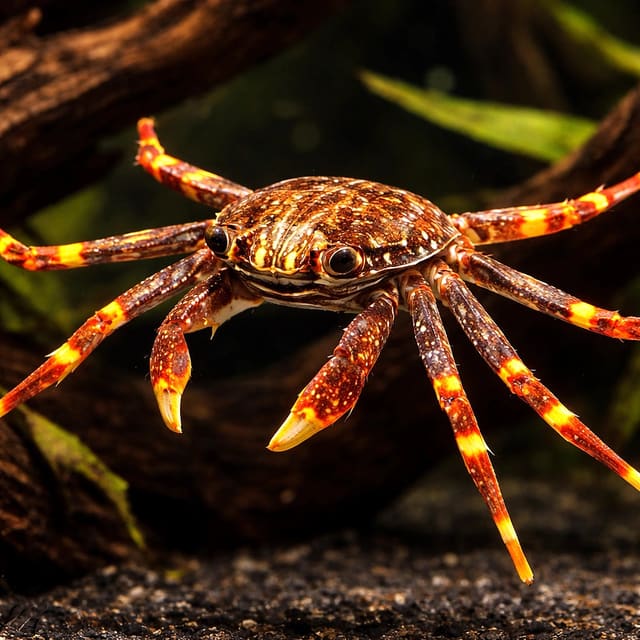
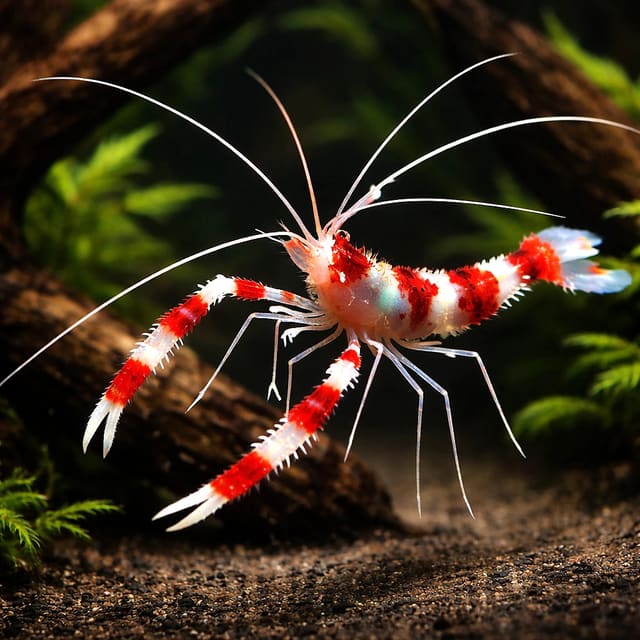
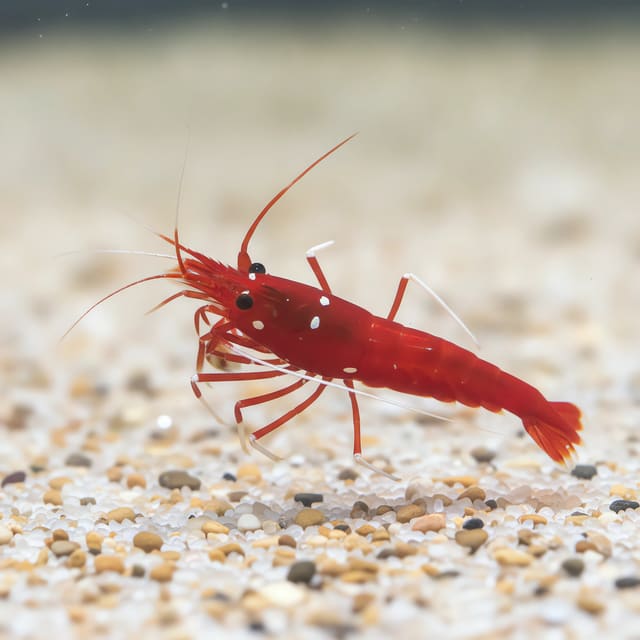
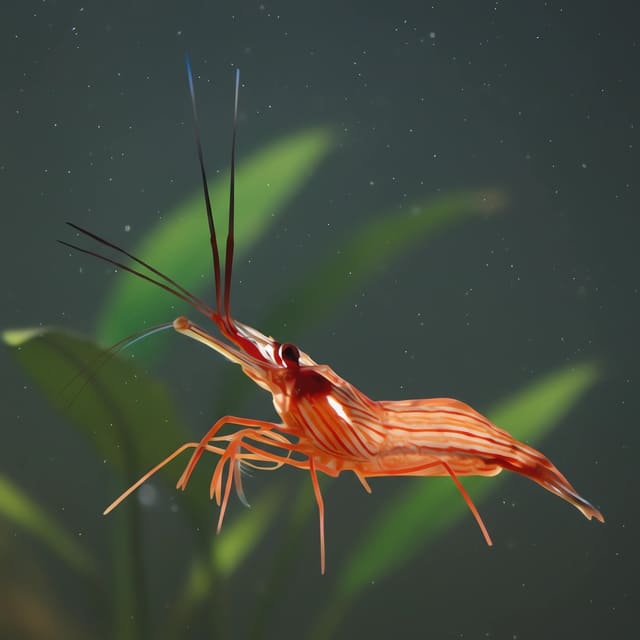
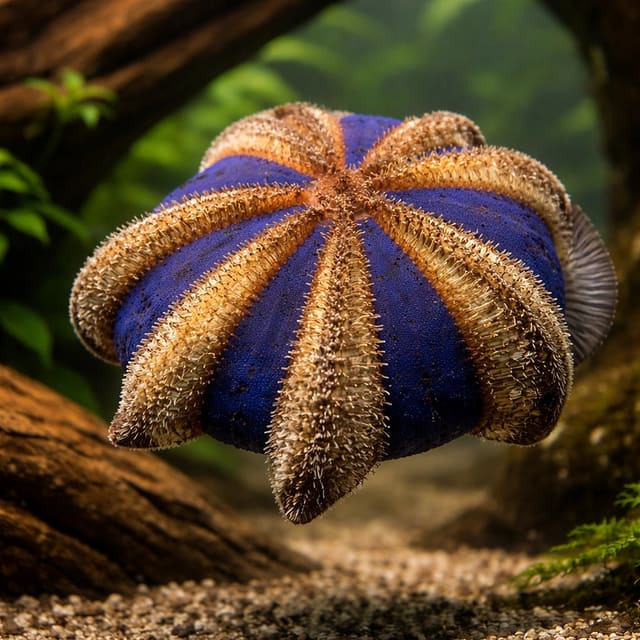
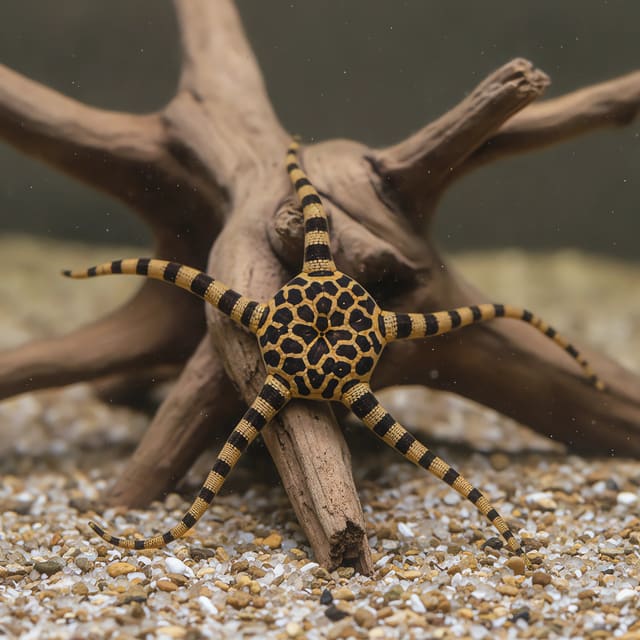
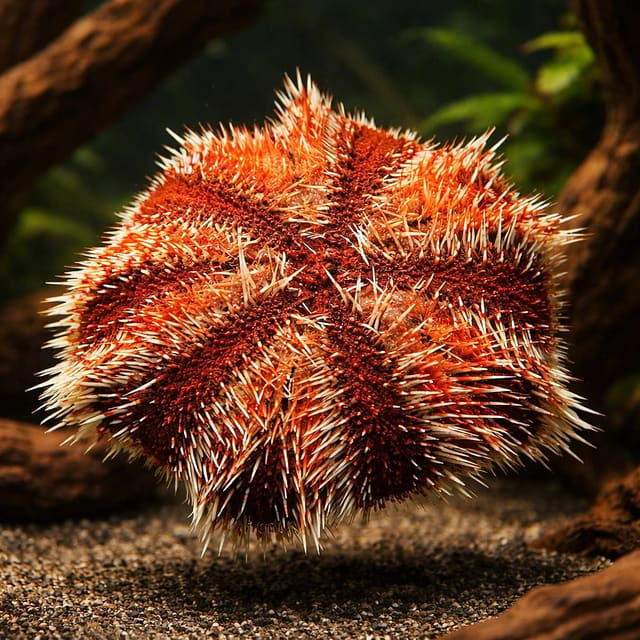
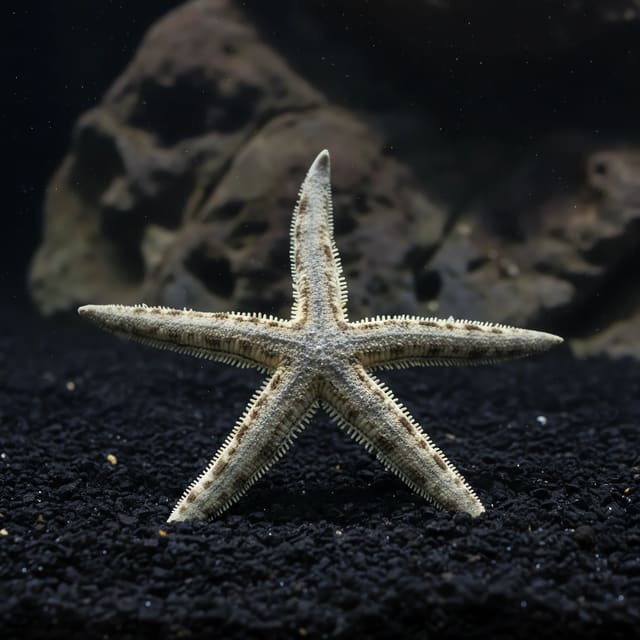
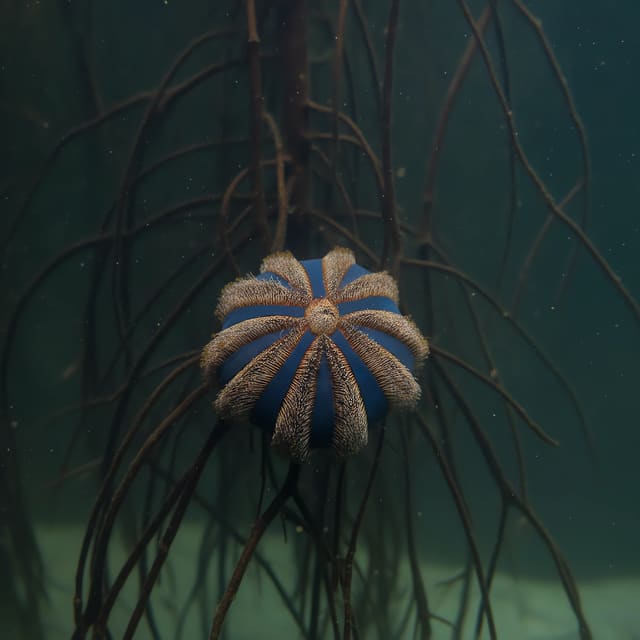
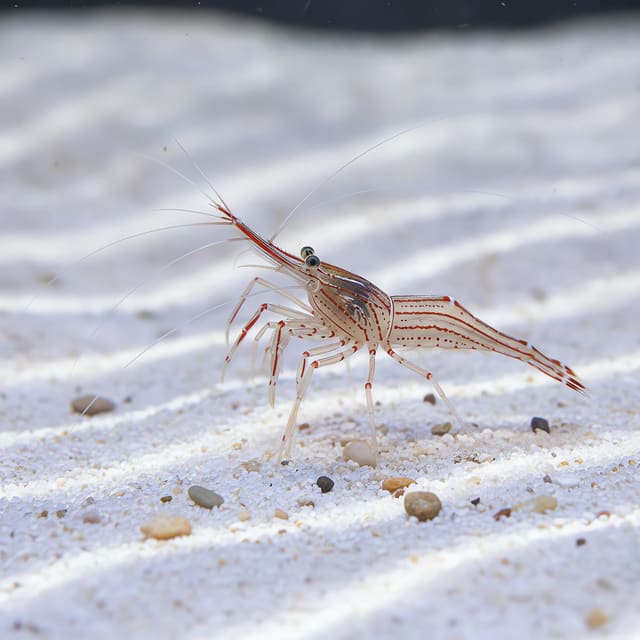
The gallery shows the long, slender legs and debris-covered outline associated with this type of crab. The gallery images are representative of this type of animal rather than photographs of the exact animal supplied, so colours can look slightly different from the live animal.
One purchase supplies one Spider crab.
Sex is guaranteed only when the selected option explicitly states male or female. This Spider crab listing has no sex-guaranteed option.
Prepare the aquarium for one crab, observe how it uses the space and consider another crustacean only after assessing space, food access and behaviour.
If you are comparing different kinds of marine invertebrate, browse the marine inverts collection. Compare husbandry and compatibility rather than treating every crab, shrimp or lobster as interchangeable.
OATA's marine-crustacean guidance gives 24–26°C, specific gravity 1.023–1.026 and pH 7.9–8.3 for crabs, shrimps and lobsters. These are broad group-level planning values rather than a species-specific optimum. Keep ammonia and nitrite at zero mg/l, nitrate at no more than 50 mg/l, carbonate hardness at 8–12 dKH, calcium at 380–450 ppm and magnesium at 1,250–1,350 ppm.
| Planning decision | Working value |
|---|---|
| Temperature | 24–26°C |
| Specific gravity | 1.023–1.026 |
| pH | 7.9–8.3 |
| Nitrogen waste | 0 mg/l ammonia; 0 mg/l nitrite; nitrate up to 50 mg/l |
| Mineral values | 8–12 dKH; calcium 380–450 ppm; magnesium 1,250–1,350 ppm |
| Space | At least 40 litres for smaller crabs; larger crustaceans need more |
The 40-litre figure is a starting floor for a crab assessed as a smaller species, not a universal recommendation for every crustacean. Aquarium dimensions, rock displacement, existing stocking and adult space requirements all affect the final choice. A larger system can also give more room for separated feeding and hiding areas, but volume never compensates for incompatible tank mates or poor filtration.
Work with the whole set of values rather than chasing temperature alone. A tank at 25°C still needs zero ammonia and nitrite, suitable salinity, a maintained filter and controlled feeding. Check the aquarium before ordering, again before introduction and during the first week after the biological load changes.
Provide live or artificial rock because OATA identifies rock as essential for marine crustaceans. It creates grazing surfaces and gives a freshly moulted crab somewhere to hide while its new exoskeleton hardens. Arrange the aquarium so the animal can reach shelter without being forced into constant contact with tank mates.
Do not rely on an open decorative display with little cover. Hiding after a moult is normal crustacean biology, and removing every retreat can turn a routine event into repeated disturbance. Equally, shelter should not prevent you from checking whether food remains uneaten or whether waste is collecting.
The decorating behaviour deserves separate consideration from ordinary rock use. Camposcia retusa attaches living sponges and corals to itself for camouflage. In a coral aquarium, assess whether that behaviour fits the animals and structures already present. It should not be assumed harmless merely because the crab is visually associated with reef environments.
Use aquarium volume as only one layout measure. Rock displaces water, existing livestock occupies usable territory and a sheltered crevice may be inaccessible to a long-legged crab. Before introduction, view the aquascape from the animal's level and identify a route between cover, feeding access and open observation space.
Test the layout through routine tasks before the crab enters. Confirm that a siphon can reach exposed waste, that filter flow is not blocked by the rock arrangement and that the chosen feeding place can be watched without lifting structures. If reaching one area requires moving the principal shelter, revise the layout first. This preserves cover during moulting while keeping maintenance practical. A second sheltered area also gives the animal another route away from an interaction, although every proposed tank mate still needs individual screening.
A filter is essential. OATA lists live rock with sufficient water flow, an internal or external filter, or a sump-based filter as workable forms of marine filtration. A protein skimmer can also help by removing dissolved organic waste before it breaks down into more harmful substances.
The RSPCA's explanation of aquarium filtration describes the biological process behind that instruction: beneficial bacteria convert toxic ammonia into nitrite and then into the safer nitrate. The practical goal is therefore not simply moving water through equipment; it is preserving a working bacterial population capable of processing the aquarium's waste.
Stocking too quickly can produce new tank syndrome because the bacterial population has not grown enough to process the increased waste. For an invertebrate that can be stressed by even small amounts of ammonia or nitrite, prevention is more dependable than reacting after a test rises.
A mature filter is an active biological system, not a label based only on how long the aquarium has been running. Use test results, stable operation and controlled stocking to judge readiness. If ammonia or nitrite is detectable, delay the introduction and restore zero readings before adding the crab.
Assess filtration under the aquarium's normal load rather than immediately after an unusual clean. Check that water still moves through the biological media, inspect equipment for blockage and compare fresh test results with the required zero readings. Avoid combining filter-media cleaning, major aquascape disruption and a livestock addition into one event. Each change can affect waste processing or make the next reading harder to interpret. A protein skimmer may support water quality, but it does not replace the essential biological filter or the testing that shows whether waste is being processed.
Carry out a partial water change of 25% at least once every week. Use a siphon where practical to remove solid waste from the substrate, then test ammonia, nitrite, nitrate, pH and the marine chemistry that guides your replacement water. Consistency matters because marine crustaceans can be stressed by even small amounts of ammonia and nitrite.
Check the filter regularly for blockages. When biological media needs cleaning, rinse it lightly in aquarium water removed during the water change. Do not rinse it under the tap, because chlorine or chloramine may kill part of the beneficial bacterial population established in the media.
| Checkpoint | Action |
|---|---|
| Ammonia or nitrite above zero | Stop adding livestock and correct water quality |
| Nitrate approaching 50 mg/l | Review feeding, waste removal and water changes |
| Reduced filter flow | Inspect for blockage and clean without tap water |
| Skimmer performance falls | Clean it to restore effective operation |
| Food remains uneaten | Reduce the next extra feed and prevent waste accumulation |
Test results should lead to a specific action. A nitrate reading moving upwards calls for attention before it reaches the limit; repeated food waste points to portion control; reduced flow calls for an equipment check. Changing several things at once can hide the cause, so work through feeding, solid waste, filter flow and replacement-water preparation in a consistent order.
Keep the routine steady after a moult as well. Hiding during shell hardening is expected, but it is not a reason to skip testing or allow organic waste to build up. Perform necessary maintenance calmly and preserve the animal's shelter while maintaining the rest of the aquarium.
Use each weekly change as a comparison point. Note the readings before maintenance, remove visible solid waste, complete the 25% change and check that normal equipment flow returns afterwards. If nitrate repeatedly approaches 50 mg/l before the next change, examine extra-food portions and trapped waste rather than waiting for the limit to be exceeded. When a filter needs attention, clean only what is necessary and do not run biological media under the tap. This sequence links the reading to a practical cause while protecting the bacteria that process ammonia and nitrite.
For marine crustaceans, OATA advises a varied diet because requirements differ across crabs, shrimps and lobsters. Most are omnivorous and may consume algae, detritus and small meaty items. Suitable extra foods from that guidance include nori algae sheets, small frozen items such as brine shrimp and pellets.
Use those foods as a practical rotation rather than assuming that one item covers every need. Present a modest extra feed where the crab can reach it, watch whether it engages with the food and prevent uneaten material from accumulating. Natural food within the aquarium affects how much extra feeding is needed.
Many crustaceans graze through the day, so a universal number of feeds cannot be applied to every aquarium. The useful decision is whether natural grazing and extra food together meet the animal's observed intake without leaving waste to break down. An aquarium rich in natural grazing opportunities may need a different extra-feeding pattern from a newer or more sparsely furnished system.
Do not treat scavenging as permission to leave excess fish food in the aquarium. Uneaten food releases waste as it decomposes, increasing the load on the biological filter. Feeding should therefore be judged both by the crab's response and by subsequent ammonia, nitrite and nitrate results.
Decoration with living sponges or corals is camouflage behaviour and should not be used as proof that those organisms form a complete aquarium diet. Base routine feeding on the varied marine-crustacean approach and adjust it through direct observation.
Make one feeding adjustment at a time. If food remains, reduce the next extra portion before changing the whole rotation; if the crab takes one item promptly, retain variety rather than feeding only that item. Check the feeding area later for fragments that could break down out of sight. During a period of hiding, avoid placing repeated extra portions into the shelter merely to test appetite. First compare water readings, recent moulting behaviour and the amount of natural grazing in the aquarium, then resume modest observable feeds when the animal is active.
Crustaceans grow by shedding their hard external skeleton. An empty shell in the aquarium may therefore be a normal moult rather than a dead crab. After shedding, the new exoskeleton takes a couple of days to harden, and the animal will often hide during that period.
Do not force the crab into the open merely to check it. Hiding is expected after a moult, and handling or repeated disturbance works against the cover provided for this stage. Continue the aquarium's established feeding and maintenance decisions without placing excess food into a shelter where it cannot be inspected.
Maintain calcium at 380–450 ppm, magnesium at 1,250–1,350 ppm and carbonate hardness at 8–12 dKH as part of the marine-crustacean water range. Test rather than adding mineral supplements by guesswork, because a stable measured value is more useful than an unmeasured dose.
Difficulty shedding, an incomplete moult or a soft-shell condition that continues beyond the expected hardening period belongs on the health watch list. Check water chemistry and observe the animal's co-ordination, limb condition and feeding response together; one sign in isolation gives less context than the full pattern.
Arrange for someone to receive the live-animal parcel so it is not left unattended. Start filming before the sealed parcel is opened, then record the opening continuously and show the crab inside the sealed bag before anything is disturbed.
Follow the Tropical Fish Co delivery and acclimatisation policy: float the bag for 20–30 minutes before releasing the crab, and never pour the bag water into the aquarium.
After release, allow the crab to seek shelter. Record whether it walks with co-ordination, whether all visible limbs and eyes appear intact and whether existing animals pursue or crowd it. Immediate hiding can occur in a crustacean and should be interpreted alongside water tests and physical condition rather than on its own.
During the first day, prioritise stable conditions over rearranging the aquarium around every movement. If a tank mate repeatedly approaches or attacks, separate the interaction safely. If the crab shows a health change, test the water promptly and contact us with the observations and readings.
The first week is a period for measured observation because adding livestock and food increases the work required from the biological filter. Keep the normal weekly maintenance schedule, but test more readily when behaviour, feeding or filter performance changes.
| What you see | What to do |
|---|---|
| Reduced activity or prolonged inactivity | Test ammonia, nitrite, nitrate, temperature, salinity and pH |
| Difficulty walking or loss of co-ordination | Check water immediately and inspect for limb or shell damage |
| Darker or paler appearance | Compare behaviour, water readings and recent moulting activity |
| More hiding than expected | Check for a recent moult and observe without removing shelter |
| Reduced food intake | Prevent leftover food and review the complete health pattern |
| Repeated attempts to leave the water | Test conditions promptly and inspect tank-mate interactions |
Also watch the exoskeleton, limbs, claws, antennae and eyes for damage, lesions, discolouration, white or fluffy growths, or lost appendages. These observations are warning signs for investigation, not instructions to begin an improvised treatment. Start with measured water quality and a clear account of what changed.
Use the first month to judge whether the original plan is working. Compare feeding response with waste levels, check whether the crab has reliable shelter and note any repeated interaction with fish, corals or other invertebrates. Continue adding livestock slowly rather than using a quiet first few days as permission to accelerate stocking.
Patterns matter. One period of hiding around a moult is different from declining activity accompanied by poor co-ordination and a measurable water-quality problem. Written readings and brief behaviour notes make that distinction easier and help you change the correct part of the routine.
Marine crustacean compatibility varies. OATA advises that they generally mix with fish considered reef-safe, while fish that are not considered reef-safe are likely to prey on them and should be avoided. That is the clearest first screen for this crab.
The reverse direction matters too. Some crabs are opportunistic and may prey on slow-moving aquarium inhabitants, so treat slow-moving animals with caution. A peaceful reputation is not a guarantee; assess each pairing independently, including fish that appear too large to fit easily into a claw.
The exact response of Camposcia retusa to any one fish, coral or mobile invertebrate should be treated as uncertain until the complete pairing and aquarium are assessed. Labels such as community, reef or clean-up crew are too broad to replace that assessment.
For a stocking and compatibility assessment, ask us with the aquarium volume, dimensions, water parameters, rock layout and the scientific names and approximate sizes of existing livestock. That gives a more useful basis than a common-name list alone.
Make the decision from the proposed pairing rather than from a list of supposedly safe species. The same crab can face predation in one aquarium, create risk for a slow-moving inhabitant in another or conflict with the purpose of a carefully arranged coral display.
| Proposed situation | Decision |
|---|---|
| Fish not considered reef-safe | Avoid because it is likely to prey on marine crustaceans |
| Fish considered reef-safe | Passes the first screen; still assess behaviour, size and food competition |
| Slow-moving inhabitant | Use caution because some crabs may prey opportunistically |
| Corals or living sponges | Assess the consequences of documented decorating behaviour |
| Another crab or crustacean | Assess space, shelter, feeding access and interactions individually |
Add livestock slowly so the filter bacteria can adjust as waste and feeding rise. A single change also makes behaviour easier to interpret. If several animals enter together, it becomes harder to identify which interaction is causing pursuit, interrupted feeding or increased hiding.
Plan around one Spider crab first. A second animal should be a fresh decision based on usable space and observed behaviour, not an automatic extension of the purchase unit. Provide separate access to shelter and food before considering that step.
After introduction, distinguish curiosity from persistent pressure. Repeated pursuit, damage, blocked access to food or a crab forced continually from shelter calls for separation. A quiet initial encounter is encouraging, but continued observation is necessary because feeding periods and moulting can change vulnerability.
This conditional approach avoids promising universal companions. It also protects both sides of the pairing: the crab from predatory fish, and slow-moving aquarium inhabitants from opportunistic crustacean behaviour.
Run the matrix again whenever stocking changes. A fish considered reef-safe still needs assessment for food competition and its response to the crab, while a new slow-moving inhabitant changes the risk from the crab's side. Review whether each animal can reach food and shelter, then watch the next feeding period for repeated displacement. Reassess after a moult because the crab may spend more time hidden while its shell hardens. If one inhabitant controls the feeding area or prevents access to cover, the pairing has failed the practical screen even without an immediate injury.
Spider crab (Camposcia retusa) is a marine crustacean in the family Inachidae that attaches living sponges and corals to its body as camouflage.
One purchase supplies one Spider crab; plan the aquarium for that single animal before considering any additional crustacean.
Plan usable aquarium space around filtration, rock displacement, shelter, existing livestock and feeding access rather than relying on volume alone.
A Spider crab needs an established filtered marine aquarium with live or artificial rock, hiding areas and at least 40 litres only when assessed as a smaller crab; larger crustaceans need more space.
Plan for one animal first, then consider another only after assessing usable space, separate shelter, feeding access and the behaviour of every crustacean involved.
For Camposcia retusa, OATA's broad marine-crustacean guidance uses 24–26°C, specific gravity 1.023–1.026, pH 7.9–8.3, zero mg/l ammonia and nitrite, and nitrate up to 50 mg/l.
Offer a varied marine-crustacean rotation such as nori, small frozen brine shrimp and pellets, adjusting extra food to its response and preventing leftovers from accumulating.
Start filming before opening the sealed parcel and continue through opening and showing the crab in the sealed bag; then float the bag for 20–30 minutes before release and never pour the bag water into the aquarium.
Avoid fish not considered reef-safe, use caution with slow-moving inhabitants and assess fish, corals, sponges and other crustaceans individually before mixing.
No reviews for this item yet. Bought one? Honest reviews only, good or bad.
What customers say about ordering from us
Easy website plenty of info on fish your buying great to pick a time slot
TRACEY DURRANT · 7 Oct 2026
Got some lovely fish thank you
Kevin Mackie · 7 Oct 2026
Reviews of our shop, collected by Judge.me, an independent third-party review collector. Newest first.