Calcinus laevimanus (white leg hermitcrab) - Marine Aquarium Livestock UK
24–26°C · pH 7.9–8.3
£10.99
Orangeclaw Hermit Crab (Calcinus tibicen) is a marine hermit crab in the family Diogenidae. It needs a mature, fully marine aquarium with live or artificial rock, plenty of empty spare shells and reef-safe fish for company. Each purchase is one live hermit crab.
Calcinus tibicen
Save when buying more. Each quantity is one shrimp; sex is not guaranteed unless the listing explicitly states it.
Orangeclaw Hermit Crab (Calcinus tibicen) is a marine hermit crab in the family Diogenidae. It needs a mature, fully marine aquarium with live or artificial rock, plenty of empty spare shells and reef-safe fish for company. Each purchase is one live hermit crab.
Maintain these water conditions for optimal health and vibrant colors
The Orangeclaw Hermit Crab is Calcinus tibicen, a marine hermit crab in the family Diogenidae. Like every hermit crab, it carries an empty snail shell as its home and trades up to a bigger one as it grows. Each purchase supplies one live hermit crab. Before anything else, check that you can give it three things: a mature, fully marine aquarium, reef-safe fish for company and a steady supply of empty spare shells.
| Suits | Keepers with a mature marine aquarium who want a grazing, scavenging crustacean on the rock and sand |
|---|---|
| Not suited to | Freshwater tanks, newly set-up tanks, or aquariums with fish that are not reef-safe |
| Family | Diogenidae, a family of hermit crabs |
| Water guidance | Salinity 1.023–1.026, 24–26°C, pH 7.9–8.3, carbonate hardness 8–12 dKH, from OATA's care sheet for marine crustaceans as a group |
| Tank size | At least 40 litres for smaller crabs and shrimp, and larger where you can |
| Must-haves | Live or artificial rock, plenty of spare empty shells, ample food |
| Companions | Fish considered reef-safe; snails only with spare shells and food to hand |
| Diet | Algae it grazes, plus nori, small frozen foods such as brine shrimp, or pellets |
| Supplied as | One live hermit crab per purchase |
A hermit crab is often bought for the work it does, but its character is just as much of a draw. OATA, the UK ornamental aquatic trade body, counts hermit crabs among the crustaceans that perform a grazing function in the aquarium and will readily consume specific types of algae. It also says that marine crustaceans are very diverse and that most make excellent aquarium inhabitants. A crab picking its way over the rock, testing a new shell or turning over a scrap of food is one of the more absorbing sights in a marine tank.
Grazing is a help, not a complete algae solution. OATA points out that crustaceans sold to eat unwanted algae still need extra algae, offered as nori sheets, if they clear what is there, so plan to feed this crab rather than leaving it to live on what it finds.
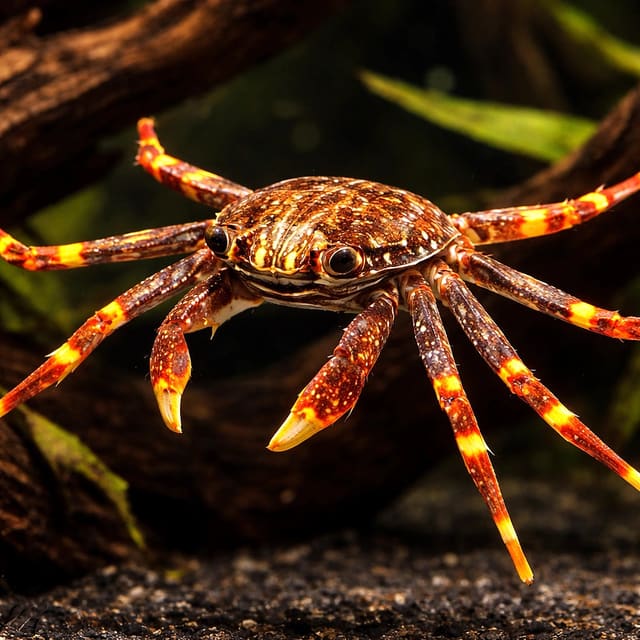
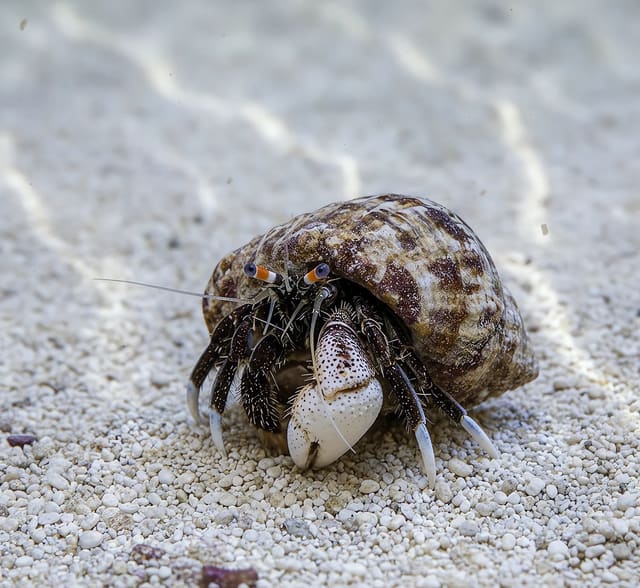
"Orangeclaw" is the trade name, and it describes what most buyers notice first: the orange claws and legs, which in the gallery photograph are flecked with white. You may also see it listed as the orange claw hermit crab. Calcinus is a genus of hermit crabs, and the species name Calcinus tibicen, with Herbst named as its author in 1791, is the accepted name on the World Register of Marine Species.
One purchase is one crab, so the quantity you enter is the number of hermit crabs that arrive. If you want more than one, remember that every extra crab needs its own share of food and spare shells.
Sex is guaranteed only when the selected option explicitly states male or female. This Calcinus tibicen listing has no sex-guaranteed option. The crab you receive may be male or female.
Each crab is an individual, and the shell it arrives in is borrowed, so its shape and colour can differ from the shell in the photograph.
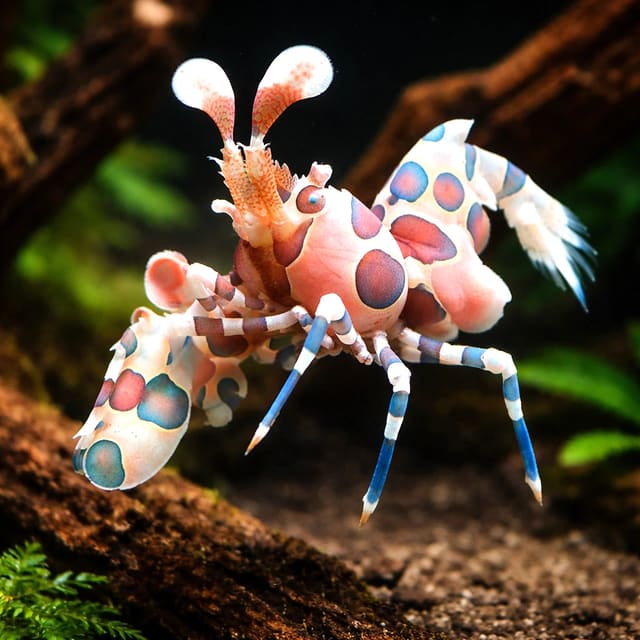
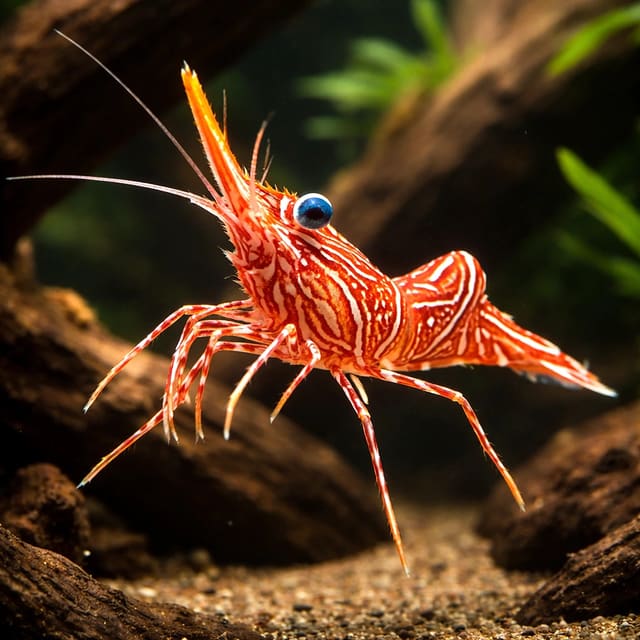
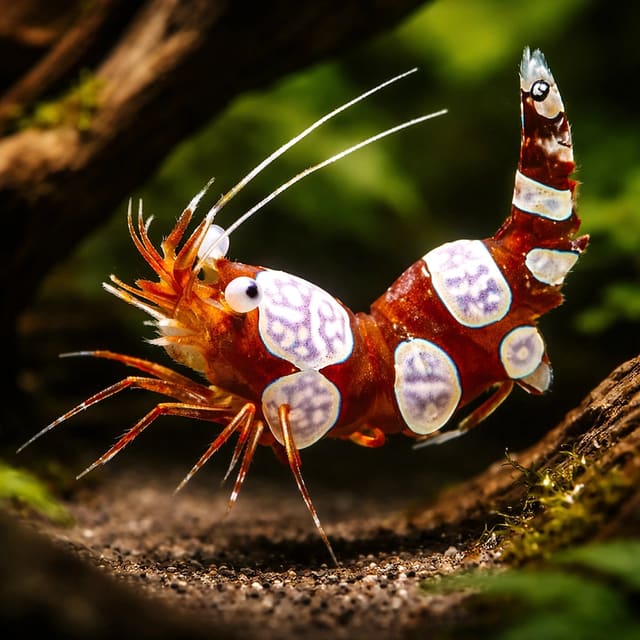
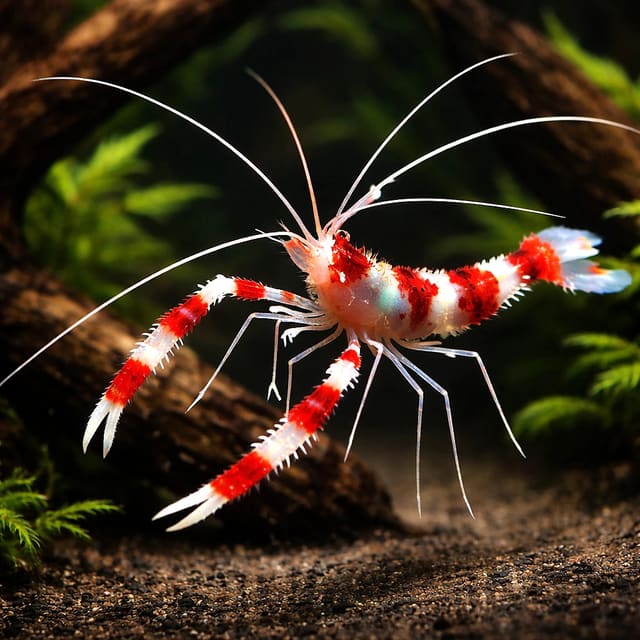
The gallery photograph shows a hermit crab with white-speckled orange legs and claws, carrying a brown, coiled shell. Gallery images have been digitally enhanced to improve image quality. Natural colour, pattern, size and maturity can vary between live animals.
If you are planning a group of invertebrates, you can browse our marine invertebrate range; check each animal's own needs and its compatibility with the others before mixing them.
The World Register of Marine Species lists Calcinus tibicen as an accepted species in the family Diogenidae, within the decapods, the ten-legged crustaceans that also include shrimps and true crabs. The Wikipedia summary of the genus describes Calcinus as a genus of hermit crabs in that family.
As a crustacean, it has a hard outer skeleton, the exoskeleton, and a body divided into segments. OATA explains that a crustacean sheds its exoskeleton as it grows, that it is common to find empty "shells" from these moults in the aquarium, and that it takes a couple of days for the new exoskeleton to harden, during which the animal will often hide.
New hermit crab keepers often panic at the sight of something empty in the tank. There are two very different things you may find:
Either way, the right response is to leave the rockwork undisturbed for a couple of days and check the crab quietly at feeding time.
A hermit crab's borrowed shell is its protection, and it has to find a bigger one as it grows. That is why OATA says hermit crabs should always be provided with ample food and plenty of spare shells: without them, they may attack snails for their shells. Spare shells are not an optional extra for this animal; they are part of its basic care, and the spare-shells section below covers them in detail.
OATA's general rule is to buy as large an aquarium as you reasonably can. It recommends at least 40 litres for smaller species of crabs and shrimp and says larger crustaceans need a larger tank. Treat 40 litres as the absolute floor for a hermit crab, and remember that the fish you keep with it will also shape how big the aquarium needs to be.
Whatever the size, OATA says a filter is essential. In a marine set-up that can be live rock with sufficient water flow, an internal or external filter, or a sump-based filter. A protein skimmer can also help, because it removes dissolved organic waste before that waste breaks down into more harmful substances. The RSPCA's aquarium environment guidance explains why the filter matters so much: animals release ammonia, which is toxic; beneficial bacteria in a working biological filter turn it into nitrite, which is also toxic, and then into nitrate, which is safer.
OATA describes marine crustaceans as undemanding of décor, with one firm exception: live or artificial rock is essential, because it gives them places to graze and areas where freshly moulted individuals can hide. For a hermit crab, lay the rock out with that in mind:
A hermit crab should go into an aquarium whose filter is already running and whose ammonia and nitrite read zero. A new tank is the wrong place for it: the bacteria that process waste take time to build up, and crustaceans are sensitive to the ammonia and nitrite a young filter lets through.
OATA's advice on hermit crabs is specific: always provide ample food and plenty of spare shells, to prevent them attacking snails for their shells. A crab that has outgrown its shell, or cannot find a better one, will look for another, and a living snail can become the target.
A hermit crab that inspects spare shells, climbs in and out or swaps homes is doing something normal. A crab that is repeatedly harassing snails, or that seems crammed into a shell too small for it, is telling you the supply of shells or food has run short. Add more shells, check how much food is going in, and keep an eye on any snails in the tank.
OATA describes marine crustaceans as usually undemanding of water chemistry. Its care sheet for marine crustaceans gives these suggested values as a general guide for the whole group, rather than figures measured for Calcinus tibicen alone:
| Salinity | 1.023–1.026 |
|---|---|
| Temperature | 24–26°C |
| pH | 7.9–8.3 |
| Ammonia | Zero mg per litre |
| Nitrite | Zero mg per litre |
| Nitrate | No more than 50 mg per litre |
| Carbonate hardness | Hard, 8–12 dKH |
| Calcium | 380–450 ppm |
| Magnesium | 1250–1350 ppm |
OATA adds that if these invertebrates are kept in a reef aquarium, some values will need to be altered to accommodate more sensitive species. In practice, a reef tank is run to suit its most demanding residents, and the hermit crab fits in around them.
Salinity is the value to watch most closely in a marine tank. Measure it regularly and keep it inside the range above. Water evaporates but salt does not, so salinity creeps up between water changes: top up evaporation with fresh water, and use made-up salt water, mixed to the same salinity as the tank, for the water changes themselves.
The nitrate figure is a ceiling, not a target. If a reading approaches 50 mg per litre, look at feeding and at your water change routine before it gets there. OATA includes calcium and magnesium in its guidance, so test them as part of a regular routine rather than guessing.
OATA warns that crustaceans can be stressed by even the smallest amounts of ammonia and nitrite, which may then cause them to develop various diseases. A heater and a separate thermometer keep the temperature within 24–26°C, and steady, routine testing does the rest.
A hermit crab shares its water with everything else in the tank, so the whole aquarium's routine is its routine. OATA's maintenance advice for marine crustaceans is straightforward.
In a 100-litre marine tank, a 25% change is 25 litres each week. Mix those 25 litres of salt water in advance, check that the salinity matches the tank, siphon the same amount from the sand between the rocks, and refill. While the siphon is out, look along the rock for the crab and for any cast exoskeleton, and count the spare shells. A note of the date, the readings and anything unusual takes a minute and shows over time whether the routine is keeping up.
| Every day | Check the temperature, look for the crab at feeding time and remove uneaten food |
|---|---|
| Every week | Test ammonia, nitrite and nitrate, carry out the 25% water change and check the filter |
| Regularly | Measure salinity, pH, carbonate hardness, calcium and magnesium, and clean the protein skimmer |
| As needed | Top up evaporation with fresh water, add larger spare shells and offer nori when the rock is bare |
If you know the crab has just moulted, do the water change gently and avoid moving rock, because the crab will often hide for a couple of days while its new exoskeleton hardens.
OATA explains that marine crustaceans vary in their diets, but most species are omnivorous and will consume algae, detritus and small meaty items. It recommends a varied diet of nori algae sheets, small frozen items such as brine shrimp, or pellets. Hermit crabs are among the crustaceans OATA describes as grazers that will readily consume specific types of algae.
Many crustaceans graze throughout the day, and OATA says it is not possible to give a fixed number of feeds for them: it depends on how much natural food your aquarium holds. Use the tank itself as your guide.
When you give extra feeds, take care not to overfeed. Uneaten food breaks down and releases toxic waste into the water, which is exactly what a crustacean copes with worst. Remove any food that is still lying untouched later in the day.
Feeding is part of keeping the peace. OATA links ample food with plenty of spare shells as the two things that stop hermit crabs attacking snails for their shells. Keeping both in good supply is the simplest protection for any snails in the tank.
We hand-pack every order. The crab travels in a bag of pure oxygen inside an insulated poly box, with a heat pack if the weather needs one, and a licensed live-animal courier carries the parcel. We email the tracking number and your confirmed delivery date. Our delivery and Live Arrival Guarantee terms set out the details; on the day itself, work through these steps in order.
Before any new livestock goes in, check that ammonia and nitrite read zero. OATA advises increasing the number of animals slowly, because the bacteria in a matured filter need to increase each time livestock and feeding increase. Overstocking or stocking too quickly can cause new tank syndrome, when there are too few nitrifying bacteria to cope with the extra waste, and unhealthy levels of ammonia and nitrite may cause invertebrates to become ill or die.
OATA lists the changes worth watching for in marine crustaceans. Each animal varies a little, but a change from its normal pattern is what matters, and spotting it early lets you act before it becomes a real health issue.
| Movement | Reduced activity, long spells without moving, difficulty walking, loss of co-ordination, repeated attempts to leave the water or unusual movement |
|---|---|
| Colour | Turning darker or paler than normal |
| Temperament | A change in the level of aggression, or hiding more than normal |
| Condition | Damage to the exoskeleton, limbs, claws, antennae or eyes, lesions, discolouration, white or fluffy growths, or lost limbs |
| Moulting | Difficulty moulting, incomplete shedding, a soft shell that lasts too long, or a change in how often it moults |
| Feeding | Eating less, or showing no interest in food |
Hiding for a couple of days after a moult, with a complete cast exoskeleton lying nearby, is normal. A crab that struggles to leave its old exoskeleton, stays soft for longer than that, or stops moulting at its usual rhythm is showing one of OATA's warning signs, and the first step is to test the water.
Remedies meant for fish are not automatically safe for invertebrates. Before you treat anything in an aquarium that holds this crab, check that the product is suitable for crustaceans, and if in doubt ask us first.
Test ammonia, nitrite, nitrate, salinity and temperature first, because they are quick to check and easy to act on. Then look at shells and food: a crab short of either behaves differently. If the cause is still unclear, send us your readings and a short description of what you are seeing.
OATA's compatibility advice for marine crustaceans has two sides. Crustaceans will generally mix with all fish considered reef-safe, while fish that are not reef-safe are likely to prey on them and should not be kept with them. Choose the fish first with that rule in mind, and check each species' own care information before it goes in.
The main risk from this crab runs the other way. OATA warns that hermit crabs should always have ample food and plenty of spare shells to prevent them attacking snails for their shells. It also notes that some scavengers, such as lobsters and crabs, are opportunistic and may prey on slow-moving aquarium inhabitants, so they should be mixed carefully.
Reef-safe is a label for fish, and it is the one to check for every species in the tank. Confirm a fish's reef-safe status before you buy it rather than judging from how calm it looks in a shop tank, and apply the same check each time you add a fish later. One unsuitable addition can undo an otherwise settled community.
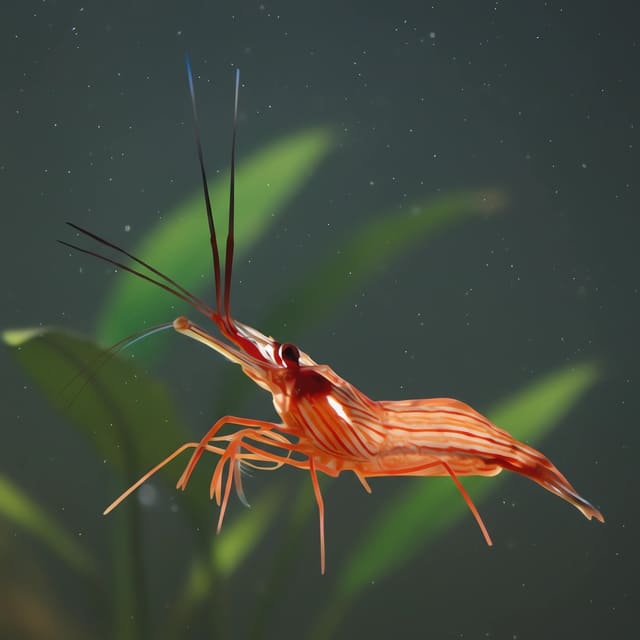
Crustaceans sold for the aquarium do different work, and it helps to know what each one is for. OATA describes hermit crabs as grazers of specific types of algae, peppermint shrimp (Lysmata wurdemanni) as eaters of unwanted Aiptasia anemones, and cleaner shrimp (Lysmata amboinensis) as shrimps that may eat parasites on larger fish. A hermit crab is the grazer of that group, and it will not do the other jobs.
Before adding the Orangeclaw Hermit Crab to an established tank, run through its companions one by one.
If you keep several hermit crabs, plan the shell supply for the whole group: each crab needs spares of its own, and a shortage shows first as crabs contesting the same few shells or turning their attention to snails. Spread food across the tank at feeding time so that each crab can find some without competing, and add crabs gradually, in line with OATA's advice to raise livestock numbers slowly.
OATA's own last word on compatibility is to check before introducing any crustacean. If you are unsure about a particular fish or invertebrate, ask us before you order.
It grows in steps, shedding its hard exoskeleton each time it gets bigger, and it moves into a larger empty shell as it grows. Plan for that growth by keeping several spare shells in the tank, including some a little larger than the one it wears, rather than planning around a single fixed size.
OATA recommends an aquarium of at least 40 litres for smaller species of crabs and shrimp and advises buying as large a tank as you reasonably can. The tank must be fully marine and mature, with a filter, live or artificial rock for grazing and hiding, and room for spare shells.
Plan by resources rather than a head count. Every hermit crab needs its share of food and its own spare shells, so each crab you add means more empty shells in the tank, and OATA advises raising livestock numbers slowly so that the filter bacteria can keep up.
It can be, once the marine aquarium itself is mature and stable. OATA describes marine crustaceans as usually undemanding of water chemistry, but ammonia and nitrite must read zero, the salinity must be right and spare shells must always be available.
OATA notes that hermit crabs graze and will readily consume specific types of algae, and that most marine crustaceans are omnivores that eat algae, detritus and small meaty items. Offer a varied diet of nori algae sheets, small frozen foods such as brine shrimp, or pellets, and avoid overfeeding.
OATA's care sheet for marine crustaceans as a group gives 24–26°C, pH 7.9–8.3, salinity of 1.023–1.026 and carbonate hardness of 8–12 dKH, with ammonia and nitrite at zero and nitrate no higher than 50 mg per litre. In a reef aquarium, some values may need adjusting for more sensitive animals.
The risk to watch is to snails. OATA advises that hermit crabs should always have ample food and plenty of spare shells to prevent them attacking snails for their shells, and notes that some scavenging crabs are opportunistic around slow-moving tank mates.
Following OATA, marine crustaceans generally mix with fish considered reef-safe. Fish that are not reef-safe are likely to prey on them and should not share the tank. Keep snails only with plenty of spare shells and food, and check each species before mixing.
Each order is hand-packed, bagged in pure oxygen in an insulated poly box with a heat pack when the weather needs one, and carried by a licensed live-animal courier; we email tracking and your confirmed delivery date. Someone must be in to receive it. Keep a continuous unboxing video running from the sealed parcel, as every Live Arrival Guarantee claim needs one, then float the bag for 20–30 minutes.
No reviews for this item yet. Bought one? Honest reviews only, good or bad.
What customers say about ordering from us
Easy website plenty of info on fish your buying great to pick a time slot
TRACEY DURRANT · 7 Oct 2026
Got some lovely fish thank you
Kevin Mackie · 7 Oct 2026
Reviews of our shop, collected by Judge.me, an independent third-party review collector. Newest first.