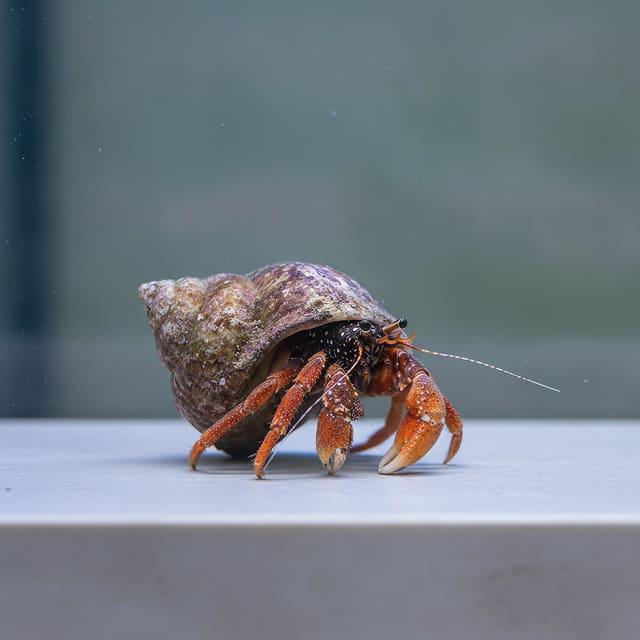
Orangeclaw Hermit Crab (Calcinus tibicen)
24–26°C · pH 7.9–8.3
£8.99
Calcinus laevimanus is a marine hermit crab sold as one animal per purchase. Keep it in a filtered marine aquarium with rock for grazing and shelter, ample food, spare shells and carefully screened tank mates.
Calcinus laevimanus
Save when buying more. Each quantity is one shrimp; sex is not guaranteed unless the listing explicitly states it.
Calcinus laevimanus is a marine hermit crab sold as one animal per purchase. Keep it in a filtered marine aquarium with rock for grazing and shelter, ample food, spare shells and carefully screened tank mates.
Maintain these water conditions for optimal health and vibrant colors
The white leg hermitcrab is Calcinus laevimanus, an accepted species in the family Diogenidae according to the World Register of Marine Species. It is also known as the left-handed hermit crab. A natural-history summary for the species places it in the Indo-West Pacific and gives Hawaii as its type locality. Those details describe its identity and geographical range rather than aquarium water targets.
This is a marine crustacean with an exoskeleton. Hermit crabs use gastropod shells for protection, while the crustacean itself periodically sheds its hard exoskeleton as it grows. These are two different kinds of shell: the empty exoskeleton left after a moult is not the protective spiral shell the crab carries.
Hermit crabs perform a grazing role in marine aquariums and may consume particular algae. That activity can make one an interesting part of a marine invertebrate community, but it does not replace feeding, filtration, testing, gravel cleaning or water changes. Choose this animal because you can meet its needs as a living crustacean, not simply because an aquarium needs tidying.
A suitable keeper has a filtered marine aquarium, tests water routinely and can maintain stable salinity, temperature and pH. The setup also needs rock for grazing and shelter, ample food, several spare shells and tank mates screened for predation or opportunistic behaviour. Freshly moulted crustaceans often hide while their new exoskeleton hardens, so visible inactivity must be interpreted alongside water quality, feeding and other health signs.
| Suits | Not suited to |
|---|---|
| A filtered marine aquarium with zero ammonia and nitrite | An aquarium without established biological filtration |
| A layout with rock for grazing and hiding | A setup without accessible shelter or spare shells |
| A keeper able to test water and maintain it weekly | A plan that relies on the crab to replace feeding or maintenance |
| Tank mates screened for reef safety and opportunistic behaviour | Fish likely to prey on marine crustaceans |
You can compare the broader marine invertebrates collection, but assess every animal by its own water, feeding and compatibility needs rather than treating all invertebrates as interchangeable.
One purchase covers one animal. Plan the aquarium around the animal’s long-term space, rock access, filtration load and compatibility.
Sex is guaranteed only when the selected option explicitly states male or female. This Calcinus laevimanus listing has no sex-guaranteed option.
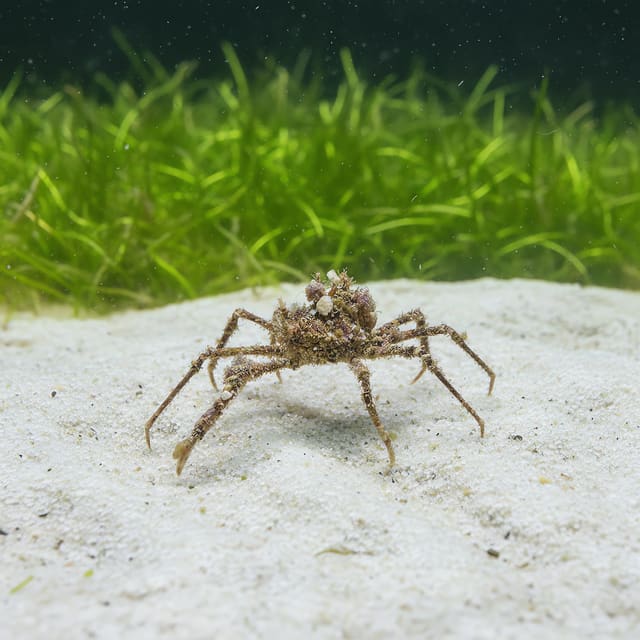
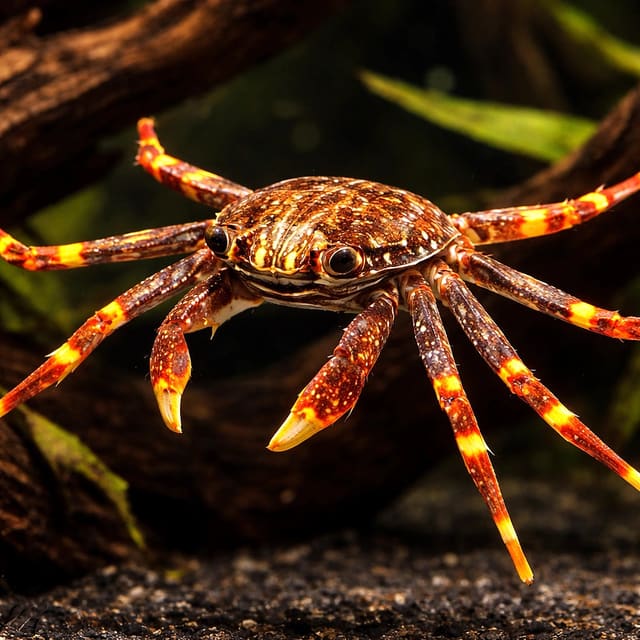
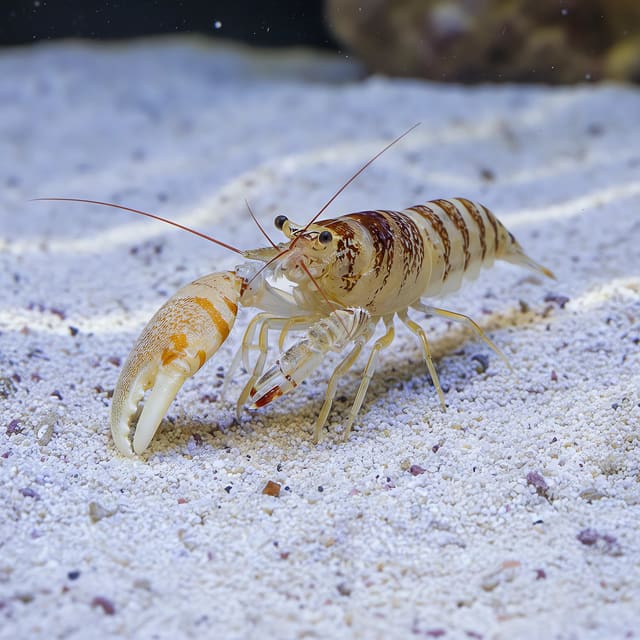
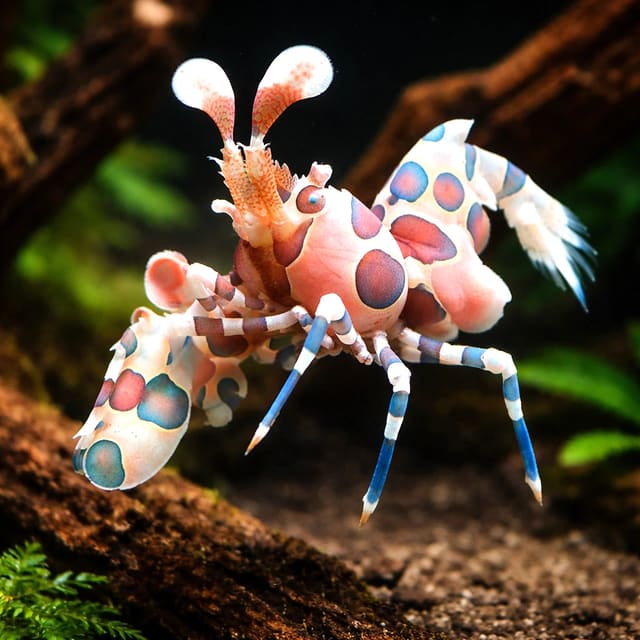
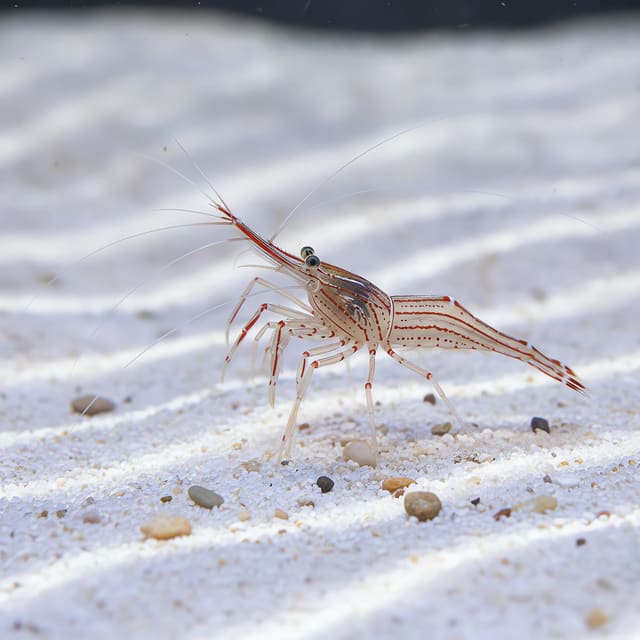
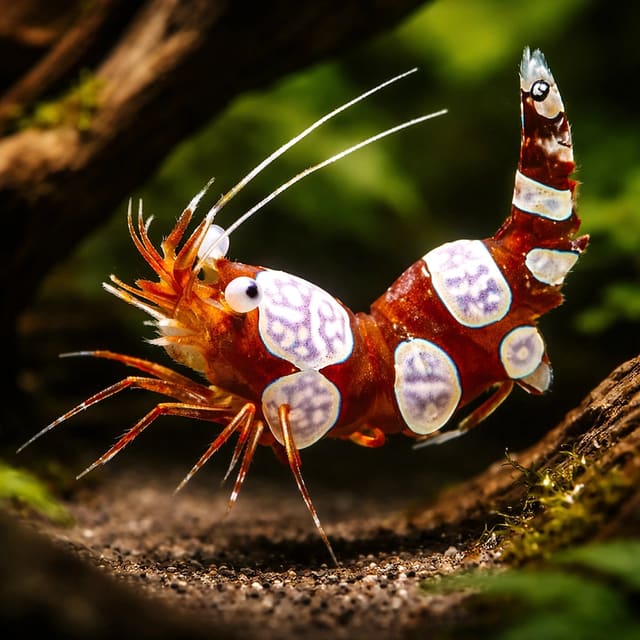
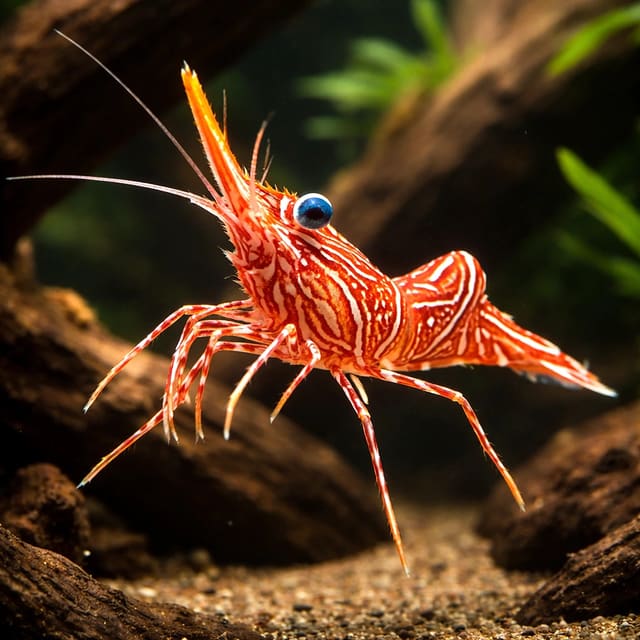
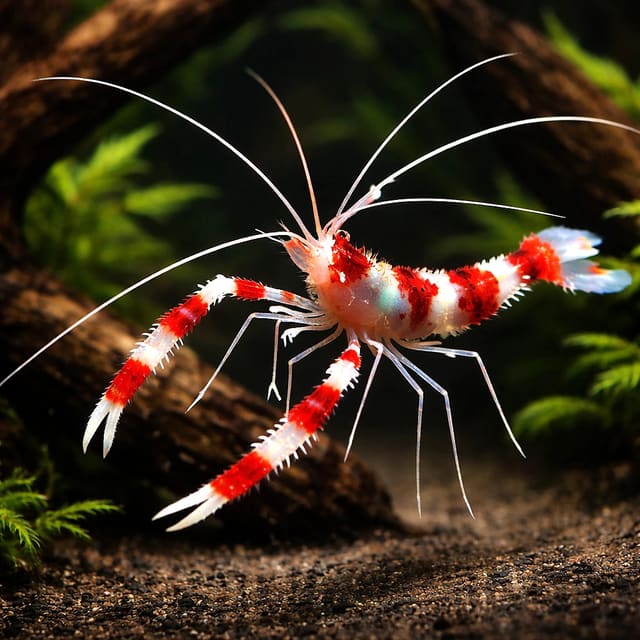
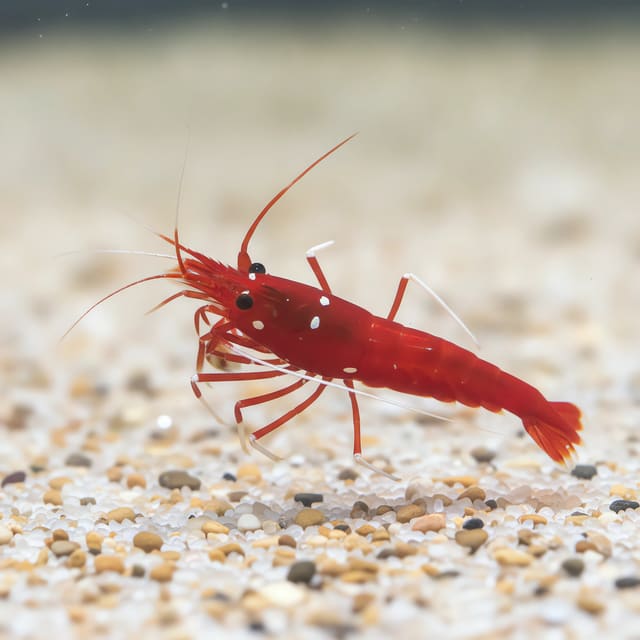
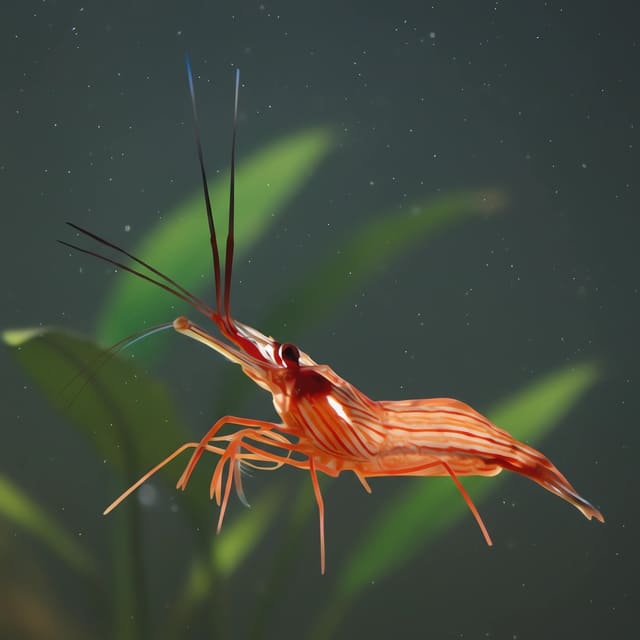
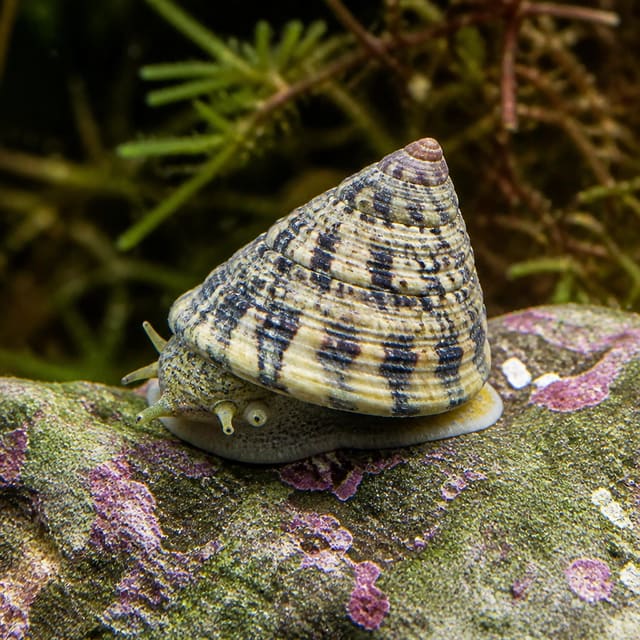
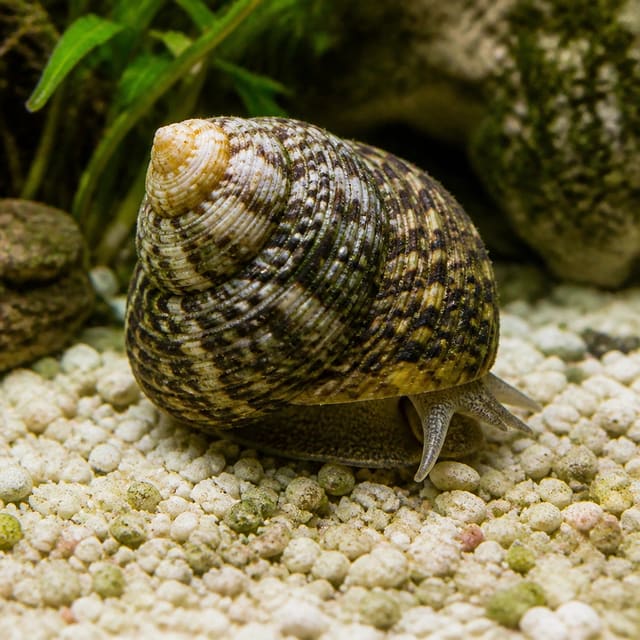
The gallery images are representative of this type of animal rather than photographs of the exact animal supplied, so colours can look slightly different from the live animal.
OATA’s marine-crustacean guidance gives the following broad group targets rather than a species-specific optimum. Reef aquariums containing more sensitive residents may need values adjusted to suit those animals, so use the compatible range that protects every resident.
| Decision | Working value |
|---|---|
| Temperature | 24–26°C |
| Specific gravity | 1.023–1.026 |
| pH | 7.9–8.3 |
| Ammonia | Zero mg/l |
| Nitrite | Zero mg/l |
| Nitrate | Up to 50 mg/l |
| Carbonate hardness | 8–12°dKH |
| Calcium | 380–450 ppm |
| Magnesium | 1,250–1,350 ppm |
| Starting volume | At least 40 litres for smaller crabs |
Treat 40 litres as a starting point for smaller crabs, not as an adult-size measurement or an automatic stocking allowance. A larger aquarium usually gives more room for rock, grazing routes and separation between inhabitants, but its filter capacity and water quality still set the safe stocking limit.
Confirm that the aquarium sits inside the working water range, that ammonia and nitrite read zero, and that there is room for essential rock and spare shells. Screen every existing inhabitant for the likelihood of eating a marine crustacean or being vulnerable to an opportunistic crab. This short check is more useful than relying on a general label such as beginner, peaceful or clean-up crew.
A filter is essential in a marine crustacean aquarium. The RSPCA’s aquarium filtration guidance explains that beneficial bacteria in a working biological filter process toxic ammonia into nitrite and then nitrate. Marine crustaceans can be stressed by even small amounts of ammonia and nitrite, so both readings must be zero before this hermit is introduced.
Suitable marine filtration may take the form of live rock with sufficient water flow, an internal or external filter, or a sump-based filter. A protein skimmer can also help maintain water quality by removing dissolved organic waste before it breaks down into more harmful substances. Whatever equipment is chosen, it needs enough capacity for the aquarium and its full livestock load.
Beneficial bacteria increase as livestock and feeding increase. Adding too many animals too quickly can leave the biological filter unable to process the extra waste, creating unhealthy ammonia or nitrite. Add this hermit as one measured change to the system, then test and observe before making another livestock addition.
| If you find | Take this action |
|---|---|
| Ammonia above zero | Delay introduction and restore zero |
| Nitrite above zero | Delay introduction and restore zero |
| A recently started filter | Allow the biological filter to establish |
| Several planned additions | Space them out and test between them |
| Reduced filter flow | Check for blockage and maintain the filter |
An aquarium can meet the at-least-40-litre group starting point and still be unsuitable if its filter is immature, blocked or overloaded. Conversely, a larger volume does not excuse detectable ammonia or nitrite. Use volume to plan physical space and dilution, then use repeated test results to judge whether biological filtration is coping.
Keep a written baseline for temperature, specific gravity, pH, ammonia, nitrite and nitrate before introduction. The baseline makes later changes easier to recognise and gives context if the crab becomes less active, hides unusually or loses interest in food.
Hold temperature at 24–26°C, specific gravity at 1.023–1.026 and pH at 7.9–8.3. Test the aquarium rather than assuming mixed seawater, a heater setting or an established routine has produced the intended result. A stable-looking display can still move outside a target range between maintenance sessions.
Ammonia and nitrite must each remain at zero mg/l. Nitrate should not exceed 50 mg/l. Carbonate hardness should remain within 8–12°dKH, calcium within 380–450 ppm and magnesium within 1,250–1,350 ppm. Keep these values together when assessing the aquarium because a single acceptable reading cannot compensate for a harmful ammonia or nitrite result.
More sensitive reef inhabitants may require adjustments within their own narrower limits. Before combining this hermit with corals or other invertebrates, compare the acceptable range for every resident and choose a shared operating point. Do not widen another animal’s limits merely because the crustacean group range is broader.
| Reading | Decision |
|---|---|
| 24–26°C | Temperature is inside the working range |
| Below 1.023 specific gravity | Restore the marine range before introduction |
| Above pH 8.3 | Restore the shared range before introduction |
| Any ammonia or nitrite | Treat the aquarium as unready |
| Nitrate above 50 mg/l | Correct water quality before adding livestock |
Test often enough to notice movement away from the baseline, particularly after adding livestock or changing feeding. If nitrate rises while ammonia and nitrite remain zero, review food quantity, solid-waste removal and the weekly water-change routine. If ammonia or nitrite appears, check the biological filter, recent stocking and feeding changes immediately.
Use clean testing equipment and record the units beside every result. Specific gravity, pH, mg/l, ppm and degrees of carbonate hardness describe different measurements; keeping the unit attached prevents a value from being mistaken for another parameter. This is especially important for carbonate hardness, which is expressed here as °dKH rather than general hardness.
Provide live or artificial rock because it creates grazing opportunities and places where a freshly moulted crustacean can hide. Arrange the aquarium so the hermit can reach rock surfaces without every route passing directly through another animal’s feeding or shelter area. The useful feature is accessible structure, not decorative complexity for its own sake.
Freshly moulted crustaceans often hide for a couple of days while the new exoskeleton hardens. Include several sheltered areas before the crab enters the aquarium so hiding remains possible without rearranging the display around a vulnerable animal.
Hermit crabs should always have plenty of spare shells. This reduces pressure to attack snails for their shells and gives the animal alternatives as it grows. Place the shells where they remain accessible around the rockwork rather than where maintenance equipment or décor blocks them.
Check the spare-shell supply during routine maintenance. A shell being carried by the hermit is occupied housing; it does not count as a spare. An empty moulted exoskeleton is also different from a spare gastropod shell. Keeping those categories clear prevents a shed exoskeleton from being removed as though it were an unused home.
| Layout feature | Reason |
|---|---|
| Live or artificial rock | Provides grazing surfaces and shelter |
| Several hiding areas | Supports concealment after moulting |
| Plenty of spare shells | Reduces shell pressure involving snails |
| Open access around rock | Lets the crab reach food and shelter |
| Serviceable filter access | Allows maintenance before flow becomes blocked |
If the hermit can graze, reach food and retreat among the rock, the layout is doing useful work. If access is repeatedly blocked by another inhabitant, adjust stocking or the placement of resources rather than assuming the crab will compete successfully. If it begins interacting with snails around their shells, check both the spare-shell supply and feeding provision promptly.
Rock and shells support the animal, but neither substitutes for safe water. A hiding crab may be moulting, while prolonged inactivity or unusual hiding can also accompany a health problem. Read use of the habitat together with test results, feeding response and physical condition.
Marine crustaceans vary in their dietary requirements. Most are omnivorous and consume algae, detritus and small meaty items, so use a varied group feeding plan as the practical baseline: nori algae sheets, small frozen items such as brine shrimp, or suitable pellets. Natural grazing in the aquarium contributes food, but it must not be assumed to cover the animal’s needs.
Hermit crabs may graze particular algae, yet adding one does not guarantee control of every algae type. If grazing removes the algae being used as food, provide extra algae as nori. Ample food also matters for compatibility because well-provisioned hermit crabs with spare shells are less likely to attack snails for shells.
Many crustaceans graze throughout the day, so there is no single useful meal count for every aquarium. The amount of extra food depends on the natural food already present. Begin with a controlled portion that can be observed, then judge whether it is eaten rather than automatically adding more on a fixed schedule.
| What you observe | Next feeding decision |
|---|---|
| Food is eaten without residue | Keep the portion under observation |
| Food remains uneaten | Remove it and reduce the next portion |
| Natural algae is consumed | Add nori as supplementary algae |
| Interest in food falls | Test water and inspect condition |
| Several scavengers converge | Check access and competition |
Uneaten food breaks down and releases waste into the water. Overfeeding can therefore undermine the zero-ammonia and zero-nitrite requirement that protects crustaceans. Feed enough to support the hermit, but make every extra portion an observed decision rather than an unmeasured addition.
When several scavenging animals share the aquarium, watch whether one animal consistently reaches the food first. The presence of food somewhere in the display does not ensure equal access. Place the feeding decision alongside the compatibility assessment: slow-moving inhabitants may be vulnerable to opportunistic crabs, while competition can leave the hermit without enough food.
A reduced intake is also a health warning. Check water readings, movement, hiding, moulting and visible condition rather than solving every appetite change by increasing the portion.
Crustaceans have a hard external skeleton divided into segments. As they grow, they shed this exoskeleton. The empty shed can resemble an animal in the aquarium, while the living crab may remain hidden for a couple of days as its new exterior hardens.
A moult is different from moving between protective gastropod shells. The carried spiral shell is the hermit’s shelter; the exoskeleton is part of its body and is periodically shed. Keep plenty of spare gastropod shells available regardless of whether an empty exoskeleton is visible.
| Watch for | Concerning change |
|---|---|
| Movement | Reduced activity, prolonged inactivity or poor coordination |
| Walking | Difficulty walking or unusual movement |
| Position | Repeated attempts to leave the water |
| Colour | Turning markedly darker or paler |
| Temperament | Changed aggression or unusual hiding |
| Condition | Damage, lesions, discolouration or fluffy growths |
| Appendages | Damage or loss affecting limbs, claws, antennae or eyes |
| Moulting | Incomplete shedding or a prolonged soft-shell condition |
| Feeding | Reduced intake or loss of interest |
When behaviour or appearance changes, test ammonia, nitrite, nitrate, pH, temperature and specific gravity. Compare the results with the aquarium’s normal baseline and the working ranges. Also check filter flow, recent feeding, recent livestock additions and whether accessible shelter is present.
A crab hidden for a couple of days after shedding fits normal crustacean biology, but hiding combined with detectable ammonia, difficulty moving or an incomplete moult needs prompt attention. Do not treat an empty exoskeleton alone as evidence that the animal has died.
If a concerning change persists or involves damage, poor coordination, repeated attempts to leave the water, lesions, growths or a prolonged soft shell, contact us with the observed signs and water-test results. Those details make the health discussion more useful than a general description such as “not itself”.
At least once every week, carry out a partial water change of 25%. Use a siphon to remove solid waste from the gravel where appropriate. Match replacement marine water to the aquarium’s intended conditions so maintenance supports the working temperature, specific gravity and pH range rather than creating an avoidable swing.
Calculate a 25% change from actual aquarium water volume. A 40-litre system needs 10 litres changed; an 80-litre system needs 20 litres; a 120-litre system needs 30 litres. If rock and equipment displace water, base the working calculation on the volume being maintained rather than relying only on the aquarium’s external label.
Check and clean filters regularly so blockages do not reduce performance. When filter media needs rinsing, do not run it under the tap because chlorine or chloramine may kill beneficial bacteria. Rinse it lightly in aquarium water removed during the partial water change, which reduces the bacterial loss.
Clean a protein skimmer regularly where one is used. Its purpose is to remove dissolved organic waste before that material breaks down, so poor skimmer performance can add to the waste burden managed by the biological filter and water changes.
| Weekly checkpoint | Required result |
|---|---|
| Water change | 25% at least once every week |
| Ammonia | Zero mg/l |
| Nitrite | Zero mg/l |
| Nitrate | No more than 50 mg/l |
| Filter flow | Clear of performance-limiting blockage |
| Spare shells | Plenty remain accessible |
| Food residue | No continuing accumulation |
A 25% change at least once every week is the routine baseline, not permission to overlook deteriorating readings between changes. If nitrate trends upwards, inspect feeding quantity, uneaten food, solid-waste removal and filter performance. If ammonia or nitrite appears, address the biological filtration problem immediately and pause further livestock additions.
Record maintenance alongside test results. A simple dated note showing the water changed, readings, filter work and any feeding change can reveal whether a problem followed increased stocking, overfeeding or reduced flow. This turns maintenance into a repeatable control rather than a task performed only when the aquarium looks dirty.
Test the aquarium before the animal is released. Ammonia and nitrite must be zero, while temperature, specific gravity and pH should already sit within the chosen shared range. Confirm that rock, hiding places, food and spare shells are in place so the aquarium does not need disruptive rearrangement immediately after introduction.
Arrange for someone to receive live livestock rather than leaving the parcel unattended. Follow the confirmed delivery window and have the aquarium checks completed before arrival. The shop’s delivery and Live Arrival Guarantee policy contains the applicable delivery details and claim requirements.
After release, check that the animal can reach rock, shelter and spare shells. Keeping bag water out prevents transport water from becoming part of the aquarium.
| Checkpoint | What to assess |
|---|---|
| Before release | Zero ammonia and nitrite; water inside the working range |
| After release | Movement, coordination and access to shelter |
| First feeding | Interest in food and the amount left uneaten |
| Daily observation | Activity, colour, hiding and visible condition |
| Before more livestock | Stable tests and filter performance |
Hiding can accompany a moult, while reduced activity can also be an early warning sign. Interpret behaviour alongside water tests, feeding response and physical condition. If food remains, remove it and reduce the next portion rather than allowing waste to accumulate.
Keep stocking changes slow during the first week and beyond. The biological filter needs time to respond whenever livestock and feeding increase, so a successful introduction should not become the reason for several immediate additions.
Marine crustaceans generally mix with fish assessed as reef-safe. Fish that are not reef-safe are likely to prey on them and should be avoided. Use that behavioural assessment rather than relying on a fish’s size, colour or a broad community label.
A reef-safe classification is the first screen, not a universal guarantee. Compatibility also depends on whether another animal competes for food, obstructs shelter or can attack a crustacean during normal activity or after a moult. Review the exact combination planned for the aquarium.
Some scavenging crabs and lobsters are opportunistic and may prey on slow-moving aquarium inhabitants. This means the screening must work in both directions: protect the hermit from likely predators and protect vulnerable slow-moving residents from opportunistic crustaceans.
| Tank-mate category | Decision |
|---|---|
| Fish likely to prey on crustaceans | Avoid the combination |
| Fish assessed as reef-safe | Continue with an individual compatibility check |
| Slow-moving inhabitants | Use caution around opportunistic scavengers |
| Snails | Provide ample food and plenty of spare shells |
| Other crabs or lobsters | Assess opportunistic behaviour carefully |
List every fish and invertebrate already in the aquarium, including other scavengers and snails. Note which residents are slow-moving, which rely on the same rock area and which may eat crustaceans. Then compare feeding access, hiding space and spare-shell provision with the intended stocking.
Send our team the full stocking list for a compatibility assessment when the interaction is uncertain. Include aquarium volume, existing inhabitants and the number of crustaceans planned. Compatibility varies across marine crustaceans, so an individual combination deserves more attention than a generic claim that an aquarium is a community or reef display.
Continue observing after introduction. Changed aggression, unusual hiding, damaged limbs or antennae, reduced feeding and difficulty moving all justify a prompt review of both water conditions and tank-mate interactions.
Each purchase covers one animal. That retail unit is not a social recommendation and does not set the number an aquarium should contain. Plan the final number around filter capacity, accessible grazing area, food provision, spare-shell supply and the behaviour of every tank mate.
Add livestock slowly because each extra animal and each increase in feeding adds waste that the biological filter must process. Test ammonia and nitrite after stocking changes and require both to remain at zero before considering another addition.
Hermit crabs should receive ample food and plenty of spare shells to reduce the risk of attacks on snails for their shells. Check these resources before introduction and during weekly maintenance. The presence of one unused shell somewhere in the aquarium is not the same as maintaining plenty of accessible choices.
Food and shells address different pressures. Extra shells do not correct inadequate feeding, while food does not remove the need for alternative housing. Keep both resources in the plan and watch whether another animal blocks access to either one.
| If you observe | Review first |
|---|---|
| Interest in snails’ shells | Spare shells and food provision |
| Competition at feeding | Access, portions and stocking density |
| Persistent hiding | Moulting, water tests and aggression |
| Damaged appendages | Tank-mate interactions and physical condition |
| Ammonia or nitrite | Filter capacity, stocking pace and feeding |
A hermit’s grazing activity may help consume particular algae, but stocking more animals purely to increase cleaning adds livestock and feeding demand. Choose the number the aquarium can support as animals, then use routine maintenance to control waste and algae.
Observe the aquarium after each addition before changing the stocking again. Stable tests, normal movement, feeding access and the absence of damaging interactions provide a better basis for the next decision than the amount of visible algae alone.
If the aquarium contains slow-moving invertebrates, opportunistic scavengers or fish with uncertain crustacean compatibility, resolve that uncertainty before introduction. Plenty of rock and a larger volume can create more separation, but neither makes a predator safe or guarantees that a vulnerable animal will escape attention.
Calcinus laevimanus is an accepted marine hermit crab species in the family Diogenidae. It is also called the left-handed hermit crab and occurs in the Indo-West Pacific, with Hawaii recorded as its type locality.
One purchase covers one white leg hermit crab. The purchase unit does not set a required social group.
Plan space for Calcinus laevimanus around filtration, accessible rock, grazing routes and compatibility. OATA recommends at least 40 litres for smaller crabs as a group starting point.
This animal needs a filtered marine aquarium with live or artificial rock for grazing and shelter, plus plenty of spare shells. OATA recommends at least 40 litres for smaller crabs as a group starting point.
Plan the number around the aquarium’s filter capacity, grazing area, food access, spare shells and tank-mate mix. Add livestock slowly and keep ammonia and nitrite at zero after each stocking change.
Use 24–26°C, specific gravity 1.023–1.026 and pH 7.9–8.3 as broad marine-crustacean guidance. Keep ammonia and nitrite at zero mg/l and nitrate at no more than 50 mg/l.
Use a varied marine-crustacean diet including nori algae sheets, small frozen items such as brine shrimp, or suitable pellets, alongside natural grazing. Observe extra portions and remove uneaten food before it breaks down.
Start filming while the parcel is still sealed with the outer box visible, then continue in one take as it is opened until the animal is shown inside the sealed bag. Float the bag for 20–30 minutes before releasing the hermit, keeping transport water out of the aquarium.
Start with fish assessed as reef-safe, then check the exact combination. Avoid fish likely to prey on marine crustaceans, use caution with slow-moving inhabitants and other opportunistic scavengers, and provide ample food and spare shells around snails.
No reviews for this item yet. Bought one? Honest reviews only, good or bad.
What customers say about ordering from us
Easy website plenty of info on fish your buying great to pick a time slot
TRACEY DURRANT · 7 Oct 2026
Got some lovely fish thank you
Kevin Mackie · 7 Oct 2026
Reviews of our shop, collected by Judge.me, an independent third-party review collector. Newest first.