Lysmata kuekenthali - Marine Aquarium Livestock UK
24–26°C · pH 7.9–8.3
£38.99
Stenopus hispidus is a coral banded shrimp sold as one animal per purchase. Keep it in a filtered marine aquarium with rock shelter; OATA’s broad marine-crustacean range is 24–26°C, pH 7.9–8.3 and salinity 1.023–1.026. Screen tank mates carefully and avoid fish not considered reef-safe because they are likely to prey on marine crustaceans.
Stenopus hispidus
Save when buying more. Each quantity is one shrimp; sex is not guaranteed unless the listing explicitly states it.
Stenopus hispidus is a coral banded shrimp sold as one animal per purchase. Keep it in a filtered marine aquarium with rock shelter; OATA’s broad marine-crustacean range is 24–26°C, pH 7.9–8.3 and salinity 1.023–1.026. Screen tank mates carefully and avoid fish not considered reef-safe because they are likely to prey on marine crustaceans.
Maintain these water conditions for optimal health and vibrant colors
Stenopus hispidus is a shrimp-like decapod crustacean belonging to the infraorder Stenopodidea. The World Register of Marine Species accepts the species in the family Stenopodidae, giving a clear identity for aquarium planning.
Wikipedia lists coral banded shrimp, banded boxer shrimp and banded cleaner shrimp as common names for the same animal. These names describe its trade identity; the word “cleaner” should not replace a proper feeding plan or a careful compatibility assessment.
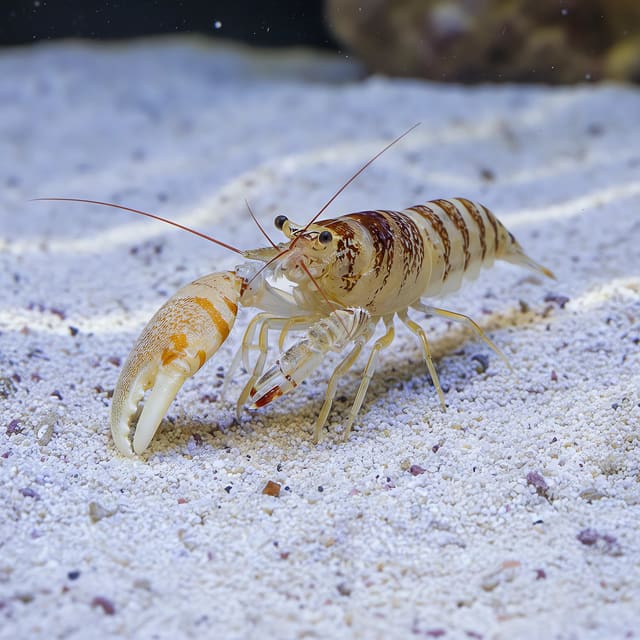
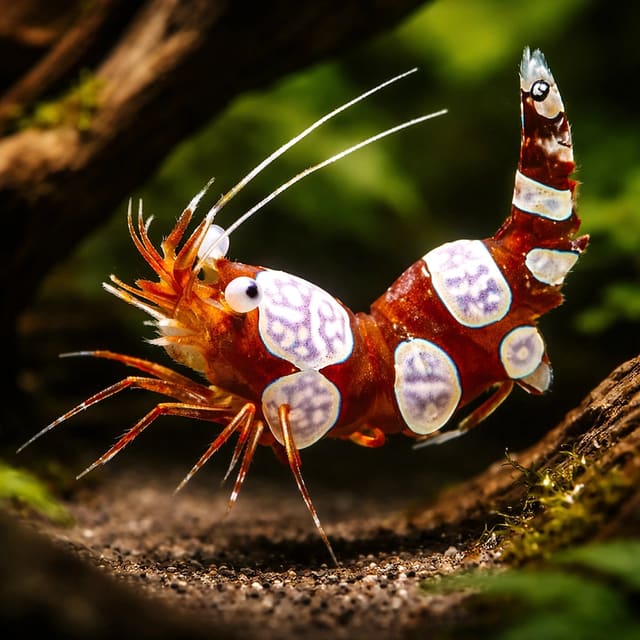
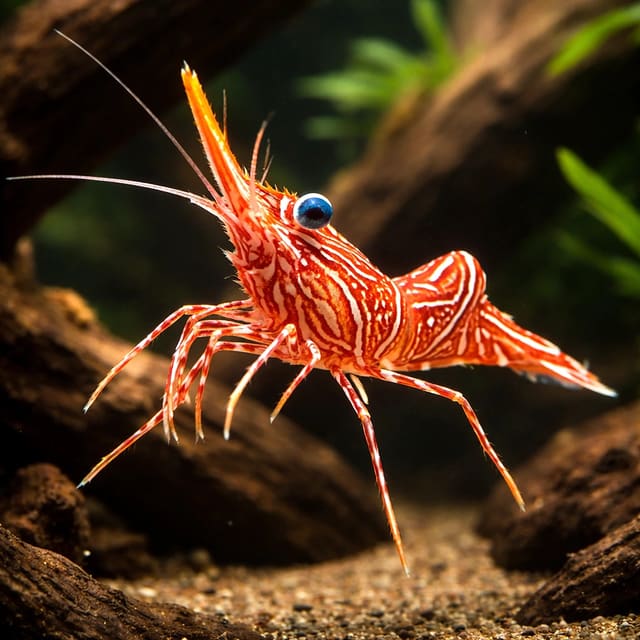
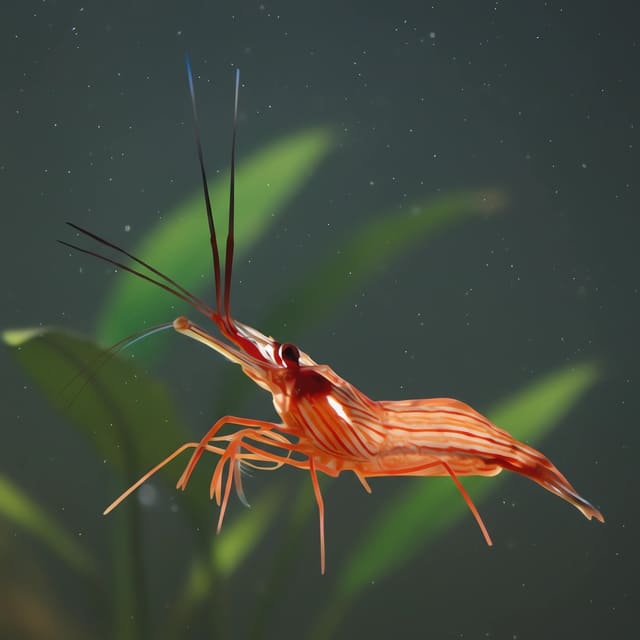
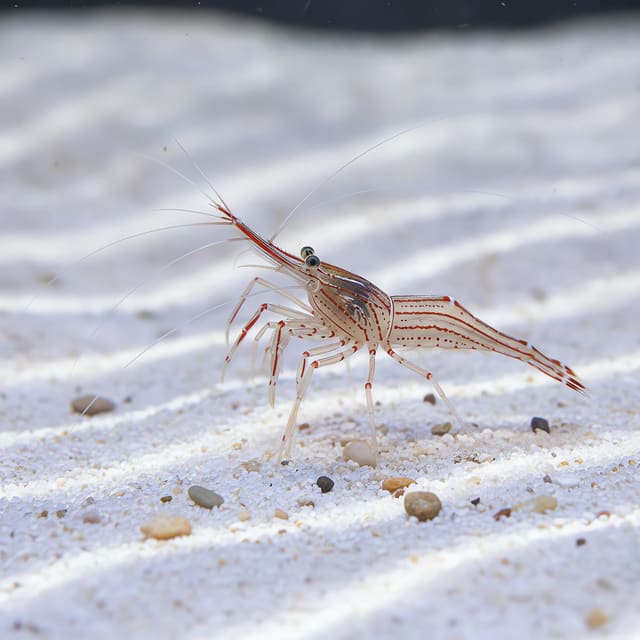
The gallery shows the characteristic aquarium presentation associated with this animal: alternating red-and-white bands, an elongated body, enlarged pincers and exceptionally long white antennae. Those extended appendages matter when arranging rockwork. Leave clear routes around caves and ledges rather than measuring shelter only against the central body.
The animal is an invertebrate with a segmented body and a hard exterior called an exoskeleton. Like other marine crustaceans, it grows by shedding that exterior. Secure shelter, stable water and restrained stocking therefore matter more than choosing it solely for colour or a common name.
| Suits | Not suited to |
|---|---|
| An established, filtered marine aquarium with secure rock shelter | An aquarium without a mature biological filter or secure rock shelter |
| A community planned around stable marine water values | Fish not considered reef-safe because they are likely to prey on marine crustaceans |
The Wikipedia summary for Stenopus hispidus covers its taxonomic placement and established common names. Follow the marine-crustacean water, feeding and maintenance instructions below when planning its aquarium care.
One purchase supplies one animal.
Sex is guaranteed only when the selected option explicitly states male or female. This Stenopus hispidus listing has no sex-guaranteed option.
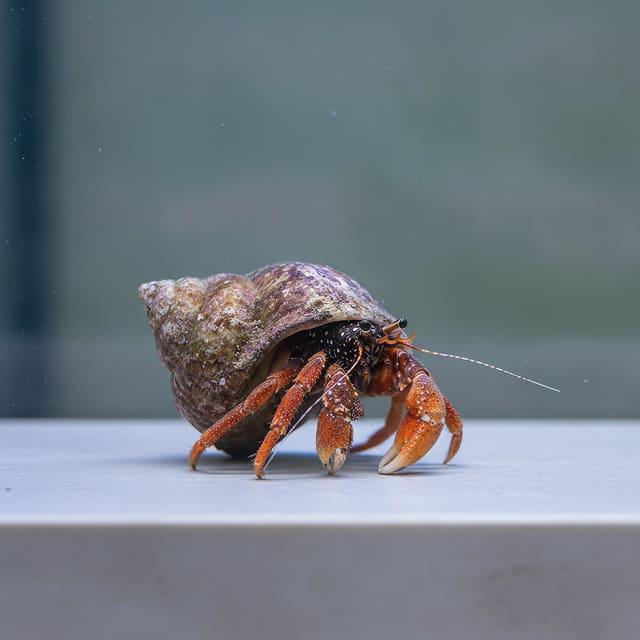
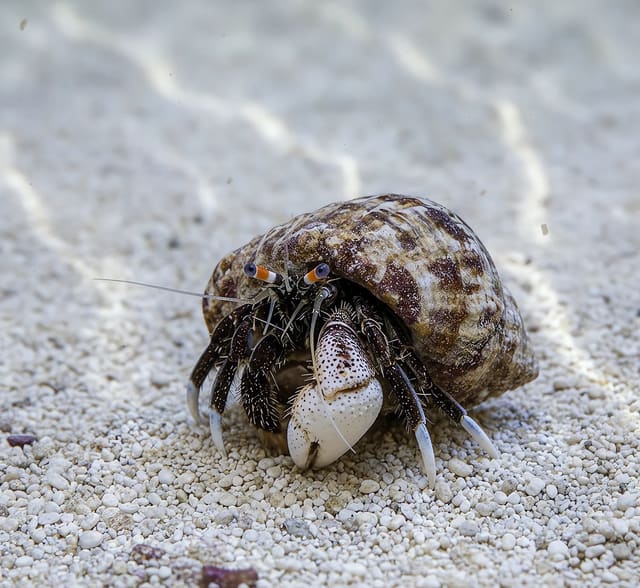
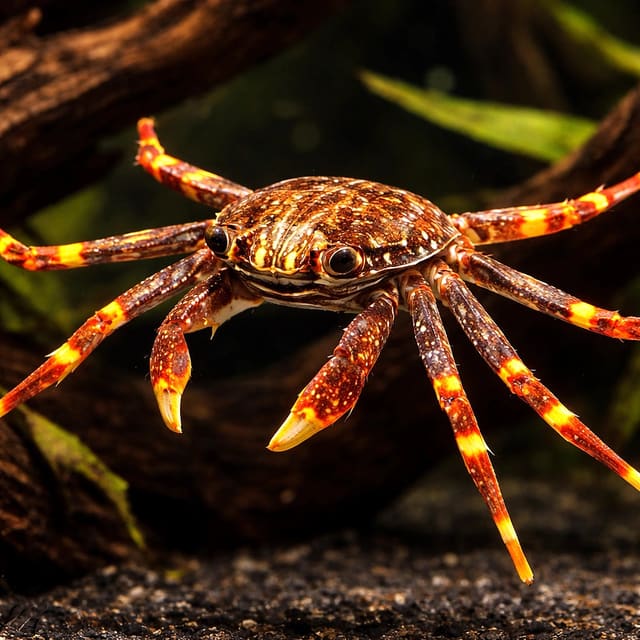
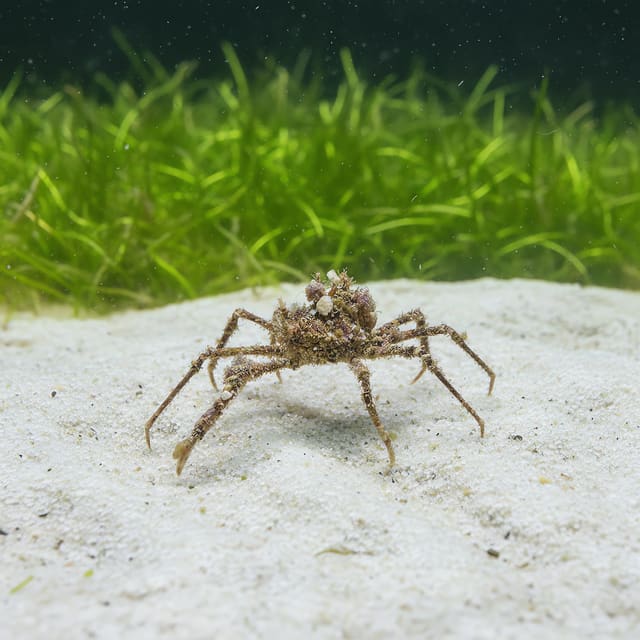
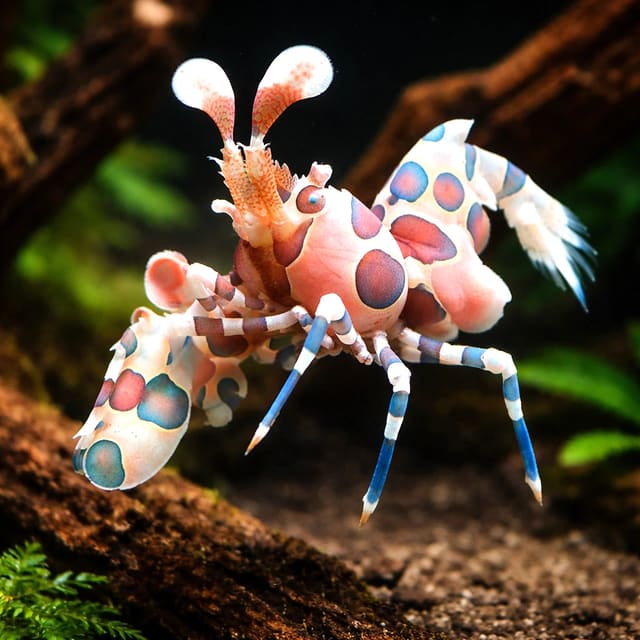
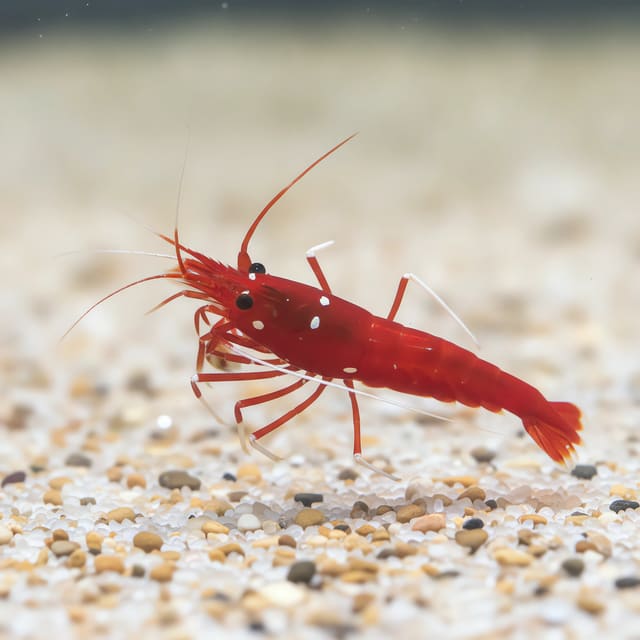
Some gallery images are representative, based on reference photographs of this species, and none shows the exact animal supplied, so colours can look slightly different from the live animal.
Before choosing this shrimp, compare its needs with the other animals already planned for the aquarium. The main questions are whether the biological filter is established, whether rock shelter is secure, whether marine water values are stable and whether every fish is considered reef-safe. Browse the wider marine inverts collection when comparing different invertebrate choices, but assess each species separately rather than assuming that all shrimp, crabs and lobsters behave alike.
OATA’s marine-crustacean guidance gives 24–26°C, pH 7.9–8.3 and salinity 1.023–1.026 for the group; these are broad planning values, not a species-specific optimum. It also calls for zero ammonia, zero nitrite, nitrate not exceeding 50 mg per litre, carbonate hardness of 8–12°dKH, calcium of 380–450 ppm and magnesium of 1250–1350 ppm.
Use those figures as the starting operating range, then accommodate any more sensitive reef inhabitants within it. A value that suits the shrimp group is not permission to move another animal outside its own range. Stability across the whole community is the practical goal.
OATA recommends an aquarium of at least 40 litres for smaller crabs and shrimp, while larger crustaceans need a larger aquarium. Treat 40 litres as a planning floor rather than a complete answer for every animal. Account for the shrimp’s body, long antennae and pincers, the footprint occupied by rock, and the swimming and shelter requirements of every tank mate.
Whatever volume you choose, fit an effective filter and provide live or artificial rock. Rock supplies grazing surfaces and, more importantly here, hiding areas for an animal whose new exoskeleton takes a couple of days to harden after a moult.
| Decision | Starting point |
|---|---|
| Water | 24–26°C; pH 7.9–8.3; salinity 1.023–1.026 |
| Nitrogen waste | Ammonia 0 mg/l; nitrite 0 mg/l; nitrate up to 50 mg/l |
| Space | At least 40 litres applies to smaller shrimp as group guidance; increase volume as animal and community needs require |
| Structure | Secure rock shelter with clear access around long appendages |
| Compatibility | Begin with fish considered reef-safe and screen every crustacean individually |
Set up and mature the biological filter before adding the shrimp. Marine livestock increases the waste processed by the aquarium, and the beneficial bacterial population must grow as stocking and feeding rise. Adding too many animals too quickly can leave the filter unable to process the extra waste, producing unhealthy ammonia and nitrite.
The RSPCA’s aquarium filtration guidance explains the core process: ammonia is converted to nitrite and then to the safer nitrate by bacteria living in a working biological filter. For this marine crustacean, the operational targets remain zero ammonia and zero nitrite.
OATA identifies several suitable forms of marine filtration: live rock with sufficient water flow, an internal or external filter, or a sump-based filter. Whichever route you use must be established, correctly sized for the whole aquarium and kept free of blockages.
A protein skimmer can support water quality by removing dissolved organic waste before it breaks down into more harmful substances. Treat it as an addition to biological filtration and water changes, not a replacement for either. Clean the skimmer regularly so declining performance does not go unnoticed.
A larger aquarium can provide more dilution and planning room, but volume cannot compensate for an immature filter. Establish the biological process first, then stock at a pace the test results support.
Use the final readiness check as a complete decision rather than relying on one favourable reading. Zero ammonia with detectable nitrite still means the biological process is not meeting the required target, while correct water chemistry cannot compensate for blocked flow or an unfinished retreat. Proceed only when the filter, water range, shelter and stocking plan are ready together.
Run the aquarium at 24–26°C, pH 7.9–8.3 and salinity 1.023–1.026. Check each figure as part of one connected system: topping up evaporation, changing water or adjusting one parameter can affect the others. Make small, controlled corrections rather than allowing repeated swings between the ends of the range.
| Measure | Operating range or limit |
|---|---|
| Temperature | 24–26°C |
| Salinity | 1.023–1.026 |
| pH | 7.9–8.3 |
| Ammonia | 0 mg per litre |
| Nitrite | 0 mg per litre |
| Nitrate | Up to 50 mg per litre |
| Carbonate hardness | 8–12°dKH |
| Calcium | 380–450 ppm |
| Magnesium | 1250–1350 ppm |
Ammonia and nitrite are not acceptable at a low background reading; the target for each is zero. If either appears, pause further stocking, check filtration and reduce the causes of excess waste. Look for uneaten food, restricted filter flow and a recent increase in livestock or feeding.
Nitrate has an upper limit of 50 mg per litre in the marine-crustacean range. Do not use that maximum as a routine target. Regular water changes, controlled feeding, effective filtration and skimmer maintenance all reduce the chance of waste accumulating towards it.
A reef aquarium may contain animals requiring tighter parameters. Keep the shared aquarium inside the range of every inhabitant, using the most restrictive compatible requirement. For example, a pH value within 7.9–8.3 may suit the crustacean group, but it should only be chosen if it also suits the other animals in the system.
Record test results consistently enough to recognise movement before a limit is crossed. The useful comparison is not only today’s number against a range; it is also today’s number against the aquarium’s recent stable pattern.
Read connected changes together. Rising nitrate alongside uneaten food points towards excess input or insufficient waste removal, while ammonia or nitrite appearing after a livestock addition shows that the filter needs immediate attention. If one result is unexpected, repeat the measurement before adjusting the aquarium, then correct the identified cause in small controlled steps.
Carry out a partial water change of 25% at least once every week. A siphon helps remove solid waste from the substrate before that material breaks down. Match replacement marine water carefully to the aquarium’s planned temperature and salinity so routine maintenance does not create the instability it is meant to prevent.
Check and clean filtration regularly to prevent blockages. When media needs rinsing, use aquarium water removed during the partial water change. Do not rinse biological media under the tap, because chlorine or chloramine may kill part of the beneficial bacterial population.
Ammonia or nitrite above zero calls for immediate attention to waste input and biological filtration. A rising nitrate trend calls for closer control of uneaten food, accumulated debris and maintenance. An unusual pH or salinity reading should be checked before making a correction, because correcting a faulty reading can cause a genuine swing.
Good maintenance is especially important for marine crustaceans because even small amounts of ammonia and nitrite can cause stress. Keep the routine simple enough to perform consistently: weekly water change, waste removal, filter inspection, careful media cleaning and regular skimmer care.
Inspect the whole water route while carrying out that routine. A pump may still be running even when debris has reduced flow through media, and a skimmer may remain switched on while accumulated waste reduces its performance. Confirm effective movement after cleaning, check that equipment restarted correctly and remove any solid waste exposed by the work.
Compare the next set of results with the readings taken before maintenance. The aim is not merely to complete a list of tasks but to keep ammonia and nitrite at zero and prevent nitrate moving towards its maximum. If the trend continues in the wrong direction, reassess feeding, trapped debris, filter condition and stocking pace together.
Marine crustaceans have a hard exoskeleton and shed it as they grow. An empty shell in the aquarium can therefore be the cast exterior from a moult rather than the animal itself. Observe carefully before drawing a conclusion from an empty form.
After shedding, the new exoskeleton takes a couple of days to harden and the animal will often hide during that period. Provide shelter before introduction so it never has to search for protection while soft. Live or artificial rock is essential because it creates enclosed areas and surfaces around which the shrimp can move.
Do not force the animal into the open when it hides around a moult. Instead, confirm that water remains within range and watch for the expected return of coordinated movement after the hardening period. A prolonged soft-shell condition, incomplete shedding or difficulty moving belongs in the health-warning checklist rather than being treated as ordinary concealment.
Rock also occupies water volume and floor space. Consider the remaining usable aquarium when judging whether the system provides enough room for the shrimp and every tank mate.
Test the layout before introduction by tracing a clear route from open water to the retreat without moving rock or passing through equipment. Check that the entrance remains usable when the shrimp’s long antennae and pincers are extended. If another inhabitant already occupies or defends that route, create a separate refuge or reconsider the combination before adding the shrimp.
Keep the shelter accessible during routine siphoning and filter work. A retreat that must be dismantled for every water change is difficult to maintain safely, while rock placed against an intake can restrict filtration. The strongest layout combines stable cover, unobstructed flow, usable entrances and practical access for waste removal.
Marine crustaceans vary widely in diet. OATA advises that most species are omnivorous and may consume algae, detritus and small meaty items. Use that group routine here by offering variety: nori algae sheets, small frozen foods such as brine shrimp, or suitable pellets.
Do not assume that visible algae, detritus or leftover fish food forms a complete ration. Equally, do not add food simply because a fixed time has arrived. Many crustaceans graze through the day, and the need for extra feeding depends on the natural food already present in the aquarium.
| What you observe | What to do |
|---|---|
| Food is taken promptly | Continue with a small varied feed while watching total waste input |
| Food remains uneaten | Reduce the next extra feed and remove waste before it breaks down |
| Nitrate is trending upwards | Review feeding quantity, trapped debris, filtration and water-change practice |
| Interest in food declines | Check water values and look for other changes in movement, colour or moulting |
| Natural grazing is plentiful | Account for it when deciding whether and how much extra food to add |
Overfeeding creates a direct water-quality problem. Uneaten material breaks down and releases waste, increasing the load on the biological filter. The safest routine is a modest portion, observation of whether it is consumed, and adjustment of the next feed from that result.
Use variety without turning every feed into a mixture of every item. Alternating appropriate foods keeps the routine varied while making it easier to see what the shrimp accepts and what remains behind. Continue monitoring ammonia at zero, nitrite at zero and nitrate below its 50 mg per litre maximum as the feeding pattern develops.
Judge the result across feeding and water quality together. Prompt consumption with stable tests supports continuing the modest portion, whereas leftovers or a rising nitrate trend call for less extra food and closer waste removal. If appetite drops, check movement, colour, moulting and the complete marine range before deciding that a different food alone will solve the change.
Prepare the aquarium before opening the transport container. Confirm that ammonia and nitrite are zero and that temperature, salinity and pH are already within the intended operating range. Rock shelter should be complete and the filter should be running normally.
Follow our delivery and Live Arrival Guarantee policy: arrange for someone to receive the parcel, acclimatise slowly, float the bag for 20–30 minutes before releasing the animal, and never pour the bag water into the aquarium.
Do not combine arrival with a large maintenance change or a batch of new tank mates. The filter’s bacterial population must respond whenever livestock and feeding increase, so stagger additions and observe the water after each one.
Once released, check coordinated walking or movement, the condition of the antennae, legs, pincers and exoskeleton, and whether the animal can reach shelter. Hiding alone can occur around a moult, but combine behaviour with water tests and physical observations rather than relying on one sign.
Use a consistent observation routine so a genuine change stands out. Watch movement, colour, temperament, body condition, moulting and interest in food. The purpose is early action on water quality and husbandry, not an attempt to diagnose or medicate from one symptom.
Look for reduced activity, prolonged inactivity, difficulty walking or swimming, loss of coordination, repeated attempts to leave the water or an unusual movement pattern. A change in aggression or substantially more hiding than the animal’s established pattern also deserves attention.
Check the exoskeleton, limbs, claws, antennae and eyes for damage. Lesions, discolouration, white or fluffy growths, loss of appendages, difficulty moulting, incomplete shedding or a prolonged soft-shell condition are warning signs. Remember that a clean empty exoskeleton may simply be a cast moult; locate and observe the animal before deciding what happened.
Turning darker or paler than the normal settled appearance, reduced intake or loss of interest in food can accompany a wider problem. Compare the change with recent water results, feeding input and any new livestock rather than treating colour alone as a diagnosis.
| If you see | First response |
|---|---|
| Reduced feeding or movement | Test ammonia, nitrite, nitrate, pH, salinity and temperature |
| Ammonia or nitrite above zero | Address waste and biological filtration immediately |
| Physical damage | Review rock safety and tank-mate interactions |
| Moulting difficulty | Check the complete marine range and preserve secure shelter |
| Persistent or worsening change | Contact us promptly and describe the behaviour, water results and visible condition |
Avoid adding an improvised treatment to the main aquarium. Begin with measured water values, equipment checks and a clear account of what changed.
OATA advises that marine crustaceans will generally mix with fish considered reef-safe. Fish not considered reef-safe are likely to predate on marine crustaceans and should be avoided. Use that distinction as the first screen, then assess the behaviour, size, feeding method and space needs of the exact fish concerned.
A reef-safe label is a starting point rather than a universal tank-mate guarantee. It does not settle competition for caves, disturbance during a moult or whether another crustacean is opportunistic. Check those questions separately.
| Screen result | Decision |
|---|---|
| Fish is not considered reef-safe | Avoid the combination because predation on marine crustaceans is likely |
| Fish is considered reef-safe | Continue to individual screening for behaviour, size and shelter use |
| Tank mate is a lobster or crab | Use caution because some are opportunistic and may prey on slow-moving inhabitants |
| Tank mate needs the same retreat | Add separate shelter or choose a different combination |
| Compatibility remains uncertain | Pause the addition until the exact combination has been assessed |
The word “cleaner” in a common name does not make this shrimp immune to predation. A fish that may attack shrimp remains unsuitable regardless of the shrimp’s trade name.
Coral compatibility is a separate question from whether a fish is reef-safe around crustaceans. Plan the complete reef around the tightest water range and the physical needs of every inhabitant. Avoid a broad claim that the shrimp suits every coral, snail, crab or other ornamental shrimp.
Work through the screen in order. A fish that fails the reef-safety check should not progress to space planning, because extra rock or aquarium volume does not remove the stated predation risk. A fish that passes still needs enough room to move without taking over the shrimp’s retreat or preventing it from hiding after a moult.
For another crustacean, inspect both shelter use and opportunistic feeding behaviour. Separate caves improve physical choice but do not guarantee a safe combination. Where the exact interaction remains uncertain, pause the addition and request one stocking and compatibility assessment covering the animals, aquarium volume, rock layout and established water range.
Compatibility includes the aquarium’s biological capacity as well as direct interactions. Every new animal and every increase in feeding raises the load placed on beneficial bacteria. Add livestock slowly so the filter can respond without ammonia or nitrite appearing.
Treat every extra crustacean as a fresh compatibility decision rather than assuming that two shrimp form a pair or that several invertebrates will share a cave. Some lobsters and crabs are opportunistic and may prey on slow-moving aquarium inhabitants, so a general marine-invertebrate label is not enough.
A 40-litre aquarium only reflects OATA’s baseline for smaller crabs and shrimp. It does not automatically have capacity for a shrimp plus several fish, nor does increasing the volume make a predatory combination safe. Use volume, filtration, shelter and behaviour together.
After adding the animal, watch for unusual aggression, increased hiding, appendage damage, difficulty moving or repeated attempts to leave the water. If those signs follow a tank-mate introduction, test the water and review the physical interaction immediately. The right response may be a compatibility change, a water-quality correction or both.
Use the period after each addition as a checkpoint before making the next decision. Confirm that ammonia and nitrite remain at zero, feeding does not leave accumulating waste, and the shrimp can use its shelter without obstruction. A stable result supports continuing the plan slowly; a changed result means pause, identify the cause and restore the aquarium before adding more livestock.
Stenopus hispidus is an accepted species in the family Stenopodidae. It is a shrimp-like decapod crustacean also called the coral banded shrimp, banded boxer shrimp or banded cleaner shrimp.
One purchase supplies one animal.
Plan around secure rock shelter, long appendages and the needs of the whole aquarium community rather than assuming a particular adult measurement.
Use a mature, filtered marine aquarium with secure live or artificial rock shelter. OATA recommends at least 40 litres for smaller crabs and shrimp, with a larger aquarium required as the animal and community need more space.
Treat each extra crustacean as a separate decision rather than assuming a pair or group will mix. Contact us for a stocking and compatibility assessment of the exact combination.
OATA’s broad group guidance is 24–26°C, salinity 1.023–1.026, pH 7.9–8.3 and carbonate hardness 8–12°dKH, with zero ammonia, zero nitrite and nitrate up to 50 mg per litre.
Use the marine-crustacean routine of varied nori, small frozen items such as brine shrimp, or suitable pellets. Account for natural grazing, offer modest extra food and avoid leaving uneaten material to break down.
Start filming before opening the sealed parcel, keep recording continuously as you open it and show the animal inside the sealed bag. Then float the bag for 20–30 minutes before release, and never pour bag water into the aquarium. Send the video with your order number if making a Live Arrival Guarantee claim.
Fish considered reef-safe are the starting point for individual screening. Avoid fish not considered reef-safe because they are likely to prey on marine crustaceans, and use caution with opportunistic lobsters or crabs.
No reviews for this item yet. Bought one? Honest reviews only, good or bad.
What customers say about ordering from us
Easy website plenty of info on fish your buying great to pick a time slot
TRACEY DURRANT · 7 Oct 2026
Got some lovely fish thank you
Kevin Mackie · 7 Oct 2026
Reviews of our shop, collected by Judge.me, an independent third-party review collector. Newest first.