Spider crab (Camposcia retusa) - Marine Aquarium Livestock UK
24–26°C · pH 7.9–8.3
£56.99
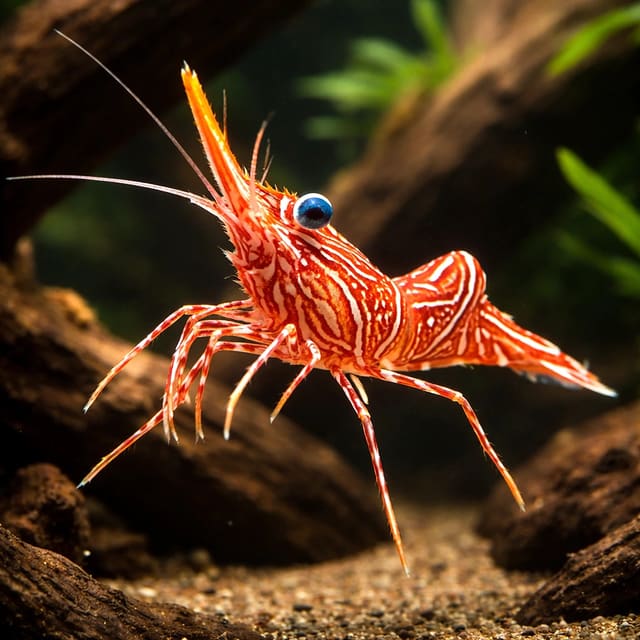
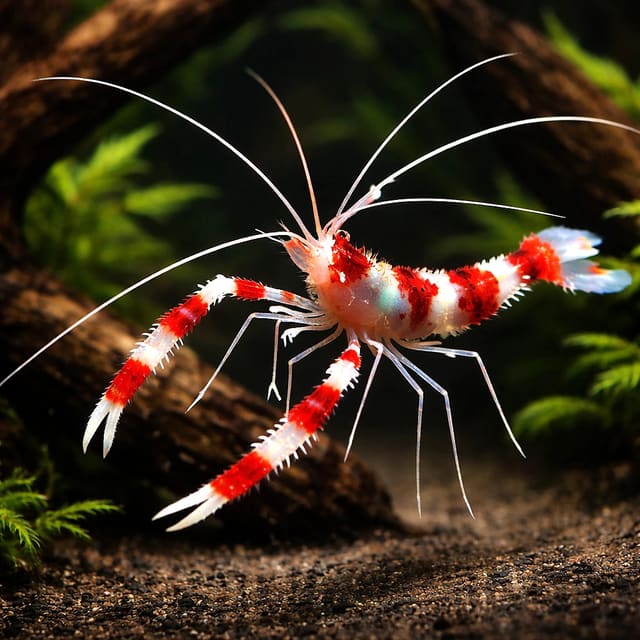
Harlequin Shrimp (Hymenocera picta) is a boldly spotted reef shrimp that eats only starfish, so it suits experienced marine keepers with a mature saltwater aquarium and a dependable starfish supply. It reaches about 5 cm, and one live shrimp is supplied per purchase.
Adult size is the maximum length this species reaches at full maturity (scientific sources). The livestock you receive will be younger and smaller. Product-photo provenance and any image-specific limitations are stated on the listing.
Hymenocera picta
Save when buying more. Each quantity is one shrimp; sex is not guaranteed unless the listing explicitly states it.
Harlequin Shrimp (Hymenocera picta) is a boldly spotted reef shrimp that eats only starfish, so it suits experienced marine keepers with a mature saltwater aquarium and a dependable starfish supply. It reaches about 5 cm, and one live shrimp is supplied per purchase.
Adult size is the maximum length this species reaches at full maturity (scientific sources). The livestock you receive will be younger and smaller. Product-photo provenance and any image-specific limitations are stated on the listing.
Maintain these water conditions for optimal health and vibrant colors
The Harlequin Shrimp (Hymenocera picta) is a small, boldly spotted reef shrimp from the tropical Indian and Pacific Oceans, and one of the most specialised animals a marine keeper can take on. It reaches about 5 cm, lives in pairs on coral reefs in the wild, and has a single food: starfish. Every other decision about keeping it, from the aquarium you set up to the companions it can share with, follows from that diet.
That makes the first question before ordering a practical one rather than a matter of tank size. Pellets, flakes and the mixed frozen foods that suit most marine crustaceans are not what this shrimp eats, so you need a dependable, continuing supply of starfish for as long as you keep it, alongside a mature, stable saltwater aquarium with plenty of rock to shelter in. With both in place it is a remarkable animal to watch at close quarters. If the food supply is uncertain, a more adaptable reef shrimp will be the kinder choice for you and for the animal.
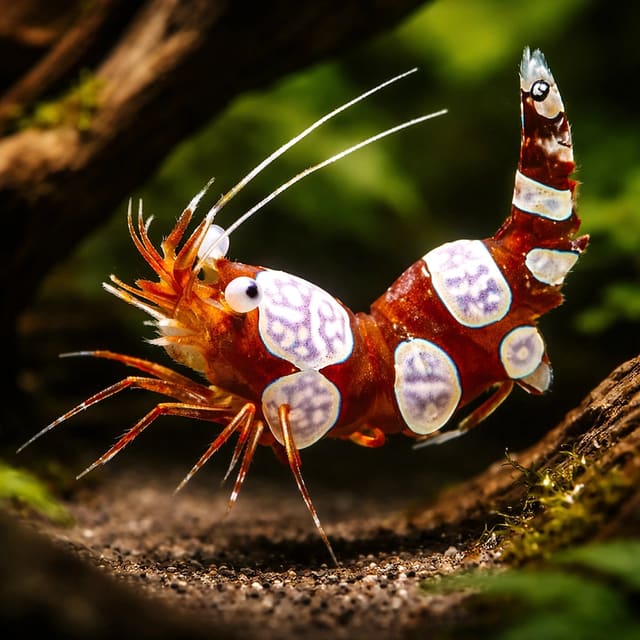
The appeal is easy to see. Its appearance is striking, a body covered in large rounded spots whose shade and edging differ between the central Pacific and Indian Ocean forms. It is also a genuine specialist, an animal whose whole way of life is built around one kind of prey. Neither quality makes up for an uncertain food supply, so settle that question before anything else.
| Suits | Experienced marine keepers with a mature reef or dedicated saltwater system and a reliable way to obtain starfish |
|---|---|
| Not suited to | Newly set-up aquariums, tanks holding starfish you want to keep, or keepers looking for a shrimp that lives on prepared food |
| Diet | Starfish only |
| Adult size | About 5 cm |
| In the wild | Coral reefs of the tropical Indian and Pacific Oceans, living in pairs |
| Water | Stable saltwater; OATA's marine crustacean guidance is salinity 1.023–1.026 at 24–26°C |
You will often see this shrimp sold as Hymenocera elegans. The World Register of Marine Species treats that name as a junior synonym and gives Hymenocera picta Dana, 1852, a member of the shrimp family Palaemonidae, as the accepted name, which is why it heads this listing. Some authors still divide the genus in two: H. picta from the central and east Pacific, with deep pinkish-purple spots edged in yellow, and H. elegans from the Indian Ocean and west Pacific, with browner spots edged in blue. Whichever name you meet, the needs described here are the same: starfish to eat, stable saltwater and carefully chosen companions. When you read up on care, search under both names, because both are still in use.
Each purchase supplies one live Harlequin Shrimp. We don't quote a dispatch length for it, so treat about 5 cm as the size it can grow to rather than the size that arrives. Sex is guaranteed only when the selected option explicitly states male or female. This Hymenocera elegans listing has no sex-guaranteed option.
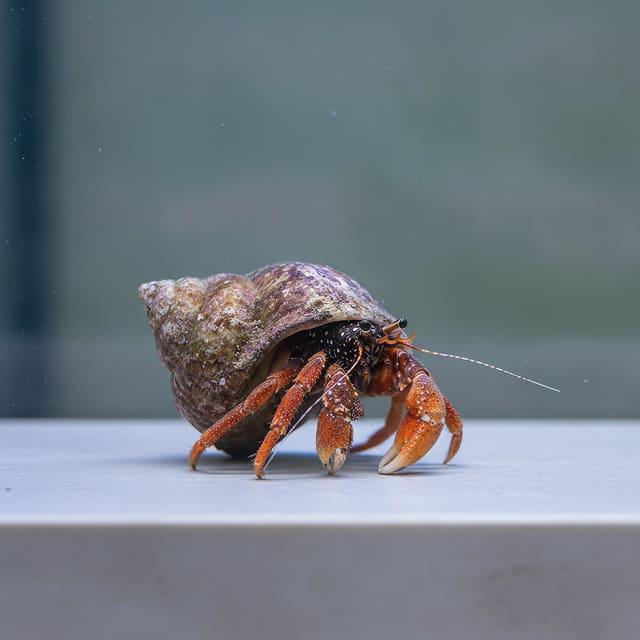
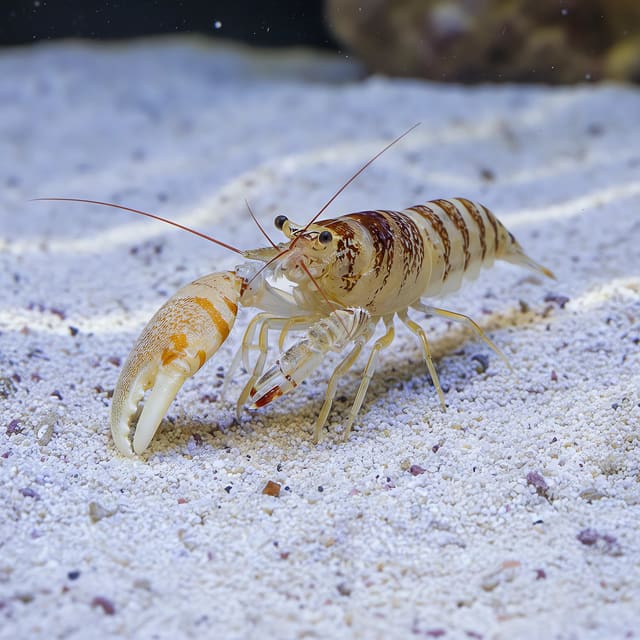
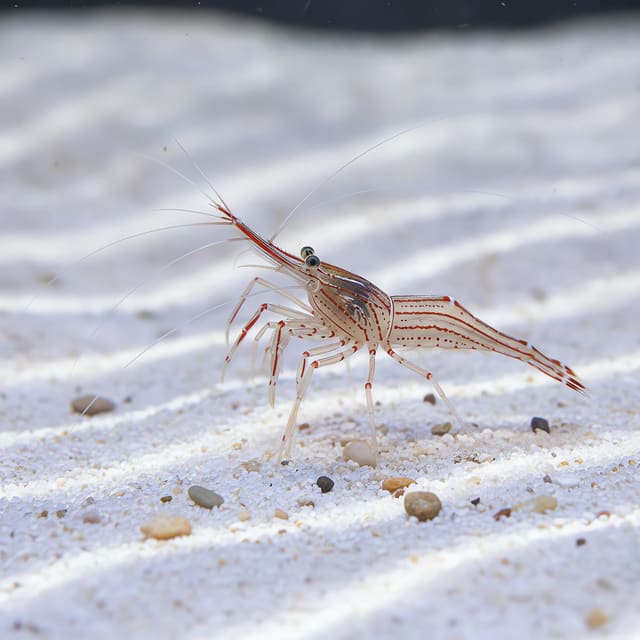
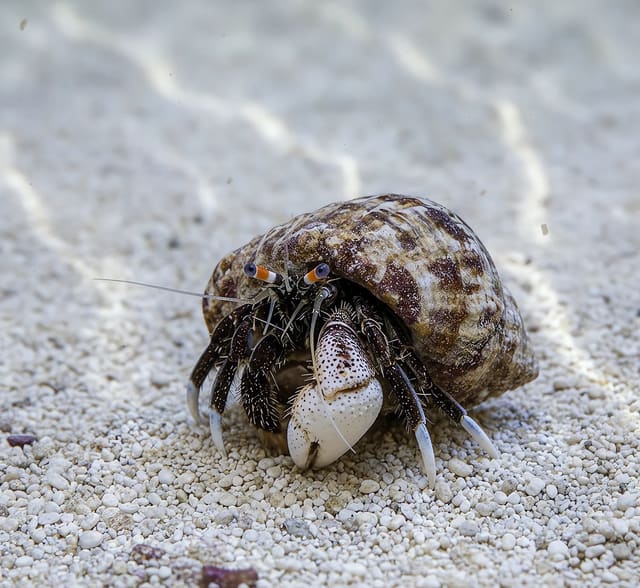
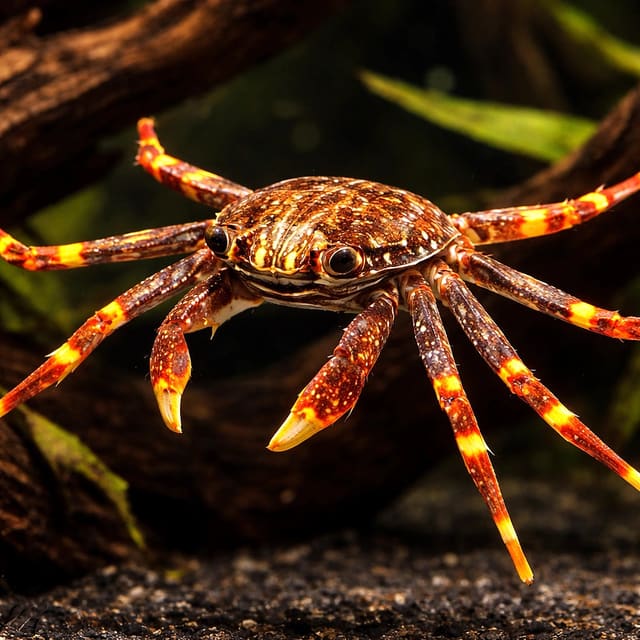
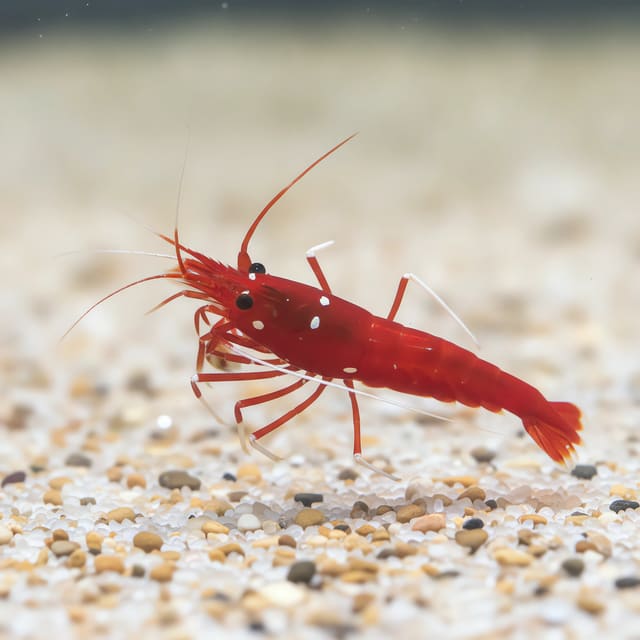
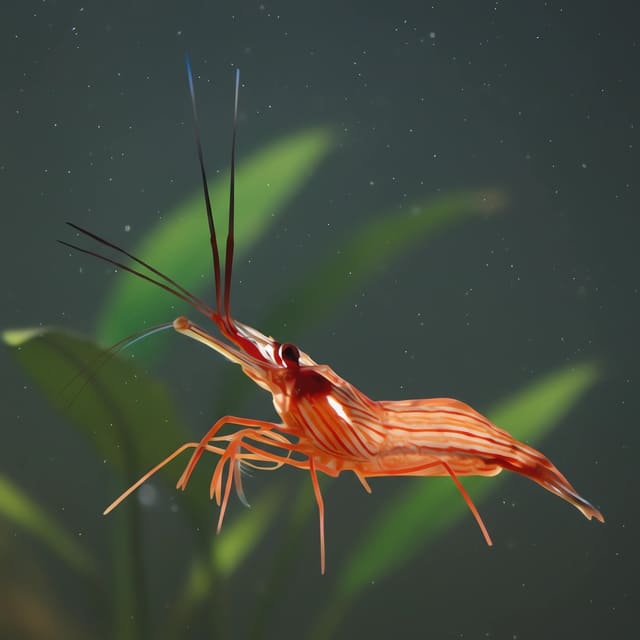
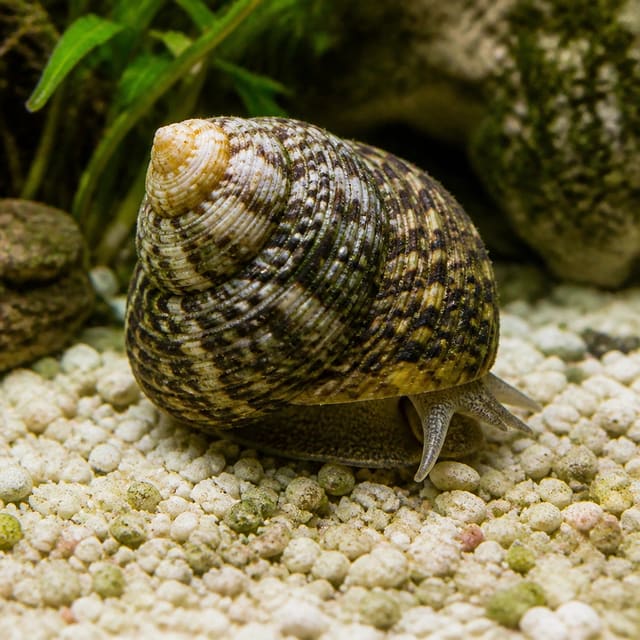
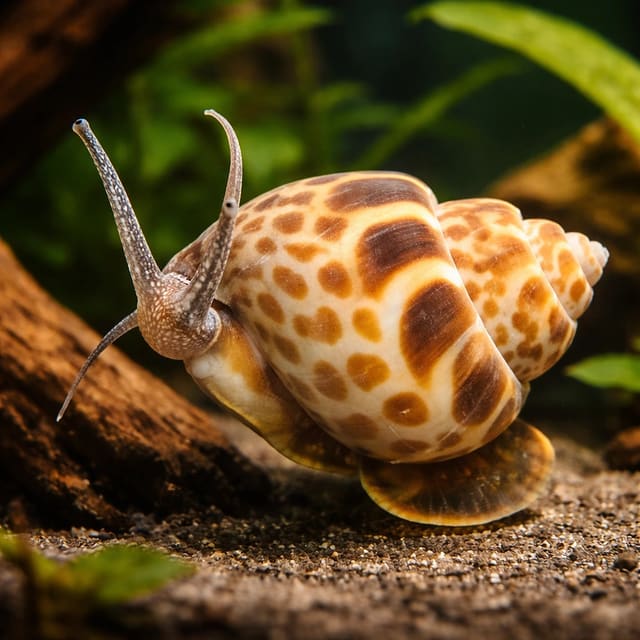
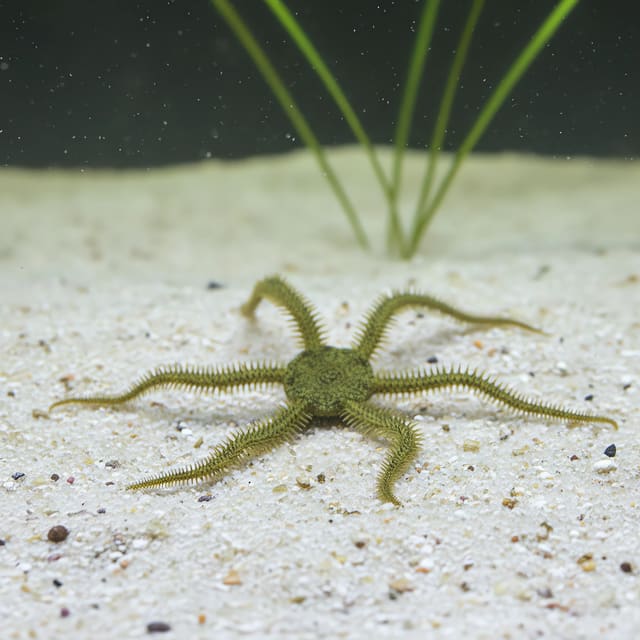
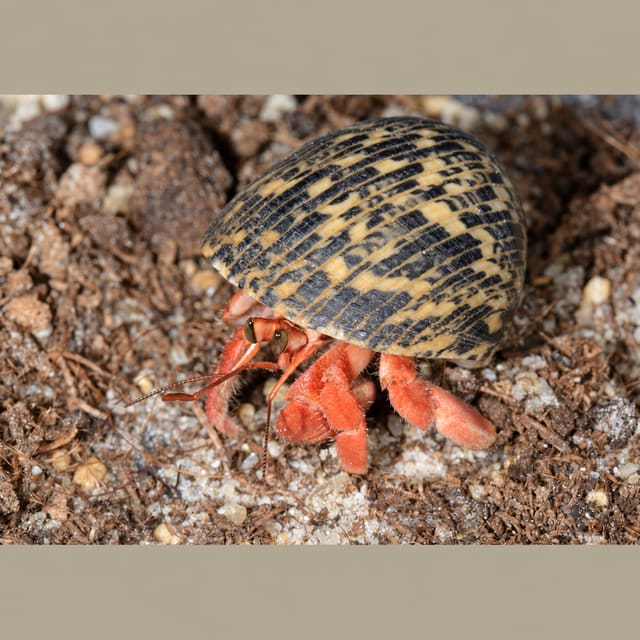
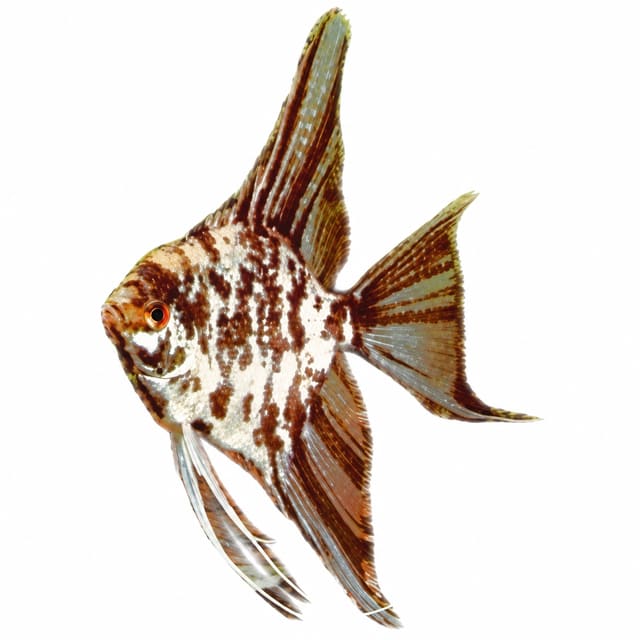
Gallery images have been digitally enhanced to improve image quality. Natural colour, pattern, size and maturity can vary between live animals. Some of the pictures show the shrimp against plants and driftwood; in reality this is a fully marine animal that needs a saltwater reef aquarium, never a planted freshwater tank.
If you are weighing it up against other reef shrimps, crabs and invertebrates, our marine invertebrates collection brings them together in one place.
Most marine crustaceans are easy to feed. OATA's care sheet describes the majority as omnivores that take algae, detritus and small meaty items, and suggests a varied menu of nori, small frozen foods such as brine shrimp, and pellets. The Harlequin Shrimp is the exception to that rule: Hymenocera picta feeds exclusively on starfish, and planning its food is the most important part of keeping one.
Wild harlequin shrimps seem to prefer smaller, more sedentary starfish. Those are generally too scarce to meet their needs, so the shrimps commonly attack the crown-of-thorns starfish, a coral-eating species. An attack reduces the starfish's coral consumption while it is under way and kills it within a few days.
That is wild natural history rather than an aquarium feeding routine, but it tells you two things that matter at home: the shrimp eats living starfish, and it can work on one prey animal over a few days rather than finishing it in a single sitting.
A starfish that is being eaten slowly is still food sitting in the aquarium, and OATA's warning about overfeeding applies: a build-up of uneaten food breaks down and releases toxic waste into the water. Look at the remains regularly and lift out anything the shrimp has clearly finished with. Keep testing for ammonia and nitrite in the days after a new starfish goes in, particularly in a smaller system where waste has less water to dilute into.
A shrimp that is eating well stays active, keeps its normal colour and moults as it grows. OATA lists reduced intake or lack of interest in food among the early warning signs in marine crustaceans, so watch whether your shrimp is actually working on the starfish you provide, not simply whether food is present in the tank.
Deciding that this shrimp isn't right for your aquarium is the responsible choice when its food can't be relied on. Many other marine crustaceans take the varied omnivore menu described above, and several have a useful role of their own. OATA notes, for example, that cleaner shrimps (Lysmata amboinensis) may eat parasites on larger fish, while peppermint shrimps (Lysmata wurdemanni) consume unwanted Aiptasia anemones.
This is a marine animal from warm coral reefs, and it needs a properly filtered saltwater aquarium. OATA's general rule for marine crustaceans is to buy as large an aquarium as you reasonably can, and it recommends at least 40 litres for smaller species of crabs and shrimps. At about 5 cm the Harlequin Shrimp is a small crustacean, but volume still matters: more water gives you more margin for the waste from its starfish meals and makes readings easier to hold steady.
A filter is essential in any marine set-up. OATA describes three workable approaches: live rock with sufficient water flow, an internal or external filter, or a sump-based system. A protein skimmer is well worth adding, because it removes dissolved organic waste before that waste breaks down into more harmful substances. The RSPCA's aquarium welfare guidance explains the biology behind this: a working biological filter hosts beneficial bacteria that convert toxic ammonia into nitrite, which is also toxic, and then into nitrate, which is safer.
Marine crustaceans need very little décor, but OATA treats live or artificial rock as essential. Rock provides grazing surfaces for many species and, more importantly for this shrimp, somewhere for a freshly moulted animal to hide while its new shell hardens. Arrange it so that there are sheltered gaps the shrimp can back into, while leaving enough open view for you to check that it is feeding.
Add the shrimp only to an aquarium whose filter has fully matured. OATA explains that the beneficial bacteria in a filter need to increase every time more livestock is added and feeding increases, and that stocking too quickly causes new tank syndrome: ammonia and nitrite rise to unhealthy levels and invertebrates can become ill or die. A starfish-eating shrimp brings both a new animal and a new source of waste, so it belongs near the end of a stocking plan rather than at the start.
OATA publishes suggested water parameters for marine crustaceans, noting that the group is usually undemanding of water chemistry and that the figures are a general guide rather than a profile of any one species. It also advises that a reef aquarium may need some values altered to suit more sensitive animals. Use the table below as the planning range for your Harlequin Shrimp, and aim above all for steady readings.
| Parameter | OATA guide for marine crustaceans |
|---|---|
| Salinity | 1.023–1.026 |
| Temperature | 24–26°C |
| pH | 7.9–8.3 |
| Ammonia | Zero |
| Nitrite | Zero |
| Nitrate | Not above 50 mg per litre |
| Carbonate hardness | 8–12°dKH |
| Calcium | 380–450 ppm |
| Magnesium | 1250–1350 ppm |
OATA stresses that crustaceans can be stressed by even the smallest amounts of ammonia and nitrite, which may then cause them to develop various diseases. That is why the table asks for zero rather than low readings. Test for ammonia, nitrite and nitrate as a matter of routine, and check salinity, temperature and pH as well, so that you notice drift before the shrimp does.
| Test | Why it matters for this shrimp |
|---|---|
| Ammonia and nitrite | Both are toxic and stress crustaceans in even small amounts; test again after each new starfish goes in |
| Nitrate | The end product of the filter's work; regular water changes keep it under the 50 mg per litre ceiling |
| Salinity and temperature | The basic marine conditions; check both at every water change |
| pH and carbonate hardness | Keep them inside the ranges above and adjust gradually |
| Calcium and magnesium | Part of the normal routine in any reef aquarium |
Nitrate is safer than ammonia or nitrite, but OATA still sets a ceiling of 50 mg per litre for the group, and regular partial water changes are the usual way to keep it there. Carbonate hardness, calcium and magnesium belong to the same routine as in any reef system, so keep them inside the ranges above as part of your normal testing.
Like every crustacean, the Harlequin Shrimp has a hard outer exoskeleton that it sheds as it grows. OATA points out that it is common to find empty shells in the aquarium, so a cast shell on the sand is a normal sign of growth rather than a lost shrimp. After shedding, the new exoskeleton takes a couple of days to harden, and the animal will often hide during that time.
Those soft-shell days are when cover matters most. A shrimp that has just moulted is at its most vulnerable, which is why OATA treats rock as essential décor for crustaceans: it gives freshly moulted individuals somewhere to hide. Resist the urge to move rockwork to look for a shrimp that has gone quiet after a moult.
If you see any of these, test the water first and look at the rest of the health checklist in the routine care section.
Your shrimp is hand-packed by our team, bagged in pure oxygen inside an insulated poly box, with a heat pack when the weather calls for it, and it travels with a licensed live-animal courier. We email you the tracking number and the confirmed delivery date so you know when to be in. Someone needs to be at the address to receive the parcel, because live animals cannot be left unattended, and it should be opened and inspected on the day it arrives.
Acclimatise slowly and don't be tempted to hurry any of these stages.
Contact us on the day the shrimp arrives with your order number and the unboxing video showing the sealed parcel being opened; WhatsApp is the fastest route. We'll arrange a replacement or refund. The full conditions are set out on our delivery and Live Arrival Guarantee page.
The video matters because our licensed live-animal courier may request continuous unboxing evidence from us when we raise a claim, and because it shows the shrimp's condition before anything was disturbed. That keeps claims quick, clear and fair for genuine customers. The same page has short clips from our own fishroom on unpacking and acclimatising, which are worth watching before the parcel arrives.
Once it is released, give the shrimp time to find its way around the rockwork before you judge how it is doing. Offer its first starfish once it has settled, then watch whether it starts to feed. Keep other new additions for later, because OATA advises increasing livestock only slowly so that the filter bacteria can keep pace.
Good husbandry is what keeps a crustacean healthy, and a small, steady routine does most of the work.
OATA strongly recommends a partial water change of 25% at least once every week. A siphon is useful for lifting solid waste out of the gravel or sand at the same time, and with this shrimp that includes any fragments left from its starfish meals.
Every shrimp has small quirks of its own, but OATA's list of changes to watch in marine crustaceans makes a useful checklist for spotting trouble before it becomes serious:
If you notice one of these changes, test the water straight away, because OATA links even small amounts of ammonia and nitrite to stress and disease in crustaceans. If the readings are good and the shrimp still seems unwell, get in touch and tell us what you have seen.
Compatibility for the Harlequin Shrimp comes down to two questions: what it will eat, and what might eat it.
Every starfish in the aquarium is potential food. Its diet is starfish and nothing else, so an ornamental sea star kept for display is exactly what the shrimp is looking for. Never add this shrimp to an aquarium holding a starfish you want to keep. A starfish that goes in as food is a different matter, and that is its intended role.
OATA advises that marine crustaceans will generally mix with fish considered reef-safe, while fish that are not reef-safe are likely to prey on them and should not be kept with them. Take that seriously with a small shrimp that spends part of its life soft-shelled after each moult. Choose calm, reef-safe fish, and leave out anything known to hunt crustaceans. Because its hunting is aimed at starfish, fish are not on its menu.
Corals are not part of this shrimp's diet, so it can live in a reef aquarium once the starfish question is settled. On wild reefs it even reduces coral losses, because shrimps attacking a crown-of-thorns starfish cut down how much coral that starfish eats. Keep in mind OATA's point that a reef aquarium may need some water values altered to suit its more sensitive inhabitants.
OATA describes crabs and lobsters as opportunistic scavengers that may prey on slow-moving aquarium inhabitants, so mix them carefully with a shrimp this small, particularly around moulting time. Hermit crabs should always have ample food and plenty of spare shells, which stops them attacking snails for their shells.
The health checklist in the care tab can also point to trouble with a tank mate. A shrimp that suddenly hides far more than normal outside the days after a moult, or that shows damaged legs, claws or antennae, may be under pressure from a tank mate. Watch the aquarium closely for a few days, and if one animal is clearly responsible, separate them before the shrimp is injured further.
Marine crustaceans vary widely in their compatibility, and OATA's advice is to check each combination before introducing a new crustacean. If you are planning a mixed invertebrate aquarium around this shrimp, check the specific animals you have in mind with us before you order.
Both can work well, and the better choice depends on what else you keep and how closely you want to follow the shrimp's feeding.
In the wild, harlequin shrimps live in pairs, and many keepers would like to recreate that. Each purchase is a single shrimp, and because sex isn't guaranteed, two shrimp ordered together can't be promised to be a male and female. Plan around the animals you actually have rather than expecting a pair to form.
Whether you keep one or two, food is the limit. Two shrimp will get through more starfish than one, so be confident your supply can feed both before you add a second. Plenty of rockwork matters too, so that each shrimp has somewhere to retreat, particularly when one of them has just moulted.
It reaches about 5 cm in length. We don't quote a dispatch length, so the shrimp that arrives may be smaller than that adult size; plan your aquarium around the full size.
OATA recommends at least 40 litres for smaller species of crabs and shrimps and, as a general rule, the largest aquarium you can reasonably provide. For a Harlequin Shrimp it must also be a mature marine system with live or artificial rock for cover.
In the wild, Hymenocera picta lives in pairs rather than groups. At home the real limit is food: your starfish supply has to feed every shrimp you keep, so keep only as many as that supply can sustain.
No. It needs a mature, stable saltwater aquarium and eats only starfish, so it suits experienced marine keepers who can keep a supply going. Newer keepers are better served by an adaptable reef shrimp that takes prepared food.
Starfish, and nothing else. Wild shrimps prefer smaller, more sedentary starfish and commonly attack the crown-of-thorns starfish. Pellets, flakes and frozen crustacean foods are no substitute.
OATA's guidance for marine crustaceans as a group is 24–26°C, pH 7.9–8.3, salinity 1.023–1.026 and 8–12°dKH, with ammonia and nitrite at zero. Treat these as a planning range for the group rather than a tuned target for this shrimp, and keep readings steady.
The Harlequin Shrimp hunts starfish, its only food, so fish are not its prey. The bigger risk runs the other way: fish that are not reef-safe are likely to prey on marine crustaceans.
Reef-safe fish generally mix well with marine crustaceans. Leave out fish that are not reef-safe and any starfish you want to keep, and add crabs or lobsters only with care, as they may prey on slow-moving tank mates.
We hand-pack each order in a bag of pure oxygen inside an insulated poly box, with a heat pack when the weather calls for it, and a licensed live-animal courier carries it. Film a continuous unboxing video from the sealed parcel, float the sealed bag for 20–30 minutes, then release the shrimp without adding the bag water. Contact us the same day, with your order number and the video, if anything is wrong.
No reviews for this item yet. Bought one? Honest reviews only, good or bad.
What customers say about ordering from us
Easy website plenty of info on fish your buying great to pick a time slot
TRACEY DURRANT · 7 Oct 2026
Got some lovely fish thank you
Kevin Mackie · 7 Oct 2026
Reviews of our shop, collected by Judge.me, an independent third-party review collector. Newest first.