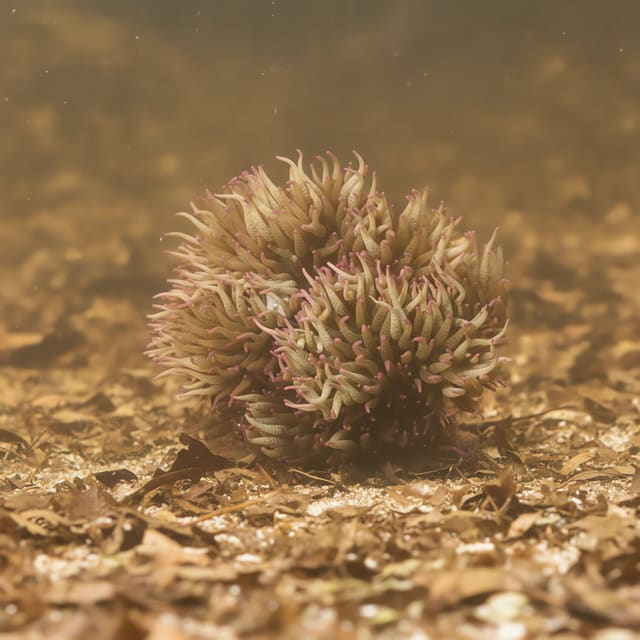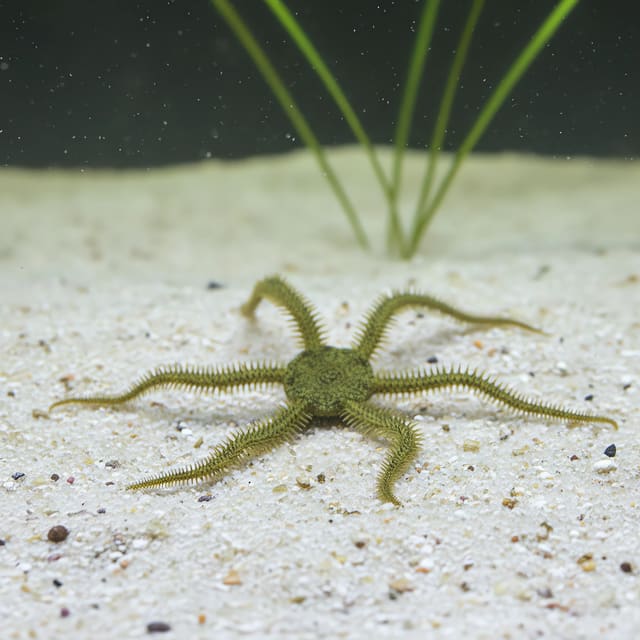
Multicolour Sea Urchin (Tripneustes gratilla)
24–26°C · pH 7.9–8.3
£45.99
Light Babylon Snail (Babylonia spirata) is a spotted marine whelk that grows to about 6 cm and spends the day buried in fine sand or silt. Supplied as one live snail per purchase, it suits a mature, warm marine aquarium, needs regular meaty food and must not share a tank with hermit crabs.
Adult size is the maximum length this species reaches at full maturity (scientific sources). The livestock you receive will be younger and smaller. Product-photo provenance and any image-specific limitations are stated on the listing.
Babylonia spirata
Light Babylon Snail (Babylonia spirata) is a spotted marine whelk that grows to about 6 cm and spends the day buried in fine sand or silt. Supplied as one live snail per purchase, it suits a mature, warm marine aquarium, needs regular meaty food and must not share a tank with hermit crabs.
Adult size is the maximum length this species reaches at full maturity (scientific sources). The livestock you receive will be younger and smaller. Product-photo provenance and any image-specific limitations are stated on the listing.
Maintain these water conditions for optimal health and vibrant colors
The Light Babylon Snail is Babylonia spirata, a marine whelk with a smooth shell, typically cream with bold orange and brown spots. One purchase supplies one live snail. It is a burrowing, nocturnal scavenger of meaty food, not an algae grazer, and it needs three things before it arrives: a mature marine aquarium kept warm at 26–30°C, a bed of fine sand or silt to bury in, and tank mates that will not harm it. Hermit crabs are the main exclusion.
In the aquarium it spends the day under the sand with only its siphon showing, then comes out to scavenge leftovers and meaty food, often surfacing quickly when food lands nearby. It brings movement and pattern to the sand bed rather than cleaning algae from the glass or rock.
The World Register of Marine Species accepts Babylonia spirata (Linnaeus, 1758) as a marine species in the family Babyloniidae, and the Wikipedia species entry gives its common name as the Spiral Babylon and describes it as the type species of the genus Babylonia. In the aquarium trade it is also sold as the Babylonian snail, leopard snail, spotted Babylon and tiger or leopard nassarius snail.
| Suits | Mature, warm marine aquariums with open fine sand or silt |
|---|---|
| Not suited to | Tanks with hermit crabs, most crabs or large aggressive fish; any freshwater tank |
| Supplied | One live snail |
| Adult shell | About 6 cm |
| Water | 26–30°C, pH 8.1–8.4, specific gravity 1.023–1.025 |
| Diet | Meaty foods and leftovers, fed once or twice a week |
| Activity | Mostly buried by day, active at night |
Run through these questions before ordering. If any answer is no, change the tank first or choose a different animal.
The shop has also labelled this snail Bybylon Shell Light, an alternative spelling of Babylon, so you may meet that name alongside Light Babylon Snail. Whatever the label, the animal is the same species throughout this page.
The size on arrival is not quoted as a measurement, so plan around the adult. SeaLifeBase records a maximum shell height of 4.9 cm, snails seen on Singapore's shores measure 4–6 cm, and the species guide gives an average adult of 4.5–5.5 cm. An adult shell of about 6 cm is a sensible planning figure: small in a marine tank, but large and strong enough to push loose rock and corals about.
Sex is guaranteed only when the selected option explicitly states male or female. This Bybylon Shell Light listing has no sex-guaranteed option. Sex makes no difference to how this snail is kept, fed or housed.
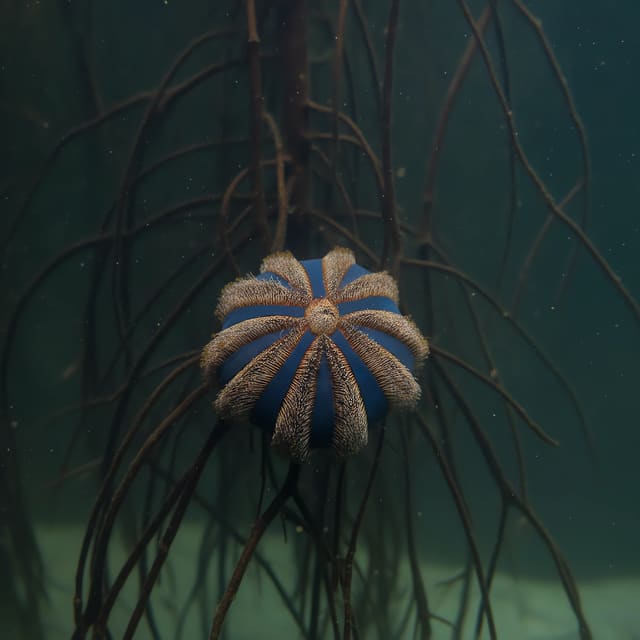
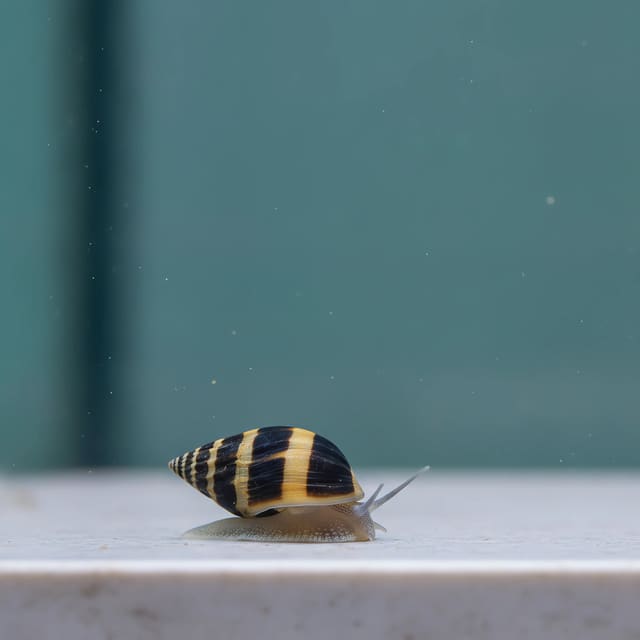
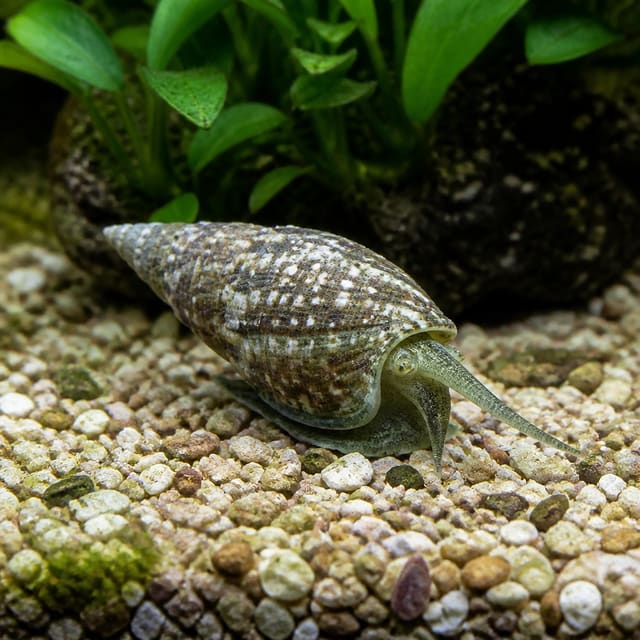
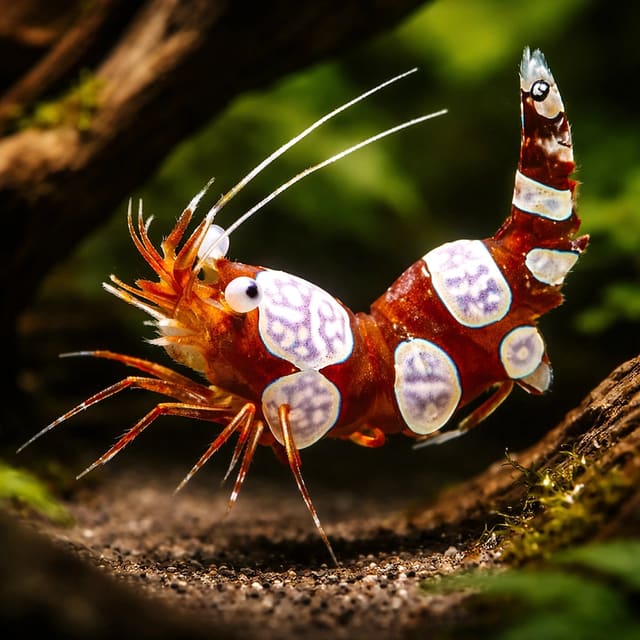
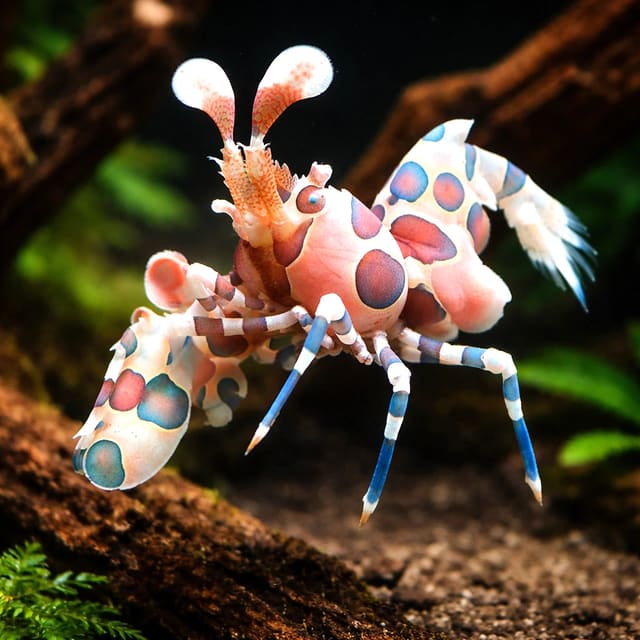
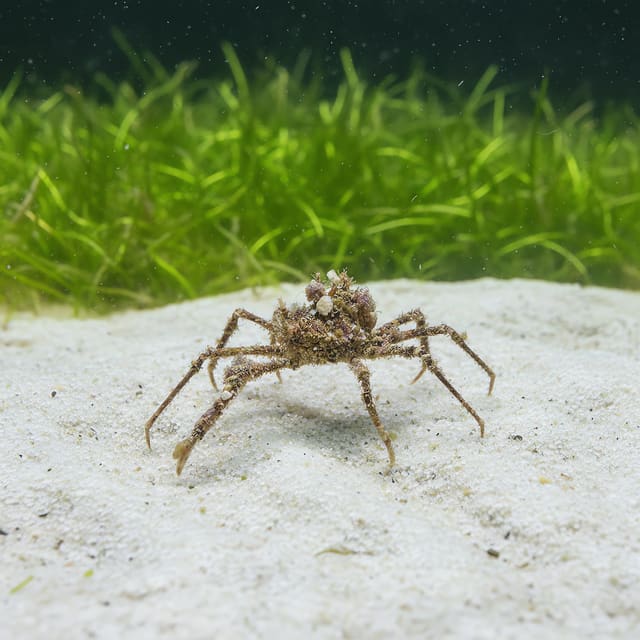
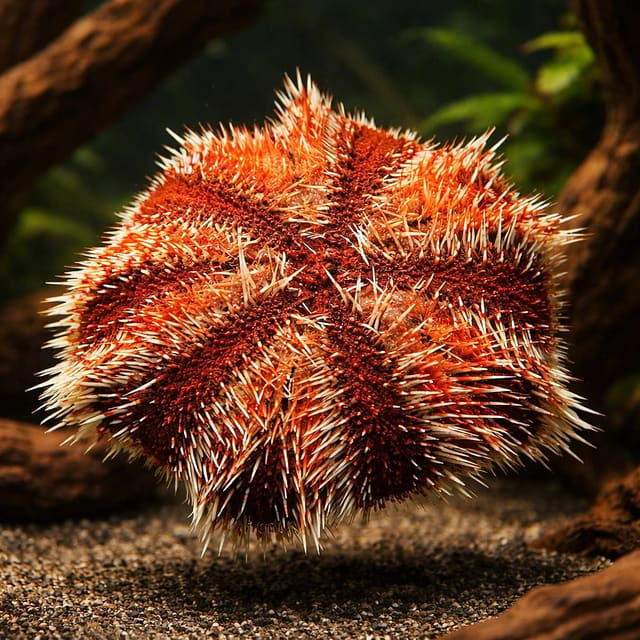
Gallery images have been digitally enhanced to improve image quality. Natural colour, pattern, size and maturity can vary between live animals. Several of the photographs show snails among green plants or beside driftwood, and two show snails lifted clear of the ground. Those settings are not a model for its home. This is a marine snail that lives on and in fine sand or silt, and it rarely climbs.
Knowing where this snail comes from explains most of its care. SeaLifeBase describes it as a benthic, tropical species of the Indo-West Pacific, from the Persian Gulf and Saudi Arabia to India and Hong Kong and south to Java and Bali, found on mud, fine sand and shell substrates and among seagrass beds. The WoRMS distribution note runs from Saudi Arabia and Oman along the coasts of India, the Maldives and Sri Lanka, and describes it as more commonly found off Bali and Java than in Thailand.
The wildsingapore factsheet describes snails on sandy areas near seagrass, often half buried and emerging as the tide comes in. The Shrimp and Snail Breeder species guide describes the same pattern in the aquarium: the snail is mainly nocturnal, buries itself by day and pushes its long siphon up to the surface like a periscope to smell for food, then emerges quickly and heads straight for it.
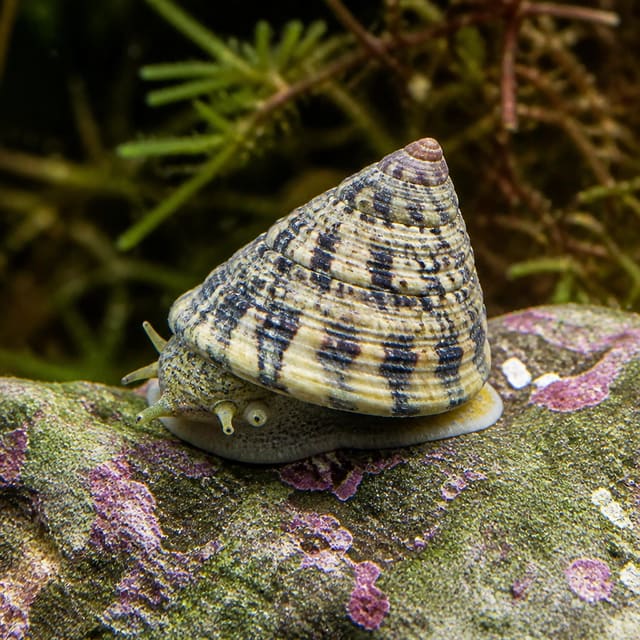
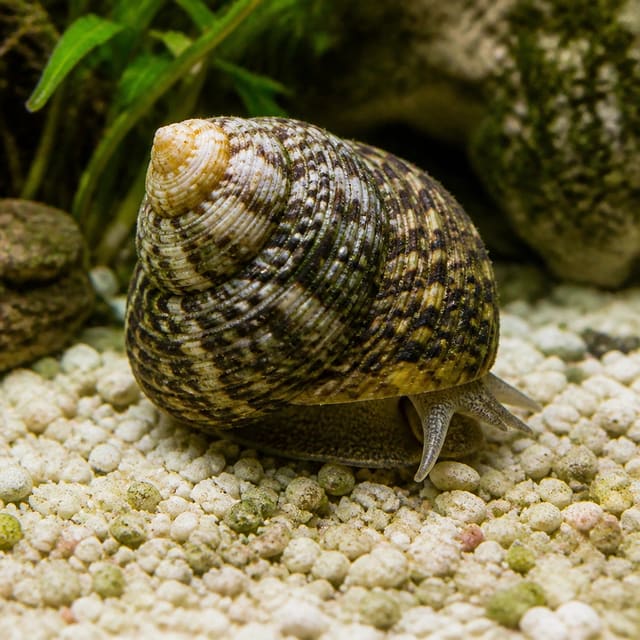
SeaLifeBase describes a broad, ovately conical, fairly short shell with a prominent pointed spire and a wide, deep channel along the sutures edged by a keel-like shoulder. The ground colour is white, with blotches in spiral bands ranging from pinkish-orange to dark brown under a thin brown outer skin. Wildsingapore adds that colour and pattern vary, from plain brown to white with orange or brown spots. Look for the notch at the tip of the shell where the siphon emerges and a thin, horn-like operculum, the trapdoor the snail closes behind it. The body is pale, with short tentacles and that long siphon.
SeaLifeBase lists the species as harmless to people. WoRMS notes that it is recorded by the FAO for fishery statistics, and the species guide draws on culture and feeding studies, which is why so much of its care can be described from measured results rather than guesswork.
The species guide gives a minimum of about 60 litres (15 US gallons) for one large snail and adds that bigger is better. Floor area matters more than height, because this snail spends its life on and under the sand: a longer, wider footprint gives it more ground to forage and more places to bury.
General marine-aquarium advice in OATA's care sheet for starfish, sea urchins and sea cucumbers applies here too, even though that sheet covers a different group of animals. A filter is essential. In a marine set-up that can be live rock with sufficient water flow, an internal or external filter, or a sump, and a protein skimmer helps to remove dissolved organic waste before it breaks down. Live or artificial rock also provides cover and structure for the rest of the aquarium.
Add this snail only to an established aquarium with ammonia and nitrite at zero. OATA explains why stocking should rise slowly: the bacteria in a maturing filter must increase every time livestock and feeding increase, and stocking too quickly can cause new tank syndrome, with ammonia and nitrite rising to levels that may make invertebrates ill or kill them. A mature tank also has the leftovers and detritus a scavenger relies on between meals.
The species guide notes that this snail will not deliberately damage or feed on corals, but its size and strength can bulldoze them. In a reef aquarium, glue corals and loose rock to the main structure and leave open sand between them so that the snail can travel without toppling anything.
The substrate is the single most important piece of equipment for this snail. Studies cited in the species guide found a preference for silt, then fine sand, with a negative correlation with gravel and coarse sand. That matches the wild record of mud, fine sand and seagrass beds.
Add the sand when you set the aquarium up and let the tank mature with it in place, then stock slowly, as OATA advises for any marine invertebrate. A settled bed also holds the leftovers and detritus that this snail scavenges between its meaty meals, which a freshly rinsed bed cannot offer.
A snail that cannot bury has nowhere to spend the day. If yours stays on the surface in daylight, check the sand first and the temperature second; the species guide links inactivity on top of the substrate to cool water, as the next section explains.
The species guide gives aquarium values for this snail specifically. They sit at the warm end of marine keeping, so check that the rest of your livestock suits them too.
| Temperature | 26–30°C (79–86°F) |
|---|---|
| pH | 8.1–8.4 |
| Carbonate hardness | 8–12 dKH |
| Specific gravity | 1.023–1.025 |
| Nitrate | Below 20 ppm |
| Ammonia and nitrite | Zero |
The guide summarises temperature studies on this species. At 20°C the operculum closed tightly. Below 24°C the snails became inactive and lay above the substrate, at 26°C they responded slowly, and at 28°C they moved, fed and burrowed normally, becoming inactive again at 34°C. Those are experimental observations rather than targets, but they explain the 26–30°C range and why a snail sitting on the sand by day is often a sign the water is too cool.
Keep specific gravity at 1.023–1.025. In the studies, adults were normally active at 31–35 ppt, while salinity below 1.015 (19 ppt) was lethal within 24 hours. That is an extreme, far outside normal keeping, but it shows how little tolerance this snail has for brackish or diluted water. Measure salinity regularly rather than relying on an old reading.
Watch the other end of the scale too. In a hot spell, check that the aquarium does not climb towards the 34°C at which the studied snails became inactive again.
Note that the hardness figure is carbonate hardness in dKH, the value marine keepers normally test, not general hardness in dGH.
The warm range is the detail most likely to clash with an existing tank. OATA's general guidance for starfish, sea urchins and sea cucumbers, for example, is 24–26°C, which meets this snail's range only at 26°C, the point where the studies saw slow responses. Check the needs of everything you keep before committing to a Babylon snail, and set the heater for the whole community rather than for one animal.
A burrowing snail is easy to overlook, so learn what normal looks like. The temperature studies in the species guide give a useful checklist.
| Buried by day, siphon showing | Normal rest; it is smelling the water for food |
|---|---|
| Out and moving after dark | Normal feeding activity |
| Lying on top of the sand by day | Check the temperature, since snails in the studies did this below 24°C, and check the sand is fine enough to bury in |
| Operculum shut tight, no movement | Seen at 20°C in the studies; check the heater |
| Slow to reach food | Responses were slow at 26°C; confirm the tank is not at the bottom of its range |
| Inactive in very warm water | The studies saw inactivity again at 34°C; check for overheating |
Whenever behaviour changes, test the water as well as the temperature. OATA warns that ammonia and nitrite in an overstocked or immature tank may make invertebrates ill or cause them to die, and a snail living in the sand is exposed to whatever collects there. Check specific gravity at the same time, since this species has so little tolerance for diluted water.
A burrowing scavenger lives in the part of the tank where waste collects, so steady maintenance protects it directly. OATA's general marine advice is a sound routine:
When siphoning, work gently over the sand and avoid digging where the snail has buried itself. Lift out any meaty food the snail has not found by the next morning; it is fed only once or twice a week, and large leftovers break down in the sand where it lives.
This snail is sometimes sold as a sand-bed tidier, but it is a carnivore. The species guide describes a scavenger that feeds mainly on dead and decaying animal matter, and WoRMS lists its feeding method as predator, a label inherited from its order, Neogastropoda, rather than one recorded for this species. In practice it behaves as a meaty-food scavenger that must be fed deliberately.
| Best foods | Oyster, clam, mussel or prawn, preferred in feeding studies |
|---|---|
| Also suitable | Frozen brine or mysis shrimp, freeze-dried larvae, small pieces of fish or seafood |
| Least preferred | Pellets |
| How often | Once or twice a week |
| Background food | Leftovers and detritus in a mature tank |
This is where its periscope siphon earns its keep. Place a piece of meaty food on open sand near where the snail was last seen; it smells the food through the siphon, surfaces and moves to it. Feeding after dark, when it is naturally active, gives it the best chance of reaching the food before fish and shrimps do.
The species guide warns that where there are many snails or too few leftovers, a Babylon snail can attack other snails. Regular meaty meals are therefore part of keeping the rest of your clean-up crew safe, not only this snail healthy. Watch how quickly food disappears and adjust portions so that nothing is left to rot.
Your snail is hand-bagged in pure oxygen by our team, packed in an insulated poly box with a heat pack when the weather calls for it, and carried by a tracked, licensed live-animal courier. We email the tracking number and your confirmed delivery date so that you can plan to be in. The species guide notes that this snail is relatively sensitive to transport stress, so a calm, prompt unpacking helps.
The Live Arrival Guarantee depends on someone being there to receive the parcel, opening and inspecting it the same day, and the continuous unboxing video. Full details are in our delivery and Live Arrival Guarantee policy.
Expect the snail to bury itself soon after release and to stay out of sight during the day. That is normal behaviour for a nocturnal burrower. Offer a small meaty feed after dark once it has had time to settle, and check that the aquarium is at 26–30°C if it stays on the surface.
Not every aquarium snail is a grazer, and this one is not. WoRMS records the feeding method of its order as predator, and the species guide, while describing it as not an active predator, is clear that an underfed snail may prey on other, smaller snails. The honest summary is a peaceful scavenger with a conditional risk to small snails that depends largely on how well it is fed.
The species guide describes it as not aggressive and compatible with most tank mates, then names specific kinds on both sides. Fish are not named individually, so choose peaceful species that are neither large nor aggressive.
| Relatively safe snails | Full-grown fighting conch, cerith, astrea, Mexican turbo and trochus snails |
|---|---|
| Named shrimps | Sexy shrimp, red fire shrimp (Lysmata debelius), peppermint shrimp (Lysmata wurdemanni) and skunk cleaner shrimp (Lysmata amboinensis) |
| Poor tank mates | Large or aggressive fish, aggressive shrimp such as coral banded shrimp, and most crab species |
| Never | Any hermit crab species |
The guide warns that all hermit crab species may kill this snail for its shell. Adding plenty of empty shells reduces that aggression but does not remove it, so a tank with hermit crabs is the wrong home for a Babylon snail.
The species guide describes this snail as not social, so a single animal lacks nothing by living alone. If you want more than one, remember that the 60-litre minimum is for one large snail, that every extra snail needs its own share of meaty food, and that with many snails or too few leftovers they can attack other snails. More snails therefore means more floor, more feeding and closer watching, not a larger shared portion.
The snails the guide names are described as relatively safe when full-grown, so add them at a good size rather than as small juveniles, and keep the Babylon snail well fed so that it has no reason to hunt. Leave hermit crabs out of the plan altogether. Among shrimps, the named Lysmata cleaner, fire and peppermint shrimps and the sexy shrimp are the choices with direct support; aggressive shrimps such as the coral banded shrimp are not.
Large or aggressive fish are poor company for this snail. Peaceful community fish that leave invertebrates alone suit it better, but judge each species on its own behaviour, and remember that fish will compete for the meaty food you put down for the snail.
When planning the rest of a clean-up crew, browse our marine invertebrates and check each species against the lists above before buying; sharing a category does not make two animals compatible.
SeaLifeBase records a maximum shell height of 4.9 cm, wildsingapore describes snails on the shore at 4–6 cm, and the species guide gives an average of 4.5–5.5 cm. Plan the aquarium, food and tank mates around an adult shell of about 6 cm.
The species guide gives a minimum of about 60 litres for one large snail and says that bigger is better. Just as important is a mature, filtered marine aquarium with a bed of silt or fine sand the snail can bury itself in. Floor area matters more than height, because it rarely climbs.
One can be kept on its own, because the species guide describes Babylonia spirata as not social. Each extra snail adds to the meaty food the tank has to provide, and with many snails or too few leftovers they can attack other snails, so plan the feeding before adding more.
The species guide rates it easy to medium. It is undemanding once settled, but it needs very warm water, a fine sand or silt bed, meaty feeding once or twice a week and careful choice of tank mates, which is why we class it as intermediate.
It is a scavenging carnivore that feeds mainly on dead and decaying animal matter. It will take leftover food and detritus, but it needs extra meaty food such as frozen brine or mysis shrimp, freeze-dried larvae and small pieces of fish or seafood. In feeding studies it preferred oyster, clam, mussel or prawn, and pellets least.
The species guide gives 26–30°C, pH 8.1–8.4, carbonate hardness of 8–12 dKH and a specific gravity of 1.023–1.025. In the studies it cites, snails became inactive and lay on top of the substrate below 24°C, so warmth matters.
The species guide describes it as not aggressive and compatible with most tank mates. It is not an active hunter and prefers dead animal matter, but an underfed snail may prey on other, smaller snails, so keep it well fed and take care with small snail species.
The species guide names full-grown fighting conch, cerith, astrea, Mexican turbo and trochus snails as relatively safe, along with sexy shrimp, red fire shrimp, peppermint shrimp and skunk cleaner shrimp. It lists large or aggressive fish, aggressive shrimp such as coral banded shrimp and most crabs as poor tank mates.
No. The species guide warns that all hermit crab species may kill it for its shell, and that plenty of empty shells only reduces that aggression rather than preventing it. Keep it in an aquarium without hermit crabs.
It does not deliberately damage or feed on corals, but it is large and strong enough to bulldoze loose pieces as it moves and burrows. In a reef aquarium, glue corals to the rock and keep open sand for it to travel through. It rarely climbs, so it spends its time on the sand rather than among the rockwork.
It is hand-bagged in pure oxygen, packed in an insulated poly box with a heat pack when the weather calls for it, and carried by a tracked, licensed live-animal courier. Be in to receive it, start a continuous unboxing video with the parcel still sealed, then float the sealed bag for 20–30 minutes before releasing the snail. Never pour the bag water into your tank. If anything has gone wrong, contact us the same day with your order number and the video.
No reviews for this item yet. Bought one? Honest reviews only, good or bad.
What customers say about ordering from us
Easy website plenty of info on fish your buying great to pick a time slot
TRACEY DURRANT · 7 Oct 2026
Got some lovely fish thank you
Kevin Mackie · 7 Oct 2026
Reviews of our shop, collected by Judge.me, an independent third-party review collector. Newest first.