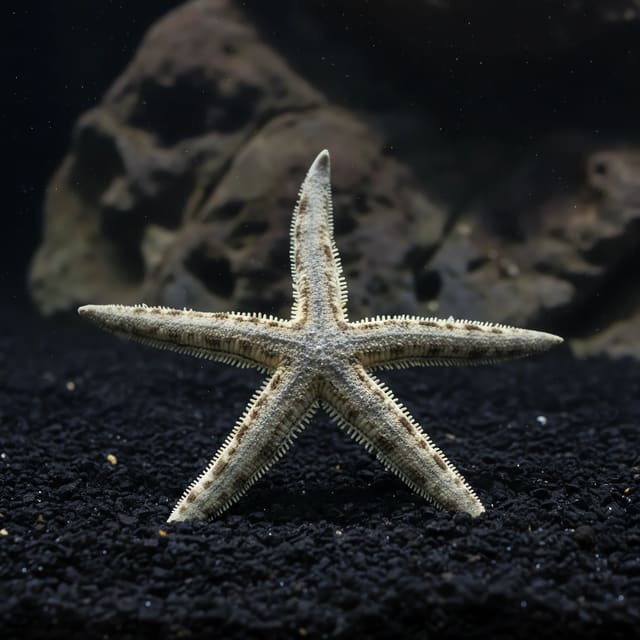
Sand Sifting Starfish (Archaster typicus)
24–26°C · pH 7.9–8.3
£48.99
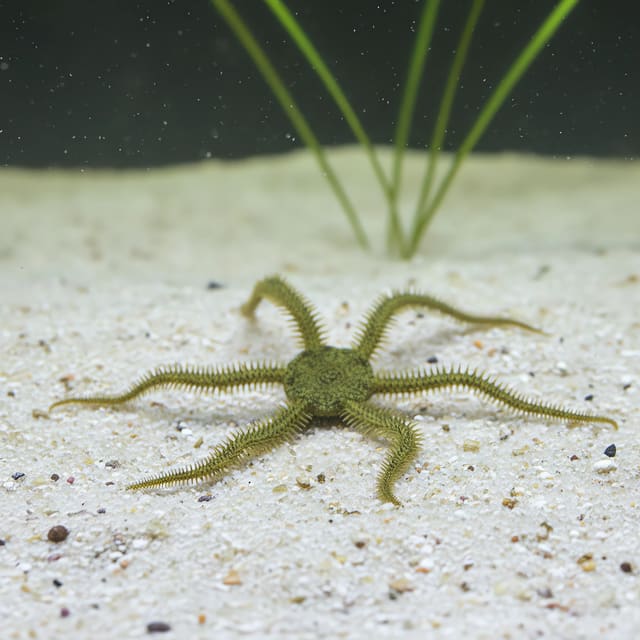
The Superba Brittle Star (Ophiolepis superba) is a marine echinoderm in the family Ophiolepididae. It suits an intermediate keeper prepared to maintain OATA’s group guidance of 24–26°C, pH 7.9–8.3 and 8–12°dKH while screening tank mates for predation. Sold individually as one live animal per purchase.
Ophiolepis superba
The Superba Brittle Star (Ophiolepis superba) is a marine echinoderm in the family Ophiolepididae. It suits an intermediate keeper prepared to maintain OATA’s group guidance of 24–26°C, pH 7.9–8.3 and 8–12°dKH while screening tank mates for predation. Sold individually as one live animal per purchase.
Maintain these water conditions for optimal health and vibrant colors
The Superba Brittle Star (Ophiolepis superba) is a marine brittle star in the family Ophiolepididae. WoRMS accepts Ophiolepis superba as a species in that family, while Wikipedia identifies it as the type species of the genus Ophiolepis. This is an intermediate choice for a keeper who can maintain marine water consistently, operate an established biological filter and screen every intended tank mate before introduction.
Keep the aquarium at 24–26°C, pH 7.9–8.3, salinity 1.023–1.026 and carbonate hardness 8–12°dKH. OATA’s marine-invertebrate guidance sets these values for the wider starfish, sea-urchin and sea-cucumber group, not as a species-specific optimum. It also places calcium at 380–450 ppm and magnesium at 1250–1350 ppm.
The decisive requirements are a working filter, zero ammonia and nitrite, controlled nitrate, essential rock cover and careful compatibility planning. Treat the animal as belonging to OATA’s larger planning category: choose an aquarium above the 60-litre threshold used for smaller echinoderms, then allow sufficient room for its full adult spread, rock structure, water movement and maintenance access.
This offer is for one live Ophiolepis superba per purchase. Plan the aquarium for the animal’s full adult dimensions rather than judging long-term space from its appearance on arrival. The aquarium should already meet the long-term space, filtration and water-quality plan before the order is placed.
Sex is guaranteed only when the selected option explicitly states male or female. This Ophiolepis superba listing has no sex-guaranteed option.
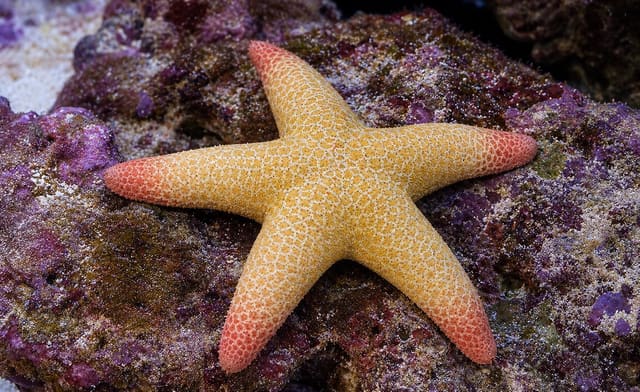
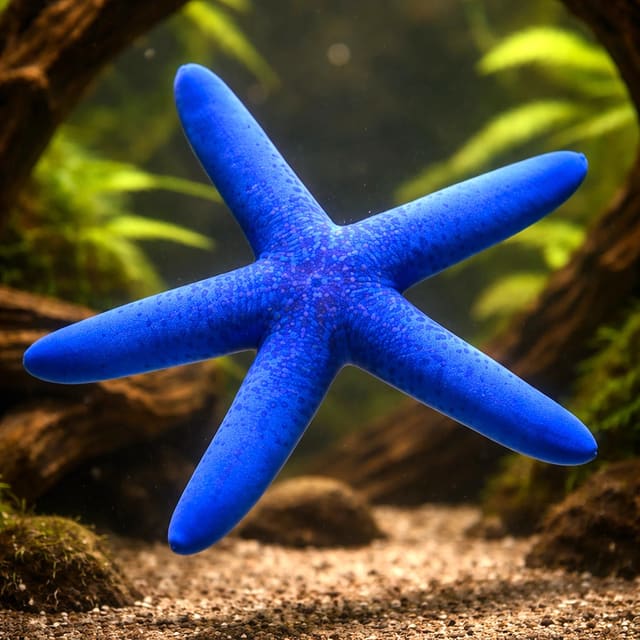
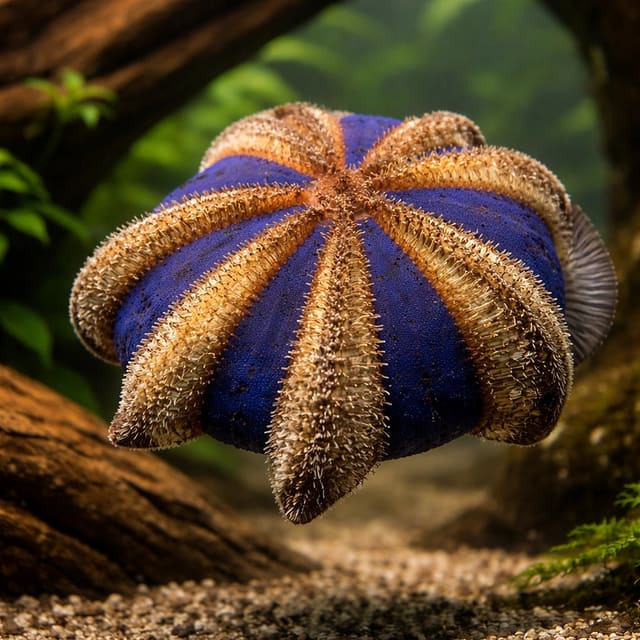
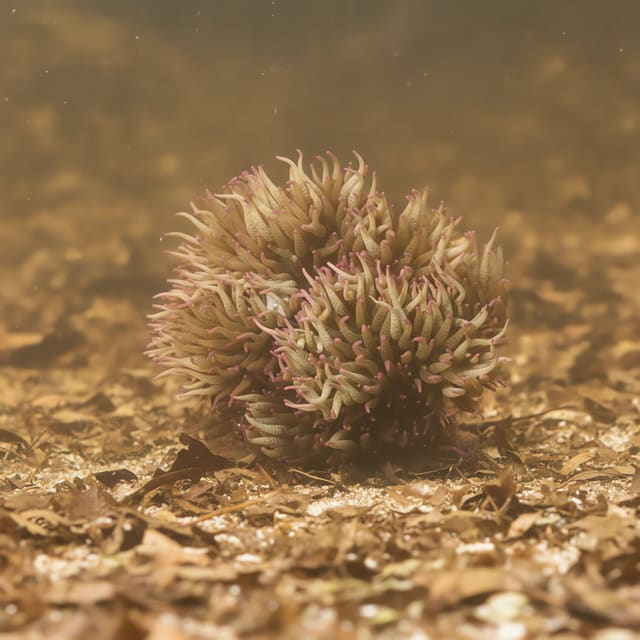
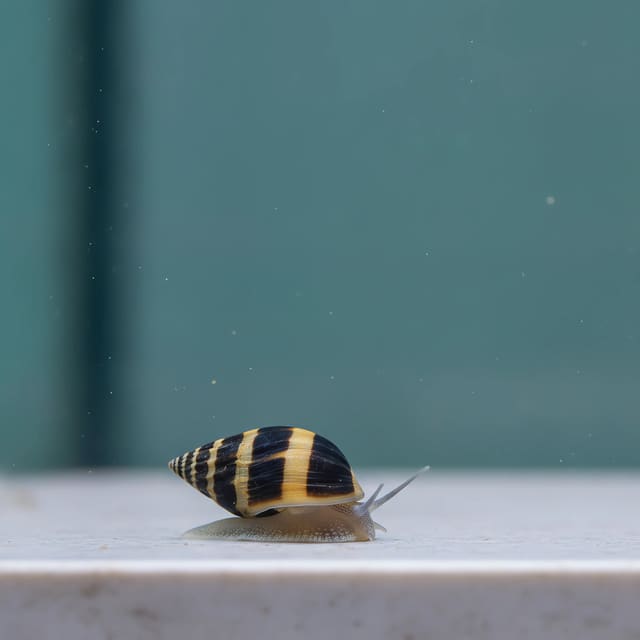
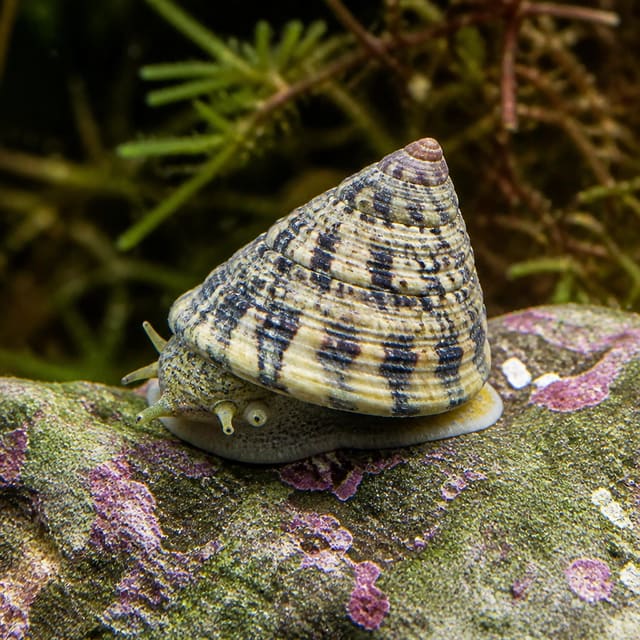
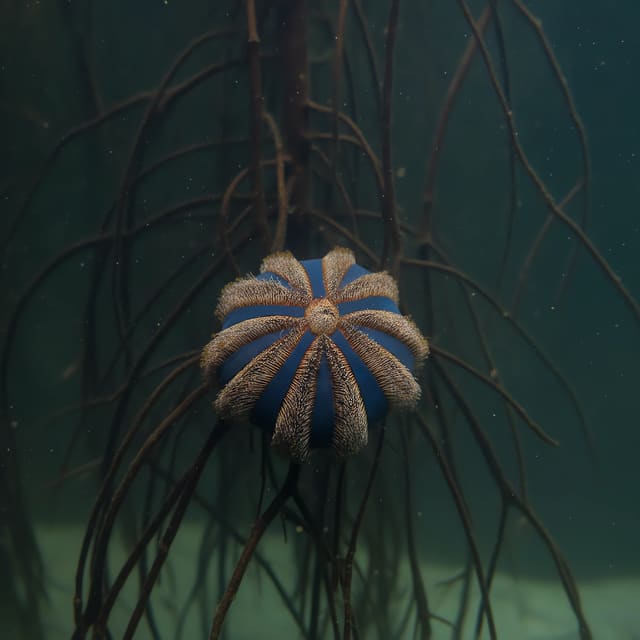
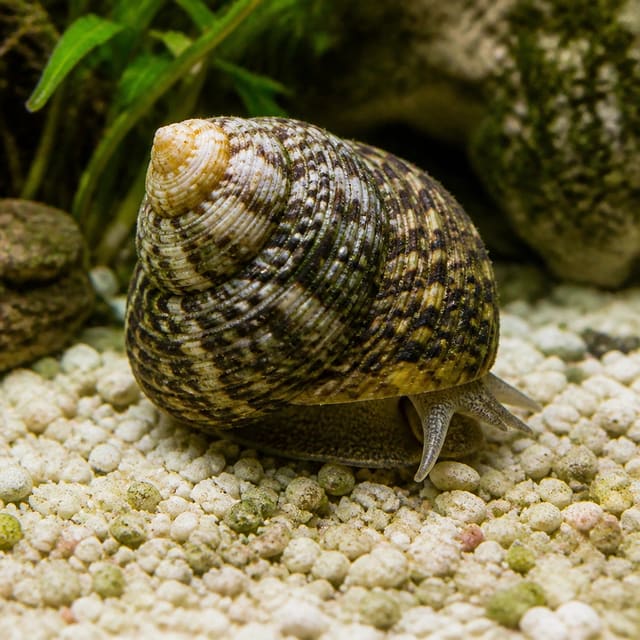
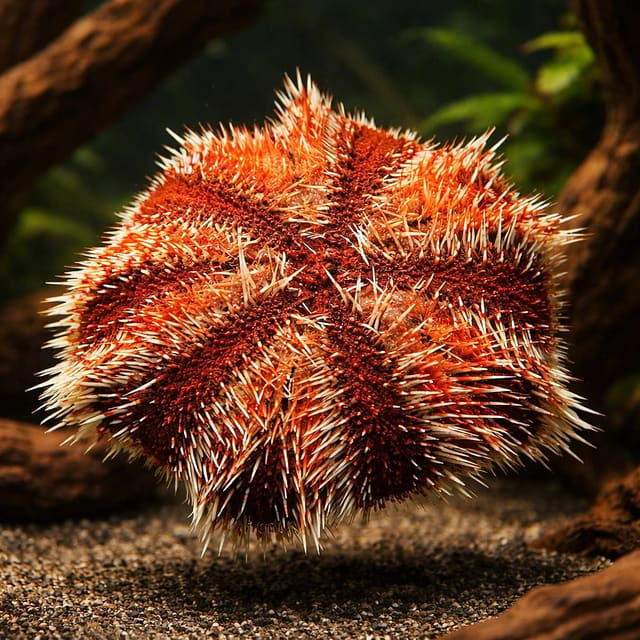
The gallery images are representative of this type of animal rather than photographs of the exact animal supplied, so colours can look slightly different from the live animal.
The photograph shows the kind of patterned brittle star represented by the listing, while the offer terms determine what is purchased. Gallery appearance must not be used to infer sex, age or an exact adult size. For comparisons between different types of marine livestock, browse our marine invertebrates collection and assess each animal against the same water, space and compatibility plan.
A suitable plan starts with the aquarium rather than the animal. Confirm that the filter has an established beneficial-bacteria population, that ammonia and nitrite both test at 0 mg/l, and that the marine water sits within the stated ranges. Essential rock cover must fit without removing the open space needed by the animal or obstructing routine maintenance.
| Suits | Not suited to |
|---|---|
| Filtered marine aquariums held at 24–26°C and pH 7.9–8.3 | Aquariums with detectable ammonia or nitrite |
| Keepers able to test salinity, carbonate hardness, calcium and magnesium | Unfiltered systems or filters that have not developed enough beneficial bacteria |
| Plans using live or artificial rock for cover | Layouts without essential rock cover |
| Carefully screened fish considered reef-safe | Triggerfish or Harlequin shrimp |
| Slow, measured additions to an established biological load | Rapid stocking that outpaces the filter’s bacterial population |
Do not use a general “clean-up crew” label as the reason to add this animal. Echinoderm diets and behaviours vary, and the keeper remains responsible for direct feeding, water testing and maintenance. A sound plan works even if the animal contributes no measurable reduction in leftover food.
Keep temperature at 24–26°C, pH at 7.9–8.3 and salinity at 1.023–1.026. Maintain carbonate hardness at 8–12°dKH, calcium at 380–450 ppm and magnesium at 1250–1350 ppm. Ammonia and nitrite must remain at 0 mg/l, while nitrate must not exceed 50 mg/l.
A temperature reading inside range does not compensate for detectable ammonia, and a suitable pH does not compensate for incorrect salinity. Check the full set of relevant values before introduction, after a livestock addition and whenever behaviour, appearance or feeding response changes. In a reef aquarium containing more sensitive animals, choose conditions that also meet those animals’ needs.
| Check | Required decision |
|---|---|
| Temperature | Hold within 24–26°C |
| pH | Hold within 7.9–8.3 |
| Salinity | Hold within 1.023–1.026 |
| Carbonate hardness | Hold within 8–12°dKH |
| Calcium | Hold within 380–450 ppm |
| Magnesium | Hold within 1250–1350 ppm |
| Ammonia and nitrite | Keep each at 0 mg/l |
| Nitrate | Do not let it exceed 50 mg/l |
If temperature, pH, salinity or mineral values sit outside their ranges, restore the planned conditions without making several unmeasured changes at the same time. If ammonia or nitrite is detectable, pause further livestock additions and inspect the biological filter, recent feeding and recent increases in aquarium load. When nitrate approaches its maximum, use the maintenance routine and review waste accumulation rather than waiting for it to pass 50 mg/l.
Compare each new reading with the previous result and with any recent change to livestock or feeding. A written sequence can distinguish a one-off test result from a continuing movement away from the target. Retest after corrective work so the decision is confirmed by a measurement rather than by appearance alone.
Record test results so that a change can be recognised rather than judged from memory. If ammonia or nitrite appears, correct the aquarium’s biological balance before adding livestock. Additions and increased feeding raise the amount of waste that the beneficial-bacteria population must process, so increase the aquarium’s load slowly.
Use a marine aquarium above 60 litres and plan it as a larger-species system. OATA reserves its at-least-60-litre recommendation for smaller echinoderms and says larger species need a larger aquarium according to the species. Choose the final volume around the animal’s full adult spread, the required rock structure, sufficient water flow and the aquarium’s total biological load.
A filter is essential. Suitable marine filtration can use live rock with sufficient water flow, an internal or external filter, or a sump-based filter. A protein skimmer can also help maintain water quality by removing dissolved organic waste before it breaks down into more harmful substances.
Look at the aquarium as a working system rather than a volume on its own. Confirm that rock creates cover without blocking the route used to siphon gravel or reach the filter. Check that water can move around the structure and that routine cleaning will not require dismantling the animal’s cover. The usable plan must include the space occupied by rock, equipment and all other livestock.
For a practical comparison, reject a layout that technically exceeds 60 litres but leaves little room after rock and equipment are fitted. Prefer the larger plan when two aquariums can both hold the water values but only one preserves cover, flow and service access. This applies OATA’s larger-species rule without treating its smaller-species threshold as a sufficient final volume.
Check the completed layout before introduction. Rock should be present for cover, water should circulate through the system, and all routine service points should remain reachable. If those needs compete for the same limited area, use a larger aquarium or simplify the structure rather than compromising filtration or maintenance.
Offer small amounts of frozen meaty food such as brine shrimp or mysis shrimp, together with suitable prepared food such as flakes. OATA describes brittle stars within its starfish guidance as omnivorous animals that will eat these foods. Use variety while keeping each portion small enough to protect water quality.
Do not rely on a general cleaner role as the complete feeding plan. Echinoderms have varied dietary requirements: some animals graze algae and biofilms, some use foods growing in a sand bed, and brittle stars will eat meaty and prepared foods. This animal should therefore receive an intentional feeding opportunity rather than being expected to live solely on material left by other livestock.
Begin with a small measured amount and note whether the brittle star responds. If food remains uneaten, remove the assumption that a larger amount will solve the problem and test the water before the next adjustment. If the animal feeds and ammonia and nitrite remain at 0 mg/l, continue using a conservative amount while rotating between the named meaty and prepared foods.
Separate two decisions that are often confused: variety concerns the types of suitable food offered, while portion control concerns the amount entering the aquarium. A varied menu can still overload the filter when portions are excessive. Equally, food disappearing quickly elsewhere in the aquarium does not show that this animal received it, so observe access as well as total food use.
Keep portions conservative. Increased feeding increases the waste that nitrifying bacteria must process, and stocking or feeding beyond the filter’s capacity can lead to unhealthy ammonia and nitrite. The useful measure is not how much food enters the aquarium, but whether the animal responds while water tests remain within the required limits.
If feeding response falls, test temperature, pH, salinity, ammonia, nitrite and nitrate and compare the result with the animal’s usual behaviour. Do not add extra food repeatedly in response to poor intake without first checking water quality, because uneaten food adds further pressure to the system.
At least once every week, carry out a partial water change of 25%. Use a siphon where practical to remove solid waste from the gravel, and match the replacement marine water to the aquarium’s required parameters before it enters the system.
Check the filter regularly and clean it as needed to prevent blockages. Do not run filter media under the tap. Instead, rinse it lightly in tank water removed during the partial water change; this reduces the number of established beneficial bacteria lost during cleaning. Clean the protein skimmer regularly so it can continue removing dissolved organic waste effectively.
The RSPCA explains the aquarium biological-filter sequence: beneficial bacteria process toxic ammonia into nitrite and then into the safer nitrate. OATA’s invertebrate guidance requires both ammonia and nitrite to remain at zero because even small amounts can stress echinoderms.
| Maintenance point | Action |
|---|---|
| Every week | Change 25% of the water |
| Solid waste | Remove it with a siphon where practical |
| Filter blockage | Check and clean the filter regularly |
| Filter media | Rinse lightly in removed tank water |
| Protein skimmer | Clean regularly to maintain performance |
| Water quality | Test ammonia, nitrite and nitrate |
After the weekly 25% change, confirm that water movement remains effective and that the filter is not restricted. Compare ammonia, nitrite and nitrate with the previous results, especially after a livestock addition or feeding increase. The aim is to remove accumulated waste while retaining enough established bacteria to process the aquarium’s continuing load.
If siphoning reveals repeated accumulations in one area, improve access to that area during the next layout review rather than leaving waste trapped behind rock. If filter flow declines again quickly, inspect for blockage and review how much solid material is reaching the filter. Keep protein-skimmer cleaning in the routine because reduced performance leaves more dissolved organic waste in the system.
Avoid cleaning every biological component aggressively at the same time. The aim is to restore water movement and remove accumulated waste while preserving the bacterial population that processes the aquarium’s ongoing load. Following a livestock or feeding increase, pay particular attention to ammonia and nitrite because the bacterial population needs time to increase.
Prepare the aquarium before the parcel arrives. Test the marine water and confirm ammonia and nitrite are both 0 mg/l, temperature is 24–26°C, pH is 7.9–8.3 and salinity is 1.023–1.026. Make sure essential rock cover, filtration and water movement are already operating.
Keep the continuous video from the sealed parcel through the view of the animal in its sealed bag. Open and inspect the parcel on the day it arrives. These steps follow the Tropical Fish Co delivery and Live Arrival Guarantee policy.
Once released, note how the animal moves, attaches and responds in the prepared aquarium. Compare later observations with that baseline rather than assuming every quiet period signals a problem. If movement, attachment, colour, appearance or feeding response changes, test the water values before making several adjustments.
Keep the stocking load unchanged while checking that ammonia and nitrite remain at 0 mg/l after introduction. The filter’s beneficial-bacteria population must process the additional waste, so a second livestock addition should not be used as a response to the animal hiding or moving less than expected.
After introduction, increase the aquarium’s livestock load slowly. Every addition and feeding increase creates more waste for the established beneficial bacteria to process. Slow additions reduce the risk of ammonia and nitrite rising because the bacterial population has not yet caught up with the new load.
Use observation and testing together during the settling period. Reduced activity, difficulty moving, loss of attachment, unusual movement, a change in colour, tissue damage or reduced feeding response are reasons to test the complete water set rather than altering several conditions without measurements.
Learn the animal’s usual activity, attachment, movement, colour and feeding response so that a change is recognisable. Individual echinoderms can vary, making a departure from the animal’s normal pattern more useful than a single isolated observation.
If any of these changes appears, test temperature, pH, salinity, ammonia, nitrite and nitrate. Also check carbonate hardness, calcium and magnesium against the planned marine values. Inspect the filter for restricted flow and the protein skimmer for loss of performance.
Detectable ammonia or nitrite requires immediate attention to water quality and biological filtration because both should be 0 mg/l. A nitrate result above 50 mg/l requires maintenance to bring it back within the stated limit. When those waste readings are correct, compare temperature, pH, salinity, carbonate hardness, calcium and magnesium with their ranges and correct the measured departure without guessing from one symptom.
Write down what changed, when it was first seen and which water results accompanied it. Review recent feeding, livestock additions, filter cleaning and loss of water movement. This short sequence helps distinguish a husbandry change from the animal’s usual variation and gives a clear basis for deciding whether the corrective action worked.
Use the results to correct husbandry rather than guessing from appearance alone. Ammonia and nitrite must return to 0 mg/l, nitrate must remain no higher than 50 mg/l, and the physical marine parameters should be brought back within range without abrupt swings. Review recent livestock additions and feeding increases because both raise the work required of the biological filter.
Contact us if the change persists or tissue damage, arm loss, lesions or fluffy growths are present. Share the observed change and recent water-test results so that the next decision is based on the animal’s condition and the aquarium environment. Do not apply an unlisted treatment simply because a symptom resembles one seen in another kind of marine animal.
Consider fish described as reef-safe only after checking the complete aquarium plan. OATA says these fish can mix with starfish, sea urchins and sea cucumbers, but the invertebrate group is diverse and every intended combination still needs screening.
Treat reef placement as a separate decision from fish compatibility. Check that every animal in the aquarium can share the same salinity, temperature, pH, carbonate hardness, calcium and magnesium plan. More sensitive reef inhabitants may require adjustments to the wider echinoderm ranges, and the final conditions must meet those inhabitants’ needs as well.
A proposed companion must pass all three questions. Passing the water check does not make a predator acceptable, and being considered reef-safe does not resolve insufficient filtration or space. When more sensitive reef animals require narrower conditions, use the shared settings that meet those animals’ needs while remaining inside the ranges used for this brittle star.
Do not turn a general reef-safe label into a universal companion list. The supported companion category is fish considered reef-safe, subject to whole-tank screening. Other fish and invertebrates require an assessment of predation risk, water requirements and the suitability of the aquarium before introduction.
Contact us with the names of all intended livestock, the aquarium volume and current water results for a stocking and compatibility assessment. Keep triggerfish and Harlequin shrimp out of the plan regardless of the other livestock present. Add approved livestock slowly so the biological filter can respond to the increased waste and feeding load.
Use the most restrictive requirement in the proposed community. A suitable water range alone does not remove predation risk, while the absence of an obvious predator does not compensate for detectable ammonia, inadequate filtration or unsuitable marine chemistry.
| Proposed situation | Decision |
|---|---|
| Fish classed as reef-safe | Consider them after screening the complete aquarium and its water requirements |
| Triggerfish present | Avoid this combination |
| Harlequin shrimp present | Avoid this combination |
| More sensitive reef animals present | Set parameters that meet their needs and reassess the whole plan |
| Filter recently received more livestock | Add further livestock slowly and confirm ammonia and nitrite remain at zero |
| Another echinoderm is proposed | Assess the aquarium and the particular animals carefully before mixing them |
If a proposed aquarium contains fish considered reef-safe, has zero ammonia and nitrite and can hold the shared water settings, continue to the checks for rock cover, flow and biological load. That plan remains conditional until every check passes. If the same aquarium contains a triggerfish, stop the assessment and avoid the combination because the predation warning decides the outcome.
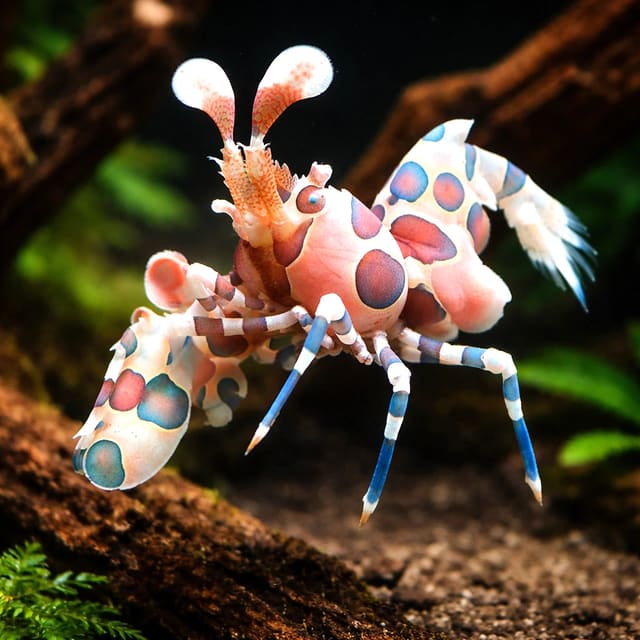
If Harlequin shrimp are present, correct water chemistry and extra filtration do not alter the decision: avoid the combination because these shrimp prey exclusively on starfish. If neither named predator is present but another invertebrate is proposed, screen that particular animal rather than treating the absence of triggerfish and Harlequin shrimp as universal approval.
This sequence prevents one positive label from overruling a decisive conflict. A fish being considered reef-safe cannot make it suitable if the shared water plan fails, and correct water chemistry cannot make a known predator acceptable.
Plan for its full adult spread and use the larger-species space rule rather than the 60-litre threshold OATA reserves for smaller echinoderms. Judge long-term space from the adult plan, not the animal’s appearance on arrival.
Use an aquarium above 60 litres; OATA’s 60-litre minimum applies to smaller species, while larger species need more space. The final volume must accommodate adult spread, essential rock cover, water movement and a maintained filter.
One purchase supplies one animal. Before combining brittle stars, assess adult space, filtration load and all livestock together, then add animals slowly so the beneficial-bacteria population can adjust.
We rate it intermediate because its keeper must maintain salinity at 1.023–1.026, ammonia and nitrite at 0 mg/l and carefully screen tank mates for predation.
OATA’s group guidance says brittle stars will eat small amounts of frozen meaty foods such as brine or mysis shrimp and prepared foods such as flakes. Offer small amounts and track feeding response alongside water tests.
Keep it at 24–26°C and pH 7.9–8.3. OATA gives these as group guidance, along with salinity of 1.023–1.026 and carbonate hardness of 8–12°dKH.
Use a screened compatibility plan rather than a general aggression label. OATA says fish considered reef-safe can mix with these invertebrates, while triggerfish may prey on them and must be avoided.
It can be considered with fish classed as reef-safe after whole-tank screening. Avoid triggerfish and Harlequin shrimp (Hymenocera picta); OATA says the shrimp prey exclusively on starfish.
Start filming the sealed parcel before opening it, keep one continuous take through opening and showing the animal inside the sealed bag, then float the bag for 20–30 minutes before releasing. Tropical Fish Co’s delivery policy also requires someone to receive the parcel and for it to be opened and inspected that day.
No reviews for this item yet. Bought one? Honest reviews only, good or bad.
What customers say about ordering from us
Easy website plenty of info on fish your buying great to pick a time slot
TRACEY DURRANT · 7 Oct 2026
Got some lovely fish thank you
Kevin Mackie · 7 Oct 2026
Reviews of our shop, collected by Judge.me, an independent third-party review collector. Newest first.