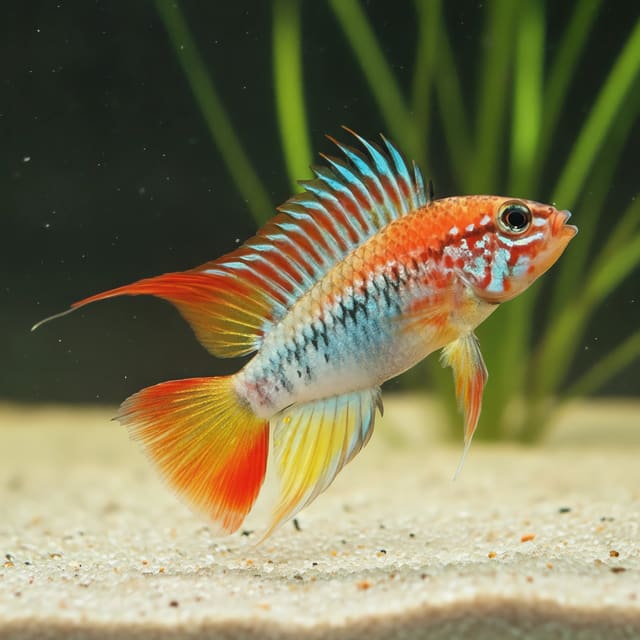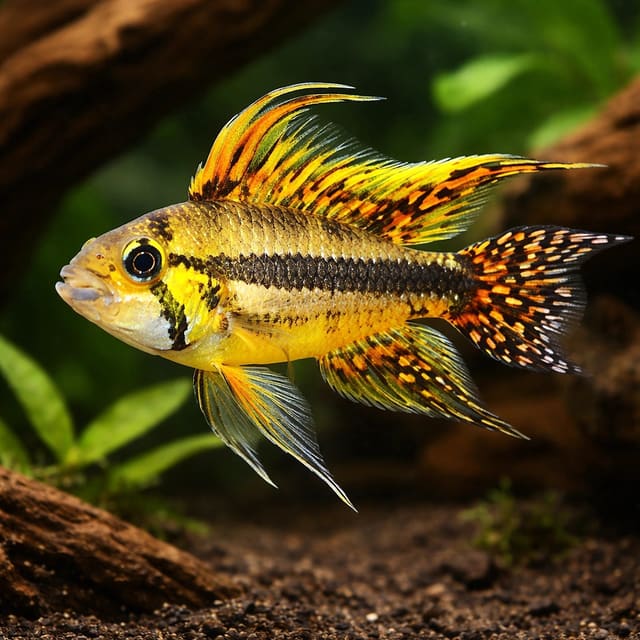
Moderate
Cockatoo Dwarf Cichlid (Apistogramma cacatuoides)
22–29°C · pH 5–6 · 54L
£10.99

Buy Apistogramma Trifasciata, a striking South American dwarf cichlid for planted aquariums. Moderate care, great colour and UK delivery.
Adult size is the maximum length this species reaches at full maturity (scientific sources). The livestock you receive will be younger and smaller. Product-photo provenance and any image-specific limitations are stated on the listing.
Apistogramma trifasciata
Save when buying multiple fish. Each quantity is one fish; sex and pair formation are not guaranteed unless the selected variant explicitly states them.
Confirm your email, then we’ll send an availability message for this exact item if it returns within 180 days.
This request is only for this product—no newsletter or other promotions. A mail-provider retry may very rarely duplicate the same availability message. Unconfirmed addresses are removed after 48 hours. See our privacy policy.
Buy Apistogramma Trifasciata, a striking South American dwarf cichlid for planted aquariums. Moderate care, great colour and UK delivery.
Adult size is the maximum length this species reaches at full maturity (scientific sources). The livestock you receive will be younger and smaller. Product-photo provenance and any image-specific limitations are stated on the listing.
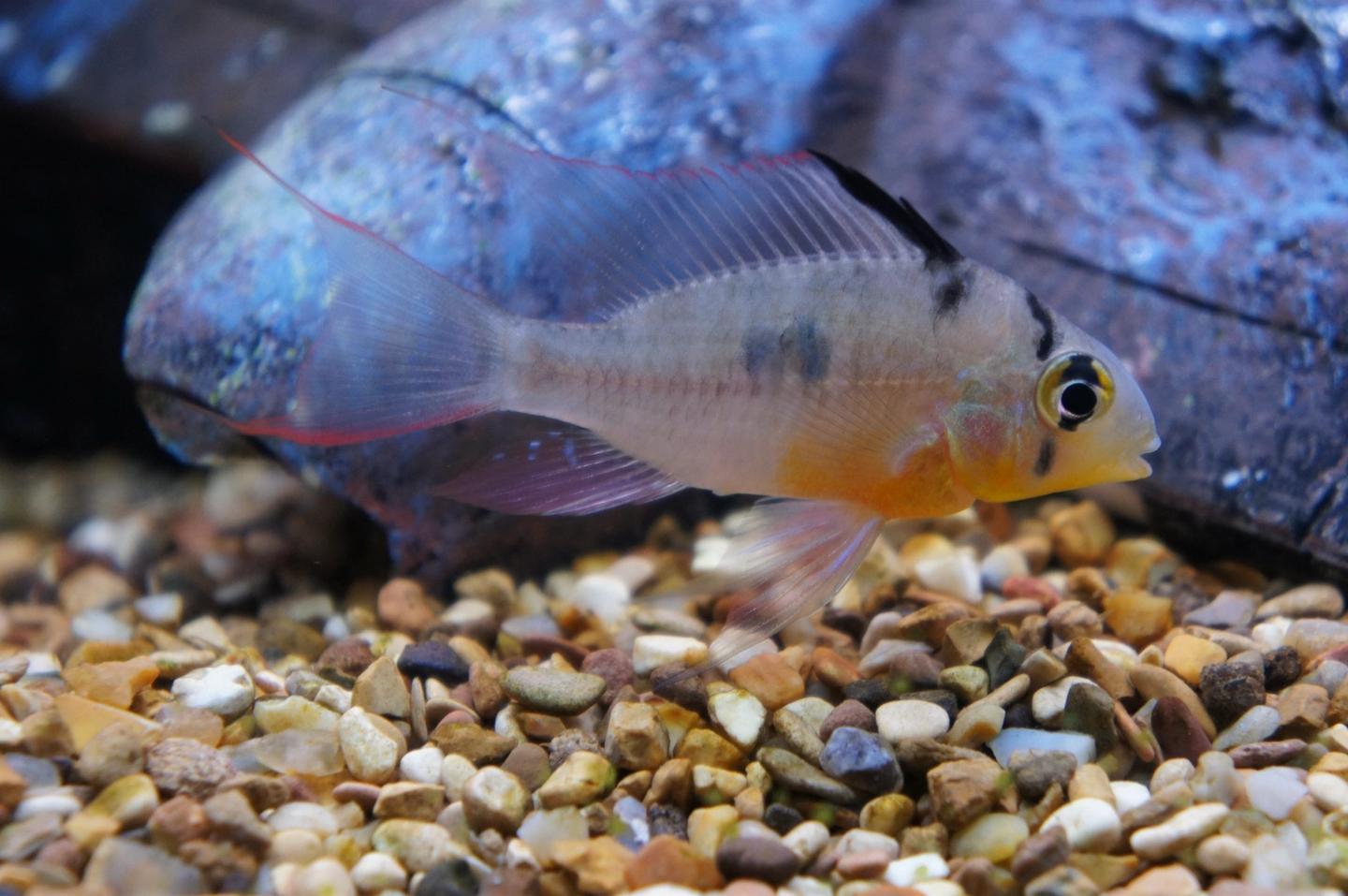
Cichlids are a family of roughly 1,800 accepted species, not one care type. Before buying, identify the exact species and source, then compare adult measurement, usable tank dimensions, social system, territory, tested water, diet and an exit plan. No family-wide minimum tank, water range or tank-mate list is safe.
Maintain these water conditions for optimal health and vibrant colors
If you are looking for dwarf cichlids for sale UK hobbyists can keep in a thoughtful community aquarium, Apistogramma trifasciata deserves a very close look. Often called the Three-Striped Apisto, this elegant South American species combines the charm of classic Apistogramma for sale UK fish with a calmer, more manageable temperament than many larger cichlids. It comes from slow-moving waters in Paraguay, Brazil, and parts of the southern Amazon system, where leaf litter, roots, and soft sand shape its daily life. Adults stay compact at around 6 cm, making this one of the most attractive tropical dwarf fish UK aquarists can choose for a carefully planned display. With a lifespan of around 5 years, peaceful but territorial breeding behaviour, and a moderate care level, it is a rewarding option for aquarists ready to move beyond basic community fish.
One reason this species remains popular in the South American cichlids UK scene is its balance of beauty and practicality. The male’s elongated finnage, metallic blue highlights, and dark horizontal striping give it the look of far rarer fish, yet its Apistogramma Trifasciata water parameters are more forgiving than some delicate Apisto species. It suits a dwarf cichlid planted tank setup, works well in a dwarf cichlid nano tank setup if space is used wisely, and is often recommended among the best dwarf cichlids for beginners who want true cichlid behaviour without the size or aggression of larger species. See our detailed photos showing body shape, fin extension, and colour contrast in this standout among freshwater cichlids UK keepers love. For aquarists who want natural beauty, engaging behaviour, and a fish that rewards good husbandry, this is an excellent species to buy.
Apistogramma trifasciata is one of the classic South American dwarf cichlids in the aquarium hobby. It belongs to a large genus known for small size, cave spawning, strong parental care, and striking sexual dimorphism. Within the hobby, it sits between the easiest Apisto species and the more demanding blackwater specialists, which is why many aquarists see it as a sensible next step after community fish or rams.
The natural Apistogramma Trifasciata habitat stretches across parts of Paraguay, Brazil, and Argentina, with records linked to the Paraguay watershed and southern Amazon-connected drainages. In the wild, these fish are typically found in shallow margins, quieter side channels, flooded grass edges, and slow creeks where submerged roots and leaf litter create a maze of cover. Water movement is usually gentle rather than forceful, and the bottom is often made up of fine sand, decomposing plant matter, and pockets of detritus rich in tiny invertebrates.
This background tells you a lot about proper care. In nature, the fish spends much of its time near the lower levels of the water column, weaving through cover, inspecting the substrate, and picking at microfauna. That is why a good Apistogramma Trifasciata care guide always emphasises shelter, broken sight lines, and a soft, natural-looking base. Their wild environment also explains their preference for lower to moderate mineral content, so dwarf cichlid water hardness matters more than many beginners expect. Although this species is more adaptable than some Apistos, the best colour and behaviour still appear when you respect its origins.
Seasonal rainfall likely influences feeding and breeding in the wild. During richer periods, tiny crustaceans, insect larvae, and biofilm-associated foods become more available, helping condition adults for spawning. This is useful when planning Apistogramma Trifasciata breeding in the aquarium, because live or frozen foods often trigger stronger courtship and better egg production. In terms of conservation, the species is established in the hobby and not generally treated as a rare emergency case, but careful captive care remains important to reduce stress and losses.
Mimicking the natural habitat with leaf litter, fine sand, driftwood arches, and shaded corners improves confidence, feeding response, and colour. In our experience, shy new specimens settle much faster when they can disappear under wood or into small caves within minutes of release.
A successful setup starts with understanding the real Apistogramma Trifasciata aquarium requirements. While this species is small, it is still a territorial dwarf cichlid, so floor space matters more than sheer water volume. The practical Apistogramma Trifasciata minimum tank size is 60 litres for a pair or a carefully managed trio, but a larger footprint is better if you want more stable water quality or mixed stocking. When customers ask about Apistogramma Trifasciata tank size, the answer is simple: bigger is easier, especially if keeping one male with 2-3 females as recommended.
For a species-only breeding group, 60 litres can work if the layout is dense and territories are clearly separated. For a community aquarium, 75-90 litres is much more forgiving. This is especially true if you want Apistogramma Trifasciata with tetras or bottom-dwelling companions. The species is often marketed as Apistogramma Trifasciata for small aquarium setups, but small should never mean bare. A compact tank must be rich in structure, caves, and visual barriers.
The recommended Apistogramma Trifasciata water temperature is 22-28°C, with 24-26°C being a very comfortable everyday range for long-term care. General dwarf cichlid temperature requirements vary by species, but this fish is pleasantly flexible. The ideal Apistogramma Trifasciata pH level sits between 5.5 and 7.5, though breeding results are usually best toward the softer, slightly acidic end. Suitable Apistogramma Trifasciata water parameters also include hardness of roughly 2-15 dGH. If you want the very best Apistogramma Trifasciata ideal water conditions, aim for pH 6.0-7.0, low nitrate, and stable temperature with no sudden swings.
Use gentle, efficient filtration rather than high flow. Sponge filters, small external canisters with spray bars, or well-baffled internal filters all work. The goal is clean water without blasting the fish around the tank. If you are building a dwarf cichlid nano tank setup, avoid oversized filters that create too much turbulence at substrate level. Stable biological filtration is more important than raw turnover.
The best dwarf cichlid substrate preference for this species is fine sand. Sand allows natural foraging, protects delicate mouthparts, and gives the tank a more authentic South American look. A pale to mid-tone natural sand also helps fish display stronger contrast. Coarse gravel is less suitable because it traps waste and limits natural sifting behaviour.
Apistogramma Trifasciata for planted tank displays can look exceptional. Add driftwood, seed pods, leaf litter, and caves made from coconut shells or rock piles. Use hardy plants around the edges and background so the centre remains open for movement. If you enjoy browsing other dwarf cichlid options for a blackwater-inspired layout, compare this species with Apistogramma Agassizii, Apistogramma Hongsloi ‘Red Stroke’, or Apistogramma Cf. Viejita Gold. For aquarists planning broader Apistogramma Trifasciata aquarium ideas, these related fish can help you decide on colour theme and stocking style.
A true dwarf cichlid planted tank setup should include dense margins, floating shade, and at least two to three cave options per female. This reduces conflict and supports natural spawning. Many keepers searching buy dwarf cichlid UK listings underestimate how important line-of-sight breaks are for female safety.
Moderate lighting works well. Very bright light can make new fish nervous unless floating plants or tannin-stained water soften the effect. Aim for 6-8 hours daily in a newer setup, extending to 8-10 hours if the tank is mature and planted. In our experience, males often show stronger blue edging and cleaner striping under gentle, warm-spectrum lighting against dark wood.
Always cycle the tank for 4-6 weeks before adding dwarf cichlids. Apistos are far more tolerant of slightly soft or neutral water than they are of ammonia, nitrite, or unstable conditions.
The correct Apistogramma Trifasciata diet is varied, protein-rich, and offered in small portions. In the wild, these fish pick through debris and substrate for tiny crustaceans, insect larvae, worms, and edible organic matter. In the aquarium, they do best on a mix of quality micro pellets, frozen foods, and occasional live foods. A proper Apistogramma Trifasciata feeding guide should focus on variety rather than one staple alone.
Use a high-quality sinking or slow-sinking micro pellet as the daily base. Choose foods sized for small cichlids rather than large pellets they must spit out repeatedly. This supports steady growth, body condition, and consistent energy. For many keepers looking at live Apistogramma Trifasciata for sale UK listings, feeding is one of the biggest success factors after water quality.
Frozen brine shrimp, cyclops, daphnia, and bloodworm can all be used in rotation. These foods help maintain condition and encourage more natural hunting behaviour. If you are conditioning fish for Apistogramma Trifasciata breeding, increase frozen and live foods gradually over 1-2 weeks while keeping water changes regular.
Live baby brine shrimp, grindal worms, and mosquito larvae are excellent occasional treats. They are especially useful when fish are newly imported, shy, or preparing to spawn. This species is one reason many aquarists searching South American cichlids for sale UK move toward frozen food routines instead of flake-only feeding.
Feed adults once or twice daily in portions they can finish within 1-2 minutes. Juveniles can be fed smaller amounts more often. Avoid dumping food into caves where it rots unseen. Good portion control is essential for Apistogramma Trifasciata health, because uneaten protein foods quickly damage water quality in warm tanks.
| Time | Food | Amount |
|---|---|---|
| Morning | Micro pellet or fine granule | Small pinch, fully eaten in 1 minute |
| Evening | Frozen brine shrimp or daphnia | Very small portion, no leftovers |
When comparing Apistogramma for sale UK species, one advantage here is that A. trifasciata usually adapts well to prepared foods once settled. That makes it easier than some wild-leaning Apistos. If you are also exploring other dwarf cichlids UK options, compare feeding style with Mikrogeophagus Ramirezi ‘Blue Brilliant’ or Ramirez Dwarf Cichlid Papiliochromis ramirezi, both of which often need warmer water and equally careful feeding.
Overfeeding causes ammonia spikes, bacterial blooms, and poor oxygen levels near the substrate. With dwarf cichlids, a slightly hungry fish is safer than a tank with hidden leftovers under wood and caves.
This is one of the more elegant colourful dwarf cichlids available to UK keepers. The body is slender rather than chunky, with a pointed head profile and a long dorsal fin that gives mature males a refined, almost flowing outline. The common name comes from the dark horizontal striping, though in well-settled specimens the pattern can shift in intensity with mood, hierarchy, and breeding condition.
Males are the show fish. They usually display elongated dorsal rays, extended caudal fin filaments, and stronger blue-green iridescence around the face and flanks. Females are smaller, rounder, and less dramatic in normal colour, but during spawning they become vivid yellow with bold black markings. This contrast makes Apistogramma Trifasciata spawning behaviour especially interesting to watch.
When people ask about Apistogramma Trifasciata colour variants, most hobby references focus on locality differences and intensity rather than true domestic morphs. Good care, dark décor, and a strong feeding routine often matter more than chasing a named variant. Our photos show the crisp lateral striping, blue highlights, and fin extension that develop under stable Apistogramma Trifasciata ideal water conditions. A dark background, leaf litter, and warm-spectrum lighting usually make this one of the most colourful dwarf cichlids in a natural-style aquarium.
The overall Apistogramma Trifasciata behaviour is peaceful by cichlid standards, but that does not mean passive. This species is territorial around caves and breeding sites, especially females guarding eggs or fry. In a calm, structured tank, it can be one of the better peaceful dwarf cichlids for community tank setups, but compatibility depends on space, layout, and the personality of each fish.
Small tetras are among the best choices, which is why searches for Apistogramma Trifasciata with tetras are so common. Midwater dithers help shy Apistos feel secure and draw them into the open. Corydoras can also work if the tank is large enough and there are enough hiding spots, though breeding females may chase them away from caves. If you are browsing south american dwarf cichlids for sale uk pages and want a themed aquarium, this species fits naturally with other gentle South American fish.
For aquarists interested in related species, you can compare community suitability with Apistogramma Elizabethae, Apistogramma Hongsloi ‘Red Stroke’, Apistogramma Cf. Viejita Gold, and Apistogramma Agassizii. Those links are also helpful if you are building a mental list of dwarf cichlids before choosing a final species.
Avoid large cichlids, boisterous barbs, fin nippers, and aggressive bottom dwellers. These fish either stress the Apistos or outcompete them for territory and food. This is one reason african dwarf cichlids and South American Apistos are not usually mixed casually: they often prefer different décor, social dynamics, and water chemistry. Likewise, fish sold under searches like starry night cichlid for sale uk are entirely different in adult size and temperament.
In a 60-litre setup, keep a single pair or one male with one female and skip extra bottom fish. In a 90-litre aquarium, one male with 2 females plus a small group of peaceful tetras can work well. In a 120-litre planted display, a trio with a shoal of small characins and a modest Corydoras group is realistic if the floor plan is broken up properly. These examples matter when people search buy dwarf cichlids online UK and assume all small cichlids behave the same.
Snails are usually fine. Shrimp are less predictable. Adult Amano shrimp may coexist, but small ornamental shrimp and shrimplets can be hunted. If your goal is a shrimp colony, choose fish more carefully. If your goal is a display of freshwater cichlids UK enthusiasts will recognise as natural and active, then occasional shrimp predation is simply part of cichlid behaviour.
| Species | Compatible? | Notes |
|---|---|---|
| Apistogramma Agassizii | ⚠️ Caution | Possible only in larger, carefully structured tanks; same niche and territorial overlap. |
| Small tetras | ✅ Yes | Excellent midwater companions and useful dithers. |
| Large cichlids | ❌ Avoid | Too aggressive and stressful for a small bottom-oriented Apisto. |
People often ask, “Are these the best dwarf cichlids comparison choice for a peaceful community?” The honest answer is that they are among the better options if you want true cichlid behaviour without the intensity of larger species. They are not completely community-proof, but they are far more practical than many fish sold simply as a generic dwarf cichlid for sale.
Always quarantine new arrivals for 2-4 weeks before adding them to an Apisto tank. Dwarf cichlids are tough enough to recover from minor stress, but they dislike sudden disease introductions and social disruption.
Apistogramma Trifasciata breeding is usually rated as moderate. That means it is very achievable, but best results come from attention to water quality, cave placement, and conditioning foods. A mature pair or a male with multiple females often works best, provided each female has her own territory. If you are interested in cave-spawning cichlids, this species offers a very satisfying window into parental care.
Use a species-focused tank of 60 litres or more with fine sand, leaf litter, wood, and several small caves. Keep the Apistogramma Trifasciata water temperature toward the warmer side of the normal range, around 25-27°C, and maintain soft to moderately soft water if possible. Frequent small water changes and rich conditioning foods are usually the best triggers. This is where a proper Apistogramma Trifasciata aquarium requirements plan pays off.
The female typically intensifies to bright yellow and begins defending a cave. The male displays around her territory and may patrol a wider area. During Apistogramma Trifasciata spawning behaviour, the female becomes much more assertive and may drive away fish several times her size if they approach the eggs. This shift surprises keepers who only know the species from its peaceful day-to-day behaviour.
Eggs are usually laid on the roof or wall of a cave. The female fans and guards them closely while the male remains more peripheral. Hatching time depends on temperature but often falls within a few days, followed by a wriggler stage before free swimming. Disturbance, poor water quality, or inexperienced parents can lead to egg loss, so keep the tank quiet and maintenance gentle.
Once free swimming, fry can be fed infusoria, vinegar eels, or freshly hatched baby brine shrimp. The female often leads the brood around the tank and gathers stragglers. Growth is steady if food is frequent and water changes are small but regular. A sponge filter is ideal here because it protects fry and keeps flow gentle.
The most common problems are infertile spawns, egg predation, and territorial stress between females. If a female keeps losing eggs, reduce disturbance, improve cover, and check hardness and pH. If the male harasses females too much, the tank is either too small or too open. This is why many experienced keepers still rank it below the absolute easiest Apistogramma species, even though it is beginner-friendly by Apisto standards.
For stronger brood survival, place caves so each entrance faces a different direction and use wood or plants to block direct lines of sight. This simple layout trick reduces female-to-female tension and allows the guarding female to feel secure enough to keep fry in the open.
Comparison matters because many shoppers looking for dwarf cichlids for sale in uk listings are deciding between several small cichlids that look similar online but behave quite differently at home. Apistogramma trifasciata stands out for its slim shape, striped pattern, moderate care level, and adaptability. It is often compared with rams, cockatoo cichlids, and even kribensis by people building their first cichlid tank.
| Feature | Apistogramma trifasciata | German Blue Ram |
|---|---|---|
| Max Size | 6 cm | 6-7 cm |
| Care Level | Moderate | Moderate to demanding |
| Temperature | 22-28°C | 26-30°C |
| Price | £10.65 | Varies |
| Best For | Natural planted Apisto tanks | Warmer display tanks with stable conditions |
In the Apistogramma Trifasciata vs German blue ram discussion, the key difference is temperature and tolerance. Rams usually want warmer, more stable conditions and can be less forgiving of mistakes. A. trifasciata is often the better pick for aquarists who want a natural South American layout with moderate temperatures and more obvious cave-spawning behaviour.
| Feature | Apistogramma trifasciata | Apistogramma cacatuoides |
|---|---|---|
| Body Style | Slender, striped | Deeper-bodied, stronger finnage |
| Temperament | Peaceful but territorial | Usually hardy, can be bolder |
| Beginner Appeal | Very good | Excellent |
| Price | £10.65 | Varies |
| Best For | Subtle, natural displays | Brighter show tanks |
The Apistogramma Trifasciata vs Apistogramma cacatuoides choice often comes down to style. If you want one of the most colourful dwarf cichlids with dramatic finnage, cockatoos often win. If you prefer a more refined, wild-type look with elegant striping, A. trifasciata is hard to beat. That is also why people searching cockatoo cichlid for sale uk frequently end up considering this species instead.
As for Apistogramma Trifasciata vs kribensis, kribs are African river cichlids with different water preferences, a bulkier shape, and a different style of territoriality. They are not direct substitutes. If you want a true South American leaf-litter fish, choose A. trifasciata. If you are comparing across categories like black ram cichlid for sale uk or other named dwarf cichlids, remember that appearance alone does not tell you how the fish will use space or react during spawning.
Good Apistogramma Trifasciata health starts with stable water, low stress, and sensible feeding. This species is not unusually fragile, but it reacts poorly to neglected maintenance, rough transport, and sudden environmental shifts. Most health issues seen in home aquariums are preventable.
A healthy specimen shows alert but not frantic movement, clear eyes, intact fins, strong interest in food, and clean body lines with no pinching behind the head. Males should hold fins confidently, and females should show good body weight. Normal apistogramma trifasciata behaviour includes exploring the lower tank, inspecting caves, and reacting to food quickly.
Watch for white spot, bacterial fin damage, wasting from internal parasites, and stress-related colour loss. Fish kept in dirty substrate conditions may also develop secondary infections around the mouth or fins. Because these fish occupy the bottom region, uneaten food and trapped waste matter more than many keepers realise.
Start with diagnosis, then improve water quality immediately. Small, frequent water changes, substrate cleaning around open areas, and temperature stability often help more than random medication. Use a hospital tank where possible. Avoid mixing treatments casually, and always check whether a product is safe if snails or shrimp are present.
Keep nitrate low, avoid overstocking, quarantine all new fish, and feed a varied diet. If you plan to order Apistogramma Trifasciata online UK, have the tank fully mature before delivery day. Many losses blamed on shipping are actually caused by immature filtration or rushed acclimation. This matters whether you are buying rare dwarf cichlids UK stock or more established species.
A separate bare-bottom tank with sponge filtration, heater, and a few hiding places is enough for quarantine. Observe new fish for 2-4 weeks. Check feeding response, faeces, respiration, and fin condition before moving them into the display aquarium. This is especially important when using live dwarf cichlid delivery UK services.
Never use copper-based medications in a display tank containing shrimp or other sensitive invertebrates. Copper can also complicate biological stability in small systems if used carelessly.
The everyday Apistogramma Trifasciata behaviour is one of the main reasons this species is so enjoyable. It is active without being frantic, observant without being constantly shy, and territorial without turning every tank into a war zone. Most of the time it patrols the lower third of the aquarium, investigates caves, and makes short dashes to inspect food or passing fish.
Socially, this is not a schooling species. It is best kept as a pair or harem arrangement with one male and multiple females in the right tank. Males display to females and rivals, while females become much more defensive around eggs and fry. These changes are normal and are part of what makes dwarf cichlids so interesting compared with standard community fish.
If you want to encourage natural behaviour, focus on cover, soft substrate, and calm tank mates. A bare tank suppresses confidence; a structured tank brings out courtship, foraging, and more visible territorial displays. For many people exploring South American cichlids UK options, this species offers the right balance between beauty and behaviour.
When you buy Apistogramma Trifasciata UK stock, quality at source matters. This species can arrive looking understated if it has been held in bright, sparse systems or fed too simply, but in the right hands it colours up beautifully and settles into natural behaviour quickly. We select fish with good body shape, clear finnage, and strong feeding response so customers receive specimens with real long-term potential, not just fish that looked bright for one photo.
Each fish is observed before sale, and we do not treat dwarf cichlids like generic community stock. Because this species is often chosen by aquarists specifically searching Apistogramma Trifasciata for sale UK, South American cichlids for sale UK, or buy dwarf cichlids online UK, we focus on the details that matter: body condition, stress reduction, and compatibility advice based on actual tank plans. We also understand the practical questions behind searches like Apistogramma Trifasciata price UK, Apistogramma Trifasciata delivery UK, and live Apistogramma Trifasciata for sale UK—healthy arrival is worth more than a cheap fish that never settles.
For shipping, fish are packed in insulated boxes with appropriate bagging, oxygen, and seasonal heat packs when needed. Tracked delivery helps reduce time in transit, and careful packing is especially important for small cichlids that can stress in poor conditions. If you are looking to order Apistogramma Trifasciata online UK, we recommend being ready to receive and acclimate the fish promptly into a mature setup. This species also sits well within our wider range of dwarf cichlids UK, South American cichlids UK, and specialist freshwater cichlids UK stock.
A common customer success story is the planted 90-litre South American setup: one male, two females, a small tetra shoal, sand, wood, and leaf litter. In tanks like that, these fish often settle within days and begin displaying natural confidence within the first fortnight. If you want a thoughtful, characterful addition to your aquarium, this is a very strong choice among south american dwarf cichlids for sale uk.
If you are building a South American dwarf cichlid display, compare this fish with Apistogramma Elizabethae for a more specialist Apisto, Apistogramma Hongsloi ‘Red Stroke’ for stronger red tones, or Apistogramma Agassizii for another classic leaf-litter species. If you prefer a different dwarf cichlid shape, Mikrogeophagus Ramirezi ‘Blue Brilliant’ offers the ram look in a warmer-water setup. For those exploring beyond Apistos, Andinoacara Pulcher ‘Neon Blue’ and Guianacara Dacrya show how cichlid personality changes with size and temperament. You can also browse the wider dwarf cichlid collection to compare stocking ideas before making your final choice.
No reviews for this item yet. Bought one? Honest reviews only, good or bad.
What customers say about ordering from us
I have a small group of long finned mountain minnows. So was delighted to be able to order ten of this variety to increase the genetics in my tank . The ones I recieved are healthy but it’s to early to give a verdict on wether they are of a long finned type since they are small currently.
Gordon Walker · 23 Sept 2026
100% success travel and "installation". Pleased with quality of purchase. The Siamese fighter a bit "shy" so have not yet seen him at his best yet but looking good. Happy customer. GG
George E Garratt · 21 Sept 2026
Reviews of our shop, collected by Judge.me, an independent third-party review collector. Newest first.