Red stroke Dwarf Cichlid (Apistogramma sp. red stroke)
22–27°C · pH 6–8
£41.99
A beautifully colored miniature dwarf cichlid with a striking red tail, ideal for soft-water planted aquariums. Moderate care, semi-aggressive. 24-27C, pH 5.5-7.0.
Adult size is the maximum length this species reaches at full maturity (scientific sources). The livestock you receive will be younger and smaller. Product-photo provenance and any image-specific limitations are stated on the listing.
Apistogramma pulchra
Save when buying multiple fish. Each quantity is one fish; sex and pair formation are not guaranteed unless the selected variant explicitly states them.
Confirm your email, then we’ll send an availability message for this exact item if it returns within 180 days.
This request is only for this product—no newsletter or other promotions. A mail-provider retry may very rarely duplicate the same availability message. Unconfirmed addresses are removed after 48 hours. See our privacy policy.
A beautifully colored miniature dwarf cichlid with a striking red tail, ideal for soft-water planted aquariums. Moderate care, semi-aggressive. 24-27C, pH 5.5-7.0.
Adult size is the maximum length this species reaches at full maturity (scientific sources). The livestock you receive will be younger and smaller. Product-photo provenance and any image-specific limitations are stated on the listing.

Cichlids are a family of roughly 1,800 accepted species, not one care type. Before buying, identify the exact species and source, then compare adult measurement, usable tank dimensions, social system, territory, tested water, diet and an exit plan. No family-wide minimum tank, water range or tank-mate list is safe.
Maintain these water conditions for optimal health and vibrant colors
For aquarists searching tropical fish online UK, Apistogramma pulchra stands out as one of the most exquisite dwarf cichlids available. This rare gem, often referred to as the Pulchra Dwarf Cichlid or red tail pulchra, is native to the soft, acidic blackwater tributaries of the Amazon Basin. Reaching a modest 4cm at maturity, this species delivers outsized visual impact with its vivid red tail, intricate body patterning, and captivating breeding behaviour. F1 (first-generation captive-bred) specimens combine the genetic vigour of wild fish with the adaptability of aquarium-raised stock, making them an excellent choice for experienced aquarists. Available for sale UK through specialist suppliers, Apistogramma pulchra is a must-have for planted aquarium enthusiasts and biotope purists alike.
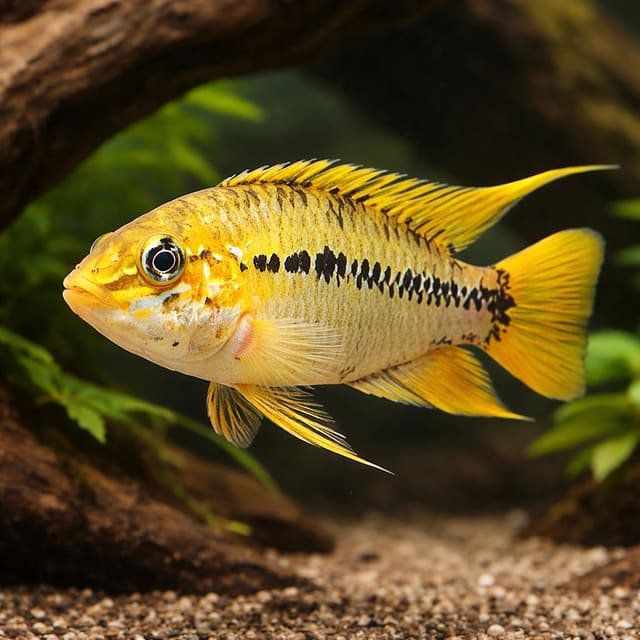
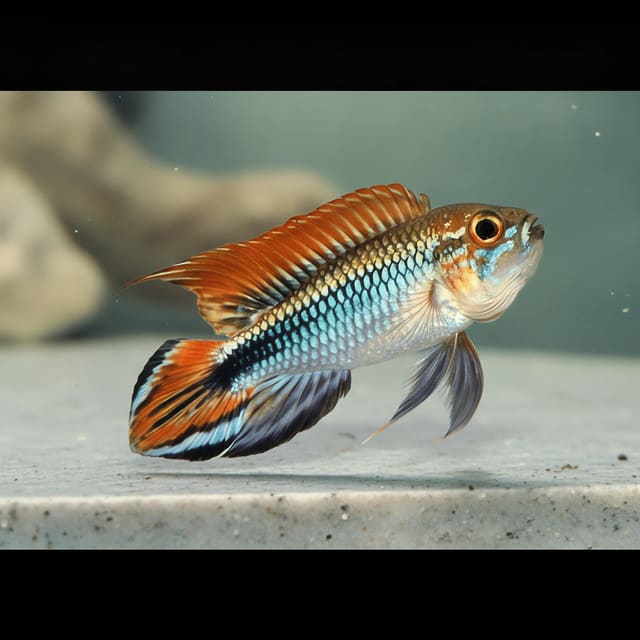
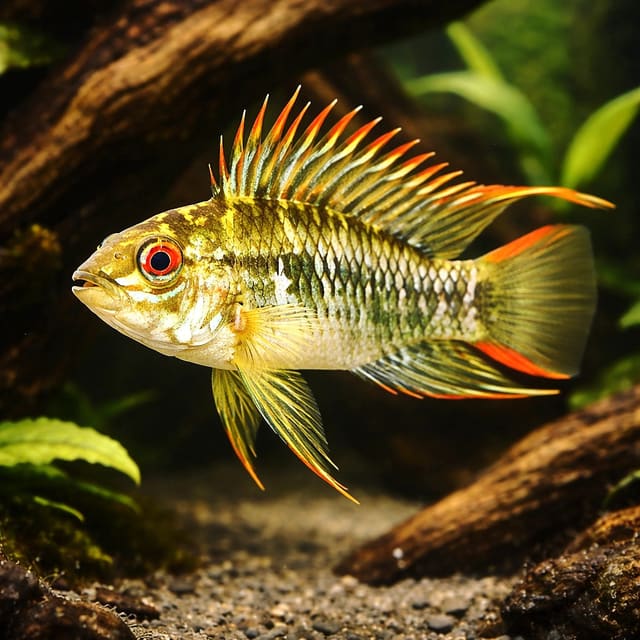
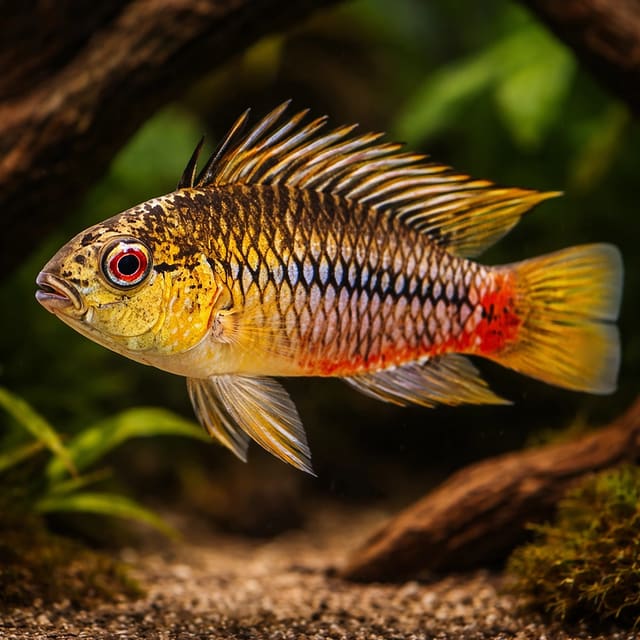
Apistogramma pulchra is a visual masterpiece, particularly mature males. The body displays a base of silver-grey to pale gold, overlaid with horizontal stripes and intricate reticulated patterning. The fins are where this species truly shines: the dorsal fin features extended rays with dark edging and iridescent highlights, while the anal fin mirrors this elegance. The caudal fin—where the species earns its "red tail" common name—is brilliantly coloured in shades of red to orange, often with black banding and lyre-shaped extensions. Females are smaller and less colourful, adopting a golden-yellow hue when breeding. Coloration intensifies in soft, tannin-stained water under subdued lighting.
This species is found in the soft, acidic blackwater streams and flooded forest margins of the Amazon Basin, though exact collection localities vary by line. The water is heavily stained with tannins from decomposing vegetation, resulting in very low pH and hardness. Submerged roots, fallen branches, leaf litter, and dense aquatic vegetation create a complex, sheltered environment. The substrate is fine sand or silt, and water movement is minimal. Understanding and replicating these conditions is critical for keeping Apistogramma pulchra in peak health and colour.
A minimum 60-litre aquarium is recommended for a pair or small group, with larger tanks allowing for more complex aquascaping and additional tankmates. Use fine sand substrate and incorporate abundant driftwood, Indian almond leaves, and smooth stones to create caves, crevices, and visual barriers. Plant densely with soft-water species such as Cryptocoryne, Anubias, and floating plants to diffuse lighting and provide shelter. Gentle filtration through a sponge or small canister filter maintains water quality without creating excessive flow. Tannin-stained water not only enhances the fish's natural beauty but also supports immune function and reduces stress.
Apistogramma pulchra is uncompromising in its water chemistry requirements. Maintain temperatures between 24-27°C and pH from 5.5-7.0, with very soft water (low hardness). Regular partial water changes with dechlorinated, properly conditioned water are essential. Avoid sudden shifts in temperature or chemistry, as this species is sensitive to stress. Efficient biological filtration and low nitrate levels (below 20 ppm) are critical for long-term health and successful breeding.
This carnivore thrives on a varied, protein-rich diet. Offer high-quality micro pellets or granules formulated for dwarf cichlids as a staple, supplemented with live or frozen foods such as daphnia, brine shrimp, cyclops, bloodworms, and small insect larvae. Occasional vegetable matter is acceptable but not required. Feed small portions twice daily, removing uneaten food promptly to maintain water quality. A diverse diet ensures vibrant coloration, robust health, and optimal breeding condition.
Apistogramma pulchra is a semi-aggressive species with strong territorial behaviour, particularly in males. However, in a well-planted, well-structured aquarium, aggression is usually limited to displays and posturing. Males establish and defend small territories centred around caves or other focal points. Females are less territorial outside of breeding periods but become fiercely protective when guarding eggs or fry. The species is generally peaceful toward non-competing tankmates and spends much of its time exploring the lower levels of the aquarium.
Ideal tankmates include small, peaceful schooling fish such as cardinal tetras, rummy-nose tetras, and rasboras, which occupy the upper and mid-water levels. Bottom-dwellers like Otocinclus and small peaceful pencilfish are usually compatible. In very large, carefully arranged tanks, other non-aggressive dwarf cichlids may be considered, though caution is advised. Avoid large aggressive cichlids, fin-nipping fish, very boisterous community fish, large predatory fish, and overly territorial bottom dwellers.
Breeding Apistogramma pulchra is both challenging and deeply rewarding. Spawning occurs in soft, acidic water within a cave or sheltered spawning site. The female deposits eggs on a flat surface and then assumes sole responsibility for guarding and fanning them. The male defends the broader territory but should be monitored, as he may become aggressive. Eggs hatch in 2-3 days, with fry becoming free-swimming after about a week. Feed fry on infusoria or liquid fry food initially, progressing to newly hatched brine shrimp. Stable water chemistry and pristine conditions are essential for fry survival.
Tropical Fish Co is the UK's trusted destination for rare and specialist dwarf cichlids, including F1 Apistogramma pulchra. Every fish is ethically sourced, carefully quarantined, and health-checked by our expert team to ensure you receive livestock in peak condition. We offer detailed care guides, personalised advice, and ongoing support to help you succeed with even the most demanding species. With secure, temperature-controlled nationwide delivery, a wealth of online resources, and a commitment to quality and sustainability, Tropical Fish Co makes it easy to build stunning soft-water biotope aquariums. Choose us for healthy, vibrant fish and unparalleled customer service.
No reviews for this item yet. Bought one? Honest reviews only, good or bad.
What customers say about ordering from us
Easy website plenty of info on fish your buying great to pick a time slot
TRACEY DURRANT · 7 Oct 2026
Got some lovely fish thank you
Kevin Mackie · 7 Oct 2026
Reviews of our shop, collected by Judge.me, an independent third-party review collector. Newest first.