Moderate
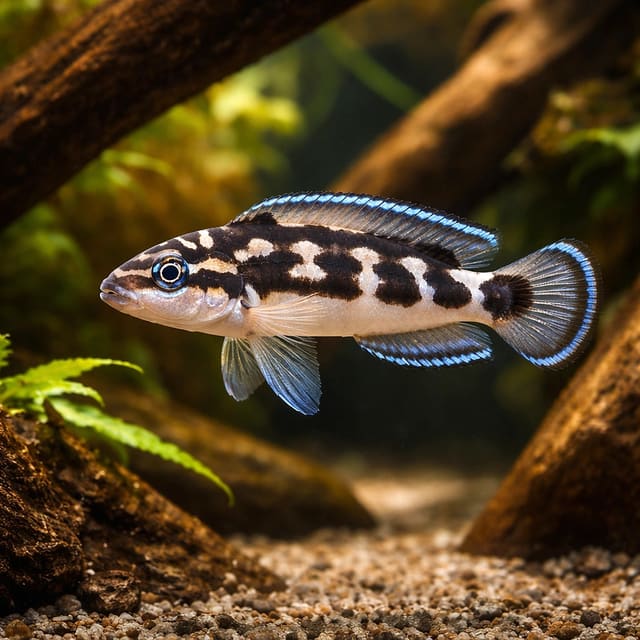
Masked Julie Gombi (Julidochromis transcriptus gombi)
24–27°C · pH 7.8–9 · 60L
£24.99

Spangled Cichlid (Limnochromis auritus) is a rare Lake Tanganyika cichlid for expert aquarists who can provide hard alkaline water, subdued lighting, rockwork and excellent filtration.
Adult size is the maximum length this species reaches at full maturity (scientific sources). The livestock you receive will be younger and smaller — pick a size above for the actual shipping size. Product-photo provenance and any image-specific limitations are stated on the listing.
Limnochromis auritus
Save when buying multiple fish. Each quantity is one fish; sex and pair formation are not guaranteed unless the selected variant explicitly states them.
Confirm your email, then we’ll send an availability message for this exact item if it returns within 180 days.
This request is only for this product—no newsletter or other promotions. A mail-provider retry may very rarely duplicate the same availability message. Unconfirmed addresses are removed after 48 hours. See our privacy policy.
Spangled Cichlid (Limnochromis auritus) is a rare Lake Tanganyika cichlid for expert aquarists who can provide hard alkaline water, subdued lighting, rockwork and excellent filtration.
Adult size is the maximum length this species reaches at full maturity (scientific sources). The livestock you receive will be younger and smaller — pick a size above for the actual shipping size. Product-photo provenance and any image-specific limitations are stated on the listing.
Cichlids are a family of roughly 1,800 accepted species, not one care type. Before buying, identify the exact species and source, then compare adult measurement, usable tank dimensions, social system, territory, tested water, diet and an exit plan. No family-wide minimum tank, water range or tank-mate list is safe.
Maintain these water conditions for optimal health and vibrant colors
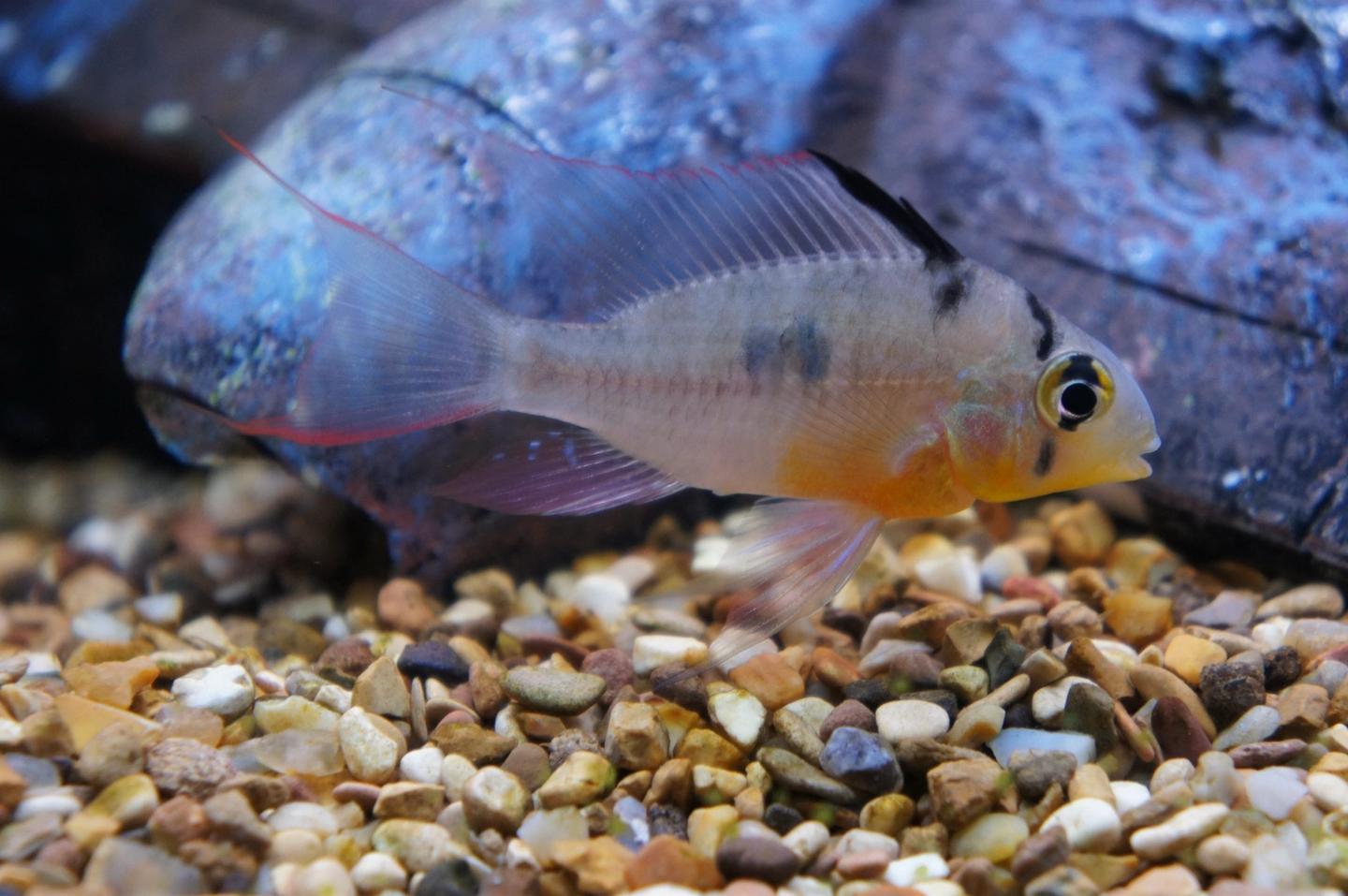
Spangled Cichlid (Limnochromis auritus) is a distinctive Lake Tanganyika cichlid for experienced aquarists who enjoy rare, specialist African cichlids rather than general community fish. FishBase records the species as endemic throughout Lake Tanganyika at great depths, with a maximum length of about 13 cm, so the aquarium should be planned around adult size, hard alkaline water and long-term stability rather than the smaller arrival size.
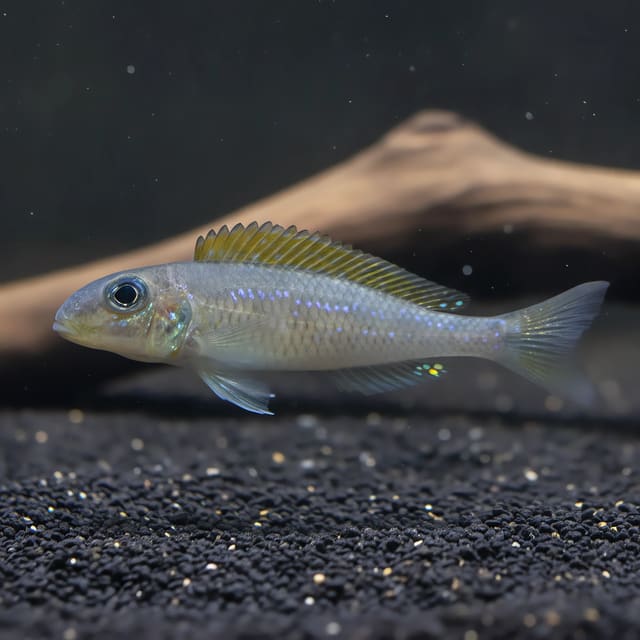
The appeal is subtle and very Tanganyikan: a silvery to bluish-grey body, spangled spots over the flanks, proportionally large eyes and a calmer, deliberate way of moving through rock and open water. It suits keepers who want provenance, behaviour and long-term specialist care notes rather than a quick generic cichlid profile.
| Scientific name | Limnochromis auritus |
|---|---|
| Common name | Spangled Cichlid |
| Origin | Lake Tanganyika, Africa |
| Adult size | Up to about 13 cm total length |
| Care level | Expert / specialist Tanganyika keeper |
| Temperature | 23-26C target range; keep stable and well oxygenated |
| Water | Hard, alkaline Tanganyika-style water; pH around 8.0-9.0, 10-20 dGH |
| Minimum aquarium | 250 litres, with larger tanks preferred |
| Diet | Quality cichlid pellets plus frozen crustaceans, insect larvae and other protein-rich foods |
| Breeding note | FishBase records both parents as mouthbrooders |
The Spangled Cichlid earns its name from fine spotting and metallic highlights across the body and fins. It is not a loud colour-strain fish; it is more refined than that. In subdued lighting the blue-grey base tone, spotted caudal fin and glinting flank pattern can look especially good against darker rock, sand and open shadowed areas.
Because the species is associated with deeper Tanganyika habitat, the most natural display is a calmer aquascape with rock structure, caves, overhangs and open swimming lanes. Avoid a bright, crowded community layout. A mature rock-and-sand aquarium lets the fish show its shape, eye size and spangled pattern without forcing it into constant exposure.
Limnochromis auritus is a specialist Lake Tanganyika cichlid suited to hard, alkaline Tanganyika-style aquariums rather than mixed soft-water community displays. FishBase describes it as a freshwater, demersal species recorded from great depths in Lake Tanganyika, with tropical temperatures around 24-26C and a hardness range of 10-20 dGH. For aquarium care, that means clean, mineral-rich, stable water is not optional.
Its deepwater character is best reflected with stable hard alkaline water, high oxygen, strong filtration, subdued to moderate lighting and a layout that gives the fish secure structure as well as open space.
Use at least a 250 litre aquarium, with larger tanks strongly preferred if you plan to keep other Tanganyika cichlids. Build with rockwork, caves and broken sight lines, then leave open sand or swimming space so the fish is not forced into constant territorial contact. A calcareous substrate or Tanganyika-style mineral approach helps buffer the water, but test regularly rather than guessing.
Filtration should be strong and reliable. Keep oxygen high, nitrate controlled and chemistry stable. This is a fish for mature aquariums, not a fresh setup. Weekly water changes, careful feeding and a stable routine matter more than chasing a perfect decorative look.
Feed a varied, protein-rich cichlid diet. Good quality cichlid pellets can be the staple, supported by frozen or live small crustaceans, insect larvae and other appropriately sized foods. Offer modest portions and watch water quality, because a specialist Tanganyika aquarium can suffer quickly if rich foods are overused.
Do not treat feeding as an excuse for heavy, messy meals. The aim is condition, colour and steady behaviour, not maximum growth. A calm, regular feeding routine also makes it easier to observe whether the fish is settling, holding territory properly and competing fairly with tank mates.
FishBase describes the species as easygoing and adaptable in the aquarium, but it is still a cichlid and still needs sensible company. The safest tank mates are Lake Tanganyika cichlids or robust hard-water fish of similar size and temperament. Avoid tiny fish, fin nippers, soft-water community species and highly aggressive cichlids that will dominate the tank.
Provide enough space for each fish to retreat. Rock piles, overhangs and open routes help prevent one fish from controlling the whole layout. If breeding behaviour appears, expect more territorial focus and be ready to protect weaker tank mates.
FishBase records Limnochromis auritus as a mouthbrooder where both parents participate in brood incubation, an important and unusual point among lake mouthbrooders. If breeding is attempted, use a stable specialist setup, minimal disturbance and carefully chosen tank mates rather than assuming a simple cave-spawning routine.
Choose the Spangled Cichlid if you already understand rift-lake water chemistry and want a rarer Tanganyika cichlid with understated display value. It is a poor choice for soft-water community tanks, impulse purchases or aquariums where water changes and testing are irregular. It is a strong fit for a mature Tanganyika project where the keeper values behaviour, provenance and subtle visual detail.
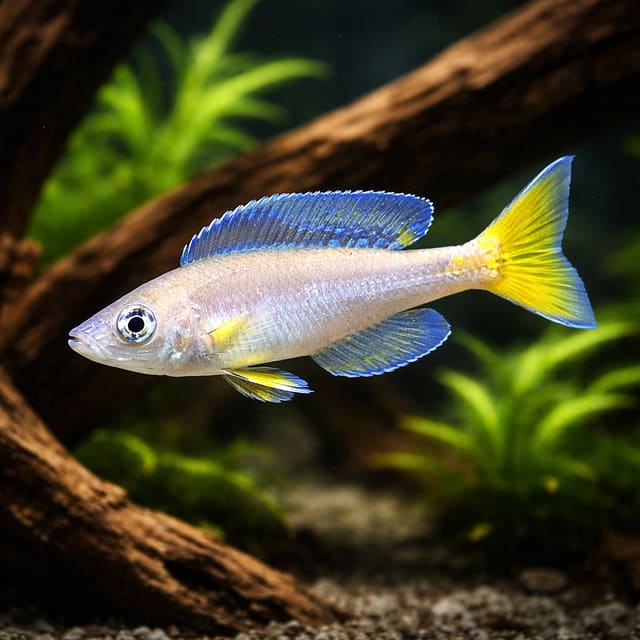
For comparison, look at Yellow Head Kekese Cyprichromis, Kavala Black Leleupi, Masked Julie Gombi, Cyprichromis leptosoma Mpulungu and Xenotilapia flavipinnis. These links keep the page connected to relevant Tanganyika choices rather than broad generic fish-shop pages.
Eligible livestock is packed for a UK live-animal courier service and covered by the Tropical Fish Co Live Arrival Guarantee. Acclimate slowly into a mature, temperature-matched aquarium with hard alkaline water. If your tank is not stable yet, wait; the best result for this fish starts before the box arrives.
Care facts were checked against FishBase for Limnochromis auritus, including Lake Tanganyika distribution, demersal habitat, 13 cm maximum length, 24-26C source temperature, 10-20 dGH hardness and biparental mouthbrooding. Source: FishBase species summary.
Max adult size is the length this species reaches at full maturity (from scientific sources). The livestock you receive will be younger and smaller — pick a size on the buy box for the actual shipping size. Product-photo provenance and any image-specific limitations are stated on the listing.
Provide rockwork, broken lines of sight and stable hard alkaline water; breeding pairs may defend space.
Always research specific species before adding them to your tank. Consider:
No reviews for this item yet. Bought one? Honest reviews only, good or bad.
What customers say about ordering from us
I have a small group of long finned mountain minnows. So was delighted to be able to order ten of this variety to increase the genetics in my tank . The ones I recieved are healthy but it’s to early to give a verdict on wether they are of a long finned type since they are small currently.
Gordon Walker · 23 Sept 2026
100% success travel and "installation". Pleased with quality of purchase. The Siamese fighter a bit "shy" so have not yet seen him at his best yet but looking good. Happy customer. GG
George E Garratt · 21 Sept 2026
Reviews of our shop, collected by Judge.me, an independent third-party review collector. Newest first.