Advanced
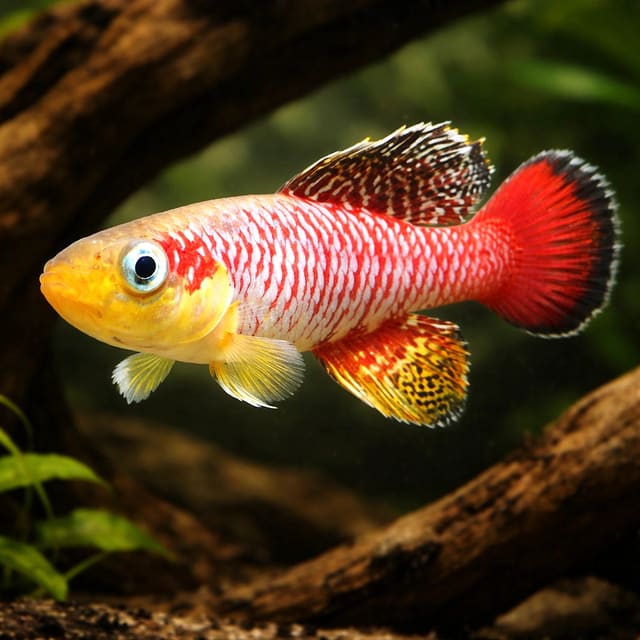
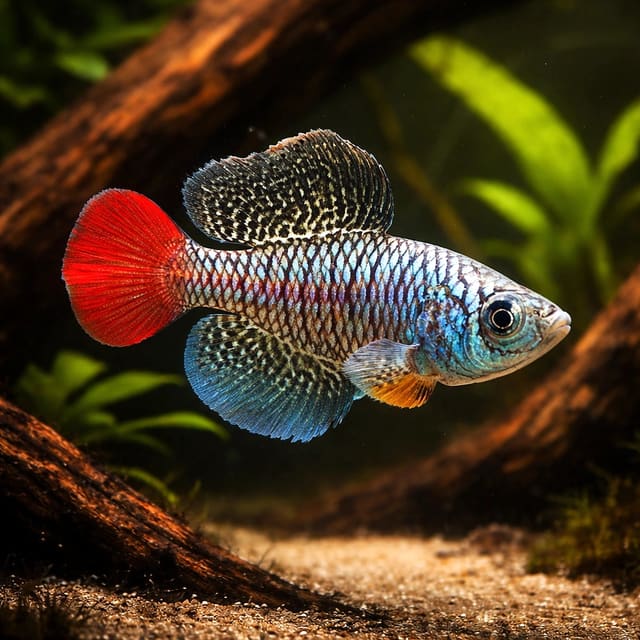
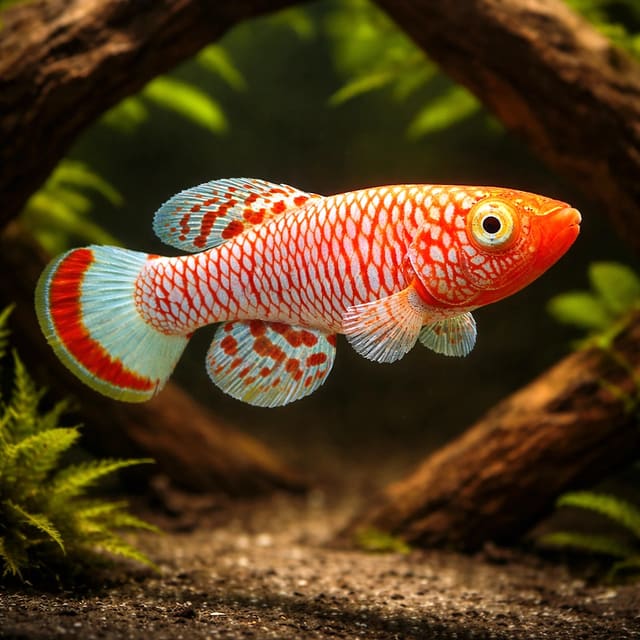
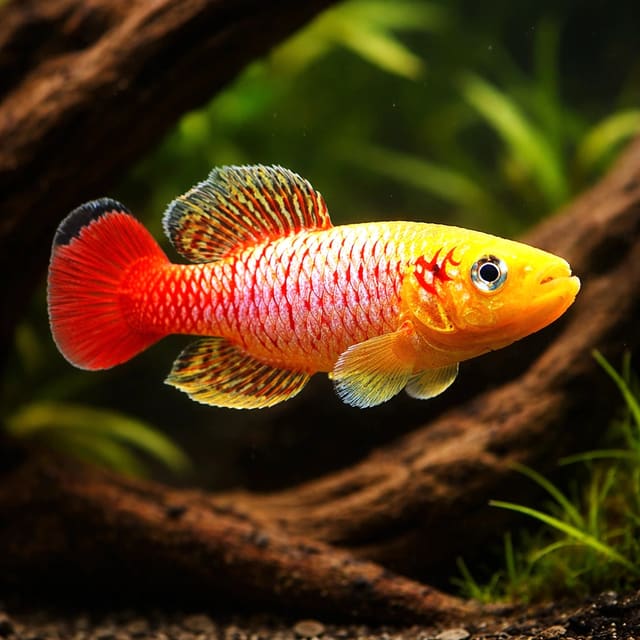
Gunther's Zanzibar Gold Nothobranch (Nothobranchius guentheri)
22–25°C · pH 6–7
£10.99

A small, attractive Cuban rivulus with subtle brown-green coloration and fascinating behavior, ideal for a quiet planted nano aquarium. Moderate care, peaceful. 22-28C, pH 6.0-7.5.
Adult size is the maximum length this species reaches at full maturity (scientific sources). The livestock you receive will be younger and smaller. Product-photo provenance and any image-specific limitations are stated on the listing.
Rivulus cylindraceus
Save when buying multiple fish. Each quantity is one fish; sex and pair formation are not guaranteed unless the selected variant explicitly states them.
Confirm your email, then we’ll send an availability message for this exact item if it returns within 180 days.
This request is only for this product—no newsletter or other promotions. A mail-provider retry may very rarely duplicate the same availability message. Unconfirmed addresses are removed after 48 hours. See our privacy policy.
A small, attractive Cuban rivulus with subtle brown-green coloration and fascinating behavior, ideal for a quiet planted nano aquarium. Moderate care, peaceful. 22-28C, pH 6.0-7.5.
Adult size is the maximum length this species reaches at full maturity (scientific sources). The livestock you receive will be younger and smaller. Product-photo provenance and any image-specific limitations are stated on the listing.
Maintain these water conditions for optimal health and vibrant colors
The Green/Brown Rivulus (Rivulus cylindraceus) is a small Cuban killifish with far more colour than the old plain-brown reputation suggests. FishBase lists the common name as Green Rivulus, while the supplier name also includes Brown Rivulus; both names are useful because settled males can show olive, bronze, orange and blue-green tones depending on light, diet and mood. This SKU is supplied at about 3-4 cm, and FishBase records adults up to about 5.5 cm total length.
This is not a seasonal annual killifish. FishBase specifically notes that it is not seasonal and is easy to maintain in aquaria, so the care should not be copied from peat-incubating annual species. Think of it instead as a quiet, covered, planted-aquarium rivulus: a small surface-to-midwater fish that likes cover, clean stable water and small meaty foods. It is peaceful, but it is still a specialist fish that shows best in a calm species-first setup or with very careful tank mates.
The body is compact and cylindrical, with a warm orange-bronze upper line, a cooler blue-lilac sheen along the flank, yellow edging in the fins and a dark tail area with pale spotting. Under subdued light and floating plants, males can look far richer than the name Brown Rivulus suggests. Females are usually plainer, often with a neat caudal spot, but they still have the same alert, hovering rivulus posture.
Colour improves when the fish feels secure. Use dark planting, floating cover, leaf litter if you like a natural look, and gentle lighting rather than a bright bare tank. The fish often pauses almost motionless under cover, then darts for food. That stop-start behaviour is normal and is part of the appeal.
FishBase places Rivulus cylindraceus in the coastal river basins of Cuba, with records from upland streams and clear vegetated rivers and lakes. The American Killifish Association also describes it as a Cuban freshwater-stream fish that uses fresher streams feeding bays and rivers rather than the saltier habitats preferred by mangrove rivulus. Older British Killifish Association notes describe small flowing streams and emphasise how quickly the fish can leap from the water.
In the aquarium, that habitat translates into clean water, plenty of cover, gentle movement and a secure lid. A tight cover is not optional. Rivulus can jump through very small gaps, especially during feeding, display or sudden disturbance.
A pair can be managed in a small specialist tank, but for a polished long-term display we recommend at least 40 litres for a pair or small group. A larger planted aquarium gives more stable water, better cover and fewer squabbles. Use a sponge filter or gentle outlet, avoid strong current, and keep the surface broken up with floating plants such as Salvinia, Amazon frogbit or floating stems. Java moss, fine-leaved plants and root tangles help the fish feel safe and also give spawning sites.
Use a routine temperature around 22-24 C. Aim for near-neutral water, around pH 6.8-7.5, and moderate softness, around 5-10 dGH. Do not chase numbers aggressively if your water is clean and stable. Small regular water changes are better than sudden corrections.
This is a small carnivorous killifish. Offer tiny live and frozen foods such as daphnia, brine shrimp, mosquito larvae, whiteworm, grindal worm and finely chopped bloodworm. Good micro-pellets can be used once the fish accepts them, but live and frozen foods keep condition, colour and breeding behaviour much better. Feed small portions and remove leftovers quickly, especially in planted nano-style setups where water can foul fast.
Green/Brown Rivulus are peaceful, but they are not built for a busy community aquarium. Fast feeders, fin-nippers and large fish will either outcompete or stress them. The safest route is a species-first tank. If you do add companions, choose only very calm fish that stay small and do not dominate the surface. Gentle killifish or small planted-tank species may work, but tiny fry and very small shrimp can be eaten.
For similar quiet killifish options, compare our Berkenkamp's Epiplatys, Graham's Epiplatys and Togo Panchax. Those pages are useful when deciding whether you want a surface-oriented African killifish or this Cuban rivulus.
Breeding is realistic for patient keepers. British Killifish Association notes describe spawning in floating plants or nylon mops, with large adhesive eggs and hatching in about ten to fourteen days. Set up a quiet pair, condition them with live foods, then check the mop or fine plants regularly. Eggs can be collected and incubated separately, or left in a mature planted tank if you are not trying to save every fry. Fry are small and need suitable first foods, then newly hatched brine shrimp as they grow.
For this SKU, the original reference photo is included alongside the existing aquarium-context gallery, so you can inspect the fish rather than relying on generic artwork. New customers can use the WELCOME10 first-order discount when eligible, and our Live Arrival Guarantee applies under the published delivery terms.
Choose Green/Brown Rivulus if you want a small Cuban killifish with subtle colour, interesting surface behaviour and manageable care. Give it a lid, plants, gentle water movement and a varied small-food diet, and it becomes a rewarding specialist fish rather than a throwaway nano tank add-on.
No reviews for this item yet. Bought one? Honest reviews only, good or bad.
What customers say about ordering from us
I have a small group of long finned mountain minnows. So was delighted to be able to order ten of this variety to increase the genetics in my tank . The ones I recieved are healthy but it’s to early to give a verdict on wether they are of a long finned type since they are small currently.
Gordon Walker · 23 Sept 2026
100% success travel and "installation". Pleased with quality of purchase. The Siamese fighter a bit "shy" so have not yet seen him at his best yet but looking good. Happy customer. GG
George E Garratt · 21 Sept 2026
Reviews of our shop, collected by Judge.me, an independent third-party review collector. Newest first.