Spotted / Red-Chinned Panchax (Epiplatys dageti) – 3–5cm Sizes
22–23°C · pH 6–7
£7.99

Non-seasonal West African surface killifish supplied at 3-4.5 cm. Best in a covered, calm planted aquarium with floating cover, gentle flow and small live or frozen foods.
Adult size is the maximum length this species reaches at full maturity (scientific sources). The livestock you receive will be younger and smaller. Product-photo provenance and any image-specific limitations are stated on the listing.
Epiplatys grahami
Save when buying multiple fish. Each quantity is one fish; sex and pair formation are not guaranteed unless the selected variant explicitly states them.
Confirm your email, then we’ll send an availability message for this exact item if it returns within 180 days.
This request is only for this product—no newsletter or other promotions. A mail-provider retry may very rarely duplicate the same availability message. Unconfirmed addresses are removed after 48 hours. See our privacy policy.
Non-seasonal West African surface killifish supplied at 3-4.5 cm. Best in a covered, calm planted aquarium with floating cover, gentle flow and small live or frozen foods.
Adult size is the maximum length this species reaches at full maturity (scientific sources). The livestock you receive will be younger and smaller. Product-photo provenance and any image-specific limitations are stated on the listing.
Maintain these water conditions for optimal health and vibrant colors
Graham's Epiplatys (Epiplatys grahami) is a West African surface killifish supplied here at approximately 3-4.5 cm. Supplier and older hobby wording may also call this fish Schultze's Panchax or Graham's Panchax; this page uses the clearer common name Graham's Epiplatys while preserving the scientific name. FishBase records Epiplatys grahami from freshwater coastal-forest swamps and swampy parts of small streams from south-eastern Benin through southern Nigeria and Cameroon to north-western Equatorial Guinea, with males reaching about 7 cm total length. It is a non-seasonal Epiplatys, so its care should be based on planted surface-spawning killifish husbandry rather than peat-diving seasonal species.
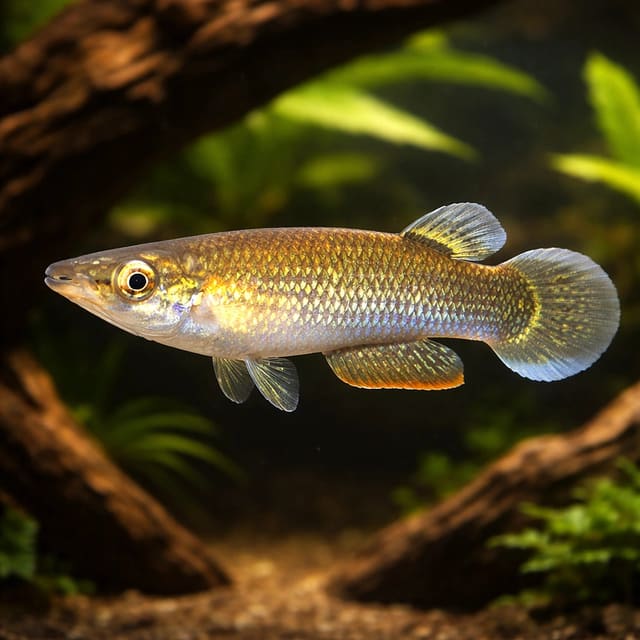
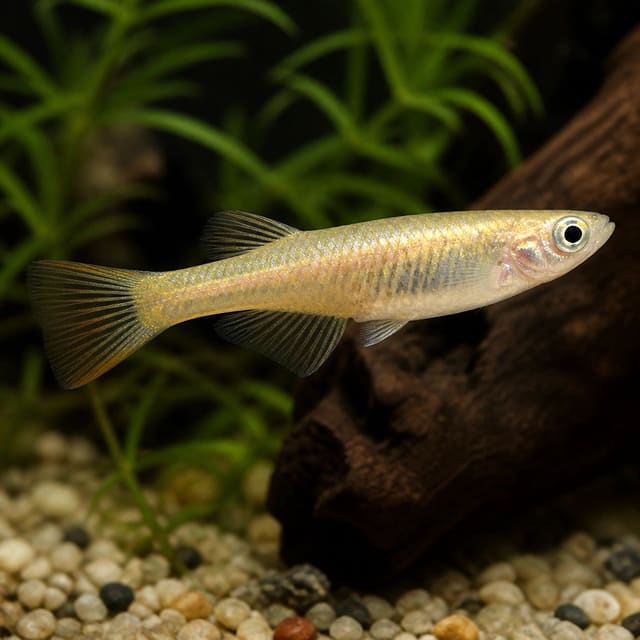
This page keeps the useful specialist detail in a natural form: exact identity, supplied size, habitat, aquarium setup, feeding, compatibility, breeding notes and delivery expectations. The original reference photo is included for this SKU, and the additional aquarium-view images remain as supporting visual context.
Choose Graham's Epiplatys if you like subtle colour, glassy green eyes, surface patrol behaviour and the quieter side of killifish keeping. It is best for a keeper who can provide a covered, mature, planted aquarium with gentle flow, floating cover, stable water and small live or frozen foods. It is not the right fish for a bright, high-current display full of fast feeders. In a calm setup it becomes much more visible, feeding neatly from the surface and showing the refined colours that can be lost in harsh lighting.
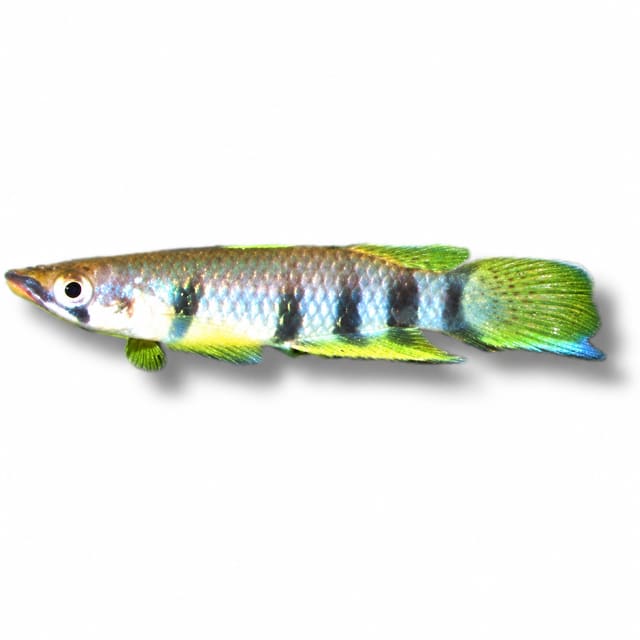
The exact source image shows the long, panchax-like body, pointed mouth and surface-feeding shape that define the species. Males can show blue-green sheen, red speckling, dark vertical markings and a strong blue tail and dorsal fin when settled. The AKA/WAK Epiplatys reference notes the species' glass-green eye character and dark vertical banding as useful recognition points. Females are usually plainer and rounder, especially when carrying eggs.
The reference photograph is a wide, small reference image, so it is not as polished as the square aquarium-view images. It is still important because it anchors this SKU to the real supplier fish line. The additional gallery images show planted-tank presentation, scale and behaviour, but they do not replace the exact source photo.
Epiplatys grahami is associated with coastal swamps, swampy stream margins and small forest streams. The type locality is linked with swampy habitat near Lagos, and hobby records include coastal localities such as Lagos, Badagri, Kribi and parts of southern Benin and Cameroon. In aquarium terms, think quiet surface cover, roots, marginal vegetation, leaf litter, broken light and gentle water movement. This is a fish of sheltered upper layers rather than open, fast water.
The species is non-seasonal, so the care should not be copied from peat-incubated seasonal species pages. Stability matters more than forcing a dramatic dry-season cycle. A calm, planted surface zone is the most important design feature.
Use a mature aquarium of about 60 litres or more for a pair or small group. A tight-fitting lid is essential because surface killifish can jump through small gaps around cables, pipework and filter returns. Floating plants such as Salvinia, Pistia or frogbit, long plant roots, Java moss, fine-leaved stems and shaded corners all help the fish feel secure. Leave open pockets at the surface so it can feed properly, but avoid a completely bare top layer.
Gentle filtration is best. A sponge filter or baffled internal filter gives oxygen and stability without pushing the fish around. Darker background tones and botanicals can make the colours look stronger, but add leaves gradually and monitor water quality. A clean, stable aquarium is more important than making the water as dark as possible.
Use 20-24 C as the practical target range. A pH of about 6.0-7.5 is suitable if it is stable. Soft to moderately hard water is appropriate; very hard, high-nitrate water is a poor match.
Keep ammonia and nitrite at zero and nitrate low with small, regular water changes. Match temperature during maintenance and avoid sudden chemistry swings. Because this species can be shy in exposed aquariums, calm routine is part of the husbandry: steady feeding, steady water changes, and no constant rearranging of the tank.
Graham's Epiplatys is an insect-focused surface predator. Offer small live and frozen foods such as daphnia, mosquito larvae, brine shrimp, bloodworm, grindal worm and fruit-fly-sized foods when available. Some individuals may learn to take quality micro pellets, but live and frozen foods should form the reliable foundation. Feed at the surface in small portions so food is eaten before faster midwater fish can take everything.
Condition is easiest to maintain when the diet is varied. A fish that is only offered dry flake may survive but is unlikely to show its best colour or breeding readiness. Small, regular feeds are better than heavy meals that sink away and foul the tank.
The safest plan is species-first: a pair or small group in a quiet, planted, covered aquarium. A carefully chosen calm community can work, but only with very small, peaceful fish that do not crowd the surface, nip fins or rush all the food. Peaceful bottom dwellers can be considered in a larger, well-structured tank because they use a different layer.
Avoid large fish, aggressive fish, fast barbs, fin-nippers, boisterous tetras, large surface feeders and predatory invertebrates. Tiny shrimp and fry may be eaten because the fish naturally hunts small prey, so do not rely on it as shrimp-safe.
This is a plant- and mop-spawning Epiplatys. The AKA/WAK reference reports eggs laid in top and bottom mops, with a preference for top mops, and water incubation of about 14 days. In a breeding setup, provide fine plants or yarn mops reaching through the upper water, condition adults with small live foods, and collect eggs if you want to protect them from adults.
Fry are small and need very fine first foods such as infusoria before moving on to newly hatched brine shrimp. Keep the fry tank stable, shallow enough for easy feeding, and free from strong current. Breeding should be approached patiently rather than by forcing drastic water changes.
Care details for this page were checked against FishBase for accepted identity, family, size, freshwater habitat, distribution, non-seasonal status and Least Concern assessment, and against the AKA/WAK Epiplatys reference for habitat notes, synonym/history context, recognition points and mop-spawning incubation detail. Our stock records provide the supplied size and exact source image for this SKU.
Graham's Epiplatys is shipped by live-animal courier when weather and route timing are suitable. Livestock is packed around welfare, oxygen, temperature and journey time, and is covered by our Live Arrival Guarantee. Please have the covered, mature aquarium ready before dispatch day, with floating cover and suitably small foods available for the first week after arrival.
No reviews for this item yet. Bought one? Honest reviews only, good or bad.
What customers say about ordering from us
I have a small group of long finned mountain minnows. So was delighted to be able to order ten of this variety to increase the genetics in my tank . The ones I recieved are healthy but it’s to early to give a verdict on wether they are of a long finned type since they are small currently.
Gordon Walker · 23 Sept 2026
100% success travel and "installation". Pleased with quality of purchase. The Siamese fighter a bit "shy" so have not yet seen him at his best yet but looking good. Happy customer. GG
George E Garratt · 21 Sept 2026
Reviews of our shop, collected by Judge.me, an independent third-party review collector. Newest first.