Panda Barb, Ember Barb (Barbus melanampyx)
20–27°C · pH 6–7.5
£2.99

A peaceful, active Southeast Asian barb that thrives in groups and brings lively movement to a well-planted community aquarium. Moderate care, peaceful. 23-25C, pH 6.0-7.5.
Adult size is the maximum length this species reaches at full maturity (scientific sources). The livestock you receive will be younger and smaller — pick a size above for the actual shipping size. Product-photo provenance and any image-specific limitations are stated on the listing.
Barbodes ablabes
Shoaling fish: kept in a group they feel safer, stay calmer and show their best colour.
Confirm your email, then we’ll send an availability message for this exact item if it returns within 180 days.
This request is only for this product—no newsletter or other promotions. A mail-provider retry may very rarely duplicate the same availability message. Unconfirmed addresses are removed after 48 hours. See our privacy policy.
A peaceful, active Southeast Asian barb that thrives in groups and brings lively movement to a well-planted community aquarium. Moderate care, peaceful. 23-25C, pH 6.0-7.5.
Adult size is the maximum length this species reaches at full maturity (scientific sources). The livestock you receive will be younger and smaller — pick a size above for the actual shipping size. Product-photo provenance and any image-specific limitations are stated on the listing.
Maintain these water conditions for optimal health and vibrant colors
Barbodes ablabes is a peaceful, active Southeast Asian barb that brings lively movement and subtle beauty to well-planted community aquariums. This small, schooling species reaches just 3.5 cm in length and is prized for its hardy nature, adaptability, and suitability for aquarists seeking a reliable, easy-to-keep cyprinid. While not as widely known as some popular barb species, B. ablabes offers the same active schooling behavior, peaceful temperament, and ease of care that make barbs such excellent community fish. The species displays a modest but attractive silvery-olive coloration that intensifies under good lighting and nutrition. Available for sale UK from specialist suppliers, this species is ideal for aquarists seeking a robust, undemanding schooling fish that thrives in groups and brings constant activity to planted aquariums.
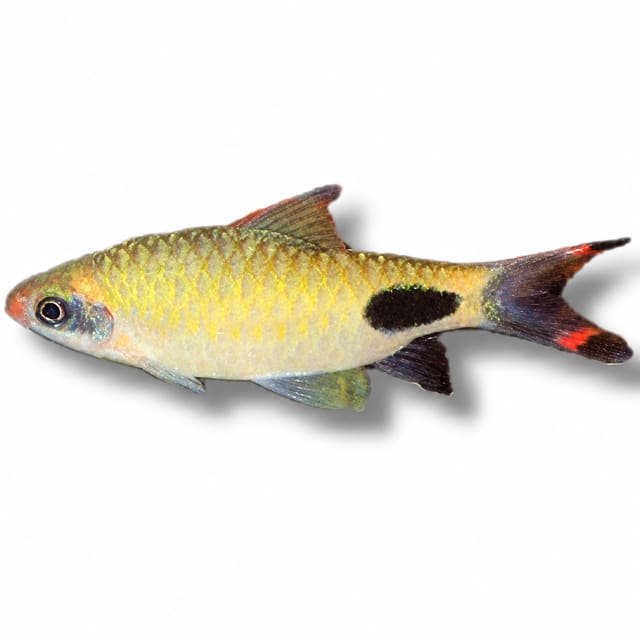
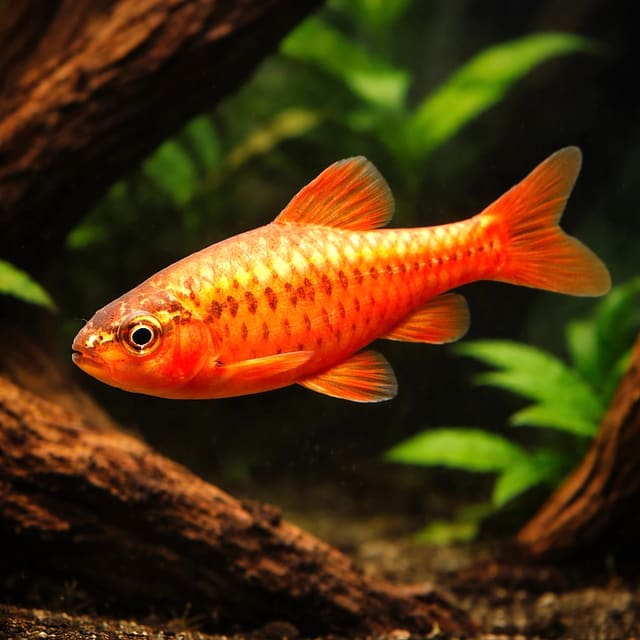
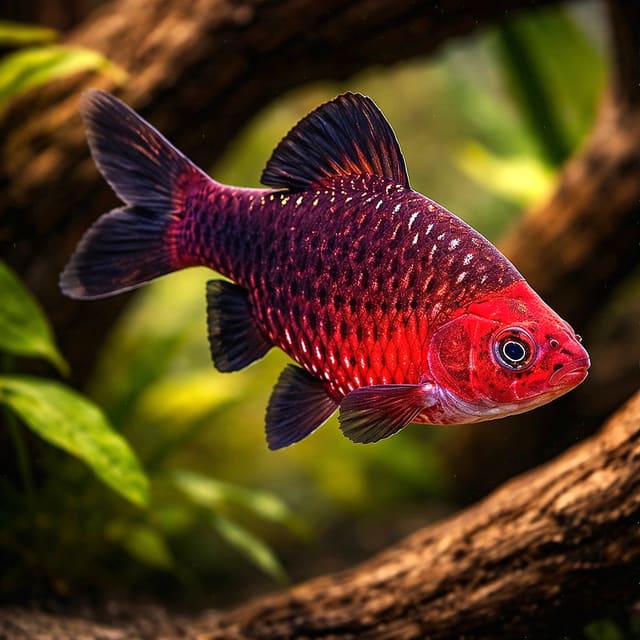
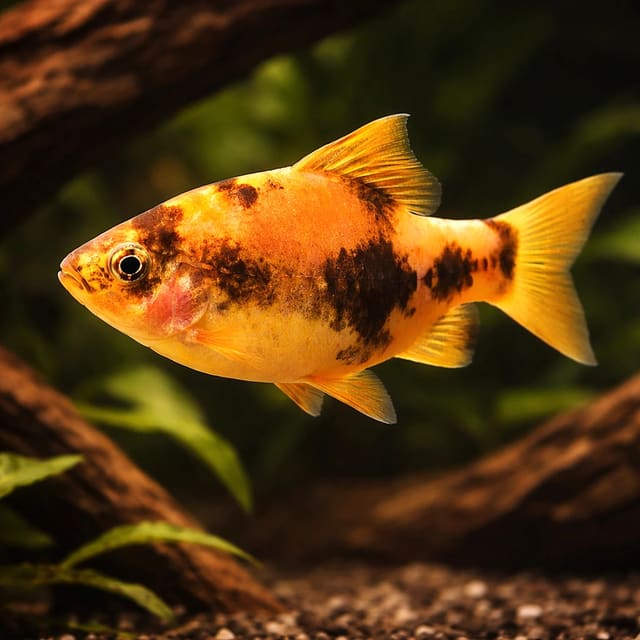
Barbodes ablabes exhibits a compact, streamlined body shape typical of small barbs, with a slightly arched dorsal profile and a deeply forked caudal fin. The body coloration is subtle and refined: a silvery-olive to pale golden base with faint darker vertical banding or mottling that becomes more visible under subdued lighting or in well-conditioned fish. The scales have a subtle iridescent sheen that catches light under aquarium lighting. The fins are generally clear to faintly amber-tinted, with males showing slightly more color and extension in the dorsal and anal fins during breeding condition. Females are typically fuller-bodied when gravid but otherwise similar in appearance to males. Both sexes have a small, terminal mouth and large, expressive eyes. Color intensity varies with diet, water quality, and social dynamics—well-fed, unstressed fish in groups display the best coloration and vigor.
Barbodes ablabes is native to Southeast Asia, though the exact native range is unclear in trade data and may include mainland Southeast Asia (Thailand, Cambodia, Laos, or Vietnam). They likely inhabit slow to moderate-flowing streams, rivers, and floodplain pools within vegetated areas, typically among submerged roots, fallen branches, and aquatic plants. The substrate is usually sandy or fine gravel, and water chemistry ranges from soft to moderately soft with slightly acidic to neutral pH (6.0-7.5). Temperatures are warm year-round (23-25°C), and seasonal fluctuations in water level and flow are common during monsoon periods. These fish are typically found in loose shoals in midwater zones, foraging for small invertebrates, algae, and organic detritus. Understanding these natural conditions—clean, well-oxygenated water with some flow, ample swimming space, and planted areas—helps replicate appropriate aquarium environments.
A minimum aquarium capacity of 60 liters is recommended for a school of 8-10 Barbodes ablabes, with larger tanks (80+ liters) preferred for community setups. The tank should emphasize horizontal swimming space with a length of at least 60 cm, as these active fish require room to school and explore. Provide moderate planting with species such as Cryptocoryne, Hygrophila, Vallisneria, Rotala, and Anubias, leaving open swimming areas in the center and foreground. A dark substrate (sand or fine dark gravel) enhances the visibility of their subtle coloration and reduces stress. Driftwood, smooth rocks, and dried leaves (Indian almond or oak) replicate their natural Southeast Asian environment and provide additional cover. Filtration should be good, with moderate water movement to maintain high oxygen levels. Lighting can be moderate; these fish appreciate some shaded areas. A secure lid is recommended, as active barbs may jump when startled.
Barbodes ablabes thrive in clean, well-oxygenated water with stable parameters. Maintain temperatures between 23-25°C, with 24°C being optimal. The pH should be slightly acidic to neutral, ranging from 6.0-7.5, though pH 6.5-7.0 is ideal. Water hardness should be soft to moderately soft, ideally 3-10 dGH. Stability is more important than exact values—avoid sudden fluctuations in temperature or chemistry. Maintain zero ammonia and nitrite at all times, and keep nitrates below 30 ppm through regular weekly water changes (25-30%). Good oxygenation is important; ensure adequate surface agitation. These fish are hardy and adaptable but will lose color and vigor if water quality deteriorates.
Barbodes ablabes is an omnivore with a diet centered on small invertebrates, algae, and organic matter. Offer high-quality flake or small pellet foods as the staple, supplemented daily with frozen or live foods such as daphnia, cyclops, brine shrimp, bloodworms, and mosquito larvae. Include occasional vegetable matter or spirulina-based foods to replicate natural foraging behavior and support digestive health. Feed twice daily in portions that can be consumed within 2-3 minutes, removing uneaten food promptly to maintain water quality. Provide variety to ensure complete nutrition and optimal health. Fasting one day per week supports digestive health. Well-fed fish display better coloration and stronger resistance to disease.
Barbodes ablabes is a peaceful, highly social species that thrives in groups and spends most of its time actively schooling and foraging at all levels of the aquarium. They are genuinely peaceful and rarely bother tankmates, making them ideal for community setups. These fish are most confident when kept in proper groups of 8-10 or more individuals; smaller groups may become shy or stressed. They are diurnal and most active during daylight hours, constantly on the move exploring and interacting with one another. Males may engage in brief, harmless displays during breeding periods, but aggression is minimal. Their lively swimming patterns make them an engaging addition to planted community aquariums.
Suitable tank mates include other peaceful small cyprinids such as danios, rasboras, other small peaceful barbs, peaceful tetras, and bottom-dwelling species such as Corydoras catfish or small peaceful loaches. These barbs are non-aggressive and coexist peacefully with most community species. Avoid housing with large predatory fish, aggressive cichlids, fin-nipping species, very slow long-finned fish, and overly timid species that may be outcompeted at feeding time. Shrimp and snails generally coexist peacefully.
Barbodes ablabes is likely an egg-scattering cyprinid that can be bred in captivity with proper preparation. Condition breeding pairs or groups with high-quality live and frozen foods for 2-3 weeks. Transfer them to a dedicated breeding tank (40-60 liters) with soft, slightly acidic water (pH 6.0-6.5, temperature 25-26°C), gentle sponge filtration, and dim lighting. Provide spawning substrates such as fine-leaved plants (Java moss, Cabomba) or spawning mops. Spawning likely occurs in the early morning, with pairs or groups scattering eggs among the plants. Remove adults after spawning to prevent egg predation. Eggs should hatch in 24-36 hours. Fry require infusoria or liquid fry food initially, progressing to newly hatched brine shrimp after 3-5 days. Provide frequent small feedings and regular small water changes.
Tropical Fish Co is the UK's trusted source for healthy, vibrant Barbodes ablabes, carefully selected for vigor and genetic quality. Every fish is quarantined, conditioned on a varied diet, and health-checked before dispatch to ensure you receive robust, disease-free specimens. Our expert team provides comprehensive care guides and ongoing support. We offer a live arrival guarantee, secure packaging, and tracked courier delivery. Order today and enjoy the activity and charm of this peaceful Southeast Asian schooling species.
No reviews for this item yet. Bought one? Honest reviews only, good or bad.
What customers say about ordering from us
I have a small group of long finned mountain minnows. So was delighted to be able to order ten of this variety to increase the genetics in my tank . The ones I recieved are healthy but it’s to early to give a verdict on wether they are of a long finned type since they are small currently.
Gordon Walker · 23 Sept 2026
100% success travel and "installation". Pleased with quality of purchase. The Siamese fighter a bit "shy" so have not yet seen him at his best yet but looking good. Happy customer. GG
George E Garratt · 21 Sept 2026
Reviews of our shop, collected by Judge.me, an independent third-party review collector. Newest first.