Moderate
Red Nose Pinocchio Shrimp (Caridina sp.)
17–27°C · pH 6.5–8
£6.99

A hardy, peaceful dwarf shrimp that helps clean biofilm and algae while adding constant activity to the aquarium. Moderate care, peaceful. 20-26C, pH 6.0-8.0.
Adult size is the maximum length this species reaches at full maturity (scientific sources). The livestock you receive will be younger and smaller. Product-photo provenance and any image-specific limitations are stated on the listing.
Caridina simoni simoni
Lives in groups: kept together they stay settled, active and show their best colour.
Confirm your email, then we’ll send an availability message for this exact item if it returns within 180 days.
This request is only for this product—no newsletter or other promotions. A mail-provider retry may very rarely duplicate the same availability message. Unconfirmed addresses are removed after 48 hours. See our privacy policy.
A hardy, peaceful dwarf shrimp that helps clean biofilm and algae while adding constant activity to the aquarium. Moderate care, peaceful. 20-26C, pH 6.0-8.0.
Adult size is the maximum length this species reaches at full maturity (scientific sources). The livestock you receive will be younger and smaller. Product-photo provenance and any image-specific limitations are stated on the listing.
Start with a mature, filtered aquarium. OATA's broad UK guidance suggests approximately 20 litres for Amano Shrimp and at least five for social shrimp, with a larger aquarium when fish are present. Treat those as cautious planning screens—not biological minima or a per-litre formula. Match the complete adult community, test your water, protect the filter inlet and never buy them as a guaranteed algae cure.
Maintain these water conditions for optimal health and vibrant colors
The Caridina simoni simoni is a hardy, peaceful dwarf shrimp endemic to Sri Lanka, valued for its utility, adaptability, and constant activity in the aquarium. Reaching an adult size of approximately 1.5cm, this species is an excellent choice for nano aquariums, planted tanks, and community setups where it helps control biofilm, algae, and detritus while adding visual interest and movement. Unlike some more delicate dwarf shrimp species, Caridina simoni simoni is relatively forgiving of moderate water parameter variations, making it suitable for intermediate aquarists seeking an engaging and functional addition to their aquarium. With its modest care requirements, peaceful temperament, and willingness to breed in captivity, this species is an outstanding choice for freshwater aquarium shrimp enthusiasts across the UK.
Quick Care Summary: Hardy dwarf shrimp; adult size 1.5cm; minimum 10L; peaceful and adaptable; helps clean biofilm and algae; breeds readily in captivity; community-friendly.
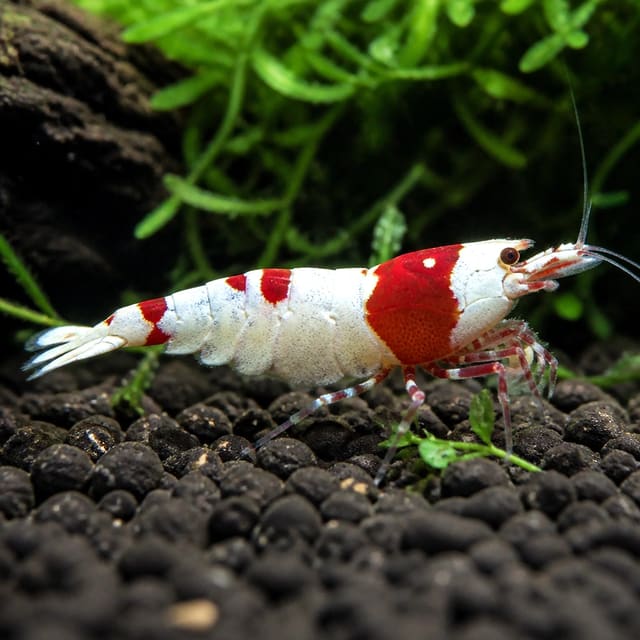
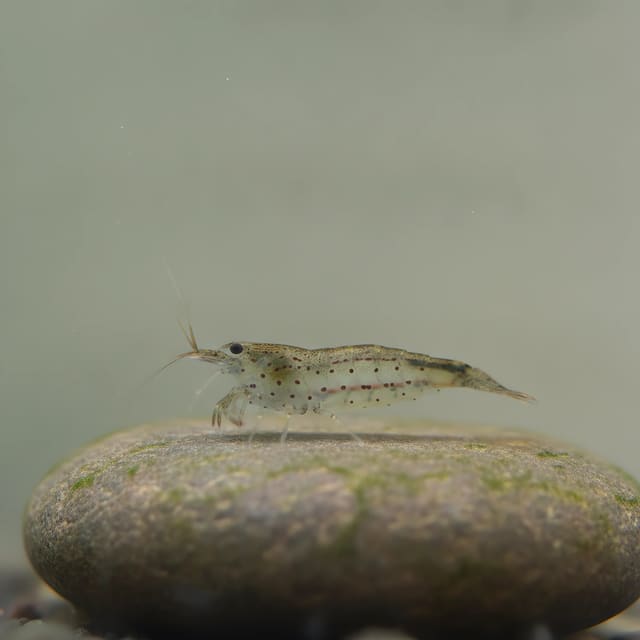
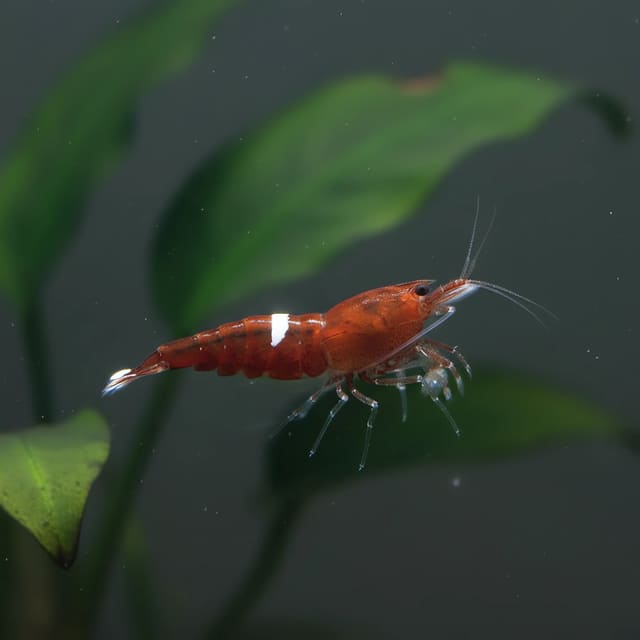
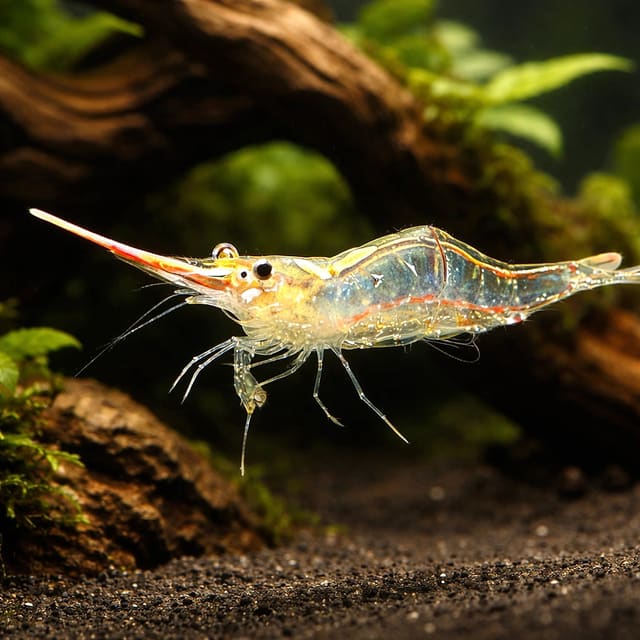
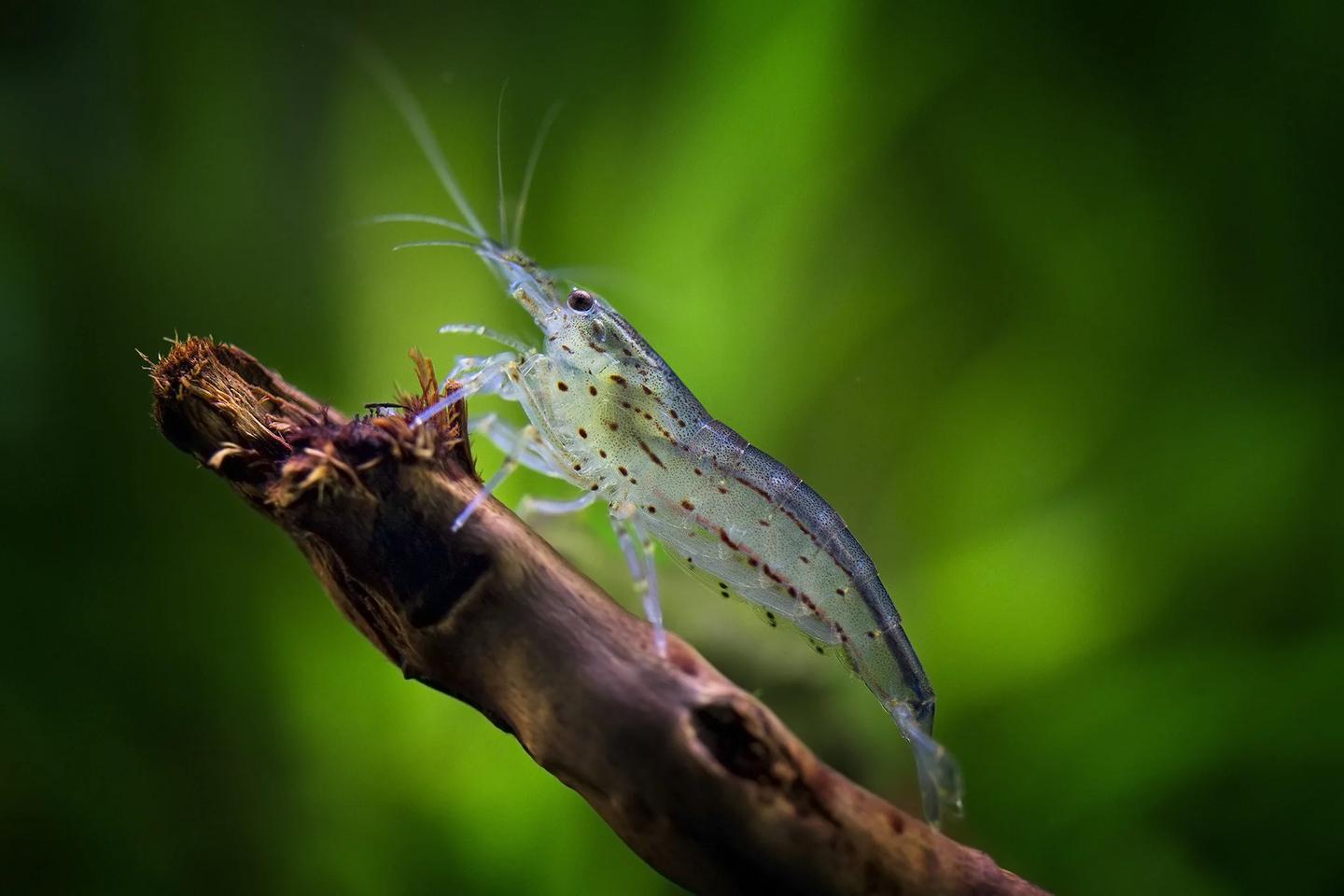
Caridina simoni simoni displays a variable but generally subtle colouration, ranging from translucent cream or pale brown to light grey or greenish tones, often with faint patterning or mottling. The body is semi-transparent, allowing some internal organs and developing eggs (in females) to be visible. The legs and antennae are long and delicate, and the rostrum (beak) is moderately pronounced. Females are noticeably larger and rounder-bodied than males, particularly when carrying eggs. Healthy specimens are active, constantly foraging, and display smooth, intact exoskeletons with no signs of damage or disease. Colouration can intensify or change slightly depending on diet, substrate colour, and environmental conditions. While not as vibrantly coloured as some ornamental shrimp species, the charm of Caridina simoni simoni lies in its industrious behaviour and beneficial role in the aquarium ecosystem.
Caridina simoni simoni is endemic to Sri Lanka, where it inhabits slow-moving streams, forest pools, and densely vegetated freshwater habitats. These environments are typically characterised by soft to moderately hard water, abundant leaf litter, submerged roots, and dense aquatic vegetation that provide cover and foraging opportunities. Water is generally clear to slightly tannin-stained, well-oxygenated, and stable in temperature. The species feeds on biofilm, algae, detritus, and microorganisms that colonise surfaces and organic matter. Understanding the natural ecology of this species is helpful for replicating suitable conditions in captivity, though the species is adaptable and can thrive in a range of well-maintained aquarium environments.
A minimum aquarium size of 10 litres is suitable for Caridina simoni simoni, though larger tanks (20-30 litres or more) provide greater stability and are easier to maintain. The substrate can be fine sand, smooth gravel, or specialised shrimp soil, depending on the desired aesthetic and planted tank requirements. The aquarium should be densely planted with a variety of live plants, including mosses (Taxiphyllum, Vesicularia), fine-leaved species (Cryptocoryne, Hygrophila), and floating plants to provide cover, grazing surfaces, and shade. Add driftwood, smooth rocks, and leaf litter to create additional hiding places and foraging opportunities. Filtration should be gentle and efficient; use a sponge filter or shrimp-safe canister filter with intake guards to prevent accidental siphoning. Water flow should be gentle to moderate. Lighting can be moderate, and the tank should be allowed to mature for several weeks before introducing shrimp to establish essential biofilm and microfauna.
Maintaining stable, clean water is essential for Caridina simoni simoni, though the species is more tolerant of moderate parameter variations than some more sensitive dwarf shrimp. Temperature should be kept between 20-26°C, with 22-24°C being ideal. pH should range from 6.0-8.0, with neutral to slightly acidic values preferred. Water hardness can be low to moderate; the species is adaptable to a range of GH and KH values. Ammonia and nitrite must always be at zero, and nitrates should be kept below 20ppm through regular partial water changes of 10-20% weekly and efficient biological filtration. Avoid copper-based medications, fertilisers, or additives, as copper is toxic to all shrimp. Use a reliable test kit to monitor parameters regularly, and ensure filtration is efficient and well-maintained. While the species is hardy, stability and consistency are always preferable to chasing precise numbers.
Top Tip: Add Indian almond leaves or oak leaves to the tank — they release beneficial tannins, encourage biofilm growth, and provide natural foraging opportunities.
Caridina simoni simoni is an omnivorous scavenger that feeds primarily on biofilm, algae, detritus, and microorganisms. In a mature, well-planted aquarium, much of the diet will be obtained naturally through constant grazing on plants, substrate, and surfaces. Supplement with high-quality sinking shrimp pellets or wafers, spirulina-based foods, blanched vegetables (such as spinach, courgette, or carrot), and occasional protein-rich foods (such as finely crushed bloodworms or brine shrimp) in very small amounts. Feed sparingly — 2-3 times per week is typically sufficient. Overfeeding can quickly degrade water quality and reduce the availability of natural grazing opportunities. Remove any uneaten food within a few hours to prevent fouling. A varied, balanced diet supports healthy moulting, vibrant colour, and successful breeding.
Caridina simoni simoni is a peaceful, highly social species that thrives when kept in groups of 10 or more individuals. In groups, they display natural foraging behaviour, social interactions, and coordinated grazing across all surfaces of the aquarium. Solitary specimens or those kept in small numbers may become stressed and withdrawn. The species is active throughout the day, constantly moving, climbing, and grazing on plants, substrate, and decor. Females carrying eggs ("berried") will fan and groom the eggs regularly, a behaviour that is fascinating to observe. The species is entirely non-aggressive toward tank mates and will not harm fish, plants, or other invertebrates. Observing a thriving colony of Caridina simoni simoni is one of the great pleasures of keeping freshwater shrimp.
Choosing appropriate tank mates for Caridina simoni simoni requires careful consideration of size, temperament, and predatory behaviour. Ideal companions include small, peaceful fish such as dwarf rasboras (Boraras species), small tetras (e.g. Ember Tetras), non-predatory snails (such as Neritina or Clithon), and other peaceful dwarf shrimp. Avoid large or aggressive fish, cichlids, loaches, crayfish, and any species with a mouth large enough to consume a shrimp. Even seemingly peaceful fish may opportunistically prey on shrimplets or juveniles. For the safest and most successful setup, a species-only or shrimp-and-snail tank is recommended, allowing the colony to thrive and breed without the stress or risk of predation. A well-planned community featuring carefully chosen, peaceful nano species can also work well if the aquarium is well-planted and provides ample cover.
Caridina simoni simoni breeds readily in captivity when provided with stable conditions, excellent water quality, and a mature, well-planted environment. Females carry fertilised eggs under the abdomen for approximately 3-4 weeks, fanning and grooming them regularly to ensure oxygenation and prevent fungal growth. The eggs are small and dark, and their development can be observed through the semi-transparent abdomen. Juveniles hatch as fully formed miniature shrimp (rather than planktonic larvae), making rearing straightforward. Survival rates are typically high in a predator-free tank with ample biofilm, moss, and fine-leaved plants. Provide hiding places and gentle filtration to protect shrimplets. Avoid large water changes or disturbances during breeding periods. With proper care, a small group can develop into a thriving, self-sustaining colony within a few months, providing both aesthetic appeal and ongoing interest.
Tropical Fish Co is your trusted source for healthy, quarantined Caridina simoni simoni and expert advice on shrimp keeping and nano aquarium setup. Every shrimp is carefully inspected for health, vitality, and colour before dispatch, and we provide comprehensive care guidance to ensure your success. With fast, reliable delivery across the UK and a commitment to customer satisfaction, we make it easy to add these industrious, peaceful shrimp to your collection. Whether you're setting up your first planted nano tank, establishing a shrimp colony, or enhancing an existing community aquarium, our team is here to support you every step of the way. Shop with confidence and discover the charm and utility of Caridina simoni simoni from Tropical Fish Co — your trusted partner for freshwater aquarium shrimp for sale UK-wide.
No reviews for this item yet. Bought one? Honest reviews only, good or bad.
What customers say about ordering from us
I have a small group of long finned mountain minnows. So was delighted to be able to order ten of this variety to increase the genetics in my tank . The ones I recieved are healthy but it’s to early to give a verdict on wether they are of a long finned type since they are small currently.
Gordon Walker · 23 Sept 2026
100% success travel and "installation". Pleased with quality of purchase. The Siamese fighter a bit "shy" so have not yet seen him at his best yet but looking good. Happy customer. GG
George E Garratt · 21 Sept 2026
Reviews of our shop, collected by Judge.me, an independent third-party review collector. Newest first.