Caridina thambipillai
Sunkist Orange Shrimp - UK
Bright Sunkist Orange Shrimp add bold colour to planted freshwater aquariums. Ideal for peaceful setups and active grazing. Order now for UK delivery.
Care at a Glance
Premium Quality
Healthy, vibrant fish from trusted suppliers
Expert Care
Detailed care guides and support
Live Arrival Guarantee
Your fish arrives healthy or we'll replace it
Acclimated
Properly quarantined and ready for your tank
Quick Care Guide
Water Parameters
Maintain these water conditions for optimal health and vibrant colors
Why Choose This Fish?
Bright Sunkist Orange Shrimp add bold colour to planted freshwater aquariums. Ideal for peaceful setups and active grazing. Order now for UK delivery.
Sunkist Orange Shrimp are one of those rare freshwater invertebrates that instantly brighten an aquarium without needing a large tank or aggressive feeding regime. Known in the hobby as Caridina thambipillai, this vivid orange dwarf shrimp comes from stream habitats in Malaysia and Myanmar and has become a favourite among keepers looking for colourful aquarium shrimp UK hobbyists can keep in a peaceful nano setup. At around 2.5 cm adult size, with a lifespan of roughly 2 years, they suit shrimp keepers who want something more unusual than standard cherry shrimp while still enjoying a species that can breed in freshwater. If you are researching a sunkist orange shrimp care guide, wondering about sunkist orange shrimp water parameters, or planning a sunkist orange shrimp aquarium setup, this species rewards careful, stable husbandry with strong colour, active grazing behaviour, and a lively colony dynamic. Their peaceful temperament, moderate care level, and ability to thrive sunkist orange shrimp with plants make them especially appealing for aquascaped tanks. See our detailed photos showing the rich sunkist orange color, body shape, and contrast against dark substrate in a planted tank. For keepers searching for live aquarium shrimp for sale UK, freshwater aquarium shrimp UK, or the best shrimp for sale UK for a peaceful display, Sunkist Orange Shrimp offer standout colour, natural algae-grazing behaviour, and genuine character in a compact aquarium.
🔹 Quick Facts
- Scientific Name: Caridina thambipillai
- Care Level: Moderate
- Min Tank Size: 20 litres (about 5.3 gallons)
- Temperature: 22-28°C (72-82°F)
- pH Range: 6.5-7.5
- Lifespan: Up to 2 years
- Temperament: Peaceful
- Diet: Omnivore
Classification
- Order: Decapoda
- Family: Atyidae
- Genus: Caridina
Caridina thambipillai belongs to the Atyidae family of freshwater shrimp, a group well known in the aquarium trade for active grazing species with fine front appendages adapted for feeding on biofilm and microscopic food. In the hobby, Sunkist Orange Shrimp sit in an interesting middle ground: more unusual than many common Neocaridina lines, but not as demanding as some specialist bee shrimp. Their place in the trade has grown because they combine bold orange colour, manageable size, and freshwater breeding potential in a peaceful community setting.
Where Do Sunkist Orange Shrimp Come From? Natural Habitat Explained
The sunkist orange origin is not a soft drink label or fruit brand reference in aquarium terms; it refers to the striking citrus-orange appearance of this shrimp. In nature, Caridina thambipillai is recorded from parts of Malaysia and Myanmar, so if you have searched sunkist orange malaysia, sunkist orange origin country, or sunkist orange where from, the answer lies in Southeast Asian freshwater stream systems rather than commercial beverages. These shrimp are associated with clear to lightly stained streams, leaf litter, submerged roots, stones, and patches of algae and biofilm.
That habitat matters because it explains why Sunkist Orange Shrimp do best in mature aquariums with stable water chemistry, gentle flow, and plenty of grazing surfaces. In the wild they spend much of the day picking at microscopic films, soft algae, decaying plant matter, and tiny organic particles. They are not open-water swimmers. Instead, they move through cover, moss, wood, and fine surfaces where food accumulates naturally.
Many hobbyists compare them with native freshwater shrimp UK species or ask whether they are like wild freshwater shrimp UK, freshwater shrimp UK rivers fauna, or even live river shrimp for sale UK stock. They are not native British river shrimp. They are tropical freshwater shrimp adapted to warmer, more stable conditions than most freshwater shrimp in pond UK or freshwater shrimp UK pond discussions would suggest. For that reason, they are not a true cherry shrimp UK pond option for outdoor year-round keeping in Britain.
Customers sometimes also search broad terms such as pond shrimp for sale UK or river shrimp for sale UK. Sunkist Orange Shrimp are best viewed as specialist aquarium shrimp rather than pond livestock. Their colour and survival rate are both better indoors in a controlled tank. Conservation data in the wild remains limited, but the species is not generally considered threatened. Even so, responsible sourcing and captive maintenance matter, especially because wild collection has historically supplied parts of the trade.
💡 Expert Tip
Mimicking a stream-edge habitat improves colour and confidence. Use aged wood, moss, leaf litter, and a mature sponge-filtered tank so shrimp can graze all day instead of relying only on prepared food. In our experience, newly settled Sunkist Orange Shrimp show stronger feeding behaviour within 48 hours when they are introduced to a biofilm-rich aquarium rather than a sterile new setup.
How to Set Up the Perfect Tank for Sunkist Orange Shrimp
A successful sunkist orange shrimp tank setup starts with stability, not complexity. The main sunkist orange shrimp tank requirements are a mature aquarium, gentle filtration, oxygenated water, and enough surface area for biofilm growth. Although the sunkist orange shrimp minimum tank size is 20 litres, most keepers get better long-term results in 30-45 litres because water chemistry changes more slowly and colony growth is easier to manage. If you are asking how many sunkist orange shrimp per tank, a sensible starting group is 6-10 shrimp in 20-30 litres, with more space recommended if you want the group to expand into a visible colony.
Tank Size Requirements
The official sunkist orange shrimp minimum tank size is 20 litres, but that is best treated as a bare minimum for a starter group. A 30 litre planted aquarium gives more room for moss, wood, and leaf surfaces, and it reduces the risk of sudden ammonia or temperature swings. Shrimp produce a low bioload individually, yet they are far more sensitive than many fish to instability. For a breeding-focused sunkist orange shrimp colony, 30 litres or more is ideal.
Water Parameters
The key sunkist orange shrimp water parameters are straightforward but should be kept stable. Aim for a sunkist orange shrimp temperature of 22-28°C, with 23-25°C often being a comfortable middle ground for colour, activity, and longevity. The acceptable sunkist orange shrimp water temperature range is broad, but prolonged exposure near the upper end can shorten lifespan. Keep pH between 6.5 and 7.5; if you are searching for the ideal sunkist orange shrimp ph level, neutral to slightly acidic usually works best. For sunkist orange shrimp water hardness, target 3-12 dGH. The practical sunkist orange shrimp GH KH requirements for most tanks are moderate mineral content with enough KH to prevent pH crashes, but not so much hardness that moulting becomes difficult.
Filtration
For freshwater shrimp requirements, filtration should be effective but safe. Air-driven sponge filters are excellent because they provide biological filtration, gentle flow, and a grazing surface. Small hang-on-back or internal filters can work too, but the intake must be covered with a shrimp-safe sponge. Shrimplets are tiny and can easily be pulled into an unguarded intake. Moderate circulation is enough; avoid blasting the whole tank.
Substrate
Dark sand or fine gravel helps the orange body colour stand out. In a planted setup, shrimp-active soils can be useful if they match your target pH and hardness, but inert substrates are often easier for mixed community tanks. Keep substrate depth around 2-4 cm. Add botanicals, rounded stones, and wood to create feeding zones and shelter for moulting shrimp.
Plants & Decor
Sunkist orange shrimp with plants is one of the best ways to keep this species. A sunkist orange shrimp in planted aquarium environment gives security, natural grazing, and better survival for shrimplets. Mosses, subwassertang, floating plants, bucephalandra, anubias, and fine-rooted stems all help. If you enjoy colour-themed shrimp collections, they also pair visually with species such as Green Jade Shrimp, Yellow Neon Shrimp, and Bloody Mary Cherry Shrimp in separate breeding tanks.
Many keepers browsing aquarium shrimp for sale UK or aquarium shrimp for sale UK nearby are setting up their first shrimp tank. For them, the most important décor rule is simple: more cover equals less stress. Moss-covered wood and leaf litter often make newly introduced shrimp visible sooner because they feel secure enough to forage in the open.
Lighting Requirements
Moderate lighting for 6-8 hours daily is usually enough. Strong light can help plant growth but may also encourage nuisance algae if nutrients are imbalanced. Shrimp benefit from some algae and biofilm, but not from unstable conditions caused by overlit tanks. Use a timer and keep the routine consistent.
Quick Setup Checklist
- Cycle the tank fully before adding shrimp
- Use a shrimp-safe sponge filter or protected intake
- Keep temperature stable between 22-28°C
- Add moss, wood, and biofilm-friendly surfaces
- Test pH, GH, KH, ammonia, nitrite, and nitrate
- Acclimate slowly to avoid osmotic shock
💡 Pro Tip
Always cycle a shrimp tank for 4-6 weeks before adding livestock. A mature setup with visible biofilm and stable minerals is far more important than expensive equipment. This is the single best answer to how to care for sunkist orange shrimp successfully over the long term.
What Do Sunkist Orange Shrimp Eat? Complete Feeding Guide
The natural sunkist orange shrimp diet is omnivorous. In the wild they graze on biofilm, algae, decaying plant material, and tiny organic particles. In the aquarium, a good sunkist orange shrimp feeding guide combines natural grazing with small portions of prepared shrimp foods and occasional vegetable or protein treats. If you are asking how often should you feed freshwater shrimp or how often to feed freshwater shrimp, the answer depends on how mature the tank is. In a well-established planted aquarium, they may only need a small supplemental feeding once per day or even every other day.
Because the product name contains “Sunkist Orange,” some searches such as does sunkist diet orange have caffeine, how much caffeine in diet sunkist orange, sunkist orange diet soda, sunkist orange drink mix, sunkist orange drink mix ingredients, sunkist orange peach mango drink mix, or sunkist orange mix can appear online. None of those are relevant to feeding this shrimp. These shrimp should never receive sugary human foods or flavoured drinks. Their nutritional needs are based on minerals, plant matter, algae, and specialised invertebrate foods.
Staple Foods
Use a quality shrimp pellet, algae wafer crumbs, or specialised shrimp sticks as the staple diet. Good staple foods sink quickly and hold together long enough for grazing. In mature tanks, natural biofilm should remain their main food source, with prepared foods acting as support rather than the entire diet.
Supplemental Foods
Blanched spinach, courgette, nettle, mulberry leaf, and spinach-based shrimp foods work well. Tiny amounts of protein-rich foods can be offered once or twice weekly, especially for breeding females. Some keepers use newly hatched foods or microfauna cultures, and while searches like brine shrimp eggs for sale UK are common in fish breeding, adult Sunkist Orange Shrimp do not need brine shrimp eggs as a staple. Shrimplets benefit more from powdered biofilm foods and naturally mature surfaces.
Treats & Special Foods
Occasional treats include blanched carrot, pumpkin, or specialised colour-support foods rich in carotenoids. These can help maintain the warm orange tone, especially in tanks with dark substrate. If you have ever wondered what does sunkist orange taste like or how to eat sunkist orange, that is a fruit query rather than an aquarium one. Likewise, can you eat freshwater shrimp, is shrimp for sale UK safe to eat, and would shrimp for sale UK be safe to eat are not relevant here: these are ornamental aquarium shrimp, not food shrimp.
Feeding Frequency & Portion Control
Feed only what the colony can clear in around 2-3 hours. In a mature tank, 4-6 small shrimp may need only a tiny pellet or pinch of powdered food. Overfeeding is the fastest route to poor water quality. For a mixed colony, alternate plant-based foods with a protein meal once or twice weekly. This approach suits both a general freshwater shrimp uk guide and species-specific cherry shrimp care uk style husbandry.
| Time | Food | Amount |
|---|---|---|
| Morning | Natural grazing only or powdered shrimp food | Very small pinch |
| Evening | Shrimp pellet, algae wafer crumb, or blanched veg | What is eaten in 2-3 hours |
⚠️ Feeding Warning
Overfeeding causes ammonia spikes, bacterial blooms, and failed moults. Remove uneaten vegetables after a few hours, and do not assume shrimp need food every time they come into view. In most planted tanks, they are already grazing continuously.
A useful comparison point if you are building a shrimp-focused aquarium and want to understand how algae-grazing species behave in planted tanks.
Another colourful shrimp option for separate colonies if you want to compare feeding response, colour intensity, and breeding pace.
Sunkist Orange Shrimp Appearance: Colors, Patterns & Varieties
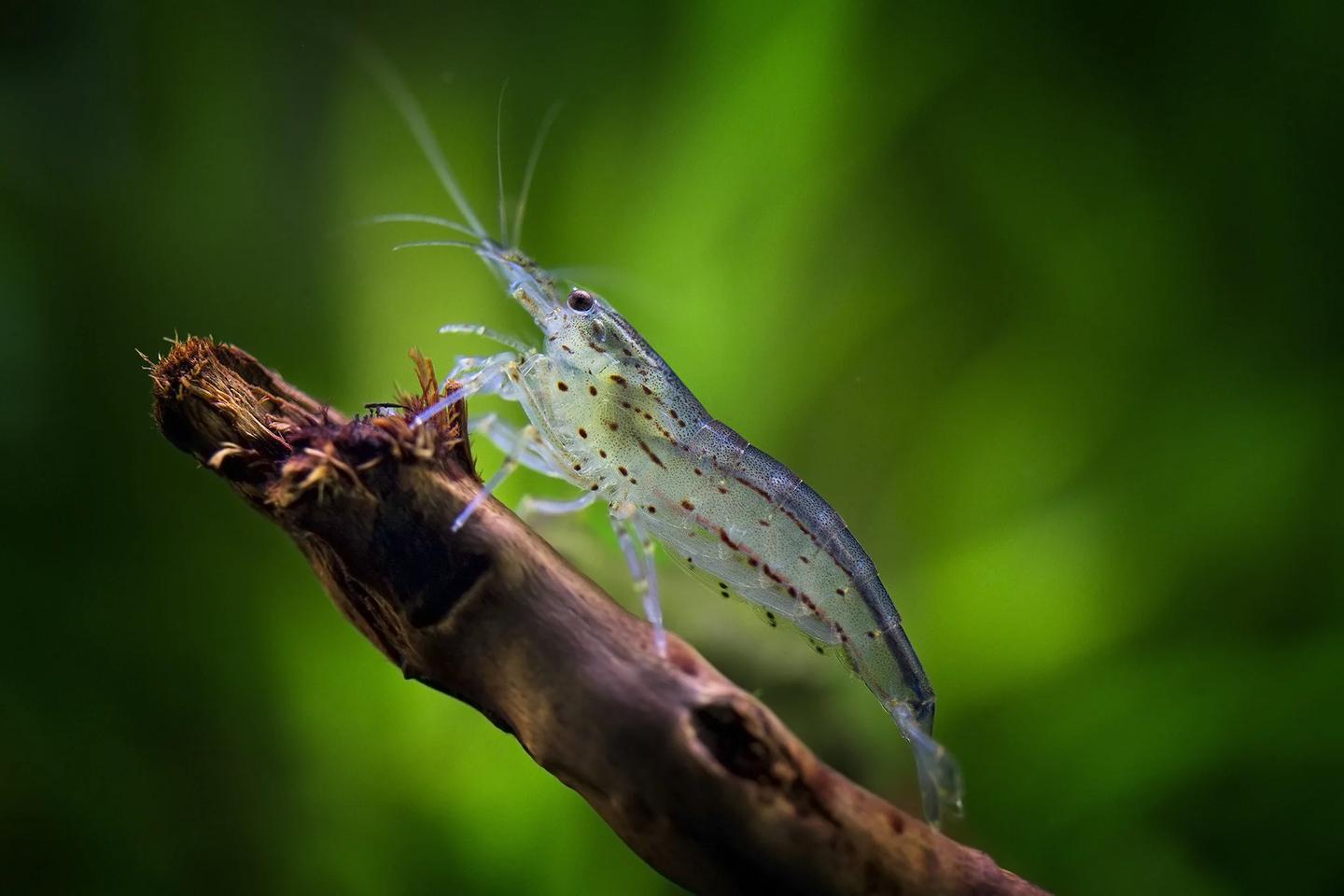
The main reason many keepers buy sunkist orange shrimp UK stock is simple: they glow in the aquarium. Adult size is usually around 2.5 cm, with a slim but sturdy dwarf shrimp body, long antennae, and active picking appendages. The best specimens show a rich, even orange body from head to tail, sometimes with slightly translucent legs or lighter saddle areas in females.
If you are comparing them with cherry shrimp for sale listings, Sunkist Orange Shrimp stand apart by offering a warmer tangerine-to-citrus tone rather than the red, yellow, or chocolate shades seen in many Neocaridina lines. The ideal sunkist orange color is solid and bright, though some individuals may appear lighter after moulting or darker depending on mood, substrate, and diet. Brownish specimens are known in the species, especially outside selective aquarium lines.
Females are usually larger, deeper-bodied, and more intensely coloured than males. Mature females may show a visible saddle before carrying eggs. Males are slimmer and often slightly paler. If you are wondering how to choose sunkist orange shrimp for a breeding group, select active individuals with full antennae, intact legs, strong colour, and no milky patches in the body. Avoid shrimp that are lethargic or unable to cling properly to surfaces.
Searches like how to peel sunkist orange, how to cut sunkist orange, how to open sunkist oranges, what company makes sunkist orange, what company makes sunkist orange soda, or what happened to sunkist oranges relate to fruit or beverage branding rather than this shrimp. In aquarium use, “Sunkist” refers to the striking orange visual effect. Our product image, sunkist-orange.webp, shows the intense orange display that makes this species so popular against dark substrate and green moss.
What Fish Can Live With Sunkist Orange Shrimp? Compatibility Guide
If you are asking what can live with freshwater shrimp, the safest answer is: peaceful, small species with tiny mouths and calm behaviour. Sunkist Orange Shrimp are gentle, non-territorial, and constantly occupied with grazing. That makes them a strong candidate for the best shrimp for community tank conversation, but only if the community is chosen carefully. Adult shrimp can coexist with some nano fish, yet shrimplets may still be eaten by almost any fish given the chance.
Ideal Tank Mates
The best sunkist orange shrimp tank mates include snails, Otocinclus, and very peaceful micro-species. In shrimp-focused displays, many keepers prefer species-only tanks or shrimp-and-snail combinations because breeding success is much higher. If you enjoy colourful invertebrate collections, consider separate colonies of Chocolate Cherry Shrimp, Full Black Rili Shrimp, Green Jade Shrimp, and Yellow Neon Shrimp. Keeping colour lines separately helps avoid accidental mixing and makes it easier to monitor breeding quality.
For hobbyists browsing freshwater shrimp uk quick guide content, one of the most common mistakes is assuming any “peaceful” fish is shrimp-safe. Even peaceful fish may hunt newborn shrimp. So while some fish are sunkist orange shrimp safe with fish in terms of adult coexistence, they are not always ideal if your goal is colony growth.
Species to Avoid
Avoid cichlids, puffers, larger barbs, most loaches, and any fish large enough to view shrimp as food. These are not sunkist orange shrimp safe tank mates. Also avoid mixing with highly aggressive or boisterous species that create constant stress. Shrimp under stress hide more, feed less, and moult poorly.
Community Tank Stocking Examples
In a 30 litre planted tank, a good setup might be 8-12 Sunkist Orange Shrimp with snails only. In a 45 litre aquarium, you could keep a group of shrimp with a few Otocinclus once the tank is mature. For a display-oriented shrimp collection, many aquarists keep separate tanks for orange, red, black, and green lines such as Bloody Mary Cherry Shrimp, Super Red Sakura Shrimp, and Red Pinto Shrimp.
Some search terms in this area, such as how to sell cherry shrimp, how to size shrimp, what day freshwater shrimp uk 2024, what day freshwater shrimp uk season, what freshwater shrimp ukes, what day freshwater shrimp ukraine, what day freshwater shrimp uky, and what day freshwater shrimp ukg, do not reflect real compatibility decisions. The practical question is whether tank mates leave shrimp alone and allow them to feed and moult in peace.
| Species | Compatible? | Notes |
|---|---|---|
| Green Jade Shrimp | ⚠️ Caution | Can coexist, but best kept separately to preserve colour lines and avoid mixed offspring. |
| Yellow Neon Shrimp | ⚠️ Caution | Peaceful, but separate colonies are recommended for selective breeding. |
| Puffers | ❌ Avoid | Will actively hunt and kill shrimp. |
💡 Compatibility Tip
Always quarantine new arrivals for 2-4 weeks before adding them to a shrimp tank. This helps prevent planaria, hydra, parasites, and bacterial issues from entering an established colony. It is especially important when combining multiple shrimp species or adding fish to a breeding setup.
How to Breed Sunkist Orange Shrimp: Complete Breeding Guide
Sunkist orange shrimp breeding is achievable in freshwater, which is one reason this species has become so appealing to dedicated shrimp keepers. Breeding difficulty is moderate rather than difficult. They are not in the same category as some specialist shrimp that require highly specific conditions, but they still need stable water and good mineral balance. If you are asking how often do freshwater shrimp breed, healthy adult females may carry eggs repeatedly when conditions are right, though timing varies with temperature, diet, and stress levels.
Breeding Setup
A dedicated 20-30 litre breeding tank works well, though larger is easier to stabilise. Use moss, leaf litter, sponge filtration, and a mature biofilm layer. The best freshwater shrimp uk breeder setups are simple, stable, and heavily seasoned rather than over-equipped. Keep a group with multiple females and males. If you are trying to identify freshwater shrimp uk male individuals, look for slimmer bodies and generally less intense colour compared with females.
Spawning Behaviour
After moulting, a receptive female releases pheromones that trigger a noticeable increase in male activity. Males may dart around the tank searching for her. Once fertilised, the female carries eggs under the abdomen. This is often when new keepers realise their small starter group is becoming a true sunkist orange shrimp colony.
Egg Care & Hatching
Females fan the eggs constantly to keep them oxygenated and clean. Avoid sudden changes in water chemistry during this period. Stable temperature and low stress are more important than chasing exact numbers. Unlike some shrimp species that produce larvae needing brackish development, Sunkist Orange Shrimp can complete their life cycle in freshwater, making them more practical than some freshwater shrimp that don't breed easily in home aquariums.
Fry Care & Growth
Once hatched, shrimplets need microscopic food and safe surfaces to graze. Powdered shrimp foods, biofilm, and mature moss are far better than large pellets. Avoid over-cleaning the tank. In many successful colonies, the back corners, sponge filter, and moss clumps become the nursery. This is also why searches like sunkist orange for baby are unintentionally relevant in aquarium terms: baby shrimp need a gentle, food-rich environment from day one.
Common Breeding Challenges
The biggest problems are failed moults, low shrimplet survival, and unstable minerals. Rapid water changes, excessive cleaning, and fish predation all reduce success. Irrelevant searches such as baby mantis shrimp for sale uk, baby peacock mantis shrimp for sale uk, fairy shrimp eggs for sale uk, pistol shrimp and goby pair for sale uk, what freshwater shrimp ukulele, what freshwater shrimp uky, what size shrimp for stuffed shrimp, what time freshwater shrimp uk 2024, and what time freshwater shrimp uk time do not help with this species. What matters is stable water, mature surfaces, and patience.
Advanced Breeding Tip
If you want stronger juvenile survival, feed tiny powdered food to one end of the tank just after lights out, when adults are less competitive. This creates a feeding zone for shrimplets without fouling the entire aquarium. Breeders often see better early growth when moss and sponge surfaces are left undisturbed for several weeks.
Sunkist Orange Shrimp vs Similar Species: Which Should You Choose?
Choosing between colourful dwarf shrimp often comes down to water, goals, and visual preference. If you want a bright orange shrimp with freshwater breeding potential and moderate care demands, Sunkist Orange Shrimp are a strong option. If you want a more established beginner line, some Neocaridina varieties may be easier. If you want rarer patterns, bee-type shrimp may appeal more but usually ask for tighter control.
| Feature | Sunkist Orange Shrimp | Bloody Mary Cherry Shrimp |
|---|---|---|
| Max Size | 2.5 cm | 2.5-3 cm |
| Care Level | Moderate | Easy to Moderate |
| Temperature | 22-28°C | 20-26°C |
| Price | £3.87 | Varies by grade |
| Best For | Orange colour and freshwater Caridina interest | Beginner-friendly red shrimp colonies |
| Feature | Sunkist Orange Shrimp | Red Pinto Shrimp |
|---|---|---|
| Max Size | 2.5 cm | 2.5 cm |
| Care Level | Moderate | Advanced |
| Temperature | 22-28°C | 20-24°C |
| Price | £3.87 | Higher |
| Best For | Colourful display with manageable care | Specialist patterned shrimp keepers |
Choose Sunkist Orange Shrimp if you want something more distinctive than standard red shrimp but less demanding than many high-end Caridina projects. They are ideal for planted nano tanks, colour-themed shrimp displays, and keepers ready to move beyond the absolute beginner stage. If you are comparing options for sunkist orange shrimp for beginners, they are possible for careful beginners, but they reward patience more than rushed setups. For related alternatives, see Bloody Mary Cherry Shrimp, Red Pinto Shrimp, and Chocolate Cherry Shrimp.
Common Health Problems in Sunkist Orange Shrimp & How to Prevent Them
Healthy Sunkist Orange Shrimp are active, alert, and constantly grazing. They should move confidently over surfaces, hold their body normally, and show clean shell structure without cloudy muscle tissue. Good colour is helpful, but behaviour is the better health indicator. Shrimp that stop feeding, lie on their side, or fail to right themselves are in trouble.
Signs of a Healthy Shrimp
Look for steady grazing, regular moulting, full antennae, intact legs, and normal response to movement. Females may show saddles or carry eggs. In a settled colony, you should also see shrimplets if breeding is established. For buyers comparing which shrimp for sale UK 2023, which shrimp for sale UK 2024, or which shrimp for sale UK online, visible activity and clear body condition matter more than exaggerated marketing terms.
Common Problems & Symptoms
The most common issues are failed moults, bacterial infections, stress from poor acclimation, and losses caused by ammonia, nitrite, or copper exposure. White ring of death around the shell often points to moulting trouble linked to mineral imbalance or stress. Sudden deaths after arrival usually trace back to rapid parameter changes rather than infectious disease.
Treatment Options
For most shrimp problems, the first treatment is environmental correction: test water, reduce feeding, improve oxygenation, and perform careful small water changes with matched parameters. Avoid random medication. Many fish medicines are unsafe for invertebrates. Searches such as which shrimp for sale uk to usa, which shrimp for sale ukraine, which freshwater shrimp ukes, which freshwater shrimp ukraine, which freshwater shrimp ukulele, and which freshwater shrimp uky are not useful for diagnosis. Water quality is almost always the first place to look.
⚠️ Critical Health Warning
NEVER use copper-based medications with invertebrates. Copper is lethal to shrimp even at low levels. Always read medication ingredients before treating a community aquarium that contains shrimp or snails.
Quarantine Protocol
- Keep new shrimp in a separate tank for 2-4 weeks
- Use a sponge filter and simple cover such as moss
- Observe feeding, moulting, and activity daily
- Check for parasites, hydra, planaria, or unexplained deaths
- Acclimate slowly before transfer to the display tank
Prevention is always easier than treatment. Stable minerals, a mature tank, careful acclimation, and conservative feeding solve most problems before they begin. If you are wondering are sunkist oranges healthy, in aquarium terms the equivalent question is whether this shrimp is robust. The answer is yes, provided the environment is stable and copper-free.
Understanding Sunkist Orange Shrimp Behavior in the Aquarium
Sunkist Orange Shrimp are peaceful, social in a loose colony sense, and most active when they feel secure. They are not schooling animals, but they do better in groups of 6 or more because group presence reduces shyness. During the day they graze on glass, moss, wood, leaf litter, and substrate. In a well-designed tank, they are visible throughout the day rather than hiding constantly.
Interesting behaviours include coordinated grazing, post-moult hiding, and bursts of male activity when a female is ready to breed. They also change visibility depending on the environment. In sparse tanks they often stay hidden. In mature planted tanks with moss and cover, they become bolder and more natural. This is another reason a sunkist orange shrimp in planted aquarium setup works so well.
To encourage natural behaviour, keep water stable, use dark substrate, provide fine plants and wood, and avoid predatory tank mates. Many keepers notice that once the colony settles, the shrimp spend more time in the open and develop stronger colour. In that sense, behaviour is one of the best indicators that your sunkist orange shrimp ideal conditions are being met.
Why Buy from Tropical Fish Co?
When ordering ornamental shrimp online, the difference is not just the species name on the label. It is the condition of the animals, how they were held before dispatch, and whether they have been prepared for typical UK aquarium conditions. Our Sunkist Orange Shrimp are selected for active behaviour, clear shell quality, and attractive orange colour rather than simply packed straight from an import list. That matters with a moderate-care species where stress and poor acclimation can undo good genetics very quickly.
Each group is monitored before sale, and shrimp are not rushed out immediately after arrival. We check feeding response, moulting stability, and general activity so customers looking for sunkist orange shrimp for sale UK, sunkist orange shrimp online UK, or where to buy sunkist orange shrimp UK receive stock that has already settled. For buyers comparing sunkist orange shrimp price UK against random listings, the real value is in healthy shrimp that arrive active and acclimate well.
Orders are packed for live transport with insulated materials, secure bagging, and seasonal heat protection where needed. That makes a difference for sunkist orange shrimp delivery UK, especially during colder months. If you are ready to order sunkist orange shrimp UK, buy shrimp UK, or find a reliable sunkist orange shrimp shop UK, this species is an excellent choice for planted nano tanks and peaceful shrimp colonies. Customers searching for cheap sunkist orange shrimp UK often discover that the lowest initial price can mean weaker stock, poorer colour, and higher losses. Healthy, settled shrimp are the better investment.
We also understand the practical side of freshwater shrimp uk requirements, including careful acclimation advice and realistic guidance on tank maturity. While broad topics like freshwater shrimp uk import requirements, freshwater shrimp uk export requirements, and even unrelated phrases such as freshwater shrimp uk healthcare or freshwater shrimp uk weather appear in search results, what matters to the aquarist is receiving healthy shrimp with clear care instructions. Order your Sunkist Orange Shrimp today with confidence if you want a colourful, peaceful, and genuinely rewarding freshwater invertebrate.
Why Choose Tropical Fish Co for Sunkist Orange Shrimp
- Selected for active grazing behaviour and attractive orange colour, not just packed as anonymous mixed shrimp
- Held and observed before sale so feeding response and general condition can be checked
- Packed for UK transit with insulated materials and seasonal heat protection for safer live arrival
You Might Also Like
If you are building a colourful shrimp setup, compare this species with Super Red Sakura Shrimp for bold red contrast, Full Black Rili Shrimp for a darker modern look, and Chocolate Cherry Shrimp for warm earthy tones. For brighter mixed display ideas in separate colonies, Green Jade Shrimp and Yellow Neon Shrimp are both eye-catching alternatives. If you are exploring rarer Caridina options, Red Pinto Shrimp offer a more advanced next step. You can also browse our wider freshwater shrimp collection to compare colours, care levels, and tank suitability across the range.
You Might Also Like


Aulonocara sp. 'Firefish' - Tropical Fish for Sale UK

Best Food for Tropical Fish - White Worms (90 ML) | UK

Orange Venezuelan Cory (Corydoras venezuelanus var. 'Orange') - UK

Yellow Lepturus Cichlid - UK

Apistogramma agassizii “Super Red” - UK

X Neon Green Rasbora - UK

Rasbora Heteromorpha (Trigonostigma heteromorpha) - UK
Popular Right Now

Endler Gold Guppy Breeding (Poecilia wingei) - UK

Chindongo saulosi 'Coral Red' - UK
10x Assorted Swordtails – Xiphophorus Hellerii

Glass Catfish (Kryptopterus vitreolus) - UK

Blood Red Dwarf Gourami - UK

Striped Kribensis Dehane - Tropical Fish for Sale UK