Easy
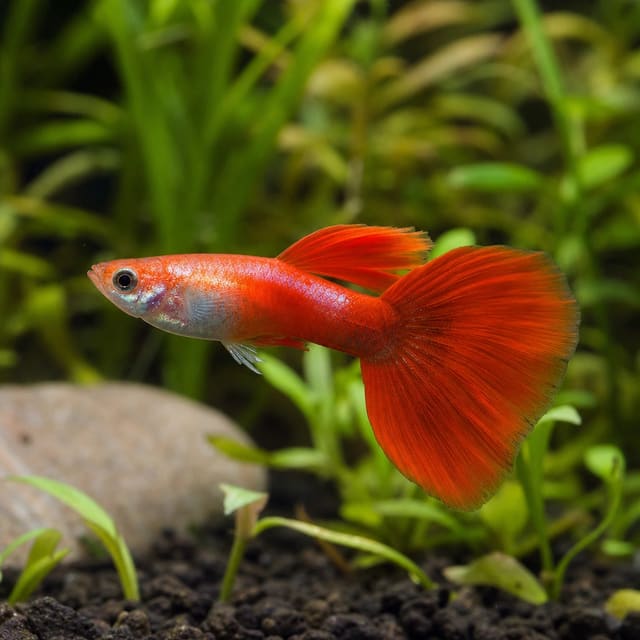
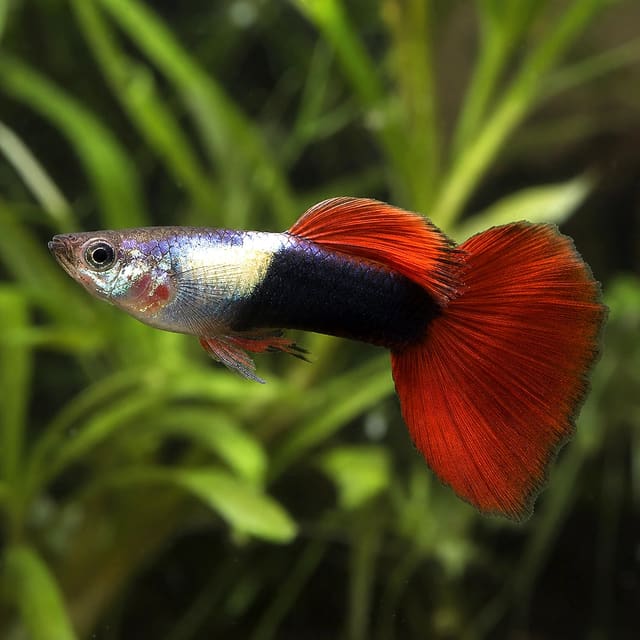
Red Tuxedo Male Guppy (Poecilia reticulata)
22–28°C · pH 7–8
£3.99
Photo coming soon
The size, price and care details on this page are for this listing.
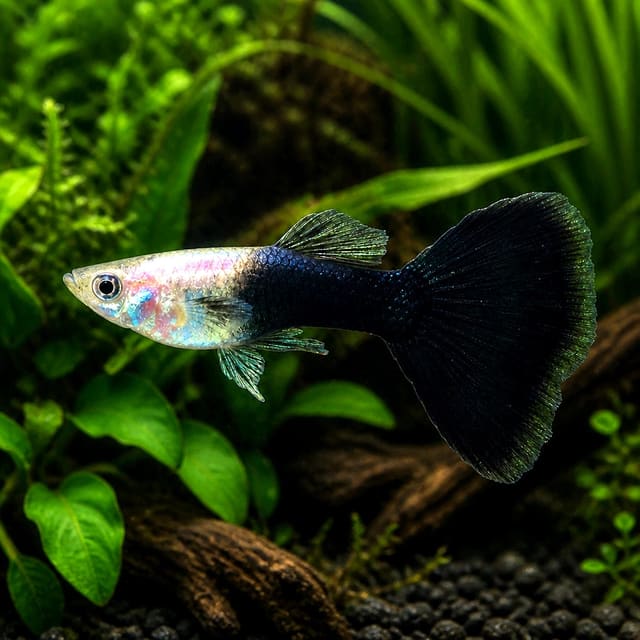
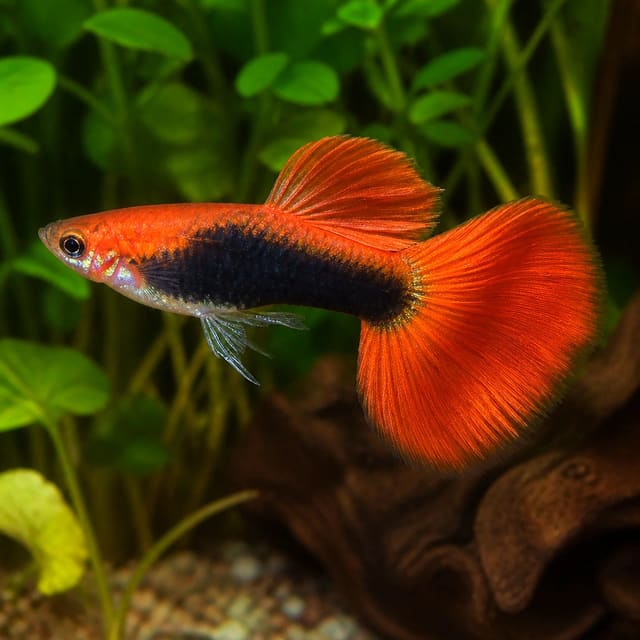
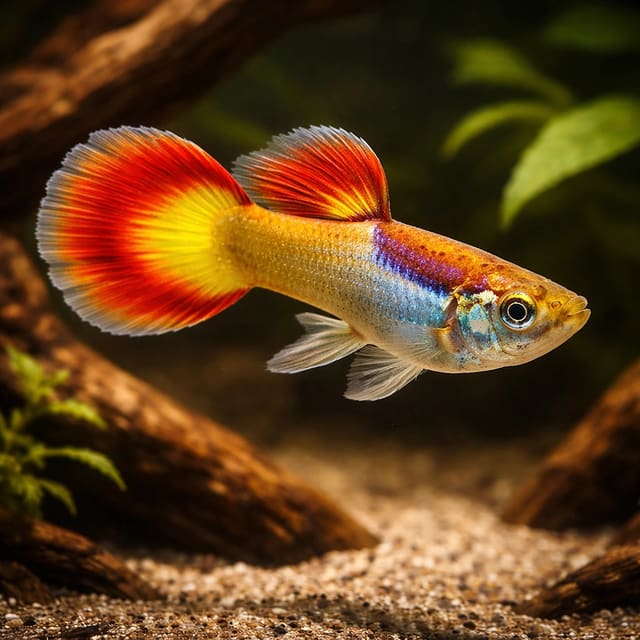
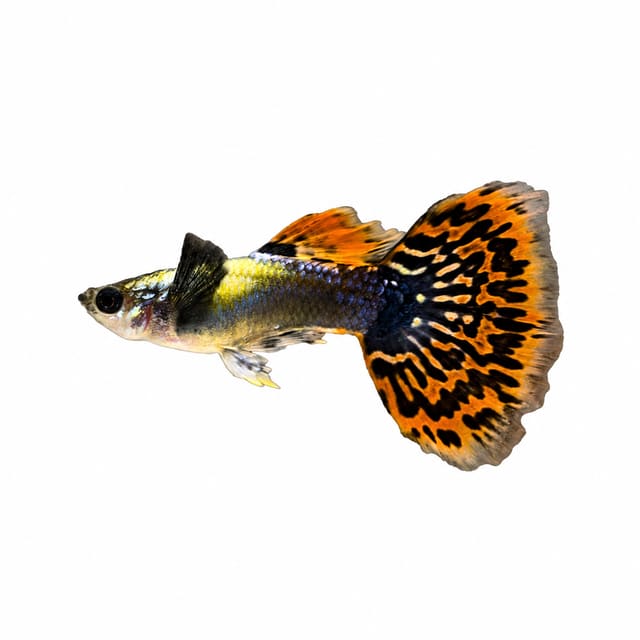
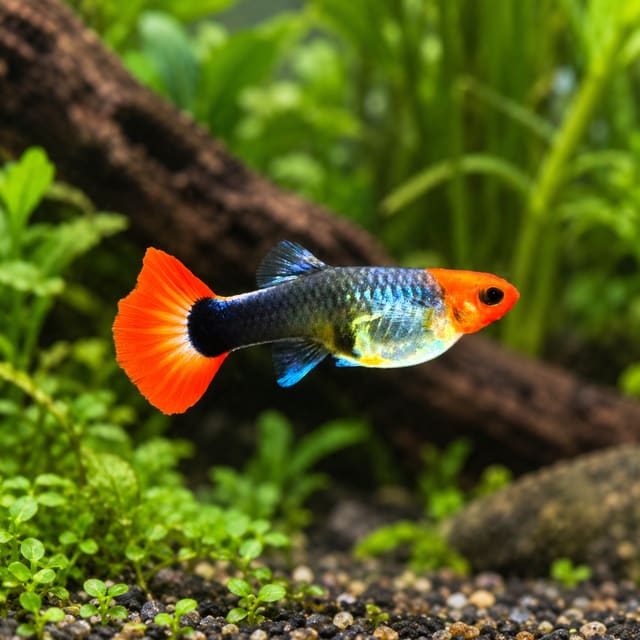
A male Red Cap Guppy (Poecilia reticulata), sold as one live fish in the selected 2–3 cm or 3–4 cm size. Keep guppies in a mature, mineral-bearing aquarium with room for a social group and peaceful companions.
Poecilia reticulata
Shoaling fish: kept in a group they feel safer, stay calmer and show their best colour.
Minimum of 2 per order.
A male Red Cap Guppy (Poecilia reticulata), sold as one live fish in the selected 2–3 cm or 3–4 cm size. Keep guppies in a mature, mineral-bearing aquarium with room for a social group and peaceful companions.

Guppies are social livebearers suited to a prepared beginner, not a fish-per-litre formula. Use a mature filtered aquarium, tested neutral-to-alkaline mineral-bearing water, deliberate sex and population planning, open swimming room, cover and a separation option.
Maintain these water conditions for optimal health and vibrant colors
The Red Cap Male Guppy is a male form of Poecilia reticulata, a small, active livebearer that needs more than an attractive colour to make it a good choice. One purchase supplies one male fish. The two size choices, 2–3 cm and 3–4 cm, describe the fish supplied; choose the size that suits your introduction plan. The size you select is the size supplied, not the adult size. These are dispatch grades, so give the fish room to grow and settle among suitable companions. A single purchase does not make a complete social group.
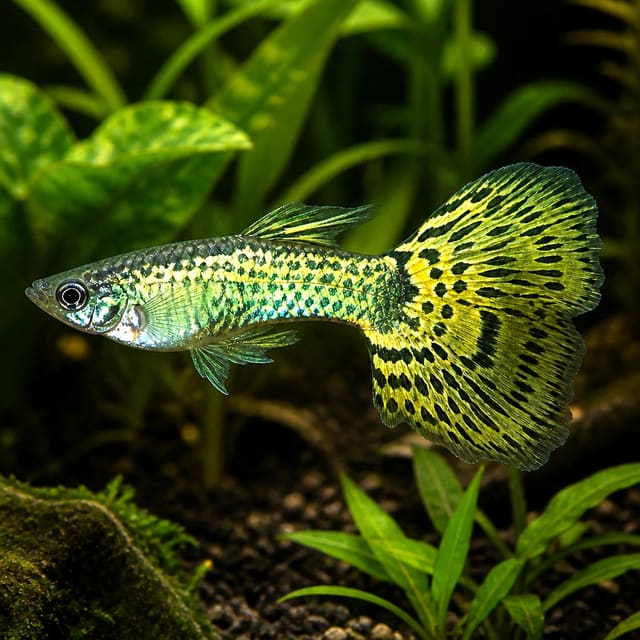
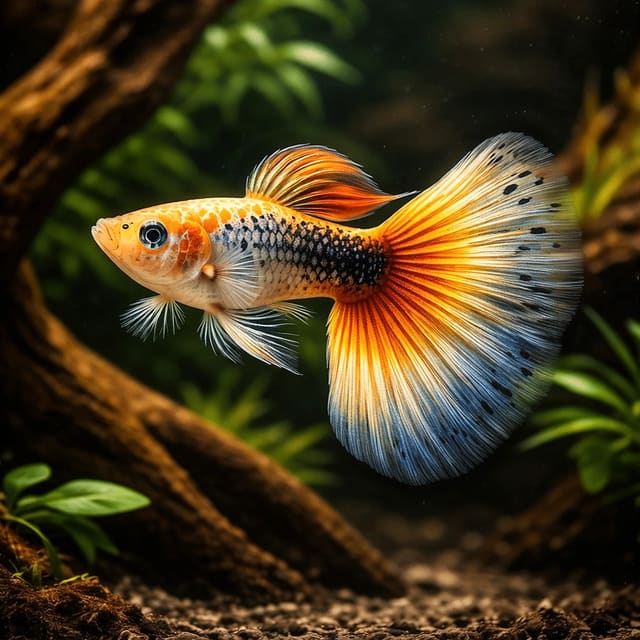
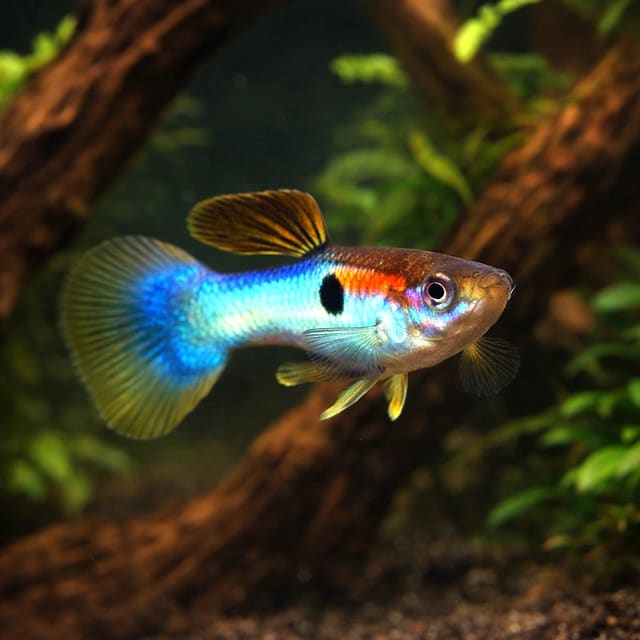
Plan this fish around the aquarium you have, rather than around the colour in the gallery. The most useful first checks are a mature filter, measured water that remains neutral to alkaline and mineral-bearing, at least 60 cm of swimming length under our guppy planning policy, and space for a group of five or more where the rest of the stocking allows it. Guppies are peaceful and active, but their fins can attract persistent nippers. A quiet community with open swimming room, plant cover and moderate movement is a better fit than a turbulent, crowded or aggressive display.
Sex is guaranteed only when the exact product or selected option explicitly states male or female. This Red Cap Male Guppy listing is sold as male. It does not mean that every guppy on the site is sexed, or that a photograph can establish the sex of a fish you will receive. If you intend to keep mixed sexes, decide beforehand how you will manage courtship and young. An all-male group avoids fry, although it still needs space, cover and observation for chasing. Where females are included, a balanced group and a plan for offspring matter more than the colour variety of any one fish.
Use the live size selector to choose the required grade. A younger, smaller fish still needs the same long-term habitat as a larger one; it is not a shortcut to a smaller permanent aquarium. If you are starting from an empty tank, prepare the biological filter and test the water before ordering livestock. Our first tropical tank guide explains that preparation step in more detail. You can also browse the guppy collection when planning a coherent group.
Poecilia reticulata is the accepted scientific name for the guppy. Red Cap identifies the traded colour form, and male identifies the sex sold here; neither is part of the Latin species name. The species belongs to the livebearer family Poeciliidae and comes from northern South America and nearby Caribbean localities. Aquarium strains have been selected into many colours and fin shapes, so colour alone cannot tell you an animal's precise lineage or origin. Treat the Red Cap description as the form offered, without assuming a pedigree that has not been specified.
Dispatch length and adult length answer different questions. The selected 2–3 cm or 3–4 cm grade helps you plan the arrival and avoid mixing a very small newcomer with fish that may outcompete it. Adult records use standard length, measured to the base of the tail, while a keeper looking at a guppy often notices the full tail as part of its apparent size. FishBase records a maximum of 5 cm standard length for male or unsexed P. reticulata; Seriously Fish lists 60 mm standard length on its species profile. These are differently sourced species figures, not a guarantee that a Red Cap male will reach either measurement or that its total length including the tail will match a standard-length number. Plan adequate swimming space and judge an individual's condition, rather than shopping to a promised final centimetre.
Although guppies are often introduced as beginner fish, easy care still depends on prepared water, a stable filter, sensible feeding and compatible stocking. Their small body size makes poor water quality and harassment more consequential, not less. Before choosing this male, compare your measured temperature, pH and hardness with the care guidance below and consider the animals already in the aquarium. A colour form cannot make unsuitable water or a fin-nipping neighbour safe.
For a routine guppy display we use 22–28°C as the working temperature range. Check the aquarium with a reliable thermometer and aim for stability within the range, rather than repeatedly changing the heater to chase a single point. FishBase records an 18–28°C environmental range in its species account, and Seriously Fish gives a broader 17–28°C husbandry range. Those broader figures do not make the cool end a target for a newly purchased fish. The store's narrower range is a practical routine recommendation for this offer.
Guppies do best in neutral to alkaline, mineral-bearing water. OATA's combined guppy-and-molly care sheet suggests pH 7.0–8.0 and general hardness 8–18 dGH; those are broad group values, useful for planning but not a measured optimum for this particular Red Cap strain. Seriously Fish gives a wider species range of pH 7.0–8.5 and 8–30 dGH while advising long-term maintenance in moderately hard or harder water. If your tap water sits outside the familiar range, investigate the whole aquarium and seek suitable advice rather than making rapid chemical corrections. Consistent conditions and gradual changes protect fish better than a number achieved overnight.
Test ammonia and nitrite before introducing guppies and after meaningful changes to stocking or filtration. Both should be zero in an established aquarium. Follow nitrate trends as well; OATA advises keeping nitrate no more than 20 mg per litre above the normal level of the source tap water. The purpose of testing is to see whether the filter and water-change routine are actually handling the fish you keep. A clear-looking tank can still contain dissolved waste. Record readings so that a change in behaviour can be compared with a change in the water, rather than guessed at from appearance.
Make water changes with conditioned replacement water matched reasonably to the aquarium's temperature. Avoid a sudden swing in hardness or pH when the new water has a different composition. If a large correction is needed, work out why the values moved first: missed maintenance, overfeeding, a stalled filter or a different water source can all matter. Our water chemistry guide explains what common tests measure, and the water matcher can help compare your measured water with the stated guidance. Neither replaces watching the fish and maintaining the filter.
Use a mature, filtered aquarium with a useful swimming length and planting that gives guppies places to withdraw. Our guppy care policy plans around at least 60 cm of aquarium length and a social group of five or more, subject to the actual footprint, filtration, measured water and other livestock. Seriously Fish describes a 45 × 30 cm base for the species, with an example volume around 41 litres; OATA describes 45 litres for a small group of the smaller livebearers. Those source examples have different scopes. The shop's 60 cm plan gives a more conservative starting point for a group; it is not a fish-per-litre rule, and a long narrow tank is not automatically suitable simply because one measurement passes.
Leave a clear lane through the middle or front of the aquarium. Plants, including floating cover if it does not shut out all light or gas exchange, can break lines of sight when a male is being pursued. Guppies often explore the upper and middle water, but they use the whole aquarium and need a safe route away from more assertive neighbours. Provide secure places to retreat without filling every centimetre with dense decoration. Smooth, easily maintained hardscape and healthy plant growth are more valuable than an intricate structure that traps waste where you cannot remove it.
Keep the filter running continuously and protect its biological media during maintenance. The filter is the home of bacteria that convert toxic ammonia through toxic nitrite to less harmful nitrate. Replace or rinse media only as needed and in a way that preserves that colony; a thoroughly scrubbed or uncycled filter can leave fish exposed even when the tank looks clean. A gentle, distributed flow is preferable to a jet that forces long-finned fish to fight the current. Ensure that the surface moves enough for gas exchange while leaving calmer zones for resting. If the outlet pins a guppy in one corner or makes it avoid open water, adjust the flow arrangement.
A secure lid or appropriate cover is a sensible safeguard, especially near filter pipes and equipment openings. Keep heaters guarded and properly placed, and check that the equipment works before livestock arrives. Do not rely on a printed tank-size label to settle stocking; measure the usable space and account for substrate, decoration and companions. A larger, stable aquarium generally gives more margin for the social behaviour and water quality that make guppies rewarding to keep.
Guppies benefit from company of their own kind. FishBase's aquarium note mentions five or more and a 60 cm minimum length, and our care guide uses five or more as the house group plan. OATA's combined sheet suggests at least three, with two females for each male in a mixed group to reduce pressure on females. These figures are guidance for different group designs, not a command to add fish regardless of space. Plan the total group, sex composition and existing livestock together. This male can join a suitably sized group; one fish on its own is not an adequate long-term social plan.
If your aim is a mixed group, male guppies can repeatedly court females and livebearers can produce young. The OATA ratio is useful for thinking about pressure on females, but it does not prevent breeding. A group with females needs room to avoid attention and a realistic plan for fry before they appear. Do not buy a female merely as a visual complement to this male without considering what happens when the population grows. If you want to avoid fry, an all-male guppy group may be more appropriate, provided the aquarium is spacious enough and individuals are watched for persistent chasing. Sex is a real stocking decision, not a decorative detail.
Observe the group at feeding and during ordinary swimming. Brief interactions are different from one fish repeatedly cornering another, denying access to food or causing torn fins. Plant cover can help the pursued fish break contact, but it does not solve a badly matched population. Change the group plan if harassment continues. When introducing a smaller dispatch grade into an established group, pay particular attention to feeding access and whether larger residents give it room to settle. Never use a small new fish to test whether an aggressive tank mate has become peaceful.
Sexing cues such as the male's modified anal fin are described in species references, but the commercial male offer here is based on the exact product record rather than a claim made from an image. Colour and fin length can vary within domestic strains. Once settled, judge welfare by normal movement, feeding and social behaviour as well as appearance. A fish that stays isolated at the surface, is repeatedly chased or cannot reach food needs investigation even if its colour remains bright.
Offer an appropriately sized, complete flake or small granule as the staple and use safe, compatible variety rather than one food in excessive quantity. Wild guppies take small invertebrates and other material, while long-domesticated aquarium fish accept a range of prepared foods. That flexibility is helpful, but it is not a reason to substitute leftovers, feed a single treat indefinitely or assume every fish in a community can reach the same food. Crumble or choose particles small enough for the selected dispatch size and watch that the fish actually takes them.
Feed amounts the group can consume without a trail of food settling into the substrate. Small regular portions are easier to observe and adjust than a large dump of food. If food remains, remove it and reduce the next portion. Extra food becomes waste and adds to the filter's load; in a small aquarium that can quickly undo otherwise good water care. Feed the whole community thoughtfully, as faster fish may intercept food before a new or smaller guppy gets a share. Spreading tiny portions through more than one accessible area can help you see who is eating without simply increasing the total ration.
Vary the diet with suitable foods in modest quantities and maintain a routine that all keepers in the household understand. If someone else feeds the tank, agree on the portion and schedule rather than doubling up. Colour is best supported by general health, adequate nutrition and stable water; no food can promise a fixed shade or turn an unhealthy aquarium into a good home. A sudden refusal to feed, loss of condition or change in swimming deserves a water test and a close look at social pressure. Do not respond automatically by adding more food, which may worsen the water.
Keep feeding equipment and hands clean, and avoid transferring water or tools between aquariums without suitable hygiene. If a fish becomes unwell, separate diagnosis from routine feeding choices and seek qualified help where needed. A complete diet, careful observation and a working filter form a more reliable foundation than an elaborate menu.
Prepare the aquarium before the parcel is due: check temperature and recent water tests, clear a calm place for the fish to enter, and make sure somebody can receive live animals at the address. On arrival, inspect the parcel promptly and keep the fish away from temperature extremes while you work. The store's current delivery and Live Arrival Guarantee policy explains the receiving conditions and claim evidence. Its continuous sealed-parcel unboxing video requirement is for a claim; it is separate from the steps that help a healthy fish enter an aquarium safely.
Follow the store's slow acclimatisation guidance, including floating the bag for 20–30 minutes before release. Keep the room and tank calm, avoid bright disturbance, and do not pour transport water into the aquarium. The aim is to limit abrupt change and prevent bag water from entering the display. When the fish is ready, release it gently into the prepared tank. Watch where it settles and whether established residents let it swim and feed. Do not immediately add multiple other new animals just because the delivery has arrived; each introduction changes the biological and social load.
For the first days, note breathing, posture, fin condition, appetite and interaction with the group. A short settling period can be normal, but repeated gasping, inability to remain upright, persistent hiding under attack or rapid deterioration calls for action. Test the water promptly if something looks wrong. Water quality and harassment are practical first checks; neither is a diagnosis. Quarantine arrangements are useful where available, especially in a larger collection, but they need their own mature, monitored setup. An empty uncycled container can be less safe than the prepared aquarium.
Keep a simple record of the arrival, the water readings and any unusual behaviour. That makes it easier to notice a trend and explain the situation to a qualified fish professional if needed. Do not add medication on a guess or copy an online dose intended for a different species or legal setting. A fish vet can help with persistent or severe signs, and OATA provides a UK fish-vet directory. Careful introduction is the start of ongoing observation, not the end of the job once the fish swims away.
A Red Cap Male Guppy is peaceful, so choose neighbours that share its water conditions and let it use open space without persistent intimidation. Seriously Fish describes guppies in quiet communities with other livebearers, rasboras, corydoras, small loricariids and tetras. These are broad groups to assess, not a promise that every species in them shares the same temperature, mineral needs, adult size or behaviour. Check the exact animal you already keep before adding this male. In particular, a fish that is peaceful in one tank may behave differently when crowded, breeding or defending food.
Avoid known fin nippers such as tiger barbs and serpae tetras; Seriously Fish names them as poor company for guppies. Long or colourful fins can invite persistent pecking, and a fish that cannot escape that attention may stop feeding or rest continually in cover. Large predatory fish and very boisterous feeders are also poor practical matches for a small newcomer. Size is only one part of the choice: compare water, activity, feeding pace, adult size and temperament together. A peaceful label on two separate product pages does not prove that the pair will thrive under the same conditions.
Water compatibility is often the hidden constraint. A guppy maintained long term in moderately hard or harder water should not be paired casually with a species whose care depends on very soft, acidic water. Moving one group to the other's preferred chemistry can leave one side stressed. Measure your own aquarium and compare the actual intended temperature and hardness ranges before deciding. Our guppy care guide gives a fuller planning framework. If there is no convincing overlap, choose a different combination rather than trying to meet two incompatible targets halfway.
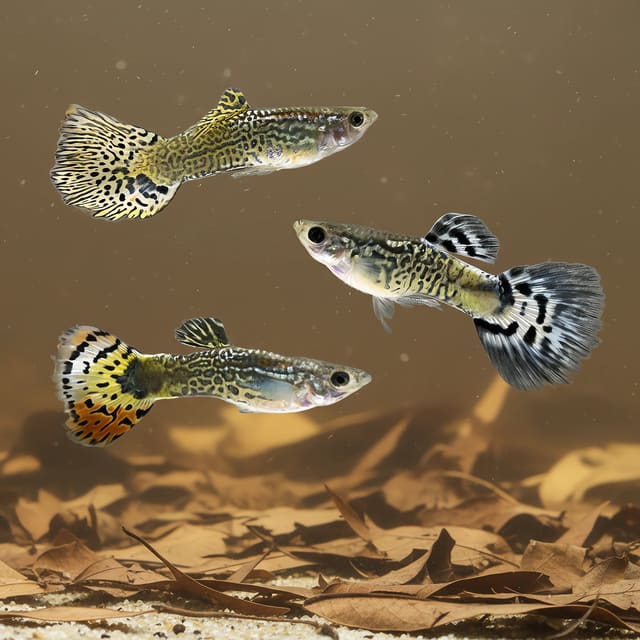
Guppy colour forms are alternatives in appearance, not separate biological species. Other guppies can be considered as part of a coherent group plan, but the sex mix, breeding outcome and social dynamics still matter. Another product presented as a related option is a purchasing comparison, not an automatic tank mate recommendation. The best community is one you can feed, observe and maintain at a common set of stable water values, with enough cover and open room for every resident.
Introduce a new guppy when you can observe the aquarium rather than just before leaving it unattended. Watch the first encounter, then check again at feeding and over the following days. A resident that repeatedly follows, bites or traps the newcomer can cause harm even without an immediate wound. Likewise, a newly introduced male may chase another guppy; the answer is to examine space and group structure, not to dismiss sustained pressure as harmless display. If aggression persists, be ready to separate fish safely or revise the stocking plan.
Feed so that the guppy gets its share without creating waste. A fast shoal can consume food in seconds; a timid or recently transported fish may initially hang back. Notice whether the Red Cap male reaches food and whether other fish push it away. Look at the fins and body regularly. Fraying, clamped fins, isolation and changes in breathing can have several causes, so start with measured water and observed behaviour before guessing. If you suspect disease, seek appropriate advice and protect the rest of the aquarium through sensible hygiene and isolation where a properly prepared facility exists.
Leave margin in the stocking plan. The selected dispatch size is temporary, and some community fish grow much larger or become more assertive with age. If your current aquarium is already at its practical limit, buying a smaller guppy does not create extra long-term capacity. Check filtration, floor and swimming space, and the real number of fish present. A mixed-sex group may add young, altering those calculations quickly. Review the aquarium as a living group rather than a list of individually compatible names.
The selected 2–3 cm or 3–4 cm size is the dispatch grade. FishBase records 5 cm standard length for male or unsexed guppies, while Seriously Fish lists 6 cm standard length for the species; a domestic tail can make total length look different.
Plan a mature, filtered aquarium at least 60 cm long under our group policy, with enough room for the full stocking plan. Seriously Fish gives a 45 × 30 cm species tank base, while OATA's combined guppy-and-molly sheet gives 45 litres for a small group.
Plan a group of five or more where the aquarium and other livestock allow it. Decide on an all-male or balanced mixed-sex group before buying; females in a mixed group need space away from repeated courtship, and young may follow.
Yes, for a prepared beginner with a mature filter, tested mineral-bearing water and a suitable social group. Its small size does not remove the need for regular water tests, careful feeding and compatible neighbours.
Use an appropriately sized complete flake or small granule as the staple, with safe compatible variety. Watch that this male gets food among faster fish, and remove leftovers before they affect water quality.
Our routine guppy display range is 22–28°C. OATA's broader guppy-and-molly guidance suggests pH 7.0–8.0 in mineral-bearing water; test your aquarium and favour stability over rapid adjustments.
Guppies are generally peaceful. Avoid persistent fin nippers such as tiger barbs and serpae tetras, and watch any new group for chasing or damaged fins.
Seriously Fish describes quiet communities with other livebearers, rasboras, corydoras, small loricariids and tetras. Check the exact species for matching water, size and behaviour; a broad group name alone is not a compatibility guarantee.
Tropical Fish Co's live-animal delivery policy explains its packing, receiving and Live Arrival Guarantee conditions. Arrange for someone to receive the parcel, acclimatise the fish slowly and consult the current delivery page for claim requirements.
The species identity and standard-length records above come from FishBase and the aquarium ranges and compatibility examples from Seriously Fish. The UK OATA guppy-and-molly care sheet provides the broader group water and social guidance. These sources describe different scopes, so their limits are labelled where they affect a decision. The store's guppy guide sets out its conservative group and tank-length plan. For a welfare concern, compare your water tests with the fish's behaviour and seek qualified advice rather than relying on a single number.
No reviews for this item yet. Bought one? Honest reviews only, good or bad.
What customers say about ordering from us
Easy website plenty of info on fish your buying great to pick a time slot
TRACEY DURRANT · 7 Oct 2026
Got some lovely fish thank you
Kevin Mackie · 7 Oct 2026
Reviews of our shop, collected by Judge.me, an independent third-party review collector. Newest first.