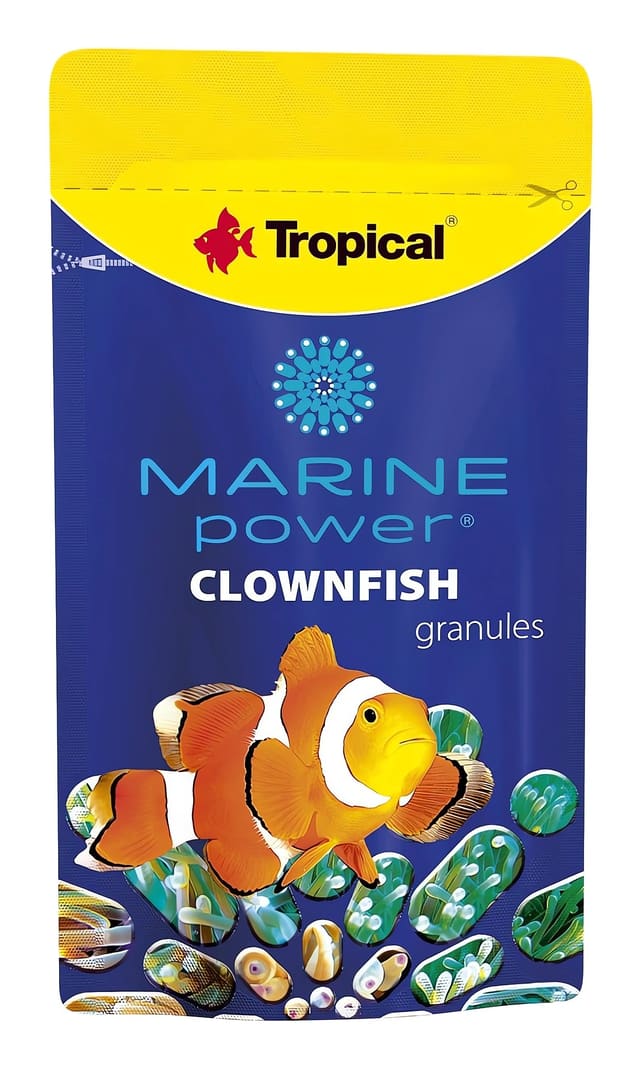
Tropical Marine Power Clownfish Food 100ml/65g
£10.39

Marine Power Oceanic Mix helps create stable saltwater conditions for marine aquariums. A practical choice for moderate-care setups. Buy now with UK delivery.
Confirm your email, then we’ll send an availability message for this exact item if it returns within 180 days.
This request is only for this product—no newsletter or other promotions. A mail-provider retry may very rarely duplicate the same availability message. Unconfirmed addresses are removed after 48 hours. See our privacy policy.
Marine Power Oceanic Mix helps create stable saltwater conditions for marine aquariums. A practical choice for moderate-care setups. Buy now with UK delivery.
Tropical - Marine Power / Oceanic Mix is a practical everyday food for marine aquariums that need broad, reliable nutrition in an easy-to-feed flake format. If you keep a mixed saltwater aquarium with small reef fish, planktivores, omnivores, and opportunistic grazers, this blend is designed to simplify feeding without sacrificing variety. Many hobbyists asking what is marine power or what are marine powers are really looking for a complete marine feeding range, and marine power oceanic mix is one of the most flexible options in that line. It is especially useful when you want one staple food for daily use, with occasional rotation alongside specialist formulas. See the product image tropical-marine-power-oceanic-mix-dry-food.webp for the fine flake texture, which helps explain why Tropical Marine Power Oceanic Mix 250ml 50g suits smaller mouths and cautious feeders so well.
For reef keepers building a balanced marine fish feeding guide, this food works as a core staple in tanks housing clownfish, chromis, gobies, blennies, cardinals, and many juvenile marine species. It also appeals to customers searching for saltwater aquarium food, fish food for saltwater tanks, and best marine fish food for beginners. Because the flakes disperse evenly, they can support more natural mid-water feeding behaviour while reducing waste when offered in small portions. In short, tropical marine power oceanic mix is a smart choice for aquarists who want complete nutrition, easy portion control, and a dependable daily diet for a community marine setup.
The Marine Power range is aimed at hobbyists who want targeted marine nutrition in different textures and formulas. Oceanic Mix sits in the range as a versatile staple, bridging the gap between specialist coral foods and single-protein fish diets. It is particularly useful in aquariums where several species feed in different parts of the water column.
Marine Power Oceanic Mix is a multi-ingredient marine flake food formulated for everyday feeding in saltwater systems. If you have ever searched what is tropical marine or marine power oceanic mix flakes, this product is exactly that: a convenient dry food made for common marine aquarium fish that need balanced protein, marine-derived ingredients, and a texture that is easy to consume.
It is best suited to aquarists keeping peaceful to semi-active community species that accept flakes readily. Think clownfish, damselfish, chromis, small wrasses, gobies, and juvenile angelfish. In many tanks, it works well as the base diet, while foods such as Tropical Soft Line Marine S or Marine Power Krill Formula Granules are added for variety.
Customers often want to know whether one food can support a broad feeding routine. In practice, yes—this is one of the reasons tropical marine power oceanic mix flakes remain popular. The flake format suits fish that feed near the surface and in mid-water, and crushed flakes can also be offered to smaller species. For beginners shopping for high quality saltwater fish food online, it gives a straightforward starting point that is easy to understand and easy to use.
The best results come from feeding very small portions that are fully eaten within 30 to 60 seconds. In marine tanks, underfeeding slightly is usually safer than overfeeding heavily. A pinch of flakes once or twice a day is enough for lightly stocked systems, while active community tanks may benefit from three smaller feeds spread through the day.
If you are building a sensible marine fish feeding guide, use Oceanic Mix as the staple and rotate in specialist foods for species with extra needs. For example, herbivorous fish may benefit from Marine Power Spirulina Formula Granules, while fussy feeders often take to Marine Power Gel Formula more readily. This rotation helps deliver complete nutrition marine fish food UK buyers often look for without relying on one texture alone.
Because flakes absorb water quickly, avoid dumping in large amounts at once. Crush them lightly for nano species, and observe whether dominant fish are taking all the food before shy fish get a chance. In mixed reefs, this product can be part of a broader marine aquarium food for fish and corals routine, but it should not replace dedicated coral diets where target feeding is needed.
| Time | Food | Amount |
|---|---|---|
| Morning | Marine Power Oceanic Mix flakes | Small pinch, eaten in under 1 minute |
| Evening | Oceanic Mix or rotated marine diet | Small pinch adjusted to stock level |
Too much flake food can raise phosphate and nitrate, contribute to film algae, and leave uneaten particles trapped in rockwork. If you have asked, “does marine fish food cloud water,” the answer is yes—any food can cloud water when too much is used or when circulation blows uneaten flakes into dead spots.
This food is ideal for many common marine aquarium fish that accept flakes. It is especially useful for clownfish, chromis, cardinals, gobies, blennies, and other small community species. In a mixed tank, it can also support juvenile tangs and dwarf angels as part of a varied diet, though those fish often need additional algae-based or specialist foods too.
For fish that prefer softer textures, alternate with Tropical Soft Line Marine M or Soft Line Marine S. If you keep fish with sensitive digestion, Marine Power Probiotic Soft Formula - S is a useful companion food. Larger fish that prefer a more substantial bite may do better when Oceanic Mix is paired with Marine Power Probiotic Soft Formula - L.
As a rule, this is a reef safe fish food for saltwater aquarium use when fed correctly, because it is intended for fish rather than as a medication or copper-based treatment. However, reef safety still depends on portion size and nutrient control. Even the best dry food for marine fish UK hobbyists use can create water quality issues if the tank is overfed.
Oceanic Mix is the generalist in the lineup. It is designed for broad daily feeding rather than a single niche. If your tank has mixed species and you want one dependable staple, this is often the easiest place to start. If your goal is colour support, probiotic support, or herbivore emphasis, one of the other formulas may be a better primary choice.
| Feature | Marine Power Oceanic Mix | Marine Power Spirulina Formula |
|---|---|---|
| Main Use | General daily community feeding | Algae-focused support for herbivores and omnivores |
| Format | Flakes | Granules |
| Best For | Mixed marine tanks | Tangs, blennies, algae-grazing species |
| Care Level | Moderate | Moderate |
| Best Choice When | You want one staple food | You need stronger plant/algae emphasis |
If your fish are reluctant to take dry flakes, Marine Power Gel Formula can be easier to introduce. If you want a richer, more protein-forward supplement, Krill Formula Granules are worth considering. For mixed feeding plans, many aquarists rotate all three across the week rather than relying on a single product every day.
One of the most common concerns with dry food is water clarity. So, does marine fish food cloud water? It can, but usually because of feeding method rather than the product itself. Fine flakes break down quickly if they are left uneaten, trapped in overflows, or blasted into rock crevices by high flow.
To keep this as a marine fish food that does not cloud water in normal use, feed with pumps on but in small portions. Watch how the flakes move. If they vanish into the weir or sump before fish can eat them, reduce flow briefly during feeding or offer smaller pinches more often. Good mechanical filtration, skimmer performance, and regular maintenance all help.
This is also where stock level matters. A tank with heavy feeding, weak export, and a dirty filter sock will struggle no matter which saltwater aquarium food you use. In customer tanks we have seen the best results when Oceanic Mix is paired with disciplined feeding and a simple “feed, observe, stop” routine.
For shy fish, crush a small amount of Oceanic Mix between your fingers and release it into lower-flow areas. This spreads the food through the water column and gives timid species more time to feed before dominant fish take over.
Yes, in most cases this food fits well into a reef system as a fish staple. It is not a dedicated coral diet, but feeding fish properly benefits the whole nutrient cycle of the aquarium. In tanks with LPS and soft corals, fish feeding often indirectly supports coral health through dissolved and particulate organics—provided nutrient export is balanced.
That said, if you are specifically researching how to feed coral food or coral food for target feeding UK, Oceanic Mix is not the main tool for that job. Corals that require direct feeding usually respond better to specialist coral foods delivered carefully. If you want to know how to feed corals with turkey baster, use a separate coral food, turn down flow briefly, and target the coral rather than broadcasting fish flakes.
In practical reef keeping, many aquarists combine a fish staple like Oceanic Mix with a separate coral routine. That creates a more complete marine aquarium food for fish and corals strategy than trying to make one product do everything.
Store the container tightly closed in a cool, dry place away from direct sunlight and humidity. Flake foods are especially vulnerable to moisture, which causes clumping, nutrient degradation, and faster spoilage. Avoid keeping the tub open near the aquarium for long periods, especially in warm cabinets with salty air.
If you buy saltwater fish food uk delivery in larger orders, keep only the active container near the tank and store backup foods elsewhere. Always use dry fingers or a clean feeding spoon. This simple habit helps preserve texture and reduces contamination. Fresh flakes smell clean and marine-like; stale food often smells dusty or oily and should be replaced.
Customers often ask how to mix marine saltwater when setting up a new tank or performing larger water changes. While Oceanic Mix is a food rather than a salt product, feeding and water preparation are closely linked. Freshly mixed saltwater should be fully dissolved, heated, and aerated before use. Salinity should match the display tank closely, typically around 1.025 specific gravity for many reef systems.
After a water change, fish may be slightly more alert or cautious depending on flow, temperature match, and handling. Feed lightly after maintenance rather than heavily. This reduces stress on the biofilter and lets you observe whether the fish are behaving normally. In our experience, tanks that receive a large water change and a heavy feed immediately afterward are more likely to show temporary cloudiness or nutrient spikes.
Questions like how to deal with marine powers usually come from hobbyists trying to coordinate feeding, filtration, and routine maintenance. The answer is to keep all three balanced: stable salinity, measured feeding, and consistent export.
How long can a marine tank go without power depends on stocking density, temperature, surface agitation, and whether the system has battery backup. In a lightly stocked tank with good oxygen reserves, fish may cope for a few hours. In a heavily stocked reef with warm water and little gas exchange, oxygen can become a problem much faster.
During a power cut, do not feed heavily. Digestion increases oxygen demand and waste production, which is the last thing a struggling tank needs. If the outage is short, skip a feed entirely. If it is prolonged, manual aeration, battery air pumps, or backup circulation become more important than food. Once power returns, resume feeding cautiously and check fish respiration before returning to a normal schedule.
This is a good example of why best marine fish food for beginners is not just about ingredients—it is also about using food correctly in real-world situations.
Searches such as why do ocean waters not mix, does atlantic and pacific water mix, does the atlantic and pacific ocean mix, and does the atlantic and pacific ocean water mix come up surprisingly often around marine topics. The short answer is that ocean waters do mix, but not instantly. Differences in salinity, temperature, sediment load, and current speed can create visible boundaries for a time, which makes it look like two bodies of water remain separate.
For aquarium keepers, the takeaway is simple: marine systems are all about stable chemistry and gradual change. Whether you are mixing new saltwater, adjusting salinity, or introducing a new food like marine power oceanic mix flakes, sudden swings are less desirable than measured, consistent routines. Stability is what keeps fish feeding confidently and filtration working efficiently.
People searching what is ocean marine coverage or marine open ocean characteristics are usually exploring how real ocean systems function. In aquarium language, that translates into understanding water movement, oxygenation, suspended food particles, and species-specific feeding zones. Open-ocean feeders often respond well to small foods dispersed in the water column, which is one reason flake-based diets still have a place in modern marine keeping.
Oceanic Mix fits this style of feeding well in community tanks because it can be offered in tiny amounts that drift naturally. This makes it useful for fish that do not like large pellets or aggressive target feeding. It is not a substitute for species-specific nutrition, but as a broad staple it mirrors the “small, frequent, suspended food” pattern many marine fish are adapted to.
Questions like can marine one land on water are not directly related to aquarium feeding, but they do show how broad marine search intent can be. When aquarists search for marine products, they often encounter mixed results covering oceans, military terms, geography, and aquarium care. For shoppers trying to decide whether tropical marine power oceanic mix is right for them, the key point is much narrower: this is a practical fish food for marine aquariums, not a treatment, not a salt mix, and not a coral-only formula.
If your goal is a dependable everyday food for common saltwater fish, this product is relevant. If your goal is target feeding corals, conditioning finicky predators, or replacing a herbivore-specific diet, you will usually want to combine it with another formula from the same range.
We stock foods that fit real aquarium routines, and Oceanic Mix is one of those products that solves a common problem: how to feed a mixed marine tank simply, consistently, and without turning every meal into guesswork. This food is especially useful for keepers who want an easy staple before branching out into specialist diets.
When customers buy dry foods from us, we focus on freshness, careful stock rotation, and clear product matching. That matters with flake foods, because texture and condition affect feeding response. If you are comparing options for high quality saltwater fish food online or looking for saltwater fish food uk delivery, we make it easier to pair this product with complementary formulas such as Probiotic Soft Formula - S, Probiotic Soft Formula - L, and Soft Line Marine M.
We also know buyers often need practical advice, not vague claims. If you are unsure whether Oceanic Mix is the right staple for your fish, the answer usually comes down to mouth size, feeding behaviour, and whether your tank is fish-only or reef-based. For many community systems, it is an excellent starting point. Order your Marine Power Oceanic Mix today if you want a dependable flake food that supports a clean, controlled, and varied marine feeding routine.
Build a more flexible feeding routine by combining Oceanic Mix with Tropical Soft Line Marine S for smaller fish and cautious feeders. Add Tropical Soft Line Marine M for medium marine species that prefer a softer bite. For herbivores and omnivores, Marine Power Spirulina Formula Granules add useful algae-based variety. If you want a richer supplement, Marine Power Krill Formula Granules are a strong companion choice. Fish that prefer soft textures often do well with Marine Power Gel Formula, while sensitive feeders may benefit from Marine Power Probiotic Soft Formula - S.
No reviews for this item yet. Bought one? Honest reviews only, good or bad.
What customers say about ordering from us
I have a small group of long finned mountain minnows. So was delighted to be able to order ten of this variety to increase the genetics in my tank . The ones I recieved are healthy but it’s to early to give a verdict on wether they are of a long finned type since they are small currently.
Gordon Walker · 23 Sept 2026
100% success travel and "installation". Pleased with quality of purchase. The Siamese fighter a bit "shy" so have not yet seen him at his best yet but looking good. Happy customer. GG
George E Garratt · 21 Sept 2026
Reviews of our shop, collected by Judge.me, an independent third-party review collector. Newest first.