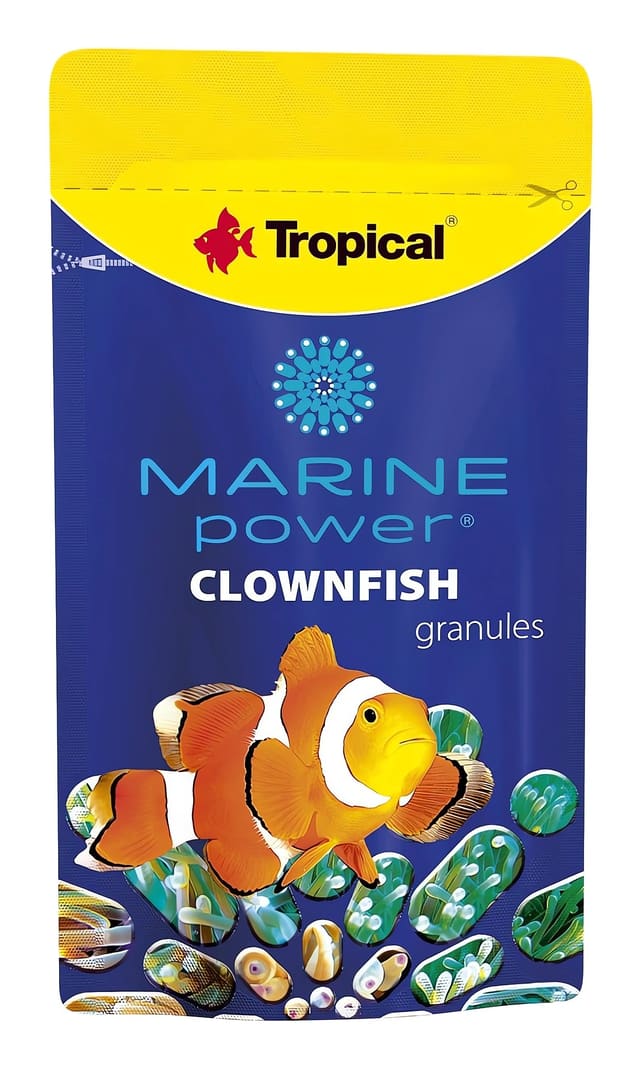
Tropical Marine Power Clownfish Food 100ml/65g
£10.39

Target feed SPS corals with Marine Power SPS Powder Coral Food. Fine particle formula supports colour and feeding response. Order now for fast UK delivery.
Confirm your email, then we’ll send an availability message for this exact item if it returns within 180 days.
This request is only for this product—no newsletter or other promotions. A mail-provider retry may very rarely duplicate the same availability message. Unconfirmed addresses are removed after 48 hours. See our privacy policy.
Target feed SPS corals with Marine Power SPS Powder Coral Food. Fine particle formula supports colour and feeding response. Order now for fast UK delivery.
Tropical Marine Power / Coral Food SPS Powder is a specialist powdered feed designed for small-polyp stony corals in modern reef systems. If you have ever asked what is sps coral, the short answer is this: SPS corals are fast-growing, hard-skeleton corals with tiny polyps that thrive under stable water chemistry, strong light, and consistent nutrition. That is exactly where this formula fits. For reef keepers searching for the best coral food for sps, a practical coral food for sps, or the best sps coral food for regular broadcast and target feeding, this fine powder offers a simple way to support polyp extension, tissue condition, and colour response without making feeding complicated.
In many reef aquariums, the biggest feeding mistake is using particles that are too large or adding too much at once. This sps coral food uses a fine texture that suits delicate feeding structures and works well as a powder coral food for target feeding SPS and LPS corals. It is especially useful if you are learning how to feed reef tank corals, building a marine aquarium food guide, or looking for coral food for beginners in reef tanks that can be dosed in very small amounts. See the product image, tropical-marine-power-coral-food-sps-powder-dry-food.webp, for a close look at the texture that helps target feed SPS corals with coral powder more accurately.
For UK reef keepers wanting high quality coral food for SPS corals UK, this is a smart option for mixed reefs, dedicated Acropora systems, and nano reefs where clean water matters. Used correctly, it becomes an easy part of your reef aquarium feeding guide and can help answer the common question: do you need to feed sps corals? In many tanks, yes—especially where nutrient export is strong and fish stocking is light.
This product sits in the specialist marine nutrition category rather than general fish food. In the hobby, powdered coral feeds are widely used by reef keepers maintaining Acropora, Montipora, Stylophora, Pocillopora, Birdsnest, and mixed coral displays where fine suspended food can be captured by feeding polyps.
Not all coral feeds are built the same. Standard marine flakes, pellets, and chunky frozen blends are often designed for fish, not for the tiny mouths and mucus-feeding strategies of SPS corals. A dedicated saltwater coral food in powder form suspends more easily in the water column, increasing the chance that fine particles contact extended polyps.
This matters if you are comparing products like reef roids, researching the best coral food sps, or reading a vitalis sps coral food review before choosing a feeding routine. Tropical Marine Power SPS Powder is aimed at hobbyists who want specialist marine food for coral feeding with better control over particle density and feeding response. It can also be a useful easy sps coral food for aquarists who find liquid foods messy or difficult to portion.
The simplest method is to mix a very small amount of powder with aquarium water in a cup, then add it to a high-flow area or use a pipette for more precise feeding. If you are wondering how to feed reef tank corals, start with less than you think you need. A small amount coral feeding 2 to 3 times daily often produces better results than one heavy feed that leaves waste behind.
For direct feeding, switch off return pumps for 5 to 10 minutes if your system allows it, keep internal circulation low but not stagnant, and gently cloud the area around the colonies. This makes it easier to target feed SPS corals with coral powder without blasting tissue. In mixed reefs, this same method can work as powder coral food for target feeding SPS and LPS corals, though lps coral species with larger mouths may also benefit from a second, larger-particle food.
In ultra-low nutrient systems, feed after lights out or during peak polyp extension. Many SPS colonies capture suspended food more effectively at this time, and hobbyists often notice a stronger feeding response with less powder used.
This is one of the most searched reef questions: do you need to feed sps corals? Strictly speaking, SPS corals get much of their energy from zooxanthellae under strong reef lighting. However, that does not mean feeding is pointless. In aquariums with aggressive skimming, filter socks, refugiums, phosphate media, and light fish stocking, dissolved and suspended nutrition can be limited.
That is where regular sps coral feeding can help. Many reef keepers use a fine sps coral food to support tissue fullness, feeding response, and recovery after fragging or shipping stress. Feeding is not a substitute for stable alkalinity, calcium, magnesium, and flow, but it can be a valuable part of a complete husbandry plan. If you are deciding between no feeding and a controlled powdered approach, this type of coral food for sps offers a measured middle ground.
Overfeeding powdered coral foods can raise nitrate and phosphate surprisingly fast. If your tank already has elevated nutrients, reduce feeding volume first rather than chasing the problem only with media or water changes.
Even the best SPS coral food for reef tanks performs poorly if core reef conditions are unstable. Corals feed most effectively when they are not stressed by swings in alkalinity, salinity, or temperature. Keep reef aquarium water temperature steady around 24-26°C, salinity near 1.025 specific gravity, and avoid large day-to-day changes in nutrient levels.
Good flow is equally important. SPS corals need strong, varied movement to bring food to the colony and carry away waste. If flow is too weak, powder settles before it can be captured. If flow is too harsh during feeding, food blows past the polyps. The best results usually come from moderate temporary reduction in return flow while keeping enough circulation to suspend particles.
For many aquarists, the answer depends on stocking. In a dedicated SPS system, a fine powdered feed is often among the most practical options because it matches the feeding style of small-polyp corals. In a mixed reef, it can still be one of the best coral food for sps choices, but it should be part of a broader feeding plan.
Large-polyp species often need chunkier foods alongside fine powder. If you keep acans, blastomussa, favia, or other lps coral species, use this product as a suspended micro-feed and pair it with a larger meaty coral diet where needed. That makes it a versatile reef aquarium coral food for direct feeding and broadcast use, rather than a one-size-fits-all answer for every coral in the tank.
| Feeding Style | Best Use | Notes |
|---|---|---|
| Broadcast Feeding | Whole reef nourishment | Best for evenly suspending fine particles in SPS systems |
| Target Feeding | Specific colonies | Useful for stressed frags or high-value colonies |
| Mixed Reef Feeding | SPS + some LPS | May need a second, larger food for fleshy LPS corals |
A sensible reef tank feeding frequency depends on nutrient export, coral density, and fish load. In most systems, feeding a tiny amount once daily or small amount coral feeding 2 to 3 times daily works better than one heavy dose every few days. The goal is to keep food available briefly without creating a nutrient spike.
If your reef is heavily skimmed and has many actively growing SPS colonies, split feeding can be effective. If your tank is young, lightly stocked, or already nutrient-rich, reduce both frequency and dose. This is the heart of a good coral feeding guide: consistency beats excess.
| Time | Food | Amount |
|---|---|---|
| Morning | Pre-mixed SPS powder in tank water | Very small cloud in high flow area |
| Evening | Target or broadcast SPS powder | Repeat only if nutrients remain stable |
One of the most common concerns with powdered feeds is whether they make the tank look dusty or dirty. When used correctly, this product can function as a marine coral food that does not cloud water excessively, but dosage is everything. Any powder can cloud the aquarium if too much is added too quickly.
To minimise haze, pre-mix thoroughly, avoid dumping dry powder straight into the display, and feed with pumps adjusted for suspension rather than turbulence. Good mechanical filtration and a strong protein skimmer also help clear uneaten particles after the feeding window. If you want a cleaner routine from your saltwater aquarium supplies uk setup, measured feeding is more important than the label on the tub.
Many reef keepers compare any powdered coral feed with reef roids, and that is fair. Both sit in the micro-particle category used for coral feeding. The real differences usually come down to particle feel, suspension behaviour, feeding response in your specific tank, and how your nutrient system handles regular use.
If you are searching for the best sps coral food, there is rarely a universal winner for every reef. Some tanks respond better to one powder than another because of flow pattern, coral species mix, and export capacity. Tropical Marine Power SPS Powder is a strong option for reef keepers who want a controlled, fine-particle specialist marine food for coral feeding that can slot into a disciplined feeding routine.
| Feature | Tropical Marine Power SPS Powder | Typical Powdered Reef Food |
|---|---|---|
| Primary Use | SPS coral feeding | Mixed coral feeding |
| Texture | Fine powder | Varies by brand |
| Best For | Target or light broadcast feeding | General reef use |
| Control | Easy to portion in small doses | Can vary by scoop size |
| Care Level | Moderate | Moderate |
This product suits reef keepers maintaining Acropora, Montipora, Stylophora, Pocillopora, Seriatopora, and other fine-polyp stony corals. It is also suitable for aquarists who want coral food for beginners in reef tanks but still need something serious enough for demanding coral species. If you are building a clean, stable mixed reef and want a dependable saltwater coral food that can be fed in tiny measured doses, this is a strong fit.
It is especially appealing if you prefer a hands-on feeding style, enjoy observing polyp extension, and want a practical answer to do you need to feed sps corals without overcomplicating your routine. It may be less suitable for hobbyists who want a single all-purpose food for fish, LPS, soft corals, and SPS all at once.
Reef keepers often get the best results when they photograph a colony weekly under the same lighting. Growth tips, tissue fullness, and polyp extension are easier to judge over time than day to day, making it simpler to fine-tune your SPS coral feeding schedule.
Underfeeding and overfeeding can both create issues. Too little nutrition in a very clean system may lead to pale tissue, reduced feeding response, and slower recovery after fragging. Too much food can contribute to nuisance algae, cyanobacteria, elevated phosphate, and unstable nitrate trends.
A balanced reef aquarium feeding guide should always connect feeding to testing. If you increase sps coral feeding, monitor nitrate, phosphate, alkalinity consumption, and visible coral response over the next two to three weeks. Healthy feeding is not just about adding food; it is about matching nutrition to export and growth.
Do not use coral foods to compensate for poor husbandry. If corals are declining due to unstable alkalinity, temperature swings, pests, or weak flow, adding more food may worsen water quality without solving the real problem.
A strong routine starts with observation. Feed when polyps are naturally extended, keep records of how much you test nutrients every week during the first month. This turns guesswork into a proper marine aquarium food guide. If your tank houses both SPS and lps coral care parameters species, separate your strategy: fine powder for suspended feeding, larger foods for fleshy corals, and fish foods kept on their own schedule.
For most tanks, the best method is simple: pre-mix, feed lightly, observe, and adjust. That is why this product works well as an easy sps coral food for disciplined reef keepers. It supports a clean, repeatable approach rather than an occasional heavy feed.
We select reef foods that solve specific husbandry problems, and this one is aimed squarely at keepers who need a fine-particle coral food for sps rather than a generic marine blend. Its format is practical for UK reef systems where nutrient control matters and many hobbyists run efficient skimmers, reactors, and filter socks. If you are comparing options for high quality coral food for SPS corals UK, this is the kind of product that rewards careful use and stable reef management.
We also write our descriptions for real aquarium use, not just label claims. That means explaining where this food fits, who it suits, and how to avoid common mistakes like overfeeding or using it as a substitute for stable chemistry. For customers shopping for saltwater aquarium supplies uk, that clarity matters just as much as the product itself.
If you are refining your coral nutrition plan, this SPS powder pairs well with other specialist reef foods, precision pipettes for direct feeding, and quality test kits so you can track nutrient response after each adjustment. Many reef keepers also combine a powdered coral feed with a separate LPS food for fleshy corals and a balanced fish diet to support the whole system.
No reviews for this item yet. Bought one? Honest reviews only, good or bad.
What customers say about ordering from us
I have a small group of long finned mountain minnows. So was delighted to be able to order ten of this variety to increase the genetics in my tank . The ones I recieved are healthy but it’s to early to give a verdict on wether they are of a long finned type since they are small currently.
Gordon Walker · 23 Sept 2026
100% success travel and "installation". Pleased with quality of purchase. The Siamese fighter a bit "shy" so have not yet seen him at his best yet but looking good. Happy customer. GG
George E Garratt · 21 Sept 2026
Reviews of our shop, collected by Judge.me, an independent third-party review collector. Newest first.