


Easy
Penguin Tetra (Thayeria boehlkei)
22–26°C · pH 6–7.5 · 80L
£2.99

Active red-and-blue Colombian Tetra for roomy community aquariums. Keep a proper shoal, use stable warm water, and order with Live Arrival Guarantee.
Adult size is the maximum length this species reaches at full maturity (scientific sources). The livestock you receive will be younger and smaller — pick a size variant above for the actual shipping size. Photos are AI-enhanced, so the animal may show subtle colour or marking differences.
Hyphessobrycon columbianus
Red-Blue Colombian Tetra are a shoaling species — they need 6+ to feel safe and show their full colour.
Active red-and-blue Colombian Tetra for roomy community aquariums. Keep a proper shoal, use stable warm water, and order with Live Arrival Guarantee.
Adult size is the maximum length this species reaches at full maturity (scientific sources). The livestock you receive will be younger and smaller — pick a size variant above for the actual shipping size. Photos are AI-enhanced, so the animal may show subtle colour or marking differences.
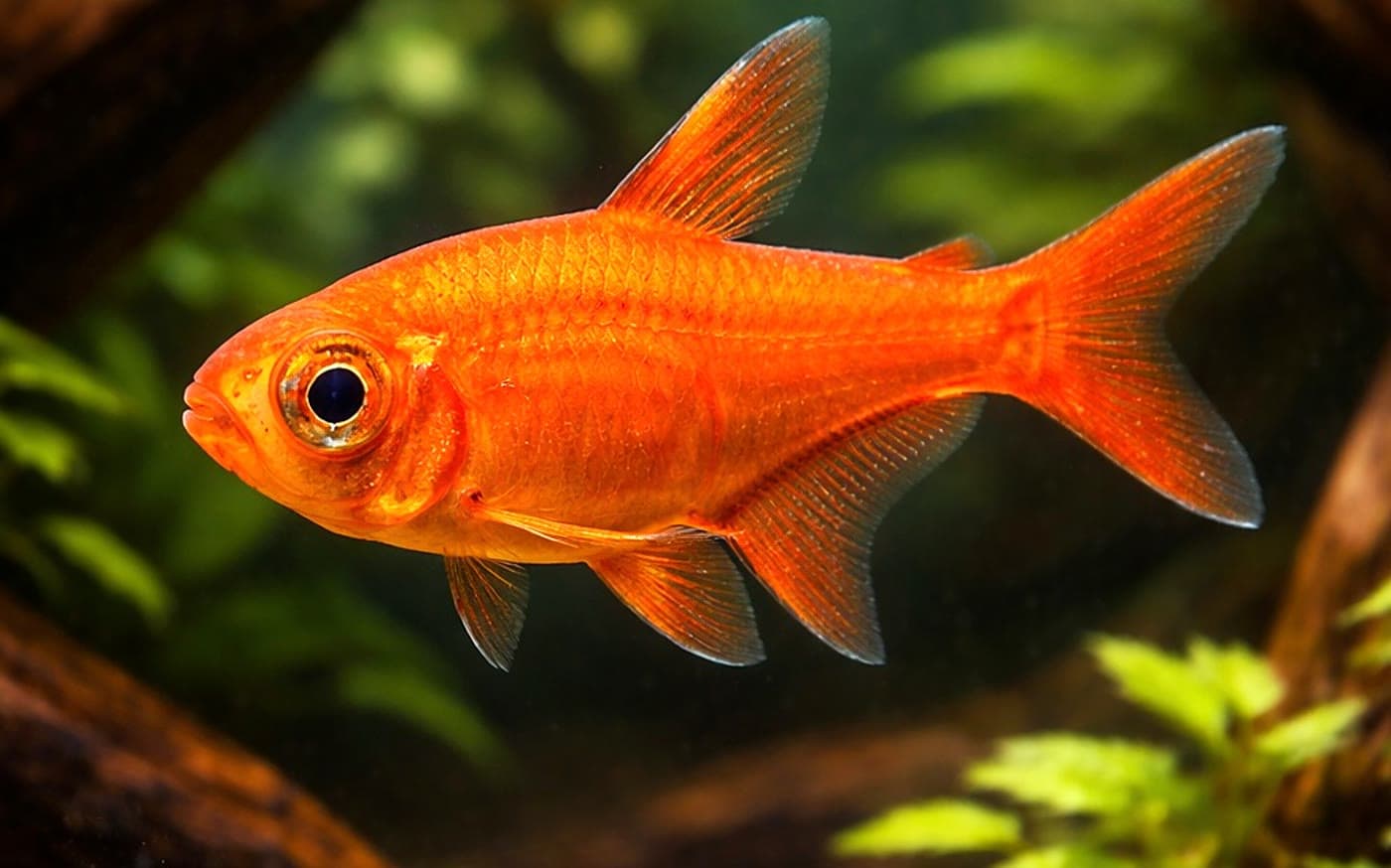
Ember tetras are tiny jewels of the planted aquarium. At just 2 cm, these fiery orange nano fish are perfect for small tanks and shrimp-safe communities.
Maintain these water conditions for optimal health and vibrant colors
If you want a shoal that adds movement, metallic flash, and real presence to a community aquarium, the Red-Blue Columbian Tetra is a standout choice. Known in the hobby as one of the more eye-catching freshwater tropical fish keepers can add to a medium or large display, this South American characin combines a silvery body with electric blue iridescence and rich red tones through the fins. The accepted scientific name for this species is Hyphessobrycon columbianus, although many aquarists still search for it under the older name Moenkhausia columbiana or simply the Red-Blue Columbian Tetra. However you know it, this is an active, hardy, peaceful shoaling fish that reaches around 6 cm, lives for roughly 5 years, and suits aquarists looking for colourful schooling fish rather than delicate nano species. See our detailed photos showing the reflective blue sheen and red fin colour of these freshwater tropical fish keepers love. For anyone researching how to care for Red-Blue Columbian Tetra (Moenkhausia columbiana), this species is popular because it is easier than many people expect, provided you give it space, flow, oxygen, and a proper group. In the right setup, these fish become one of the best tetras for community tank displays, creating a lively midwater shoal that makes the whole aquarium look fuller and more dynamic.
The Columbian tetra belongs to the large characin family, a group that includes many of the most popular South American tetras kept in home aquariums. In the hobby it is valued for being larger and more robust than many nano tetras, while still keeping the classic schooling behaviour that makes characins so attractive. It sits nicely alongside other South American tetras UK that aquarists enjoy, but offers a bolder body shape and stronger red-blue contrast than many smaller species.
The natural origin of Hyphessobrycon columbianus is Colombia in South America, where it inhabits freshwater river systems with steady current, clean water, and high oxygen levels. When aquarists research the Columbian Tetra habitat, they are usually trying to understand why these fish seem more energetic than many small tetras. The answer is simple: in the wild, they come from moving waters rather than stagnant pools.
When comparing Red-Blue Colombian Tetra (Hyphessobrycon columbianus) with similar livestock, focus on clear identification, settled feeding, accurate care guidance, careful packing and a realistic match for your aquarium. Those details matter more than repeated search phrases or a low headline price, especially with specialist species.
In nature they feed opportunistically on tiny crustaceans, insect larvae, plant matter, and organic debris. This explains why the Columbian Tetra diet should be varied rather than based on one dry food alone. Their wild environment also helps explain their preference for a group, as a shoal offers security in moving water.
Many search terms online such as aquarium fish available europe, aquarium fish available germany, aquarium fish available florida, aquarium fish available gold coast, aquarium fish available in riyadh, and aquarium fish available kampala reflect worldwide interest in colourful characins, but for UK keepers the key point is that this species adapts well to established indoor tropical aquariums when its natural need for swimming room and clean water is respected. It is very much an aquarium fish available freshwater species rather than a brackish or coldwater fish.
Mimicking the natural habitat of Columbian tetras improves both colour and confidence. Use a dark background, moderate planting at the sides, and an open central lane for swimming. In my experience, fish kept this way show tighter schooling and stronger blue iridescence than fish crowded into heavily decorated tanks with little flow.
If you are building a proper Columbian Tetra tank setup, think “active shoal in a spacious river-style community aquarium.” These are not fragile fish, but they do need room. The Columbian Tetra tank size minimum is 120 litres, and that is best treated as a starting point rather than an ideal. Because adults reach around 6 cm and are constantly on the move, a longer tank works better than a tall one.
The Columbian Tetra tank size should allow a proper shoal. A group of 6 is the minimum, but 8-12 gives far better behaviour and reduces fin-nipping within the group. People often ask about Columbian Tetra in 60 litre tank; in practice, that is too small for adult fish to show their natural movement. A 90 cm tank footprint is much more suitable.
The recommended Columbian Tetra water parameters are straightforward: temperature 24-28°C, pH 6.5-7.5, and hardness 5-15 dGH. The ideal Columbian Tetra temperature for long-term care is around 25-26°C in a mixed community tank. If you are checking the Columbian Tetra water temperature range, keep it stable rather than chasing daily fluctuations. The Columbian Tetra pH requirements are broad enough for many UK aquariums, but sudden swings should be avoided.
A good external or high-quality internal filter is ideal because this species appreciates circulation and oxygenation. The Columbian Tetra water flow preference is moderate, not extreme, so aim for visible movement without blasting the fish. This is one reason they do so well in larger community tanks with stable filtration. If you are planning a mixed tetra display, pair them with similarly active species such as the Penguin Tetra: A Graceful and active schooling tetra for a layered midwater effect.
Use a dark sand or fine gravel substrate to make the blue and red tones stand out. The best Columbian Tetra planted tank setup includes side and background planting with open swimming space at the front and centre. Hardy plants such as Amazon swords, Vallisneria, Cryptocoryne, and floating cover all work well. For contrast with smaller species, you can also look at Neon Blue Tetra: A Dazzling small tetra for planted tanks or Dwarf Pencilfish Tropical Fish Aquarium Tank if you want a softer, upper-level companion species.
The Columbian Tetra lighting requirements are moderate. Bright light is fine if broken up with floating plants or wood. In a dimmer aquascape, the fish often appear deeper red and more metallic blue. A so-called Columbian Tetra neon tank setup works best when dark décor and reflective scales create contrast rather than using harsh white lighting alone.
Always cycle the tank for 4-6 weeks before adding fish. Even an easy species will struggle in immature water. Stable biological filtration matters more than chasing perfect numbers, especially when keeping active schooling fish with a higher oxygen demand.
The Columbian Tetra feeding guide is simple: this is an omnivore that thrives on variety. In the wild, these fish take small invertebrates and drifting food items. In the aquarium, the best Columbian Tetra diet includes a quality flake or micro pellet as the staple, with frozen or live foods several times each week.
Choose a fine tropical flake or small granule that can be eaten in the midwater zone. Because these fish are energetic, they benefit from regular feeding, but portions should remain controlled. If customers ask what are the best freshwater fish for beginners or what fish are best for tropical tank, this species often comes up because it accepts prepared food readily and is not fussy once settled.
To improve colour and condition, offer frozen daphnia, cyclops, bloodworm, and brine shrimp. These foods are especially useful if you are conditioning fish for breeding or trying to intensify red fin colour. If you are wondering what size fish should i get for a community tank, remember that Columbian tetras are mid-sized tetras, so their food should be small but not dust-sized.
Live foods can be used as occasional treats, but avoid anything too large or fatty. Also avoid overuse of unneeded additives. Search phrases like treating tropical fish with salt appear often, but salt is not a routine tonic for characins and should only be used cautiously, for specific reasons, and never as a blanket treatment. Likewise, searches about edible or food fish are unrelated to ornamental tetra care; these are display fish, not food fish.
| Time | Food | Amount |
|---|---|---|
| Morning | Quality tropical flake or micro pellet | What the shoal eats in 30-60 seconds |
| Evening | Frozen daphnia, brine shrimp, or a second light dry feed | Small portion, no leftovers |
Useful if you are building a colourful tetra community and want compatible fish that take similar prepared foods.
A good companion option when planning feeding routines for active shoaling species with similar dietary needs.
Overfeeding causes ammonia spikes, cloudy water, and long-term organ stress. Columbian tetras are enthusiastic feeders, so it is easy to give too much. A healthy shoal should look full-bodied but not bloated, and all food should be gone quickly.
The appeal of Red-Blue Columbian Tetra lies in contrast. Adults develop a bright silver body washed with metallic blue, while the fins show red to reddish-orange tones, especially on healthy, mature specimens. The body is deeper and more substantial than many nano tetras, which is one reason this colourful Columbian Tetra for aquarium displays stands out in larger aquariums.
The average Columbian Tetra size is about 6 cm, making it more robust than tiny shoalers. Males are usually slimmer, brighter, and slightly more intense in colour, while females are fuller-bodied, especially when carrying eggs. If you are comparing Columbian Tetra male vs female, body depth is often the easiest clue.
There are no major captive-bred colour morphs in common circulation, which is part of the charm. What you are seeing is the species’ natural beauty rather than an artificial strain. In a mature planted aquarium, the Red-Blue Columbian Tetra shows a very clean, classic characin profile.
The Columbian Tetra behaviour is active, social, and generally peaceful, but this is not a timid tetra. It is best described as a confident Columbian Tetra peaceful community fish for medium to large aquariums. Because of its size and energy, it suits similarly active species better than tiny or very slow fish.
The best Columbian Tetra tank mates include other medium tetras, Corydoras, peaceful barbs, and rainbowfish. If you want a varied South American display, consider the Penguin Tetra: A Graceful and elegant schooling companion, the Albino Cherry Barb: A Gentle active barb for community tanks, or the Cobalt Dwarf Gourami - Trichogaster as a centrepiece fish in a suitably sized setup. For upper-level movement, the Dwarf Pencilfish Tropical Fish Aquarium Tank can work in a peaceful planted layout.
This species is one of the Columbian Tetra for community tank options when you want a visible shoal rather than a tiny background group. As Columbian Tetra schooling fish, they should always be kept in numbers. The ideal Columbian Tetra shoal size is 8 or more, though the Columbian Tetra minimum group size is 6.
Avoid very small fish, delicate long-finned fish, and timid nano species. They may not be outright aggressive, but their speed and feeding enthusiasm can stress weaker tank mates. This is why comparisons like Columbian Tetra vs guppy often favour the tetra only in larger, faster-moving communities, not in soft, slow guppy-style tanks. The same applies to tiny shrimp.
People often ask about Columbian Tetra with shrimp. Adult shrimp may survive in a dense planted tank, but shrimplets are likely to be eaten. Snails are usually fine. If shrimp are your priority, choose a gentler species mix.
| Species | Compatible? | Notes |
|---|---|---|
| Albino Cherry Barb: A Gentle | ✅ Yes | Similar activity level and size for a lively community tank |
| Penguin Tetra: A Graceful and | ✅ Yes | Excellent with other active tetras in a well-sized shoaling setup |
| Cobalt Dwarf Gourami - Trichogaster | ⚠️ Caution | Can work in larger tanks, but avoid overcrowding and watch feeding competition |
| Very small shrimp | ❌ Avoid | Small shrimplets may be treated as food |
For shoppers searching schooling fish UK, community tank fish UK, or colourful schooling fish UK, this species sits in a useful middle ground: larger and bolder than many nano tetras, but still suitable for peaceful communities. It is also a strong choice for a Columbian Tetra for planted aquarium where open swimming space is preserved.
Always quarantine new arrivals for 2-4 weeks before adding them to a community aquarium. This reduces the risk of introducing parasites and also lets you observe whether a new species is too timid or too boisterous for your Columbian tetra group.
The Columbian Tetra breeding process is best described as moderate rather than difficult. Adults may spawn in a mature aquarium, but raising fry successfully usually requires a separate breeding setup. If you are used to looking at breeding pairs of tropical fish available, remember that tetras are not pair-bonding fish in the same way as cichlids. Conditioning a group and selecting the best fish is usually more effective.
Use a separate tank of around 40-60 litres with soft, slightly acidic water, gentle filtration, and fine-leaved plants or a spawning mop. Keep the temperature around 26-27°C. Dim lighting helps. Condition males and females on live or frozen foods for 1-2 weeks before introducing them.
Males intensify in colour and chase females through plants. Eggs are scattered rather than guarded, so adults should be removed after spawning. If you are comparing Columbian Tetra or danio for breeding ease, danios are usually more straightforward, but Columbian tetras are very achievable with preparation.
Eggs usually hatch in roughly 24-36 hours depending on temperature. Fry become free-swimming a few days later and need infusoria or liquid fry food first, followed by newly hatched brine shrimp. Clean water and tiny regular feeds are crucial. This is where many first attempts fail.
Common issues include infertile eggs, fungus, adults eating eggs, and fry losses from poor first foods. Similar species such as tetras, live tetras delivery, and nano fish UK often focus on buying fish, but breeding success depends more on water quality and conditioning than on any special trick. Compared with Columbian Tetra vs rasbora or Columbian Tetra vs ember tetra, the Columbian tetra produces larger, more robust adults but needs a little more space from the start.
Use a bare-bottom breeding tank with a mesh or marbles over the base so eggs fall out of reach. This sharply improves survival compared with leaving adults over the spawn. Once fry are free-swimming, keep light low for the first few days and perform tiny daily water changes to maintain stability without shocking them.
Many aquarists compare this fish with smaller tetras before deciding. That is sensible, because the Columbian tetra fills a different role in the aquarium. It is not a tiny accent fish; it is a visible, energetic shoaler for medium and larger layouts. If you are choosing between Columbian Tetra vs neon tetra or Columbian Tetra vs cardinal tetra, the main differences are size, boldness, and tank scale.
| Feature | Red-Blue Columbian Tetra | Neon Tetra |
|---|---|---|
| Max Size | 6 cm | 3.5-4 cm |
| Care Level | Easy | Easy to moderate |
| Temperature | 24-28°C | 22-26°C |
| Price | £16.45 | Varies |
| Best For | Active medium community tanks | Smaller peaceful planted aquariums |
| Feature | Red-Blue Columbian Tetra | Ember Tetra |
|---|---|---|
| Max Size | 6 cm | 2 cm |
| Behaviour | Bold, active shoaler | Small, gentle, subtle shoaler |
| Tank Impact | High visibility | Best in dense planted nano displays |
| Shrimp Safety | Limited with shrimplets | Usually better |
| Best For | Visible movement and colour contrast | Delicate aquascapes |
If you want a stronger visual presence than a neon, choose the Columbian tetra. If you are building a larger planted community and want one of the Columbian Tetra for community tank options, this species makes sense. If your tank is very small or designed around tiny shrimp, a smaller tetra may be the better fit. For similar alternatives, see the Neon Blue Tetra: A Dazzling or the Enhance Your Freshwater Aquarium with Vibrant collection of tropical community fish.
Good Columbian Tetra health starts with stable water, oxygen, and diet. A healthy fish is alert, swims strongly in the middle of the tank, feeds eagerly, and shows clear eyes, intact fins, and bright metallic colour. Because this species is active, lethargy is often the first sign that something is wrong.
The most common Columbian Tetra diseases in captivity are the same ones seen in many community fish: ich, bacterial fin damage, stress-related fungal issues, and internal problems linked to poor diet or water quality. Newly imported or stressed fish may show clamped fins, flashing, or faded colour. If one fish isolates itself from the shoal, investigate quickly.
Never use medication casually. Treating tropical fish with salt is not a cure-all, and copper-based medications should be used with extreme care in mixed setups. If your aquarium contains shrimp or snails, always check compatibility before dosing anything.
The Columbian Tetra schooling fish pattern is one of this species’ best features. These fish are active through the day, occupy the middle levels, and constantly interact with one another. In a proper group they move as a loose shoal, tightening when startled and spreading out again once secure.
The Columbian Tetra lifespan of around 5 years is realistic when their social needs are met. Too small a group often leads to bolder individuals chasing tank mates or nipping within the shoal. In contrast, a correct Columbian Tetra shoal size gives calmer, more natural behaviour.
If you are asking Columbian Tetra for beginners, the answer is yes, with one condition: beginners must understand that active fish need space. This is not one of the tiniest nano fish UK options. It is better for keepers who want visible movement and are ready to meet proper tropical fish requirements for filtration, heating, and group size.
When people ask experienced tropical-fish specialist, arrange aquarium-fish delivery, or can you choose tropical fish online, the real concern is not just price. It is whether the fish arrive healthy, correctly packed, and ready to settle. For this species, that matters because active shoaling fish travel best when packed professionally and moved quickly into stable, heated aquariums.
When comparing Red-Blue Colombian Tetra (Hyphessobrycon columbianus) with similar livestock, focus on clear identification, settled feeding, accurate care guidance, careful packing and a realistic match for your aquarium. Those details matter more than repeated search phrases or a low headline price, especially with specialist species.
When comparing Red-Blue Colombian Tetra (Hyphessobrycon columbianus) with similar livestock, focus on clear identification, settled feeding, accurate care guidance, careful packing and a realistic match for your aquarium. Those details matter far more than a low headline price, especially with specialist species.
If you are comparing Colombian Tetras for your aquarium, remember that healthy, settled fish are better value than stressed fish sold cheaply. Order your shoal with confidence if you want one of the most rewarding freshwater tropical fish community species for a larger planted or open-style setup.
To build a balanced tetra community, consider the Neon Blue Tetra: A Dazzling for smaller blue highlights, or the Penguin Tetra: A Graceful and for a striking black-and-silver schooling contrast. If you want a peaceful active companion outside the tetra family, the Albino Cherry Barb: A Gentle is a smart option. For a centrepiece fish in a larger setup, look at the Cobalt Dwarf Gourami - Trichogaster. If you are browsing more freshwater tropical fish choices, explore the wider Enhance Your Freshwater Aquarium with Vibrant collection for compatible community species and schooling fish ideas.
22–26°C · pH 6–7.5 · 80L

23–27°C · pH 5.5–7.5 · 40L

23–28°C · pH 5.5–7.5 · 60L

24–27°C · pH 6–8 · 60L

22–26°C · pH 6–7.5 · 60L

18–26°C · pH 6.5–8 · 30L

23–27°C · pH 7.4–8.4 · 500L

20–27°C · pH 6–7 · 54L

23–27°C · pH 7.4–8.4 · 150L

24–28°C · pH 6.5–7.8 · 300L

20–24°C · pH 7–8 · 45L

24–28°C · pH 6.5–7.5 · 2000L

24–28°C · pH 7.5–8.5 · 200L

24–28°C · pH 5.5–7 · 60L

18–25°C · pH 6–8 · 100L

24–28°C · pH 7–8 · 120L

18–28°C · pH 6.5–8 · 20L

24–27°C · pH 7.5–8.8 · 150L

22–26°C · pH 6–7.5 · 60L

24–28°C · pH 7.5–8.5 · 40L

24–28°C · pH 7.5–8.5 · 500L