−22%
Expert
Super Red Melon Discus (Symphysodon spp.)
26–30°C · pH 6–7 · 300L
£72.99£93.99
Red Melon Discus (Symphysodon sp.) is a red discus colour variety for keepers who can run a large, mature aquarium with warm, soft and very clean water. Discus live best in a group of at least five with calm companions, and each purchase is one live fish in your chosen size, from 4 cm to 12 cm or XL.
Symphysodon sp.
Save when buying multiple fish. Each quantity is one fish; sex and pair formation are not guaranteed unless the selected variant explicitly states them.
Red Melon Discus (Symphysodon sp.) is a red discus colour variety for keepers who can run a large, mature aquarium with warm, soft and very clean water. Discus live best in a group of at least five with calm companions, and each purchase is one live fish in your chosen size, from 4 cm to 12 cm or XL.
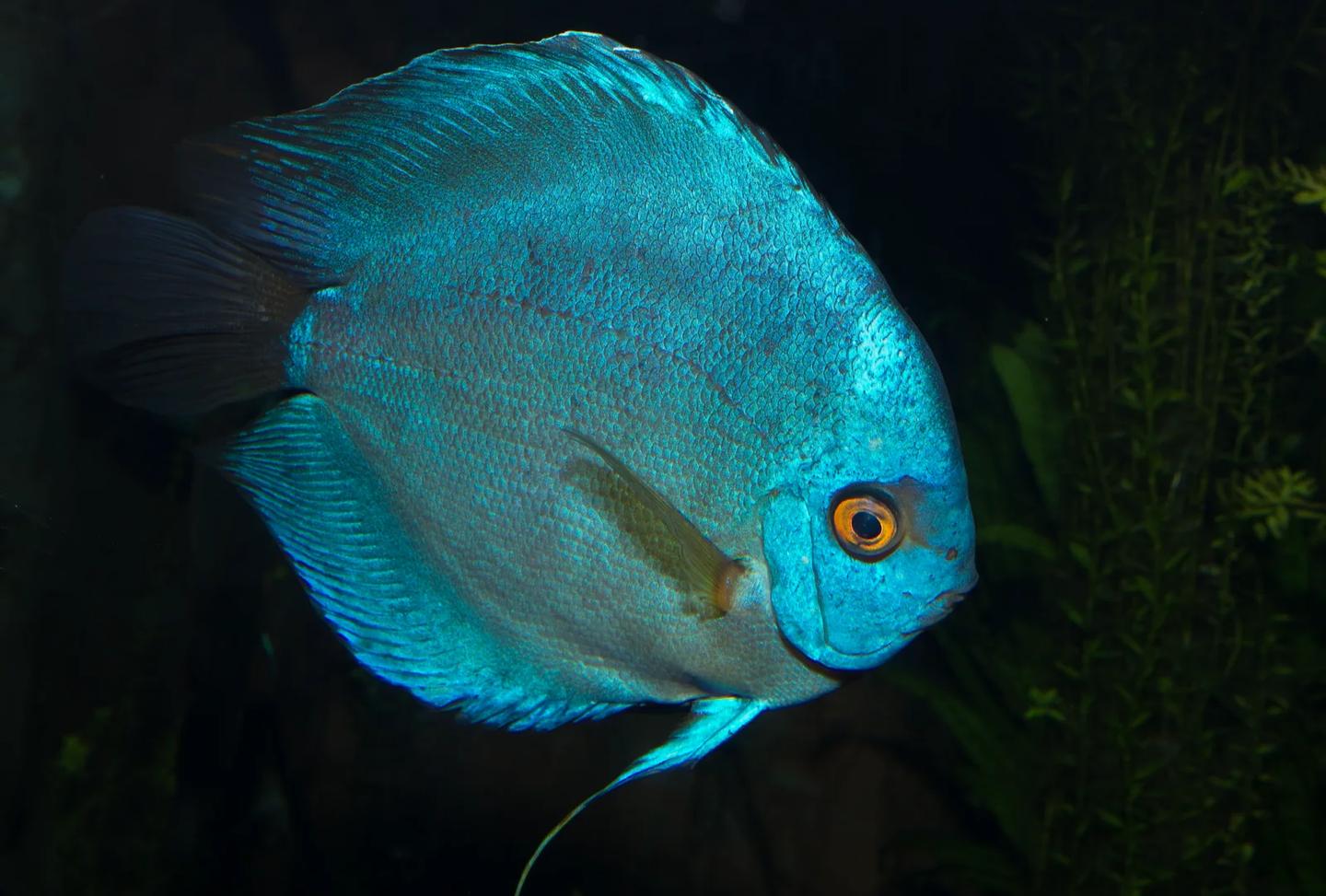
Discus are social Amazonian cichlids with specialised aquarium needs. OATA advises at least five fish, except an established breeding pair, and about 50 litres per adult—roughly 300 litres for six adults. Use that as a planning floor, then check usable dimensions, filtration, source water and the actual fish.
Maintain these water conditions for optimal health and vibrant colors
The Red Melon Discus is a red colour variety of discus, the South American cichlids of the genus Symphysodon known for their distinctive rounded shape. Each purchase is one live fish at the size you pick, from 4 cm to 12 cm or the XL selection HQ grade. The deciding question before you order is whether you can give discus what they need: a group of at least five, a large aquarium, and warm, soft, slightly acidic water kept clean by big weekly water changes.
Discus come from the Amazon river basin in Brazil. Their distinctive shape, calm behaviour, bright colours and dedicated parenting have made them some of the most admired freshwater aquarium fish, and breeding them for the hobby is now a major industry in several Asian countries. They are sometimes called pompadour fish, and enthusiasts show and compete with them. The Wikipedia overview of discus gives more background on the genus.
Red Melon is a trade name for a colour form rather than a separate species. The World Register of Marine Species entry for Symphysodon accepts Symphysodon as a genus in the cichlid family, Cichlidae. The exact species has not been identified, so the care advice here follows the genus Symphysodon and its care group. In practice that means the discus care sheet from the Ornamental Aquatic Trade Association (OATA), which is written for discus in general.
| Suits | Keepers with a large, mature aquarium who can manage a 50% water change every week and keep a group of five or more |
|---|---|
| Group | At least five discus, and more is better |
| Water (OATA care sheet) | 26–30°C, pH 6.0–7.5, general hardness 4–12 °dH |
| Food | Discus granules or pellets, plus frozen or live meaty foods |
| Temperament | Calm and social; stressed when kept alone or in too small a group |
| Sold as | One live fish per purchase, 4 cm to 12 cm or XL selection HQ |
Discus reward the right aquarium and struggle in the wrong one. Before ordering, check that you can say yes to each of these:
If any answer is no, it is better to prepare the aquarium first and order once it is ready. A newly set-up tank, a small aquarium or a community of fish that want cooler or harder water are all poor starting points for discus.
Red Melon Discus are offered in ten sizes: 4 cm, 5 cm, 6 cm, 7 cm, 8 cm, 9 cm, 10 cm, 11 cm and 12 cm, plus an XL selection HQ grade. The size you select is the size supplied, not the adult size. Not every size can be ordered at all times, and the product page shows which ones you can add to your basket.
Because each purchase is a single fish, set the quantity to build your group. Five or more Red Melon Discus make a strong single-colour display, or you can combine them with other colour varieties from our discus collection to reach the same group size.
Sex is guaranteed only when the selected option explicitly states male or female. This Red Melon Discus listing has no sex-guaranteed option. Discus are also hard to sex by eye: OATA notes that it is difficult to tell males from females unless they are in breeding condition, when the female's ovipositor can be seen.
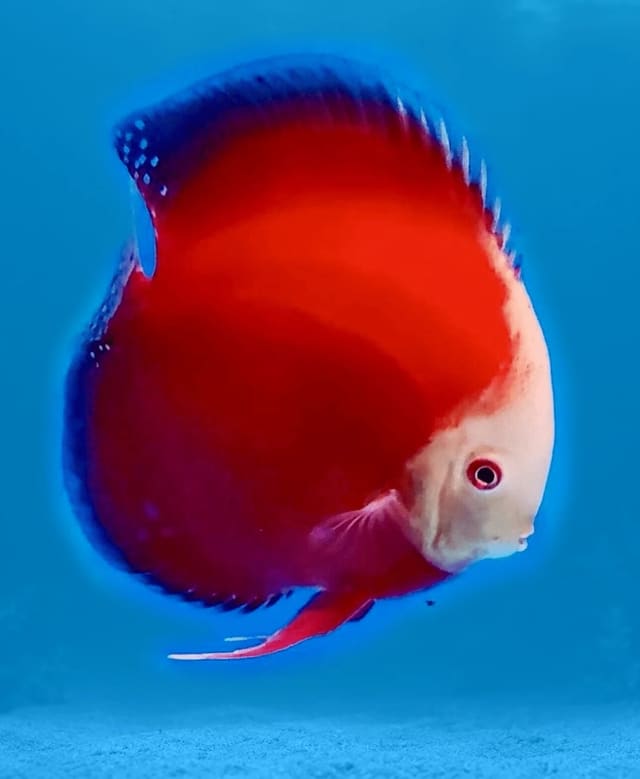
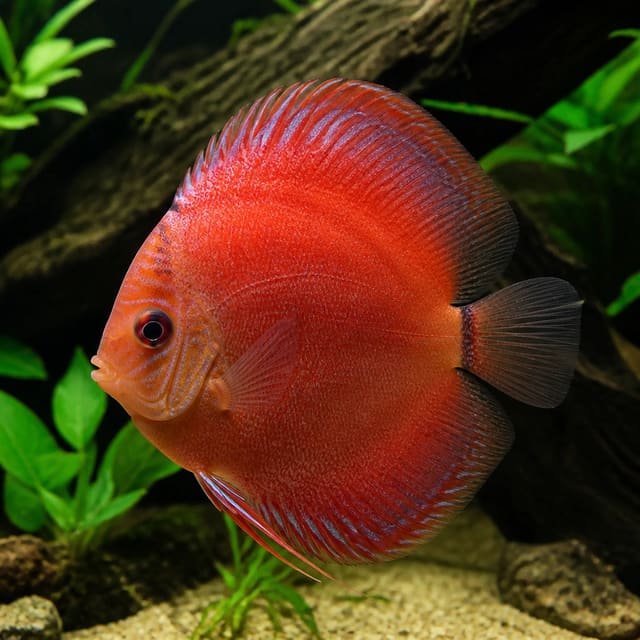
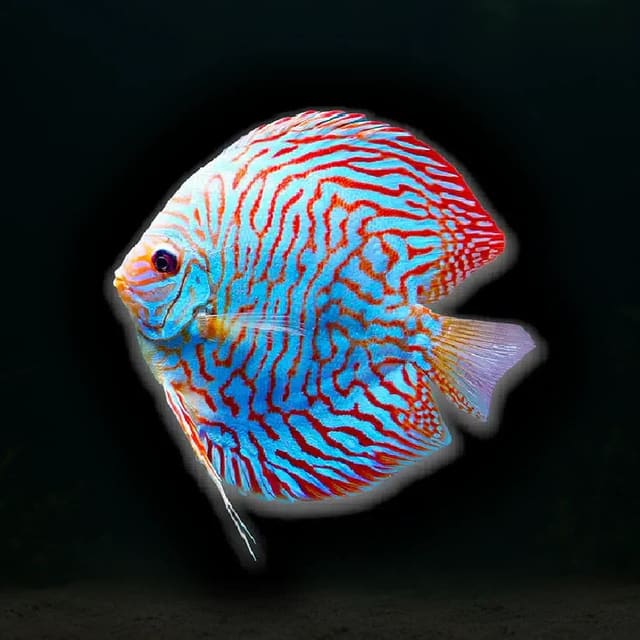
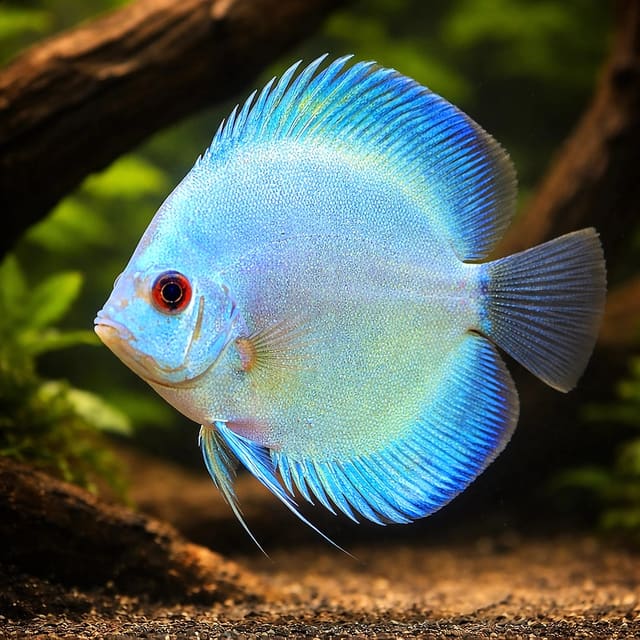
The photographs show the look this variety is chosen for: an even orange-red body, red eyes and finely rayed fins with pale, bluish edges. Gallery images have been digitally enhanced to improve image quality. Natural colour, pattern, size and maturity can vary between live animals. A 4 cm fish is a young discus with most of its growing still ahead of it.
OATA describes discus as needing more specific water parameters than many other fish. Clean, warm, soft and slightly acidic water is the optimum for all discus, and regular partial water changes are the best way to achieve it. That makes it worth getting the water right before the fish arrive, not after.
The figures below come from the OATA guide to looking after discus. They apply to discus as a whole rather than being a measured optimum for Red Melon Discus, so treat them as the range to stay within and aim for stability inside it.
| Temperature | 26–30°C |
|---|---|
| pH | 6.0–7.5 |
| General hardness | 4–12 °dH (soft to medium) |
| Carbonate hardness | 3–10 °dKH (soft to medium) |
| Ammonia | Zero |
| Nitrite | Zero |
| Nitrate | No more than 20 mg per litre |
Tank-bred discus can tolerate harder water than their wild relatives, but soft, slightly acidic water is still the optimum. OATA's advice is to find out what conditions discus have been kept in and to replicate them in your aquarium, so ask us about the water your fish have been living in and match it as closely as you can at first.
Each value tells you something different. Temperature and pH describe the conditions the fish live in every day, while general hardness describes how soft or hard the water is and carbonate hardness shows how strongly it resists changes in pH. Ammonia and nitrite are toxic waste products that a healthy filter should keep at zero, and nitrate is the end product that water changes remove.
If you are new to test kits, our guide to aquarium water parameters and what to test explains each reading in plain terms. The water parameter matcher lets you compare your own tap and tank readings with the discus figures above before you commit to a group.
OATA's advice is to buy an aquarium as large as you reasonably can. It recommends about 50 litres of water for each adult discus, with plenty of floor space, and gives an aquarium of approximately 300 litres as the size to house a shoal of six adults. The larger the volume, the more stable the temperature and water quality will be.
Plan the tank around adult fish rather than the size you buy. OATA notes that adult discus can reach up to 20 cm across, so a group bought at 5 or 6 cm will need that full volume as it grows.
In the wild, discus are generally carnivores that eat aquatic invertebrates. In the aquarium, a good diet combines a specialised dried discus food with meaty frozen or live foods, offered little and often.
Discus have a relatively small stomach, so they appreciate 2–3 smaller feeds spread through the day. At each feed, offer only what the group eats within a few minutes.
The real danger at feeding time is overfeeding. Uneaten food breaks down and releases toxic waste into the water, which undoes the clean conditions discus need. Watch the whole group eat, and lift any leftovers out with the siphon when you next clean the substrate.
A simple pattern is to use the dried discus food as the base of the diet and bring in frozen or live foods across the week, so the group is offered bloodworm, beef heart and discus mix in turn. Keep each portion small, because every extra pinch that goes uneaten ends up as waste in the water.
In a group, watch that every discus gets its share, particularly any that are shy, and spread the food a little so the quieter fish can reach it.
Feeding time is the easiest moment to count the group and look at each fish. A discus that shows reduced intake or loses interest in food is worth watching closely, and it is a good prompt to test the water.
Discus do best with a steady routine that keeps the water clean and stable week after week. The steps below follow OATA's care sheet and take the guesswork out of looking after a group.
Each day, count the group at feeding time, look over every fish for the warning signs listed below, and check that the thermometer still reads within 26–30°C. These few minutes of attention are the quickest way to catch a problem early.
The RSPCA advice on fish environments explains why the filter matters so much. Fish release ammonia, which is toxic. In a working biological filter, beneficial bacteria convert that ammonia to nitrite, which is also toxic, and then to nitrate, which is safer. No fish should be kept in an aquarium without a well set-up and maintained filter.
When the filter needs cleaning, do not run it under the tap, because any chlorine or chloramine present may kill the beneficial bacteria living in the media. Instead, rinse it lightly in some of the tank water you have just removed during a partial water change.
Every fish varies a little in behaviour and appearance, but changes in these areas can show a problem before it becomes serious:
If you are worried about any of your discus, test the water quality first, then contact us for guidance.
A healthy fish has clear, bright eyes, undamaged fins, intact scales and no ulcers or bumps, and it swims normally. Use this as your baseline when your fish arrive, so that any later change stands out.
Set up and mature the aquarium well before you order. Our guide to setting up a tropical fish tank walks through maturing a filter safely. Before any fish go in, check that ammonia and nitrite both read zero, that the heater holds the water within 26–30°C, and that the aquarium is large enough for the number of discus you plan to keep.
Every order is hand-packed by our team. Fish are bagged in pure oxygen and packed in an insulated poly box, with a heat pack when the weather calls for it. We email the tracking number and your confirmed delivery date, and a licensed live-animal courier carries the parcel to your door. The full terms are on our delivery and Live Arrival Guarantee page.
Because the email tells you the delivery date, you know exactly when to be in. Keep that day clear, and the day before, check that the aquarium is at temperature and that ammonia and nitrite still read zero.
A Live Arrival Guarantee claim needs that unboxing video. If anything has gone wrong, message us the same day your fish arrive (WhatsApp is fastest) with your order number and the video, and we will arrange a replacement or refund.
Build up the stocking gradually. The beneficial bacteria in a matured filter need to increase every time more fish are added and feeding increases. Overstocking, or stocking too quickly, can cause new tank syndrome: there are not enough nitrifying bacteria to cope with the extra waste, so ammonia and nitrite rise to unhealthy levels that may cause fish to become ill or die.
In practice, test the water more often than usual in the weeks after a new group goes in, keep feeds small, and watch each fish at feeding time for the signs listed in the maintenance section.
Knowing how discus behave makes it easier to set up the aquarium well and to notice when something has changed.
Discus are known for their calm behaviour, and they are social fish that live best in a group. They can also be shy, which is why OATA recommends live plant cover for them to hide in, along with branches, wood and other ornaments. Giving them both cover and open water lets the group choose where to spend its time.
Discus explore the aquarium together, so OATA stresses the importance of some open space in which they can swim as a group. Keep a clear area free of décor rather than filling every corner.
Discus feed naturally by blowing at the substrate, which is why OATA suggests fine gravel or sand as the base.
OATA lists changes in colour and temperament among the early signs worth noticing. A discus that turns darker or paler than normal, hides more than usual or becomes more aggressive needs a closer look, and the first step is always to test the water.
Every size on offer is a young discus with growing still to do. OATA notes that adult discus can reach up to 20 cm across but are slow growers, so a 4 cm fish and a 12 cm fish are at very different stages of life.
You can choose any mix of sizes for a group. Buying younger fish spreads their growth over a longer time, while buying larger fish shows you more of the adult look sooner. Either way, the aquarium, filter and routine need to be ready for the full adult group before the first fish arrive.
The XL selection HQ grade is the largest grade on this page and is sold by that label rather than by a centimetre measurement. If you would like to know more about it before ordering, contact us.
Discus can live for many years in a well-matured aquarium with good water quality. Treat a group as a long-term commitment when you plan the tank, the weekly water-change routine and the space it will take up in your home.
Discus are known for their dedicated parenting. Two discus can sometimes be kept on their own if they are already an established breeding pair, but otherwise they need a group. Telling the sexes apart is difficult: the female's ovipositor is normally visible only when fish are in breeding condition.
Discus care uses a handful of terms that are worth understanding before you start testing and planning.
| General hardness (°dH) | The amount of dissolved minerals, mainly calcium and magnesium, in the water. OATA's discus range is soft to medium, 4–12 °dH. |
|---|---|
| Carbonate hardness (°dKH) | The water's buffering capacity, which affects how steady the pH stays. OATA gives 3–10 °dKH for discus. |
| pH | How acidic or alkaline the water is. Values below 7 are acidic, so the discus range of 6.0–7.5 runs from slightly acidic to just above neutral. |
| Ammonia and nitrite | Toxic waste products. A working biological filter converts them, and both should test at zero. |
| Nitrate | The safer end product of filtration, kept no higher than 20 mg per litre by regular water changes. |
| Dither fish | Smaller, calm companions whose presence helps discus judge that there are no predators near. |
| New tank syndrome | A rise in ammonia and nitrite when there are not enough nitrifying bacteria to cope with the fish in the aquarium. |
| Ovipositor | The breeding tube that becomes visible on a female discus in breeding condition, which is when the sexes can be told apart. |
| Established breeding pair | Two discus that have already paired, the one case where two can sometimes be kept without a larger group. |
With discus, get the group right first and choose companions second. OATA's advice starts with the discus group itself and then adds a handful of suitable companions.
Discus are shoaling fish, and OATA advises keeping them in groups of at least five in the home aquarium, with more being better. Discus kept singly or in too small groups will often become stressed or bullied by larger or more dominant fish. The one exception is an established breeding pair, which can sometimes be kept as two.
Discus need an aquarium set up around their own needs, so only a handful of other species make suitable tank mates. OATA names:
Smaller companions like these can act as dither fish. Discus use the behaviour of smaller fish to judge that there are no predators nearby, so a calm group of dither fish can help them feel more confident.
Whatever you choose, check each species on its own terms before adding it. A companion is worth considering only if you can answer yes to every question below.
The group can be made up entirely of Red Melon Discus or can mix them with other discus colour varieties. OATA's advice is written for discus as a whole, and the many colour forms in the trade have been selectively bred within the same genus, so the water, space and feeding needs on this page apply to every fish in the group.
Decide how many adult discus you want first and allow the space they need. Then add a modest number of companions from the kinds OATA names, introducing them gradually so the filter can keep pace.
OATA's discus care sheet says adult discus can reach up to 20 cm across, although they grow slowly. Plan the aquarium around fish of that size rather than the size of a young fish.
OATA recommends about 50 litres of water for each adult discus, with plenty of floor space, and gives approximately 300 litres as the size for a shoal of six adults. A larger aquarium keeps temperature and water quality more stable, and because discus grow slowly it is worth planning for the adult group from the start.
Keep a group of at least five, and more is better. Discus kept singly or in too small groups will often become stressed or bullied by larger or more dominant fish. Two can sometimes share an aquarium if they are already an established breeding pair.
Discus have specialised care requirements and need more specific water conditions than many other fish, including a 50% partial water change every week, regular testing and a group of five or more in a large aquarium. They suit keepers who already run a mature, stable aquarium and can keep to that routine.
Discus are generally carnivores that eat aquatic invertebrates in the wild. Offer a specialised discus granule or pellet at least once a day, plus frozen or live foods such as bloodworm, beef heart or a discus mix, in 2–3 small feeds a day and only as much as is eaten within a few minutes.
OATA's discus care sheet gives 26–30°C, pH 6.0–7.5, general hardness of 4–12 °dH and carbonate hardness of 3–10 °dKH, with ammonia and nitrite at zero and nitrate no higher than 20 mg per litre. Keep conditions stable within those care-sheet ranges rather than chasing one number.
Discus are not as aggressive as some of their close cichlid relatives and are known for calm behaviour. The main social risk is a group that is too small, because a lone discus or a small group will often become stressed or bullied by larger or more dominant fish.
Only a handful of other species suit a discus aquarium. OATA names medium-sized tetras, Corydoras, plecos and dwarf cichlids, and smaller dither fish can help discus feel more confident. Any companion must also be comfortable in warm, soft, slightly acidic water, so check each one's own needs before adding it.
We hand-pack each order in bags of pure oxygen inside an insulated poly box, with a heat pack when the weather calls for it, and a licensed live-animal courier delivers it with tracking. Someone must be at home to receive it. Film a continuous unboxing video from the sealed parcel to the fish in the sealed bag, then float the bag for 20–30 minutes before releasing the fish; the video is needed for any Live Arrival Guarantee claim.
No reviews for this item yet. Bought one? Honest reviews only, good or bad.
What customers say about ordering from us
Easy website plenty of info on fish your buying great to pick a time slot
TRACEY DURRANT · 7 Oct 2026
Got some lovely fish thank you
Kevin Mackie · 7 Oct 2026
Reviews of our shop, collected by Judge.me, an independent third-party review collector. Newest first.