−15%
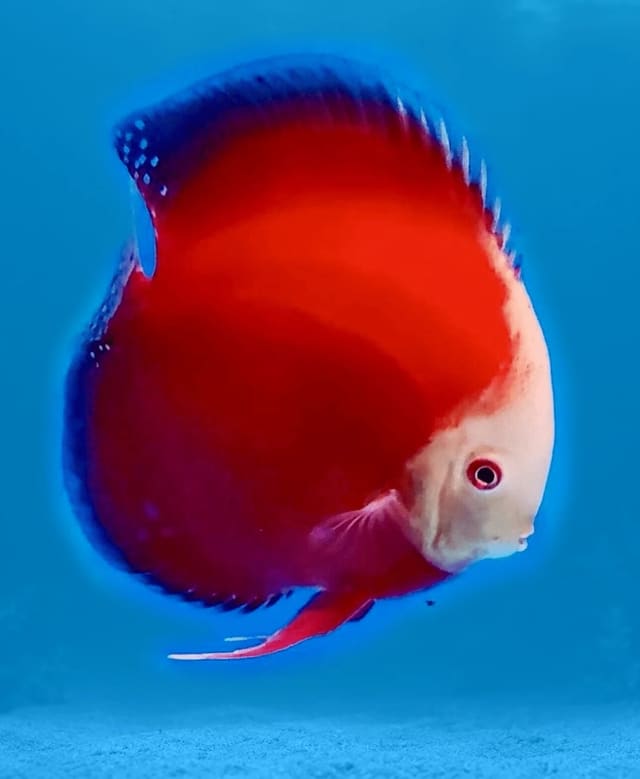
Red Melon Discus (Symphysodon sp.)
26–30°C · pH 6–7.5
£44.19£51.99
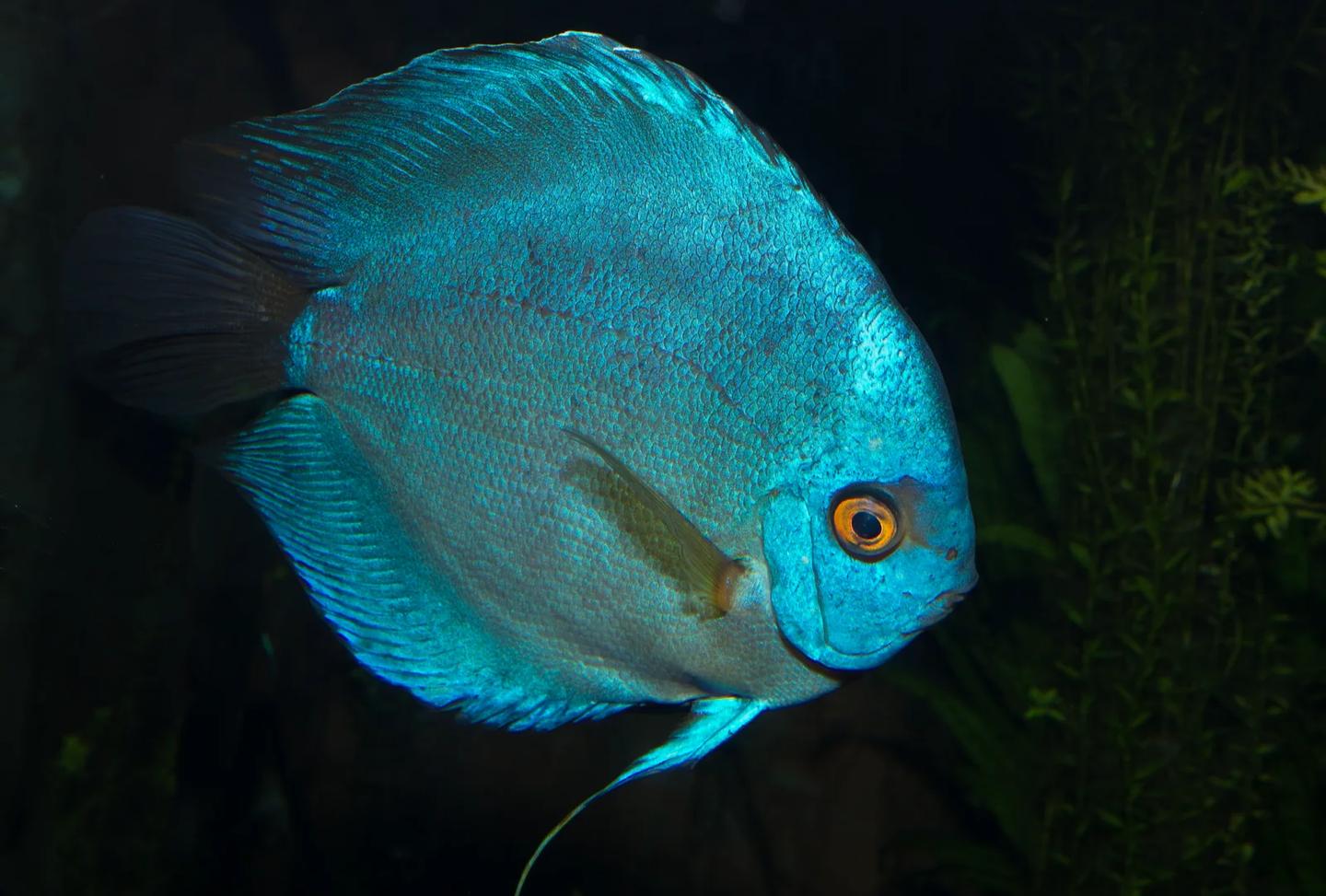
Royal Blue Discus (Symphysodon sp.) is a blue-lined discus, a cichlid from a genus native to the Amazon river basin, for experienced keepers with a mature, warm aquarium. OATA's discus care sheet advises groups of at least five, 26–30°C and pH 6.0–7.5. Sold as one live fish in sizes from 2 cm to 15 cm, plus XL selection HQ.
Symphysodon sp.
Royal Blue Discus (Symphysodon sp.) is a blue-lined discus, a cichlid from a genus native to the Amazon river basin, for experienced keepers with a mature, warm aquarium. OATA's discus care sheet advises groups of at least five, 26–30°C and pH 6.0–7.5. Sold as one live fish in sizes from 2 cm to 15 cm, plus XL selection HQ.
Discus are social Amazonian cichlids with specialised aquarium needs. OATA advises at least five fish, except an established breeding pair, and about 50 litres per adult—roughly 300 litres for six adults. Use that as a planning floor, then check usable dimensions, filtration, source water and the actual fish.
Maintain these water conditions for optimal health and vibrant colors
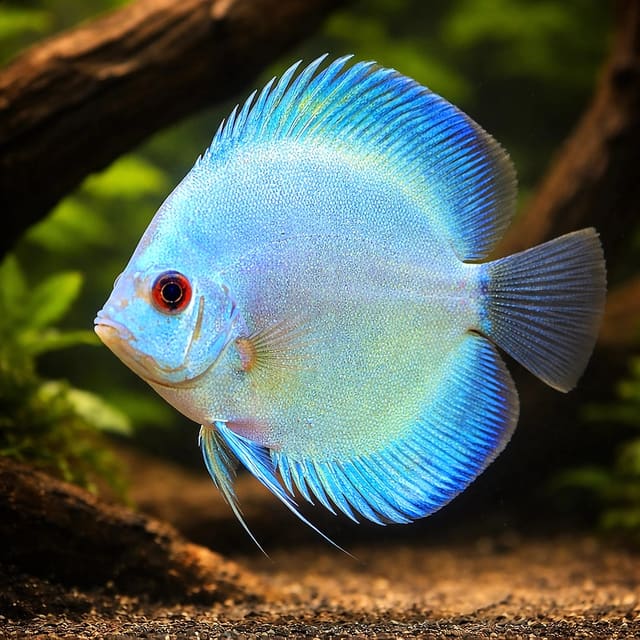
The Royal Blue Discus (Symphysodon sp.) is a discus, a cichlid prized for its distinctive shape, from a genus that Wikipedia describes as native to the Amazon river basin in Brazil. WoRMS lists Symphysodon as an accepted genus in the cichlid family, Cichlidae. Royal Blue is the trade name for this colour form: it describes the blue-lined look of the fish rather than a separate species.
This fish suits a keeper who wants a calm, colourful group and is ready to run a mature aquarium with warm, soft, slightly acidic water and a large water change every week. We rate discus as an advanced choice, because OATA's discus care sheet notes that they have specialised care requirements and need more specific water parameters than many other fish. Discus are social, so the first decision is whether you can house a group of at least five, not just one striking fish.
Keepers value discus for their shape, calm behaviour, bright colours and patterns and devoted parenting. Those qualities have made them popular freshwater aquarium fish, sometimes called pompadour fish, and OATA describes them as held in the highest regard by fishkeepers, and by some as the ultimate freshwater tropical species. They also have a dedicated following among collectors, with shows and competitions built around them, and discus farming is a major industry in several Asian countries.
| Suits | Not suited to |
|---|---|
| A planned group of at least five discus | A single discus kept on its own |
| A mature, filtered aquarium with about 50 litres per adult | A newly filled tank with an immature filter |
| Warm water held steady at 26–30°C | Unheated or cool-water set-ups |
| Keepers who can change 50% of the water every week | Owners looking for a low-maintenance fish |
| Experienced keepers ready for an advanced fish | A first fish for someone new to tropical tanks |
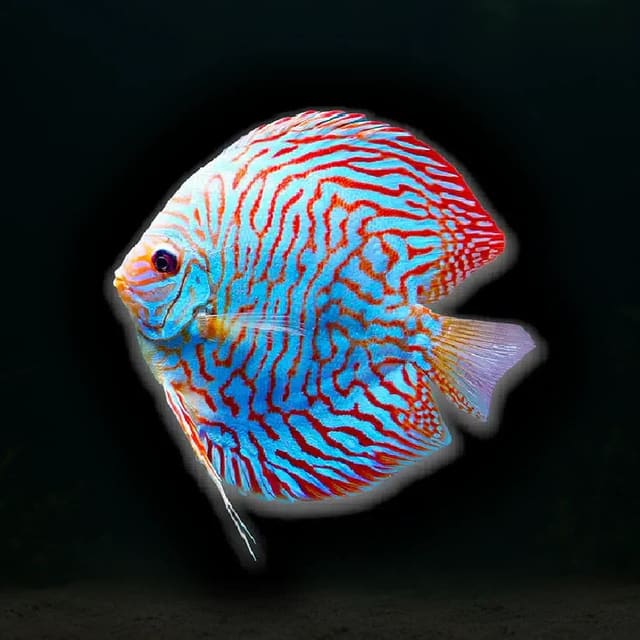
Royal Blue names a colour form, not a pedigree. Two fish sold under the name can differ in shade, in how densely the blue lines cover the body and in fin colour, and a young fish can look quite different once it matures. Choose this discus for its general blue-lined appearance and plan the aquarium around the group it will join.
Each purchase supplies one live Royal Blue Discus in the size you choose. Sizes run from 2 cm to 15 cm in single-centimetre steps, plus a larger grade labelled XL selection HQ, and the size selector on this page shows which of them can be ordered. The size you select is the size supplied, not the adult size. Discus are slow growers, so a small fish takes time to fill out, and the aquarium should be planned for the adult group from the start.
One fish per purchase suits two situations. If you are adding to a group that has already settled in a mature aquarium, buying one at a time spreads the extra load on the filter. If you are starting a new group, the aim is still at least five discus, built up at a pace the filter can handle, because a discus bought on its own needs others of its kind around it.
Sex is guaranteed only when the selected option explicitly states male or female. This Royal Blue Discus listing has no sex-guaranteed option. OATA notes that discus are difficult to sex unless they are in breeding condition, when the female's ovipositor can be seen.
The exact species has not been identified, so the care advice here follows the genus Symphysodon and its care group. In practice, the water values, group size and aquarium volume on this page come from OATA's discus care sheet, which is written for discus as a whole.
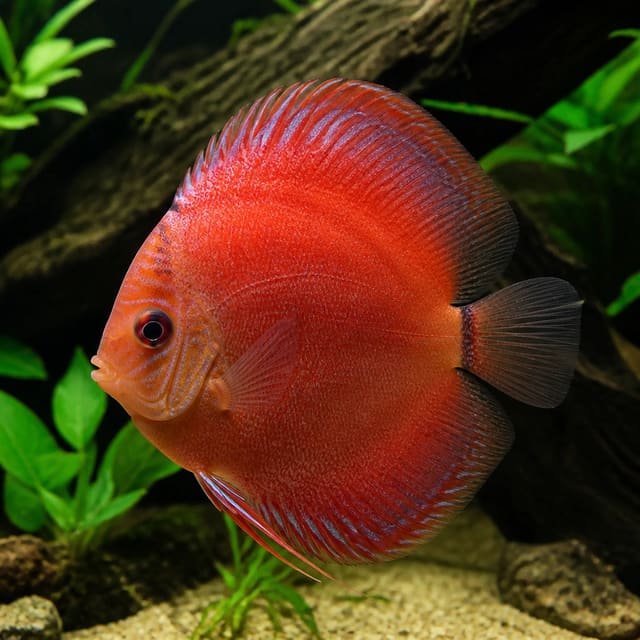
Gallery images have been digitally enhanced to improve image quality. Natural colour, pattern, size and maturity can vary between live animals. The photo showing two fish illustrates discus in a planted group and does not change the one-fish purchase.
If you are comparing colour forms before deciding, browse our discus collection. Every discus there needs the same group planning and water care set out below, whatever its colour.
Discus are shoaling fish. OATA advises keeping them in groups of at least five in the home aquarium and says that more is better. Discus kept singly or in groups that are too small will often become stressed or bullied by larger or more dominant fish, so a group is a welfare need rather than a display choice. The one exception OATA gives is an already established breeding pair, which can sometimes share a set-up as two fish.
In practice, build the group in small batches rather than all at once. Test ammonia and nitrite before each new addition, and add more fish only when both read zero and the discus already in the aquarium are feeding well. That rhythm lets the filter bacteria keep pace with the rising load instead of falling behind it.
Stocking too many fish, or stocking too quickly, can cause what OATA calls new tank syndrome: there are too few nitrifying bacteria to cope with the extra waste, so ammonia and nitrite climb to levels that may make fish ill or kill them. Before any discus arrives, the filter should already be mature, with ammonia and nitrite reading zero. Our guide to setting up a first tropical tank in ten safe steps walks through maturing a filter before livestock goes in.
If you are unsure whether your aquarium suits the number of discus you have in mind, send us its dimensions and your stocking plan before ordering and we will check it with you.
OATA recommends allowing 50 litres of water for each adult discus, with plenty of floor space, and gives an aquarium of approximately 300 litres as a home for a shoal of six adults. Its general advice is to buy an aquarium as large as possible, within reason, because the larger the aquarium, the more stable its temperature and water quality stay. Whatever the size, a filter is always essential.
That volume is set by adults, not by the size in the bag. OATA notes that adult discus can reach up to 20 cm across, although they are slow growers. A 5 cm fish will need the same space as the rest of the group once it matures, so buy the aquarium for the finished group rather than planning to upgrade later.
| Planned adult group | Water volume at 50 litres per adult |
|---|---|
| Five discus | About 250 litres |
| Six discus | About 300 litres, OATA's own example |
| Eight discus | About 400 litres |
| Discus plus companion fish | More than the discus figure alone, because every companion adds waste |
Floor space matters as much as the litre figure. Discus explore the aquarium as a group, so a footprint with generous length and depth gives them open water to move through together while leaving room for planted cover along the back and sides. A tall, narrow tank of the same volume offers less of that usable swimming room.
The heater and filter have to suit the finished group too. Choose a heater that can hold the whole volume steady within 26–30°C and a filter sized for every adult discus plus any companions. Your weekly tests tell you whether the filter is keeping up: any ammonia or nitrite reading above zero means it is not.
Discus can be shy, and OATA recommends live plant cover for them to hide in, together with branches, wood and other decorations that give shelter. Balance that cover with open water: given their size and shape, discus need some open space in which to swim as a group when they explore the aquarium.
Choose fine gravel or sand for the substrate. Discus feed naturally by blowing into the substrate to uncover food, and a fine surface lets them do that. Sand needs a little extra attention, which the maintenance routine below covers.
Cover gives a shy fish somewhere to retreat, which helps a new arrival settle, while a bare tank leaves it nowhere to go. Too much clutter has the opposite problem, filling the swimming space the group needs. Aim for planted, sheltered edges and a clear middle.
Plan the layout with maintenance in mind as well. Leave open areas of substrate that you can reach easily with a siphon, and position wood so that waste does not gather behind it out of sight. A layout you can clean quickly each week is one you will keep clean.
Keep Royal Blue Discus at 26–30°C, pH 6.0–7.5 and a general hardness of 4–12°dH, with ammonia and nitrite at zero and nitrate below 20 mg per litre. These are OATA's discus care-sheet values for discus as a whole, not a species-specific optimum, and within them OATA describes clean, warm, soft, slightly acidic water as the best conditions for all discus.
| Water value | OATA discus guidance |
|---|---|
| Temperature | 26–30°C |
| pH | 6.0–7.5 |
| General hardness | Soft to medium, 4–12°dH |
| Carbonate hardness | Soft to medium, 3–10°dKH |
| Ammonia | Zero |
| Nitrite | Zero |
| Nitrate | No higher than 20 mg per litre |
OATA notes that tank-bred discus can tolerate harder water than wild discus, but soft, slightly acidic, clean water remains the target, and regular partial water changes are the most reliable way to hold it there. Aim for steady conditions inside the ranges rather than frequent adjustments.
OATA also advises finding out what conditions discus have been kept in and then replicating them in your aquarium. Before you order, compare your own water with the figures above and note where it sits in each range, so the fish arrives into water as close as possible to what it knows.
Test before you buy. Our guide to aquarium water parameters explains what each test measures and why it matters, and the water parameter matcher compares your own readings with ranges like these. If your tap water sits well outside them, solve that before ordering rather than after the fish has arrived.
| Reading | First response |
|---|---|
| Ammonia or nitrite above zero | Feed lightly, change water, check the filter for blockages and add no new fish until both read zero again |
| Nitrate close to 20 mg per litre | Keep strictly to the weekly 50% change and review how much food goes in |
| Temperature outside 26–30°C | Check the heater and thermometer before changing anything else |
Write every result down, so you can see whether a problem is new or has been building for weeks.
Discus need consistently clean water, and OATA strongly recommends a partial water change of 50% at least once every week. Large, regular changes hold nitrate down and keep the water clean, warm and soft between tests.
The tap rule protects the filter. Tap water can carry chlorine or chloramine, which may kill the beneficial bacteria living in the media, while a light rinse in removed aquarium water cleans the media and reduces the number of bacteria lost.
The RSPCA's aquarium welfare guidance explains why the filter matters so much. Fish release ammonia, which is toxic. A working biological filter grows beneficial bacteria that convert ammonia to nitrite, which is also toxic, and then to nitrate, which is safer. No fish should be kept without a well set up and maintained filter, and weekly water changes then remove the nitrate the filter produces.
Keep a simple written log of each week's readings and the date of each water change. A slow rise in nitrate, or a missed change, is easy to see in a log and easy to miss from memory, and the log gives you something useful to share if you ever need advice about a fish.
In the wild, discus are generally carnivores that eat aquatic invertebrates, so their aquarium diet is built around animal foods. OATA recommends specialised dried discus foods, in granule or pellet form, at least once a day to make sure the fish receive enough vitamins. Add frozen or live foods for variety; OATA names beef heart, bloodworm and special discus mixes as foods discus appreciate.
Discus have a relatively small stomach, so two or three smaller meals spread through the day suit them better than one large one. Feed only what the group eats within a few minutes, and take care not to overfeed: uneaten food breaks down and releases toxic waste into the water.
Watch every fish at every meal. A discus that shows less interest in food, or eats less than usual, is showing one of the early changes OATA lists as worth investigating, and that is far easier to spot across several small meals than in one large feed. Over the longer term, keep an eye on body condition too, because a gradual gain or loss of weight is another sign on the same list.
If food is still lying on the substrate after a few minutes, siphon it out and give less at the next meal. Adjust portions as the group grows, and feed a little less rather than more when you are unsure, because leftover food only adds waste to the water.
A discus should arrive into an aquarium that has been running steadily for some time, not one filled the week before. Work through these checks before you place the order, and again the day before delivery.
If any check fails, delay the order rather than hoping the aquarium catches up after the fish arrives. Immature or unstable water is where new tank syndrome begins, and waiting a week costs far less than nursing a stressed fish through it.
The same checks protect the fish already in your aquarium. Every new discus adds waste and feeding, so an established group benefits from a filter with spare capacity and a keeper who has already confirmed the readings before the parcel is on its way.
Your discus is hand-bagged in pure oxygen and packed in an insulated poly box, with a heat pack when the weather calls for it. We email the tracking number and your confirmed Thursday or Friday delivery date, and a licensed live-animal courier carries the parcel on a tracked service. Live fish cannot be left unattended, so someone needs to be at the delivery address to receive it.
The Live Arrival Guarantee depends on three things: someone being at the address to receive the parcel, the parcel being opened and inspected on the day it arrives, and a continuous unboxing video that starts with the parcel still sealed. Film every delivery this way, because our licensed courier may ask for continuous unboxing evidence when a claim is raised. The full terms are on our delivery and Live Arrival Guarantee page.
According to OATA, healthy fish have clear, bright eyes, undamaged fins, intact scales, no ulcers or bumps and normal swimming behaviour. Use that picture as your baseline on arrival day, then watch for changes as the new discus settles into the group.
| What to watch | Changes worth noting |
|---|---|
| Swimming | Hanging at the surface, sitting on the bottom or swimming erratically |
| Colour | Turning darker or paler than normal |
| Temperament | More aggression than usual, or hiding more than normal |
| Breathing | Gill covers moving faster or slower than normal |
| Appearance | White spots, fluffy growths, or loss of fins or scales |
| Condition | Gaining or losing body weight |
| Feeding | Eating less or losing interest in food |
Every fish varies a little in behaviour and appearance, so compare each discus with how it looked and behaved in its first days rather than with a different fish. A single observation matters less than a change that persists from one day to the next.
If you see any of these changes, test the water first: ammonia, nitrite and nitrate readings show quickly whether the aquarium itself is the problem. Then contact us with the readings and a description of what the fish is doing, so we can talk it through with you.
Keep the weekly routine going through this period without extra changes to the layout or stocking. Steady water, small meals and a calm, sheltered aquarium give a newly arrived discus the best chance to settle and show its colour.
A discus aquarium is set up around the discus, so only a handful of other species make suitable tank mates. OATA names medium-sized tetras, Corydoras, plecos and dwarf cichlids as the kinds of fish that can share a discus aquarium. Smaller companions of this kind can act as dither fish: discus watch them to judge that no predators are near, which can help the group feel more confident.
Use OATA's list as a starting point and research each species on its own terms before it goes in. A companion that suits one discus aquarium may not suit another if the stocking, layout or water differ.
Work through the numbers before choosing companions. Six adult discus at 50 litres each account for about 300 litres, which is the whole of OATA's example aquarium, so a 300-litre tank holding six discus leaves little room for anything else. In a larger aquarium of, say, 400 litres, the same six discus leave some capacity for a small group of companions, provided the filter is sized for the total.
The discus group always comes first. Settle a group of at least five in a mature aquarium, then add companions gradually at the same slow pace that protects the filter, as described in the group-planning section.
Discus are known for calm behaviour and are not as aggressive as some of their close cichlid relatives. They are still social fish with needs of their own, and the arrangement OATA recommends is a group of at least five: a lone discus or a very small group will often become stressed or bullied by larger or more dominant fish.
Pairs are the exception. OATA notes that two discus can sometimes share a set-up if they are an already established breeding pair, meaning two fish that have already paired and bred, not simply two fish bought together. Discus are also known for their dedicated parenting, which is part of their appeal to experienced keepers.
When you add a new discus to an existing group, go gradually, as the group-planning section explains, and watch temperament over the following weeks. More aggression than usual, or a fish hiding more than normal, is the change OATA lists under temperament, and it deserves a closer look at both the fish and the water.
Plan on about 50 litres of water for each adult discus, with plenty of floor space: OATA's discus care sheet gives an aquarium of approximately 300 litres as a home for a shoal of six adults. Size the tank for the finished adult group rather than for the fish you buy, and choose the largest aquarium you reasonably can, because a bigger volume keeps temperature and water quality more stable.
Keep a group of at least five, and more where space allows. OATA advises groups of at least five because discus kept singly or in too small groups will often become stressed or bullied by larger or more dominant fish. Two discus can sometimes share an aquarium only when they are an already established breeding pair.
We rate discus as an advanced fish rather than a beginner's choice. OATA notes that discus have specialised care requirements and need more specific water conditions than many other fish, so plan for warm, soft, slightly acidic water, a mature filter and a 50% partial water change at least once every week.
In the wild, discus are generally carnivores that eat aquatic invertebrates. OATA recommends specialised discus granules or pellets at least once a day, plus frozen or live foods such as bloodworm, beef heart or discus mixes. Offer two or three small meals through the day and feed only what the fish eat within a few minutes, because uneaten food breaks down into toxic waste.
OATA's discus care sheet gives 26–30°C, pH 6.0–7.5, a general hardness of 4–12°dH and a carbonate hardness of 3–10°dKH, with zero ammonia and nitrite and nitrate no higher than 20 mg per litre. These care-sheet values cover discus as a whole; clean, warm, soft, slightly acidic water suits them best and is kept that way through regular partial water changes.
Discus are known for calm behaviour and are not as aggressive as some of their close cichlid relatives. Their main risk is social rather than aggressive: kept alone or in too small a group, discus will often become stressed or bullied by larger or more dominant fish, so keep at least five together.
Only a handful of species suit a discus aquarium, because every companion must share its warm, soft water. OATA names medium-sized tetras, Corydoras, plecos and dwarf cichlids, and smaller dither fish of this kind can help discus feel more confident. Check each companion's own group size, adult size and water needs before adding it.
Start filming before the parcel is opened and keep filming in one continuous take until the fish can be seen in its sealed bag, because that unboxing video is needed for any Live Arrival Guarantee claim. Each fish is hand-bagged in pure oxygen inside an insulated poly box, with a heat pack when the weather calls for it, and a licensed live-animal courier delivers on your confirmed Thursday or Friday, so someone must be in to receive it. Float the bag for 20–30 minutes before releasing the fish, and never pour the bag water into your tank.
No reviews for this item yet. Bought one? Honest reviews only, good or bad.
What customers say about ordering from us
Easy website plenty of info on fish your buying great to pick a time slot
TRACEY DURRANT · 7 Oct 2026
Got some lovely fish thank you
Kevin Mackie · 7 Oct 2026
Reviews of our shop, collected by Judge.me, an independent third-party review collector. Newest first.