−15%
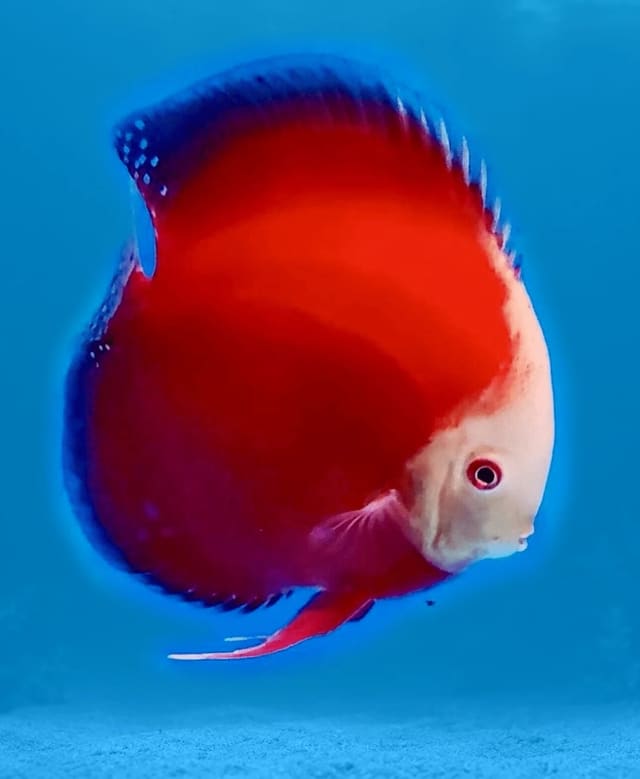
Red Melon Discus (Symphysodon sp.)
26–30°C · pH 6–7.5
£44.19£51.99
Blue Discus – Mixed Colour B Grade (Symphysodon sp.) is a domestic trade-form discus for an experienced keeper with a mature, warm group aquarium. One purchase supplies one unsexed fish in the chosen 2–15 cm dispatch size; colour, pattern and commercial grade vary between animals.
Symphysodon sp.
Blue Discus – Mixed Colour B Grade (Symphysodon sp.) is a domestic trade-form discus for an experienced keeper with a mature, warm group aquarium. One purchase supplies one unsexed fish in the chosen 2–15 cm dispatch size; colour, pattern and commercial grade vary between animals.
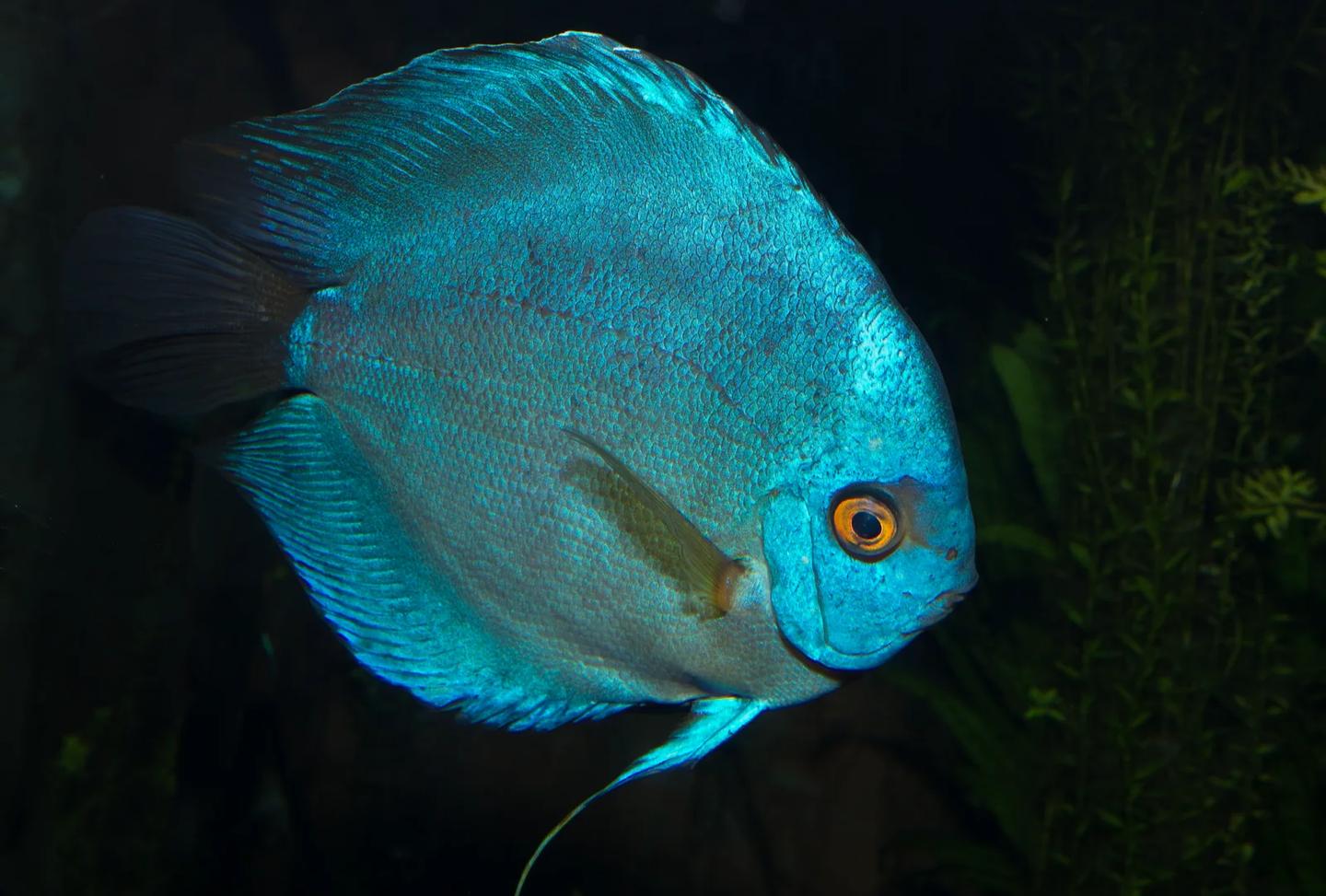
Discus are social Amazonian cichlids with specialised aquarium needs. OATA advises at least five fish, except an established breeding pair, and about 50 litres per adult—roughly 300 litres for six adults. Use that as a planning floor, then check usable dimensions, filtration, source water and the actual fish.
Maintain these water conditions for optimal health and vibrant colors
Blue Discus – Mixed Colour B Grade (Symphysodon sp.) is a domestic trade-form discus rather than a named wild species or a fixed pedigree strain. Blue Discus is the customer-facing trade name. Mixed Colour describes the expected variation, while B Grade is the commercial visual grade attached to this stock. These words help set appearance expectations; they do not create a scientific species name.
Symphysodon is the accepted genus. For this offer, Symphysodon sp. is the accurate singular shorthand for a fish identified to genus but not to one named species. The exact species has not been identified, so the care advice here follows the genus Symphysodon and its care group. Mixed Colour and B Grade stay outside the scientific parentheses because colour and grading belong to the trade description, not taxonomy.
| Suits | An experienced keeper with a mature aquarium, dependable warm-water maintenance and a plan for a compatible social group |
|---|---|
| Less suitable for | A small community, a newly filled tank, solitary long-term housing or an aquarium where large regular water changes are impractical |
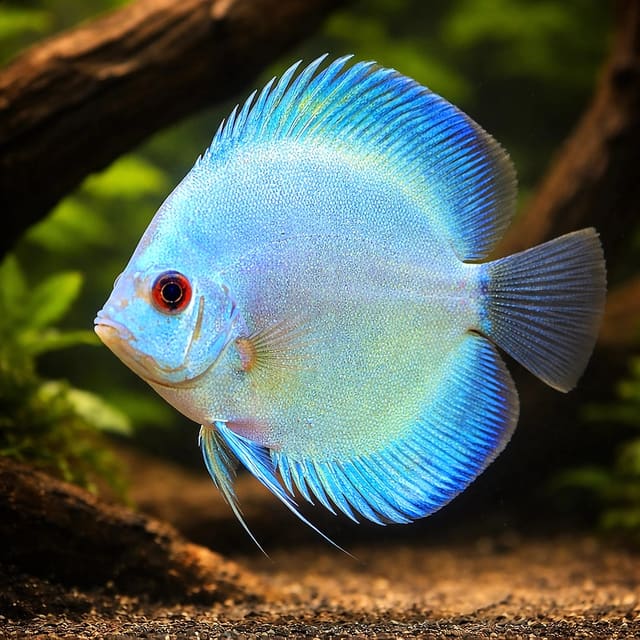
| Appearance | Blue or mixed blue-toned domestic discus with variation in shade, pattern, barring, fin shape and body profile |
| Care basis | Broad UK discus-group guidance, kept separate from claims about one exact species or breeder line |
This is a fish to choose for its social behaviour, rounded cichlid shape and the challenge of keeping a stable discus aquarium, not for an exact photograph match. Lighting, background, maturity, stress and social position can all alter how strongly a discus displays blue, red or vertical bars. B Grade is best understood as a variable commercial selection, while normal welfare and health assessment still apply to every fish.
One quantity supplies one Blue Discus in the dispatch size chosen on the product page. The recurring grades span 2 cm through to 15 cm. The size you select is the size supplied, not the adult size. A two-fish gallery scene does not turn one quantity into a pair, and buying several fish does not create an established social group automatically.
Sex is guaranteed only when the selected option explicitly states male or female. This Blue Discus listing has no sex-guaranteed option. Young discus cannot be sexed reliably from colour, forehead shape or fin outline. Even with mature fish, sex is usually easiest to assess in breeding condition, when the female’s ovipositor may be visible. Select this product for trade form, size and husbandry fit rather than a presumed sex.
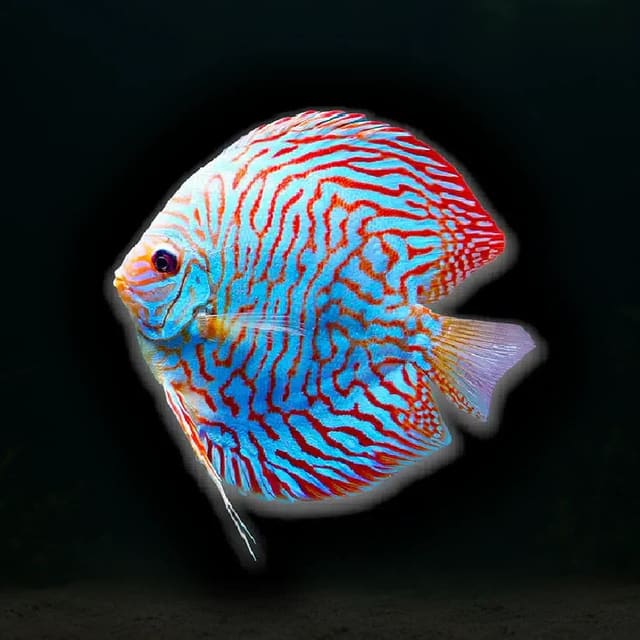
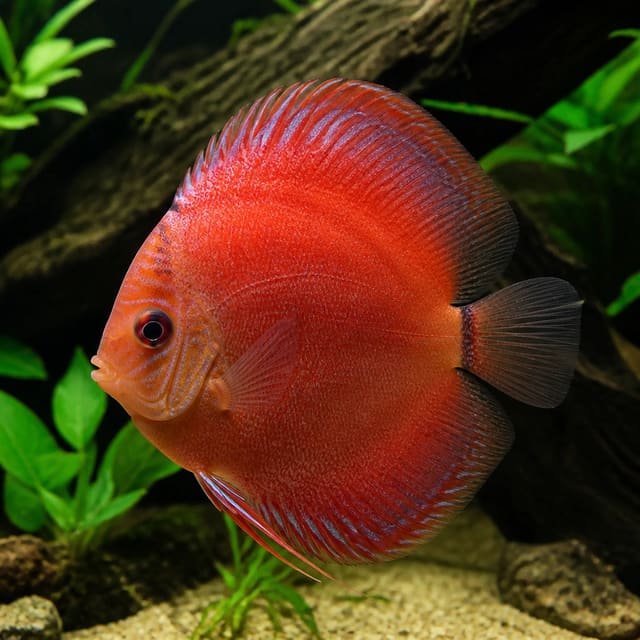
The four gallery assets show blue discus in different settings: one fish among wood, two fish in planting, one side view on a light background and one fish beside a broad leaf. They are useful for understanding body shape and possible colour direction, while the offered animal can differ in pattern, shade and maturity. Gallery images have been digitally enhanced to improve image quality. Natural colour, pattern, size and maturity can vary between live animals.
Buyers comparing colour forms can browse the discus collection. Those products are alternatives, not automatic companions for this fish.
The grade describes visual selection in the supply chain. It is not a clinical judgement and it does not define a separate biological care category. Colour coverage, pattern, body profile or fin finish may all contribute to commercial sorting, but the exact grading criteria are not itemised for this line. A buyer should therefore expect a healthy live discus assessed on its own condition while allowing more visual variation than a tightly named premium strain.
Blue is also a broad trade description. A fish can show violet, turquoise, grey, orange or red areas alongside blue, and the balance can shift with age and conditions. Vertical stress bars can become more or less apparent. Bright photography and aquarium lighting can change perceived colour, so the practical buying question is whether this variable mixed form suits you, not whether every scale matches one gallery scene.
The genus is native to the Amazon basin in South America, while domestic trade stock can be many generations removed from wild fish. Native range is biological context, not a statement that the animal sent was collected in Brazil or elsewhere in the basin. The mixed colour label also gives no basis for assigning a species epithet or a particular breeder line.
OATA’s UK discus sheet says discus are shoaling fish and should be kept in groups of at least five in the home aquarium, with more being better. Fish kept alone or in a group that is too small will often become stressed or bullied by larger or more dominant individuals. The main exception is an already established breeding pair in its own suitable setup. Two newly selected fish are not equivalent to that established pair.
For space, OATA advises about 50 litres per adult and gives approximately 300 litres for a shoal of six adults. Use around 120 cm of tank length as a practical group starting point, with a shape that provides open mid-water and a meaningful footprint. The 20 cm adult figure in the same sheet is broad discus-group planning. Because this product stops at genus level, it is not presented as the measured maximum of one named species.
Discus can be shy, especially after a move or when one fish controls a preferred area. Cover should make a fish feel secure without dividing the aquarium into cramped pockets. A broad-leaved planted layout can work, but every plant and companion must tolerate the same warm water. Open swimming room remains essential even in a heavily planted display.
The filter must be biologically mature before fish arrive. A warm aquarium filled recently with clear water is still unprepared if it cannot process ammonia. The first tropical tank guide explains cycling and testing. Discus are a poor choice for using a new aquarium as a live test of whether the filter has matured.
Think beyond nominal litres. A tall decorative tank with limited length may hold the same water as a long aquarium but provide less group movement and fewer retreat routes. Adult numbers, tank mates, decor, feeding access and filter capacity all affect the final stocking plan.
OATA’s broad discus-group range is 26–30°C, pH 6.0–7.5 and 4–12 dGH, with clean, warm, soft to moderately hard water and a slightly acidic target described as optimum for the group. These are not species-specific values for this unidentified mixed stock. Ask for the holding conditions before a move, compare them with the established aquarium and make any change gradually.
| Temperature | 26–30°C under OATA’s broad discus-group guidance |
|---|---|
| pH | 6.0–7.5 under the same group guidance |
| General hardness | 4–12 dGH, described as soft to medium |
| Ammonia and nitrite | Zero on an appropriate aquarium test |
| Nitrate | OATA says no more than 20 mg/l for discus |
The water chemistry guide explains the role of each reading. Use the water matcher to compare measured aquarium values with the broad target. Do not alter pH or hardness simply to make a dashboard turn green; first consider the fish’s current water and the stability of the intended method.
A biological filter is essential because fish release toxic ammonia, which bacteria convert through toxic nitrite to safer nitrate. Warm water holds less dissolved oxygen than cool water, while discus appreciate movement that is calm enough for their swimming style. Spread the return, maintain surface movement and inspect the filter for slowing flow. Gentle circulation should still reach the biological media and prevent waste collecting in hidden areas.
OATA strongly recommends a 50% partial water change at least once every week for discus. This frequency and percentage are a group-care starting point. Heavy stocking, juvenile feeding and local tap-water chemistry can affect the practical routine, but large changes require careful temperature and water matching. Treat replacement tap water with conditioner before it enters the aquarium.
Test at least weekly and after adding fish, changing feeding or finding unusual behaviour. Clean open areas of sand or fine gravel so waste does not collect. Check filters for blockages; when media needs cleaning, rinse it lightly in removed aquarium water and do not run it under the tap. Preserve the bacteria that make the filter safe.
Stability is an active routine rather than a static number. Heaters can drift, filters clog and increased feeding can raise waste long before the water looks cloudy. Record temperature and test results so a trend becomes visible. A darker fish, reduced appetite or faster breathing should prompt immediate checks of temperature, ammonia, nitrite, nitrate and circulation.
OATA describes discus as generally carnivorous in the wild and recommends a specialised dried discus granule or pellet to provide a dependable nutritional base. Suitable frozen or live foods can add variety. Food must match the mouth size of the selected fish: a small juvenile should not have to tear apart a piece intended for a large adult.
Discus have relatively small stomachs, so several small measured feeds can suit them better than one oversized meal. Offer only what the group finishes promptly and remove leftovers. Warm water, frequent juvenile feeding and rich foods can increase biological demand quickly, making filtration and the weekly water-change routine especially important.
A dominant fish can eat well while a subordinate animal loses condition. More food scattered into the aquarium may worsen water quality without solving exclusion. Change the feeding pattern, improve cover and reassess group dynamics. Persistent appetite loss, hollowing, dark colour and isolation deserve prompt water tests and appropriate health advice.
Beef heart appears in traditional discus feeding, but it is not necessary for every keeper and should not displace a complete commercial diet. If used, source an appropriate aquarium preparation, feed carefully and keep it from fouling warm water. Bloodworm and other rich frozen foods are additions, not a complete diet on their own.
Healthy discus should swim with balance, breathe steadily, carry open fins and engage with food and the group. Shade and social context can alter colour, so use a combination of signs rather than treating one darker bar as a diagnosis. OATA asks keepers to watch for changes in swimming, colour, temperament, breathing, appearance, body condition and feeding.
| Change noticed | Immediate husbandry check |
|---|---|
| Rapid breathing or surface hanging | Temperature, ammonia, nitrite, oxygenation and filter flow |
| Persistent darkening and hiding | Social pressure, water quality and access to a calm retreat |
| Hollow profile or reduced feeding | Whether the fish can reach food and whether appetite change affects one fish or the group |
| White spots, damaged skin or fluffy growth | Document signs, test water and seek diagnosis-based treatment advice |
| Clamped fins or erratic swimming | Water tests, recent changes, aggression and physical hazards |
Choose treatments only after considering diagnosis, aquarium volume, temperature and the other animals present. Quarantine is helpful when it is a genuinely mature, heated and filtered setup with separate equipment. A container assembled on delivery day can expose an already stressed fish to unstable water.
Someone must be present to receive live fish. Tropical Fish Co uses oxygenated bags, insulated packaging and a licensed live-animal courier. Read the current delivery and Live Arrival Guarantee policy before ordering.
During the first week, check breathing, balance, appetite and how the established group receives the new fish. Test the aquarium after adding livestock. Early attention to a fish that is isolated or excluded from food is safer than waiting for obvious injury or severe weight loss.
Learn what normal looks like for each fish rather than waiting for a dramatic symptom. At feeding time, scan from one end of the aquarium to the other: count the fish, confirm that each animal joins the meal, and note whether breathing and swimming match the rest of the group. A brief written note or regular photograph can make slow changes in body condition easier to recognise.
Separate group-wide changes from one-fish changes. If the whole group breathes faster or stops feeding, check temperature, ammonia, nitrite, oxygenation and filter function immediately. If one fish alone withdraws, test the same water first, then also inspect feeding access, chasing, damaged fins and the availability of a calm retreat. Both patterns deserve attention; they simply point the first husbandry investigation in different directions.
Observe before and after maintenance as well. A heater set point is not proof of the water temperature, and a running filter is not proof that its flow is normal. Confirm the thermometer, surface movement and return flow, then record the water-test result. This routine turns vague impressions into useful evidence for an experienced retailer or aquatic vet if advice is needed.
Discus are calmer than many cichlids, but a social group still develops dominant and subordinate relationships. OATA says a group should contain at least five, with more being better, and warns that fish kept alone or in a group that is too small will often become stressed or bullied. Space, visual cover and feeding access determine whether that social structure remains manageable.
An established breeding pair can be maintained separately in a suitable aquarium, but a buyer should not infer that two selected fish will pair. A gallery asset showing two fish also says nothing about pair status. Pairing is observed through long-term behaviour and breeding condition; it is not created by choosing matching colours or buying two animals at once.
Adding one small discus to a much larger established group can concentrate pressure on the newcomer. Size matching is only one part of introduction: group stability, available space, health status and feeding style also matter. Quarantine protects both the newcomer and the established fish, but reintroduction still needs careful observation.
Do not use colour grade to predict temperament. A less intensely coloured or visually variable fish is not automatically less dominant, easier or harder to keep. Husbandry decisions should follow actual behaviour, body condition and water results.
The safest focus is the discus group itself. OATA says only a limited range of other species will suit a discus aquarium and names medium-sized tetras, Corydoras, plecos and dwarf cichlids as possible companions. Those examples still require species-by-species checks for temperature, temperament, adult size, feeding speed and space.
Bottom fish are not maintenance tools. They need appropriate food, oxygen, social numbers and usable floor space. Warm water reduces dissolved oxygen, and a crowded floor can make it difficult to keep waste under control. Confirm that every species can thrive at the same temperature rather than relying on a broad community-fish label.
The related Red Melon and Royal Blue discus shown elsewhere are verified alternatives for a buyer comparing trade forms. Their presence is not an instruction to mix products or a guarantee that unfamiliar fish will integrate. Any discus addition requires quarantine, size-aware introduction and close feeding observation.
Use the OATA discus-group planning figure of up to about 20 cm across, while recognising that this mixed stock is identified only to genus. The figure helps size the aquarium and group space; it is broad discus guidance rather than a species-level maximum for the individual sent.
OATA advises about 50 litres per adult and approximately 300 litres for six adults. Around 120 cm of tank length, open mid-water, mature filtration and several retreat and feeding areas make a practical group starting point. Tank mates or additional adults require more room.
Keep at least five compatible discus, with more being better where the aquarium supports them. Fish kept alone or in a group that is too small will often become stressed or bullied. An already established breeding pair is a distinct exception, not the same as buying two fish.
It is best for an experienced or thoroughly prepared keeper. The aquarium must be mature, warm and stable; large regular water changes, group observation and careful feeding are central tasks. It is a poor choice for learning the nitrogen cycle with fish already present.
Use an appropriately sized complete discus granule or pellet as the nutritional base, with suitable frozen or live foods for variety. Offer small measured portions, use several feeding points and confirm every fish eats. Remove leftovers before they affect water quality.
OATA’s broad discus-group guidance is 26–30°C, pH 6.0–7.5 and 4–12 dGH; these are not species-specific optima for this genus-level stock. Match the fish’s holding water gradually and keep ammonia and nitrite at zero.
Discus are less aggressive than many cichlids, but dominant fish can chase, exclude or bully others. Provide a large compatible group, visual cover and several feeding points. Persistent exclusion, fin damage or weight loss means the social plan needs action.
OATA names medium-sized tetras, Corydoras, plecos and dwarf cichlids as possible groups, but each species must tolerate sustained warm water and calm feeding. Avoid aggressive cichlids, fin-nippers, cool-water species and boisterous feeders.
Fish are hand-packed in oxygenated bags inside insulated packaging and carried by a licensed live-animal courier. Someone must receive the parcel. For a Live Arrival Guarantee claim, make one continuous unboxing video from the sealed parcel through opening to the fish in the sealed bag, then contact Tropical Fish Co the same day.
The World Register of Marine Species record supports Symphysodon as an accepted genus in Cichlidae. The discus genus overview supplies limited natural-history context for the Amazon-basin genus and its domestic aquarium trade; it is not used to assign a species to this mixed stock.
The OATA discus care sheet provides UK group guidance for water, social numbers, adult planning, aquarium space, feeding, maintenance and possible companion categories. The RSPCA aquarium environment guidance explains biological filtration. Exact dispatch sizes and the one-fish sold unit come from the current offer, while delivery statements come from Tropical Fish Co’s current delivery policy.
No reviews for this item yet. Bought one? Honest reviews only, good or bad.
What customers say about ordering from us
Easy website plenty of info on fish your buying great to pick a time slot
TRACEY DURRANT · 7 Oct 2026
Got some lovely fish thank you
Kevin Mackie · 7 Oct 2026
Reviews of our shop, collected by Judge.me, an independent third-party review collector. Newest first.