−15%
Red Melon Discus (Symphysodon sp.)
26–30°C · pH 6–7.5
£44.19£51.99
White Diamant Discus is a domestic colour strain identified at genus level as Symphysodon spp. Sold individually in sizes from 4cm to 13cm, plus XL selection HQ. OATA’s broad discus guidance recommends a group of at least five in a mature, filtered aquarium at 26–30°C, with about 50 litres per adult and companions screened for the same conditions.
Symphysodon spp.
Save when buying multiple fish. Each quantity is one fish; sex and pair formation are not guaranteed unless the selected variant explicitly states them.
White Diamant Discus is a domestic colour strain identified at genus level as Symphysodon spp. Sold individually in sizes from 4cm to 13cm, plus XL selection HQ. OATA’s broad discus guidance recommends a group of at least five in a mature, filtered aquarium at 26–30°C, with about 50 litres per adult and companions screened for the same conditions.
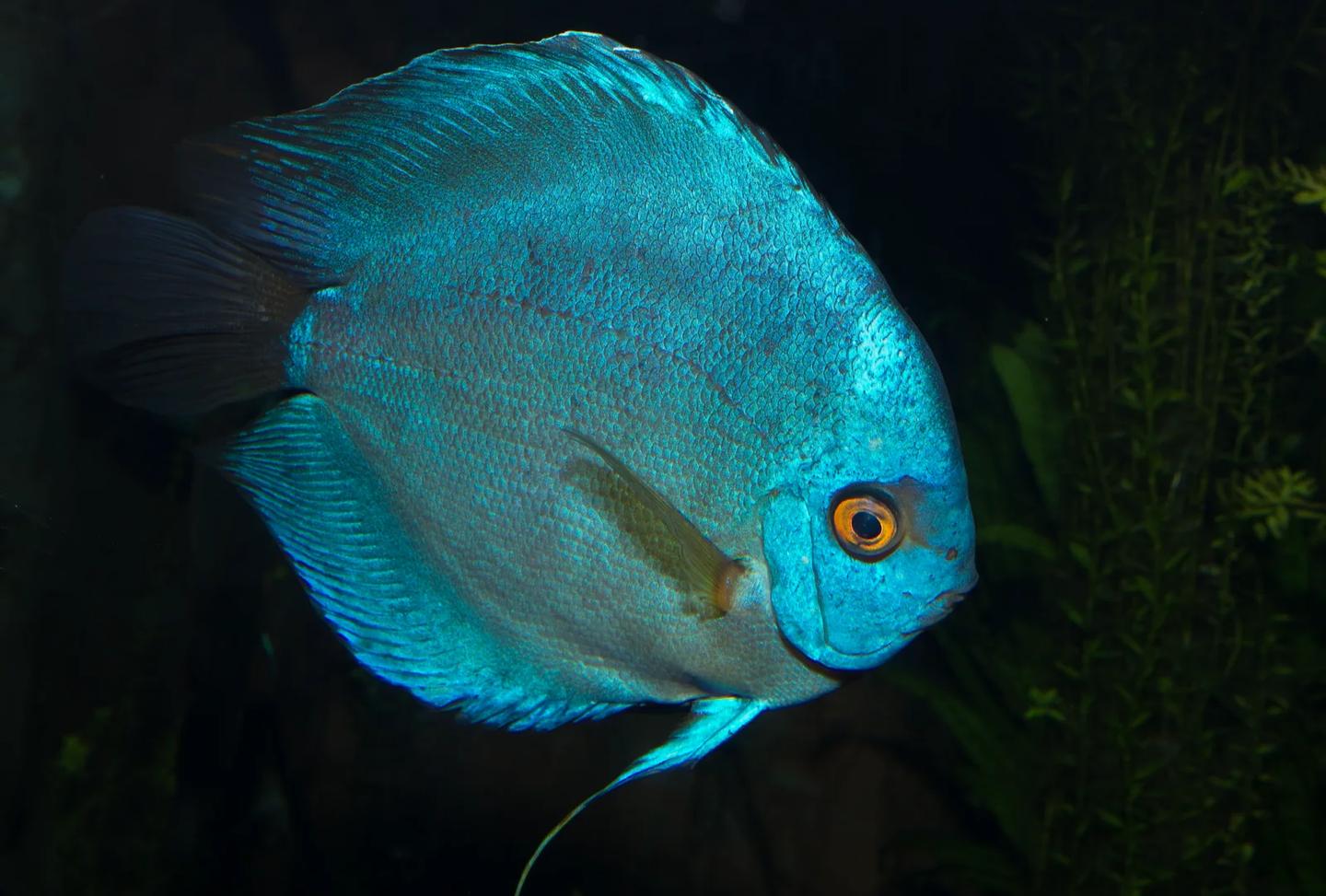
Discus are social Amazonian cichlids with specialised aquarium needs. OATA advises at least five fish, except an established breeding pair, and about 50 litres per adult—roughly 300 litres for six adults. Use that as a planning floor, then check usable dimensions, filtration, source water and the actual fish.
Maintain these water conditions for optimal health and vibrant colors
White Diamant Discus is a domestic discus colour strain within Symphysodon. Its pale strain name distinguishes the aquarium form, while the accepted taxonomic record places Symphysodon in the cichlid family Cichlidae. The exact species has not been identified, so the care advice here follows the genus Symphysodon and its care group.
That genus-level identity matters when planning care. Treat White Diamant as a discus rather than assigning it the habitat, adult dimensions or water preferences of one named species. The label Symphysodon spp. keeps that distinction clear without turning the domestic strain name into a Latin species.
Discus have specialised requirements compared with many tropical fish. This strain suits a keeper prepared to maintain warm, clean water, test it every week, complete substantial partial water changes and provide a properly sized social group. A mature biological filter and a deliberate feeding routine are essential parts of the plan, not optional upgrades after the fish arrive.
| Suits | Not suited to |
|---|---|
| Keepers prepared for warm, clean water and weekly testing | Aquariums without a mature biological filter |
| A planned social group with adult swimming space | Keeping one discus as a test fish |
| A calm aquarium built around discus requirements | Companions that cannot share the same water conditions |
The genus overview describes discus as Amazon-basin cichlids with a distinctive shape and calm behaviour. White Diamant is a domestic colour strain, so that natural history explains the wider genus rather than assigning a particular wild locality to this animal. Its calm character does not make its care casual: water stability, group structure and adult space remain the decisive tests.
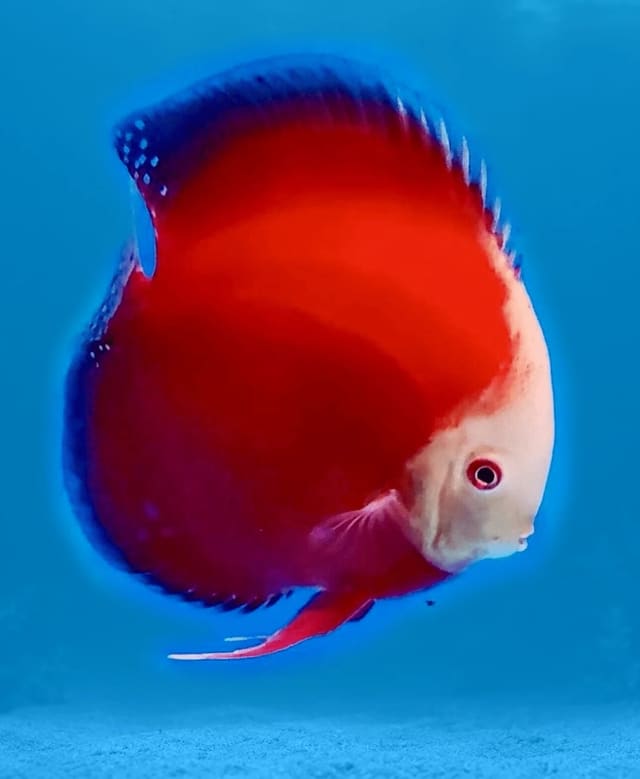
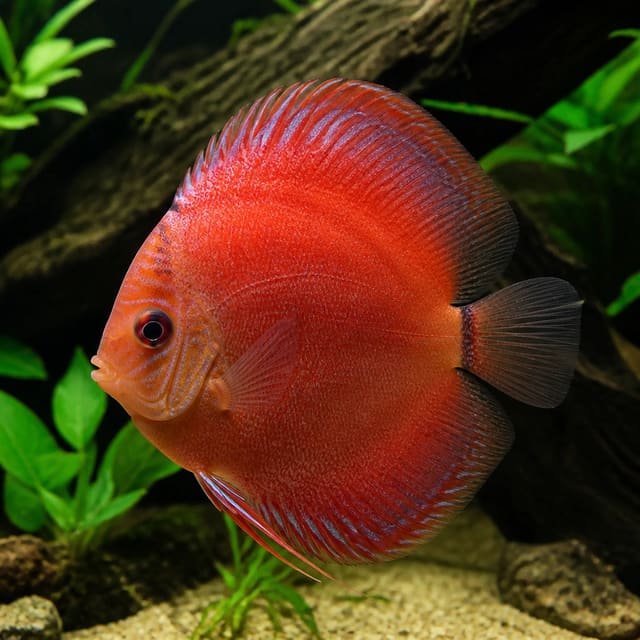
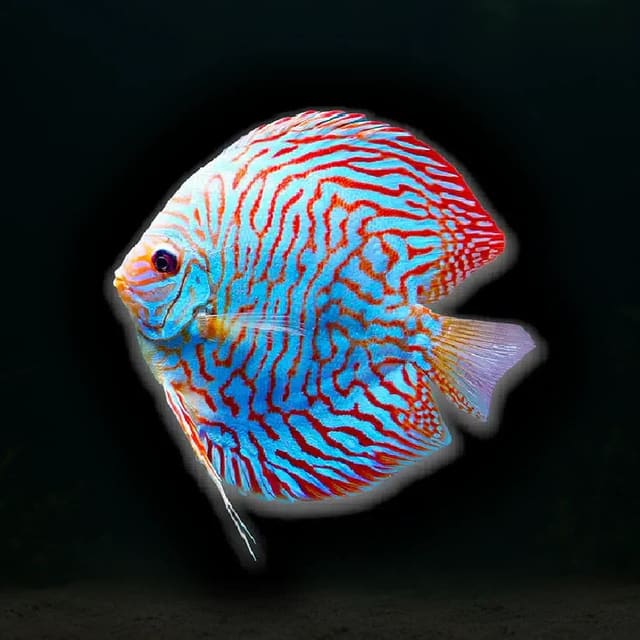
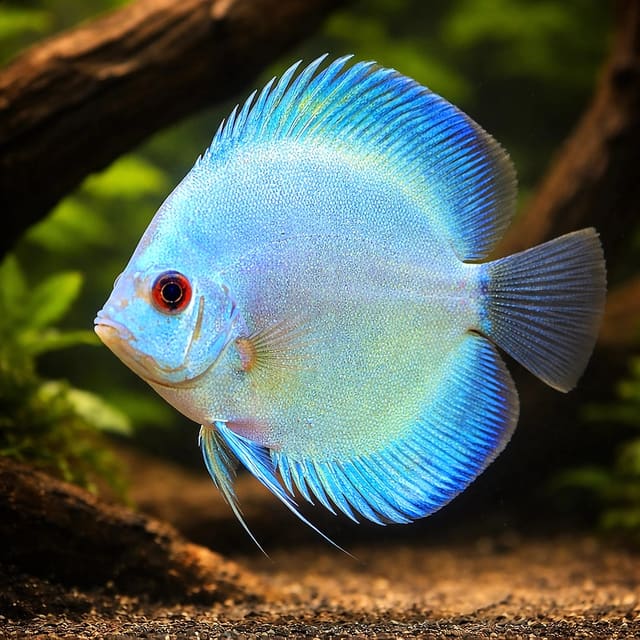
The pale bodies, rounded profiles and translucent fins shown in the gallery illustrate the intended White Diamant appearance in planted and plain-background scenes. The gallery images are representative, based on reference photographs of this kind of animal, so colours can look slightly different from the live animal.
Use the gallery to understand the overall strain style and body shape, then judge your aquarium against the practical requirements below. Colour alone cannot determine sex, species or the conditions in which an individual was raised.
Use the live size selector to choose among the labels 4cm, 5cm, 6cm, 7cm, 8cm, 9cm, 10cm, 11cm, 12cm, 13cm and XL selection HQ. One purchase quantity supplies one animal of the selected option. The size you select is the size supplied, not the adult size.
The centimetre labels describe dispatch size. Continue planning for an adult discus regardless of the selected label, because OATA describes discus as slow growers that may reach up to 20cm across. The XL selection HQ label is non-numeric, so retain that label rather than converting it into a centimetre measurement.
Sex is guaranteed only when the selected option explicitly states male or female. This White Diamant Discus listing has no sex-guaranteed option.
OATA’s discus guidance gives broad planning figures for the group: 26–30°C, pH 6.0–7.5, general hardness of 4–12°dH, at least five discus, about 50 litres per adult and approximately 300 litres for six adults. These are group targets rather than a species-specific White Diamant optimum.
| Decision | Planning figure |
|---|---|
| Adult dimensions | Up to 20cm across |
| Routine temperature | 26–30°C |
| Routine pH | 6.0–7.5 |
| General hardness | 4–12°dH |
| Social group | At least five; more is better |
| Adult water allocation | About 50 litres per fish |
| Six-adult example | Approximately 300 litres |
These figures work together. A warm aquarium that is too small for the adult group is not ready, and a large aquarium without mature filtration is not ready either. Complete the water, space, filtration and social checks before selecting a dispatch size.
If you are comparing colour strains while keeping the same core care plan, browse the current discus collection. Choose the strain after confirming the aquarium can support its adult group and maintenance routine.
Keep the temperature between 26 and 30°C, pH between 6.0 and 7.5, and general hardness between 4 and 12°dH. Carbonate hardness should remain within 3–10°dKH. Aim for clean, warm, soft to medium water that is slightly acidic where practical, while prioritising stability within the stated ranges.
Before introduction, find the conditions in which the fish has been held and bring the aquarium as close to those values as the accepted ranges permit. For example, an established aquarium holding steadily at 28°C should remain steady rather than being moved towards either edge simply because both 26°C and 30°C appear in the range. Apply the same approach to pH and hardness: measure first, compare, then make deliberate changes rather than chasing a particular number from day to day.
| Measurement | Action point |
|---|---|
| Temperature | Keep within 26–30°C |
| pH | Keep within 6.0–7.5 |
| General hardness | Keep within 4–12°dH |
| Carbonate hardness | Keep within 3–10°dKH |
| Ammonia | Maintain at 0mg/l |
| Nitrite | Maintain at 0mg/l |
| Nitrate | Do not let it exceed 20mg/l |
Ammonia and nitrite are waste-control measurements rather than acceptable operating ranges. A reading above zero calls for an immediate review of stocking, feeding, maintenance and filter performance. Nitrate must remain at or below 20mg/l, with regular partial water changes used to prevent accumulation.
Use our water chemistry guide to understand what each test measures. Once you have current results, the water matcher can help compare those measured values with the discus targets.
Record temperature, pH, hardness, ammonia, nitrite and nitrate at least once each week. A sequence shows whether the aquarium is holding steady and whether nitrate is rising between maintenance days. Keep the test routine consistent so changes are visible before they become large enough to affect behaviour, breathing or feeding.
Plan White Diamant Discus as a social group. Keep at least five in the home aquarium, with more being better when the aquarium volume and filter capacity support them. A solitary discus or an undersized group will often become stressed or bullied by larger or more dominant fish.
The narrow exception is an already established breeding pair. Two unrelated or newly combined fish should not be treated as equivalent to such a pair. Sex is difficult to determine outside breeding condition, so group planning should not rely on visual assumptions about male and female fish.
Use about 50 litres of water volume for each adult discus and retain plenty of floor space. Multiplying the planning figure gives a clear first check:
| Adult group | Volume calculation |
|---|---|
| Five discus | 5 × 50 litres = 250 litres |
| Six discus | 6 × 50 litres = 300 litres |
| Seven discus | 7 × 50 litres = 350 litres |
| Eight discus | 8 × 50 litres = 400 litres |
OATA specifically recommends approximately 300 litres for a shoal of six adults. The arithmetic above is a planning tool, not permission to fill every litre with fish: wood, substrate, equipment and companions all affect the practical layout and biological load.
A larger aquarium gives more water volume over which heat and dissolved waste can be managed. It also makes it easier to combine cover with open group-swimming space. Choose the largest practical aquarium that can be filtered, heated and maintained consistently rather than choosing volume without considering access for weekly care.
Discus are slow growers, but growth rate does not postpone the adult-space decision. Set up for the mature group from the beginning so that filtration, floor space and social structure do not depend on an urgent later move. If companions are planned, allocate adult discus volume first and assess the remaining space against each companion’s own needs.
Use a well-established biological filter before adding discus. RSPCA aquarium guidance explains that fish release toxic ammonia; beneficial bacteria in a working filter convert it to nitrite and then to the safer nitrate. The aquarium is ready only when that biological process can handle the intended fish load while ammonia and nitrite remain at 0mg/l.
A filter is essential whatever aquarium size you choose. Larger water volume can improve stability, but it cannot replace biological filtration or regular maintenance. Equally, a powerful filter does not compensate for an undersized adult-space allocation or an unsuitable social group.
If this is your first setup, follow the steps in our guide to preparing and maturing a tropical aquarium before livestock arrives. Filter maturity should be demonstrated by water results rather than assumed from the number of days the equipment has been running.
Add fish numbers slowly. Every addition increases waste and feeding, so the beneficial bacterial population must grow to process the new load. Adding too many fish too quickly can produce new tank syndrome, with ammonia or nitrite rising to harmful levels.
Test at least weekly after stocking and compare each result with the established baseline. If ammonia or nitrite rises above zero, pause further additions and review feeding, stocking and filter function. This sequence protects both the discus group and any carefully screened companions.
Design the aquarium around both security and group movement. Discus may be shy, so include live plant cover, branches, wood or other ornaments that create places to retreat. Keep a substantial open area where the group can explore and swim without navigating a solid wall of decoration.
Their broad, rounded body shape makes usable floor area important. Arrange tall or bulky pieces so they form defined areas of cover without dividing the aquarium into narrow channels. Before filling the aquarium, view it from the front and above: the group should have a clear route through the open area and several covered edges.
| Feature | Practical choice |
|---|---|
| Substrate | Fine gravel or sand |
| Cover | Live plants, branches, wood or ornaments |
| Swimming area | Open space for group movement |
| Lighting | Overhead aquarium lighting |
Fine gravel or sand allows discus to feed naturally by blowing at the substrate. Keep feeding areas accessible so waste can be reached during the weekly siphon. If using sand, leave open areas that can be stirred regularly to prevent waste collecting in dead spots.
Overhead tank lighting is recommended, while plants and hardscape provide visual cover within the lit aquarium. The objective is not to fill every open patch. A successful layout gives shy fish somewhere to retreat, feeding fish access to the substrate and the whole group enough unobstructed room to move.
Make sure a siphon can reach exposed substrate, the filter can be checked for blockages and ornaments do not prevent routine observation. A visually dense design that hides waste or makes a 50% water change impractical works against the clean-water routine discus need. Build access into the layout before the group is introduced.
Discus are generally carnivorous and eat aquatic invertebrates in the wild. In the aquarium, use a specialised dried discus food in granule or pellet form at least once each day so the routine includes an appropriate vitamin source. Frozen or live foods can add variety, including bloodworm, beef heart and prepared discus mixes.
Provide two or three smaller feeds across the day because discus have relatively small stomachs. At each feed, offer only what the fish consume within a few minutes. This sets a practical limit based on the group’s response rather than an arbitrary scoop size.
| Feed | Decision |
|---|---|
| First small feed | Use specialised dried discus granules or pellets |
| Later small feed | Repeat dried food or offer an appropriate frozen or live food |
| Optional third feed | Use only when the group clears the earlier portions within a few minutes |
The exact number of particles depends on fish size, group size and appetite. Begin with a restrained portion, watch the whole group and stop adding food once the fish are no longer clearing it promptly. Check that less dominant fish obtain food rather than allowing one large individual to take every portion.
A normal feeding response gives you a regular point of comparison. Reduced intake or a complete loss of interest is one of the changes that deserves attention, especially when it appears alongside altered breathing, hiding, erratic swimming or a change in colour.
Overfeeding directly conflicts with the water-quality plan. Uneaten food breaks down and releases waste, which can increase the load on the filter and contribute to ammonia, nitrite or nitrate problems. Smaller feeds are therefore both a digestive strategy and a water-management decision.
Keep the specialised dried feed as a daily foundation rather than replacing it entirely with favourite frozen or live foods. Variety can sit around that foundation while the few-minutes rule controls every portion.
Complete a partial water change of 50% at least once every week. Use a siphon to remove solid waste from the substrate while water is taken out. This substantial routine supports the clean conditions discus need and helps keep nitrate from exceeding 20mg/l.
Treat all replacement tap water with a suitable conditioner before it enters the aquarium so chlorine or chloramine cannot harm the fish or biological filter. Keep the aquarium within its established 26–30°C, pH 6.0–7.5 and 4–12°dH operating ranges throughout the maintenance routine.
Use the results to judge whether the routine is keeping pace with stocking and feeding. Ammonia and nitrite must remain at 0mg/l. Nitrate must not exceed 20mg/l. A rising sequence is useful even before the upper limit is reached because it shows that waste is accumulating faster between changes.
When filter media needs cleaning, do not rinse it under the tap. Chlorine or chloramine may kill the beneficial bacteria established in the media. Instead, rinse it lightly in aquarium water removed during the partial water change. The purpose is to clear obstruction while retaining the biological population that processes fish waste.
Check the filter rather than cleaning it aggressively by habit. A blocked filter needs attention, while established media needs protection. Combine that judgement with the weekly water results: steady zero ammonia and nitrite, controlled nitrate and normal fish behaviour indicate that filtration and maintenance are working together.
Arrange equipment and décor so this routine remains practical every week. Easy access to substrate, filter and test points makes consistent maintenance more likely than a layout that must be dismantled each time.
Prepare the mature aquarium before the delivery window and make sure someone can receive the parcel. Confirm the aquarium is holding the intended temperature, pH and hardness, with ammonia and nitrite at 0mg/l and nitrate no higher than 20mg/l.
Follow our current delivery and Live Arrival Guarantee policy when the parcel arrives.
Healthy fish should have clear, bright eyes, undamaged fins, intact scales and appropriate swimming behaviour, without ulcerations or bumps. Observe the new arrival closely enough to learn its normal swimming, breathing, colour, temperament and feeding response. That baseline makes later changes easier to recognise.
| Change observed | Immediate response |
|---|---|
| Hanging at the surface | Test water quality and review breathing |
| Sitting on the bottom | Compare with its normal behaviour and test the water |
| Erratic swimming | Check temperature, ammonia, nitrite and nitrate |
| Darker or paler colour | Look for accompanying behavioural or breathing changes |
| More hiding or aggression | Review group interactions and available cover |
| Faster or slower gill movement | Test the water promptly |
| White spots or fluffy growth | Check water quality and seek health guidance |
| Reduced feeding | Compare appetite with the established feeding pattern |
Observe swimming, breathing and feeding each day while keeping portions within the normal two or three small feeds. Continue the established testing schedule and record any departure from the pre-arrival baseline. Do not add further fish while water readings or behaviour are changing.
If a health change concerns you, test the water quality first and contact us for further guidance. Treatment should follow the nature of the problem rather than being guessed from one isolated sign.
Build compatibility around the discus aquarium rather than trying to make the discus fit an existing mixed community. OATA notes that only a handful of other fish are likely to suit a setup built for warm water, specialised maintenance and a calm discus group.
Medium-sized tetras, Corydoras, plecos and dwarf cichlids are candidate groups. They are not universal recommendations: each proposed species must be checked individually against the aquarium’s temperature, pH, hardness, adult space and stocking load before it is added.
| Question | Required decision |
|---|---|
| Can it live at 26–30°C? | Proceed only if that range suits the candidate |
| Can it share pH 6.0–7.5? | Use an overlapping stable target |
| Can it share 4–12°dH? | Keep hardness within both animals’ needs |
| Is there adult space left? | Allocate about 50 litres per adult discus first |
| Can the filter carry the extra waste? | Add only while ammonia and nitrite remain at 0mg/l |
| Can all fish feed appropriately? | Watch that every discus reaches its small portions |
A candidate that fails any one of these checks should not enter the aquarium. Temperature compatibility alone is not enough if the hardness conflicts, the adult group already uses the planned volume or the filter cannot absorb another increase in feeding and waste.
Smaller dither fish may help discus feel more confident by signalling that predators are not nearby. That possible benefit does not override the water and space screen. The candidate must still suit the warm aquarium and leave enough room for the adult discus group.
Begin with the discus requirements, shortlist only categories that can meet them, and then assess the exact candidate species. This sequence prevents a familiar community-fish label from becoming an automatic compatibility claim.
Establish the core discus group and its adult allocation before calculating room for companions. Six adult discus use the complete 300-litre example at the OATA planning rate of 50 litres each. A 400-litre aquarium with six adults leaves 100 litres before the proposed companions’ own adult space is considered; that extra volume is not automatically a stocking allowance.
This calculation stops decoration, juvenile dispatch size or empty-looking upper water from disguising the adult load. Floor space, filter capacity and each companion’s requirements still determine whether the remaining aquarium is usable.
Add fish slowly so the mature biological filter can respond to increased waste and feeding. Test ammonia and nitrite after the population changes and keep both at 0mg/l. Pause further additions if either reading rises or if nitrate begins approaching the 20mg/l ceiling between weekly water changes.
Staged additions also make behaviour easier to interpret. Watch for a discus hiding more than normal, changing colour, losing interest in food or being displaced by a larger or more dominant fish. Compare these observations with the baseline established before the addition.
Do not reduce the planned discus group to make space for unrelated companions. At least five discus remains the starting social requirement, except for an already established breeding pair. More can be better only when adult water volume, floor space and filtration all increase with the group.
Maintain plant and wood cover for shy fish while preserving open swimming space. After a companion is added, check that the discus still move through the aquarium as a group and that every individual can reach food during the two or three small daily feeds.
The candidate categories do not create an automatic compatibility guarantee. Individual species, aquarium dimensions, group composition and biological load must pass the same screening process each time. When those factors conflict, retain the discus group and its water plan rather than forcing the mixed community.
It is a domestic colour strain within the accepted cichlid genus Symphysodon. The exact species is unidentified, so Symphysodon spp. is the correct genus-level label.
One purchase supplies one animal of the selected option. Use the live selector to choose the required dispatch-size label.
The selector uses 4cm, 5cm, 6cm, 7cm, 8cm, 9cm, 10cm, 11cm, 12cm, 13cm and XL selection HQ labels. OATA’s broad discus guidance says adults may reach up to 20cm across, so plan every dispatch size around the adult fish.
Use a mature, biologically filtered aquarium with cover and open swimming space. OATA recommends about 50 litres per adult and approximately 300 litres for six adults.
OATA says to keep at least five, with more being better when space and filtration permit. Two are appropriate only when they are an already established breeding pair.
OATA gives 26–30°C, pH 6.0–7.5 and 4–12°dH for discus. Maintain ammonia and nitrite at 0mg/l and nitrate no higher than 20mg/l.
OATA recommends two or three small portions daily, including specialised dried discus granules or pellets at least once a day. Frozen or live bloodworm, beef heart and discus mixes can add variety.
Start filming before opening the sealed parcel, keep filming continuously as you open it and show the fish inside the sealed bag. Then float the bag for 20–30 minutes before releasing the fish, and do not pour the bag water into the aquarium.
OATA names medium-sized tetras, Corydoras, plecos and dwarf cichlids as possible candidates for discus aquariums. Screen the exact species for 26–30°C water, compatible pH and hardness, adult space and filter capacity.
No reviews for this item yet. Bought one? Honest reviews only, good or bad.
What customers say about ordering from us
Easy website plenty of info on fish your buying great to pick a time slot
TRACEY DURRANT · 7 Oct 2026
Got some lovely fish thank you
Kevin Mackie · 7 Oct 2026
Reviews of our shop, collected by Judge.me, an independent third-party review collector. Newest first.