−15%
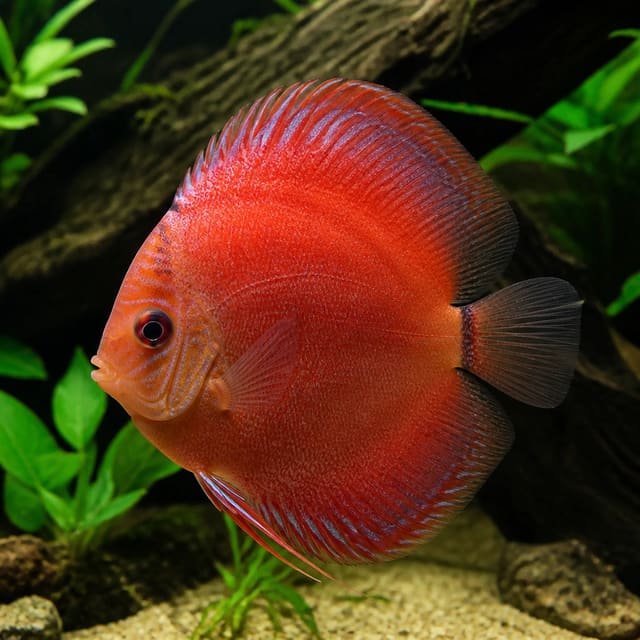
Red Melon Discus (Symphysodon sp.)
26–30°C · pH 6–7.5
£44.19£51.99
The Discus cobalt (Symphysodon aequifasciatus) is a cichlid in Symphysodon, a genus native to Brazil’s Amazon river basin, and reaches about 18 cm. It suits keepers prepared for specialised care: keep it at 26–30°C, pH 6.0–7.0 and 4–10°dH, in a group of at least five as OATA’s discus guidance advises. Sold individually in sizes from 3cm to 15cm, plus XL selection HQ.
Adult size is the maximum length this species reaches at full maturity (scientific sources). The livestock you receive will be younger and smaller — pick a size above for the actual shipping size. Product-photo provenance and any image-specific limitations are stated on the listing.
Symphysodon aequifasciatus
Save when buying multiple fish. Each quantity is one fish; sex and pair formation are not guaranteed unless the selected variant explicitly states them.
The Discus cobalt (Symphysodon aequifasciatus) is a cichlid in Symphysodon, a genus native to Brazil’s Amazon river basin, and reaches about 18 cm. It suits keepers prepared for specialised care: keep it at 26–30°C, pH 6.0–7.0 and 4–10°dH, in a group of at least five as OATA’s discus guidance advises. Sold individually in sizes from 3cm to 15cm, plus XL selection HQ.
Adult size is the maximum length this species reaches at full maturity (scientific sources). The livestock you receive will be younger and smaller — pick a size above for the actual shipping size. Product-photo provenance and any image-specific limitations are stated on the listing.
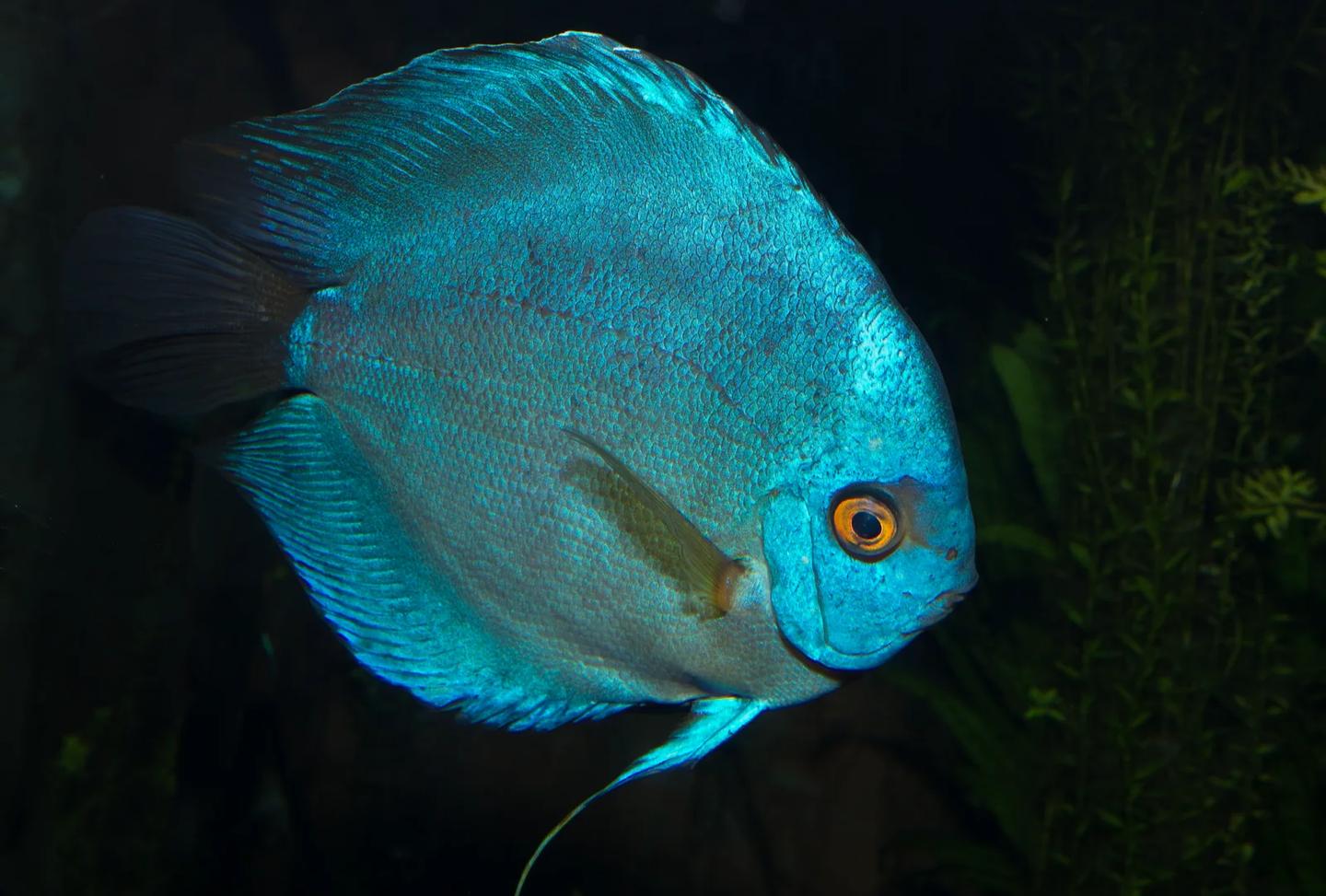
Discus are social Amazonian cichlids with specialised aquarium needs. OATA advises at least five fish, except an established breeding pair, and about 50 litres per adult—roughly 300 litres for six adults. Use that as a planning floor, then check usable dimensions, filtration, source water and the actual fish.
Maintain these water conditions for optimal health and vibrant colors
Discus cobalt (Symphysodon aequifasciatus) is a freshwater cichlid in the discus genus. The genus Symphysodon is native to the Amazon river basin in Brazil. This fish reaches about 18 cm and suits a keeper prepared to manage a warm aquarium, a social group, frequent maintenance and carefully screened companions. It is not a casual solitary centrepiece: the aquarium should be planned around at least five discus and their adult water volume.
Keep the water at 26–30°C, pH 6.0–7.0 and 4–10°dH general hardness. OATA’s discus guidance also sets carbonate hardness at 3–10°dKH, ammonia and nitrite at 0 mg per litre, and nitrate no higher than 20 mg per litre. Warm, clean and slightly acidic water is the practical aim.
| Suits | Not suited to |
|---|---|
| Keepers able to maintain 26–30°C and stable water quality | An unfiltered or immature aquarium |
| An aquarium planned for at least five discus | Keeping one fish as a routine long-term arrangement |
| At least 250 litres for five adults, with more space for a larger group | Aquariums without enough adult swimming and floor space |
| Calm companions screened for the same water and feeding conditions | Aggressive, fin-nipping, coldwater or highly boisterous companions |
Allow open middle swimming space as well as sheltered areas. Fine gravel or sand, live plants, branches, wood and suitable ornaments provide feeding surfaces and cover, while an unobstructed area lets the group explore together. A well-established biological filter is essential because warm water, several large fish and repeated feeding all make waste control a central part of the decision.
Sketch the full stocking plan before choosing décor. Mark the open swimming area, covered retreats, feeding points and filter access. This simple plan prevents later additions from consuming the space reserved for adult discus or blocking the areas needed for maintenance.
One purchase supplies one Discus cobalt from the size selected on the live selector. Sizes run from 3cm to 15cm, plus XL selection HQ. XL selection HQ has no stated measurement, so do not assume a size for it. The size you select is the size supplied, not the adult size.
Reserve space for a fish of about 18 cm and for the full social group even when choosing a smaller dispatch size. Starting with a smaller fish does not reduce the aquarium’s eventual water-volume, filtration or swimming-space requirements. Compare the size you choose with the fish already in your aquarium, but do not judge sex or origin from it.
Sex is guaranteed only when the selected option explicitly states male or female. This Discus cobalt listing has no sex-guaranteed option.
Plan the group without depending on a particular sex ratio. OATA notes that discus are difficult to sex unless they are in breeding condition, so do not rely on colour, body size or gallery pictures to pick a male or female.
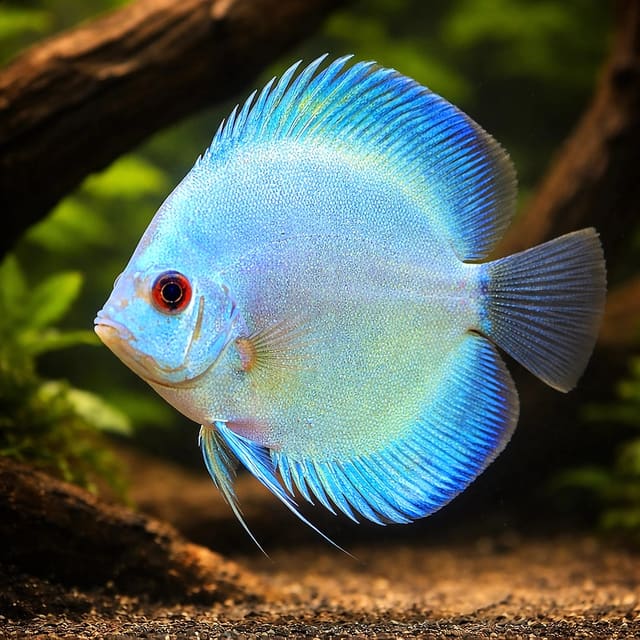
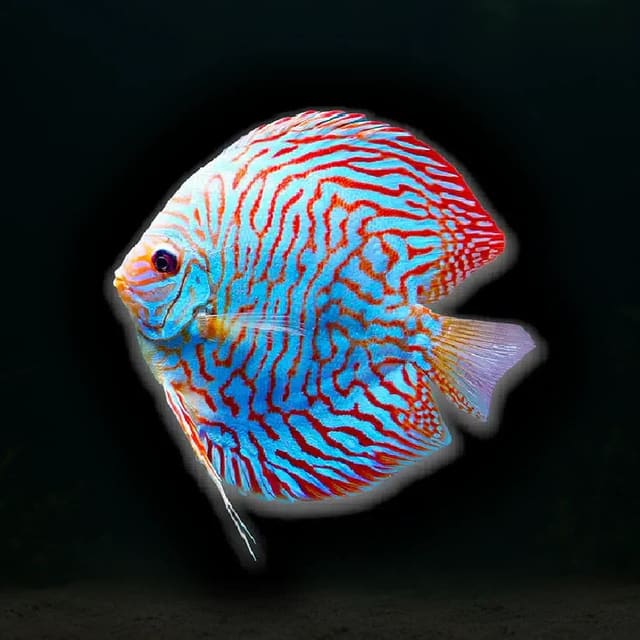
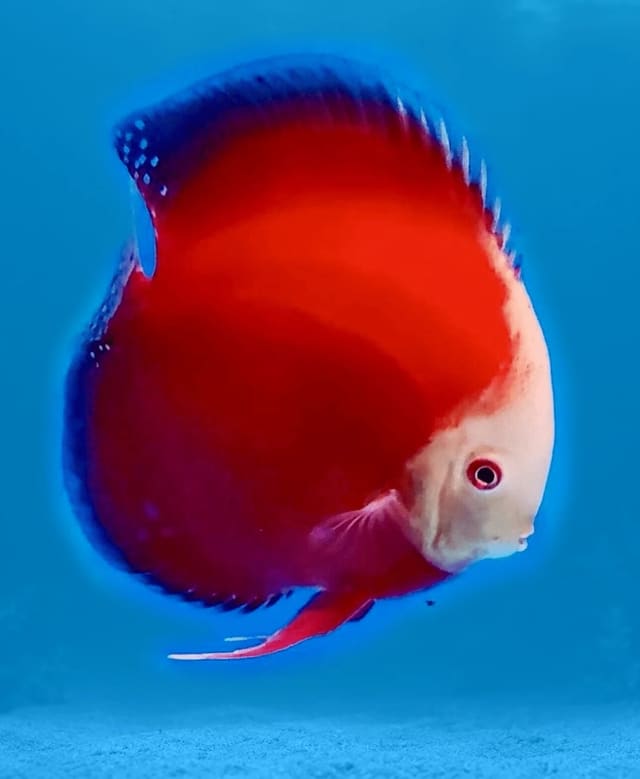
The gallery images are representative, based on reference photographs of this species, so colours can look slightly different from the live animal.
The gallery shows representative scenes rather than the exact fish supplied. One picture shows two fish; each purchase is still one fish. Browse the wider discus collection when comparing colour varieties, while treating each product’s identity and care requirements separately.
Plan at least 250 litres for five adult discus. OATA recommends 50 litres of water volume for each adult and approximately 300 litres for a group of six. Five adults at 50 litres each need 250 litres; six need 300 litres. More water also gives greater stability when temperature, waste production or feeding changes.
Volume is only part of the space decision. Provide plenty of floor space and a central open area where the group can swim together. Discus have a broad body shape, so leave clear routes between wood, branches, plants and ornaments instead of filling every part of the aquarium. Position cover around those open routes so a shy fish can withdraw without being trapped away from the group.
Prepare and mature the aquarium before livestock arrives. Our first tropical aquarium guide explains the setup sequence. A tank can hold the right number of litres yet still be unsuitable if its filter is new, its swimming routes are cramped or its water cannot be held steadily within the discus range.
Keep the aquarium at 26–30°C, pH 6.0–7.0, general hardness 4–10°dH and carbonate hardness 3–10°dKH. Maintain ammonia and nitrite at 0 mg per litre, and do not let nitrate exceed 20 mg per litre. These figures work together: a suitable temperature does not compensate for detectable ammonia, and a suitable pH does not make excessive nitrate acceptable.
Test the source water and established aquarium before choosing the fish. Use our water chemistry guide to understand each measurement, then compare the results with the targets using the water matcher. Record the actual numbers rather than relying on descriptions such as soft, neutral or tropical.
| Result | Action |
|---|---|
| 29°C, pH 6.8 and 8°dH | These values sit within the working discus ranges; confirm ammonia, nitrite, nitrate and carbonate hardness too. |
| Detectable ammonia or nitrite | Do not add the fish. Stabilise the biological filter and retest until both read 0 mg per litre. |
| Nitrate above 20 mg per litre | Complete the planned maintenance and find the cause before adding livestock. |
| A temperature outside 26–30°C | Set and verify the correct temperature before acclimatisation begins. |
Ask what water conditions the discus is currently kept in, and match your aquarium to them as closely as you can while staying within 26–30°C, pH 6.0–7.0 and 4–10°dH. Avoid abrupt swings made simply to chase a preferred number. A stable result inside the range is a safer operating target than repeated large adjustments between its limits.
Check temperature with a reliable aquarium thermometer and confirm the heater can hold the selected point throughout the aquarium. Water testing should remain part of the routine after stocking because feeding, fish growth and new additions all increase the work demanded from the filter.
Use a well-set-up and maintained biological filter from the start. The RSPCA explains that beneficial filter bacteria convert toxic ammonia into nitrite and then into the safer nitrate. Both ammonia and nitrite remain toxic, so the required reading for each is 0 mg per litre.
A mature filter contains a bacterial population matched to the waste entering the aquarium. Adding several fish or sharply increasing food creates more waste before that population has expanded. OATA warns that stocking too quickly can lead to new tank syndrome, with unhealthy ammonia and nitrite concentrations that may make fish ill or cause death.
Check the filter for blockages during routine maintenance. Reduced circulation, trapped solid waste or obstructed intakes can impair its practical performance even while the unit continues to run. Keep the intake and return positioned so water moves through the aquarium without removing the sheltered areas built for the fish.
When cleaning is needed, rinse the media lightly in aquarium water removed during a partial water change. Do not run it under the tap, because chlorine or chloramine may kill the beneficial bacterial population established in the media.
The filter and water-change routine work as a pair. Biological filtration processes dissolved waste, while siphoning and partial changes remove accumulated material and control nitrate. Neither task replaces the other.
Change 50% of the water at least once a week. Use a siphon to remove solid waste from fine gravel and exposed areas around wood, plants and feeding points.
For a 250-litre aquarium, 50% equals 125 litres. For a 300-litre aquarium, it equals 150 litres. Work from the aquarium’s actual water volume when measuring the replacement amount, allowing for the space occupied by substrate and décor where appropriate.
Test at least weekly even when the water looks clear. Clarity does not show whether ammonia is 0 mg per litre or nitrate remains below 20 mg per litre. A short log of temperature, pH, ammonia, nitrite and nitrate makes gradual changes easier to notice before they become a welfare problem.
Link unexpected test results to recent events. More food, growing fish, an added companion or a blocked filter may all increase the pressure on the system. Correct the cause as well as completing the immediate water change, then retest before making another stocking decision.
Feed two or three small portions across the day, offering only what the fish can finish within a few minutes. Discus are generally carnivorous and eat aquatic invertebrates in nature. Use a specialised dried discus granule or pellet at least once a day so the routine includes the vitamins supplied by a prepared food.
Add variety with frozen or live foods, particularly bloodworm, beef heart and specialist discus mixes. Rotate suitable foods rather than feeding a single item continuously. Keep the prepared discus food in the daily plan instead of allowing occasional frozen or live food to displace it completely.
The small stomach of a discus is the reason for several modest feeds rather than one oversized meal. Dividing the daily amount also creates repeated opportunities to see whether every group member is eating. It does not mean adding a full large portion two or three times.
Food competition is a compatibility test as well as a feeding issue. A companion that rushes every meal and prevents the discus from eating is unsuitable even if it shows no direct aggression. Adjust food distribution first, then reassess the stocking plan if the same fish remains excluded.
Reduced interest in food can be an early warning alongside abnormal swimming, altered breathing, unusual hiding, colour change or loss of body condition. Test the aquarium water promptly when feeding behaviour changes instead of trying to solve the problem by adding more food.
Plan around an adult size of about 18 cm for this Discus cobalt. Discus grow slowly, so leave enough clearance around wood and ornaments for the broad adult fish from the start. Growth rate should not be used to postpone the adult aquarium or group plan.
Keep at least five discus together, and choose more where the aquarium volume and filtration support them. OATA identifies discus as shoaling, social fish and warns that individuals kept alone or in groups that are too small will often become stressed or bullied by larger or more dominant fish. Keeping just two is only sometimes possible, and only when they are an already established breeding pair.
| Observation | Decision |
|---|---|
| The group swims and feeds together | Continue monitoring each individual rather than judging the group only as a whole. |
| One fish repeatedly hides at meals | Check feeding access, cover, group pressure and water quality before adding more livestock. |
| A fish is repeatedly displaced by a larger or dominant individual | Reassess space, group composition and feeding distribution promptly. |
| More discus are planned | Confirm the extra 50-litre-per-adult allowance and biological filter capacity first. |
Provide several sheltered areas without dividing the aquarium into cramped dead ends. Cover helps a shy fish withdraw, while the central open space lets the shoal move together. The combination matters: an entirely bare aquarium offers little refuge, but an aquarium packed with décor restricts the swimming room required by broad adult fish.
Review the plan as the fish grow. Confirm that the filter, weekly 50% water change and feeding pattern still hold ammonia and nitrite at 0 mg per litre and nitrate no higher than 20 mg per litre. Growth increases both physical space and waste-processing demands, even when the number of fish has not changed.
Have the mature, filtered aquarium running at 26–30°C before receiving the fish. Check that ammonia and nitrite are 0 mg per litre, nitrate is no higher than 20 mg per litre, and the aquarium sits within pH 6.0–7.0 and general hardness 4–10°dH. Complete these checks before opening the parcel so acclimatisation can proceed without delay.
Tropical Fish Co hand-bags live fish in pure oxygen and uses an insulated poly box, with a heat pack when the weather calls for it. A licensed live-animal courier carries the parcel, and live fish must not be left unattended. Read the delivery and Live Arrival Guarantee policy before the delivery date so the recipient and recording arrangements are ready.
For a Live Arrival Guarantee claim, contact us on the day the fish arrives with the order number and continuous unboxing video. The recording should show the sealed parcel, the opening and the fish still in the sealed bag before anything is disturbed.
At each feed, check swimming behaviour, breathing, colour, fins, scales, body condition and interest in food. Test the water promptly if the fish hangs at the surface, sits on the bottom, swims erratically, hides more than normal, breathes faster or slower, changes colour, develops spots or growths, or stops feeding.
Keep the first week focused on stable water and measured feeding. Do not rush additional stocking while the biological filter adjusts to the new waste load. Complete the at-least-weekly tests and continue only when ammonia and nitrite remain at 0 mg per litre.
Choose companions only when they can share 26–30°C, pH 6.0–7.0, general hardness 4–10°dH, calm feeding and the available space. OATA names medium-sized tetras, Corydoras, plecos and dwarf cichlids as possible discus companions. These are candidate kinds, not automatic matches for every aquarium.
Suitable candidates include medium-sized tetras, peaceful tetras such as cardinal and rummy-nose tetras, Corydoras, plecos, Otocinclus, dwarf cichlids such as rams, and peaceful pencilfish. Screen the exact animal for temperature, water chemistry, adult space, temperament and feeding behaviour before it is added. Individual behaviour and aquarium conditions can change the outcome, so no candidate is universal.
| Candidate | Condition to check |
|---|---|
| Other peaceful discus | Keep the planned group at five or more; two fish are only sometimes workable, and only as an already established breeding pair. |
| Medium-sized tetras | Confirm they tolerate the warm discus range and do not nip fins or dominate feeding. |
| Corydoras | Confirm the exact kind shares the temperature and water range and has suitable floor space. |
| Plecos or Otocinclus | Check temperature, adult space and whether every fish can feed without competition. |
| Dwarf cichlids such as rams | Screen temperament and water requirements for the complete community. |
| Peaceful pencilfish | Confirm warm-water suitability and calm access to food. |
Build the community around the discus rather than adding discus to an aquarium designed for different conditions. Reserve the required 50 litres per adult discus first, then account separately for every companion’s space and waste. The filter must support the total population, not only the discus group.
Introduce additions gradually. A candidate may meet the temperature and temperament tests but still be inappropriate if its addition pushes ammonia or nitrite above 0 mg per litre, raises nitrate beyond 20 mg per litre or consumes the open swimming area.
Avoid aggressive cichlids, fin-nipping barbs, fast boisterous fish, large predatory fish, very active species that outcompete discus for food, and coldwater fish. These conflicts cannot be solved simply by providing more décor. They oppose the discus requirement for calm feeding, warm water or protection from harassment.
Observe compatibility most closely at feeding time and around shelter. Healthy fish should show appropriate swimming behaviour, intact fins and scales, normal breathing, stable body condition and interest in food. Repeated hiding, a darker or paler appearance, altered aggression, erratic swimming or reduced intake calls for action.
When behaviour changes, test temperature, ammonia, nitrite and nitrate first. Pause further additions and review whether the aquarium provides enough group space, feeding access and cover. A fish that cannot eat because of a companion remains a poor match even when there is no obvious chasing.
Use a whole-stock plan for the compatibility assessment. Include aquarium volume, measured water values, the number of discus, every proposed companion and adult space requirements. This prevents a list of individually plausible animals from becoming an overcrowded or internally conflicting community.
It reaches about 18 cm and grows slowly; plan its swimming space and group volume around that adult figure.
Plan at least 250 litres for five adults; OATA’s discus guidance gives 50 litres per adult and approximately 300 litres for six.
OATA’s discus guidance says to keep at least five, with more being better; keeping just two is only sometimes possible, and only when they are an already established breeding pair.
It is best suited to experienced keepers who can provide specialised conditions: a mature filtered aquarium, warm stable water, a social group and a 50% water change at least once a week.
It is generally carnivorous; feed two or three small meals daily, including a specialist discus granule or pellet at least once a day and suitable frozen or live variety.
Keep it at 26–30°C, pH 6.0–7.0 and general hardness 4–10°dH; keep ammonia and nitrite at 0 mg per litre.
It is generally peaceful and is not as aggressive as some cichlids; protect it from aggressive cichlids and fin-nipping barbs.
Possible companions include medium-sized tetras, Corydoras, plecos and dwarf cichlids, provided each one shares the warm water, space and calm-feeding requirements.
Tropical Fish Co hand-bags it in pure oxygen, uses an insulated poly box and a heat pack when weather calls for it, and uses a licensed live-animal courier. Receive it in person and film one continuous video from the sealed parcel through the opening to the fish still in its sealed bag.
No reviews for this item yet. Bought one? Honest reviews only, good or bad.
What customers say about ordering from us
Easy website plenty of info on fish your buying great to pick a time slot
TRACEY DURRANT · 7 Oct 2026
Got some lovely fish thank you
Kevin Mackie · 7 Oct 2026
Reviews of our shop, collected by Judge.me, an independent third-party review collector. Newest first.