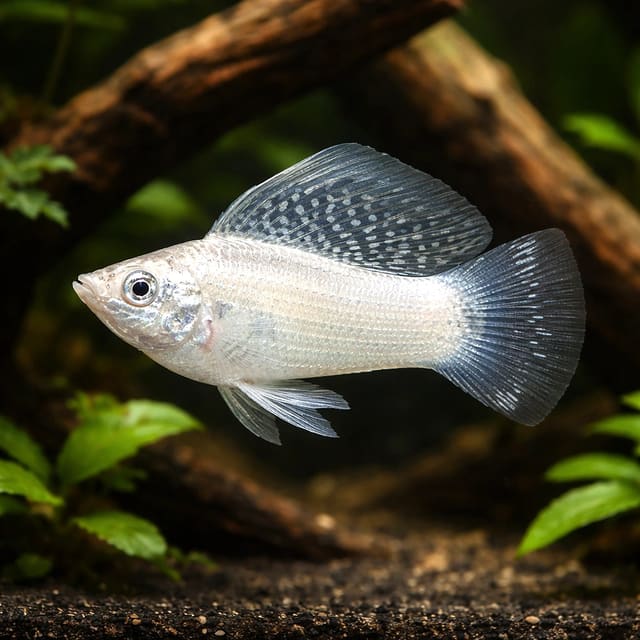
Silver Sailfin Molly (Poecilia velifera)
£6.99

Photo coming soon
The size, price and care details on this page are for this listing.
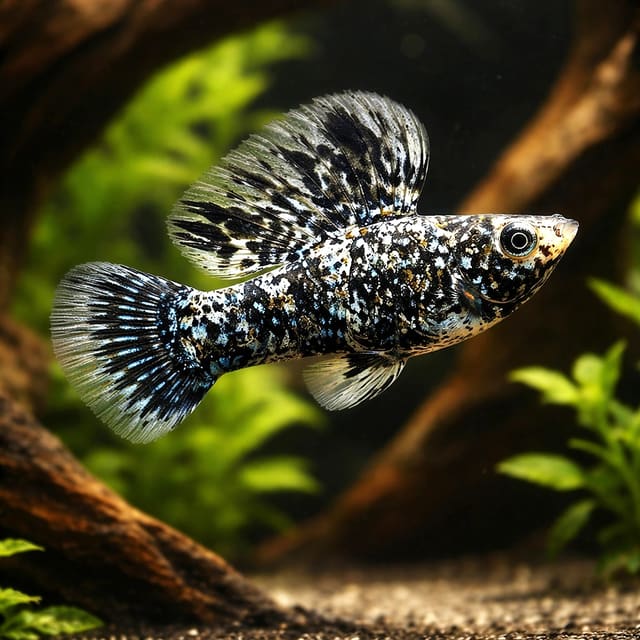
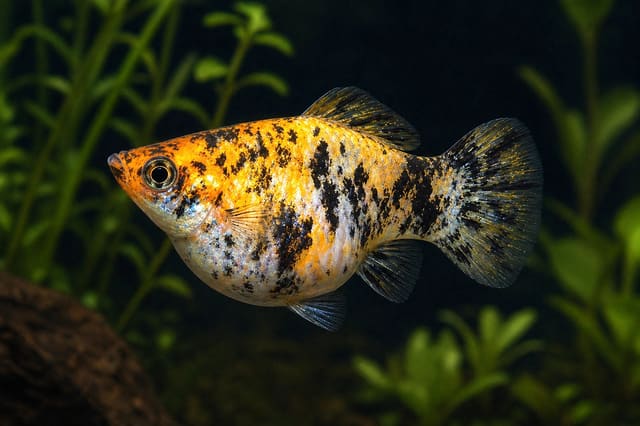
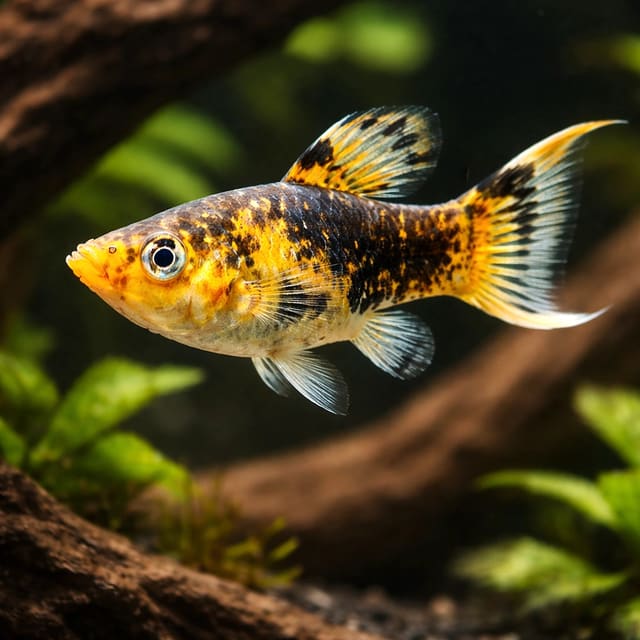
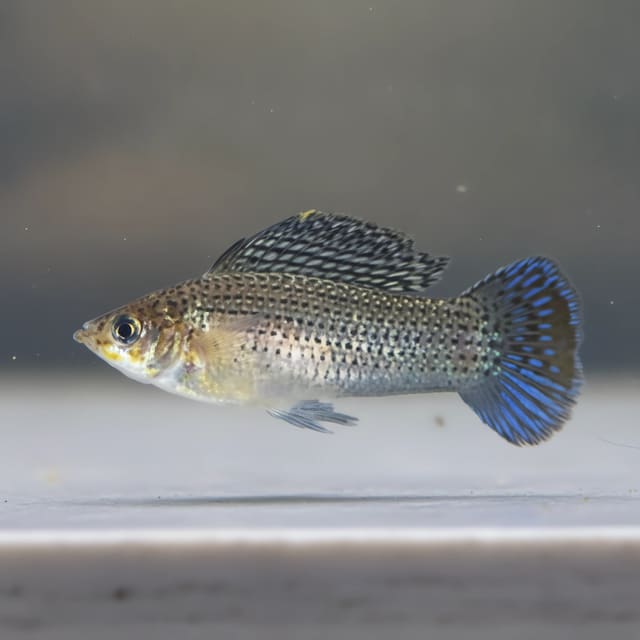
Dalmatian Sailfin Molly (Poecilia velifera), supplied around 6-7 cm, is an active spotted sailfin livebearer for mature hard-water community aquariums.
Adult size is the maximum length this species reaches at full maturity (scientific sources). The livestock you receive will be younger and smaller. Product-photo provenance and any image-specific limitations are stated on the listing.
Poecilia velifera
Save when buying multiple fish. Each quantity is one fish; sex and pair formation are not guaranteed unless the selected variant explicitly states them.
Dalmatian Sailfin Molly (Poecilia velifera), supplied around 6-7 cm, is an active spotted sailfin livebearer for mature hard-water community aquariums.
Adult size is the maximum length this species reaches at full maturity (scientific sources). The livestock you receive will be younger and smaller. Product-photo provenance and any image-specific limitations are stated on the listing.
Maintain these water conditions for optimal health and vibrant colors
The Dalmatian Sailfin Molly, Poecilia velifera, is a distinctive livebearer admired for its elegant sail-like dorsal fin and attractive dalmatian patterning. It is a popular choice for aquarists who want an active, characterful fish with plenty of visual impact. As with all mollies, good husbandry and stable water quality are key to keeping this species in the best condition.
This listing is for fish supplied at around 6-7 cm on shipment. Adult size varies by sex, diet and husbandry, but Poecilia velifera is a larger sailfin molly, so plan for a medium-to-large adult livebearer rather than a small community fish. A spacious hard-water aquarium gives the dorsal fin, body depth and spotted pattern the best chance to develop properly.
Dalmatian Sailfin Mollies are best suited to aquarists who can provide a spacious, mature aquarium, reliable filtration, and suitable mineral content in the water. They are active swimmers and benefit from open space, regular maintenance, and a varied diet. They are not a fish to rush into an uncycled or undersized aquarium.
The Dalmatian Sailfin Molly has the classic black-on-light spotted pattern that makes the fish stand out even in a busy planted aquarium. The large sail-like dorsal fin is the main display feature: when males are settled, well fed and kept in suitable hard water, the fin can be raised in a broad display that gives this molly much more presence than a standard short-fin livebearer.
For the best visual result, use a darker or natural substrate, open swimming room and patches of hardy planting rather than an overgrown layout. Bright overhead light can show the spotted body pattern clearly, while floating cover or taller background plants help the fish feel secure enough to cruise in the upper and middle water layers.
This is not a soft-water nano fish. Keep Dalmatian Sailfin Mollies in a mature, well-filtered aquarium with stable mineral content, warm water and enough open room for active swimming.
A well-planned aquarium is the foundation of success with sailfin mollies. They appreciate a tank that offers room to cruise, areas of cover, and steady water quality. As a general rule, do not keep any fish in an aquarium below 40 litres, and for a fish of this type a larger, more stable setup is strongly preferable. Because this species is active and produces a fair amount of waste, filtration should be efficient without creating excessive turbulence.
Use a secure lid or cover, as active livebearers can jump when startled. A dark or natural substrate can help the fish show its colour well, while driftwood, rocks, and hardy planting can be used to break up sight lines and reduce stress. Live plants are helpful, but choose species that can tolerate the water conditions preferred by mollies. Open swimming space should still be left in the centre and upper levels of the tank.
Water stability matters more than chasing numbers, but this listing should be planned around hard, mineral-rich freshwater rather than soft acidic conditions. A practical target range is 25-28C and pH 7.2-8.0, with enough hardness to support livebearer health. If you keep mollies in your area, test your tap water and compare it with the requirements of the whole community rather than making assumptions based on general advice alone.
Because this species is sold as a livebearer, it does best in a mature aquarium with consistent maintenance. Regular partial water changes, careful stocking, and efficient biological filtration will help support colour, appetite, and long-term health. If you are setting up specifically for mollies, plan the tank around their needs rather than treating them as an adaptable add-on to a generic community aquarium.
Dalmatian Sailfin Mollies are omnivorous livebearers with a strong preference for plant-based foods in the diet. In the aquarium, offer a varied menu built around quality flake, small sinking or floating pellets, and vegetable-rich foods. Supplement this with blanched greens and suitable live or frozen foods in moderation to support conditioning and overall vitality.
Overfeeding is a common mistake with livebearers. Provide small portions that are consumed quickly, and remove uneaten food so it does not foul the water. Because mollies are active and graze frequently, many aquarists find that feeding little and often works better than large once-a-day meals, provided the tank remains clean and the fish maintain good body condition.
If your water is on the softer side, or if you notice the fish are not thriving, review both diet and water chemistry. Feeding alone cannot compensate for unsuitable conditions. Good nutrition supports colour, fin condition, and breeding readiness, but stable water quality remains essential.
In temperament, the Dalmatian Sailfin Molly is generally peaceful, active, and suited to calm community aquariums with similarly sized, non-aggressive tank mates. Like many livebearers, it can be lively and occasionally persistent, especially when males are displaying or when competition for attention is high. Providing a suitable group structure helps reduce stress and improves behaviour.
Choose companions that will not nip the flowing dorsal fin and will not outcompete mollies at feeding time. Good tank mates often include other peaceful livebearers, small-to-medium peaceful community fish, and gentle species that enjoy similar water conditions. Avoid aggressive, predatory, or fin-nipping fish, and be cautious with species that require very different water chemistry.
It is also worth considering the social balance within the group. Livebearers are often kept in male-heavy or mixed groups depending on stocking plans, but overconcentration of males can lead to constant chasing. If you want a more settled aquarium, plan the group carefully and ensure there is enough space to spread out.
As a livebearer, Poecilia velifera can breed in the aquarium when conditions are suitable. If you keep males and females together, fry may appear without much warning. This can be rewarding for experienced aquarists, but it also means you should be prepared for increased stocking, extra feeding demands, and the need to protect young fish if you intend to rear them.
If breeding is your goal, provide dense planting or fine-leaved cover where fry can shelter. Adult mollies may eat their young, so separation or protective cover is often needed if you want good survival rates. Fry should be offered suitably small foods once they are free-swimming, and excellent water quality is essential for healthy growth.
If you do not want fry, keep this in mind before purchase and plan your group accordingly. As with any livebearer, breeding is common enough that good planning is important from the outset.
Mollies are often seen as hardy, but they can be sensitive to poor water quality and unsuitable mineral balance. Low-grade water, sudden changes, chronic stress, and overstocking can quickly lead to issues. Common concerns include clamped fins, lethargy, poor appetite, frayed fin edges, and general decline linked to environmental stress.
Because this species is active and often kept in community tanks, observe new fish carefully during the acclimation period. Make sure the aquarium is mature, filtration is adequate, and the fish are not being bullied. If you notice health problems, test the water first and review compatibility before treating for disease. Many problems in livebearers are husbandry-related rather than caused by pathogens alone.
Quarantine new arrivals where possible, and avoid sudden changes in temperature or chemistry. The safest approach is to keep conditions stable, feed sensibly, and maintain a regular cleaning routine. If you are unsure whether your local water is suitable, verify before purchase rather than assuming mollies will adapt.
When you order eligible live fish from Tropical Fish Co, we pack your fish with care for a licensed UK live-animal courier route and support eligible livestock with our Live Arrival Guarantee. We aim to send healthy, well-conditioned stock and to provide clear information so you can prepare the right aquarium before your fish arrive. Please ensure your tank is fully set up, cycled, and ready before delivery.
Our live fish are supplied as described, and your final results depend on the aquarium you provide. That means stable water, appropriate stocking, and careful acclimation all matter. If you are new to keeping mollies, or if your local water is unusually soft or otherwise unsuitable, please verify conditions in advance so you can plan correctly.
On arrival, acclimate your fish slowly and keep the aquarium lights subdued for the first few hours. Check the fish over carefully, allow them to settle, and avoid feeding heavily on day one. Good first-day handling makes a real difference to long-term success.
Max adult size is the length this species reaches at full maturity (from scientific sources). The livestock you receive will be younger and smaller. Product-photo provenance and any image-specific limitations are stated on the listing.
Dalmatian Sailfin Mollies are peaceful but active. Keep them with similarly robust community fish that tolerate warm, mineral-rich water, and avoid fin nippers or very soft-water species.
Always research specific species before adding them to your tank. Consider:
No reviews for this item yet. Bought one? Honest reviews only, good or bad.
What customers say about ordering from us
I have a small group of long finned mountain minnows. So was delighted to be able to order ten of this variety to increase the genetics in my tank . The ones I recieved are healthy but it’s to early to give a verdict on wether they are of a long finned type since they are small currently.
Gordon Walker · 23 Sept 2026
100% success travel and "installation". Pleased with quality of purchase. The Siamese fighter a bit "shy" so have not yet seen him at his best yet but looking good. Happy customer. GG
George E Garratt · 21 Sept 2026
Reviews of our shop, collected by Judge.me, an independent third-party review collector. Newest first.