−11%
Moderate
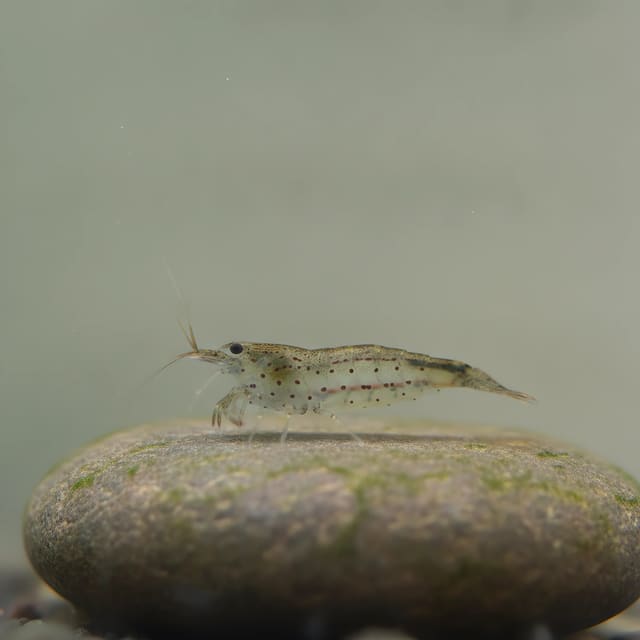
Amano Shrimp (Caridina multidentata)
£5.33£5.99

The Vampire Shrimp (Atya gabonensis) is a West African freshwater shrimp and omnivorous filter feeder that grows up to 15 cm. It suits a keeper with a mature, filtered aquarium; OATA’s group guidance gives 17–27°C, pH 6.5–8.0 and 4–18°dH. Sold individually in sizes from 3–5 cm to 15 cm.
Atya gabonensis
Lives in groups: kept together they stay settled, active and show their best colour.
The Vampire Shrimp (Atya gabonensis) is a West African freshwater shrimp and omnivorous filter feeder that grows up to 15 cm. It suits a keeper with a mature, filtered aquarium; OATA’s group guidance gives 17–27°C, pH 6.5–8.0 and 4–18°dH. Sold individually in sizes from 3–5 cm to 15 cm.
Maintain these water conditions for optimal health and vibrant colors
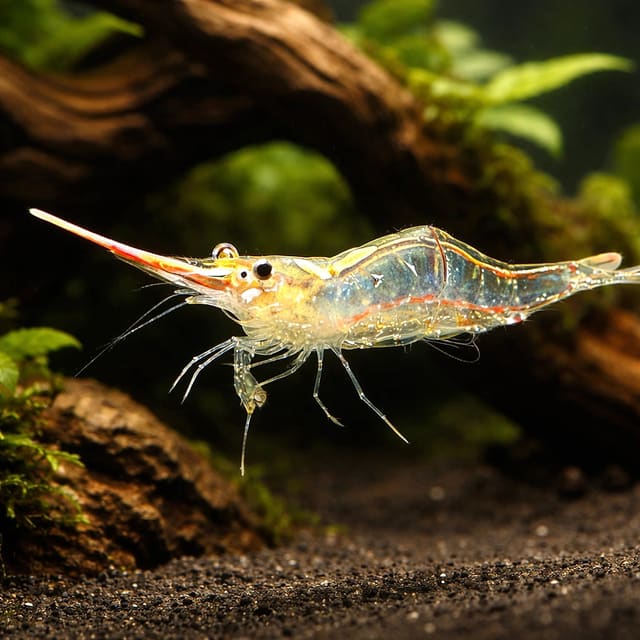
Vampire Shrimp (Atya gabonensis) is a large freshwater shrimp from West Africa that grows up to 15 cm. Its common names include African fan shrimp, African filter shrimp, African giant shrimp, Gabon shrimp and Cameroon fan shrimp. The dramatic name refers to the animal rather than a predatory feeding style: this omnivorous filter feeder uses feather-like claspers to collect particles carried through the water.
The accepted scientific name is Atya gabonensis. WoRMS places it in the family Atyidae, while Wikipedia describes its West African distribution, filtering biology and growth up to 15 cm. Reports placing it in South America refer to another animal rather than this shrimp.
It suits a keeper prepared to test the water, maintain a mature filter and assess every companion by mouth size and predatory behaviour. OATA’s freshwater shrimp and snail guidance gives 17–27°C, pH 6.5–8.0 and 4–18°dH as broad group guidance, not a species-specific optimum.
This feeding method should drive every setup decision. The aquarium needs established biological filtration, dependable water quality, shelter and a route through which moving water can bring fine suspended particles within reach of the feeding fans. A decorative aquarium that offers cover but leaves particles settling far from the shrimp does not meet that feeding need.
| Suits | Not suited to |
|---|---|
| Keepers prepared to test water and maintain an established filter | Newly set-up aquariums with detectable ammonia or nitrite |
| Layouts with shelter and moving-water feeding access | Fish able to swallow the shrimp or species known to be predatory |
| Plans that allow for growth up to 15 cm | Aquariums where copper exposure cannot be excluded |
Its potential 15 cm length makes adult space more important than the smaller dispatch sizes shown in the selector. If you are comparing invertebrates before making that decision, browse the freshwater shrimps and crustaceans collection.
Use the live size selector to choose between 3–5 cm, 5–7 cm, 10 cm and 15 cm. One purchase supplies one animal in the size selected. These measurements describe the dispatch size rather than a promise about age, sex, colour or future growth.
The size you select is the size supplied, not the adult size. Plan every size around an animal that can grow up to 15 cm. For example, selecting a 3–5 cm shrimp reduces its dispatch measurement; it does not turn the aquarium into a temporary small-shrimp setup. The filter, cover, feeding route and companion screening should already make sense for the full planning length.
The 15 cm selection should also be read as a dispatch size. The natural-history figure of up to 15 cm is a maximum planning reference, not a guarantee that every individual will finish at precisely that length. Use 15 cm when judging usable floor area, access around ornaments and whether a fish could treat the shrimp as prey.
Sex is guaranteed only when the selected option explicitly states male or female. This Vampire Shrimp listing has no sex-guaranteed option.
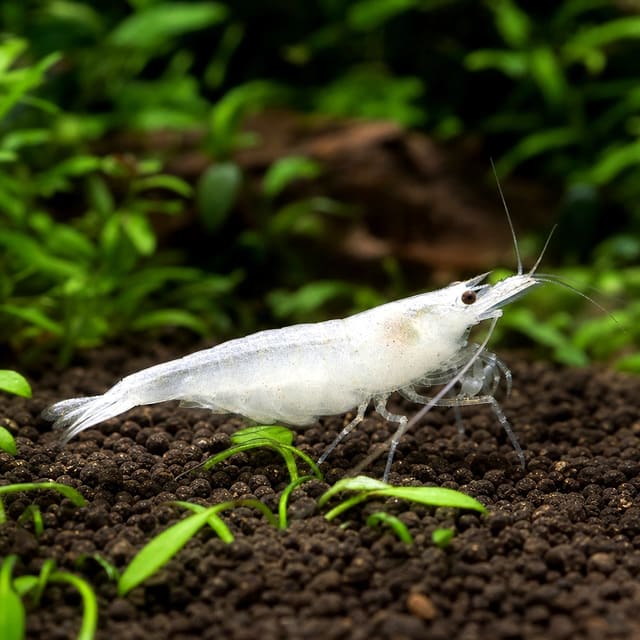
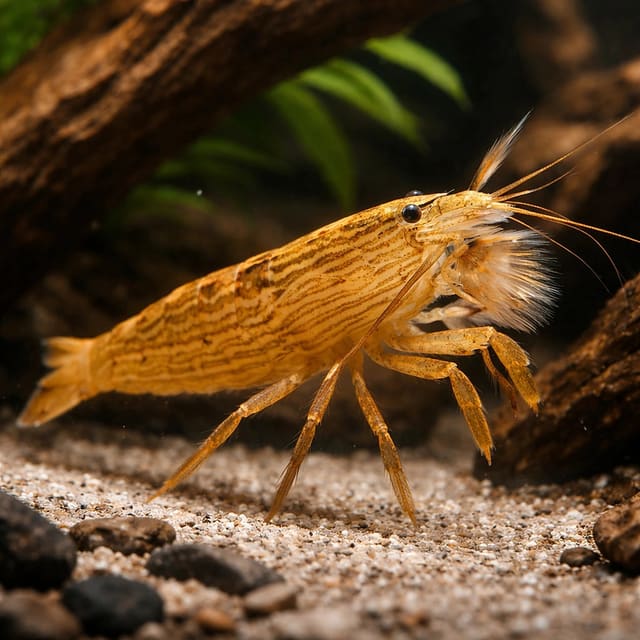
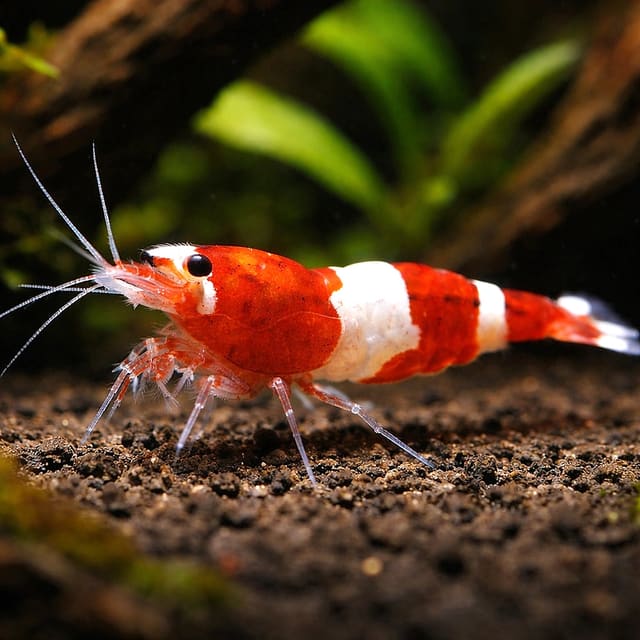
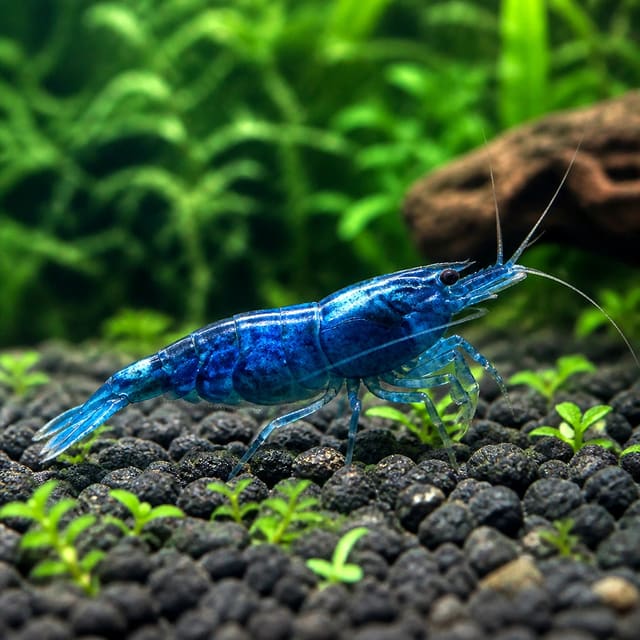
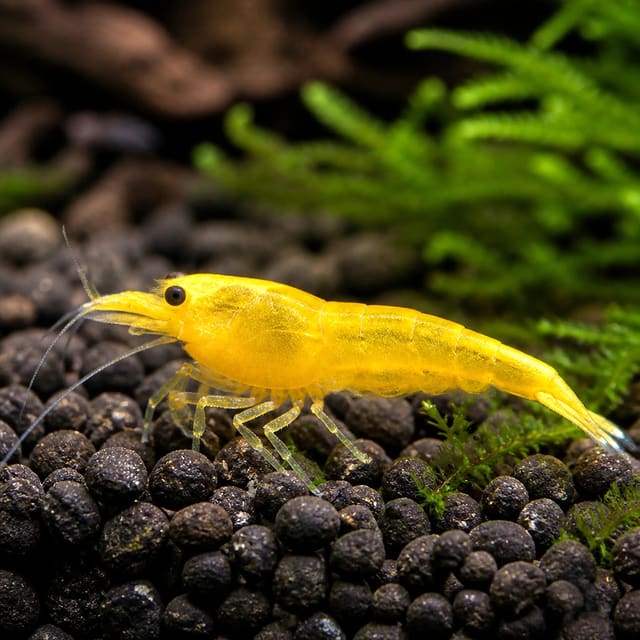
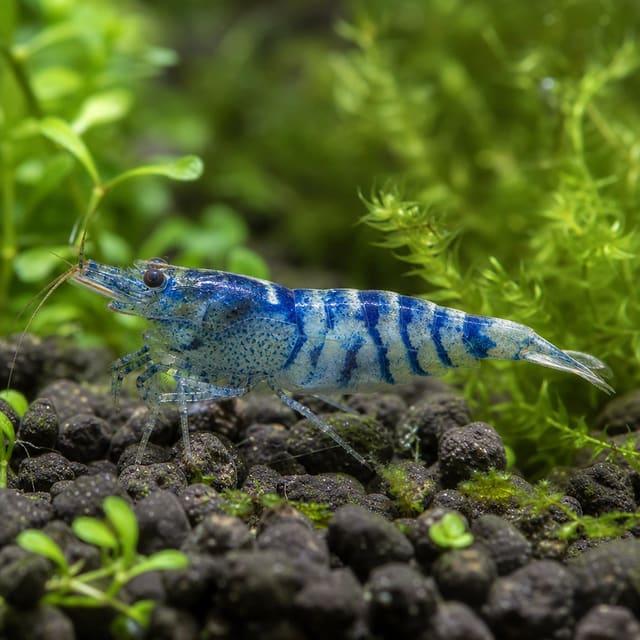
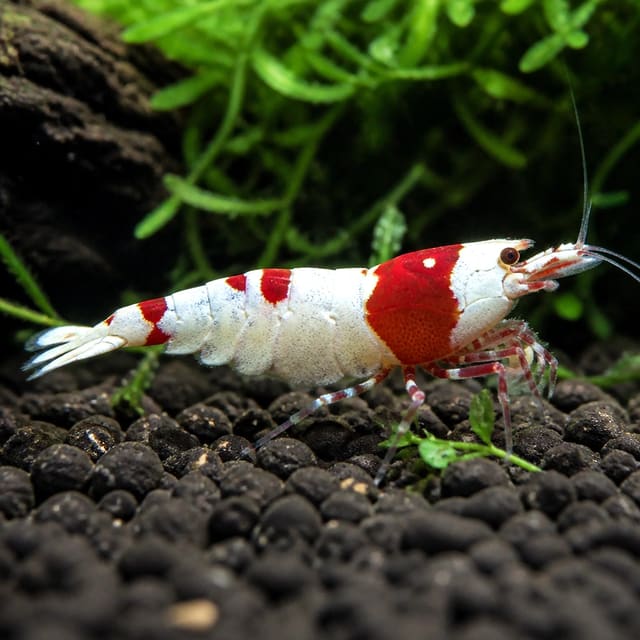
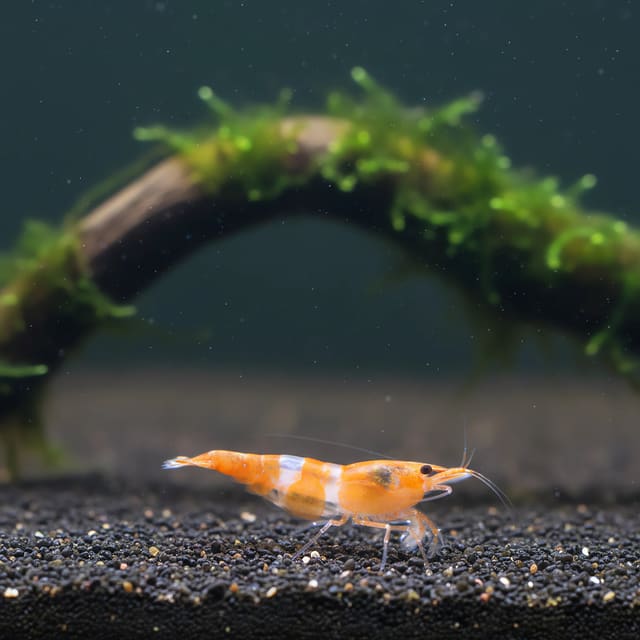
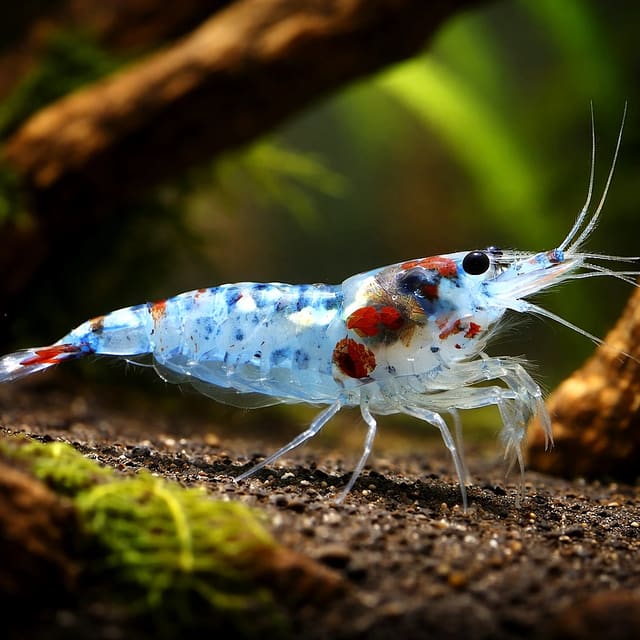
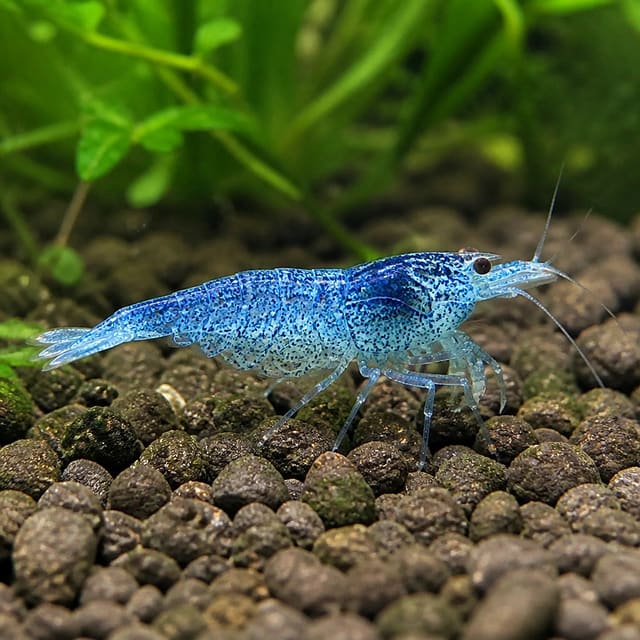
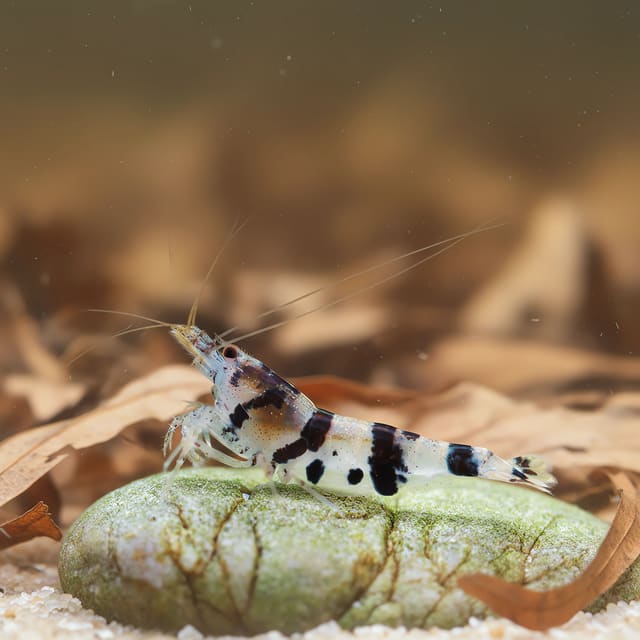
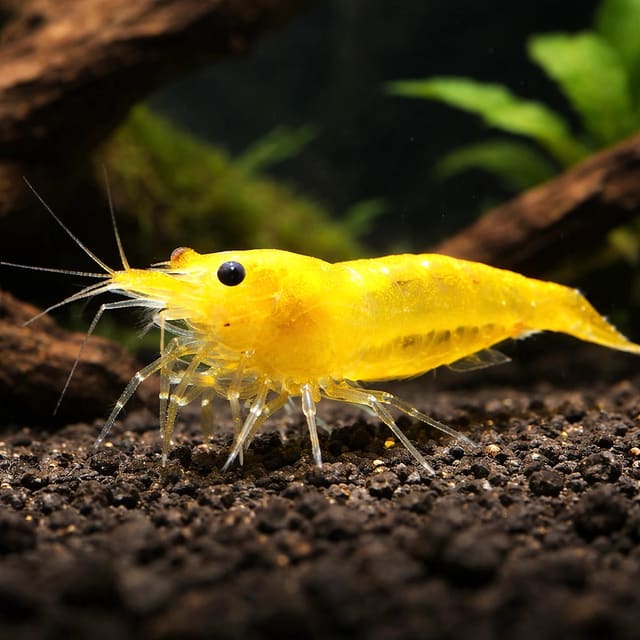
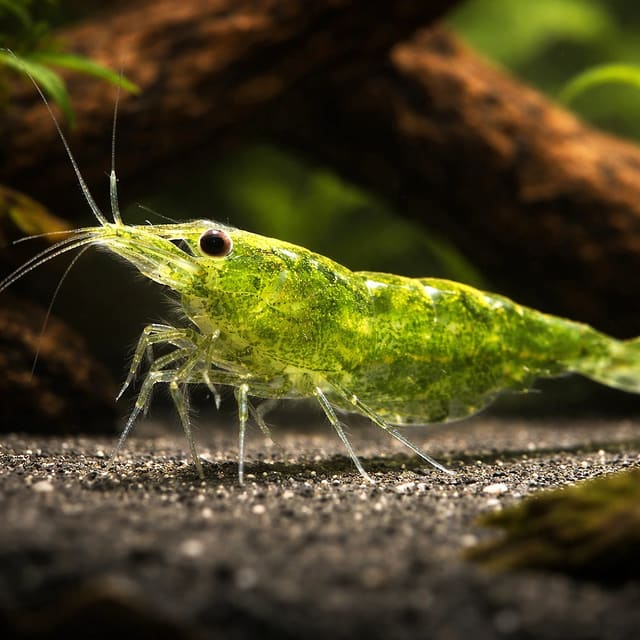
Some gallery images are representative, based on reference photographs of this species, and none shows the exact animal supplied, so colours can look slightly different from the live animal.
Do not use a gallery animal’s colour, body proportions or apparent size to infer the sex or life stage of the animal sent. The selector is the right place to choose the dispatch measurement, while the adult-size figure is the right number for aquarium planning.
Before arranging an order, read the delivery and Live Arrival Guarantee policy for the applicable dispatch days, delivery process and claim terms. Keep the livestock decision separate from that policy check: first establish that the aquarium is mature, filtered and suitable for the chosen animal.
OATA’s freshwater shrimp and snail guidance gives 17–27°C, pH 6.5–8.0 and 4–18°dH for the group. Treat these figures as broad guidance rather than a species-specific optimum. It also places carbonate hardness at 3–15°dKH, ammonia and nitrite at zero mg/l, and nitrate at no more than 20 mg/l above the normal tap-water level.
| Decision | Planning figure |
|---|---|
| Maximum length | Up to 15 cm |
| Dispatch sizes | 3–5 cm, 5–7 cm, 10 cm or 15 cm |
| Temperature | 17–27°C |
| pH | 6.5–8.0 |
| General hardness | 4–18°dH |
| Carbonate hardness | 3–15°dKH |
| Ammonia and nitrite | Zero mg/l |
| Nitrate | Up to 20 mg/l above tap water |
OATA recommends approximately 20 litres for larger freshwater examples such as Amano shrimp and says the aquarium needs to be larger when fish are included. For this shrimp, use that figure only as a broad lower reference. Choose the aquarium around the 15 cm planning length, the space occupied by the filter and cover, the route used for filter feeding, and the waste produced by every other inhabitant.
Read the figures together. A temperature inside the range does not compensate for detectable ammonia, and a generous aquarium does not compensate for a fish capable of swallowing the shrimp. The practical target is a stable combination of suitable water, mature filtration, sufficient adult space and safe companions.
Start with an aquarium that can accommodate a shrimp up to 15 cm after the filter, plants, substrate and ornaments are installed. Overall volume matters because larger aquariums generally hold temperature and water quality more steadily, but usable layout matters too. Leave enough open route for water to move past a feeding position without forcing the shrimp into an exposed area.
Freshwater shrimp need a filtered aquarium with aquarium gravel or sand. Live plants are ideal for cover; plastic plants and suitable ornaments such as model caves or plant pots can provide shelter when live planting is not used. Select smooth, stable placements that do not block access between the sheltered areas and the moving-water feeding zone.
A useful layout places cover beside, rather than directly across, the path of filtered water. The animal can then move between protection and feeding access. If plants or ornaments cause all particles to fall into quiet corners, revise the arrangement before adding livestock.
When fish will share the aquarium, increase the space allowance beyond the invertebrate-only reference. Every additional inhabitant adds waste, occupies shelter and changes how confidently the shrimp can reach a feeding position. Work through our shrimp aquarium preparation guide before the animal arrives, then judge the finished aquarium rather than its empty stated volume.
The feather-like claspers collect particles from the water, so feeding access depends on where those particles travel. Use the movement produced by the established filter to create a route past an accessible perch or sheltered standing point. The aim is dependable transport of fine particles, not an arbitrary promise that stronger movement is always better.
Observe the aquarium before introduction. Add nothing during this check; simply watch how tiny existing particles or plant movement reveal the path of the water. If movement passes high above every surface, the shrimp may have no useful place from which to filter. If all suspended matter drops immediately behind dense decoration, reposition the cover or alter the existing outlet direction without compromising filtration.
A feeding position should not be the only sheltered place in the aquarium. Provide alternative cover so the shrimp is not forced to choose between security and access to suspended particles. In a mixed aquarium, also watch whether fish occupy or repeatedly cross the same location.
Do not judge the route from filter output alone. The useful question is where water and fine particles travel after meeting plants, wood, stones and the aquarium walls. Small layout changes can redirect that path, so reassess it whenever ornaments move or the filter becomes partially blocked.
Use 17–27°C, pH 6.5–8.0, general hardness 4–18°dH and carbonate hardness 3–15°dKH as the working aquarium ranges. Test the actual aquarium rather than estimating from tap-water reputation, substrate type or another keeper’s results. Our water chemistry guide explains what each measurement means, while the water matcher helps compare measured values with these ranges.
Ammonia and nitrite should both read zero mg/l. Nitrate should not exceed 20 mg/l above the normal tap-water level. That wording makes a tap-water test part of the decision: if the tap water already contains nitrate, compare the aquarium reading with that baseline instead of treating the aquarium number in isolation.
| If the test shows | Decision |
|---|---|
| Ammonia above zero | Pause livestock additions and correct the filtration or waste problem. |
| Nitrite above zero | Pause additions and protect water quality while the biological filter recovers. |
| Nitrate rising towards the limit | Review feeding, waste removal and the water-change routine. |
| pH, GH or KH outside range | Resolve the mismatch before introduction rather than changing several values suddenly. |
| Temperature outside range | Stabilise the aquarium within 17–27°C before adding the shrimp. |
Consistency is more useful than repeatedly chasing a chosen number within the range. Test after maintenance and whenever behaviour changes, then compare results with earlier readings. A value that remains inside the range can still reveal a developing trend when it moves steadily week after week.
Never use clear-looking water as a substitute for testing. Dissolved ammonia, nitrite and nitrate are not judged by appearance, while pH and hardness require measurements. Record the result, date and any maintenance performed so later changes can be linked to a practical cause.
A working biological filter supports bacteria that convert toxic ammonia into nitrite and then into the safer nitrate stage. RSPCA aquarium welfare guidance explains why a well-set-up and maintained filter is vital for processing livestock waste. For this shrimp, filtration also contributes the moving water through which feeding particles travel.
Before introduction, test ammonia and nitrite and proceed only when both are zero mg/l. Confirm that temperature, pH and hardness also sit within the working ranges. A running filter alone is not enough: the biological population has to cope with the aquarium’s waste load.
For acclimatisation, begin with those measured aquarium conditions rather than relying on appearance. Introduce the shrimp only after the readiness check passes, and avoid adding several further inhabitants at the same time. Beneficial bacteria need time to increase when livestock and feeding increase; adding too much too quickly can cause new tank syndrome and unhealthy ammonia or nitrite.
During the first week, test at least once and observe the shrimp’s activity, colour, breathing effort, appearance and feeding response. Test sooner if behaviour changes. Keep the normal maintenance schedule rather than making multiple unnecessary changes that obscure whether the filter and aquarium are coping.
This shrimp is an omnivorous filter feeder. Provide suitably fine food that can disperse as suspended particles and pass within reach of its feather-like feeding claspers. The key decision is whether an appropriate amount reaches the animal through the water, not whether food has simply been placed somewhere in the aquarium.
Begin with two or three small feeding sessions a week, following the freshwater-invertebrate feeding schedule. Keep each portion controlled because surplus food breaks down and releases waste. The filter-feeding route should let a small amount pass the shrimp without requiring the entire aquarium to become heavily clouded.
An open fan positioned in moving water shows how the animal performs its normal filtering action, but a single observation cannot define the correct quantity. Use feeding interest, body condition and water-test trends together. Reduced feeding interest is a health warning, while rising waste readings show that the aquarium is receiving more organic matter than its filter and maintenance routine can safely process.
Do not respond to uncertain feeding by adding repeated large portions. First check whether the particle route still reaches the shrimp, whether the filter is blocked and whether fish intercept the feeding area. Correcting access can be more useful than increasing the amount.
After plants grow or ornaments move, repeat the route check. A setup that worked previously can redirect suspended particles away from the shrimp even though the filter remains switched on. Feeding, layout and water quality therefore need to be judged as one connected system.
Change 25% of the aquarium water at least once every week. Treat replacement tap water with a conditioner that removes harmful chlorine or chloramine before adding it. Use a siphon where practical to remove solid waste from the gravel while leaving enough layout undisturbed for the shrimp to retain shelter and feeding access.
Test the water at least weekly. Ammonia and nitrite must remain at zero mg/l, while nitrate must stay no more than 20 mg/l above the tap-water baseline. Include temperature, pH and hardness often enough to recognise a developing change rather than discovering a mismatch only when the shrimp’s behaviour alters.
If the filter media needs cleaning, rinse it lightly in aquarium water removed during the partial water change. Do not rinse it under the tap, because chlorine or chloramine may damage the beneficial bacterial population established in the media. Avoid replacing all established media during ordinary cleaning.
Water movement is also a maintenance signal for this animal. A blocked filter may reduce biological performance and redirect the route that carries food particles to the feeding fans. When movement changes, inspect for blockage before changing the entire layout.
Compare each week’s readings with the previous ones. A gradual nitrate rise calls for a review of feeding and waste removal, while detectable ammonia or nitrite calls for immediate attention to stocking, waste and biological filtration. Keep further livestock additions paused until both return to zero.
Freshwater shrimp are very sensitive to copper and will die if exposed even to low levels. Before adding any aquarium treatment, confirm that it is safe for invertebrates. Do not assume that a product suitable for fish is automatically safe for this shrimp.
Observe the animal closely enough to recognise changes from its normal pattern. Useful warning signs include increased inactivity, restlessness, unusual movement, hiding more than normal, a darker or paler colour, altered breathing rate or effort, and spending more time where oxygen levels are higher.
When a change appears, test ammonia, nitrite, nitrate, temperature and the remaining water values before changing several parts of the setup. Inspect the filter for blockages and confirm that the feeding route still reaches the shrimp. These checks can identify an environmental problem that affects both breathing and feeding.
If several warning signs appear together or a change persists, contact us about the health change and share the measured water values, recent maintenance and any treatment already used. Keep copper exposure out of the response and avoid making repeated unmeasured changes while the cause is being assessed.
Regular observation works best when it happens before feeding and maintenance. That gives a consistent view of activity, colour and position without temporary disturbance from hands, tools or newly suspended debris.
Avoid fish that can fit the shrimp in their mouth and avoid any species known to be predatory. Apply the mouth-size test to the shrimp’s selected dispatch size as well as its 15 cm planning length: a smaller animal can be vulnerable even when the same fish may appear less threatening beside a larger shrimp.
Do not rely on a general community label by itself. Compare the proposed companion’s feeding behaviour, mouth size and use of the aquarium with the shrimp’s need to stand in moving water and spread its feeding fans. A fish that repeatedly occupies that route may prevent dependable feeding even when it cannot swallow the shrimp.
| Question | Decision |
|---|---|
| Could it swallow the shrimp? | Avoid the combination. |
| Is it known to be predatory? | Avoid the combination. |
| Do the water needs overlap? | Proceed only when the aquarium can remain inside the shrimp’s ranges. |
| Will it block feeding or cover? | Revise the stocking or layout first. |
The aquarium must be larger when freshwater shrimp are mixed with fish. Judge the finished stocking plan by adult space, shelter, filtration and waste load rather than simply counting animals. Compatibility remains conditional because individual aquarium layout, the shrimp’s dispatch size and the behaviour of the proposed companion all affect the result.
Snails, other shrimp and named community fish should not be treated as universal matches. Run the same screen for every animal, including another invertebrate. Shared water values alone do not settle predation, feeding access or space.
Freshwater shrimp are generally social, but use aquarium capacity rather than an assumed fixed group count when planning this animal. Each Vampire Shrimp can grow up to 15 cm and needs access to cover and a route carrying suspended particles. Several animals therefore require more than enough physical room to stand side by side.
For each additional shrimp, identify a usable feeding position and nearby shelter before changing the stocking plan. If all positions depend on one narrow route, one animal may occupy the effective feeding area while the others receive little access. Add cover or redesign the particle path before increasing the number.
Mixed-species stocking needs another layer of assessment. Fish add waste and may occupy the same feeding zone, so increase aquarium space and repeat the mouth-size and predation screen. Do not use the fact that two animals appear together in a gallery scene as a stocking recommendation.
If keeping one selected animal initially, give it the complete adult-size setup rather than a reduced temporary arrangement. If planning several, make the decision from measured aquarium conditions, feeding access and filter capacity. The useful question is not how many will physically fit, but whether every animal can feed, shelter and remain in water that continues to test safely.
Vampire Shrimp grows up to 15 cm. Plan the aquarium, shelter, feeding position and companion screening around that adult length rather than the selected dispatch size.
Plan enough usable space for a shrimp up to 15 cm, established filtration, cover and a moving-water feeding route. OATA recommends approximately 20 litres for larger freshwater examples such as Amano shrimp as a broad lower reference and says the aquarium must be larger when fish are included.
OATA describes freshwater shrimp as generally social, but use aquarium capacity rather than a fixed number for this species. Give every shrimp adult space, cover and feeding access, then increase stocking slowly so the biological filter can adjust.
It suits a keeper prepared to mature and test the aquarium, maintain zero ammonia and nitrite, deliver fine suspended food through moving water, avoid copper and screen every companion for predation risk.
It is an omnivorous filter feeder that collects particles with feather-like claspers. Provide suitably fine suspended food through its feeding route in two or three small sessions a week, and prevent surplus food from degrading water quality.
OATA’s freshwater shrimp and snail group guidance gives 17–27°C, pH 6.5–8.0, general hardness 4–18°dH and carbonate hardness 3–15°dKH. Keep ammonia and nitrite at zero mg/l and nitrate no more than 20 mg/l above tap water.
Treat compatibility as conditional rather than relying on an aggression label. Protect its feeding route, observe how companions use that area, and avoid fish able to swallow the shrimp or any species known to be predatory.
Choose animals that cannot swallow it and are not predatory, then check that their water needs overlap and that the aquarium has enough adult space, shelter and feeding access. Other shrimp, snails and community fish are not automatic matches.
Film every delivery continuously from the sealed parcel before opening it, with the outer box visible and the animal still inside the sealed bag. Have someone present to receive the parcel, inspect it the same day, float the bag for 20–30 minutes, never pour the bag water into the aquarium, and retain the video with the order number for any Live Arrival Guarantee claim.
No reviews for this item yet. Bought one? Honest reviews only, good or bad.
What customers say about ordering from us
I have a small group of long finned mountain minnows. So was delighted to be able to order ten of this variety to increase the genetics in my tank . The ones I recieved are healthy but it’s to early to give a verdict on wether they are of a long finned type since they are small currently.
Gordon Walker · 23 Sept 2026
100% success travel and "installation". Pleased with quality of purchase. The Siamese fighter a bit "shy" so have not yet seen him at his best yet but looking good. Happy customer. GG
George E Garratt · 21 Sept 2026
Reviews of our shop, collected by Judge.me, an independent third-party review collector. Newest first.