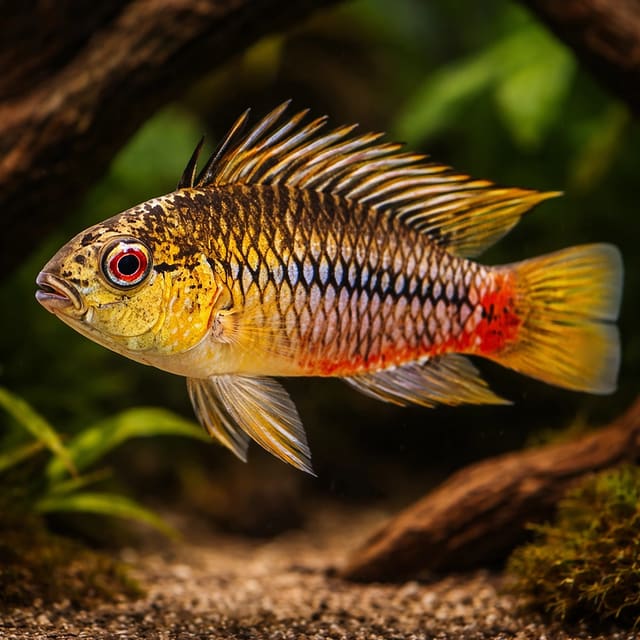
Paebas Dwarf Cichlid — tropical fish for sale UK — AI hero driftwood view

Apistogramma paebas

Paebas Dwarf Cichlid (Apistogramma paebas) — 3-3,5cm

Moderate Care
Semi-Aggressive
£40.99In Stock

A beautifully colored dwarf cichlid for soft, acidic aquariums, prized for its personality, breeding behavior, and compact size. Moderate care, semi-aggressive. 24-27C, pH 4.5-6.5.

care:moderatediet:carnivorefamily:cichlidaeorigin:south-americasite:tropical-fish-cosize:smalltemperament:semi-aggressivetype:freshwater-fish

Care at a Glance

Scientific Name
Apistogramma paebas
Adult Size
3.5 cm
Lifespan
5 years
Care Level
Moderate
Temperament
Semi-aggressive
Temperature
24–27°C
pH Range
4.5–6.5
Minimum Tank
80L
Diet
Carnivore

Water Parameters

Maintain these water conditions for optimal health and vibrant colors

Temperature
24–27°C
24°CIdeal Range27°C
pH Level
4.5–6.5
4.5Ideal Range6.5

Overview

The Apistogramma paebas, known as the Paebas dwarf cichlid, represents one of South America's most beautifully colored and behaviorally fascinating dwarf cichlids. This compact species exemplifies the remarkable diversity found in the Amazon basin's slow-moving tributaries, where hundreds of Apistogramma species have evolved distinct color patterns and breeding behaviors. Now available as tropical fish for sale online UK with specialist guidance, this rare dwarf cichlid brings exceptional coloration, captivating personality, and remarkable breeding behavior to properly maintained soft-water aquariums. Whether establishing a dedicated South American biotope or adding centerpiece interest to a peaceful community, A. paebas rewards knowledgeable keepers with color displays rivaling far larger cichlids. This rare freshwater fish UK represents the pinnacle of dwarf cichlid keeping for aquarists who appreciate subtlety, natural behavior, and the challenge of specialized soft-water species.

Appearance and Coloration

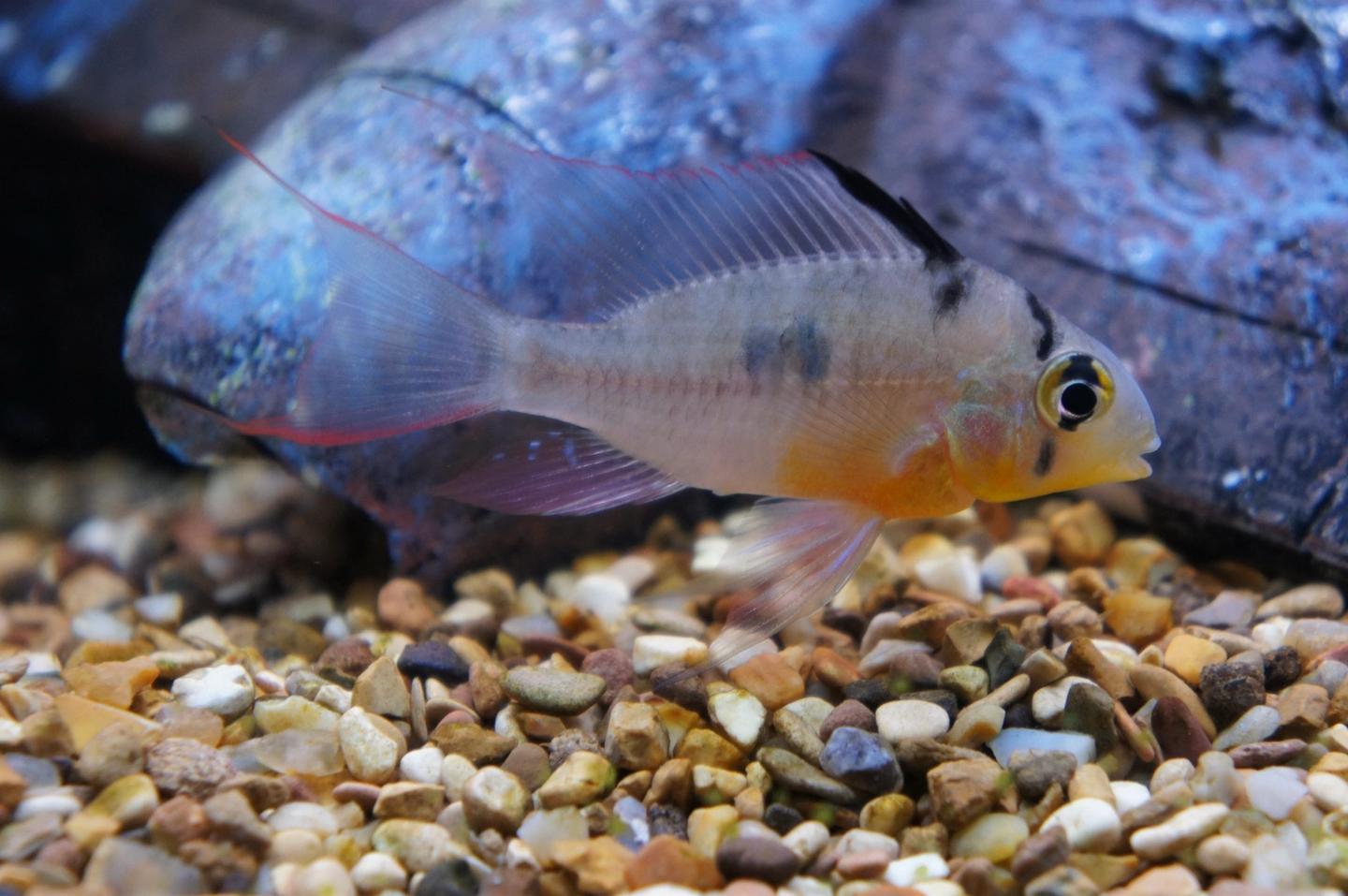
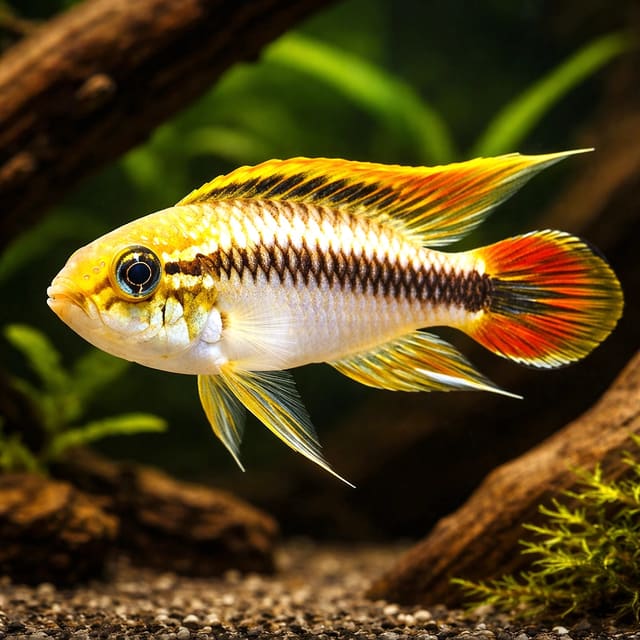
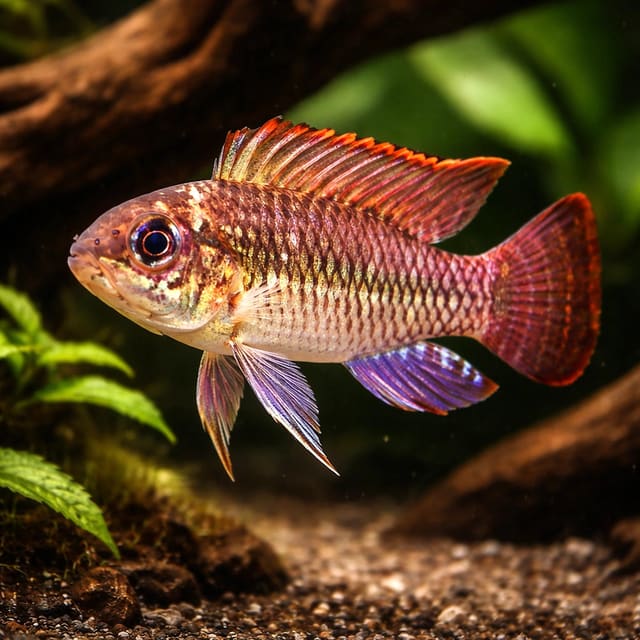
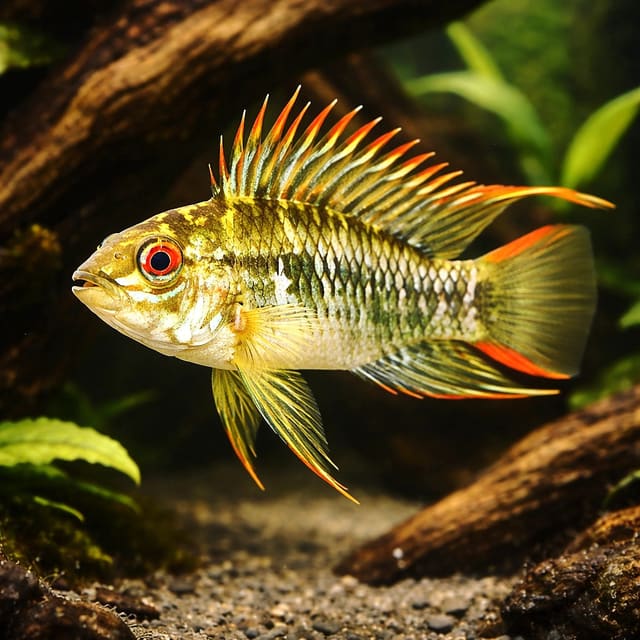
Apistogramma paebas displays the characteristically elongated body shape and large dorsal fin typical of the genus, with males developing spectacular finnage extensions when mature. Coloration varies with mood, breeding condition, and dominance status, but typically features vibrant combinations of blues, yellows, reds, and oranges arranged in complex patterns across the body and fins. Males develop far more intense coloration than females, with breeding dress bringing out maximum color intensity including extended dorsal fin rays and deeply forked caudal fins. Despite the compact adult size of approximately 3.5cm, males command attention through their disproportionately large finnage and brilliant coloration. Females remain smaller and show more subdued earthy tones with yellows and browns predominating, though breeding females can display bright yellow coloration. Body shape remains laterally compressed with a slightly upturned mouth adapted for surface and mid-water feeding. The eyes are relatively large providing excellent vision in shaded blackwater habitats. Healthy specimens display extended fins, vibrant coloration, and alert, inquisitive behavior throughout the day.

Natural Habitat and Distribution

The exact wild origin of Apistogramma paebas remains poorly documented in aquarium literature, though the genus is native to slow-moving blackwater and clearwater tributaries throughout the Amazon basin in South America. Typical Apistogramma habitat features shallow streams and forest pools with dense overhead canopy creating shaded conditions. Substrates consist of leaf litter, fine sand, and submerged branches and roots providing abundant cover and territorial boundaries. Water conditions are extremely soft and acidic due to decomposing organic matter releasing tannins and humic acids. These blackwater environments show minimal mineral content with pH values often dropping below 5.0 and hardness approaching zero. Water movement remains minimal with some areas nearly stagnant during dry seasons. Natural habitats contain abundant hiding places among roots, leaves, and undercut banks where pairs establish breeding territories. This highly specialized habitat—combining extreme water chemistry, structural complexity from natural materials, and subdued lighting—creates specific requirements that must be accurately replicated for successful long-term maintenance and breeding.

Water Parameters

  • Temperature: 24-27°C
  • pH: 4.5-6.5 (soft, acidic essential)
  • Hardness: 0-4°dH (very soft water)
  • Ammonia/Nitrite: 0 ppm
  • Nitrate: <10 ppm (keep minimal)
  • Water Changes: 20-30% weekly with matching chemistry

Aquarium Setup and Environmental Requirements

A minimum of 80 litres provides adequate space for a bonded pair with additional tank mates, though pairs can be maintained in smaller species tanks of 40-60 litres. The aquarium should be densely planted with soft-water species including Amazon swords, Cryptocoryne, and floating plants creating shaded areas. Incorporate abundant driftwood—preferably branching pieces creating cave-like spaces—and add Indian almond leaves or similar botanical materials releasing beneficial tannins. Substrate should be fine dark sand 3-5cm deep, mimicking natural stream beds. Lighting must be subdued as these fish evolved in shaded forest streams—floating plants help diffuse light. Filtration should provide gentle water movement without strong currents that stress these inhabitants of still waters. Use soft, acidic water prepared through reverse osmosis with minimal remineralization or naturally soft tapwater if available. Many successful breeders add blackwater extracts or rely on natural tannin release from botanicals to achieve target pH. Water quality standards are strict as these fish prove sensitive to pollution—maintain excellent filtration and perform regular water changes using chemistry-matched water. The aquarium should prioritize natural appearance with planted areas, shaded retreats, and open swimming spaces creating a functional Amazon biotope.

Feeding and Nutritional Needs

This carnivorous species requires a varied diet of small meaty foods reflecting natural feeding on insect larvae, small crustaceans, and zooplankton. High-quality micro-pellets or small granules formulated for carnivorous fish should form the dietary foundation. Supplement extensively with frozen and live foods including brine shrimp, daphnia, cyclops, bloodworms, and insect larvae such as mosquito larvae or blackworms. Live foods provide exceptional enrichment and stimulate natural hunting behavior—newly hatched brine shrimp, micro worms, and grindal worms are ideal. Feed small portions 2-3 times daily as these small fish have high metabolisms and limited stomach capacity. Remove uneaten food promptly to prevent water quality degradation in the soft acidic conditions. Avoid flake foods as primary diet and minimize plant-based foods—this is a specialized carnivore requiring protein-rich nutrition. Variety prevents nutritional deficiencies and maintains optimal coloration and breeding condition. Condition breeding pairs with increased live food offerings before spawning attempts. Observe feeding behavior carefully as subdominant individuals may struggle to compete with more aggressive tank mates.

Top Tip: Create multiple potential breeding caves using coconut shells, ceramic tubes, or driftwood arranged to form small enclosed spaces with narrow entrances. Position caves in corners or against tank sides where females feel secure, as Apistogramma spawn in secluded locations and females select specific sites based on entrance size and concealment.

Behavior and Social Structure

Apistogramma paebas exhibits semi-aggressive temperament with territorial behavior intensifying during breeding periods. Males establish territories encompassing 30-50cm square areas and can maintain multiple females in harem-type arrangements in larger aquariums. Females establish smaller territories centered on chosen breeding caves, becoming extremely defensive when guarding eggs or fry. Outside breeding periods, aggression remains moderate with males displaying to each other through fin spreads and parallel swimming rather than physical contact. Activity levels are moderate with periods of active swimming interspersed with resting in caves or under plants. The species shows considerable intelligence with complex courtship rituals, dedicated parental care, and learned behaviors. Males court females through elaborate displays involving color intensification, fin spreading, and ritualized movements. Breeding pairs develop bonds though males may spawn with multiple females. Post-spawning, females assume primary brood care, guarding eggs and fry intensively while males maintain broader territory defense. The species demonstrates curiosity toward keepers with less timidity than many dwarf cichlids once established in appropriate conditions.

Compatible Tank Mates

Suitable companions include small peaceful soft-water fish that occupy different water zones and tolerate similar chemistry. Small tetras such as ember tetras, green neon tetras, or rummy-nose tetras make ideal dither fish providing activity without competition. Small peaceful rasboras like chili rasboras or least rasboras work well. Otocinclus catfish provide algae control without interfering with dwarf cichlids. Corydoras pygmaeus or C. habrosus occupy the bottom without territorial conflicts. In larger aquariums, other peaceful dwarf cichlid species may coexist if territories are well-defined. Avoid all aggressive fish including larger cichlids that will harass or predate. Fin-nipping species like some barbs or tetras damage the elaborate finnage. Fast competitive feeders outcompete these relatively sedate fish. Very small shrimp may be predated, particularly on fry, though larger Amano shrimp usually coexist. Hard-water species cannot tolerate the required soft acidic chemistry. The key to successful community building involves selecting exclusively soft-water species with peaceful temperament, providing adequate territory, and maintaining pristine water quality. Breeding pairs benefit from dedicated species tanks eliminating predation risks to eggs and fry.

Breeding and Reproduction

Apistogramma paebas breeds readily in appropriate conditions, displaying typical cave-spawning behavior. Males court females through elaborate displays involving color intensification, fin spreading, and ritualized movements leading the female to potential spawning sites. The female selects a preferred cave, inspecting multiple sites before choosing. Spawning occurs within the cave with females depositing 50-100 eggs on the ceiling or walls. The female immediately assumes brood care, fanning eggs continuously and defending the cave entrance vigorously—even small females will attack much larger fish approaching the territory. Males maintain broader territory defense but may be attacked by aggressive females if they approach too closely. Eggs hatch in 2-3 days with fry becoming free-swimming after approximately one week. Initial fry foods include infusoria or liquid fry foods, progressing to newly hatched brine shrimp and micro worms within days. Females lead fry on foraging expeditions, maintaining tight schools for several weeks. Successful breeding requires soft acidic water (pH 5.0-6.5), elevated temperature around 26-28°C, excellent conditioning with live foods, appropriate caves, and low disturbance. Remove males if aggression toward females becomes excessive. Many breeders maintain pairs in dedicated 40-60 litre tanks for optimal breeding success.

Health and Special Care Considerations

Apistogramma paebas proves moderately hardy when maintained in appropriate conditions but faces several health challenges. The species requires soft, acidic water—hard alkaline conditions cause severe stress and immune suppression. Water quality sensitivity demands excellent filtration and consistent maintenance as these fish evolved in pristine forest streams. The soft acidic water chemistry provides minimal buffering capacity, meaning parameter swings occur rapidly if maintenance lapses. These fish cannot tolerate copper-based medications, complicating treatment of parasitic infections. Small size makes them vulnerable to aggressive tank mates causing chronic stress. High metabolic rates mean regular feeding is essential—these fish cannot tolerate extended fasting. Breeding females exhibit high stress levels and will abandon broods if disturbed, requiring careful observation without interference. The species can suffer from typical cichlid ailments including hole-in-the-head disease if water quality deteriorates or diet proves inadequate. Regular observation reveals behavioral changes indicating problems—loss of appetite, clamped fins, or faded coloration signal issues requiring attention. With proper soft-water setup, compatible tank mates, quality nutrition, and consistent maintenance, these beautiful dwarf cichlids provide years of enjoyment and regular breeding success for aquarists willing to meet their specialized requirements.

Why Buy from Tropical Fish Co

Tropical Fish Co specializes in rare South American cichlids with comprehensive expertise in soft-water dwarf species. Our Apistogramma paebas specimens are sourced from quality suppliers who maintain proper water conditions and understand dwarf cichlid requirements. Each fish undergoes health screening and quarantine in soft acidic water before being offered for sale, ensuring robust individuals arrive ready to thrive. We provide detailed guidance on soft-water aquarium setup, water chemistry management, and community planning tailored specifically to Apistogramma requirements. As specialist aquarium retailers, we understand the challenges of maintaining soft acidic biotopes and offer ongoing support as you develop your South American collection. Our packaging employs proven techniques for safe transport of small, delicate cichlids, with insulated containers and optimized oxygen levels ensuring excellent arrival condition. We can advise on water preparation methods including reverse osmosis systems, remineralization protocols, and natural blackwater conditioning. When you buy cichlids online UK from Tropical Fish Co, you receive not merely fish but comprehensive knowledge enabling long-term success with specialized species. Our commitment to customer education and focus on rare, quality specimens makes us the preferred choice for aquarists seeking the finest South American dwarf cichlids available in the UK market.

Premium Quality

Healthy, vibrant fish from trusted suppliers

Expert Care

Detailed care guides and support

Live Arrival Guarantee

Your fish arrives healthy or we'll replace it

Acclimated

Properly quarantined and ready for your tank