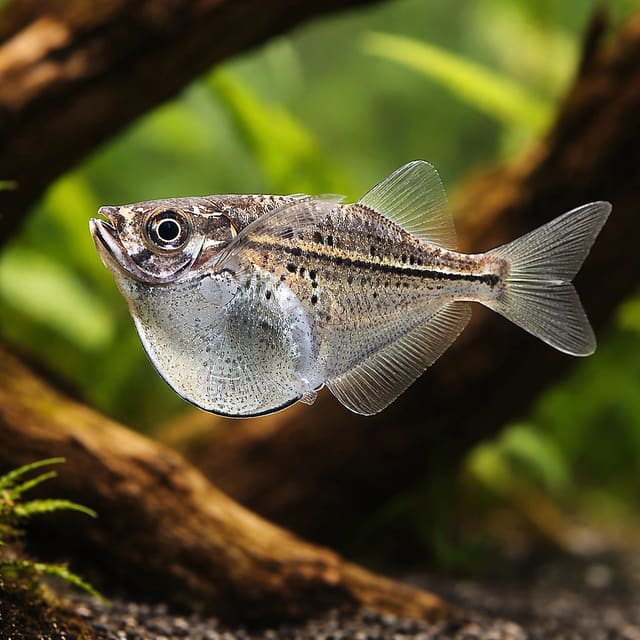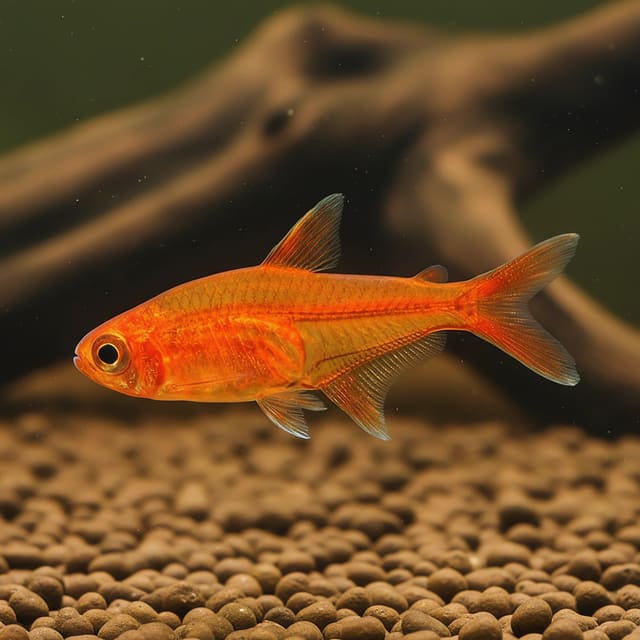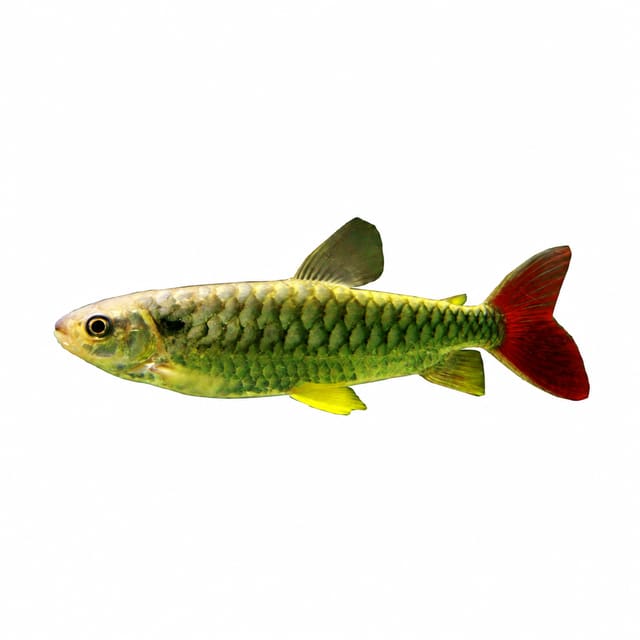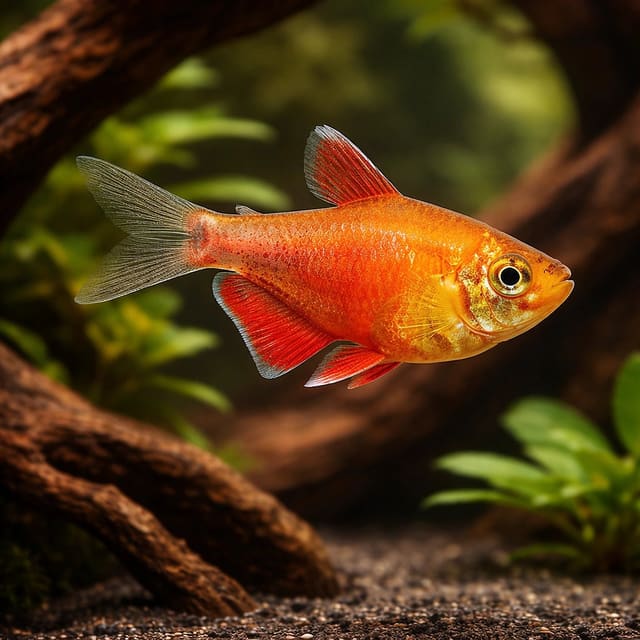
Orange Flame Tetra (Hyphessobrycon flammeus)
20–26°C · pH 5.5–7.5 · 54L
£4.99

A tiny South American darter-style characin for mature planted nano aquariums. Supplied around 1-2 cm; best for careful keepers who can feed tiny foods and maintain soft, stable water.
Adult size is the maximum length this species reaches at full maturity (scientific sources). The livestock you receive will be younger and smaller. Product-photo provenance and any image-specific limitations are stated on the listing.
Odontocharacidium aphanes
Shoaling fish: kept in a group they feel safer, stay calmer and show their best colour.
Confirm your email, then we’ll send an availability message for this exact item if it returns within 180 days.
This request is only for this product—no newsletter or other promotions. A mail-provider retry may very rarely duplicate the same availability message. Unconfirmed addresses are removed after 48 hours. See our privacy policy.
A tiny South American darter-style characin for mature planted nano aquariums. Supplied around 1-2 cm; best for careful keepers who can feed tiny foods and maintain soft, stable water.
Adult size is the maximum length this species reaches at full maturity (scientific sources). The livestock you receive will be younger and smaller. Product-photo provenance and any image-specific limitations are stated on the listing.
Maintain these water conditions for optimal health and vibrant colors
Green Dwarf Tetra (Odontocharacidium aphanes) is a very small South American crenuchid characin with a bottom-hugging, darter-like way of moving. It is not a generic midwater tetra for a busy community tank. The appeal is subtler: a tiny patterned fish that explores leaves, roots, moss, fine plants and quiet foreground spaces.
This SKU is supplied at around 1-2 cm. FishBase records Odontocharacidium aphanes as a miniature freshwater species from the Amazon system, with a maximum size around 1.7 cm standard length. In practice, plan for a delicate nano fish that needs calm tank mates, small foods and mature water quality rather than a high-energy mixed aquarium.
| Scientific name | Odontocharacidium aphanes |
|---|---|
| Common name | Green Dwarf Tetra |
| Supplied size | Approx. 1-2 cm |
| Adult size | Very small; FishBase records about 1.7 cm SL |
| Minimum aquarium | 60 litres or larger for a stable specialist group |
| Temperature | 24-28 C preferred; avoid cold or unstable water |
| pH | Soft, mildly acidic to neutral water, about pH 5.8-7.0 |
| Temperament | Peaceful but delicate; males may posture in small territories |
| Diet | Tiny live/frozen foods and fine sinking micro-foods |
| Best for | Experienced nano-fish keepers and planted blackwater-style aquariums |
The supplier name for this product is Green Dwarf Tetra - Odontocharacidium aphanes. The fish belongs to the Crenuchidae family, a group that includes small South American characins with a more benthic, perching style than the classic open-water tetra. That is why this listing describes it as darter-like: it spends much of its time close to cover, browsing small foods from surfaces and making short movements rather than constantly schooling in open water.
Because this is a tiny species, the supplied 1-2 cm size is already close to adult scale. It should be acclimated gently and fed foods small enough for very small mouths. Avoid treating it like a robust larger tetra that can compete hard at feeding time.
FishBase places Odontocharacidium aphanes in tropical South American freshwater, including Amazon drainage records. Aquarium trade notes for closely related and cf. aphanes forms describe soft, very clean water, leaf litter, fine roots and calm margins where small fish can avoid strong flow and larger tank mates.
A good aquarium interpretation is a mature planted layout with fine-leaved plants, moss, botanicals, driftwood roots and open patches of sand or fine substrate. Tannin tint is useful, but it should not be used to hide poor water quality. Clear, stable, mature filtration matters more than making the tank dark.
Use a settled aquarium of at least 60 litres for a small group. The extra volume is not because the fish is large; it is because tiny specialist fish do better in stable water with enough planted cover and feeding space. A smaller tank can swing too quickly in temperature, nitrate and dissolved organics.
Keep flow gentle to moderate. Sponge pre-filters or shrimp-safe intakes are sensible because these fish are tiny and often feed close to surfaces. Provide dense planting at the back and sides, moss or leaf litter for microfauna, and open foreground patches where you can observe feeding and social behaviour.
A secure lid is still recommended. Small characins can jump if startled, especially during maintenance, netting, transport acclimation or sudden lights-on moments.
Aim for warm, soft, stable freshwater. A practical target is 24-28 C, pH around 5.8-7.0 and low to moderate hardness. FishBase gives tropical conditions and a pH range within the soft-acidic to neutral band, which fits the specialist Amazon-style setup this species deserves.
Do not chase numbers with sudden chemical corrections. Keep ammonia and nitrite at zero, nitrate low, and make small regular water changes with temperature-matched water. If your tap water is hard or alkaline, use a planned remineralised RO mix rather than repeatedly adding quick fixes.
Green Dwarf Tetra need very small foods. Offer baby brine shrimp, daphnia, cyclops, microworms, finely chopped frozen foods and high-quality micro-pellets that sink or drift slowly. Many specimens will not compete well with fast midwater fish that grab every item before it reaches the lower levels.
Feed tiny portions once or twice daily and watch whether food actually reaches them. A mature planted tank with biofilm and microfauna helps, but it is not a replacement for targeted feeding. Remove uneaten food quickly because small specialist fish are usually less forgiving of water-quality mistakes.
This is a peaceful species, but peaceful does not mean careless. Keep it with others of its own kind where possible and provide many sight breaks. Males may display or hold small spaces among leaves and roots, so a bare tank can create stress even though the fish is tiny.
They are best appreciated in a quiet aquarium where you can watch them perch, browse and move in short bursts. Strong lighting, boisterous fish and constant feeding competition usually make them shy.
The safest companions are very small, calm species that enjoy similar soft, warm water and do not dominate feeding. Suitable options may include tiny peaceful rasboras, small pencilfish, gentle dwarf cory-type bottom dwellers in a larger setup, small otocinclus-type algae grazers after the tank is mature, and peaceful snails.
Avoid large or fast fish, fin nippers, assertive cichlids, predatory fish, large tetras, barbs, and anything likely to view a 1-2 cm fish as food. Shrimp adults may coexist in some planted tanks, but shrimplets are at risk and the fish should not be sold as shrimp-safe.
Captive breeding information is limited. Treat this as a specialist display species unless you are deliberately setting up a soft-water breeding project. A likely approach would involve very clean soft water, dense fine plants or spawning mops, tiny live foods for conditioning and separate fry protection.
Fry, if produced, would be extremely small and would need infusoria or similarly tiny first foods before progressing to newly hatched brine shrimp. For most keepers, long-term health and natural behaviour are the main goals.
Dim the aquarium lights before opening the box. Float the sealed bag to equalise temperature, then acclimate slowly with small additions of aquarium water. Because this is a tiny soft-water fish, avoid rushing the chemistry change and avoid pouring transport water into the aquarium where practical.
Offer the first food only after the fish have settled and are breathing normally. Tiny live or frozen foods are often the best first meal after shipping.
Choose Green Dwarf Tetra if you enjoy rare, subtle nano fish and already maintain stable planted aquariums. It is not the right choice for a beginner community tank, a hard-water setup, a tank with boisterous feeders or an aquarium where small fish may vanish.
When available, eligible livestock orders from Tropical Fish Co are packed carefully and supported by our Live Arrival Guarantee when the delivery and acclimation terms are followed.
No reviews for this item yet. Bought one? Honest reviews only, good or bad.
What customers say about ordering from us
I have a small group of long finned mountain minnows. So was delighted to be able to order ten of this variety to increase the genetics in my tank . The ones I recieved are healthy but it’s to early to give a verdict on wether they are of a long finned type since they are small currently.
Gordon Walker · 23 Sept 2026
100% success travel and "installation". Pleased with quality of purchase. The Siamese fighter a bit "shy" so have not yet seen him at his best yet but looking good. Happy customer. GG
George E Garratt · 21 Sept 2026
Reviews of our shop, collected by Judge.me, an independent third-party review collector. Newest first.