−12%
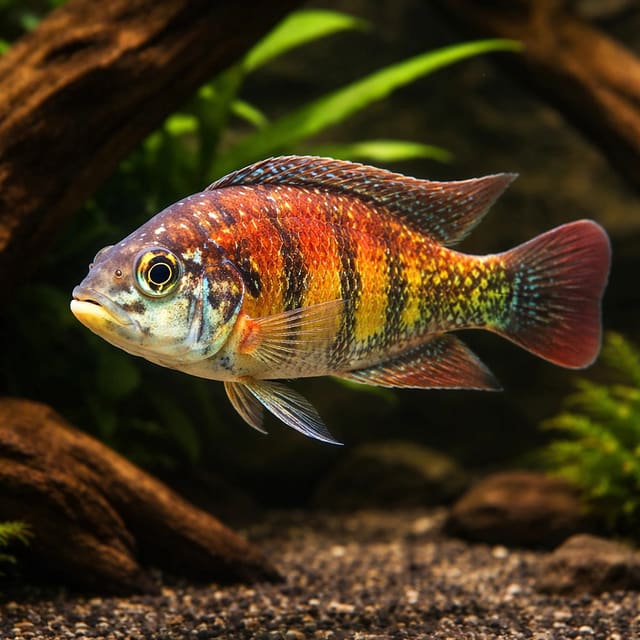
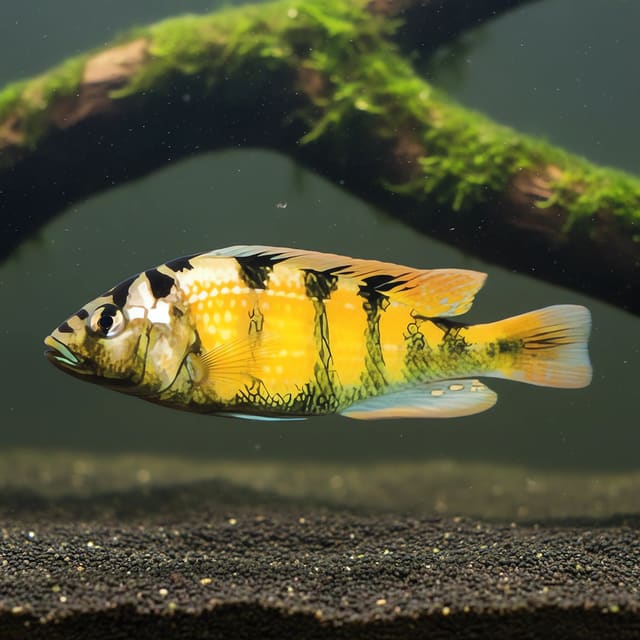
Yellow Belly Hap (Haplochromis sp. yellow belly)
23–27°C · pH 8–8.6
£9.67£10.99

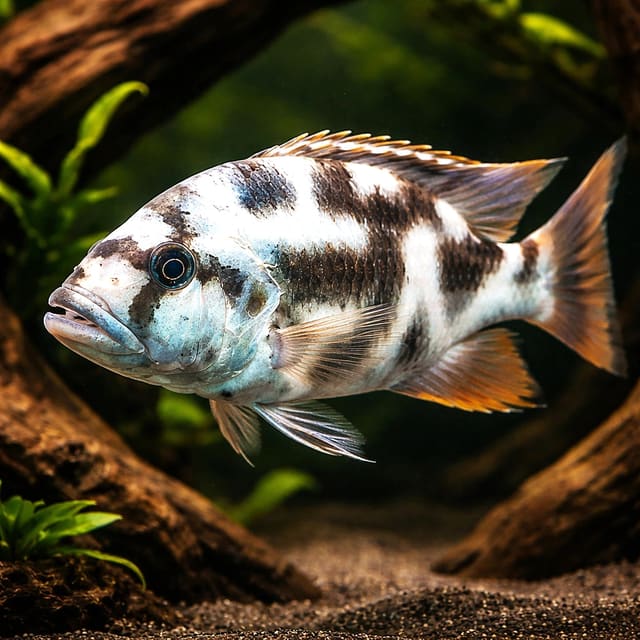
A distinctive Lake Malawi thicklip cichlid with pronounced lips, larger adult size and bold hard-water hap behaviour.
Adult size is the maximum length this species reaches at full maturity (scientific sources). The livestock you receive will be younger and smaller — pick a size above for the actual shipping size. Product-photo provenance and any image-specific limitations are stated on the listing.
Cheilochromis euchilus
Save when buying multiple fish. Each quantity is one fish; sex and pair formation are not guaranteed unless the selected variant explicitly states them.
Confirm your email, then we’ll send an availability message for this exact item if it returns within 180 days.
This request is only for this product—no newsletter or other promotions. A mail-provider retry may very rarely duplicate the same availability message. Unconfirmed addresses are removed after 48 hours. See our privacy policy.
A distinctive Lake Malawi thicklip cichlid with pronounced lips, larger adult size and bold hard-water hap behaviour.
Adult size is the maximum length this species reaches at full maturity (scientific sources). The livestock you receive will be younger and smaller — pick a size above for the actual shipping size. Product-photo provenance and any image-specific limitations are stated on the listing.
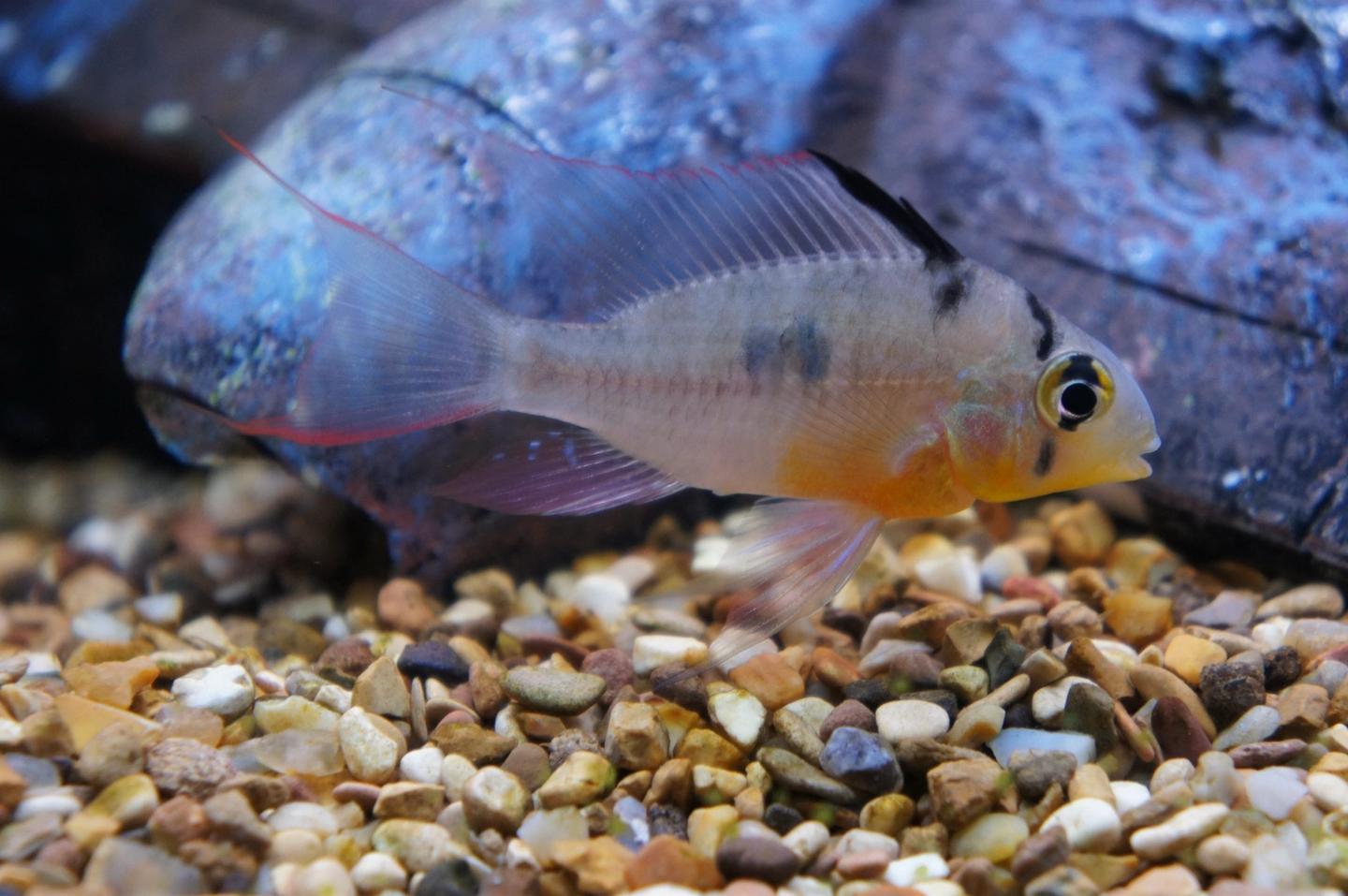
Cichlids are a family of roughly 1,800 accepted species, not one care type. Before buying, identify the exact species and source, then compare adult measurement, usable tank dimensions, social system, territory, tested water, diet and an exit plan. No family-wide minimum tank, water range or tank-mate list is safe.
Maintain these water conditions for optimal health and vibrant colors
Big-Lipped Cichlid is best listed as Cheilochromis euchilus, the Malawi thicklip cichlid. The older supplier/trade name Haplochromis euchilus is useful for matching historical labels, but it should not drive the care facts. This is a Lake Malawi cichlid with a much larger adult size than the 4-5 cm juvenile sale size suggests.
The key to keeping this fish well is planning around adult structure: a spacious hard-water aquarium, open swimming room, strong filtration and tank mates chosen for a large, assertive Malawi hap rather than a small community fish.
| Scientific name | Cheilochromis euchilus |
|---|---|
| Older trade names | Haplochromis euchilus, Chilotilapia euchilus |
| Common names | Big-Lipped Cichlid, Malawi Thicklip |
| Natural range | Lake Malawi, East Africa |
| Adult size | Up to about 35 cm total length; common adult size around 22 cm |
| Minimum aquarium | 450 litres or larger for long-term adult care |
| Temperature | 24-28C |
| pH | 7.5-8.8 |
| Hardness | 10-25 dGH |
| Diet | Insect-focused omnivore; quality cichlid foods plus invertebrate foods |
Cheilochromis euchilus is a distinctive Lake Malawi cichlid known for its pronounced lips. The older Haplochromis euchilus wording still appears in supplier lists and older aquarium trade references, so it is kept here as a synonym/trade bridge rather than forced into the title or care data.
The lip shape is not just a cosmetic feature. It is part of the fish's natural feeding and foraging identity, and it is one reason this species stands out among Malawi haps and peacocks.
FishBase places the species in inshore rocky areas around Lake Malawi, feeding on insects. Aquarium references also describe intermediate or rocky/sandy shoreline habitat. In the aquarium, that points toward a layout with stable hard water, open swimming space, rock boundaries and enough floor area for a large cichlid to move without constant collision.
It should not be sold or planned as a small Lake Victoria hap. A young fish may arrive small, but the long-term setup should be closer to a large Malawi hap aquarium.
Use 450 litres or larger for adult care, with a long tank footprint preferred. A 180 cm aquarium is a sensible planning target for mature fish, groups or mixed Malawi communities. Juveniles can be grown on in smaller quarters, but the permanent home should be chosen before the fish outgrows its early sale size.
Use sand or smooth fine gravel, secure rock structures, caves and open water. Anchor heavy rocks safely because large cichlids can dig or push around the base of the layout. Keep the centre/front of the aquarium open so the fish can patrol and display naturally.
Maintain hard, alkaline Lake Malawi-style water. A practical target is 24-28C, pH 7.5-8.8 and 10-25 dGH. Stability matters more than chasing a narrow number, especially in a large cichlid aquarium with heavy feeding.
Strong biological filtration, good oxygenation and regular water changes are important. Large cichlids are rewarding, but they are not light bioload fish.
Feed a varied insect-focused omnivore diet. Quality Malawi cichlid pellets can form the base, supported by spirulina foods and invertebrate items such as mysis, brine shrimp, krill, daphnia and insect larvae. FishBase notes insect feeding in nature, and aquarium care notes often include both vegetable matter and invertebrate foods.
Avoid fatty mammal meats or an overly rich predator diet. Feed controlled portions and keep water quality high; colour, body condition and confidence improve when the diet and filtration are balanced.
Big-Lipped Cichlid is best treated as a moderately assertive to semi-aggressive Malawi cichlid. Males can become territorial, especially as they mature and during breeding behaviour. The fish needs space to claim areas without turning the whole aquarium into a fight.
Expect a bold, active fish with strong visual appeal. The pronounced lips, body size and mature male colour can make it a centrepiece, but it needs suitable tank mates and enough room to show well.
Good companions are robust Malawi haps, peacocks and similarly sized hard-water cichlids that will not be swallowed or bullied constantly. Suitable Synodontis catfish can also work in a large Malawi-style aquarium.
Avoid small fish, shrimp, delicate long-finned fish, peaceful community species, soft-water fish and cramped mbuna-heavy layouts. Also avoid mixing with very aggressive cichlids that prevent the Big-Lipped Cichlid from feeding or displaying normally.
The enlarged lips are the headline feature, but adult colour and confident swimming are just as important. A dark background, pale sand, stable hard water and open swimming lanes help the fish read clearly in a display aquarium.
Young fish may look subtler than mature males. Do not judge the species only by juvenile colour; the attraction is the combination of mature size, unusual mouth shape and strong Malawi cichlid presence.
This is a mouthbrooding African cichlid, with females taking eggs in the mouth. Breeding plans need space, stable water, good conditioning and careful management of male pressure. A breeding group should not be forced into a small aquarium.
This fish suits keepers building a serious Lake Malawi hap or peacock display who want a distinctive species with unusual lips and larger adult presence. It is a better fit for experienced African cichlid keepers than for a first community aquarium.
It is not suitable for nano tanks, soft-water planted community aquariums or mixed tanks containing small peaceful fish. If your current tank is below the long-term target, plan the adult upgrade before ordering.
Check the current livestock delivery page before ordering so dispatch timing, weather holds, packing rules and live-fish delivery terms are clear. This product page is for species choice and care planning; delivery terms can change with season and conditions.
This listing uses Cheilochromis euchilus as the current care anchor. Haplochromis euchilus is retained as older supplier/trade wording.
FishBase lists a maximum of about 35 cm total length, with common adult size around 22 cm. Plan the aquarium for adult size, not the juvenile sale size.
Use 450 litres or larger for long-term care, with a long footprint, strong filtration and open swimming space.
No. The species is a Lake Malawi cichlid.
Use quality Malawi cichlid foods, spirulina foods and suitable invertebrate items such as mysis, brine shrimp, krill, daphnia and insect larvae.
This listing was checked against FishBase for accepted identity, size, Lake Malawi habitat, insect feeding and mouthbrooding notes; Tropical Freshwater Fish and Ron's Cichlids care notes were used as aquarium-care cross-checks for tank size, water chemistry, sand/open-space setup and feeding guidance.
No reviews for this item yet. Bought one? Honest reviews only, good or bad.
What customers say about ordering from us
I have a small group of long finned mountain minnows. So was delighted to be able to order ten of this variety to increase the genetics in my tank . The ones I recieved are healthy but it’s to early to give a verdict on wether they are of a long finned type since they are small currently.
Gordon Walker · 23 Sept 2026
100% success travel and "installation". Pleased with quality of purchase. The Siamese fighter a bit "shy" so have not yet seen him at his best yet but looking good. Happy customer. GG
George E Garratt · 21 Sept 2026
Reviews of our shop, collected by Judge.me, an independent third-party review collector. Newest first.