Moderate
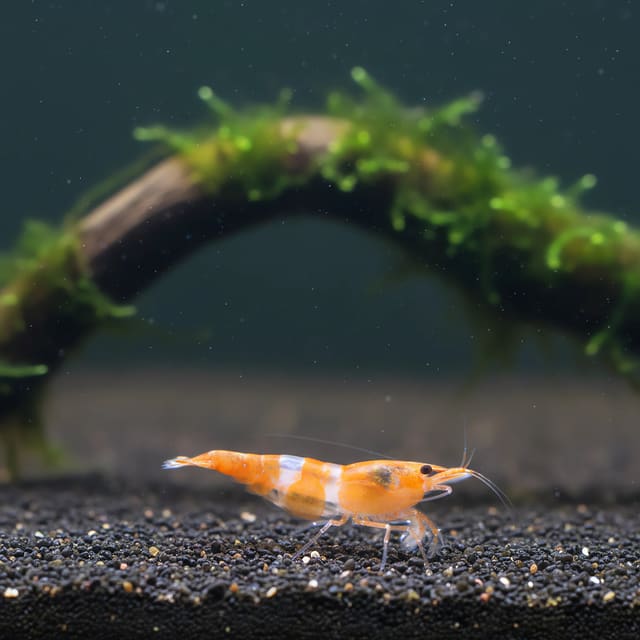
Orange Rili Shrimp (Neocaridina davidi)
17–27°C · pH 6.5–8 · 20L
£12.99

Striking White Spotted Red Shrimp for colourful freshwater setups. A rare Caridina dennerli with moderate care needs. Order now with UK delivery.
Adult size is the maximum length this species reaches at full maturity (scientific sources). The livestock you receive will be younger and smaller. Product-photo provenance and any image-specific limitations are stated on the listing.
Caridina dennerli
Lives in groups: kept together they stay settled, active and show their best colour.
Confirm your email, then we’ll send an availability message for this exact item if it returns within 180 days.
This request is only for this product—no newsletter or other promotions. A mail-provider retry may very rarely duplicate the same availability message. Unconfirmed addresses are removed after 48 hours. See our privacy policy.
Striking White Spotted Red Shrimp for colourful freshwater setups. A rare Caridina dennerli with moderate care needs. Order now with UK delivery.
Adult size is the maximum length this species reaches at full maturity (scientific sources). The livestock you receive will be younger and smaller. Product-photo provenance and any image-specific limitations are stated on the listing.
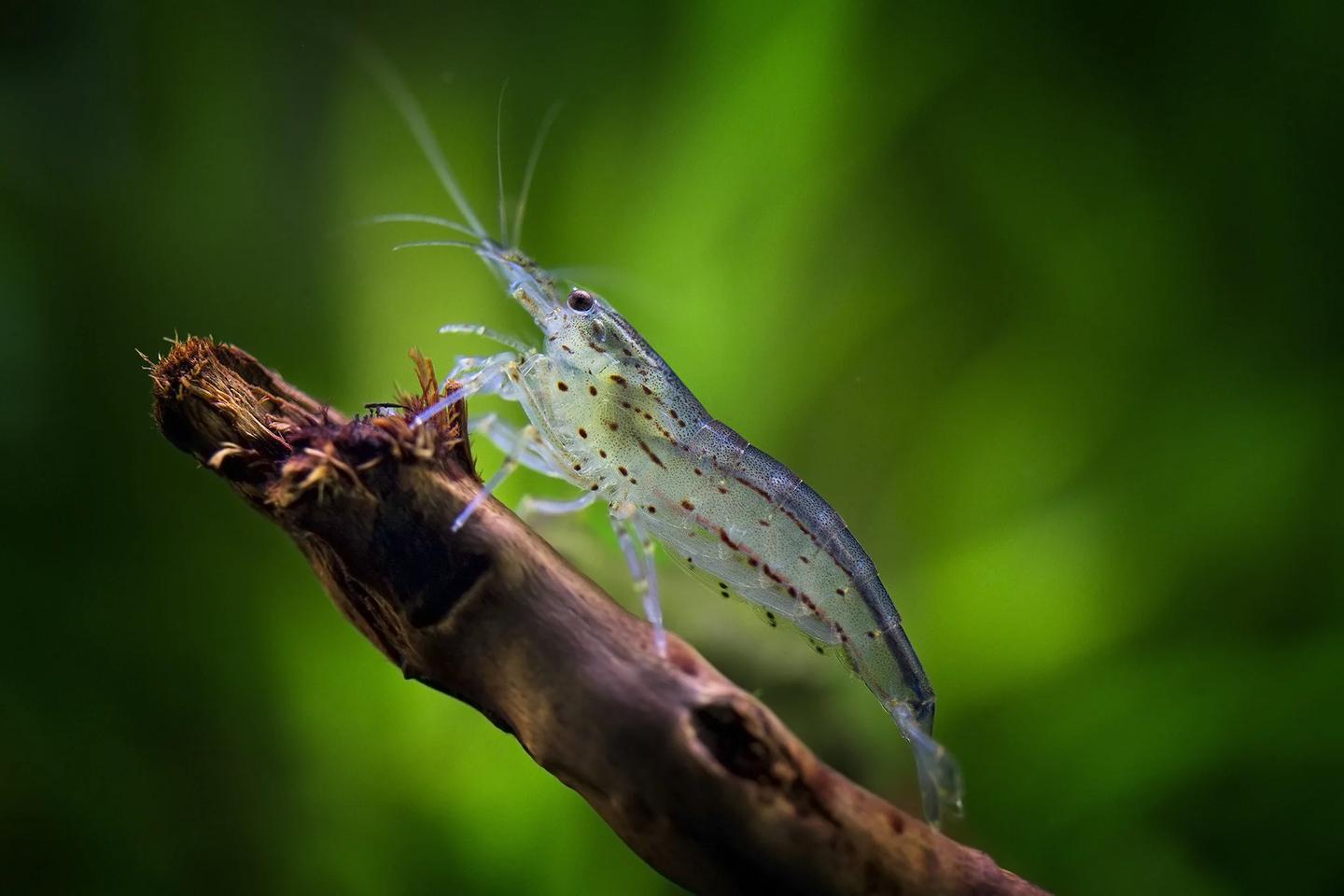
Start with a mature, filtered aquarium. OATA's broad UK guidance suggests approximately 20 litres for Amano Shrimp and at least five for social shrimp, with a larger aquarium when fish are present. Treat those as cautious planning screens—not biological minima or a per-litre formula. Match the complete adult community, test your water, protect the filter inlet and never buy them as a guaranteed algae cure.
Maintain these water conditions for optimal health and vibrant colors
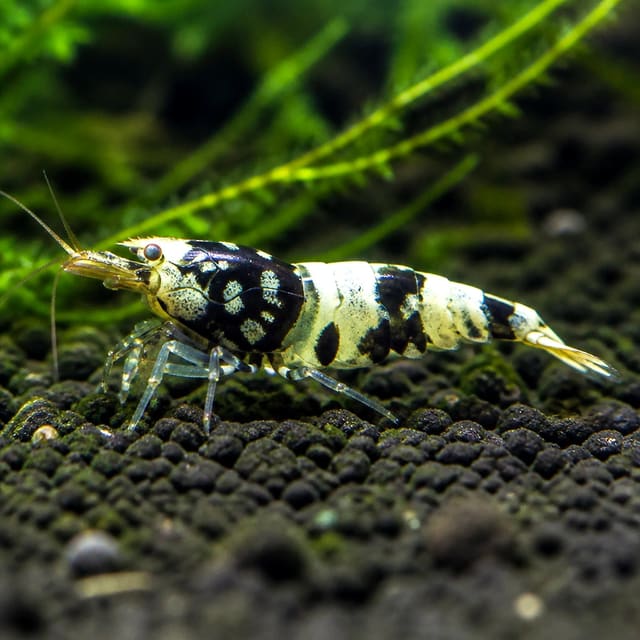
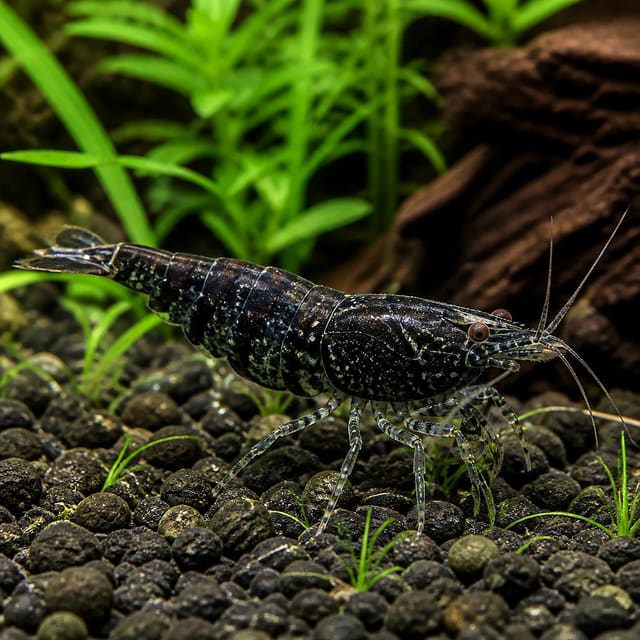
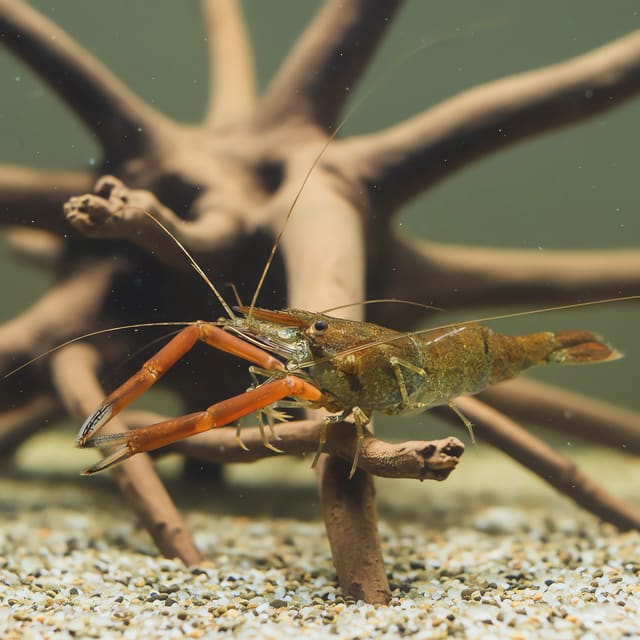
If you want a true showpiece for a specialist shrimp aquarium, the White Spotted Red Shrimp, Caridina dennerli, is one of the most striking choices in the freshwater shrimp UK hobby. Often called the Cardinal Shrimp, this Sulawesi species combines a deep ruby-red body with crisp white spotting that stands out beautifully against dark rock, lava stone, and sparse green planting. Native to Lake Matano in Sulawesi, Indonesia, it stays small at around 2.5 cm, lives for roughly 2 years, and has a peaceful temperament, but it is not a casual beginner shrimp. This is a specialist, expert-level species that needs stable warm alkaline water, a mature biofilm-rich aquarium, and careful acclimation. Its care profile is very different from easy Cherry Shrimps (Neocaridina davidi) or hardy amano shrimp. If you are researching a white spotted red shrimp care guide, the white spotted red shrimp tank requirements, the correct white spotted red shrimp water parameters, or simply how to care for white spotted red shrimp, this species rewards precision with unforgettable colour and fascinating natural behaviour. Our photos show the intense red base colour, white spotting, and compact body shape that make this one of the most desirable aquarium shrimp UK options for a dedicated Sulawesi setup.
Caridina dennerli belongs to the Atyidae family, the group that includes many of the most popular ornamental dwarf shrimp in the aquarium trade. Unlike easy Neocaridina varieties, this Sulawesi species comes from ancient mineral-rich lakes and has very specific environmental needs. In the hobby it is valued for its bold colour contrast, rarity, and specialist appeal among keepers looking beyond standard community shrimp.
The White Spotted Red Shrimp comes from Lake Matano in Sulawesi, Indonesia, one of the ancient Malili lake systems. This origin matters because it explains nearly every aspect of the white spotted red shrimp aquarium setup and its wider freshwater shrimp requirements. Lake Matano is warm year-round, highly stable, mineralised, and alkaline. These shrimp did not evolve in cool, soft, acidic water, and they do not adapt well to rapid swings in temperature or chemistry.
In the wild, Caridina dennerli spends much of its time grazing on biofilm, algae films, and microscopic organic matter on rocks and hard surfaces. That is why a mature tank with established surfaces is so important. This is a tropical lake shrimp, not a temperate pond or river species, so it should not be confused with the cool-water shrimp some keepers picture for outdoor or unheated setups.
White Spotted Red Shrimp are not suitable for outdoor ponds in the UK climate. They need consistently high temperatures, stable oxygen levels, and hard alkaline water. They also differ from the many freshwater shrimp kept in mixed planted community tanks, because they are best maintained in a species-focused Sulawesi aquarium rather than a general display.
In nature, these shrimp are usually found among rockwork rather than dense stem-plant jungles. Their environment is clean, clear, and stable, with relatively low organic pollution. That stability is the key lesson for aquarists. If you mimic the lake’s warmth, mineral content, and mature grazing surfaces, you will see stronger colour, more confident foraging, and better long-term survival.
Mimicking the natural habitat improves health and brings out natural behaviours. For White Spotted Red Shrimp, that means warm alkaline water, dark mineral-rich hardscape, gentle but constant filtration, and a mature aquarium with visible biofilm rather than a sterile, freshly set-up tank.
Getting the white spotted red shrimp tank setup right is the single biggest factor in success. If you are researching how to set up a shrimp aquarium for this species, think specialist first and decorative second. A small but stable Sulawesi tank will outperform a larger unstable mixed aquarium every time.
The white spotted red shrimp minimum tank size is 20 litres, but 30-45 litres is usually a better working volume because it gives you more stability. How many shrimp you keep depends on maturity and surface area as much as litres. A starter group of 6-10 shrimp is ideal, allowing natural social behaviour without overloading a newly established system. For a breeding-focused white spotted red shrimp colony, more surface area and mature grazing zones matter more than raw water volume.
The correct white spotted red shrimp water temperature is 27-30°C, with the best results usually around 28-29°C. This ideal white spotted red shrimp temperature range is much warmer than standard cherry shrimp care. Keep pH between 7.8 and 8.5, and maintain hardness at 6-10 dGH. The white spotted red shrimp GH KH requirements are important because these shrimp rely on stable minerals for moulting and overall osmotic balance. Sudden drops in hardness or pH can trigger failed moults, stress, and losses.
For anyone comparing aquarium shrimp requirements across species, this is one of the clearest examples of why not all shrimp should be grouped together. These are not soft-water bee shrimp, and they are not forgiving beginner Neocaridina either.
Use a gentle, oxygen-rich filter that will not suck in shrimplets. Air-driven sponge filters are excellent, and a small internal filter with a pre-filter sponge can also work well. The goal is steady biological filtration, not heavy current. A mature sponge filter is especially useful because it grows biofilm, giving shrimp an extra grazing surface. For a nano shrimp tank setup UK keepers favour, sponge filtration remains one of the safest and most effective choices.
Dark inert sand or fine gravel works well, especially over a mineral-rich base designed for Sulawesi conditions. Keepers often ask about the best gravel and sand for a shrimp tank. For this species, fine dark substrate helps shrimp feel secure and makes their red-and-white pattern stand out. Avoid active buffering substrates designed to lower pH for crystal shrimp. White Spotted Red Shrimp need alkaline conditions, not acidic ones.
Many keepers researching plants for shrimp tank setups imagine dense moss jungles. This species is different. Sparse planting, algae-coated stones, lava rock, and open grazing surfaces are more natural. Some hardy plants can still be used if they tolerate warm alkaline water; shrimp-safe epiphytes and mosses can be added carefully, but the best decor is usually porous rock and stable hardscape. If you enjoy colourful shrimp in softer setups, easier species such as Blue Rili Shrimp, Blue Mary Shrimp, and Orange Rili Shrimp are more forgiving for planted tanks.
Keeping white spotted red shrimp with plants can work, but avoid turning the aquarium into a heavily fertilised aquascape. Excess fertiliser, CO2 swings, and trace-element overdosing can all create problems for sensitive shrimp. A white spotted red shrimp in planted aquarium setup should still prioritise stable mineral chemistry over plant growth speed.
Moderate lighting for 6-8 hours daily is enough. You want enough light to encourage gentle algae and biofilm growth without overheating the aquarium or causing unstable blooms. In our experience, the best-looking tanks have dark rock, controlled light, and mature surfaces rather than high-tech aquascapes.
Always cycle the tank for 4-6 weeks before adding White Spotted Red Shrimp. The tank should not only test cycled, it should also look mature, with visible biofilm and stable readings over time. This species reacts badly to “new tank syndrome”.
The natural white spotted red shrimp diet is based on biofilm, algae films, microscopic organisms, and fine organic material collected from hard surfaces. In captivity, the best white spotted red shrimp feeding guide combines natural grazing with small portions of specialist foods. If you are asking how often should you feed freshwater shrimp, the answer is: lightly, and only as much as they can clear quickly.
High-quality shrimp foods containing spirulina, algae, and plant-based ingredients should form the staple diet. This species does best when food supports gut health and moulting rather than rapid bulk growth. A mature tank should provide part of the daily intake through natural grazing.
Supplement with powdered foods, fine shrimp granules, and occasional blanched vegetables in tiny amounts. Protein should be offered sparingly. White Spotted Red Shrimp are grazers, not predators that need meaty feeding routines, so their digestive system is far better suited to constant low-level grazing than to heavy protein meals.
Treat foods can include specialised mineral foods and occasional pollen-based shrimp feeds for conditioning. During breeding attempts, a little extra variety can help, but overfeeding is far more dangerous than slight underfeeding. Keepers used to easier cherry shrimp care UK routines are often surprised by how little direct feeding is needed in a mature Sulawesi tank.
For most groups, feed once daily or every other day in very small portions. The best answer to how often to feed freshwater shrimp is to watch the colony. If food remains after 2-3 hours, you are feeding too much. In a mature aquarium, some days can be skipped entirely because the shrimp will continue grazing naturally.
| Time | Food | Amount |
|---|---|---|
| Morning | Natural biofilm/algae grazing | Continuous |
| Evening | Specialist shrimp pellet or powder | Very small portion, removed if uneaten |
Avoid copper-containing foods or medications, oily leftovers, and large meaty foods. Ornamental shrimp should never be fed or treated like culinary or feeder shrimp. Also be cautious if you notice unexplained hitchhikers in the tank, such as small worm-like organisms; not every one is harmful, but new arrivals should be identified before treatment. If you are wondering what can live with freshwater shrimp, the answer often starts with tank mates that do not outcompete them for food.
Overfeeding causes ammonia spikes, bacterial blooms, and poor water quality. White Spotted Red Shrimp are especially sensitive to fouled water, so feed less than you think you need and rely on natural grazing in a mature aquarium.
The White Spotted Red Shrimp is famous for its saturated red body and sharply contrasting white dots across the shell and tail. Adults reach around 2.5 cm, making them small but visually powerful. The body is compact, the rostrum is short, and the legs are delicate, giving the shrimp a neat, jewel-like look on dark hardscape.
The best specimens show intense red coverage with clean, bright spotting. This is where white spotted red shrimp grading becomes useful. Higher-grade shrimp usually display richer red colour, stronger contrast, and more even spotting. Females are often slightly larger and deeper-bodied than males, especially when carrying eggs, while males tend to be slimmer.
Comparing white spotted red shrimp vs cherry shrimp, the difference is obvious: cherry shrimp usually show solid red or translucent red tones, while Caridina dennerli has a more dramatic spotted pattern and a completely different care profile. The same is true for a white spotted red shrimp vs amano shrimp or white spotted red shrimp vs crystal red shrimp comparison. This species is less about a wide range of colour morphs and more about one iconic natural pattern.
The typical white spotted red shrimp lifespan is around 2 years in stable conditions. Healthy shrimp show active grazing, clear eyes, clean shell texture, and regular white spotted red shrimp moulting without failed sheds. If you are looking for white spotted red shrimp online UK, or wondering where to buy white spotted red shrimp UK, always prioritise health, careful acclimation, and parameter matching over hunting for the cheapest option. With a sensitive species, quality handling matters far more than saving a few pounds.
When customers ask whether white spotted red shrimp are safe with fish, the honest answer is that most fish are a poor match. This species is peaceful, small, and easily stressed. Even fish that seem harmless may eat shrimplets, steal food, or create constant low-level pressure. That is why White Spotted Red Shrimp are rarely the best choice for a general community tank, even though that is a common search.
The safest white spotted red shrimp tank mates are other Sulawesi invertebrates with matching water needs, especially Sulawesi snails. If you want a shrimp-focused display, species-only is often best. The most reliable answer to which are the white spotted red shrimp safe tank mates is: other specialist invertebrates, not general community fish.
For a calm shrimp and snails display, Sulawesi snails add movement and cleanup value without threatening the shrimp. By contrast, common community fish, even nano species, can reduce breeding success and make adults hide more.
Avoid most fish, especially tetras, rasboras, barbs, gouramis, cichlids, and bottom-feeding predators. Also avoid mixing them with non-Sulawesi shrimp that need very different water chemistry. Easy Neocaridina such as cherry shrimp generally prefer cooler, less alkaline conditions than Caridina dennerli, so they are best kept in their own tank rather than alongside this species.
In a 20-30 litre species tank, keep 6-12 White Spotted Red Shrimp with Sulawesi snails only. In a 45-litre mature setup, a larger white spotted red shrimp colony can be maintained if filtration and mineral stability are excellent. If your goal is a colourful mixed shrimp aquarium rather than a specialist biotope, easier species such as Super Red Sakura Shrimp, Orange Sakura Shrimp, Blue Rili Shrimp, and Cherry Shrimps (Neocaridina davidi) Algae Eater are more forgiving choices.
Keepers comparing species also ask about crystal bee shrimp, blue jelly shrimp water parameters, and blue rili shrimp UK options. These comparisons are useful because they show just how specialised Sulawesi shrimp are. Crystal bee shrimp usually prefer softer, more acidic water, and blue jelly and blue rili shrimp are generally adaptable Neocaridina. White Spotted Red Shrimp should not be mixed with them simply because they are all “shrimp” — matching water chemistry comes first.
| Species | Compatible? | Notes |
|---|---|---|
| Super Red Sakura Shrimp | ⚠️ Caution | Different preferred parameters; not ideal in the same tank long term |
| Red Pinto Shrimp | ⚠️ Caution | Attractive but usually kept in different water conditions |
| Most community fish | ❌ Avoid | Stress adults and prey on shrimplets |
Always quarantine new arrivals for 2-4 weeks before adding them to a shrimp system. Even harmless-looking fish or snails can introduce pathogens, planaria, or hydra that become serious problems in a specialist shrimp aquarium.
White spotted red shrimp breeding is possible, but it is considered difficult. This is not a species that refuses to breed, but it is one that only breeds reliably when every condition is right. If you are asking how often do freshwater shrimp breed, the answer varies widely by species. For Caridina dennerli, breeding is tied closely to mature conditions, stable minerals, warmth, and low stress.
Use a species-only tank of at least 20 litres, though 30 litres or more is easier to stabilise. Keep the white spotted red shrimp water parameters steady: 27-30°C, pH 7.8-8.5, and 6-10 dGH. Fine sponge filtration, porous rock, and mature biofilm are essential. A strong breeder group starts with healthy, well-acclimated adults rather than rushing to buy white spotted red shrimp UK and attempting breeding immediately.
Females are larger and deeper-bodied than males. After moulting, a receptive female releases pheromones, and males become more active as they search. Once berried, the female carries relatively large eggs under her abdomen. Compared with many dwarf shrimp, the clutch is smaller, but the eggs are larger and better developed.
Eggs should be left with the mother. Stable water is critical during this period, so avoid sudden water changes, temperature swings, or aggressive tank maintenance. In suitable conditions, shrimplets hatch as miniature versions of the adults rather than passing through a free-swimming larval stage. This makes freshwater breeding possible, but only if the system is mature enough to provide constant microscopic food.
Newly hatched shrimplets depend on biofilm, algae, and fine powdered foods. Do not overclean the tank. Growth is slow and survival depends on consistency. Many losses in young shrimp trace back to tanks that look clean to the keeper but are actually too sterile for shrimplets.
The biggest issues are failed moults, parameter swings, overfeeding, and mixing incompatible species. Sourcing matters — many buyers search for white spotted red shrimp for sale UK, live white spotted red shrimp UK, and the current white spotted red shrimp price UK — but breeding success depends far more on setup quality than on purchase timing. This is a specialist freshwater dwarf shrimp project with very specific needs, not a quick beginner breeding project.
For the best chance of breeding success, let the aquarium mature for several months before expecting shrimplets to survive. Experienced keepers often report that the first real breakthrough comes not from changing foods, but from allowing rock surfaces, sponge filters, and mineral balance to stabilise over time.
Comparisons matter because many buyers start with a broad search like shrimp for sale UK, aquarium shrimp for sale UK, or freshwater shrimp for sale UK and only later realise that different shrimp need very different care. White Spotted Red Shrimp are best for aquarists who want a specialist Sulawesi display rather than a general planted community shrimp tank.
| Feature | White Spotted Red Shrimp | Cherry Shrimp |
|---|---|---|
| Max Size | 2.5 cm | 2.5-3 cm |
| Care Level | Expert / Specialist | Beginner to intermediate |
| Temperature | 27-30°C | 18-26°C |
| Best For | Specialist Sulawesi tanks | Planted community shrimp tanks |
| Feature | White Spotted Red Shrimp | Amano Shrimp |
|---|---|---|
| Primary Appeal | Colour and rarity | Algae control |
| Care Profile | Strict warm alkaline water | More adaptable |
| Breeding | Difficult but freshwater | Larval brackish stage required |
| Best Use | Display colony | Utility shrimp in planted tanks |
| Suitable for Beginners | No | More suitable |
Choose White Spotted Red Shrimp if you want a rare jewel-like species, are comfortable managing exact parameters, and prefer a species-led aquarium. Choose Cherry Shrimps (Neocaridina davidi) Algae Eater, Blue Mary Shrimp, or Orange Sakura Shrimp if you want colour with easier care. If your focus is algae control, an amano shrimp is a different tool for a different job. For anyone weighing up white spotted red shrimp for beginners, the answer is simple: start with Neocaridina first, then move up to Sulawesi species once you can maintain stable conditions confidently.
The most common health problems in White Spotted Red Shrimp are not classic fish diseases but environmental failures. This species declines quickly when water quality, temperature, or mineral balance drifts. Good aquarium shrimp UK husbandry starts with prevention, not medication.
Healthy shrimp show strong red colour, active grazing, normal posture, clear eyes, and regular moulting. Good white spotted red shrimp behaviour includes steady picking at surfaces, calm movement across rockwork, and visible interest in food without frantic darting.
Failed moults are a major risk and often point to unstable minerals or sudden parameter changes. Lethargy, colour loss, unexplained deaths after water changes, or shrimp lying motionless can indicate stress or poisoning. Newly imported shrimp may also struggle if acclimated too quickly. This is why buyers wanting reliable white spotted red shrimp delivery UK should choose sellers who pack and acclimate carefully.
Treatment should begin with water testing, not random medication. Check temperature, pH, hardness, ammonia, nitrite, and nitrate. Perform small, matched water changes rather than large swings, and remove any decaying food. In many cases, restoring stability is more effective than adding products. For specialist species, chemical treatments can do more harm than good.
Keep the tank mature, avoid overfeeding, match water exactly during changes, and never add livestock without quarantine. If you are transitioning from easier species and comparing white spotted red shrimp vs cherry shrimp, remember that the margin for error is much smaller here. The best prevention is consistency.
Quarantine all new shrimp and snails for 2-4 weeks in a separate heated, filtered setup with matching parameters. Observe feeding response, moulting, and activity before introduction. This is especially important for specialist imports and for any sensitive livestock.
NEVER use copper-based medications with invertebrates. Copper is lethal to shrimp, even at doses tolerated by many fish. Always read labels carefully before treating a tank that contains shrimp or snails.
White spotted red shrimp behaviour is calm, deliberate, and highly rewarding to watch in a settled aquarium. They spend much of the day grazing on rocks, filter sponges, and hard surfaces, using their small front appendages to pick at microscopic food. In a secure tank they are visible for long periods, especially when kept in a proper group of 6 or more.
This is a peaceful, social species rather than a territorial one. A healthy group will spread out across the hardscape, with occasional clustering around feeding spots or especially rich biofilm patches. Females carrying eggs often become more reserved, while males may show bursts of activity after a female moults.
Natural behaviour is strongest in a mature setup with stable heat, low stress, and plenty of grazing area. If the shrimp hide constantly, lose colour, or stop grazing, treat that as an early warning sign. In our experience, customers who succeed long term usually focus less on adding more livestock and more on maintaining a calm environment. That is one reason this species is prized by specialist keepers: it rewards patience and observation.
White Spotted Red Shrimp are not a species to buy casually from a generic listing. They need careful holding, stable warmth, and informed packing. Our approach is built around the needs of specialist shrimp rather than treating them like standard mixed aquarium shrimp for sale UK stock. Each group is monitored for feeding response, activity, and moulting before sale, and we only send shrimp once they are stable and settled.
For buyers searching white spotted red shrimp for sale UK, wanting to order white spotted red shrimp UK, or looking for live white spotted red shrimp UK, the real difference is preparation. Shrimp are packed in insulated boxes, with seasonal heat protection in colder weather, and sent by tracked delivery on a licensed live-animal courier. We also include practical acclimation guidance, because this species should never be rushed straight into a tank.
Specialist Sulawesi shrimp benefit from specialist handling. We also stock easier alternatives for keepers not yet ready for Dennerli, including Super Red Sakura Shrimp, Blue Rili Shrimp, and Red Pinto Shrimp. If you are browsing other freshwater options such as sulawesi shrimp for sale UK or general freshwater shrimp UK lines, we recommend choosing based on your water chemistry and experience level first, not just colour. Every order is covered by our Live Arrival Guarantee.
Order your White Spotted Red Shrimp today with confidence if you already run, or are ready to build, a true Sulawesi setup.
If you enjoy colourful shrimp, compare this species with easier options like Orange Sakura Shrimp or Blue Mary Shrimp for planted community tanks. For pattern lovers, Red Pinto Shrimp offers a very different high-contrast look in softer water. If you want a classic red Neocaridina line, Cherry Shrimps (Neocaridina davidi) Algae Eater is a practical starting point before moving into Sulawesi species. And if your goal is a bright mixed shrimp display rather than a specialist biotope, Orange Rili Shrimp and Super Red Sakura Shrimp are both strong options for a more conventional freshwater shrimp UK setup.
No reviews for this item yet. Bought one? Honest reviews only, good or bad.
What customers say about ordering from us
I have a small group of long finned mountain minnows. So was delighted to be able to order ten of this variety to increase the genetics in my tank . The ones I recieved are healthy but it’s to early to give a verdict on wether they are of a long finned type since they are small currently.
Gordon Walker · 23 Sept 2026
100% success travel and "installation". Pleased with quality of purchase. The Siamese fighter a bit "shy" so have not yet seen him at his best yet but looking good. Happy customer. GG
George E Garratt · 21 Sept 2026
Reviews of our shop, collected by Judge.me, an independent third-party review collector. Newest first.