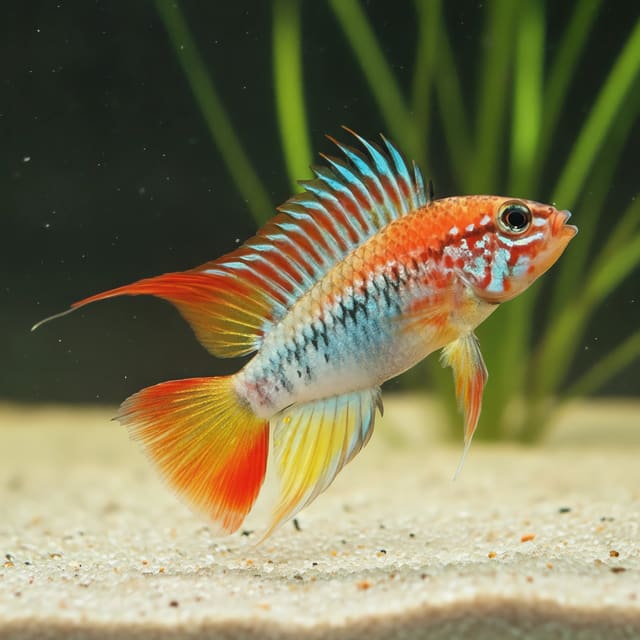
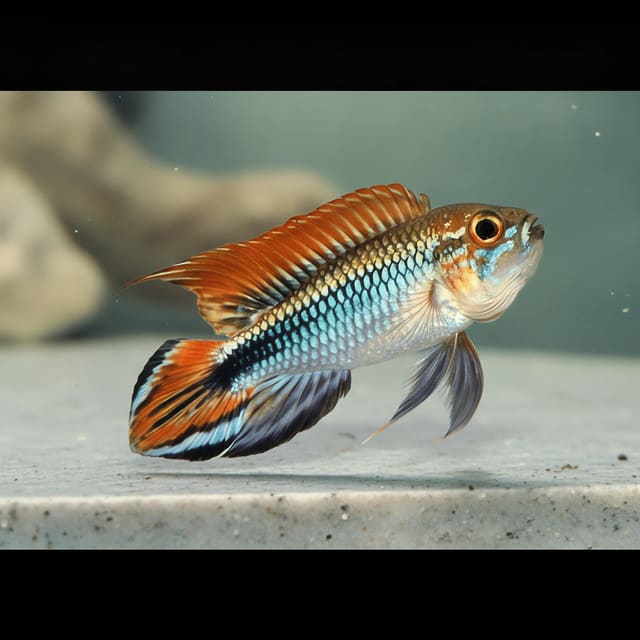
Pandurini Dwarf Cichlid (Apistogramma panduro)
22–27°C · pH 6–6.5 · 54L
£15.99

Red Hongsloi Dwarf Cichlid is a colourful Apistogramma hongsloi form for mature, soft-water planted aquariums with caves, leaf litter and peaceful tank mates.
Adult size is the maximum length this species reaches at full maturity (scientific sources). The livestock you receive will be younger and smaller — pick a size above for the actual shipping size. Product-photo provenance and any image-specific limitations are stated on the listing.
Apistogramma hongsloi
Save when buying multiple fish. Each quantity is one fish; sex and pair formation are not guaranteed unless the selected variant explicitly states them.
Confirm your email, then we’ll send an availability message for this exact item if it returns within 180 days.
This request is only for this product—no newsletter or other promotions. A mail-provider retry may very rarely duplicate the same availability message. Unconfirmed addresses are removed after 48 hours. See our privacy policy.
Red Hongsloi Dwarf Cichlid is a colourful Apistogramma hongsloi form for mature, soft-water planted aquariums with caves, leaf litter and peaceful tank mates.
Adult size is the maximum length this species reaches at full maturity (scientific sources). The livestock you receive will be younger and smaller — pick a size above for the actual shipping size. Product-photo provenance and any image-specific limitations are stated on the listing.
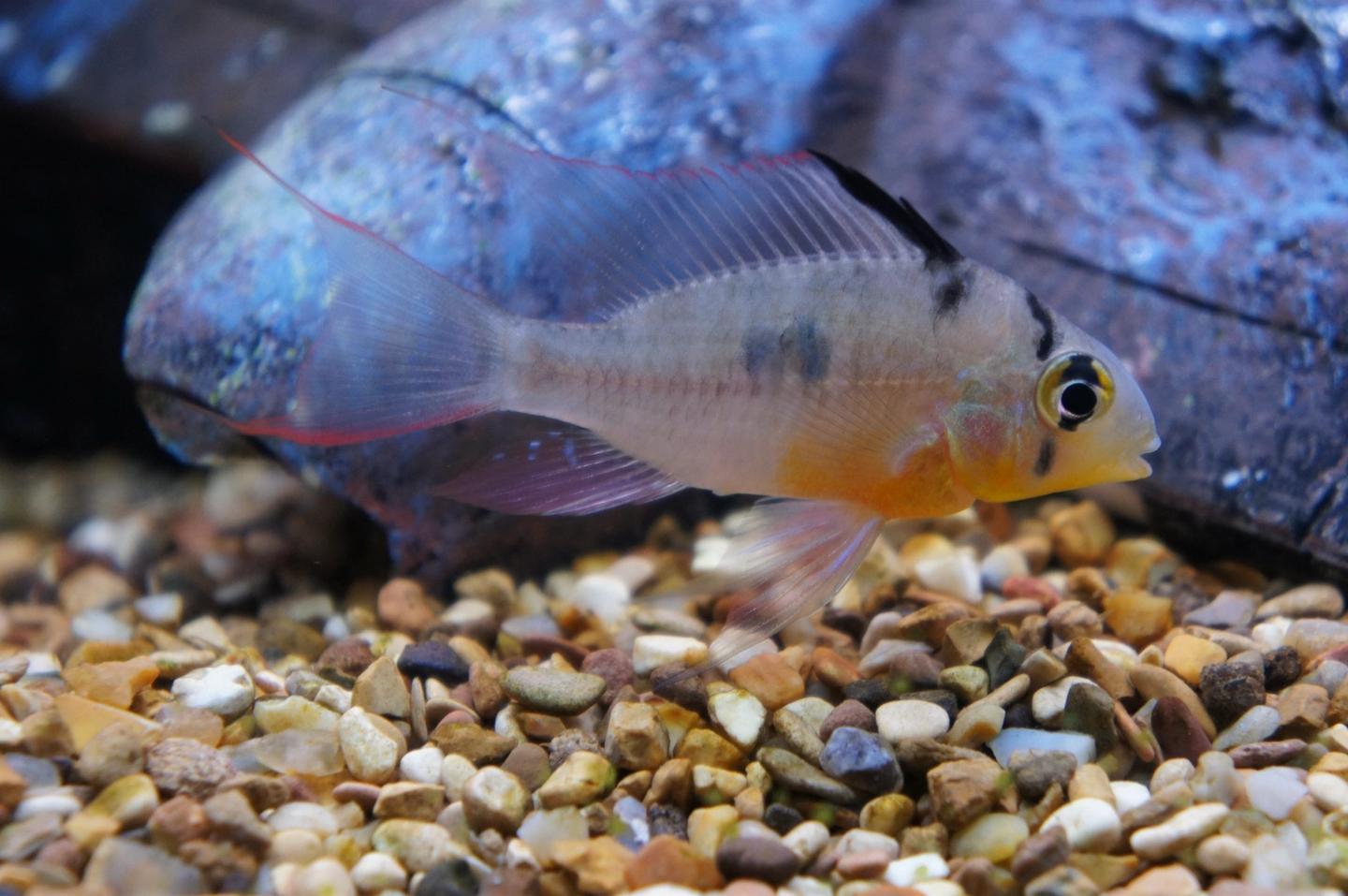
Cichlids are a family of roughly 1,800 accepted species, not one care type. Before buying, identify the exact species and source, then compare adult measurement, usable tank dimensions, social system, territory, tested water, diet and an exit plan. No family-wide minimum tank, water range or tank-mate list is safe.
Maintain these water conditions for optimal health and vibrant colors
Red Hongsloi Dwarf Cichlid is a colourful form of Apistogramma hongsloi, a South American dwarf cichlid with a compact body, confident lower-level behaviour and flashes of red through the flanks and fins.
Apistogramma hongsloi is associated with the Orinoco system, including Colombian drainages such as the Vichada and Meta. In aquariums it should be treated as a warm, soft-water species rather than a general community fish. It can be peaceful with the right tank mates, but it is still a cichlid and will defend a cave or chosen patch of the bottom, especially if a pair is settling or breeding.
The appeal of a Hongsloi is not just colour. A settled male patrols in short, deliberate movements, displays to rivals or females, and often uses the aquarium layout with real intention. The red markings can look intense under natural planting and softer light, while females may turn stronger yellow when guarding a cave. This behaviour is exactly why the tank needs to be designed around territories instead of treated as a simple ornament-filled community.
Use the live variant selector for current availability. When this fish is available again, choose the size that best matches your existing aquarium and tank mates. Do not add a small Apistogramma to a tank with boisterous cichlids, fin nippers, large catfish or fast-feeding fish that will take all food before the cichlid can settle.
Build the tank around shelter and calm water. Fine sand is ideal because Apistogramma often sift or pick at the substrate. Add branching wood, leaf litter, shaded areas and several small caves so the fish can choose a territory without controlling the whole aquarium. Coconut caves, smooth stone caves, ceramic breeding caves and dense plant bases can all work, provided no sharp edges can damage fins.
Plants help enormously. They break lines of sight, make nervous fish feel secure and create a more natural feeding zone for small invertebrate life. Floating plants can soften the light if the aquarium is very bright. Filtration should be mature and reliable, but the flow should not blast the bottom. Clean water matters more than chasing an extreme blackwater number; stable, soft, warm water is the goal.
This species is best kept away from hard alkaline community tanks. Aim for soft water, a gentle acidic to near-neutral pH and a stable temperature. FishBase records Apistogramma hongsloi from freshwater conditions with a pH range around 5.5-6.0 and tropical temperatures, while practical aquarium care commonly allows a broader soft-water range when the fish are acclimated carefully. Sudden swings are more dangerous than a sensible stable value.
If your tap water is very hard, consider mixing with RO water and remineralising lightly rather than forcing the fish to adapt to unsuitable conditions. Keep nitrate low with regular water changes, avoid overfeeding and make sure the biological filter is mature before introduction. Apistogramma are small, but they are not disposable beginner fish; they reward steady husbandry.
Apistogramma hongsloi is carnivore-leaning and naturally interested in small benthic foods. Offer a varied diet of quality micro pellets, soft granules, frozen cyclops, daphnia, brine shrimp, mosquito larvae and similar small foods. Live foods can be useful for conditioning, but they should come from safe sources.
Feed small portions that are eaten quickly. These fish often feed near the bottom, so watch that faster tetras or surface-feeding fish are not taking everything first. A calm feeding routine helps new arrivals settle and gives you a daily chance to check body shape, breathing, colour and confidence.
Good companions are peaceful fish that enjoy similar warm, soft-water conditions and occupy different levels of the tank. Small tetras, pencilfish, hatchetfish, peaceful rasboras, Otocinclus and carefully chosen Corydoras can work in a large enough aquarium. Avoid aggressive cichlids, hard-water livebearer setups, large bottom dwellers, shrimp you hope to breed, fin nippers and anything likely to harass a cave-spawning dwarf cichlid.
Mixing several Apistogramma species or multiple males in a small tank is risky. The fish may look calm in a shop photo but become territorial once settled. If you plan a pair, give the female a cave with a guarded entrance and give the male enough room to move away from it. If the pair bond breaks down, separation may be needed.
Look for a fish with clear eyes, intact fins, a rounded but not bloated body and steady breathing. A newly arrived dwarf cichlid may show muted colour, but it should still respond to the environment and hold itself normally. Avoid mixing it straight into a high-energy display where every other fish rushes the food; a quieter aquarium makes the first week much easier.
Once added, let the fish choose its own hiding places. Do not chase it out for photographs or move every ornament because it has selected a corner. Dwarf cichlids often colour up after they feel secure, not before. If the aquarium has enough shade, cover and calm tank mates, the fish usually becomes more visible with routine feeding and stable lighting.
Hongsloi are cave spawners. Females tend eggs inside a cave or sheltered surface and can become much more assertive once they are guarding fry. FishBase notes cave-attached eggs and a clutch size often around 60-90 eggs. In a display aquarium, fry survival depends on tank mates, food availability and how much disturbance the female experiences.
If breeding is the goal, prepare the aquarium before adding the fish: soft clean water, several caves, fine foods for conditioning and a plan for fry food such as infusoria, microworms or newly hatched brine shrimp. If breeding is not the goal, still provide caves and cover because those same features reduce stress in everyday keeping.
The most common mistake is treating this fish as a generic colourful community cichlid. It should not be pushed into hard water, kept with rough tank mates, or expected to thrive without a defined territory. Another mistake is using one cave in a bare tank; that creates a single contested space. Several shelters and broken sight lines are much safer.
Overfeeding is another quiet problem. Rich food can condition fish, but too much food quickly damages water quality in smaller aquariums. Feed modestly, keep the substrate clean and keep maintenance regular. Stable conditions, not constant tinkering, are what allow this species to show its best colour and behaviour.
When stock returns, acclimate this fish gently and keep the lights low at first. Let it find cover before expecting display colour. Many dwarf cichlids look muted after transport and become brighter once they are feeding, claiming a safe area and recognising the routine of the aquarium. Avoid rearranging the whole tank immediately after introduction unless aggression makes it necessary.
The best results come from matching the fish to the right aquarium before purchase: warm soft water, a mature filter, natural cover, peaceful tank mates and a keeper who enjoys observing behaviour. In that setting, the Red Hongsloi Dwarf Cichlid becomes a small but memorable centrepiece rather than another over-sold keyword on a product page.
No reviews for this item yet. Bought one? Honest reviews only, good or bad.
What customers say about ordering from us
I have a small group of long finned mountain minnows. So was delighted to be able to order ten of this variety to increase the genetics in my tank . The ones I recieved are healthy but it’s to early to give a verdict on wether they are of a long finned type since they are small currently.
Gordon Walker · 23 Sept 2026
100% success travel and "installation". Pleased with quality of purchase. The Siamese fighter a bit "shy" so have not yet seen him at his best yet but looking good. Happy customer. GG
George E Garratt · 21 Sept 2026
Reviews of our shop, collected by Judge.me, an independent third-party review collector. Newest first.