−13%
Advanced
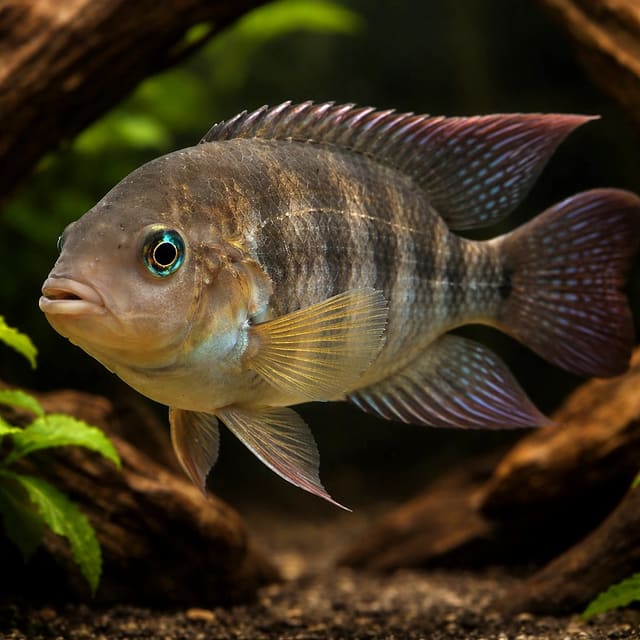
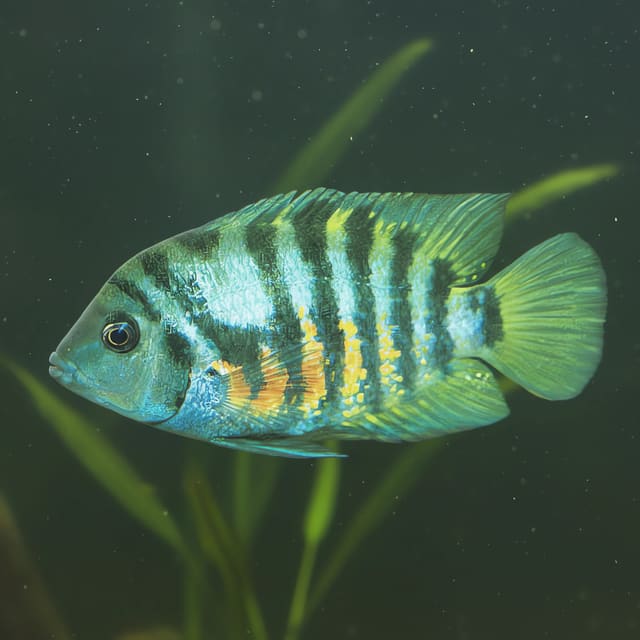
Zebra Convict Cichlid (Amatitlania nigrofasciata)
24–28°C · pH 6–8
£5.21£5.99

An expert-only Amazonian predator cichlid with bold peacock bass markings, rapid growth and serious adult tank-size requirements.
Adult size is the maximum length this species reaches at full maturity (scientific sources). The livestock you receive will be younger and smaller — pick a size above for the actual shipping size. Product-photo provenance and any image-specific limitations are stated on the listing.
Cichla monoculus
Confirm your email, then we’ll send an availability message for this exact item if it returns within 180 days.
This request is only for this product—no newsletter or other promotions. A mail-provider retry may very rarely duplicate the same availability message. Unconfirmed addresses are removed after 48 hours. See our privacy policy.
An expert-only Amazonian predator cichlid with bold peacock bass markings, rapid growth and serious adult tank-size requirements.
Adult size is the maximum length this species reaches at full maturity (scientific sources). The livestock you receive will be younger and smaller — pick a size above for the actual shipping size. Product-photo provenance and any image-specific limitations are stated on the listing.
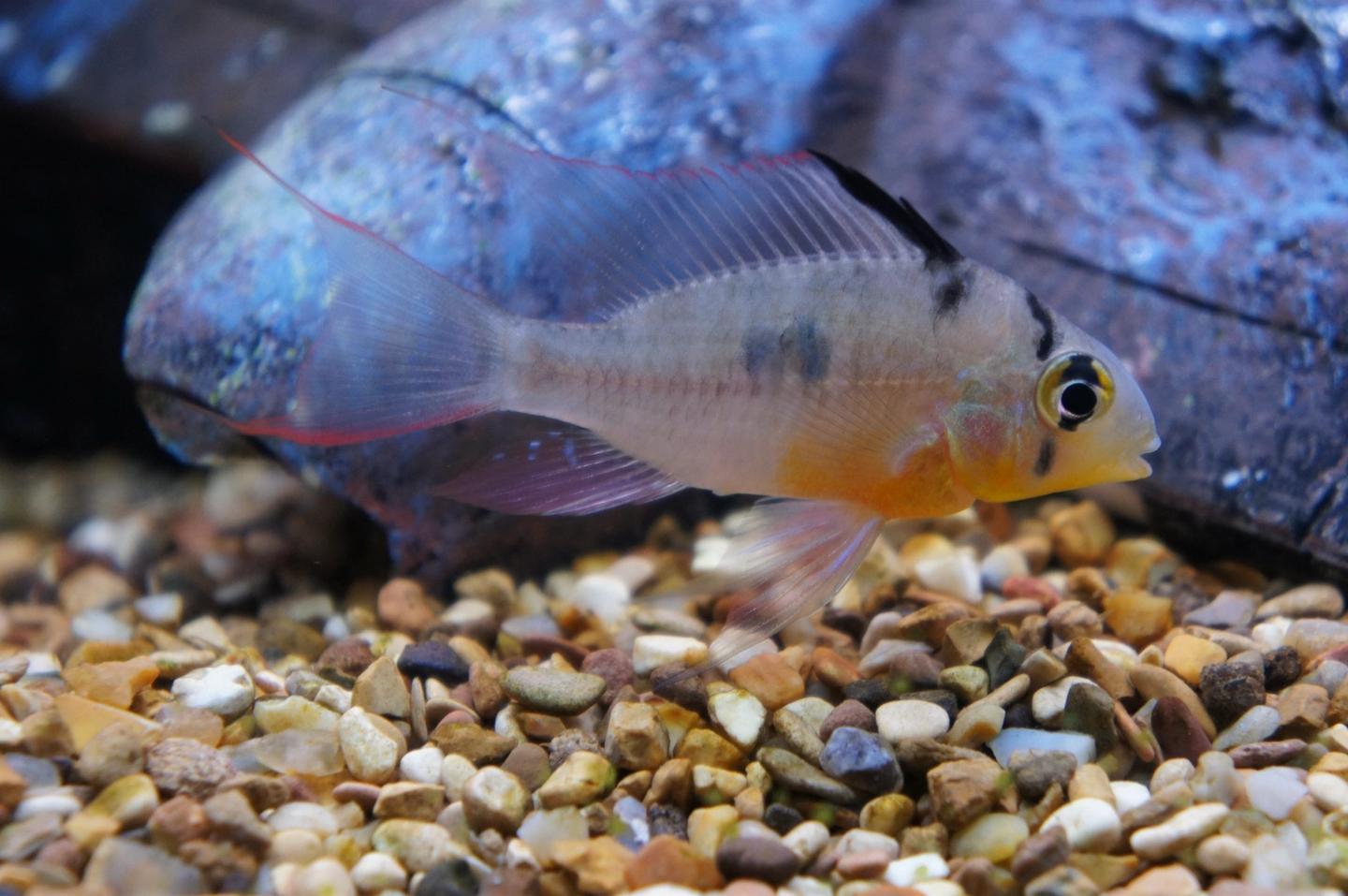
Cichlids are a family of roughly 1,800 accepted species, not one care type. Before buying, identify the exact species and source, then compare adult measurement, usable tank dimensions, social system, territory, tested water, diet and an exit plan. No family-wide minimum tank, water range or tank-mate list is safe.
Maintain these water conditions for optimal health and vibrant colors
The Monoculus Peacock Bass (Cichla monoculus) is a spectacular South American predatory cichlid for aquarists who already understand large-fish housing, heavy filtration and long-term growth planning. It is often bought as a small juvenile, including the 3-4 cm, 4-5 cm and 5-6 cm size options on this listing, but it should be planned as a genuinely large aquarium predator from day one. A young fish may look manageable at first; a well-fed adult is powerful, fast, territorial and capable of reaching very substantial size.
This species is admired for its bold bars, golden to olive body colour, muscular profile and the distinctive eye-like ocellus near the tail. It is also an intelligent, interactive fish that learns feeding routines and patrols its territory with real presence. That appeal is exactly why the care requirements must be taken seriously. The right keeper is someone with a mature large aquarium, strong maintenance habits and a realistic adult plan, not someone looking for a normal community cichlid.
| Care point | Recommendation |
|---|---|
| Adult planning size | Plan for 60 cm or more; wild records can be larger |
| Current listing sizes | Juvenile size options: 3-4 cm, 4-5 cm and 5-6 cm |
| Minimum adult aquarium | Very large custom aquarium or indoor pond; around 2,000 litres is a realistic adult starting point |
| Temperature | 24-30 C, kept stable |
| pH | 6.0-7.5, with clean stable water more important than chasing extremes |
| Hardness | Soft to moderately hard water |
| Diet | Carnivorous predator; meaty frozen foods and quality predator pellets once trained |
| Temperament | Predatory, territorial and unsuitable for small or peaceful community fish |
| Care level | Expert only |
Cichla monoculus has the classic peacock bass shape: a long, deep, muscular body, a large predatory mouth and strong fins built for sudden acceleration. Juveniles usually show softer patterning, then develop stronger vertical bars, warmer body colour and a clearer tail ocellus as they grow. Mature specimens can become golden, olive or yellowish with darker markings depending on mood, age, diet, lighting and background.
The important point for buyers is that the fish changes dramatically with size. A small juvenile is not a miniature community fish; it is the early stage of a large predator. Growth can be quick when the fish is warm, well fed and kept in clean water. If the aquarium is too small, water quality and behaviour usually become problems before the fish reaches its full visual potential. Give the fish length, turning room and open water so its natural shape and movement can develop properly.
The Monoculus Peacock Bass comes from the Amazon basin and associated South American waters, where it uses rivers, lakes, lagoons, floodplain habitats and flooded forest edges. Seasonal flooding gives the species access to prey-rich areas, while submerged roots, timber, margins and open channels provide cover and hunting lanes. This is not a fish from cramped, still, overdecorated water; it is a mobile predator from warm freshwater systems with space and structure.
In nature, juveniles take smaller prey such as shrimps and invertebrates, while adults become strongly fish-focused predators. That natural history explains both the feeding challenge and the tank-mate risk in captivity. The aquarium should allow the fish to move, turn and strike without damaging itself, while still offering heavy pieces of wood or rock for visual boundaries and security.
Start with the adult setup in mind, even if the fish arrives as a juvenile. A growing specimen can be raised in a smaller grow-out aquarium only when there is a firm plan for moving it into a much larger system before it becomes cramped. For an adult, think in terms of a custom tank or indoor pond rather than a typical display aquarium. Long tanks with front-to-back depth are far better than narrow, tall tanks because peacock bass need horizontal swimming space and turning room.
Use sand or smooth gravel, large pieces of securely placed wood, rounded rockwork and open swimming areas. Avoid sharp decor, unstable rock piles and delicate planted layouts. Robust plants may survive around the edges, but this fish is large, fast and capable of disturbing aquascapes during feeding, turning and territorial displays. A dark rear background and natural hardscape help the bars and yellow-green body colour stand out without making the layout fragile.
Filtration must be oversized. Large predatory fish produce heavy waste, and the food they eat can quickly pollute water if uneaten pieces are left behind. Use a sump or multiple large external filters, strong biological capacity, good oxygenation and a maintenance routine that includes large regular water changes. Ammonia and nitrite must always remain at 0 ppm, and nitrate should be kept as low as practical. A secure, weighted lid is essential because startled or feeding peacock bass can jump with force.
Keep the water warm, clean and stable. A temperature range of 24-30 C suits the species, with many keepers choosing the middle of that range for steady growth and metabolism. A pH of around 6.0-7.5 is suitable, and the fish is generally tolerant of soft to moderately hard water when acclimated carefully. Stability is more important than trying to force exact wild chemistry in a large system.
Because this is a heavy-feeding predator, water quality matters as much as the numerical parameters. Test regularly, especially during grow-out, after diet changes and after adding large tank mates. Strong oxygenation is helpful, particularly at warmer temperatures. Keep the aquarium mature before introduction, avoid sudden parameter swings and remove uneaten food quickly after feeding.
Cichla monoculus is a carnivorous predator. Juveniles may take smaller meaty foods such as chopped prawn, mysis, krill, bloodworm, chopped mussel and suitably sized insect larvae. As the fish grows, move it toward larger frozen meaty foods and high-quality pellets made for predatory cichlids. Many specimens need patience when being trained away from live foods, but it is worth the effort because live feeder fish can introduce disease and often create nutritional imbalance.
Feed juveniles smaller portions more frequently, then reduce adult feeding to controlled meals several times per week. The aim is a strong, well-muscled fish, not an obese one. Vary the diet and avoid relying on one food item. Good nutrition supports colour, growth, immune strength and recovery from minor scrapes, while overfeeding can damage water quality and make aggression worse around feeding time.
The Monoculus Peacock Bass is alert, predatory and territorial. It often watches movement outside the aquarium, recognises regular keepers and responds strongly to feeding routines. This intelligence is one reason experienced aquarists enjoy the species, but it also means the fish needs a layout and routine that reduce stress. Sudden disturbances, cramped space and competitive tank mates can all lead to chasing, injuries or jumping.
Anything small enough to fit into its mouth should be considered food. Even fish that are not swallowed immediately can be harassed, injured or outcompeted. Breeding adults and territorial pairs are much more defensive, and large males can become especially forceful. This species should never be treated as a peaceful showpiece for a mixed community tank.
Tank mates are possible only in very large aquariums with careful planning. Suitable candidates must be too large to swallow, robust enough to cope with a predator environment and not so aggressive that they create constant fighting. In specialist systems, keepers sometimes combine peacock bass with very large cichlids, large catfish or big plecos, but every combination carries risk and requires observation.
Avoid small tetras, barbs, livebearers, dwarf cichlids, shrimp, snails, slow fancy fish, nervous schooling fish and anything delicate. Also avoid overcrowding multiple large predators simply because they are all impressive. A solitary specimen in a properly sized aquarium is often the better welfare choice, especially for private keepers who cannot provide public-aquarium scale space.
Breeding Cichla monoculus is rare in normal home aquariums because the fish require enormous space, excellent water quality and a compatible pair. Pairs may clean flat surfaces or prepare spawning areas and then defend eggs and fry intensely. Both parents can become highly aggressive toward other fish and even toward routine maintenance near the brood.
Fry are predatory from an early stage and need appropriately sized foods as they grow. The practical challenge is not only getting eggs; it is housing the parents safely, raising fast-growing young and maintaining water quality under heavy feeding. For most keepers, responsible long-term display care is a more realistic goal than breeding.
Choose this fish only if the adult commitment is comfortable, not just possible. The listing sizes are juveniles, which makes transport and settling easier, but the long-term duty is a large, warm, heavily filtered predator aquarium. Before ordering, check that your tank is mature, covered, cycled, large enough for the current fish and backed by a confirmed upgrade plan.
At Tropical Fish Co, this listing is intended for keepers who want the real species information before purchase, not a softened description that hides the adult size. We pack livestock carefully for UK courier transport and provide practical care guidance, but the success of a Monoculus Peacock Bass depends on the aquarium waiting for it. If you can give it the room, filtration and respect it needs, Cichla monoculus is one of the most impressive freshwater predators available to advanced fishkeepers.
No reviews for this item yet. Bought one? Honest reviews only, good or bad.
What customers say about ordering from us
I have a small group of long finned mountain minnows. So was delighted to be able to order ten of this variety to increase the genetics in my tank . The ones I recieved are healthy but it’s to early to give a verdict on wether they are of a long finned type since they are small currently.
Gordon Walker · 23 Sept 2026
100% success travel and "installation". Pleased with quality of purchase. The Siamese fighter a bit "shy" so have not yet seen him at his best yet but looking good. Happy customer. GG
George E Garratt · 21 Sept 2026
Reviews of our shop, collected by Judge.me, an independent third-party review collector. Newest first.