−15%
Advanced
Haplochromis “Cribensis” (Haplochromis sp.)
23–27°C · pH 8–8.6
£11.04£12.99

A dark blue-black Lake Victoria hap cichlid with active display behaviour, best kept in mature hard-water African cichlid aquariums.
Adult size is the maximum length this species reaches at full maturity (scientific sources). The livestock you receive will be younger and smaller. Product-photo provenance and any image-specific limitations are stated on the listing.
Haplochromis melanopterus
Save when buying multiple fish. Each quantity is one fish; sex and pair formation are not guaranteed unless the selected variant explicitly states them.
Confirm your email, then we’ll send an availability message for this exact item if it returns within 180 days.
This request is only for this product—no newsletter or other promotions. A mail-provider retry may very rarely duplicate the same availability message. Unconfirmed addresses are removed after 48 hours. See our privacy policy.
A dark blue-black Lake Victoria hap cichlid with active display behaviour, best kept in mature hard-water African cichlid aquariums.
Adult size is the maximum length this species reaches at full maturity (scientific sources). The livestock you receive will be younger and smaller. Product-photo provenance and any image-specific limitations are stated on the listing.
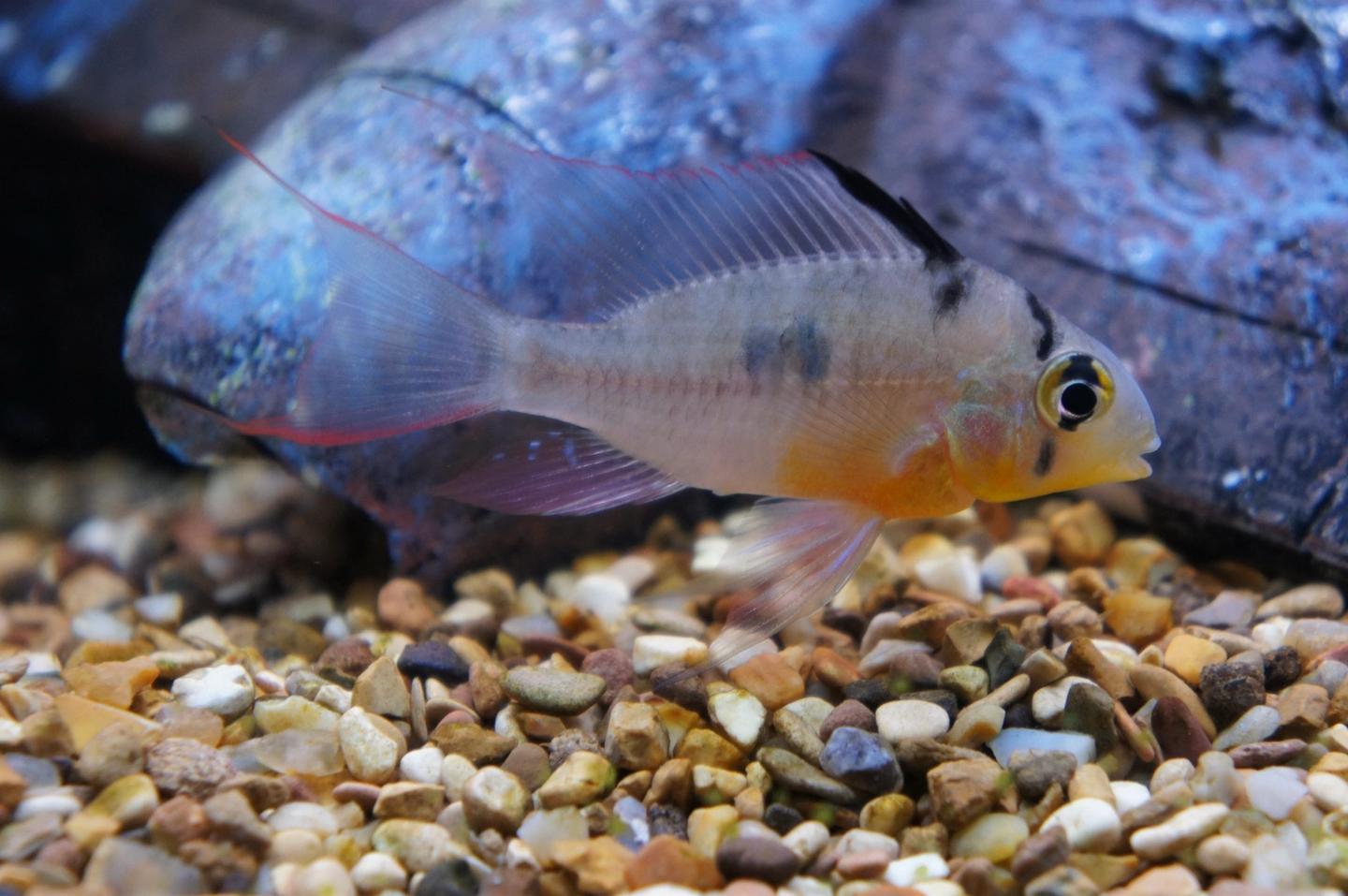
Cichlids are a family of roughly 1,800 accepted species, not one care type. Before buying, identify the exact species and source, then compare adult measurement, usable tank dimensions, social system, territory, tested water, diet and an exit plan. No family-wide minimum tank, water range or tank-mate list is safe.
Maintain these water conditions for optimal health and vibrant colors
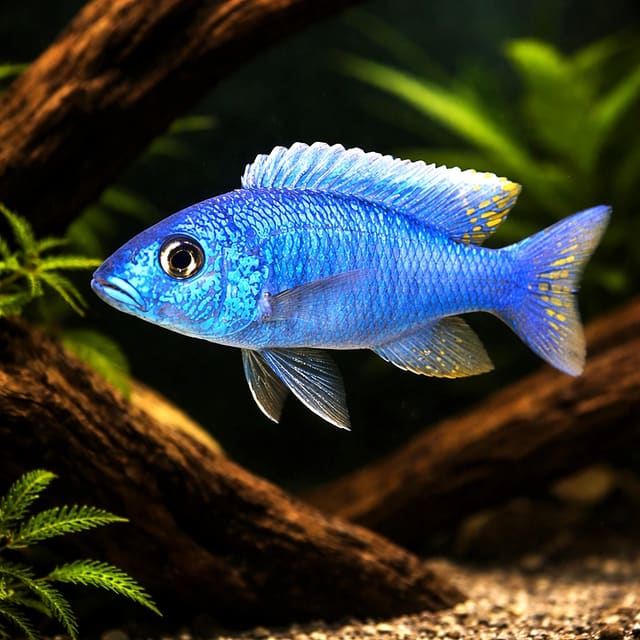
The strongest care anchor for this listing is Haplochromis melanopterus, which also matches the existing Shopify scientific-name metafield. This is a compact but active African cichlid with a dark body, bright blue facial and dorsal highlights, and the confident territorial behaviour typical of many Victorian haps.
The fish offered here is around 4-5 cm, but care should be planned around an adult of roughly 12.7 cm. It is best for aquarists who already understand hard, alkaline African cichlid water and who want a specialist Lake Victoria species rather than a generic mixed-community fish.
| Care point | Recommendation |
|---|---|
| Scientific care anchor | Haplochromis melanopterus |
| Trade/source wording | Haplochromis mola, Mola Hap |
| Current listing size | Approx. 4-5 cm |
| Adult size | Plan for about 12.7 cm |
| Minimum aquarium | 200 litres or more for a stable adult display; larger for groups or mixed haps |
| Temperature | 22-26 C |
| pH and hardness | Hard, alkaline water around pH 7.5-8.6 |
| Temperament | Semi-aggressive; territorial when mature or breeding |
| Diet | Omnivore leaning protein-rich; quality cichlid foods with some vegetable content |
| Care level | Moderate, with specialist stocking discipline |
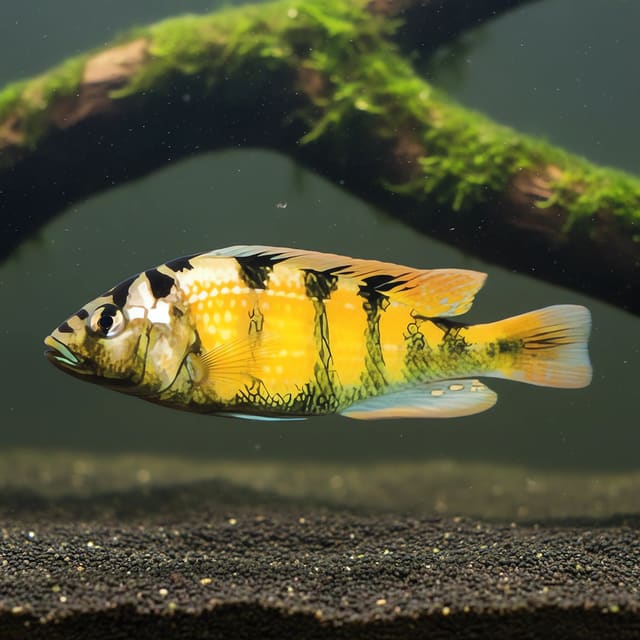
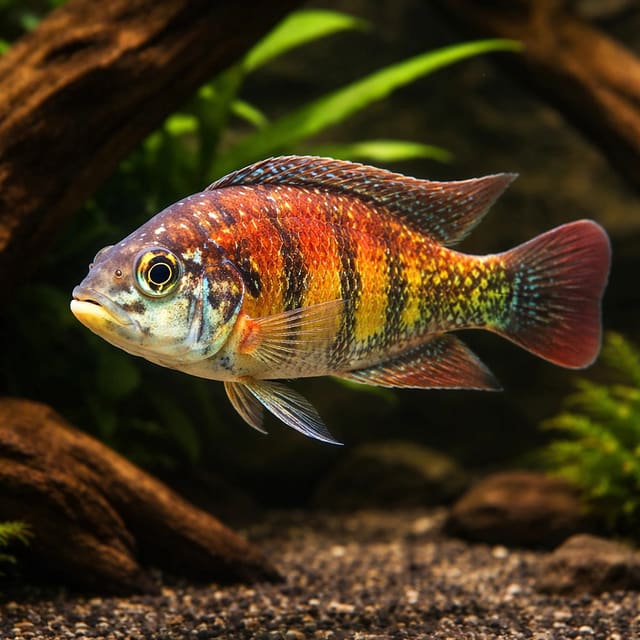
The Mola Hap is a visually strong Victorian-style hap, especially when settled and displaying. The source image shows a dark body with blue to violet iridescence over the head and upper flank, pale reflective patterning along the dorsal area, and dusky fins. Juveniles and subordinate fish may show less intensity, so colour should improve with maturity, stable conditions and sensible stocking.
Because Lake Victoria haps often change colour with mood, sex, dominance and lighting, the best aquarium display comes from clean water, a secure hierarchy and a layout that lets males show without constantly pinning other fish into corners.
Haplochromis melanopterus is recorded from Lake Victoria, with FishBase listing Smith Sound in the Tanzanian part of the lake. FishBase also records a mud-bottom collection habitat and female mouthbrooding. The stomach content note for examined material points to a specialist feeding ecology in the wild, but aquarium care should translate that into a clean, varied cichlid diet rather than risky feeder-fish practices.
Victorian haplochromines are also conservation-sensitive fish in the hobby. Many species have been pressured by habitat change, introduced predators and hybridisation risk. That means this fish should be kept with care, identified honestly and not casually mixed with closely related Victorian species if breeding is possible.
Use a mature aquarium with hard, alkaline water, efficient filtration and a layout that combines open swimming room with rockwork or hardscape breaks. A 200-litre aquarium is a more realistic starting point for an adult than the old small-tank text, and larger tanks are better for groups or mixed African cichlid communities. Keep the substrate smooth, keep rock structures secure, and avoid sharp decor that can damage fins during chasing.
Provide several visual barriers so subordinate fish can leave a dominant male's line of sight. The goal is not to create a cramped rock maze, but to give enough structure that territories can form without one fish controlling the whole aquarium.
Keep the water hard, alkaline and stable. A temperature range of 22-26 C and pH around 7.5-8.6 suits the current care profile. Hardness around 10-20 dGH is a useful practical range. Stability matters more than chasing exact numbers: ammonia and nitrite should always be zero, nitrate should be controlled with regular water changes, and mineral buffering should not swing suddenly.
If your tap water is very soft, prepare the aquarium before purchase with appropriate Rift Lake-style mineral support and test it for consistency. Do not move this fish into acidic, soft-water community conditions.
Feed a varied diet built around quality African cichlid pellets or granules. Add frozen foods such as brine shrimp, mysis, daphnia and insect larvae, and include some spirulina or vegetable-based content to keep the diet balanced. Small, measured meals are better than heavy feeding because Victorian haps are active and water quality can deteriorate quickly in overfed cichlid tanks.
Do not use routine feeder fish. They are unnecessary, can bring disease, and do not reflect good aquarium nutrition. A clean prepared-and-frozen-food rotation is safer and gives more predictable results.
Mola Hap should be treated as semi-aggressive. Young fish may seem easygoing, but mature males can become territorial, especially around spawning sites or when females are present. Colour, confidence and chasing often increase as the fish settles. Good tank size, hardscape breaks and careful sex ratios reduce stress.
This is not a fish for tiny, timid or long-finned tank mates. It should live with robust fish that enjoy similar hard-water conditions and can hold their own without turning the aquarium into a fight.
Good choices include similarly sized Lake Victoria haps, carefully selected Malawi haps or peacocks, and suitable Synodontis catfish that are not small enough to be bullied or eaten. Choose tank mates by adult size and behaviour, not by juvenile sale size.
Avoid small community fish, dwarf shrimp, timid soft-water species, delicate long-finned fish and very aggressive cichlids that will outmuscle it. Avoid mixing close-looking Victorian species casually if breeding purity matters, because females can be similar and hybridisation is a real risk in mixed haplochromine tanks.
This is a maternal mouthbrooder. Males establish and defend display areas, court females, and the female carries eggs and fry in her mouth after spawning. If breeding is intended, keep records of the exact species or trade line, avoid hybrid mixes, and provide a quiet holding option for females if they are being harassed.
Fry should be raised separately from adult cichlids and fed appropriately sized foods. Even when breeding is not the goal, understanding the mouthbrooding behaviour helps explain why mature males can become more territorial.
Mola Hap is best for keepers who want a colourful, active Lake Victoria-style cichlid and can provide stable hard water, enough space and appropriate tank mates. It is not a beginner community fish and not a small-tank shortcut. If your aquarium is already built around African cichlids and you can manage semi-aggressive behaviour, it can become a distinctive display fish.
Before ordering, check your tank size, water chemistry and existing stock. If the aquarium is mature and compatible, this fish offers a more unusual alternative to the common Malawi species while still fitting a hard-water African cichlid theme.
We pack live fish for specialist UK live-fish courier transport according to current livestock procedures and weather conditions. Availability and dispatch timing can vary because animal welfare comes first. When the fish arrives, keep lights low, float the sealed bag to equalise temperature, then acclimate gradually with small additions of tank water before release.
Give the fish a quiet first day and monitor interactions carefully. Do not add it straight into a crowded cichlid tank without watching the first few hours, because established territories can cause immediate stress.
No reviews for this item yet. Bought one? Honest reviews only, good or bad.
What customers say about ordering from us
I have a small group of long finned mountain minnows. So was delighted to be able to order ten of this variety to increase the genetics in my tank . The ones I recieved are healthy but it’s to early to give a verdict on wether they are of a long finned type since they are small currently.
Gordon Walker · 23 Sept 2026
100% success travel and "installation". Pleased with quality of purchase. The Siamese fighter a bit "shy" so have not yet seen him at his best yet but looking good. Happy customer. GG
George E Garratt · 21 Sept 2026
Reviews of our shop, collected by Judge.me, an independent third-party review collector. Newest first.